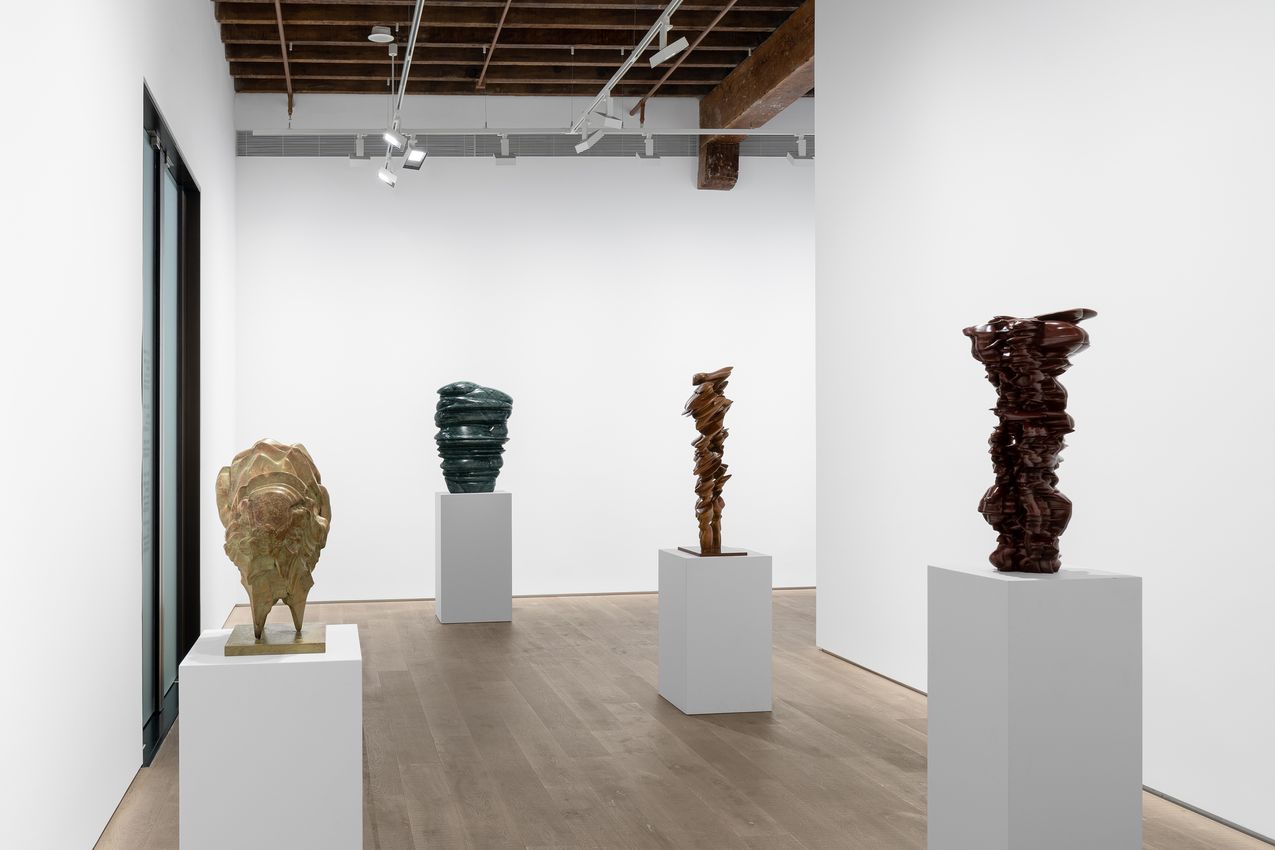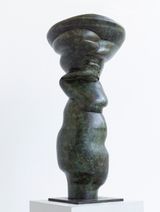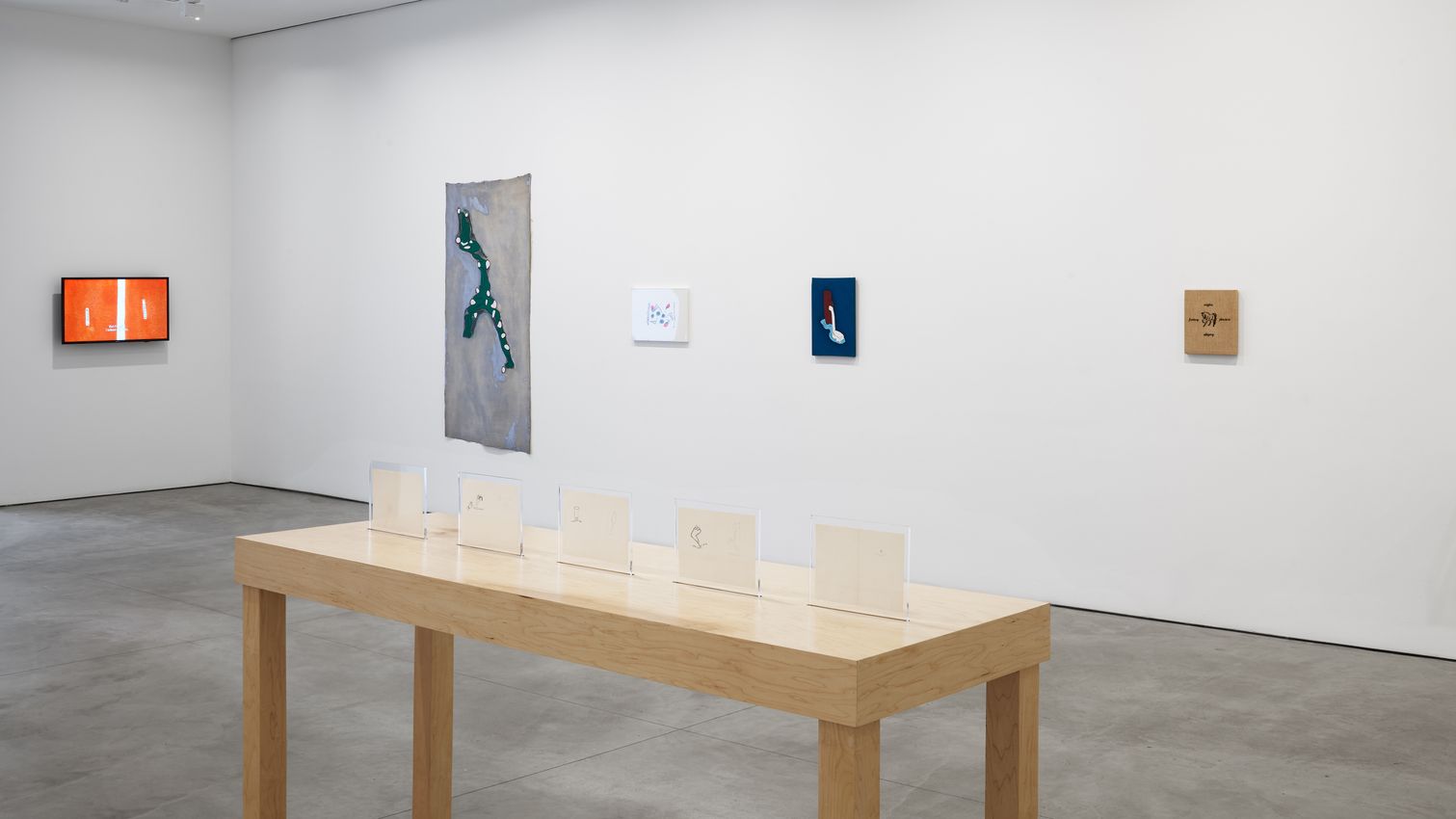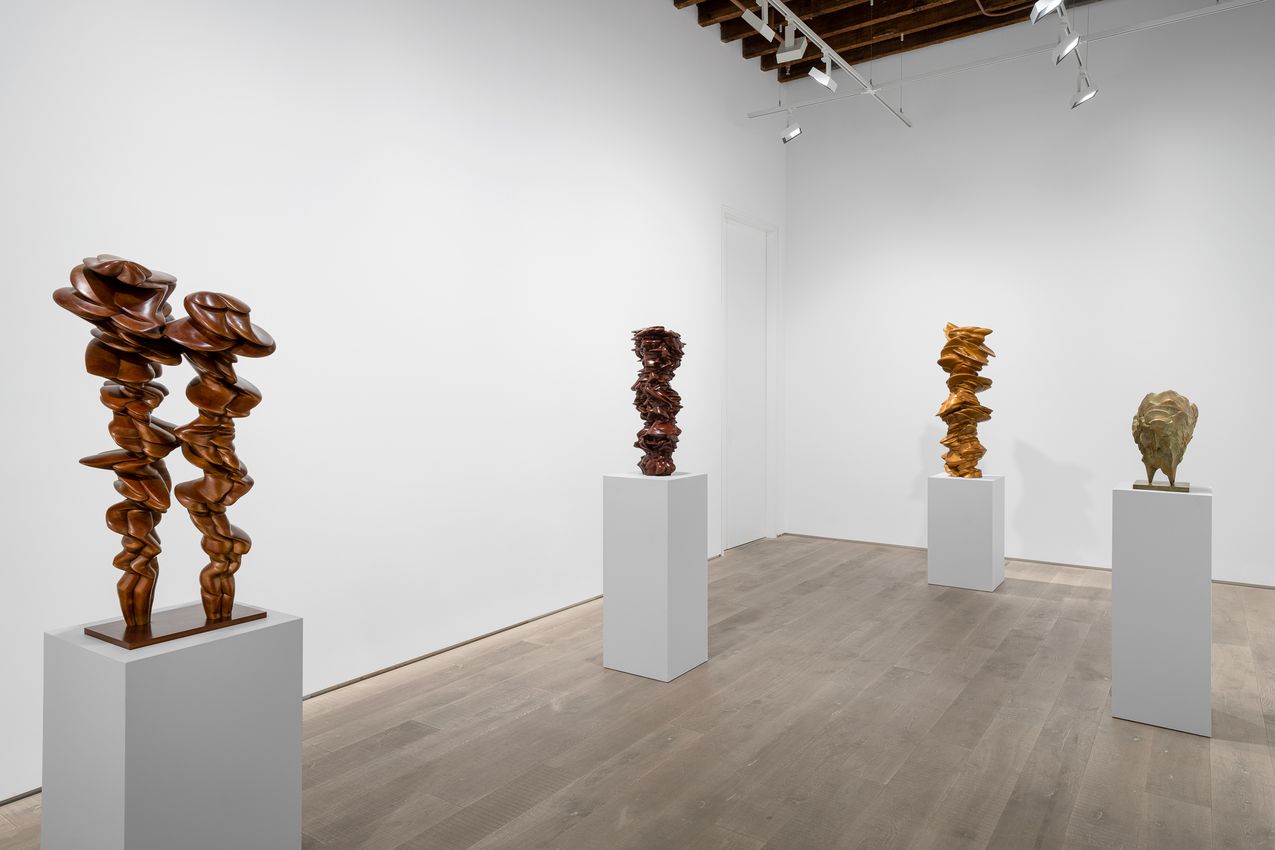
Lisson Gallery is delighted to present Tony Cragg‘s first solo exhibition in China following his major presentation at CAFA Art Museum in Beijing in 2012. The internationally acclaimed artist will present a selection of recent works in bronze and stone. These sculptures—composite, polymorphic entities that are stacked and layered like geological plates—highlight the distinguished practice of an artist who has been hugely influential since the 1970s. This is Cragg’s sixteenth exhibition with Lisson Gallery, many decades after his groundbreaking first show on Bell Street, London in 1979, but his first in Shanghai.
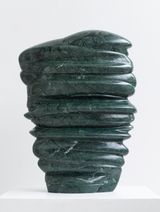
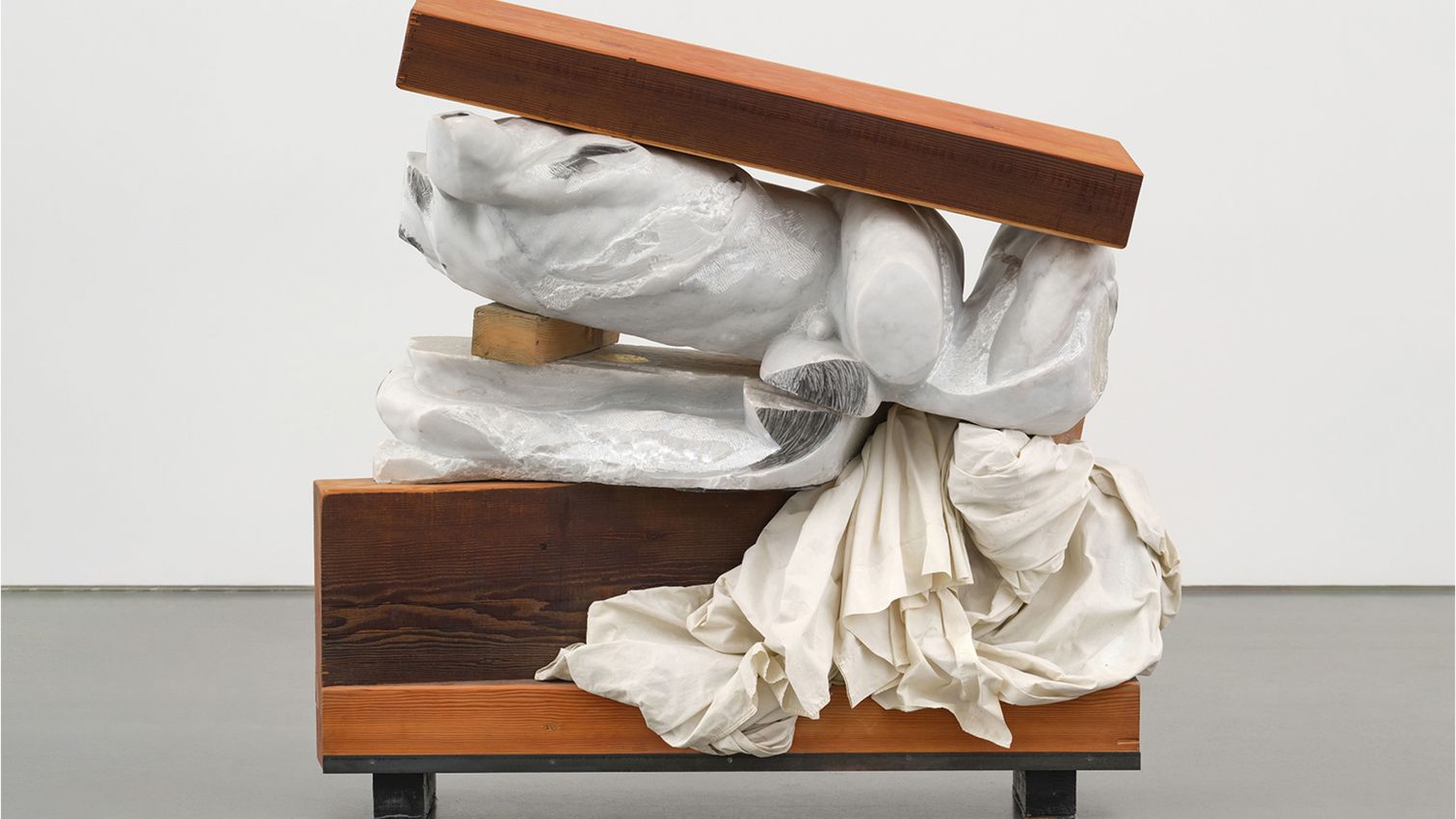
The exhibition features seven sculptures throughout the gallery, created between 2018 and 2021, that demonstrate Cragg’s enduring interest in the dynamic power of matter to assume form. At the core of Cragg’s work is an acute observation and understanding of the world around us, a process of continual enquiry into reshaping what we see, with each work an entirely unique experimentation into the possibilities of material, scale and volume. The selection of works in this exhibition illustrates the ambition and variety of Cragg’s sculptural explorations, producing a remarkably complex structure from a fundamentally simple concept, such as a natural form or a human profile. Cragg has stated: ‘Making sculpture involves not only changing the form and meaning of the material but also oneself.’ Where Cragg has previously created work out of marble, glass, sandstone, fibreglass, wood, cast and constructed steel, as well as many from found plastic objects, this presentation focuses on sculptures created from bronze, and one new work—Masks (2021)—from stone.
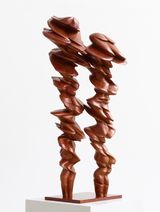
For his first exhibition in Shanghai, Cragg presents a series of works that express the resonance of stacking in his practice, a technique he has been exploring since the 1970s. These works show how a solid, cohesive form can be created from intimate, disparate parts, with each deriving from an initial drawing. In the gallery space, there is a discourse between Cragg’s classical vocabulary and his contemporary forms, offering an opportunity to assess different forms and finishes, such as in Pair (2018), consisting of multi-piled wooden objects cast in bronze. Despite the solidity of the material, the work exudes dynamism and movement; as curator and art historian Dr Jon Wood once commented, ‘they remind us that all is ultimately moving, seething and active in the world and that nothing is really static.’ Similarly, It is, It isn’t (2020) creates an illusion between the corporeal and the non-corporeal, with a sense of profile and physical presence as the audience’s gaze traces the forms of the sculpture. Senders (2019), In Frequencies (2020) and Mean Average (2021) also present recurrent forms and materials that Cragg returns to in his practice, connecting these recent works with his history as an artist.
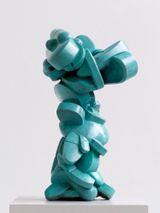
Cragg’s practice of layering forms also crucially derives from his geological and environmental concerns, spanning from the sculptural Stack he presented at Tate in 1975 and Minster (1987) at Hayward Gallery that year, which both employ a multitude of miscellaneous, recycled and geological materials. Stacked with numerous turquoise layers, Untitled (2020) speaks to Cragg’s early experiences working in a chemistry laboratory after his graduation in the late 1960s, and traces back to these early works utilising found plastic objects to reimagine forms in his own language.
The presentation also offers the opportunity to imagine these works in larger scale—as monumental outdoor sculptures—as he has so often exhibited, from Yorkshire Sculpture Park (2017) to Houghton Hall, Norfolk, UK (19 May–26 September 2021). In September 2008, Cragg even opened his own outdoor sculpture park and gallery, Waldfrieden, in his home town of Wuppertal, Germany, near his studio.
Alongside the exhibition, Drawing as Continuum is currently on view at the Haus am Waldsee, Berlin until 9 January 2022, providing a detailed overview of the artist’s drawings and graphic works from the early 1990s to the present day. An essay by Dr. Jon Wood, a curator and art historian who has written extensively on modern and contemporary sculpture, will accompany the show.
About the artist
Tony Cragg is one of the world’s foremost sculptors. Constantly pushing to find new relations between people and the material world, there is no limit to the materials he might use, as there are no limits to the ideas or forms he might conceive. His early, stacked works present a taxonomical understanding of the world, and he has said that he sees manmade objects as ‘fossilized keys to a past time which is our present’. So too, the floor and wall arrangements of objects that he started making in the 1980s blur the line between manmade and natural landscapes: they create an outline of something familiar, where the contributing parts relate to the whole. Cragg understands sculpture as a study of how material and material forms affect and form our ideas and emotions. This is exemplified in the way in which Cragg has worked and reworked two broad bodies of work he calls Early Forms and Rational Beings. The Early Forms explore the possibilities of sculpturally reforming familiar objects such as containers into new and unfamiliar forms producing new emotional responses, relationships and meanings. Rational Beings examine the relationship between two apparently different aesthetic descriptions of the world; the rational, mathematically based formal constructions that go to build up the most complicated of organic forms that we respond to emotionally. The human figure being the prime example of something that looks ultimately organic eliciting emotional responses, while being fundamentally an extremely complicated geometric composition of molecules, cells, organs and processes. His work does not imitate nature and what we look like, rather it concerns itself with why we look like we do and why we are as we are.
Tony Cragg was born in Liverpool, UK in 1949 and has lived and worked in Wuppertal, Germany since 1977. He has a BA from Wimbledon School of Art, London, UK (1973) and an MA from the Royal College of Art, London, UK (1977). Among many major solo shows he has exhibited at Houghton Hall, UK (2021); Museum Belvédere, Netherlands (2021); Museu Oscar Niemeyer, Brazil (2020); Split Kula Cultural Institution, Croatia (2019); City of Arts and Sciences, Spain (2018); Isfahan Museum of Contemporary Art, Iran (2018); Istanbul Modern, Turkey (2017); Yorkshire Sculpture Park, UK (2017); the National Museum of Havana, Cuba (2017); MUDAM Luxembourg, Luxembourg (2017); Ludwig Museum, Koblenz, Germany (2017); Wroclaw Contemporary Art Museum, Wroclaw, Poland (2017); The State Hermitage Museum, St Petersburg, Russia (2016); Von der Heydt Museum, Wuppertal, Germany (2016); Benaki Museum, Athens, Greece (2015); Gothenburg International Sculpture Exhibition, Gothenburg, Sweden (2015); Heydar Aliyev Centre, Baku, Azerbaijan (2014); Musée d’art modern de Saint-Étienne, Saint-Étienne, France (2014); National Taiwan Museum of Fine Arts, Taichung, Taiwan (2013); CAFA Museum in Beijing, China (2012); Musée du Louvre, Paris, France (2011); the Scottish National Gallery, Edinburgh, UK (2011); Nasher Sculpture Center, Dallas, TX, USA (2011); Skulpturenpark Waldfrieden, Wuppertal, Germany (2010); Tate Gallery, Liverpool, UK (2000); Museo Nacional Centro de Arte, Reina Sofia, Madrid, Spain (1995), Stedelijk van Abbemuseum, Eindhoven, The Netherlands (1991) and Tate Gallery, London, UK (1988). He represented Britain at the 43rd Venice Biennale in 1988 and in the same year was awarded the Turner Prize at the Tate Gallery, London, UK. He has been a Professor at Ecole Nationale Superieure des Beaux Arts, Paris, France (1999–2009) and Professor at Kunstakademie, Dusseldorf, Germany (2009–present). He was elected a Royal Academician in 1994; received the Praemium Imperiale for Sculpture, Tokyo, Japan (2007); was Awarded the 1st Class Order of Merit of the Federal Republic of Germany (2012) and was made a Knight’s Bachelor in 2016.
Tony Cragg is one of Britain’s foremost sculptors. Constantly pushing to find new relations between people and the material world, he works with stone, wood, glass, aluminium, cast bronze and cast iron, and found objects, from plastic consumer goods to rubbish from the streets. His early stacked works present a taxonomical understanding of the world, and he has said that he sees manmade objects as “fossilized keys to a past time which is our present”. So too, the witty floor and wall arrangements of objects that he started making in the 1980s blur the line between manmade and natural landscapes: they create an outline of something familiar, where the contributing parts relate metaphorically to the whole. Cragg originally trained as a scientist and had a job as a lab technician at the National Rubber Producers Research Association, 1966–68, an experience that is reflected in his vigorous approach to material. He has said, “I see a material or an object as having a balloon of information around it”, 1992, and he pummels this aura in different ways across two broad bodies of work – Early Forms and Rational Beings. The Early Forms explore the possibilities of distorting everyday vessels such as vases or plastic bottles, morphing into and around themselves. The Rational Beings sculptures take the outline of a human gesture or profile as starting point for exuberant improvisations on natural processes.


Established in 1967 in London, Lisson Gallery is one of the most well-known galleries operating globally. Boasting an influential and continuing legacy, including playing a pivotal role in the careers of many pioneers of historically important art movements, the gallery works with some of the most significant contemporary artists today.

A respected voice in contemporary art discourse.
Focusing on ambitious storytelling and insightful art-world commentary. Ocula Magazine publishes in-depth interviews, critical essays and timely analysis on the artists, exhibitions and ideas driving the global art world.
Learn more about Ocula Magazine
Showcasing the best of the art world.
Ocula partners with galleries from around the world to highlight their artists, artworks and exhibitions. Gallery membership is by application and invitation, with each member vetted by an independent panel.
Learn more about Ocula Membership

Specialises in the sale of major artworks.
Led by a team with deep ties to the world’s leading auction houses, galleries and collectors. Ocula’s advisory team offers bespoke services to high-net-worth clients from around the world who are looking to acquire the best of contemporary and modern art.
Learn more about our team and services