




CHRISTOPHER WOOL
b. 1955, United StatesPerhaps best known for his word paintings, American artist Christopher Wool’s practice is centred around his continual reformations of painting and abstraction. Combining the aesthetics of graffiti and street culture with the legacies of pop and conceptual art, Wool has employed media and techniques as diverse as incised rollers, stencils, silkscreen printing, photography, replication and overlapping to explore the potential of painting during a time when many deemed it irrelevant.
Early Years
Christopher Wool was born in 1955 in Chicago. In the early 1970s, he moved to New York City, where he initially studied film at Sarah Lawrence College before turning his focus to visual art. Wool immersed himself in the city’s dynamic punk and No Wave music scenes, which would later inform the rebellious energy of his practice.
Throughout the late 1970s and early 1980s, Wool worked as a studio assistant to artist Joel Shapiro and studied painting at the New York Studio School. By the mid-1980s, he had begun to develop his distinctive approach to painting, merging conceptual strategies with the language of abstraction and the aesthetics of urban signage.
Wool continues to live and work in New York City and Marfa, Texas.
Artworks
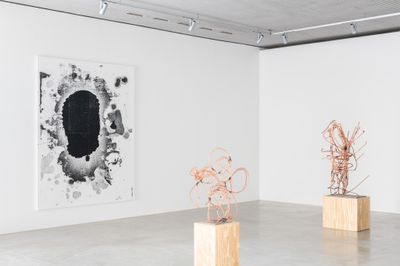
Christopher Wool’s artworks span painting, printmaking, photography, and sculpture, interrogating the processes of creation, reproduction, and erasure. His works often use stencils, silkscreening, spray paint, and digital manipulation to blur the lines between original and copy, intention and accident.
Word Paintings and Text Works (1980s–1990s)
In the late 1980s, Wool gained prominence with his now-iconic word paintings. Using commercial stencils and black enamel on white aluminium panels, he created large-scale works featuring bold, fractured words and phrases, often arranged without spacing or punctuation. Works such as Apocalypse Now (1988) and Sell the House, Sell the Car, Sell the Kids (1988) evoke urgency and ambiguity, combining pop-cultural references with existential undertones.
These text works explore the power and limitations of language, with their cropped and compressed lettering forcing viewers to actively decipher meaning. Their stark aesthetic echoes the grit of New York’s urban landscape, while also engaging with conceptual and minimalist traditions.
Abstract and Pattern Paintings (1990s–2000s)
By the 1990s, Wool had begun experimenting with decorative and mechanical patterns. Using rollers and stencils, he applied repeating floral and geometric motifs onto his canvases, creating compositions that oscillate between order and disruption. Works like Untitled (1990) feature layered, partially erased patterns, exposing the processes of revision and intervention.
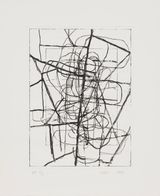
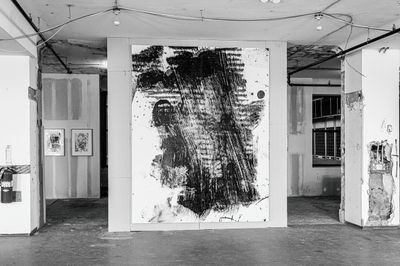
Wool’s later abstract paintings further push this tension, incorporating silkscreened marks, overpainting, and digital editing. His gray paintings series (2000s) showcases ghostly layers of lines and gestures, exploring themes of reproduction, erasure, and the degradation of the image.
Photography and Artist Books
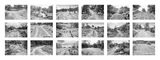
In addition to painting, Wool has produced a significant body of photographic work, documenting urban environments and found imagery. His photographic series often appear in self-published artist books, such as East Broadway Breakdown (2003), which captures nighttime scenes of New York’s Lower East Side. Photography, for Wool, functions as an extension of his painting practice—another means of exploring seriality, repetition, and surface.
Awards and Accolades
- Wolfgang Hahn Prize, Museum Ludwig, Cologne (2012)
- Member of the American Academy of Arts and Letters (2010)
Exhibitions
Christopher Wool has been the subject of both solo exhibitions and group exhibitions at important institutions.
Solo Exhibitions
- Christopher Wool, Daros Collection at Fondation Beyeler, Hurden, Switzerland (2016)
- Inbox: Christopher Wool, The Museum of Modern Art, New York (2015)
- Christopher Wool, Solomon R. Guggenheim Museum, New York; The Art Institute of Chicago, Chicago, (2013–2014)
- Christopher Wool, Musée d’Art Moderne de la Ville de Paris (2012)
- Christopher Wool, Institut Valencià d’Arte Modern, Valencia, Spain; Musée d’Art Moderne et Contemporain de Strasbourg, Strasbourg, France (2006)
- Christopher Wool, Camden Arts Centre, London, England (2004)
Group Exhibitions
- Coming Attractions: The John Waters Collection, Baltimore Museum of Art, Baltimore (2022-2023)
- The Greek Gift, DESTE Foundation Project Space, Slaughterhouse, Hydra, Greece (2021)
- Abstraction: Aspects of Contemporary Art, National Museum of Art, Osaka, Japan (2019)
- Being Modern: MoMA in Paris, 1929-2017, Louis Vuitton Foundation, Paris, France (2017-2018)
- Fast Forward: Painting from the 1980s, Whitney Museum of American Art, New York (2017)
- America Is Hard to See, Whitney Museum of American Art, New York (2015)
- The Forever Now: Contemporary Painting in an Atemporal World, Museum of Modern Art, New York (2014–2015)
- Painting 2.0: Expression in the Information Age, Museum Brandhorst, Munich (2015)
- The Painting Factory: Abstraction after Warhol, Museum of Contemporary Art, Los Angeles (2012)
Website
Christopher Wool’s website can be found here.
Critical Reception
Christopher Wool’s practice has been widely covered in leading art publications including Frieze, The New York Times, and W Magazine.
Christopher Wool FAQs
Where can I see Christopher Wool’s artworks?
Christopher Wool’s art is held in major museum collections and regularly exhibited internationally. Notable institutions include The Museum of Modern Art (MoMA) and the Solomon R. Guggenheim Museum in New York, the Art Institute of Chicago, Musée d’Art Moderne de la Ville de Paris, and Fondation Beyeler in Switzerland. His work is also frequently shown at leading galleries and featured in significant group exhibitions such as The Forever Now: Contemporary Painting in an Atemporal World’ at MoMA.
What is Christopher Wool best known for?
Wool is renowned for his word paintings from the late 1980s and early 1990s, which feature bold, stencilled black text on white backgrounds. These artworks often use fragmented language and ambiguous phrases, challenging the viewer’s expectations of meaning and highlighting the limitations of language. He is also known for his abstract and pattern paintings, which use rollers, stencils, and silkscreen techniques to explore repetition, erasure, and the boundaries of painting as a medium.
How did Christopher Wool influence contemporary art?
Wool’s practice has been pivotal in redefining painting in the postmodern era. By appropriating elements from graffiti, street signage, and commercial printing, he questioned the relevance of painting at a time when critics were declaring its end. His innovative use of language, repetition, and erasure has influenced a generation of artists exploring the intersections of text, image, and abstraction.
What is Christopher Wool’s record price at auction?
Christopher Wool’s artworks have achieved significant results at auction, with several paintings selling for over $20 million USD. His 1992 painting Untitled (Riot) set a record when it sold for $29.9 million at Sotheby’s in 2015, underscoring his status as one of the most sought-after contemporary artists.
Does Christopher Wool work in media other than painting?
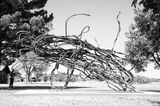
Yes, in addition to his paintings, Wool has produced an extensive body of photographic work and artist books. His photographic series, such as East Broadway Breakdown, document urban environments and reflect his interest in seriality and surface. Wool’s practice also includes printmaking and sculpture, further exploring themes of repetition, reproduction, and materiality.
Sherry Paik | Ocula | 2025









Explore Christopher Wool's Exhibitions













Explore and Follow Artists Shaping Contemporary Art
A respected voice in contemporary art discourse.
Focusing on ambitious storytelling and insightful art-world commentary. Ocula Magazine publishes in-depth interviews, critical essays and timely analysis on the artists, exhibitions and ideas driving the global art world.
Learn more about Ocula Magazine
Showcasing the best of the art world.
Ocula partners with galleries from around the world to highlight their artists, artworks and exhibitions. Gallery membership is by application and invitation, with each member vetted by an independent panel.
Learn more about Ocula Membership
Specialises in the sale of major artworks.
Led by a team with deep ties to the world’s leading auction houses, galleries and collectors. Ocula’s advisory team offers bespoke services to high-net-worth clients from around the world who are looking to acquire the best of contemporary and modern art.
Learn more about our team and services