Press Release

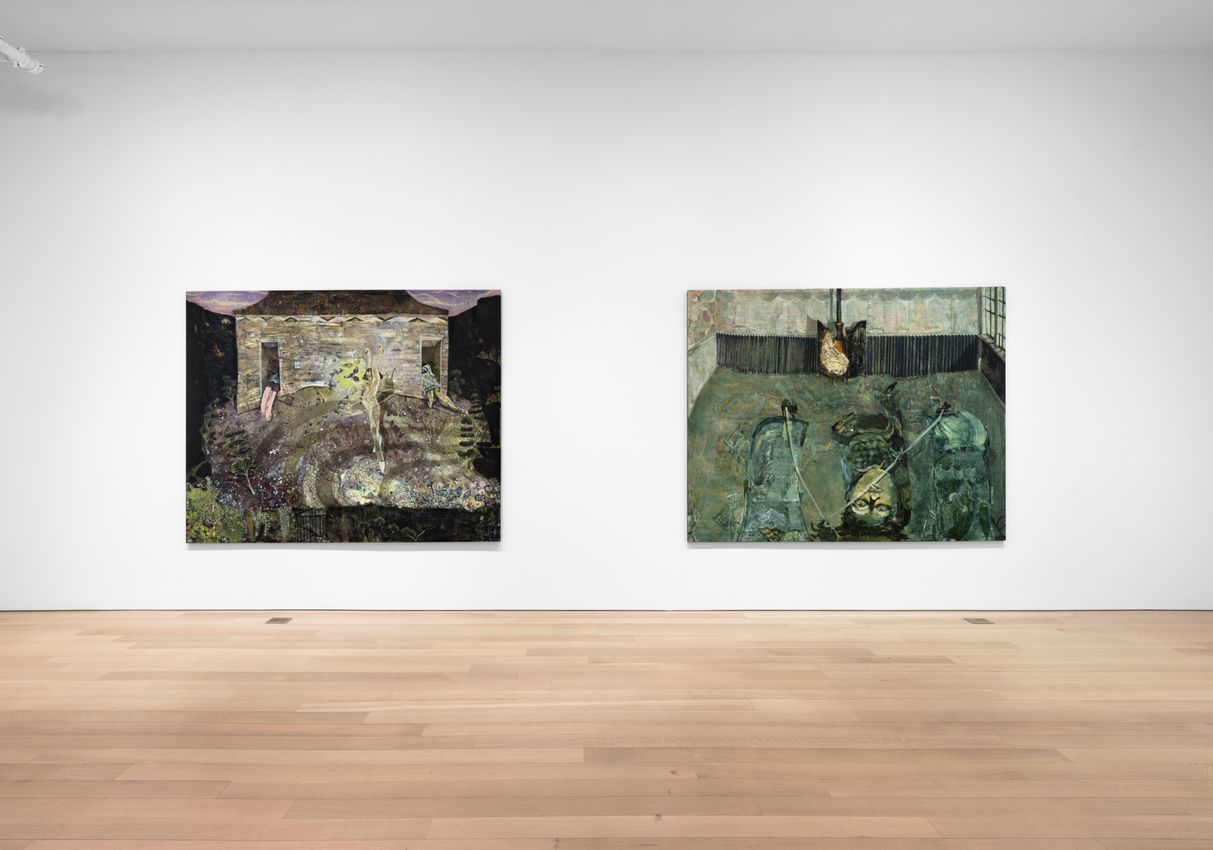
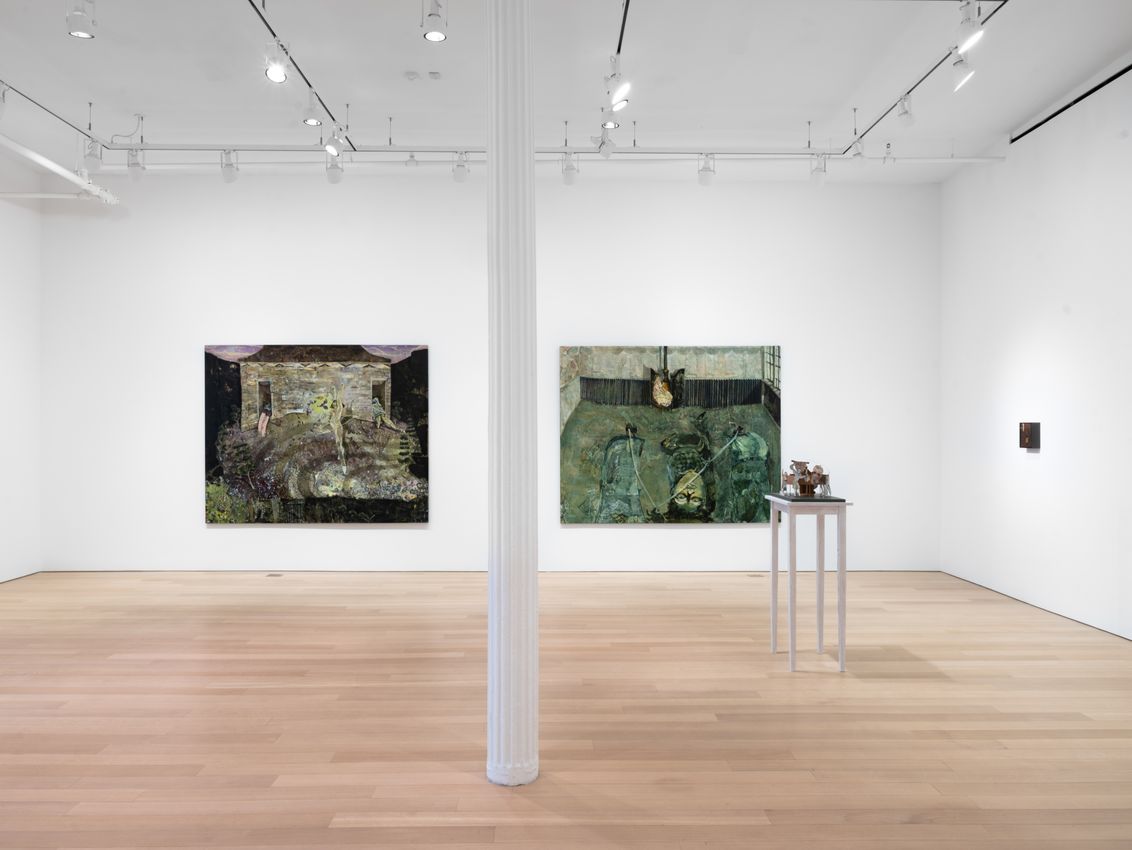
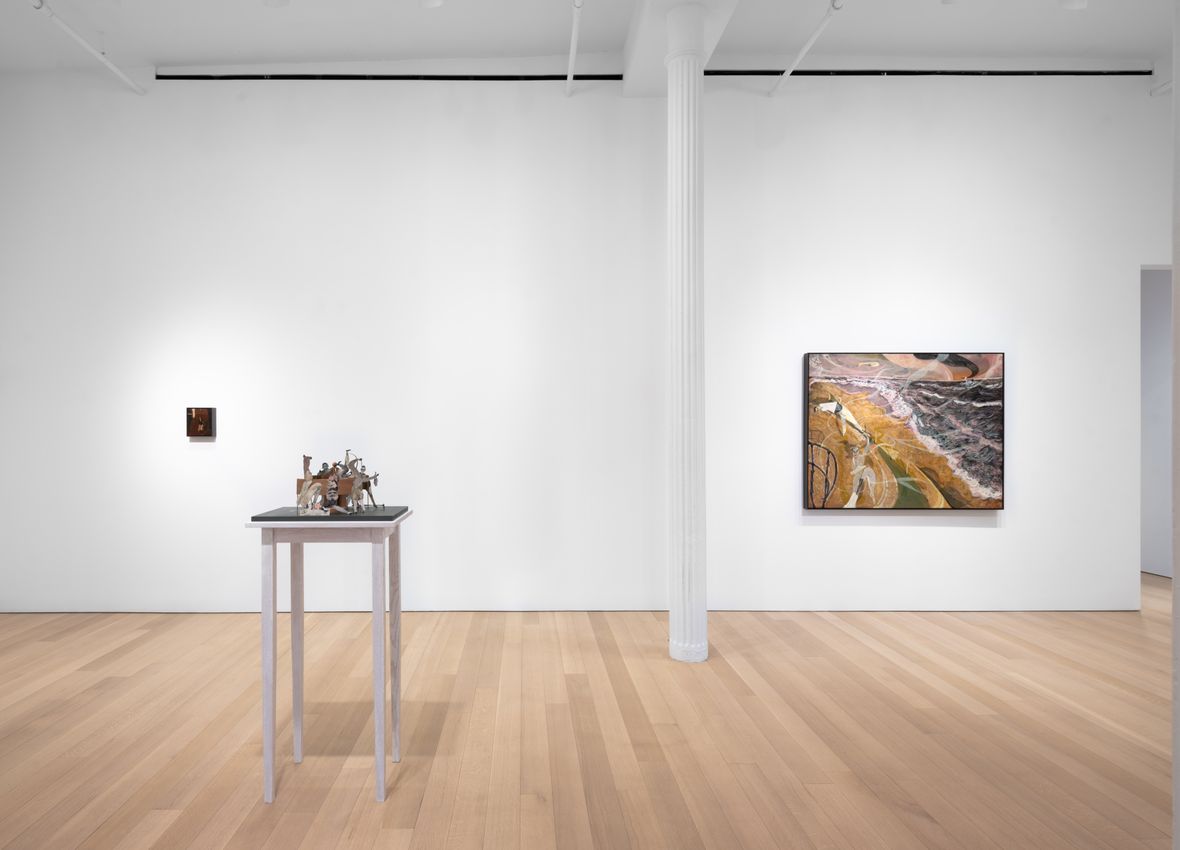
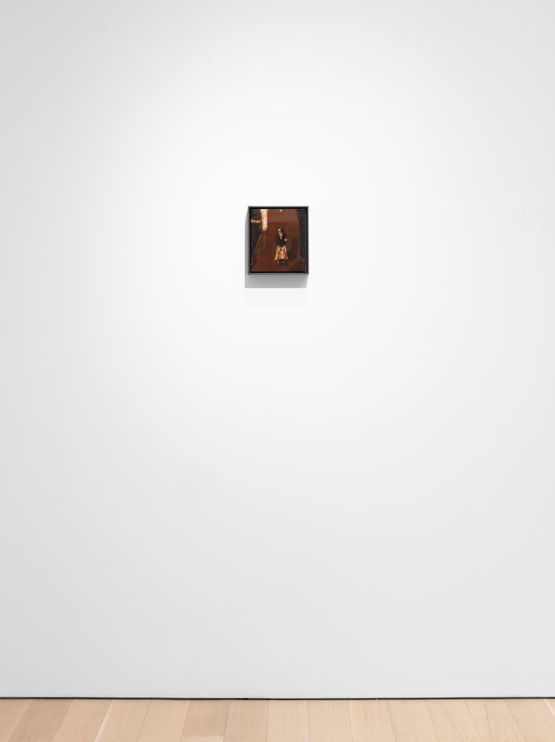
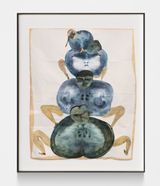
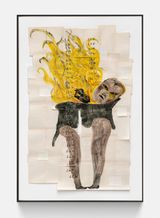
Mendes Wood DM is pleased to present Demonios Familiares by Guglielmo Castelli (b.1987, Turin, Italy). Building on his previous exhibition in the gallery’s Brussels space in 2021, and an acclaimed solo at Paris+ par Art Basel 2022, this exhibition offers audiences the most complex and complete presentation of Castelli’s work to date, with large and small-scale oil paintings shown alongside works on paper, collage, and a sculpture.

The exhibition takes its name from an eponymous book by the Spanish writer Ana Maria Matute (1925–2014), whose work often addresses the liminal space bridging childhood with adulthood and the power of fantasy and magical thinking.

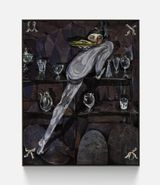
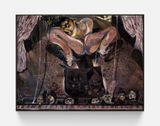
Known for his unsettling and theatrical compositions pitting adolescent figures against oppressive geometries, tight pictorial settings and heavily symbolic imagery, Castelli uses his understanding of Matute’s Demonios Familiares (Familiar Demons) to expand his artistic vocabulary and give further meaning to his subjects.

“Matute’s characters are often subjected to unfavorable conditions that project them towards fatal destinies,” Castelli says. “This title seems so appropriate to me given the dark and complicated times that we are living in. Her characters become representative of the victims of a society that prevents them from realizing their hopes and dreams. I wanted to create characters who are active in their conception, not just mere spectators, but fully realized protagonists that move within these mysterious spaces. And not just them, but their shadows too.”

Castelli’s powerful visual language draws upon a wealth of European artistic and literary references, from the imperfect shadows of Giorgio de Chirico’s metaphysical compositions to Franz Kafka’s nightmarish allegories and T.S. Eliot’s stream of consciousness. Their common thread, or perhaps just one of them, is the very real presence of uncertainty and instability, of an impending but intangible sense of danger, of the uncanny specters of a childhood bedroom that morph, meta-morph, haunt, and then disappear as quickly as they have formed.

“Our society finds it hard to accept things that creak, that whisper. The dark elements in my paintings are often obstacles, but in the end my subjects always survive. They may be in difficult positions, dancing with demons or chasing their shadows, but they survive,” Castelli says.

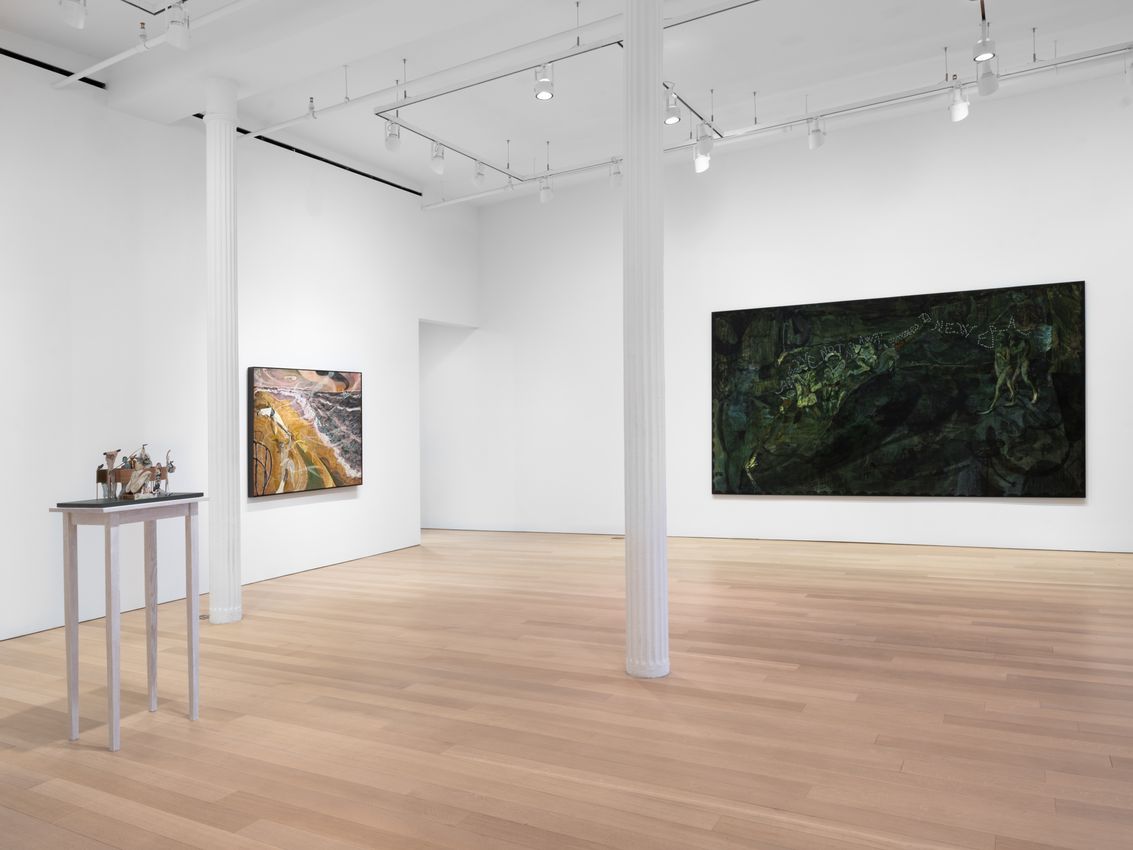
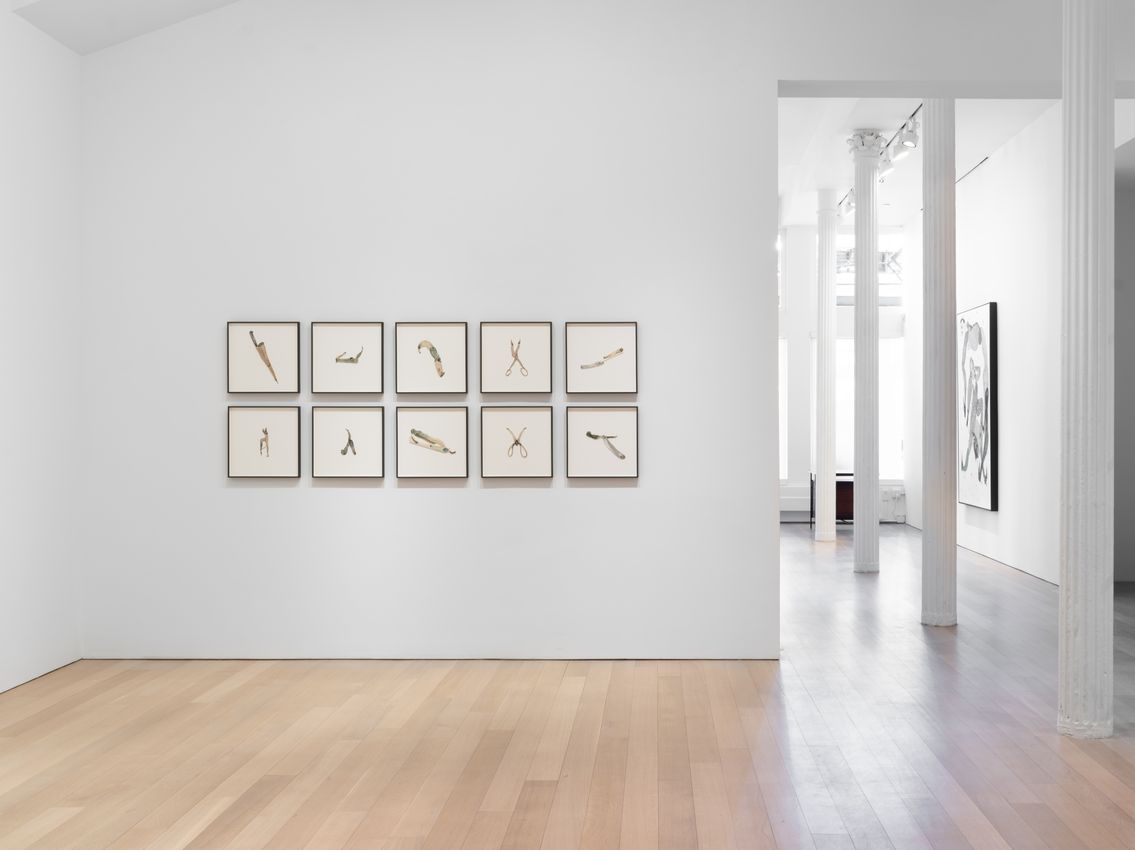
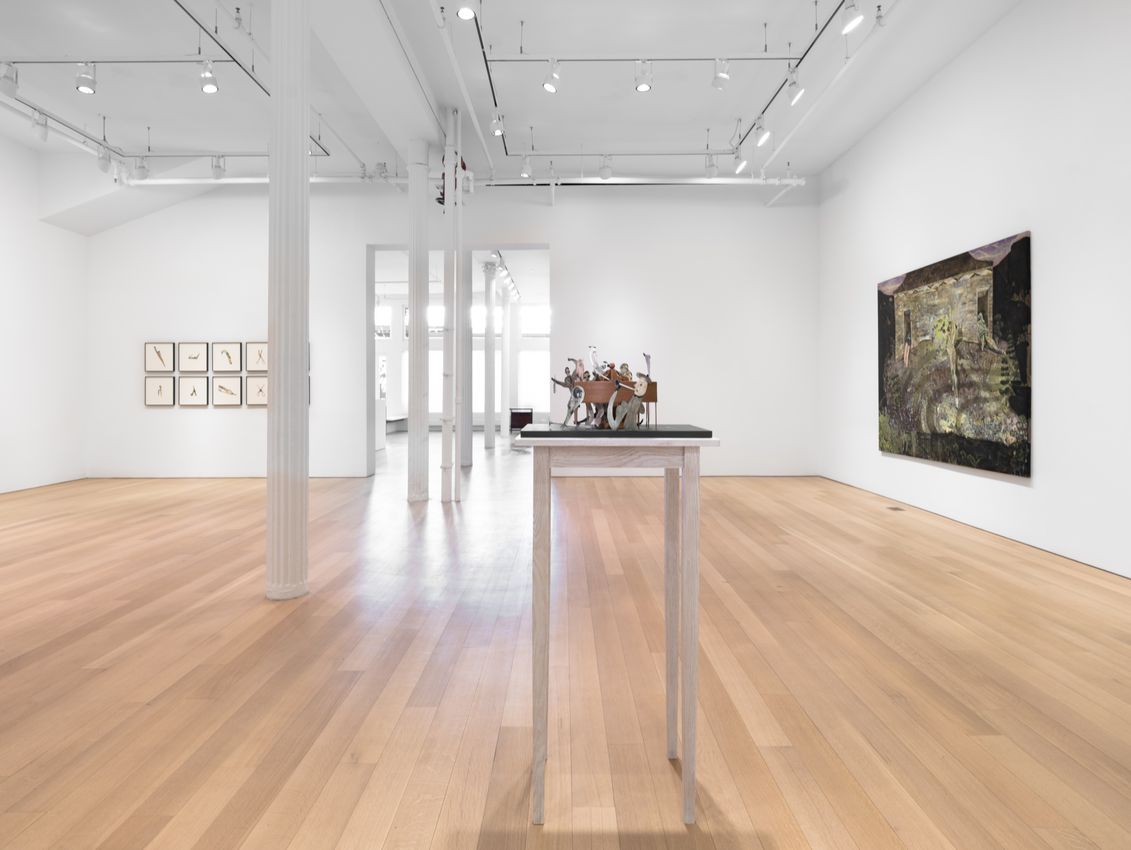
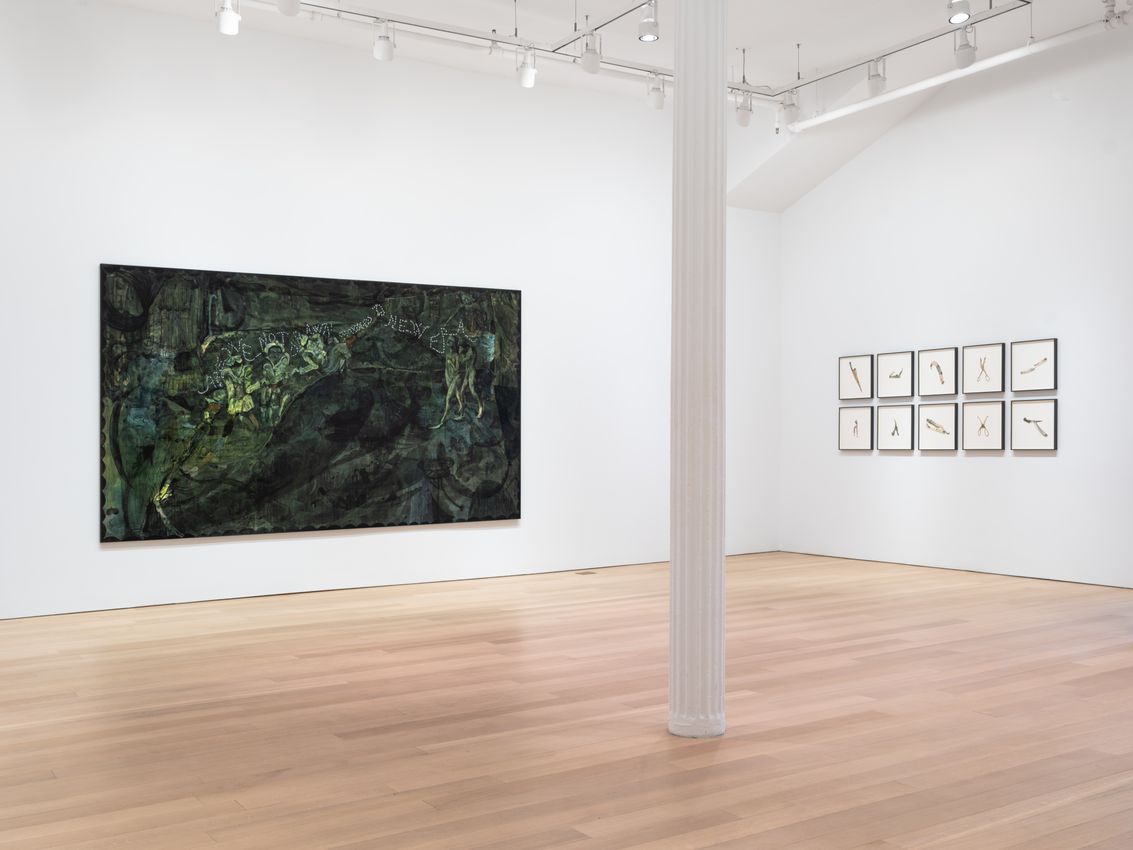
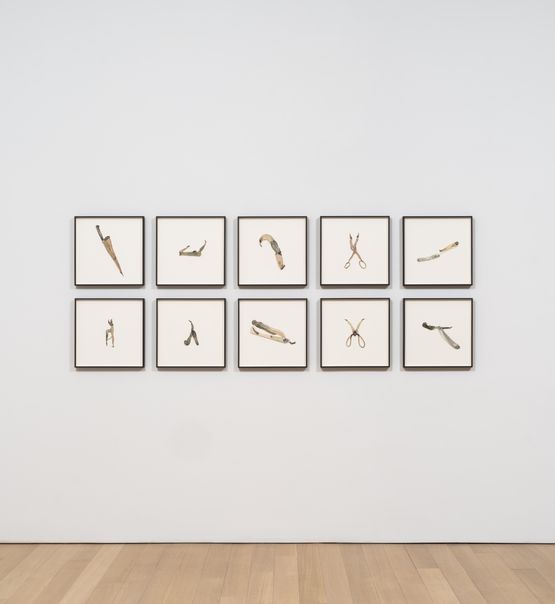
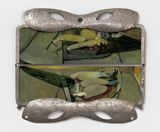
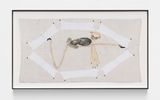
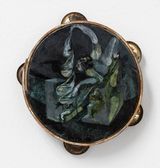
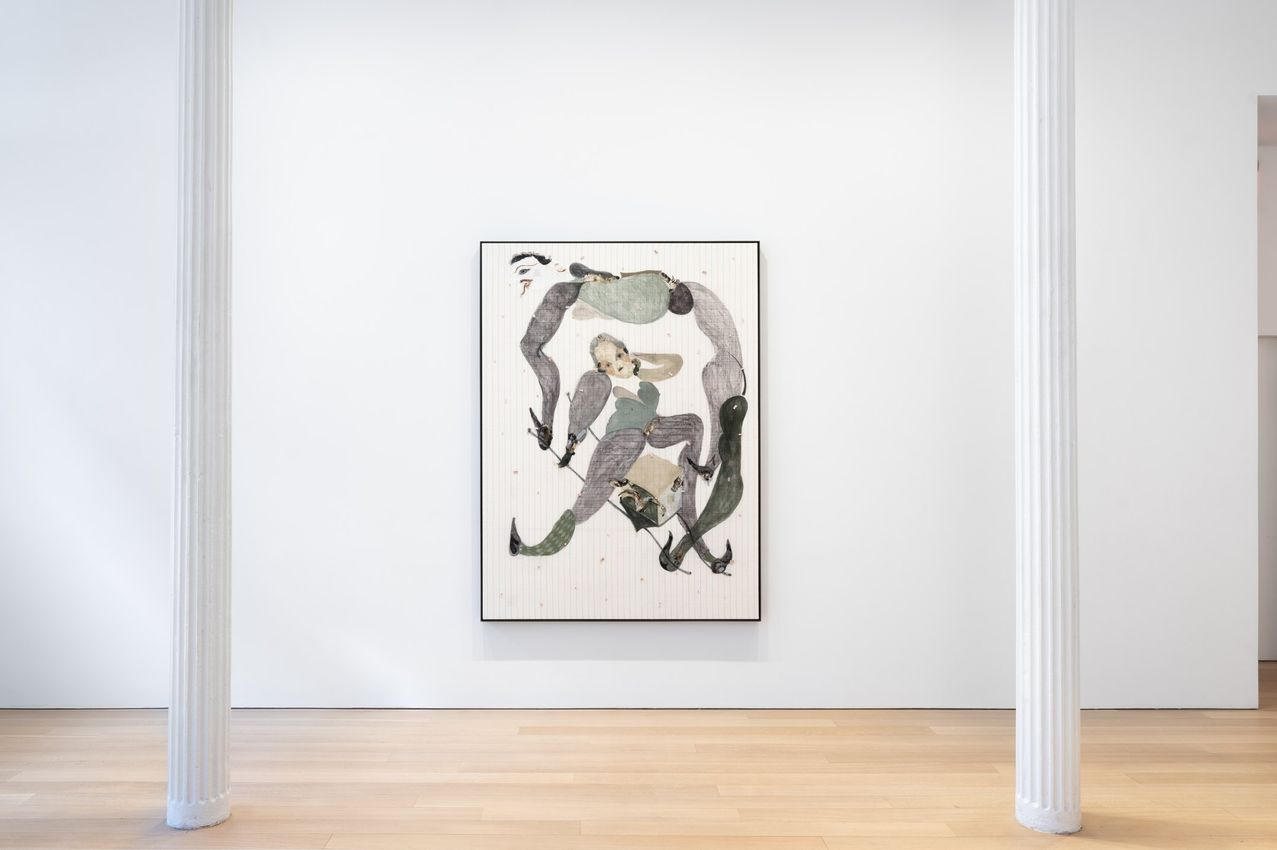
Dark and surreal but not entirely threatening elements appear in Castelli’s series of oil on paper drawings, in which all the blades in a set of knives and scissors are substituted with sharpened human bodies “in order to rummage around within ourselves.” Elsewhere, the circular, composition of the sculpture The involuntary confessions, which characters inhabit like figures in a theatre maquette, artfully conflates the safety and security of a closed circuit with the intense claustrophobia of a maze in which the actors are forced to wander forever.

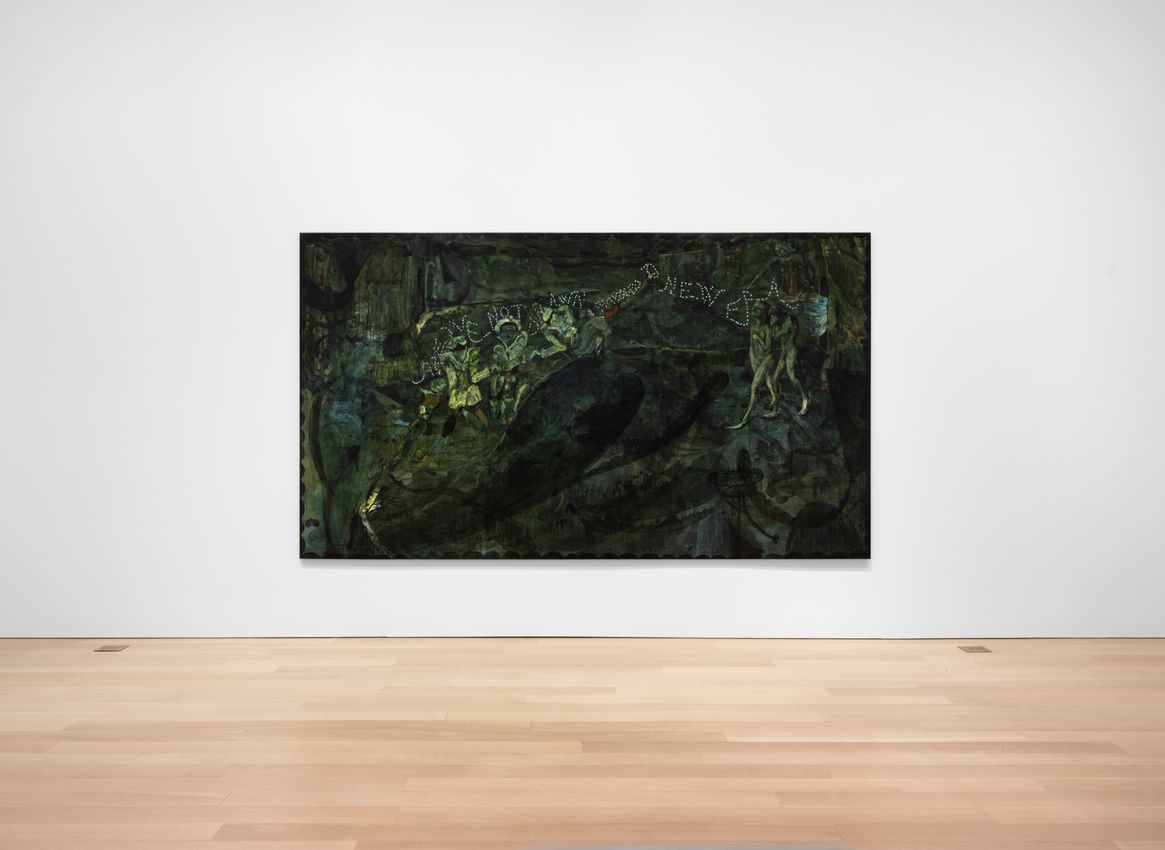
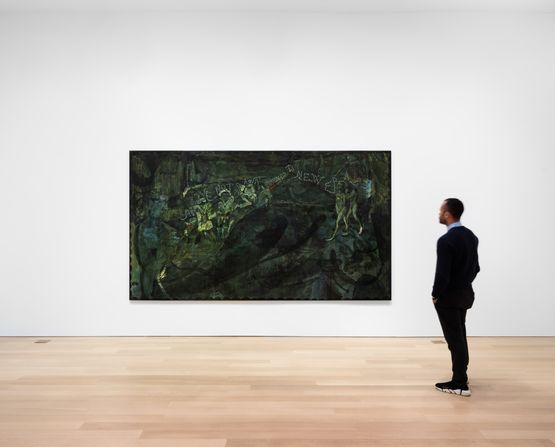
The first painting created for the exhibition, also its largest, is titled after the longest palindrome in the English language—Are we not drawn onward to new era—and features the figures of Adam and Eve taken from Masaccio’s early Renaissance fresco The Expulsion from the Garden of Eden. The work seems to suggest that we are unable to access a new era; we remain exiled from the garden, destined to wander in the shadows, half-shadows, and uncertain transparencies of Castelli’s masterfully applied oils.

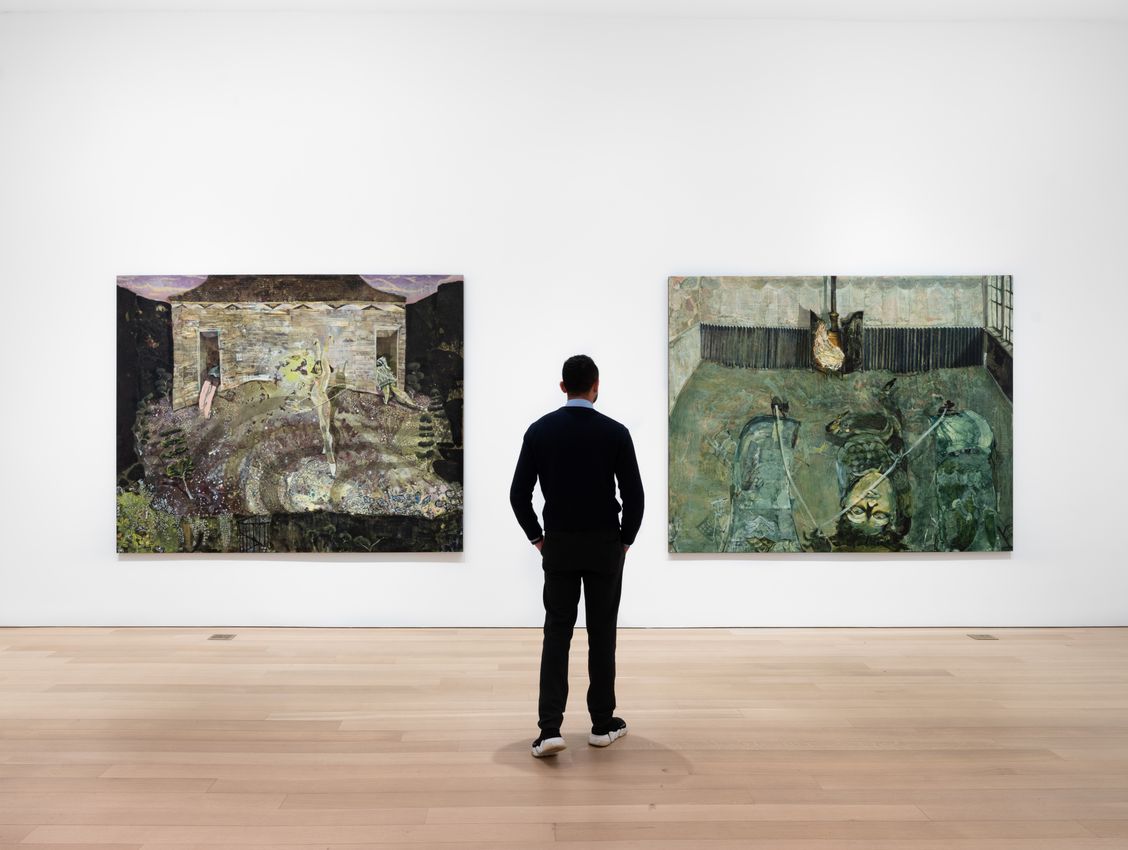
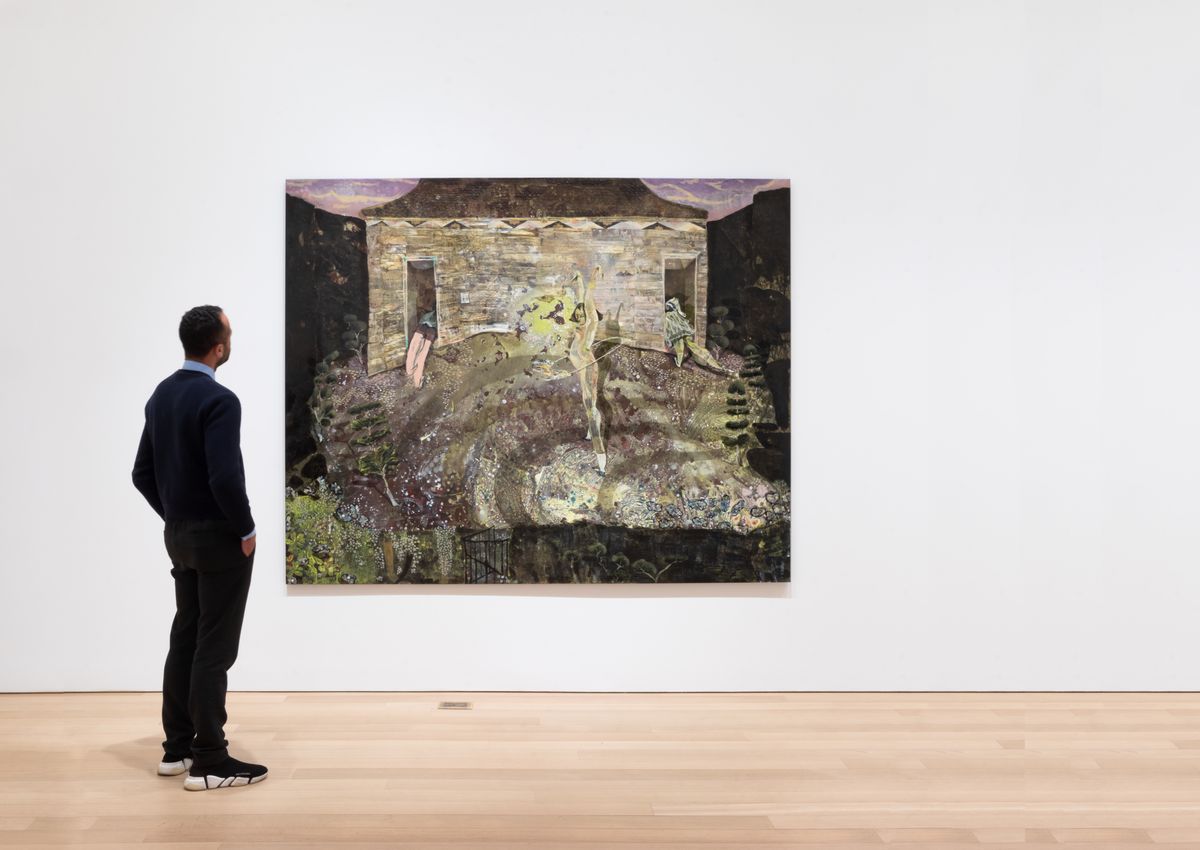
The reversibility of the palindrome finds an echo in the circular composition of A house is not a home, the last work that Castelli painted for the exhibition, in which indeterminate figures appear to circuitously enter and exit a building nestled within a blooming and verdant garden, where a third figure plays with a flaming hoop. Fitting perhaps with the themes of instability and uncertainty that the canvases exude, this circularity finds resonance not only in the resignation of Thomas Beckett’s existentially absurd exhortation, “Try again. Fail again. Fail better”, but also suggesting the possibility for redemption, rebirth, and hope. In Castelli’s words: “One can always find ways of coexisting with uncertainty, and in this sense that is a happy ending. These works are representations of such attempts.”

Guglielmo Castelli (b.1987, Turin, Italy) lives and works in Turin.

His recent solo exhibitions include Calm act in a closed room, Mendes Wood DM, Brussels (2021); Ornate Impotence, The Cabin, Los Angeles (2020); Sia inteso come tutto ciò che non pesa, Fondazione Coppola, Vicenza (2019); Goodmorning Bambino, Künstlerhaus Bethanien, Berlin (2018). Select group exhibitions include Fifteen Painters, Andrew Kreps Gallery, New York (2021); Grand Opening, Galerie Rolando Anselmi, Rome (2020); The Hawt Show II, Atina (2020); and The Italian Open, Galerie Rolando Anselmi, Berlin (2019).

His work has been featured in several institutional exhibitions, including Expressioni, Castello di Rivoli Museo d’Arte Contemporanea, Rivoli (2022); 17a Quadriennale di Roma (2020); GAM, Turin (2020); Biennale Internazionale d’Art Contemporain de Melle (2018); Challenging Beauty, Insights into Italian Contemporary Art, The Parkview Museum, Singapore (2018); Recto/Verso 2, Foundation Louis Vuitton, Paris (2018); Intriguing Uncertainties, Museum Of Contemporary Art of Saint-Étienne (2016); and Dittico, Museum of Contemporary Art, Lissone (2016). His work is included in the collections of the Castello di Rivoli Museum d’Arte Contemporanea, Rivoli, Italy, and the Blenheim Art Foundation, Woodstock, UK.

Read More

Installation Views

About the Artist

Guglielmo Castelli (b.1987, Turin, Italy) lives and works in Turin. His iconographic universe questions the relationship between inner and outer space, between bowels and environment, in a close relationship with literature and the world of theatre and scenography, from which he comes. Released from any constraint, figures slip and overlap on either neutral backdrops or unfamiliar landscapes, challenging the blurred boundaries of the self and resisting a strict notion and distinction between subject and object. From fluid and wide, brushstrokes coagulate into thick knots portraying melancholy, astonishment and wonder, while characters melt into gentle chromatic accents, suspended in uncertain postures that reflect an unsteady grip on reality.

View Artist Profile

Also Exhibiting at Mendes Wood DM

About the Gallery
Mendes Wood DM was founded in 2010 by partners Felipe Dmab, Matthew Wood and Pedro Mendes with the intent to exhibit international and Brazilian artists in a context conducive to critical dialogue and cross-pollination. Central to the gallery’s program is a concern for regional difference and individuation while fostering cosmopolitanism and collaboration. Inspired by a belief that artistic practices broaden the scope of human agency and have the power to both touch and change the world, Mendes Wood DM cultivates a program premised on conceptualism, political resistance and intellectual rigor.
View Gallery Profile
Address
47 Walker Street
New York
United States
Opening Hours
Tuesday - Saturday
10am - 6pm
(1)
New York 47 Walker Street
Mendes Wood DM
47 Walker Street, New York, United States
+1 212 220 9943
http://www.mendeswooddm.com

Opening hours
Tuesday - Saturday
10am - 6pm
The art world in focus