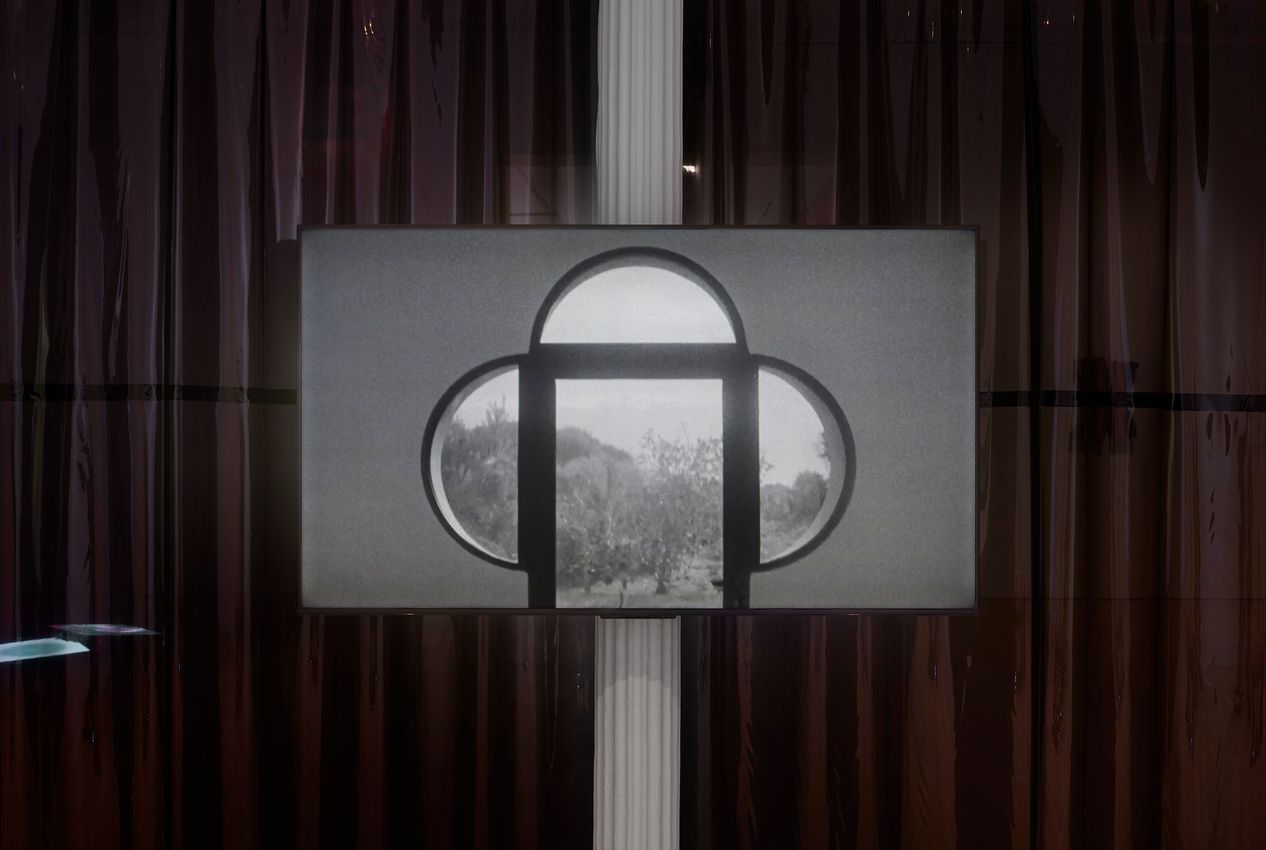




Luiz Roque’s videos are transmissions from an alien planet. Or, if you prefer, they are televised signals from alternate timelines, other possible worlds, or the reveries of the undercommons. With the right technology, we can catch a glimpse of these visions. The sculptural edifices that sometimes tend to house Roque’s works resemble monoliths designed to tune into these frequencies; they strike us as artefacts left behind from another civilisation, one much like our own yet uncannily dissimilar. Here, Roque’s video installations comprise a series of portals – to different universes, to zones of temporal strangeness and encounter, to transformed perceptual maps of the world.
Holes threads together themes that recur throughout Roque’s career. The exhibition draws from his interests in filmic depictions of the natural world – whether abstracted into sheer form or anthropomorphised as in a wildlife documentary. It dissolves stable boundaries of embodiment and subjectivity, foregrounding the disordering temporalities that accompany desire. All the while, it relishes in the medium of video art itself, summoning the site-specific historical significance of this art form’s special relationship with New York City. This is, after all, where artists such as Shigeko Kubota, Vito Acconci, Nam June Paik, and Joan Jonas honed their craft.
Like some of these early pioneers, Roque too seeks flight from the enclosure of the museal black box; he stresses mobility, movement, and flux. For him, the hole seems to symbolise an escape route for video art, a portal leading outside the subjugating spatial grid of the theatre. This is one way to think about the preponderance of orbs, spheres, and circles throughout the exhibition – shapes which rhyme with the hole. These shapes recall works such as República (2020), which, screened in a circular format, is perhaps his most overt challenge to the conventional presentation of video. And if the hole evokes the aperture of the camera, it also alludes to sites of receptivity on the body – the myriad sites, perhaps, where the multisensory medium of video art might awaken us to unexpected pleasures.
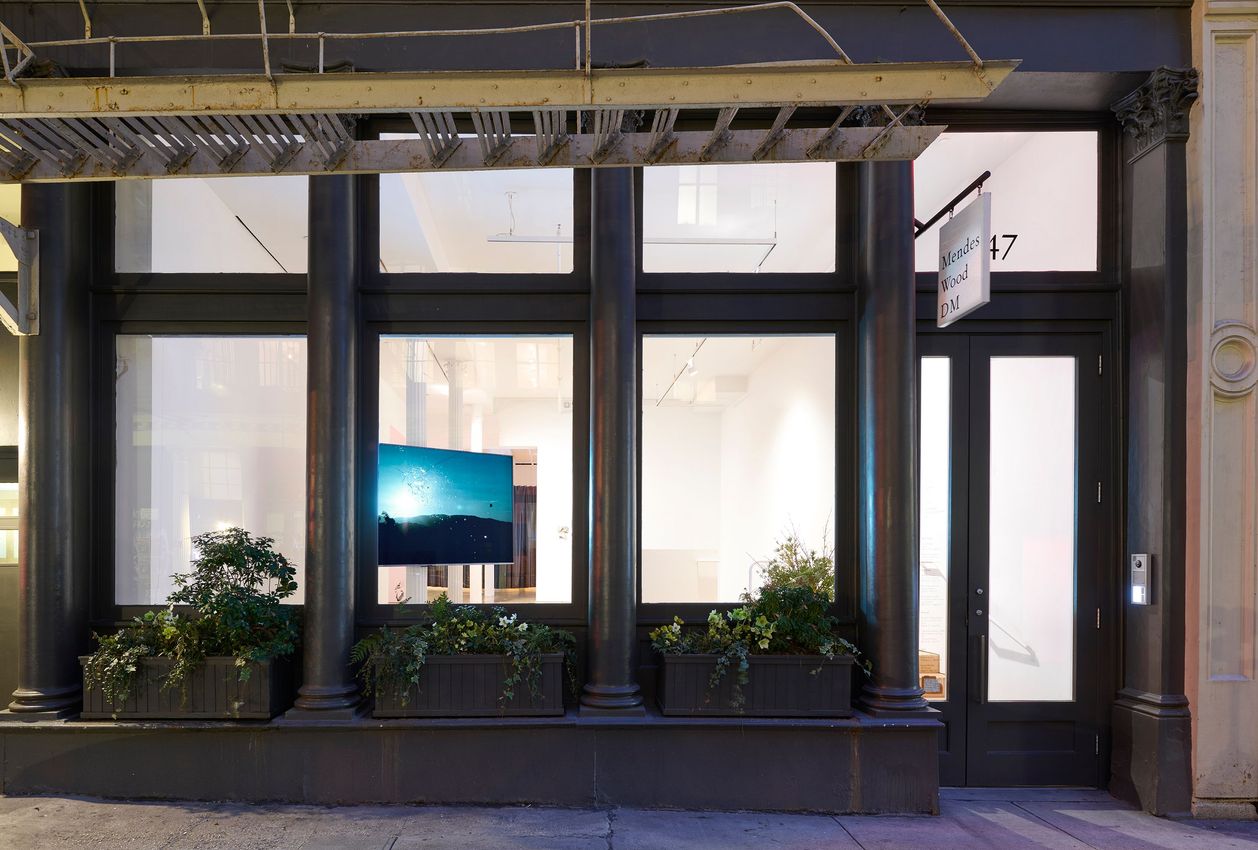
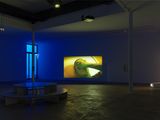
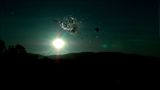
Passersby on Walker Street will spot a vast screen upon which a glass plane shatters in slow motion. This is Roque’s invitation to the exhibition and a nod to the visual language of New York itself. At first, the work Projection (2012-2025) seems enmeshed with the hyperstimulating visual field of the city – window tableaux, Times Square advertisements, and, most recently, subway video screens snag our attention at all turns. Intriguingly, although an orb pierces the glass plane of the video, nothing about the image of the sunset landscape behind it seems to change as this overlay falls to pieces. Or does it? Roque hints that our ordinary sense perception is filtered from the outset, even if such mediations are invisible to the naked eye. He plays with the format of video itself, giving us screens within screens, flat surfaces that dissemble and disassemble. Video, for Roque, refreshes our ways of looking.

Roque accomplishes these perceptual reboots by appropriating the tropes, technologies, and visual rhetoric of science fiction. As a genre, science fiction tends to centre on a core concept or idea that can generate an entire world system. Such concepts are the seeds from which Roque’s works blossom: Heaven (2016) conjures a situation in which a virus spreads through hormones used by the transgender community, while Zero (2019) presents a world full of glittering skyscrapers and jets yet devoid of human life. In the words of Fredric Jameson, the recently passed American philosopher, science fiction is paradoxically literal despite its fabulations: it employs visuality “not to represent the world but to represent our thoughts about the world.”[1] Put differently, science fiction gives form to abstractions.
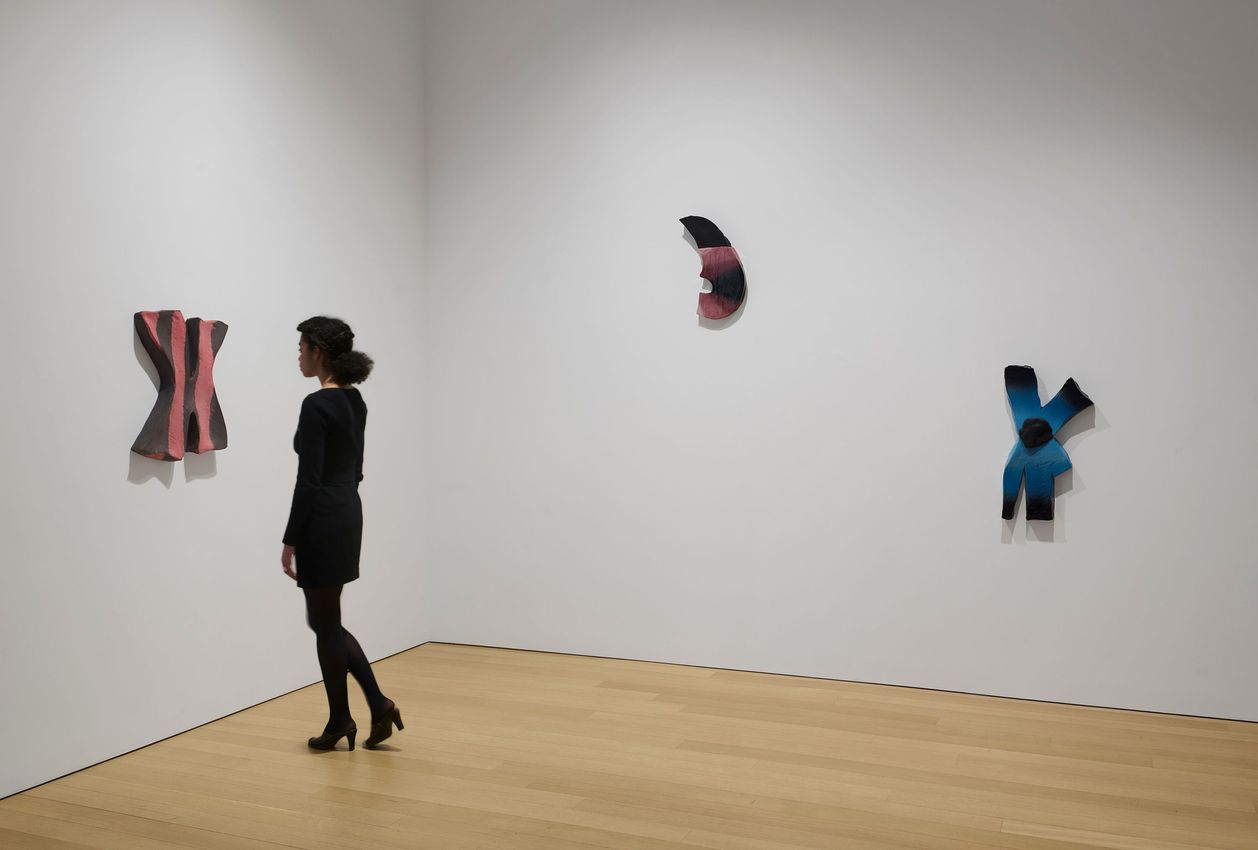
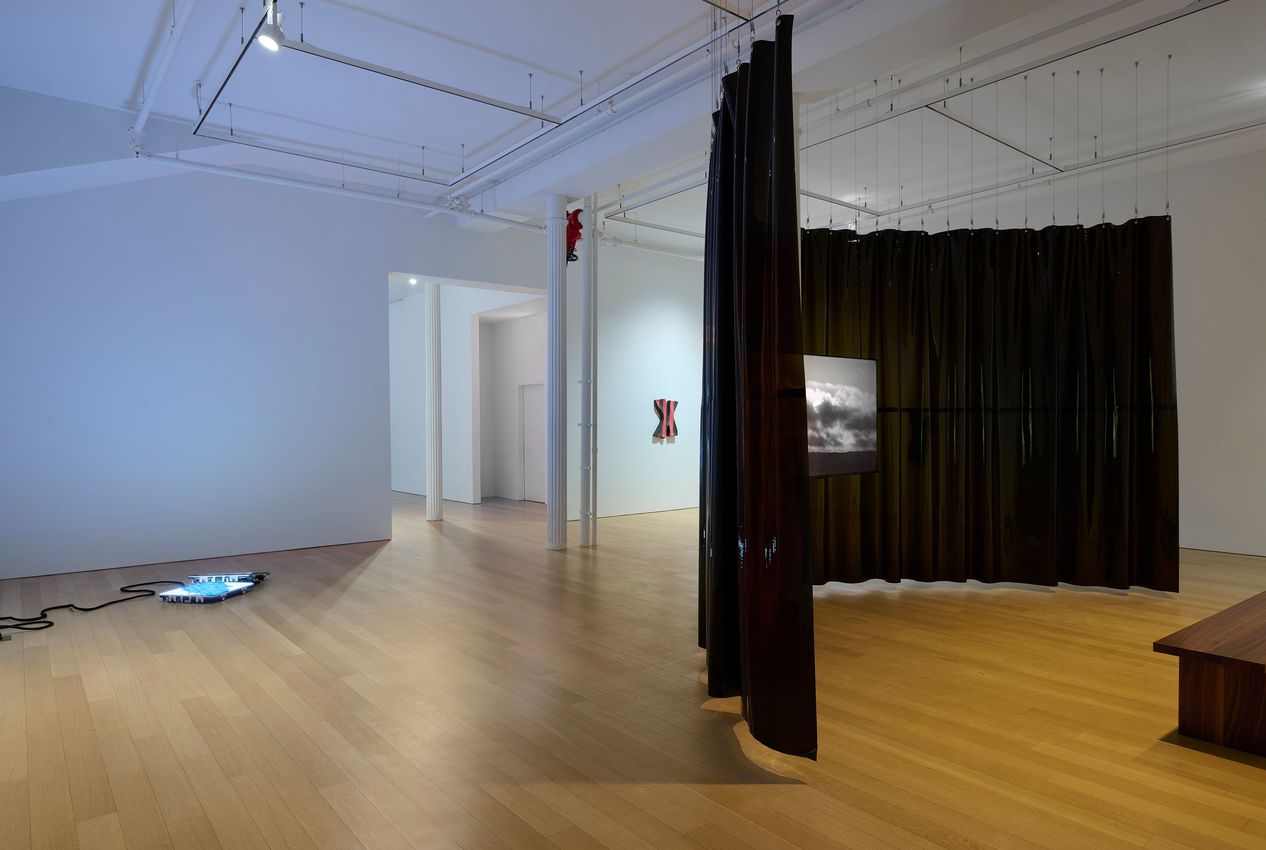
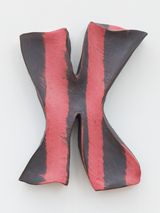
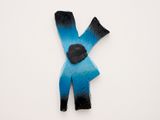
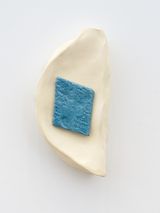
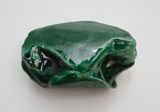
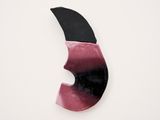
In this light, Roque’s sculptures rhyme with his films.: Both practices mould ideas or concepts into visual propositions; both invite us to consider the manifold and delightfully strange forms that subjectivities might take. Named after familiar objects and entities yet Martian in their geometry, these works paraphrase organic life; consider them abbreviations of human energies. Toilet (2024) resembles its namesake – and perhaps slyly summons Duchamp while discarding the reference in the same gesture – yet its multiple, drain-like holes could equally be a set of eyes. Meanwhile, on other works, ceramic glaze may start to remind us of makeup on a contoured face.
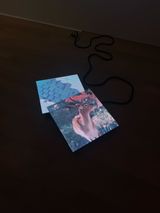
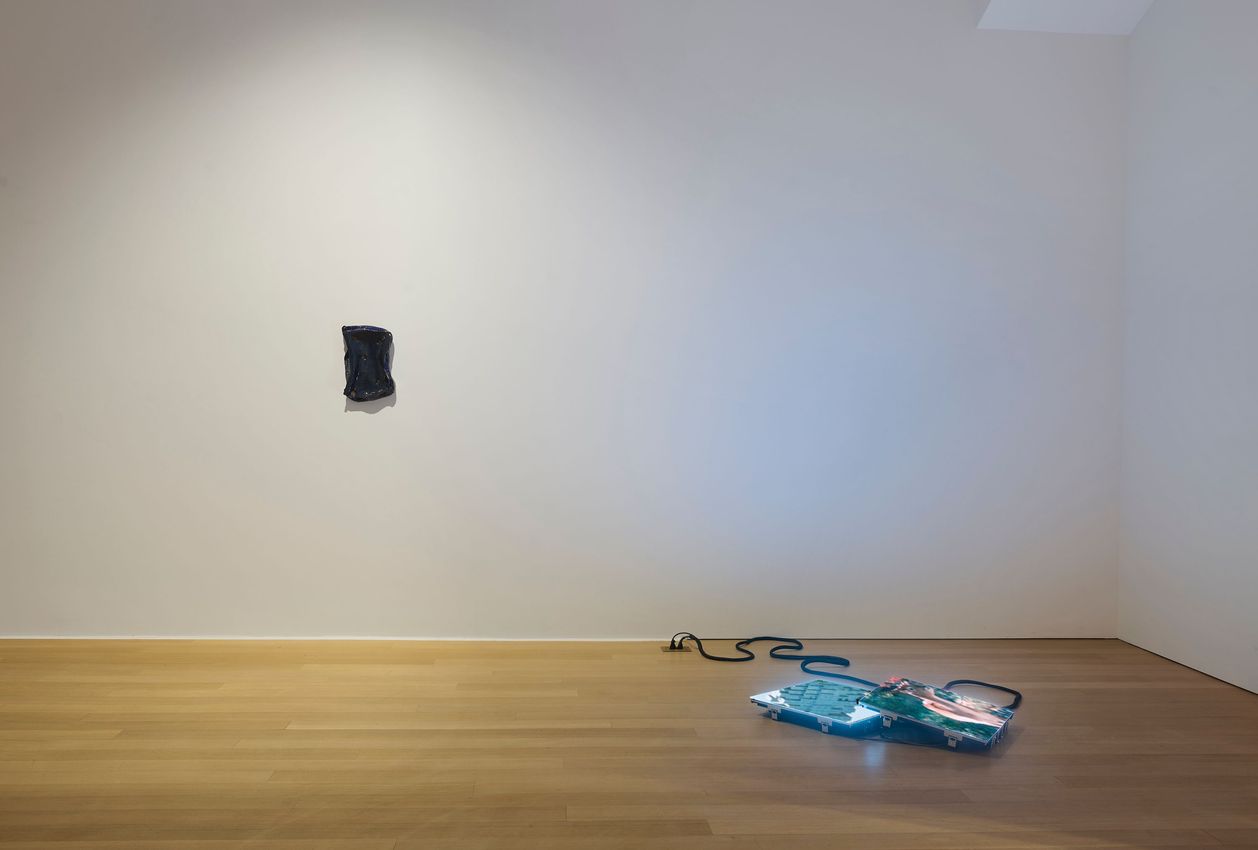
If we understand Roque as an artist mining sci-fi for its capacity to picture theory, we can fully appreciate Clube Amarelo (2024) and Paradise __(2025), a new work for this exhibition. Distilling Roque’s visual grammar of loops, repetitions, and striking images to its most condensed form, Paradise consists of two connected square monitors stacked on top of each other on the floor, each displaying a distinct video. One monitor displays an iconic feature of the neighbourhood skyline: the towering residential skyscraper at 56 Leonard Street, designed by the Swiss architecture firm Herzog & de Meuron and nicknamed “the Jenga Building” for the stacked appearance of its apartment units. Ever attuned to the global afterlife of Modernism, Roque has zeroed in on these cantilevered open plan spaces, which float in mid-air untethered to the earth below them. The image of the building spins, evoking at once the oddly transfixing repetitions of a computer screensaver as well as the opening of a vortex or portal. Slipping through this spiral, we are teleported to the unexpected scene displayed on the sister monitor: a lovely video of grazing deer.
Veado means “deer” in Portuguese, and in Brazil, it functions both as an epithet for queer men as well as an intracommunity term of endearment. Functioning as a kind of shibboleth, the video initially appears to offer us an image of a queer idyll in contrast to the dizzying urbanism of 56 Leonard. Yet as the linguistic ambivalence of veado itself suggests, there is something uneasy about the relationship between these two video feeds. The natural world is threatened by the forms of extraction required to construct skyscrapers, those testaments to human virtuosity that equally register the cyclical processes of capitalist accumulation. Still, the urban environment has proliferated queer social forms that break with convention, offering its own kind of “paradise” to the marginalised. Featuring monitor cables that resemble tails, Paradise blurs the lines between the natural the technological and unsettles any simple binaries.
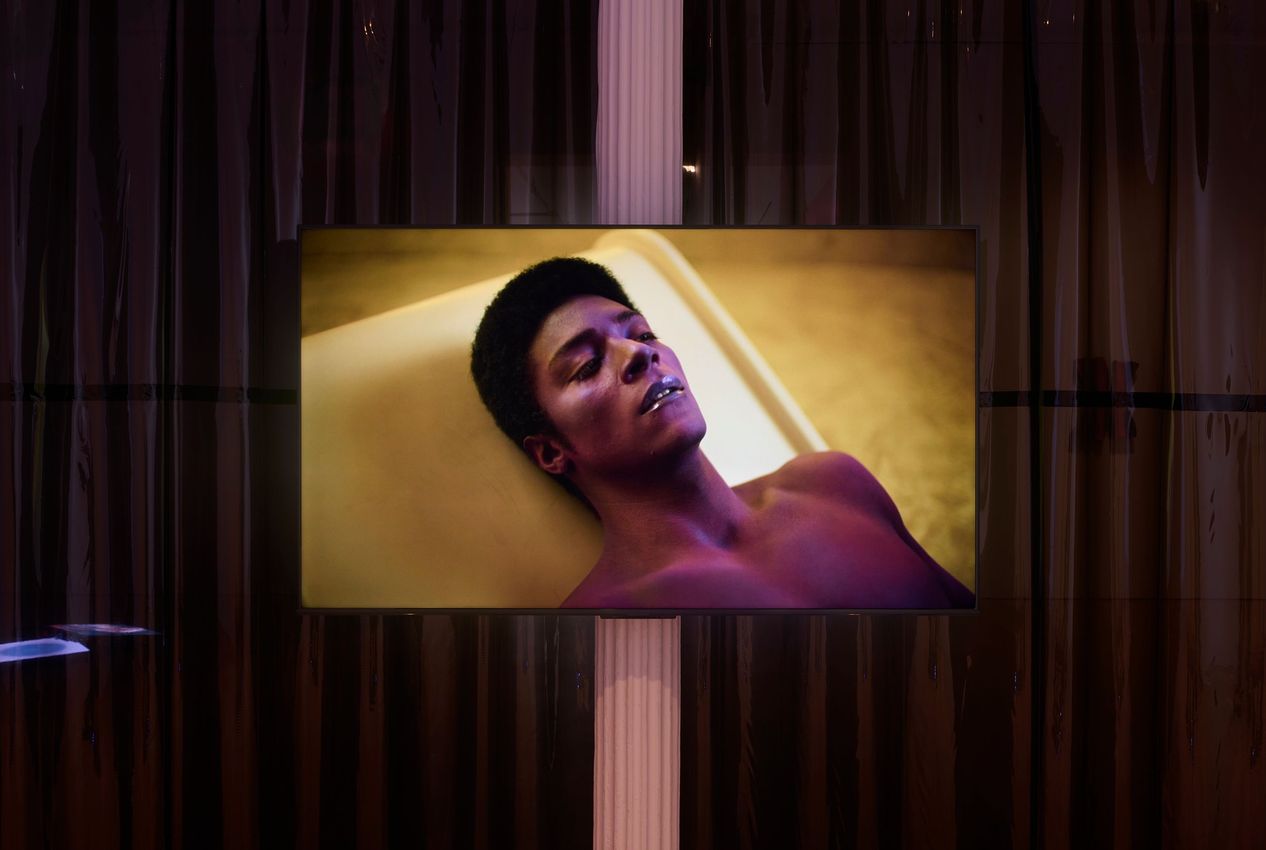
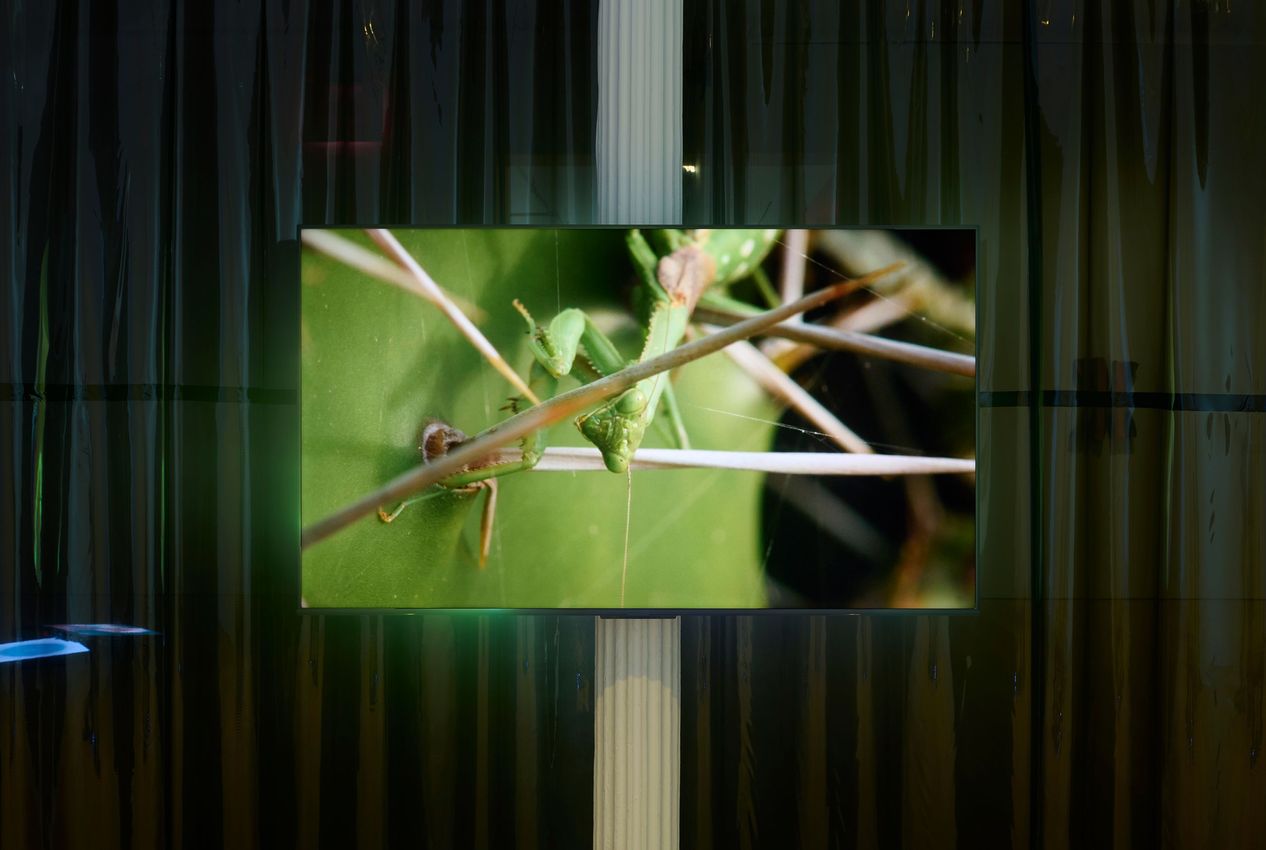
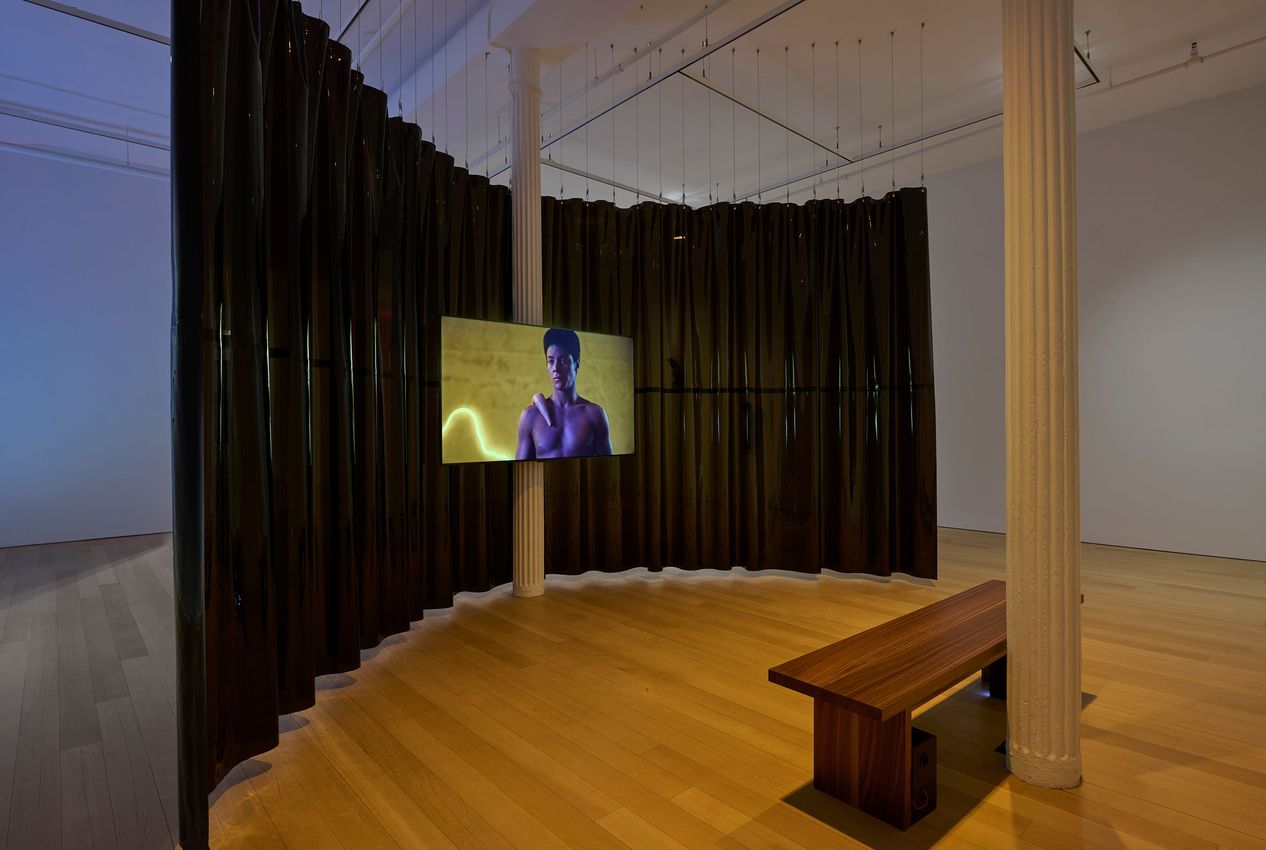
At the back of the gallery, _Clube Amarelo___ (2024) stars humanoid aliens, figures that allow Roque to explore queer configurations of bodies and pleasures. We glimpse exterior shots of a starkly geometrical building in a time that confounds day and night. Before long, the camera is drawn through the club’s doorway as if caught in the gravitational pull of a black hole, and we seem to leave this world behind as we pass through the darkened void. The suggestion is that we are about to embark upon an interior journey where lines between the matter of the unconscious encroaches upon waking life. Now, serial images of an orgy proliferate across the screen, limbs jumbled and infinite. Cut to the next shot, and it seems that this may have been the reverie of the green-skinned being in repose on a lounge chair. Does she long to join the throng? Or, like the praying mantis she imagines, does she harbor aggression toward her potential mates?
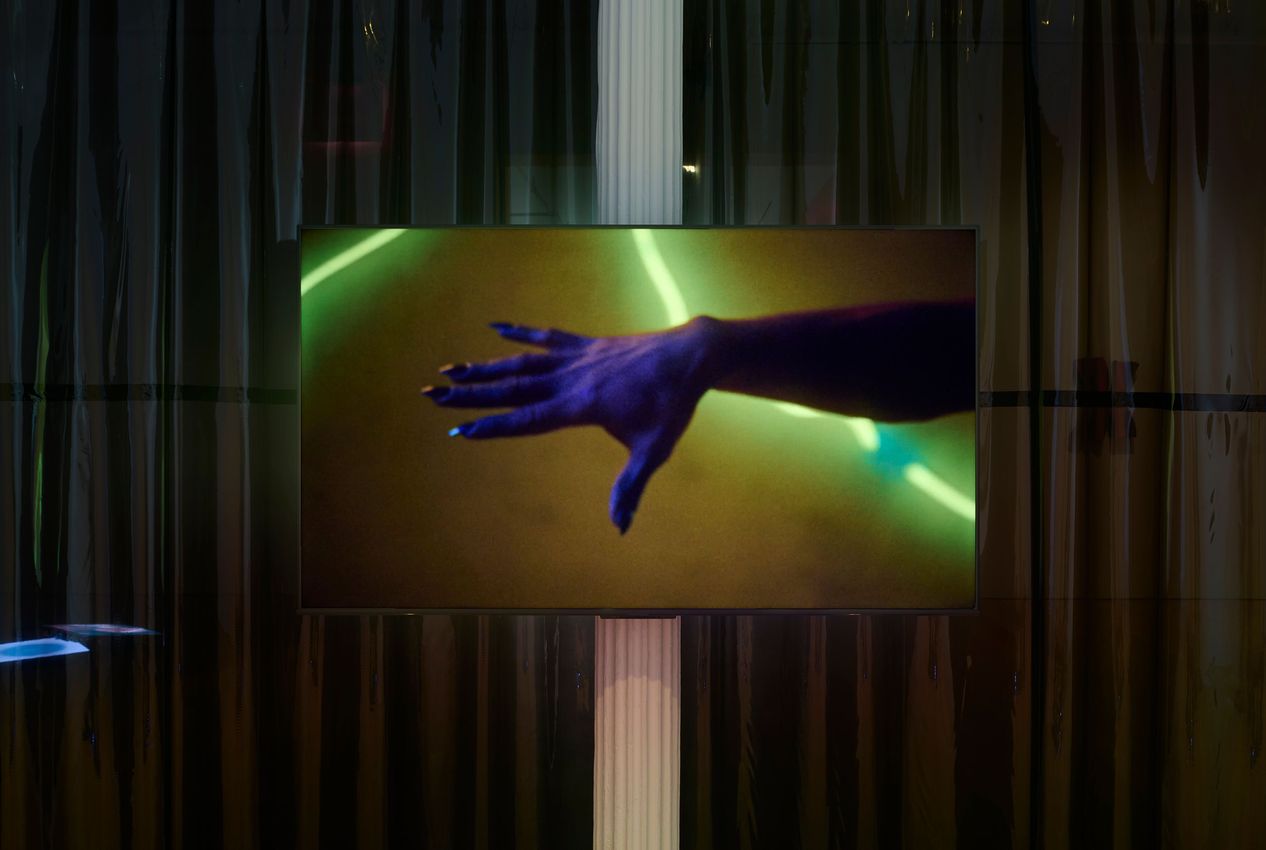
Perhaps more like a nightclub than a spa, Clube Amarelo is where ecstasy meets terror. We witness a purple-skinned being encounter his double, who, before long, reveals his alien difference: a long, thick tentacle, its faintly translucent skin resembling a grub and its appearance an homage to the practical effects for which sci-fi is known. Slowly yet insistently, this tentacle advances toward our protagonist before strangling him. His gasps, however, are indistinguishable from moans of pleasure, and we cut to repeated shots and poses, as if this moment of jouissance shatters any semblance of linear time. The film could be read as an allegory for our destabilising attraction to the unfamiliar, to the estrangement of the self that accompanies transformation. Will we like what we become, relish what happens to us, when we seek pleasure or embark upon the transformations of our bodies? Could our attraction to the other really be a sublimated fantasy of the reformatting of our own identity?
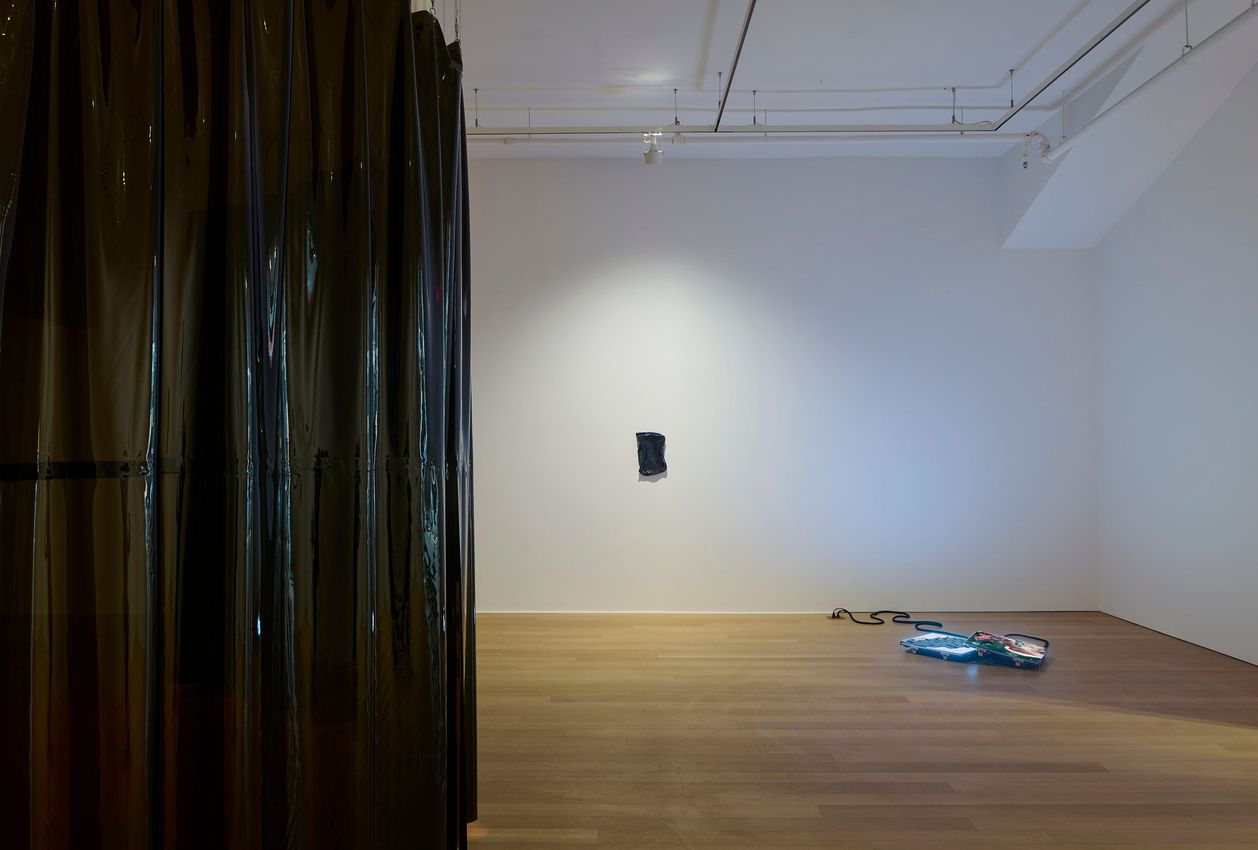
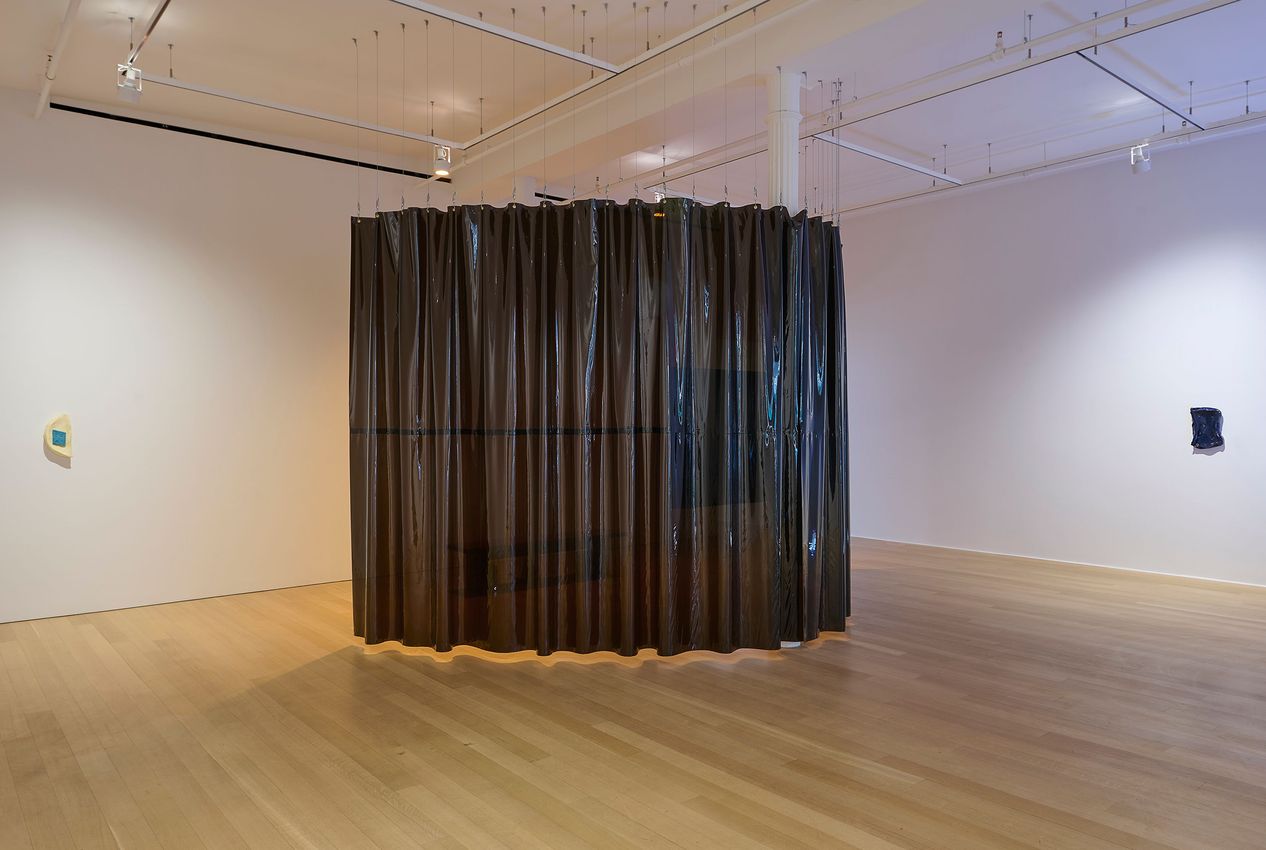
Questions such as these proliferate throughout Roque’s work, where clear boundaries will not be found.He does not allow – or want – his viewers to melt into the anonymising, subjugating space of the black box. Do you wish to enter Clube Amarelo? Step around this rubbery curtain and gaze at the screen. Curtains normally cleave the stage from the audience or the museal viewing room from the white cube exterior. This one, however, calls attention to its own materiality, its own presence as something that permits viewing at the same time that it cordons it off. Roque wants to offer alternative scenes of artistic reception, modalities that might change the arrangements of bodies in space and circuits of affectivity and sensation. If works of science fiction materialize such transformations, so do the queer cultures that Roque so frequentlycites in his work. They are, for him, zones of encounter that might unsettle our familiar ways of seeing, feeling, and knowing. They puncture holes in the forcefield of the here and now.
Attracted by the power of image and, in particular, by sensations that stem from the sense of vision, Luiz Roque’s work crosses different territories, such as the genre of science fiction, the legacy of Modernism, pop-culture and queer bio-politics, in order to understand the propose ingenious and visually sensual narratives. The plasticity of the allegories he uses in his films takes us through the current conflict between technological advancement and contemporary micro and macro power relations.


A respected voice in contemporary art discourse.
Focusing on ambitious storytelling and insightful art-world commentary. Ocula Magazine publishes in-depth interviews, critical essays and timely analysis on the artists, exhibitions and ideas driving the global art world.
Learn more about Ocula Magazine
Showcasing the best of the art world.
Ocula partners with galleries from around the world to highlight their artists, artworks and exhibitions. Gallery membership is by application and invitation, with each member vetted by an independent panel.
Learn more about Ocula Membership

Specialises in the sale of major artworks.
Led by a team with deep ties to the world’s leading auction houses, galleries and collectors. Ocula’s advisory team offers bespoke services to high-net-worth clients from around the world who are looking to acquire the best of contemporary and modern art.
Learn more about our team and services