’Water shakes the rain from rooftops
That of ivy castles
It was green – water churned.
__
There were draperies
Ancient stem garrison
Hidden hearts of Mélusines
Beneath muffled blooms.
Never had the evening star
Revealed such enchantment
There was no longer night nor day.
A long beat a long wing
Terrifying.’
Valentine Penrose’s “Gilles de Rais”, Les Magies, 1972.
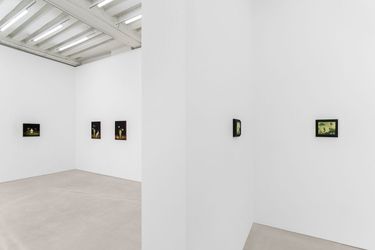
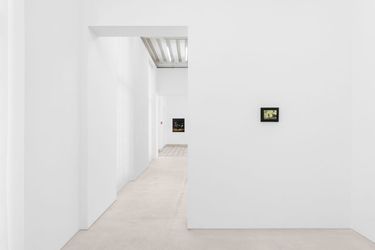
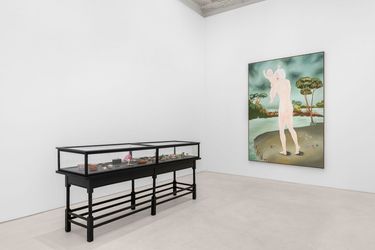
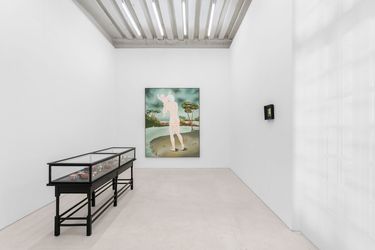
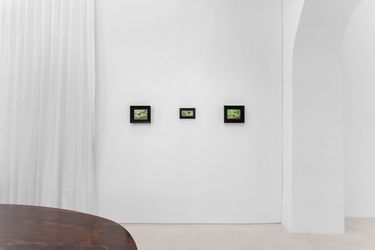
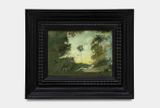
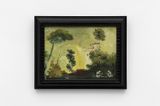
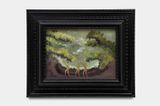
In the early 1960s, the French surrealist novelist, poet and artist Valentine Penrose, fascinated by serial killings and the bloodthirsty characters of history, began exploring the biographies of French Baron Gilles de Rais and the Hungarian countess Erzsébet Báthory. As she probed the dark and possessed soul of the latter, she delved deep into her madness and her cruelty, revealing the fascinating horror of her destiny. In a similar vein to Penrose’s compelling writing, Sanam Khatibi’s practice – which encompasses paintings, embroideries, tapestries, sculptures, objects and installations – oscillates between a fascination for human violence and the macabre, and the flamboyant representation of an idyllic nature bathed in soft light and lush with vegetation. Her works explore themes of animality and primal instincts, making us tread that fine line between fear and attraction, chaos and seduction.
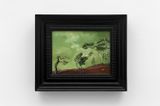
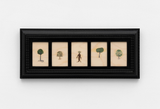
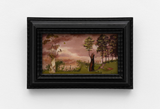
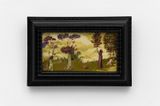
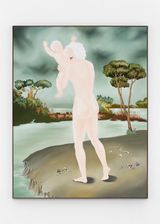
Sanam Khatibi’s work conjures first and foremost an art of paradox, where domination and submission, control and release are fervently intertwined. Here power, violence and sensuality blend and blur into each other, weaving together tales of confrontation between human and animal, instinct and reason, cruelty and desire. At the core of her artistic practice is an exploration of power dynamics and of the tension between triumph and failure. Her attraction for what terrifies her manifests on the surface of her canvases in the form of the small snakes that punctuate many of her works – creatures that inspire both fascination and phobia in her. Khatibi’s inclination for paradox is also embedded in her aesthetics, and she plays with a visual tempo that is both unsettling and hypnotic, where fluid compositions and stark contrasts create a fluctuating rhythm between tension and lightness. The animal and human figures she depicts are often caught in metamorphosis and reinforce that dynamic, lending an organic, almost visceral cadence to her works. Lastly, Sanam Khatibi’s canvases are composed with a skilful interplay between the representation of a vast natural landscape, embracing us with its branches, and the presence of minuscule objects nestled within it – small porcelain figurines, ivory skulls, teeth, insects, etc.
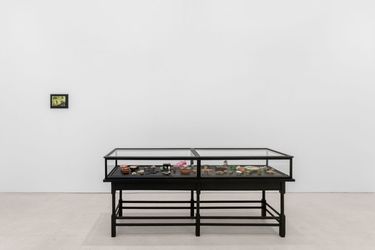
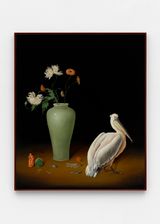
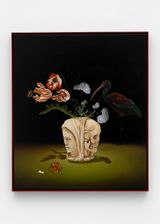
The artist’s works seems imbued with the primordial importance she places on objects and their representation. Having grown up with a mother who was an avid collector of antiquities, she inherited, upon the latter’s passing, a vast collection of objects including Chinese and Japanese porcelains. These frequently come to life on her canvases, operating a sort of mise en abyme of the personal and familial memory tied to such objects. Here, jugs lie abandoned on the side of a path, spilling out their liquids – or perhaps their blood – against a diluvian backdrop.
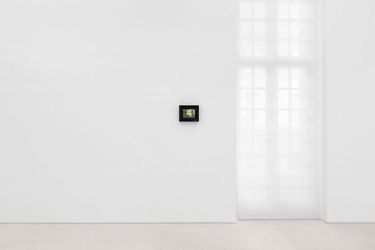
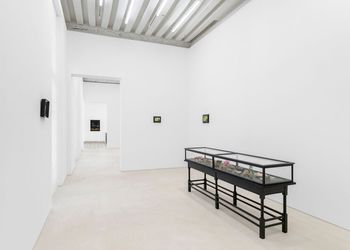
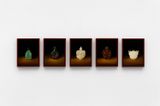
Visiting Sanam Khatibi’s studio is like stepping into an actual cabinet of curiosities in which vases, phalluses from West Africa, vanities and other treasures she amassed blend together haphazardly. This dual role of artist and collector only makes sense once we understand that mysticism and spirituality permeate the artist’s entire body of work. Indeed, she seems to believe in the precious symbolic power of objects and in the ritualistic force they inspire. A series of small paintings depicting intricately carved, vial-shaped Chinese snuff boxes is thus titled Amulets and functions like offerings of sorts, while the miniature objects mentioned earlier seem to form a protective ensemble against the evil eye.
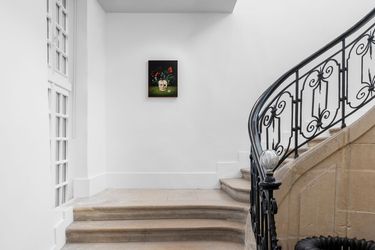
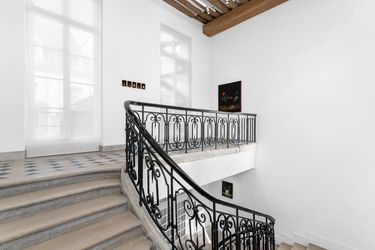
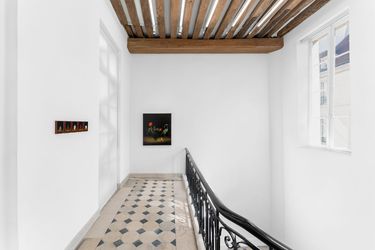
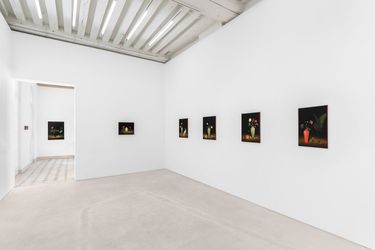
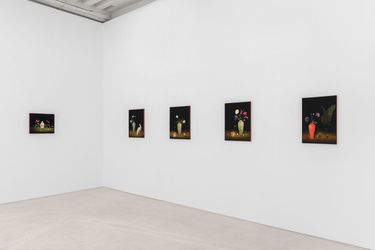
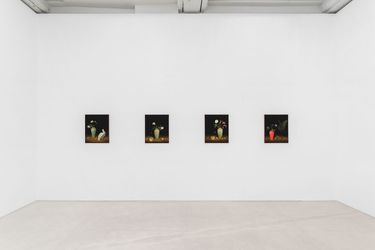
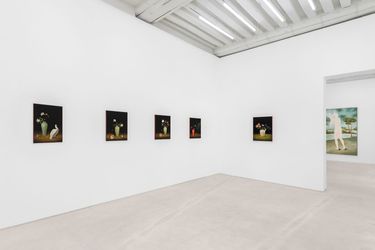
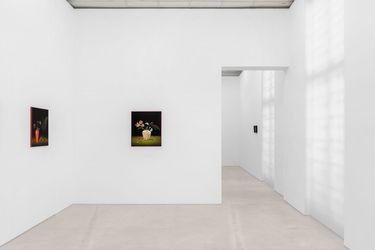
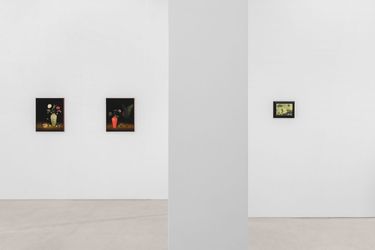
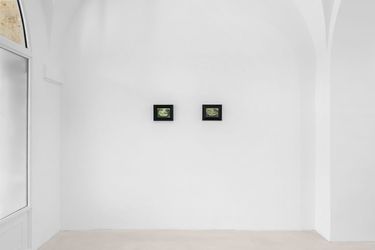
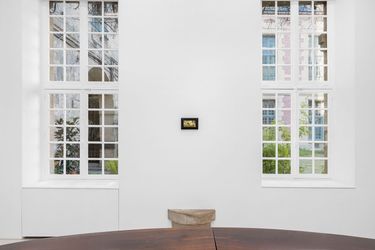
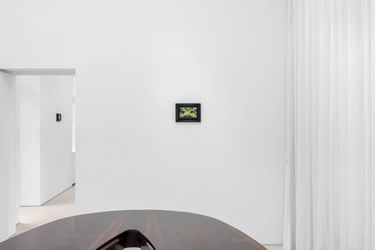
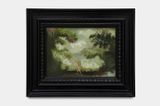
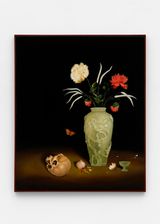
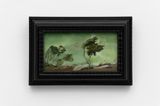
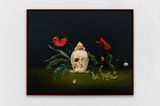
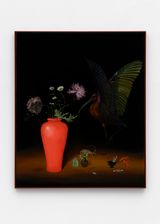
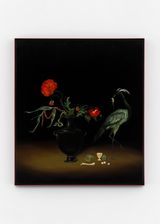
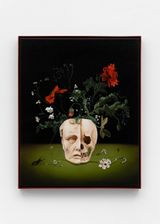
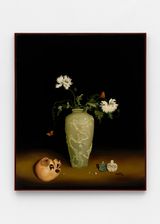
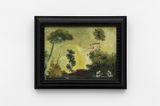
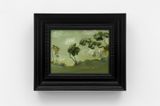
The still lifes presented in the show reflect the myth of nature as a destructive force. Disproportionately sized poppies emerge from two-faced vases – part human, part skull – evoking the duality of life and death. Animal life always plays a central part in Sanam Khatibi’s compositions, often represented alongside human counterparts. In these still lifes, birds – ibises or snake-birds – linger around the vases, and recall the artist’s interest in birds and predators, having herself trained as a falconer. The influence of Japanese art is also deeply felt in her work. The glossy finish of her paintings, in particular, is reminiscent of Japanese lacquerware, or shikki, a craft used to decorate objects as diverse as prints, buddhas or bento boxes. The reference to Renaissance painting and its use of chiaroscuro, meanwhile, is heightened by a palette of dark, moody tones: here, the dusky purples of earth and sky merge with the deep bottle green of foliage; elsewhere, the brown of the table turns into a dazzling black.
The lingering sense of danse macabre in Sanam Khatibi’s paintings reminds us that death is inseparable from life and that, while the world is vulnerable, who we are and what we own continue to inhabit our days – and sometimes even transcending our own existences.
– Martha Kirszenbaum


Sanam Khatibi’s work explores notions of animality and the primal impulses that we all share. At the core of her practice is a questioning of our relationship with power structures, and the duality of triumph and failure. The recurrent themes that feature in her work are chaos, destruction, excess, loss of control, domination, and submission. Khatibi is also interested in the thin line that exists between fear and desire, and how closely they are interrelated.Her subjects live on their impulses, set within alluring, exotic, and dangerous landscapes. Wildlife and animals are an integral part of her practice, and her figures are often depicted within the same plane as the flora and fauna. Power, violence, and sensuality mingle, intermix, and overlap with each other ambiguously, giving rise to multifaceted scenarios that juxtapose the animal and the human, past and present, cruelty and seduction.


A respected voice in contemporary art discourse.
Focusing on ambitious storytelling and insightful art-world commentary. Ocula Magazine publishes in-depth interviews, critical essays and timely analysis on the artists, exhibitions and ideas driving the global art world.
Learn more about Ocula Magazine
Showcasing the best of the art world.
Ocula partners with galleries from around the world to highlight their artists, artworks and exhibitions. Gallery membership is by application and invitation, with each member vetted by an independent panel.
Learn more about Ocula Membership

Specialises in the sale of major artworks.
Led by a team with deep ties to the world’s leading auction houses, galleries and collectors. Ocula’s advisory team offers bespoke services to high-net-worth clients from around the world who are looking to acquire the best of contemporary and modern art.
Learn more about our team and services