Press Release
One of Indonesia’s foremost contemporary artists, Heri Dono’s prestigious career over the past three decades has won widespread international acclaim. Voyage Trokomod, his large-scale installation depicting a hybrid of the Trojan Horse and Indonesia’s endangered komodo dragon species in the form of a wheeled warship, occupied the Indonesian Pavilion as one of the highlights of the 2015 Venice Biennale. He has participated in hundreds of exhibitions the world over to date, and his accolades include the  Prince Claus Fund Award (1998), the Unesco Prize (2000) and Anugerah Adhikarya Rupa (Arts Award) from the Indonesian Government (2014).

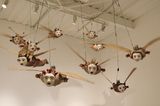
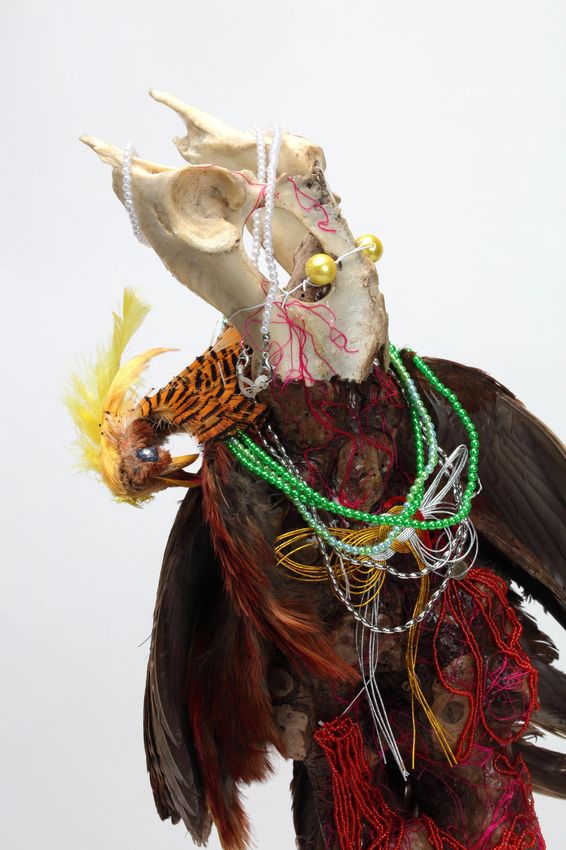
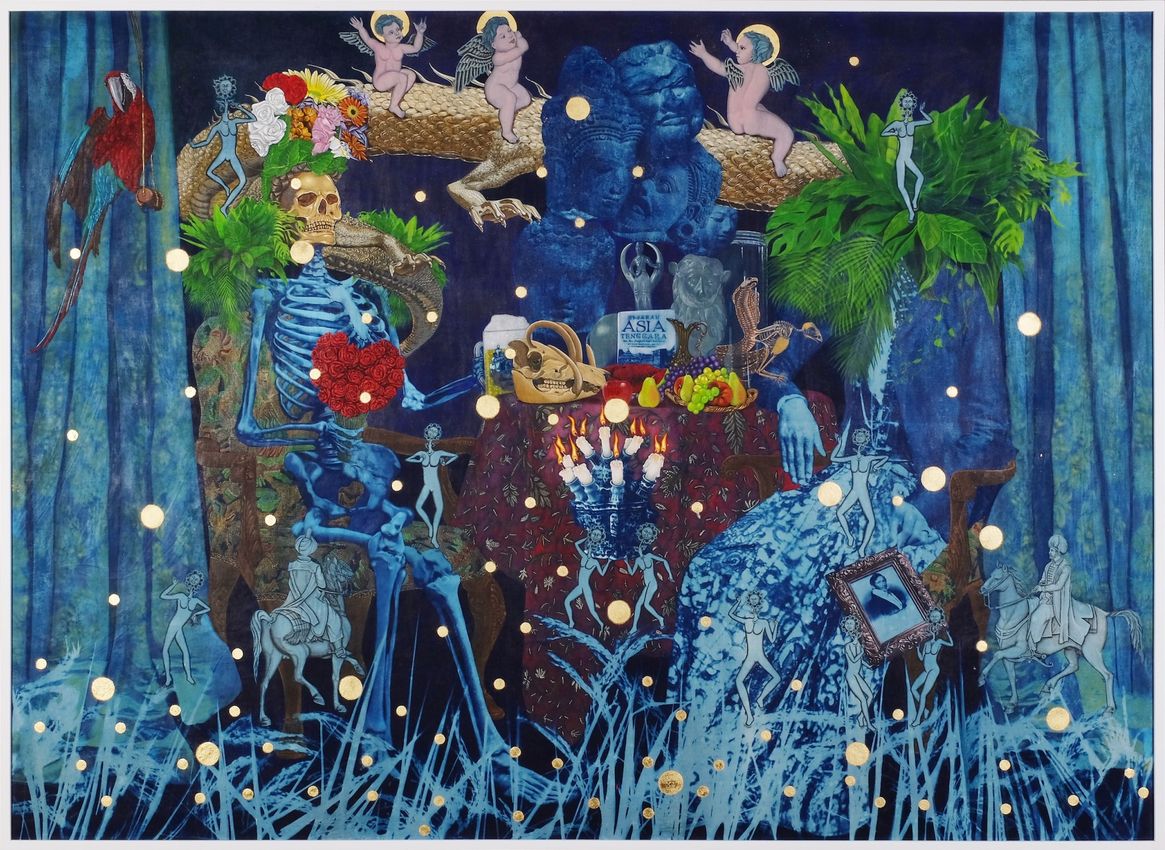
HERIDONOLOGY refers to the influences and themes that construct Heri Dono’s unique visual language and narratives which manifest in his paintings, kinetic sculptures, installations and performances. Heri Dono is known for incorporating elements of traditional Indonesian art forms into his work, including aesthetic conventions ofwayang kulit shadow puppetry, having studied under a professional wayang master in order to fuse the idioms of indigenous storytelling with contemporary methods of expression.

The vibrant aesthetics and popular appeal of Heri Dono’s practice is synchronous with its engagement with political concerns: born in Jakarta in 1960, the artist’s personal experience of the former Suharto regime profoundly influenced his works’ underlying societal critique. In this sense, the fantastical monsters, beasts and other characters that populate his compositions may be seen as subversive analogies of figures of power. Military interventions, environmental destruction, and official corruption: all these and more feature in the absurdist landscapes of his darkly humorous allegories.

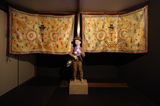
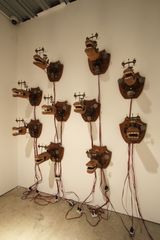
Heri Dono’s long-standing relationship with Japanese art audiences began in 1992, when he participated in the group show “New Art from Southeast Asia” at Tokyo Metropolitan Art Space. The exhibition later travelled to Fukuoka, Hiroshima, and Osaka. Since then he has participated in numerous exhibitions throughout the country. This exhibition at Mizuma Art Gallery will be Heri Dono’s third solo show in Japan, comprising paintings and three major sculptural pieces.

We invite you to explore the science of Heridonology, in which Javanese tradition coexists with contemporary political satire, and which uses humour and storytelling to focus our attention on the underlying questions deserving humanity’s reflection.
About the Artist

Heri Dono (b. 1960, Jakarta, Indonesia) is known for incorporating elements of traditional Indonesian art forms into his work, including aesthetic conventions of wayang kulit shadow puppetry. Having studied under a professional wayang master, he fuses the idioms of indigenous storytelling with contemporary methods of expression. The vibrant aesthetics and popular appeal of his practice is synchronous with its engagement with political concerns as the artist’s personal experience of the former Suharto regime profoundly influenced his works’ underlying societal critique. Heri represented the Indonesian Pavilion during the 56th Venice Biennale, Venice, Italy (2015); and he has participated in several major exhibitions including SUNSHOWER: Contemporary Art from Southeast Asia 1980s to Now at National Art Center, Tokyo, Japan (2017); Kochi-Muziris Biennale in Kochi, India (2018); and Visible Soul: Around the Asia Collection of Benesse Art Site Naoshima at Fukutake House, Okayama, Japan (2019). His works are in the collections of Tropenmuseum, National Gallery of Australia, Fukuoka Art Museum, and Deutsche Guggenheim Frankfurt, amongst many others.

View Artist Profile

Also Exhibiting at Mizuma Art Gallery

About the Gallery

Executive Director Sueo Mizuma established Mizuma Art Gallery in Tokyo in 1994. Since then, the gallery has continuously presented artists from Japan and, increasingly, from the surrounding region whose works demonstrate distinctive sensibilities, unaffected by fleeting stylistic trends.

View Gallery Profile
Address
2F Kagura Building
3-13 Ichigayatamachi
Shinjuku-ku
Tokyo
Japan
Opening Hours
Tuesday – Saturday
12 – 7pm

Closed Sunday, Monday and National holidays
(1)
Tokyo 2F Kagura Building, 3-13 Ichigayatamachi
Mizuma Art Gallery
2F Kagura Building, 3-13 Ichigayatamachi, Shinjuku-ku, Tokyo, Japan

Opening hours
Tuesday – Saturday
12 – 7pm

Closed Sunday, Monday and National holidays
The art world in focus