Press Release

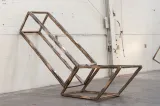
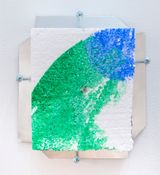
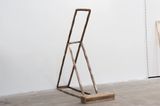
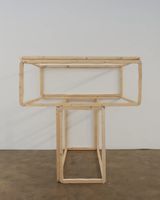
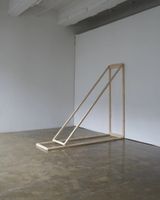
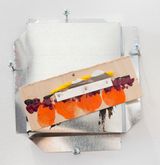
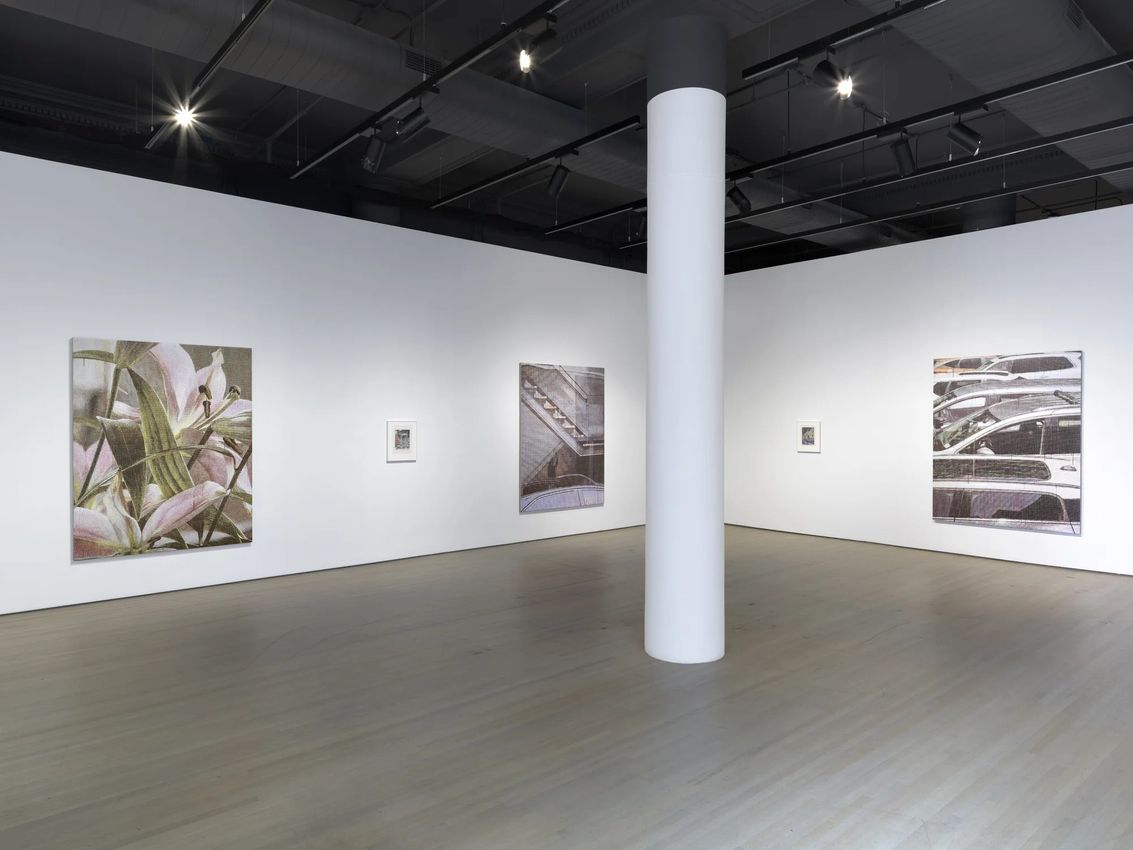
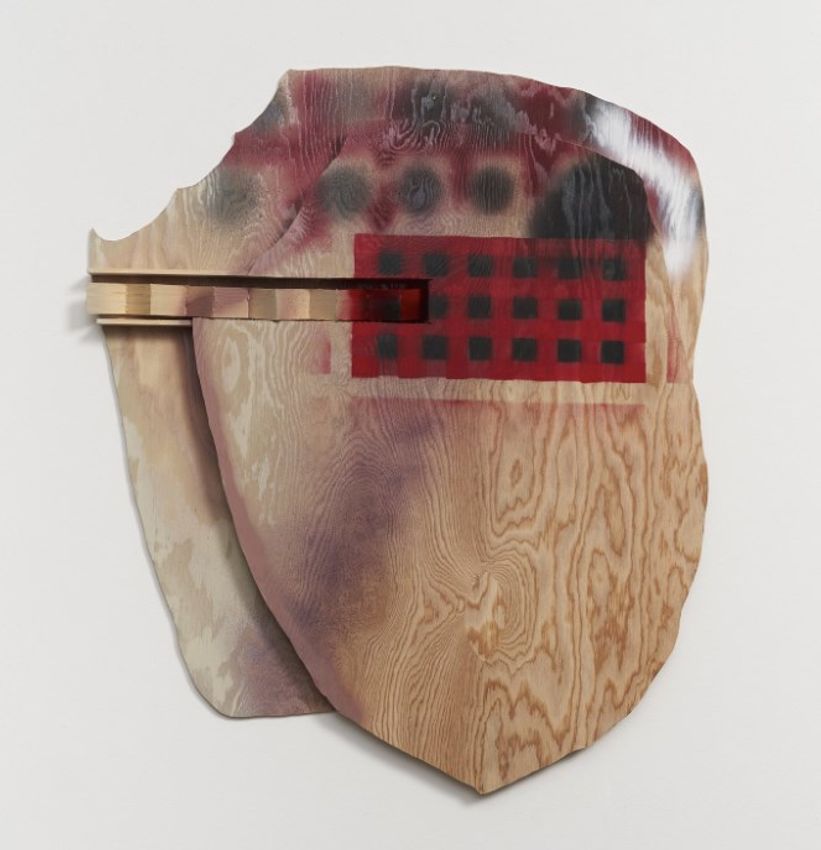
New York-Pace is pleased to announce an exhibition of new works by Richard Tuttle at 510 West 25th Street. Coinciding with Tuttle’s exhibition of ninety-four drawings from the 1970s on view at Pace’s neighbouring headquarters at 540 West 25th Street, this exhibition will feature over twenty new works produced over the summer of 2019 at the artist’s new studio in Maine. Split into three series, ‘Days’, ‘Muses’, and ‘Stars’, these works explore the relationship between what is directly portrayed through picture making and the act of perception. Like all of Tuttle’s work, these new pieces reveal his continuous ability to create a unique visual language that defies categorisation and blurs the boundaries between drawing, sculpture, and painting. Richard Tuttle Days, Muses and Stars will be on view from November 12 2019 through January 11 2020, with an opening reception on Tuesday, November 12 from 6-8pm.

In conjunction with the opening reception for this exhibition, Pace will host a special book signing with the artist in celebration of his forthcoming publication: Richard Tuttle: A Fair Sampling. Collected Writings 1965-2018. The event will take place from 5-7pm at the gallery’s newly opened research library at 540 West 25th street, which holds over 10,000 volumes of Pace’s vast archival materials and catalogues. The 500-page book, edited by Dieter Schwarz, spans Tuttle’s prolific career as both a poet and artist. Published by Buchhandlung Walther König in Germany, the monograph will be released in January 2020. Advance copies of the book will be available at the event.

The genesis for Richard Tuttle Days, Muses and Stars stemmed from his time spent at his recently acquired property in Mount Desert, Maine. His expansive new studio and the vast surrounding landscape energised Tuttle with an influx of new ideas, resulting in one of the most productive and fertile times of his artistic career.

Comprised largely of plywood and spray paint, these new assemblages draw on a range of influences from the nine muses in Greek mythology, after which some of the works are titled, to broader themes concerning nature and the cosmos. In Tuttle’s own words:

‘The entire

Body of work

Was produced

In the summer

Of 2019

After ar

Duous beg

Ginings where

No consis

Tent forms

Or materials

Took place, dom

Inated, a

Breakthrough

Took place

That showed

Itself as

A zig zag be

Tween two

Surfaces

That let

Light into

A darkness

Much the

Same as

When light

Penetrates

The dense for

Rests of

Maine How a

A little piece

Of light can

Get through

(Or a deer

Can so ele

Gantly slip

Through the

Density) is

Astonishing

And pictoral

The density

Is also pic

Toral

In fact

It is known

Just as much

As the light

Penetrating

It

All the

Elements of

A picture are

Here

So much

So they can mine

Picture making

In ways never

Before possible

It is so rich

In fact it has

To be held

Together by

Humanity

For the au

Diance it is

Intended

To serve

The group of work called

Stars are this group

The

Group called

Muses shows

The capacity

For portrayal

Each work

Showing each

Of the nine

Muses from

Hesiod’s

Theogony

Not as il

Lustration

But from his

Source Days

Shows the

Ability to

Play and dis

Play from the

Same source,

Love, and light.’

-Richard Tuttle, Zurich, November 1, 2019

Richard Tuttle has revolutionised the landscape of contemporary art, challenging rules and notions of genre and media. His work exceeds rational determinations, sensitising viewers to perception and the unconscious, and engages aspects of painting, drawing, sculpture, bookmaking, printmaking, and installation.

Exposed to the Pop movement and the beginnings of Minimalism as a young artist, Tuttle began to explore the possibilities of material and form freed from historical allusion and precedent. Early investigations into the merging of painting and sculpture are evident in his ‘Constructed’ paintings which exist in a liminal space between mediums. For Tuttle, the 1980s and 1990s marked wider experimentation with material and a move toward in the-round constructions. He began incorporating the frame as an element in his compositions, collapsing the boundaries between the artwork and its surrounding space.

Tuttle’s engagement with scale, light, and systems of display have endured throughout his oeuvre and can be seen in his attention to marginal spaces such as floors, corners, and over door frames. Rejecting the rationality and precision of Minimalism, Tuttle embraced a handmade quality and the invention of forms that emphasise the occupation of these spaces along with volume. Over the course of his career, he has continued to overturn traditional constraints of material, medium, and method that engage a variety of traditional and non-traditional processes such as in his wire, small-scale collage, dyed cloth, and octagonal pieces. The beauty and poetry that Tuttle draws out of everyday materials can be experienced in works that exist in the present moment, reflect the fragility of the world, and allow for individual experiences of perception.

Read More
About the Artist

Richard Tuttle (b. 1941, Rahway, New Jersey) is one of the most significant artists working today. Since the mid-1960s, he has created an extraordinarily varied body of work that eludes historical or stylistic categorization. Tuttle’s work exists in the space between painting, sculpture, poetry, assemblage, and drawing. He draws beauty out of humble materials, reflecting the fragility of the world in his poetic works. Without a specific reference point, his investigations of line, volume, colour, texture, shape, and form are imbued with a sense of spirituality and informed by a deep intellectual curiosity. Language, spatial relationship, and scale are also central concerns for the artist, who maintains an acute awareness for the viewer’s aesthetic experience. Tuttle was the Artist in Residence at the Getty Research Institute from September 2012–June 2013. The artist lives and works in Mount Desert, Maine; Abiquiu, New Mexico and New York City.

View Artist Profile

Also Exhibiting at Pace Gallery

Address
508 & 510 West 25th
New York
United States
Opening Hours
Tuesday – Saturday
10am – 6pm
(1)
New York 508 & 510 West 25th
Pace Gallery
508 & 510 West 25th, New York, United States
+1 212 421 3292
http://www.pacegallery.com

Opening hours
Tuesday – Saturday
10am – 6pm
The art world in focus