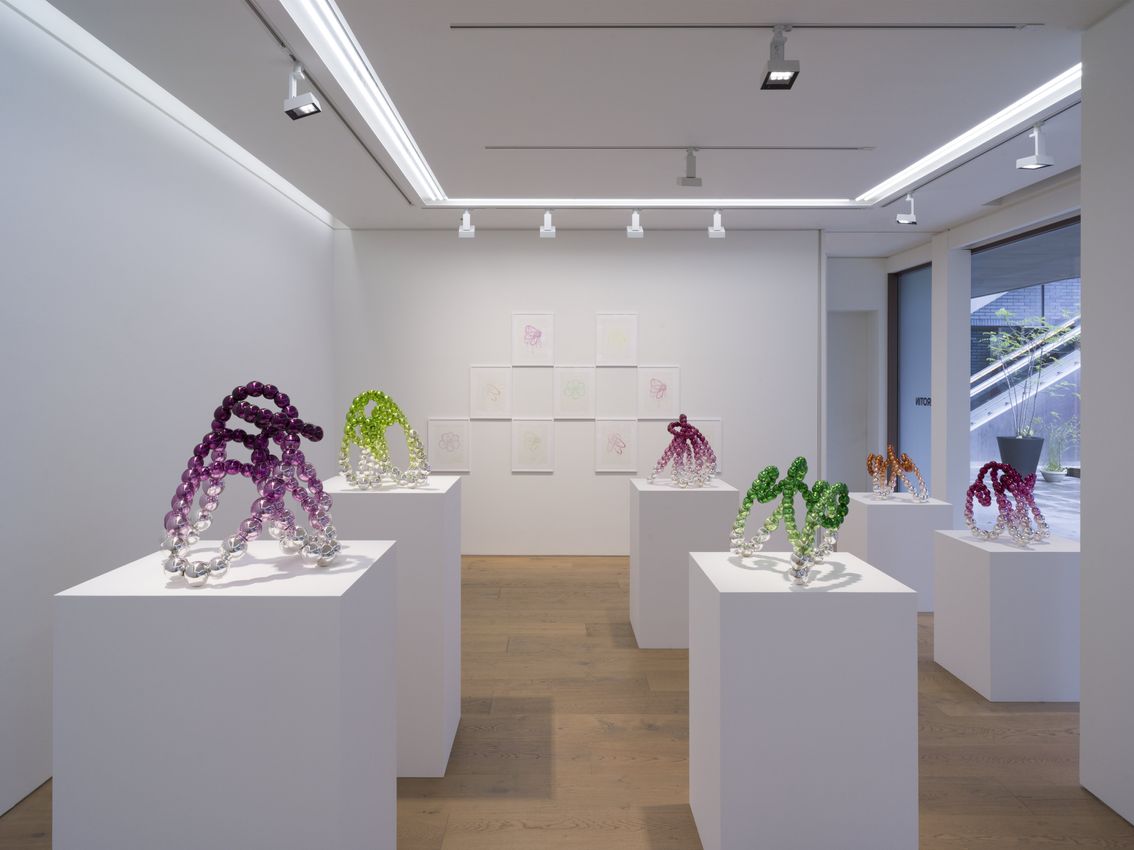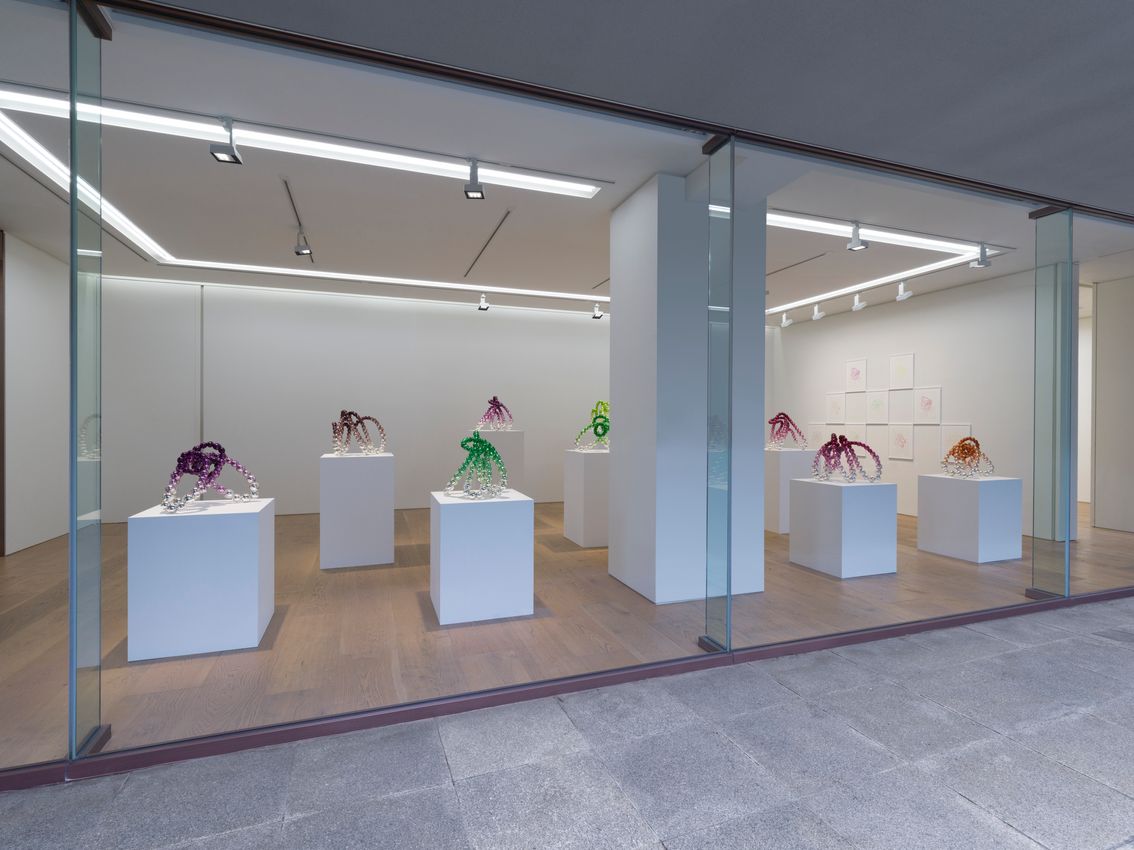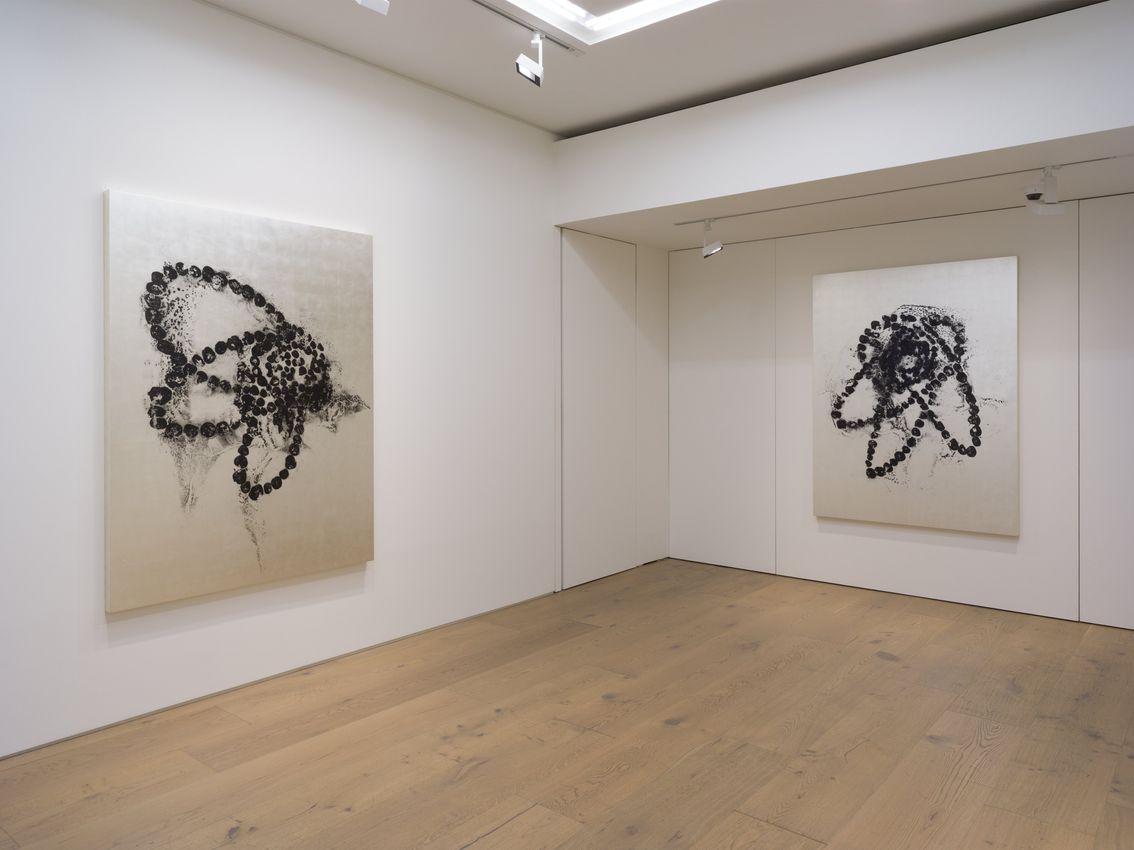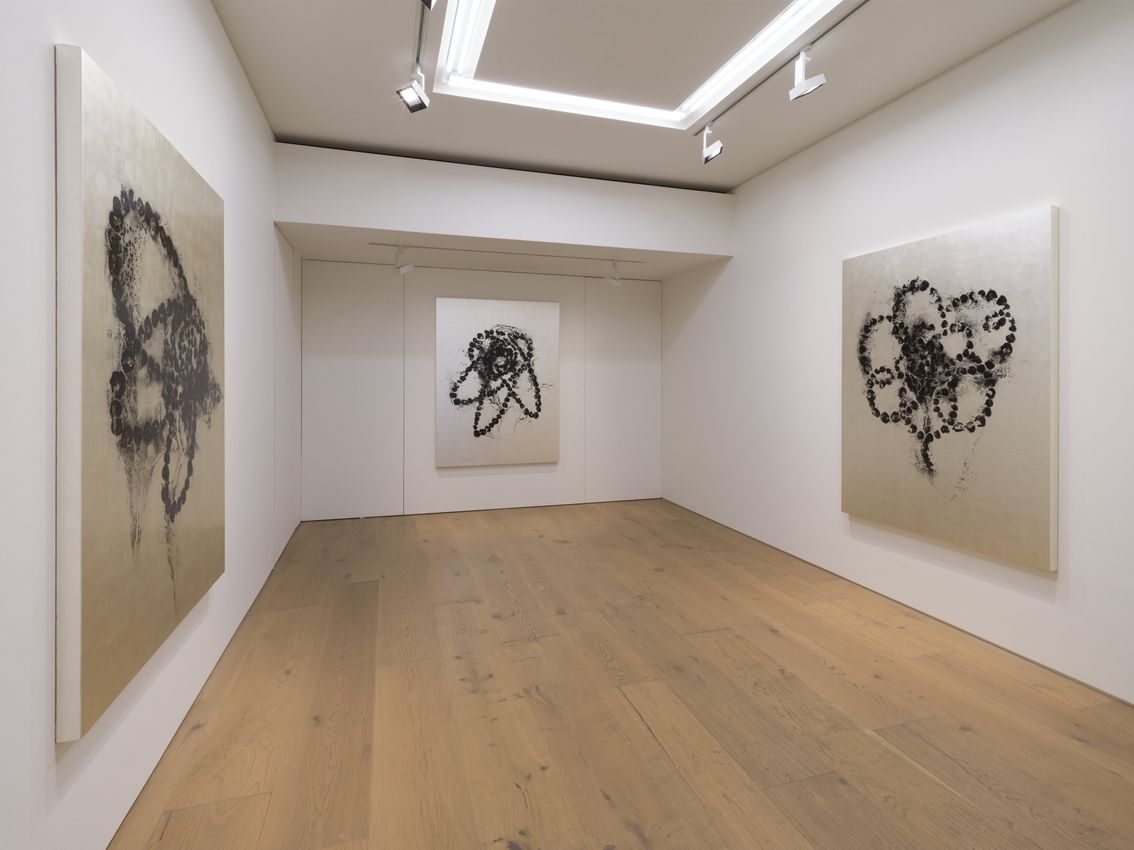


Perrotin Tokyo is pleased to present a solo exhibition of new works by French artist Jean-Michel Othoniel, marking his first gallery presentation in Japan. On view is a new series of glass sculptures and gold leaf paintings that have never been seen before.
This solo show in Japan follows the artist’s retrospective at the Hara Museum in 2012. Othoniel continues his exploration of nature in a contemplative approach by presenting new series of abstract and sensuous artworks: the Kiku, inspired by the chrysanthemum flower and its symbolism in ancient Japanese culture.
With his installation showcasing sculptures as precious sacred talismans, and calligraphic paintings as icons, Othoniel recreates inside the gallery space an enclosed forbidden garden of chrysanthemums, a dream world he named Yumeji in Japanese (夢 – translated as ‘Dream Road’). The word bears a dual meaning: ‘to dream’ and ‘to meet someone you love in your dreams’, as it appears in ancient Japanese poems (waka), published in the historical collections Kokin Wakashu and Gosen Wakashu, in the 900s A.D.
By naming his exhibition Yumeji, Othoniel shows his romantic vision of the world and how such simple things as flowers are keys to emotions, a dream road to fantasies and imagination, and a way of looking at the world and see the marvels that surround us. For him, what is real is a continual source of symbol and wonder.
The chrysanthemum is one of the most important and symbolic flowers in Japan. Known as the flower that blooms during autumn as winter approaches, it has come to be a symbol of longevity and rejuvenation. I very much like this idea of a flower blooming against all odds, fighting to marvel while its surroundings have already began to fall asleep. It is one of the last blooming flowers of the year, says Othoniel.
Originally imported from China to Japan in the eighth century as medical herbs, the chrysanthemum was admired by the court and aristocracy during the Heian and Kamakura periods as a symbol of longevity. In September, people would cover blossoms of chrysanthemum with pieces of cloth overnight. By wiping one’s body with scented cloth soaked with dewdrops from the flowers, they prayed to purify their spirit and wished for a long life. Based on this custom, the combination of the chrysanthemum and dewdrops became a recurrent motif in classic poems and literature, which melancholically romanticised the flower’s eternal life in contrast to the fragile and ephemeral nature of human life.
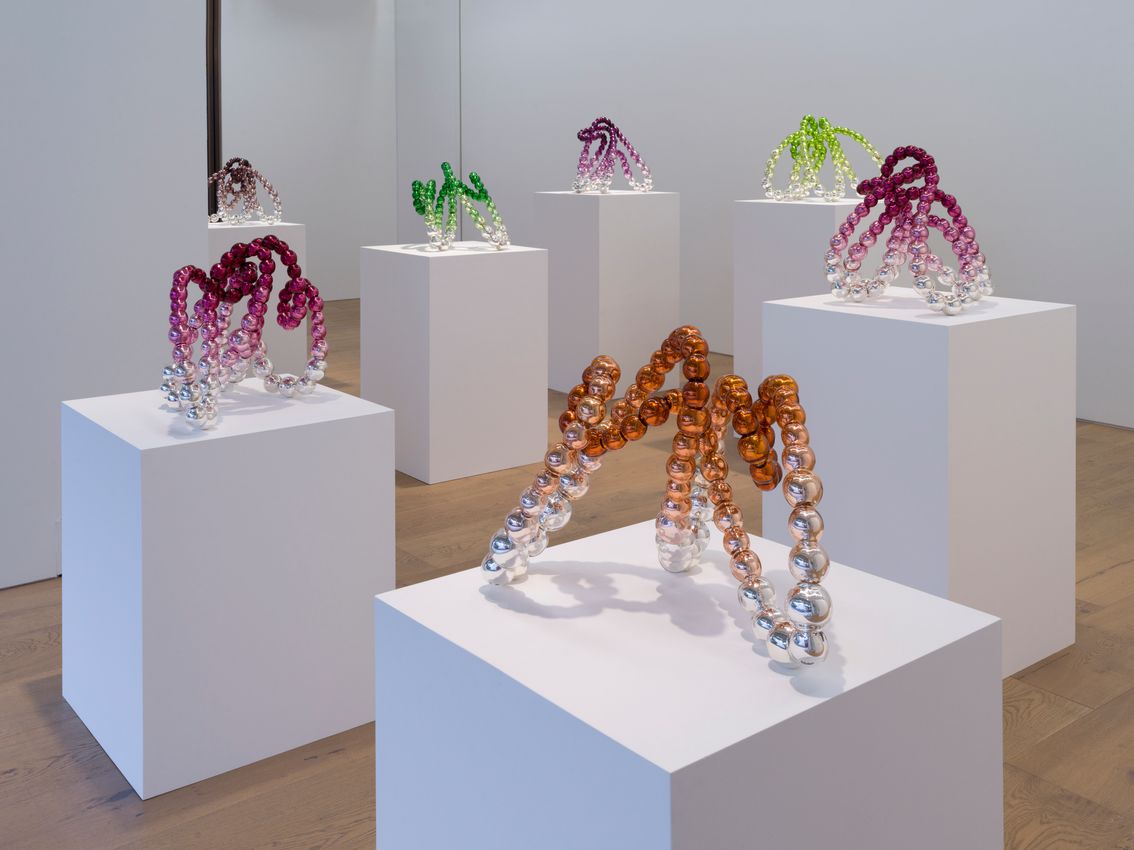
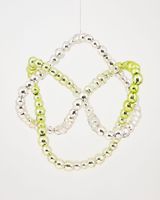
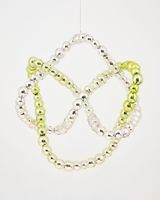
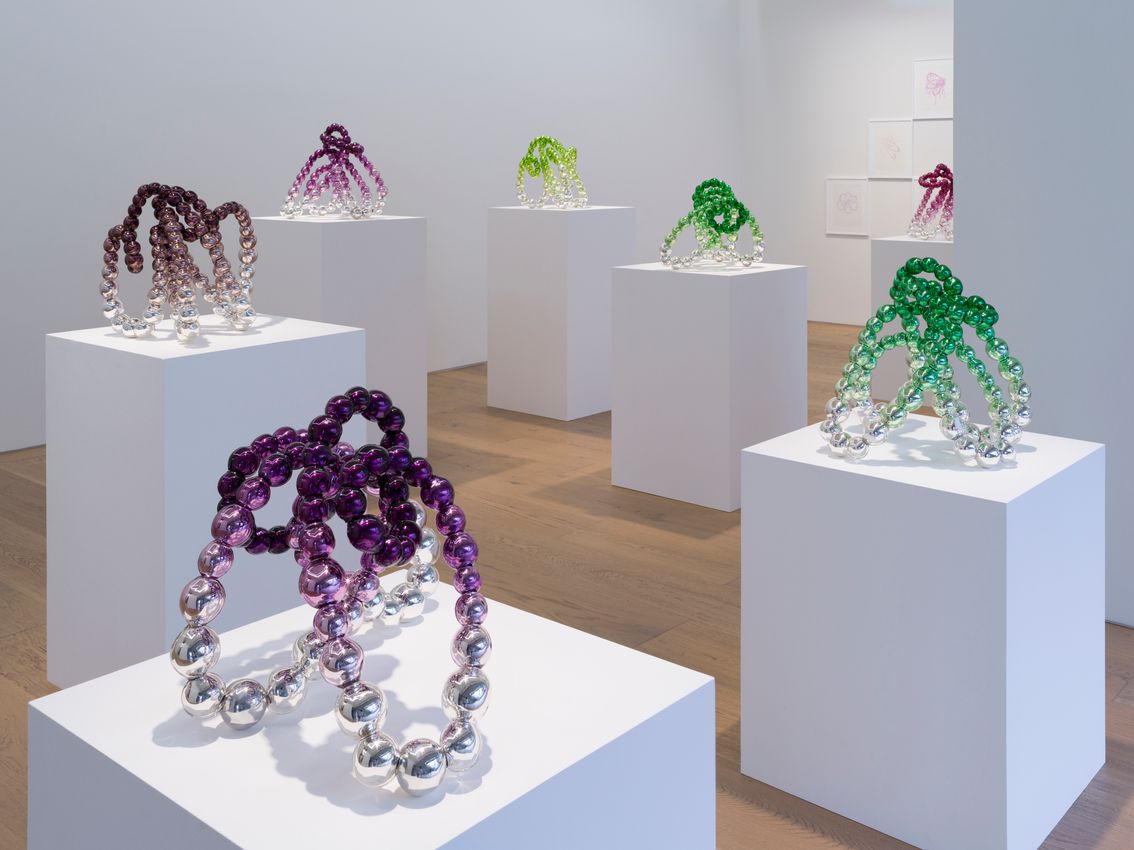
By creating crystallised chrysanthemums made of glass beads, his signature material since the end of the 1990s, and by exhibiting these Japanese symbols in spring, Othoniel subtly reverses seasons. Frozen in glass, the artist’s chrysanthemums are protected, forever blooming in an eternal youth. Nature is thus preserved, almost sacralised.
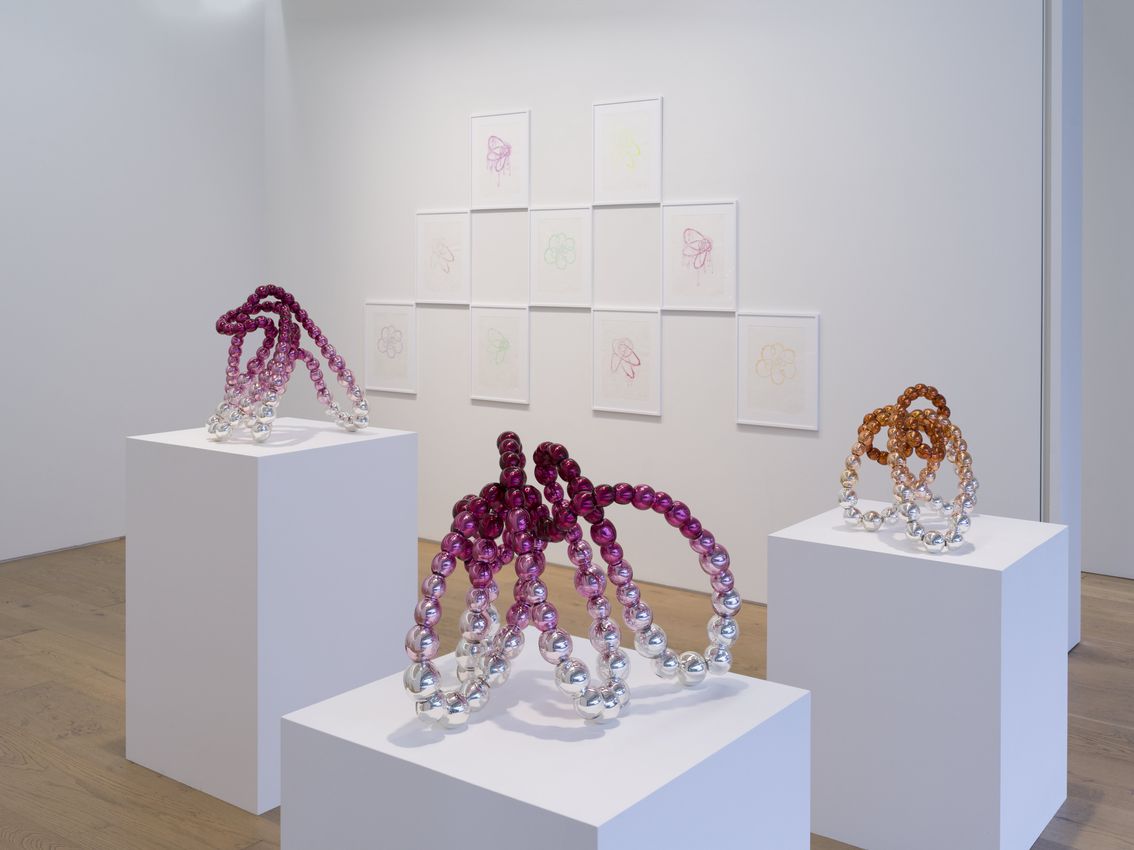
The Kiku sculptures are organic in form, ambiguous, halfway between plants and knots, referring also to love and the art of knot-tying in Japanese culture. Offering an alluring visual experience consistent in the artist’s sculptural work, the enigmatic forms of these mirrored knots recall the fatal seductiveness of a trap, while the bright and shimmering hues of the glass are as eye-catching.
I always make a point of creating works that stimulate all senses, like a desire to lick or to touch; or creating shapes that evoke sensual pleasure such as ‘the beauty of tight binding’. The attractiveness of mirrored glass playing with the sight of the beholder work as a trap as well, since one can see their reflection in the knot sculpture in front of themselves, giving free rein to their imagination. There is more to this than meets the eye. These flowers with erotic symbolism are attractive yet dangerous, like Baudelaire’s Fleurs du Mal (Flowers of Evil), or ‘cultured nature’, as one could say, says Othoniel.
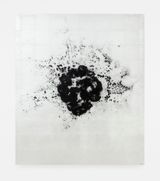
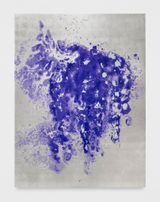
The artist continues playing with a sense of contrast in his large-format paintings on canvas, almost abstract images made in black ink on layers of white gold leaf. These gigantic hallucinative shadows of flowers painted by Othoniel refer to a more anxious vision of the world. Contrary to the prismatic garden shown in the main space of the gallery, these dark calligraphic works bring the viewer into pure abstraction and contemplation. The ‘Kiku’ paintings show the artist’s fondness for the art of drawing that is at the very core of his practice since the beginning of his career.
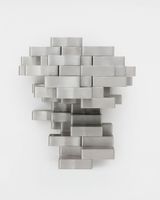
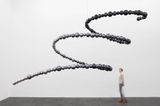
Jean-Michel Othoniel’s enchanting aesthetics revolves around the notion of emotional geometry. Using the repetition of modular elements such as bricks or his signature beads, which are his most recurring motif, he creates exquisite jewelry-like sculptures whose relationship to human scale ranges from intimacy to monumentality. His predilection for materials with reversible and often reflective properties–particularly blown glass that has been the hallmark of his practice since the early 1990s–relates to the deeply equivocal nature of his art. Monumental yet delicate, baroque yet minimal, poetic yet political, his contemplative forms, like oxymorons, have the power to reconcile opposites. While his dedication to site-specific commissions for public spaces has led some of his work to take an almost architectural turn, Jean-Michel Othoniel’s holistic sensibility further compares to feng shui or the art of harmonising people with their environment, in his case allowing viewers to inhabit his world through reflection and motion.


A respected voice in contemporary art discourse.
Focusing on ambitious storytelling and insightful art-world commentary. Ocula Magazine publishes in-depth interviews, critical essays and timely analysis on the artists, exhibitions and ideas driving the global art world.
Learn more about Ocula Magazine
Showcasing the best of the art world.
Ocula partners with galleries from around the world to highlight their artists, artworks and exhibitions. Gallery membership is by application and invitation, with each member vetted by an independent panel.
Learn more about Ocula Membership

Specialises in the sale of major artworks.
Led by a team with deep ties to the world’s leading auction houses, galleries and collectors. Ocula’s advisory team offers bespoke services to high-net-worth clients from around the world who are looking to acquire the best of contemporary and modern art.
Learn more about our team and services