


Press Release

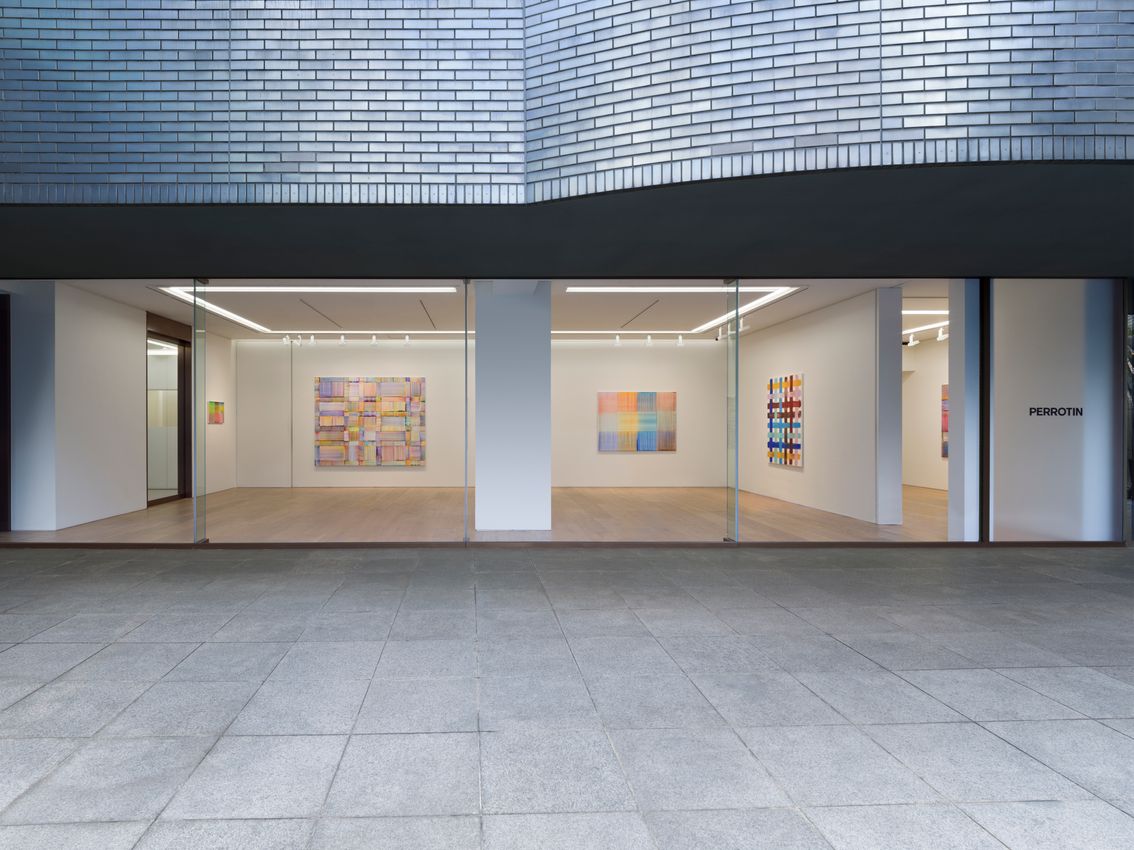
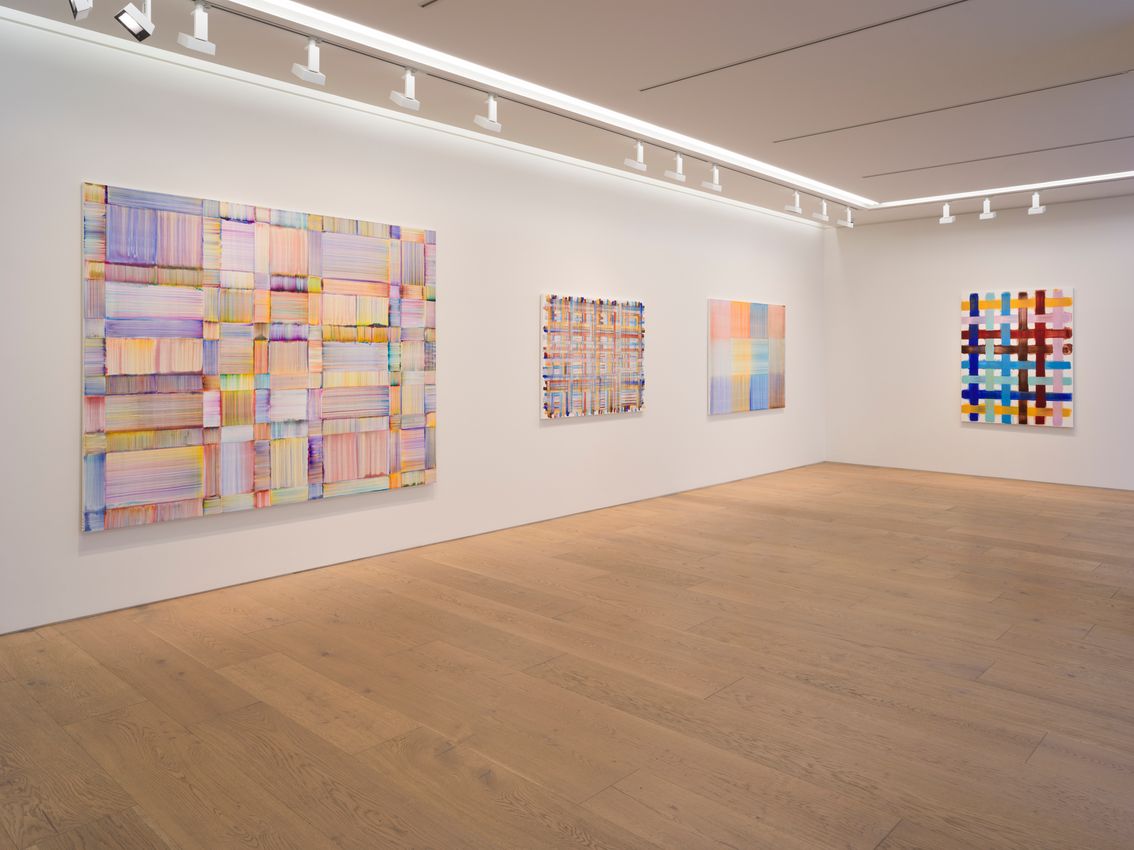
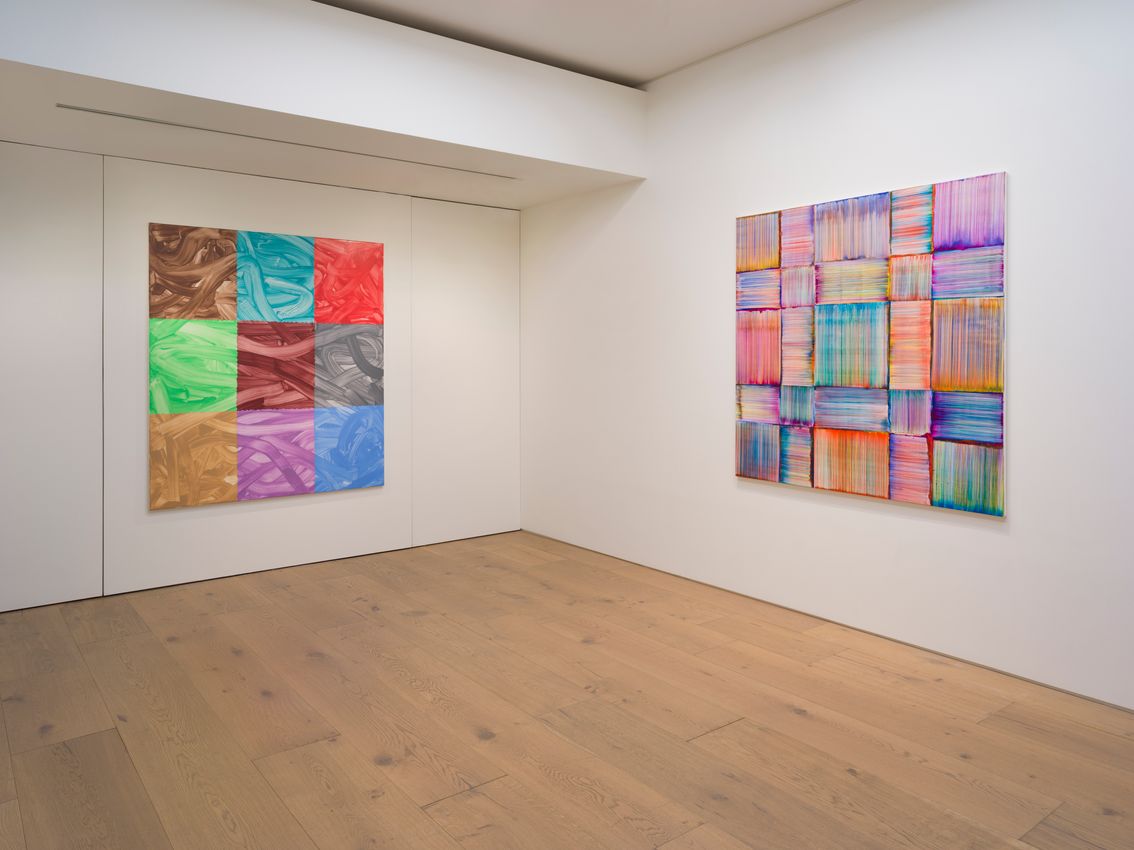
Perrotin Tokyo and Kaikai Kiki Gallery are happy to present two concurrent solo shows of French painter Bernard Frize, in advance of his retrospective at the Centre Pompidou–Musée National d’Art Moderne in Paris (29 May–26 August 2019, curator Angela Lampe). Featuring a wide range of paintings, including new productions, these exhibitions mark the return of the artist in Japan, 13 years after the group show Essential painting at the National Museum of Osaka.

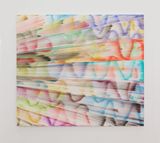
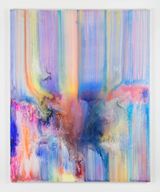
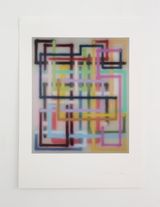
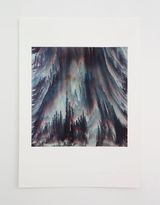
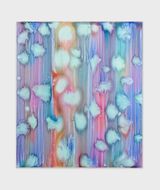
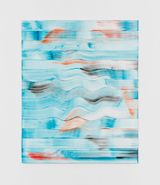
While regularly revisiting various moments of his past practice, Frize has never stopped exploring new concepts, inventing novel ways to paint (starting with the development, 10 years ago, of processes based on the creation of one painting by multiple people simultaneously), but he has also, since the mid–1990s, abandoned all recourse to what we summarise as ‘figurative art,’ namely the representation of real and identifiable objects or images. It is only by accident or allusion, and by a natural predisposition of our vision, that we perceive this or that painting as evoking a stone, a curtain or a bookshelf. So much so that this action of expansion that first strikes us corresponds to another, of reduction or of disconnection. The paradox is far-reaching and leads immediately to the Frize’s conception of painting since the beginning, which is to constitute it of an ensemble of paradoxes, in other words of propositions contrary to common sense and expectation. Of course, the principle applies at the level of each work considered individually: ‘I always try to get to the point where there is not just one thing in the painting, one thing shown, but that there is a paradox, an antagonism, a difficulty in the work.’1

‘I try to make paintings that one can look at at least twice. I would also say that I try as much as possible to articulate the processes amongst themselves, to recycle the remains of one series for the benefit of another. The monochrome that is drying over there is an example: at one point I put a canvas beneath it so that the drops that fall from it provide me with the beginning of another painting.’2 These words, spoken by Frize more than 20 years ago, have just as much pertinence today. Since then his work has continued to grow using the same autodidactic method. Considering the many avenues he has explored, one of the questions he certainly now faces is that of a renewed, deliberate use of distinctly figurative motifs. In an interview published in Artforum, he remarked on this point: ‘The figurative pieces I’ve done, the ones that are paintings in the strict sense—not the photographs or scanachromes—are, it seems to me, even more ambiguous than the abstract ones. In the figurative the images function as a sort of primary material that I use without worrying about their references, or else they are used to play with the idea of hidden figuration, of double meaning. In any case, I have never invented an image, I can only paint one in order to put it to use in a demonstration of pictorial order. When, for example, I returned periodically to painting images of pots, I did so in order to work on the idea of “failure”, to accentuate, via the image, a certain exploitation of accident that I was trying to get to. So, for example, I would cover the surface of the painting with “crazing” varnish, or I would paint the image itself out of register. I was trying to represent in the clearest way possible a certain inadequacy, the fact that nothing fits in these pictures.’3 That there is still much to invent from such a conception of the image is more than likely, especially if one takes into account the way in which all sorts of illicit figurations haunt numerous paintings of Frize’s that can rightly be called ‘abstract.’ In the course of his entire body of work, the logic would be that of an expansion of figurative exploration, through a revitalisation of ‘pictorial intelligence.’4

Jean-Pierre Criqui, extract of Bernard Frize Today, in Bernard Frize, Perrotin, 2014.Jean-Pierre Criqui is the Curator of The Musée National d’Art Moderne–Contemporary Collections, and Chief Editor of Les Cahiers du Mnam

Bernard Frize will be exhibited later this year at Perrotin Paris (May 18th - August 10th) and Perrotin New York (September 14th - October 26th) celebrating 25 years of collaboration between the artist and Perrotin gallery.

In 2015, Bernard Frize was awarded the Käthe Kollwitz Prize by the Berlin Akademie der Künste. The Jury members, Ayse Erkmen, Mona Hatoum and Karin Sander wrote in their statement: ‘He strives with the utmost sophistication toward the advancement of contemporary painterly abstraction and the development of a topology of painterly gestures and structures.’ Bernard Frize was also awarded the Fred Thieler Prize for Painting, Berlinische Galerie, Berlin, 2011. The artist has been the subject of solo exhibitions in worldwide institutions, including the Fundação Calouste Gulbenkian, Lisboa, Portugal; Berlinische Galerie, Berlin, Germany; Museum Morsbroich, Leverkusen, Germany; Kunsthallen Brandts Klædefabrik, Odense, Denmark; Ikon Gallery, Birmingham, UK; Musée d’Art Moderne de la Ville de Paris, France; S.M.A.C.K., Ghent, Belgium; Gemeentemuseum, the Hague, the Netherlands; Kunstmuseum Basel & Museum für Gegenwartskunst, Switzerland; Westfälisches Landesmuseum für Kunst und Kulturgeschichte, Münster, Germany; Kunstmuseum St. Gallen, Switzerland; Museum Moderner Kunst, Stiftung Ludwig, Wien, Austria; De Pont Museum of Contemporary Art, Tilburg, The Netherlands; Ivan Dougherty Gallery, Sydney, Australia; Kunsthalle, Zürich, Switzerland; the Carnegie Museum of Art, Pittsburgh, USA; Villa Medici, Rome, Italy. He has also been featured in important group exhibitions, including the Sao Paolo Biennial, Venice Biennale, and Sydney Biennial, amongst others.His work is represented in more than 45 public collections around the world, including the Tate Gallery, London; MNAM/ Centre Pompidou, Paris; MUMOK, Vienna; NMAO the National Museum of Art Osaka; Museo Nacional Centro de Arte Reina Sofía, Madrid; Museum of Contemporary Art, Los Angeles; Museum für Moderne Kunst, Frankfurt; the Kunstmuseum, Basel and the Kunsthalle, Zurich.

1 I buy a 40 cm brush... interview with Irmeline Lebeer, catalogue Bernard Frize: Aplat, Musée d’Art Moderne de la Ville de Paris, 2003

2 Unpublished interview with Bernard Frize and Jean-Pierre Criqui, Summer 1993

3 Rule and Branch : Jean-Pierre Criqui Visits Bernard Frize, Artforum, October 1993

4 From the title of the book by Svetlana Alpers & Michael Baxandall, Tiepolo and the Pictorial Intelligence, Yale University Press, 1994

Read More

Installation Views

About the Artist

Bernard Frize’s abstract painting is decisively process-oriented. Working in series, he explores all the possible visual outcomes of precise protocols, which he conceives beforehand. These pre-established conditions and constraints usually pertain to the use of very conventional tools and materials, the almost mechanical execution of seemingly simple gestures, and sometimes the simultaneous assistance of other painters. While they each record the peculiar dynamics of a predetermined technique, his vibrant abstractions are also arenas for chance to operate. By outsourcing some of his creative power to contingency (starting with his highly distinctive yet random colour palette), he allows for painterly events or disruptions to unfold on his canvases. At once calculated and random, conceptual and organic, his aesthetics portends an automatic ideal of painting. With much humour, Bernard Frize actually describes his most successful works as the ones that required minimal intervention from him and thus realised themselves to some extent autonomously.

View Artist Profile

Also Exhibiting at Perrotin

About the Gallery
Emmanuel Perrotin founded his first gallery in 1989 at the age of 21. He has opened since then over 17 different spaces, with the aim of continuing to offer increasingly vibrant and creative environments to experience artists work. He has worked closely with his roster of artists, some since more than 25 years, to help fulfill their ambitious dreams and projects. The gallery is now based in New York, Paris, Hong Kong, Seoul, Tokyo, and participates in all the significant worldwide art fairs each year (Art Basel (Hong Kong, Miami, Basel), Frieze (London, New York), FIAC (Paris), Dallas Art Fair, Art Cologne, Art Stage Jakarta, Expo Chicago, Art021 & West Bund Art & Design, Shanghai, Zona Maco Mexico, amongst others).
View Gallery Profile
Address
Piramide Building 1F
6-6-9 Roppongi
Minato-Ku
Tokyo
Japan
Opening Hours
Tuesday – Saturday
11am – 7pm
(1)
Tokyo Piramide Building 1F, 6-6-9 Roppongi
Perrotin
Piramide Building 1F, 6-6-9 Roppongi, Minato-Ku, Tokyo, Japan
+81 367 210 687
http://www.perrotin.com

Opening hours
Tuesday – Saturday
11am – 7pm
The art world in focus
