Press Release

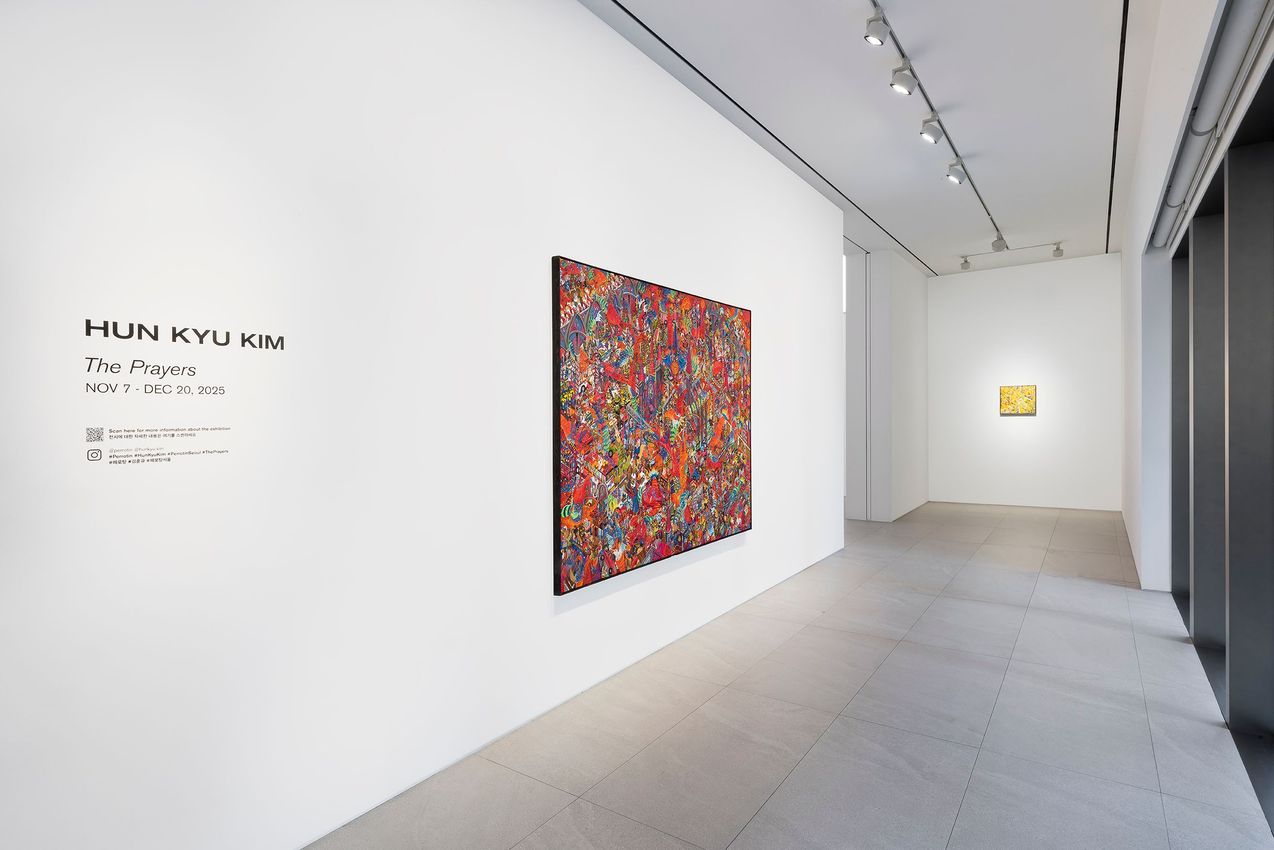
Perrotin Seoul is pleased to present The Prayers, a solo exhibition by Korean artist Hun Kyu Kim. Expanding upon the world of animal collectives that he has long explored, this exhibition sheds new light on the realms of faith and belief. Born in Seoul in 1986, Kim graduated from the Department of Oriental Painting at Seoul National University. Drawing inspiration from Goryeo Buddhist paintings and traditional silk-coloring techniques, he has developed an allegorical visual language that reflects human desire and contradiction through the depiction of animals. After completing his MFA at the Royal College of Art in London, Kim has continued to work primarily in London, presenting a unique painterly world that moves fluidly between Eastern and Western visual idioms.

In Kim’s paintings, chaos and order, inside and outside, one belief and another ceaselessly collide. As viewers engage with his work, they are prompted to confront fundamental questions about humanity—What is right? How should we live? Rather than seeking definitive answers, the artist persistently reexamines these questions through the act of painting. Through this exhibition—where color, belief, and pictorial structure intertwine—viewers are invited to contemplate the symbolic narratives that compose Kim’s universe, and to reflect on the fragile balance of convictions that shape our world.

When one initially encounters the works of Hun Kyu Kim, so densely packed with various animals going head to head, it can be difficult to locate much apparent affection for the world writ large. This is a place where beings seemingly unconstrained by boundaries of species—rabbits, pigs, parrots, salmon—engage in raw, real-time contests of survival and predation. Indeed, what strikes the viewer first is the fact that none of these animals are actually poised to become the absolute victor or loser; rather, they remain trapped in a state of useless struggle. Though they are clearly suffering, it would appear that these creatures simply cannot stop fighting. And while, upon closer examination, one discovers bits of absurd humor and mischievous wit hidden amidst some of these cute brawls, a lingering sense of déjà vu bleeds across one’s vision, evoking the human world.

The stories of this world are depicted with such precision as to feel almost hallucinatory, and in this sense, appear to map rather directly onto the artist’s own struggle with his work. This also reflects Hun Kyu Kim’s intense attitude and approach to painting itself. As a child, the artist found himself entranced by the delicate yet elaborate expressiveness of Buddhist paintings, and this, in turn, led him to undertake the practice of gongpilhwa (工筆畵)—a technique of silk painting in which one uses layers of color to depict one’s object. Along the way, Kim came to believe that using extremely detailed brushwork to construct these worlds we call paintings was a practice that carried its own power. This belief, in turn, reached a turning point of sorts during his time in the United Kingdom, where he first encountered a number of works from the Renaissance period and came to see that the special force he had thought to be specific to traditional East Asian painting techniques had also been achieved, albeit in a different dimension, by the devotional painters of 15th-century Europe. These Renaissance painters’ delicate brushstrokes recreated reality, Kim noted, “as if a soul were contained within the painting, as if the painter had been painting for his life”—and this, along with gongpilhwa, has come to form the very grammar of Hun Kyu Kim’s artistic world.

The use of multiple perspectives is another key element that visually amplifies the scattered battles between different groups of animals. Not only has the artist completely eliminated any device that might guide the viewer’s gaze, he leaves zero clues by which to establish any sense of time or space. Instead, he introduces a number of arbitrary viewpoints that dismantle and twist the relationships between before and after, foreground and background, center and periphery. For example, the moment we take in one part of a painting, looking up from below, a bird’s-eye view of a landscape appears right beside it, and then around that emerges a perspective piercing through the side of a building. Point of view, in this way, is key to interpreting Kim’s work, and its significance goes well beyond simply inciting interest through overlapping perspectives. As one’s eyes sweep the invisible walls that separate these points of view, their movement becomes constrained, sometimes narrowing in scope, sometimes restricted in passing freely from one zone to another. This delayed flow of vision, in turn, the gaze repeatedly halting and searching, becomes a state of wandering, discovering, and even straightforwardly experiencing this chaotic, multidimensional world.

Meanwhile, in providing the backdrop for a brutal inter-species struggle that also reflects the power structures of situation and viewpoint, Kim’s strategic use of multiple perspectives can be seen as a form of artistic combustion. In one interview I conducted with the artist a few years past, Kim mentioned his attempt to appropriate the concept of wayu (臥遊). An aesthetic notion related to traditional landscape painting, wayu refers to the act of taking in a landscape through the mind’s eye without physically going outdoors. In such landscape paintings, perspective is regularly abandoned, the boundaries between foreground, middle ground, and background becoming blurred; what results is not a simple scene of nature but a living totality, imbued with its own vitality and energy. Hun Kyu Kim sought to translate this concept into a political and social context to highlight some of the differences in perspective that shift according to one’s situation, position, or era. The relationship between position and viewpoint extends to Foucault’s framework of the power dynamic between the observer and the observed—that is, the gaze as a mechanism of power. For example, in Kim’s The Lighthouse Keeper of the Panopticon (2020), his characteristically divided gaze and segmented composition is deployed in service of the concept of panopticism. The towering central structure, modeled after Foucault’s panopticon, appears to be on the verge of collapse due to a combination of external assault (another form of surveillance) and internal explosion (the breakdown of the system), raising the question: what sustains, or might replace, the symbolism of surveillance in contemporary society?

Through this solo exhibition, the artist once again sheds light on the paradoxical nature of power that both sustains and threatens the continuity of modern society—this time through the lens of religion. And while religion may represent a new thematic territory for Kim’s work, we must also note that it is, in fact, mankind’s oldest and sturdiest sanctuary. To this day, religion possesses a manufactured power capable of legitimizing the superhuman, the irrational, and even human frailty itself, and, thanks to its systems, rituals, and cultural expressions, remains inextricably intertwined with the arts. For the artist, moreover, religion signifies something akin to a panacea: a unilateral political performance positioned beyond the realm of reason and logic.

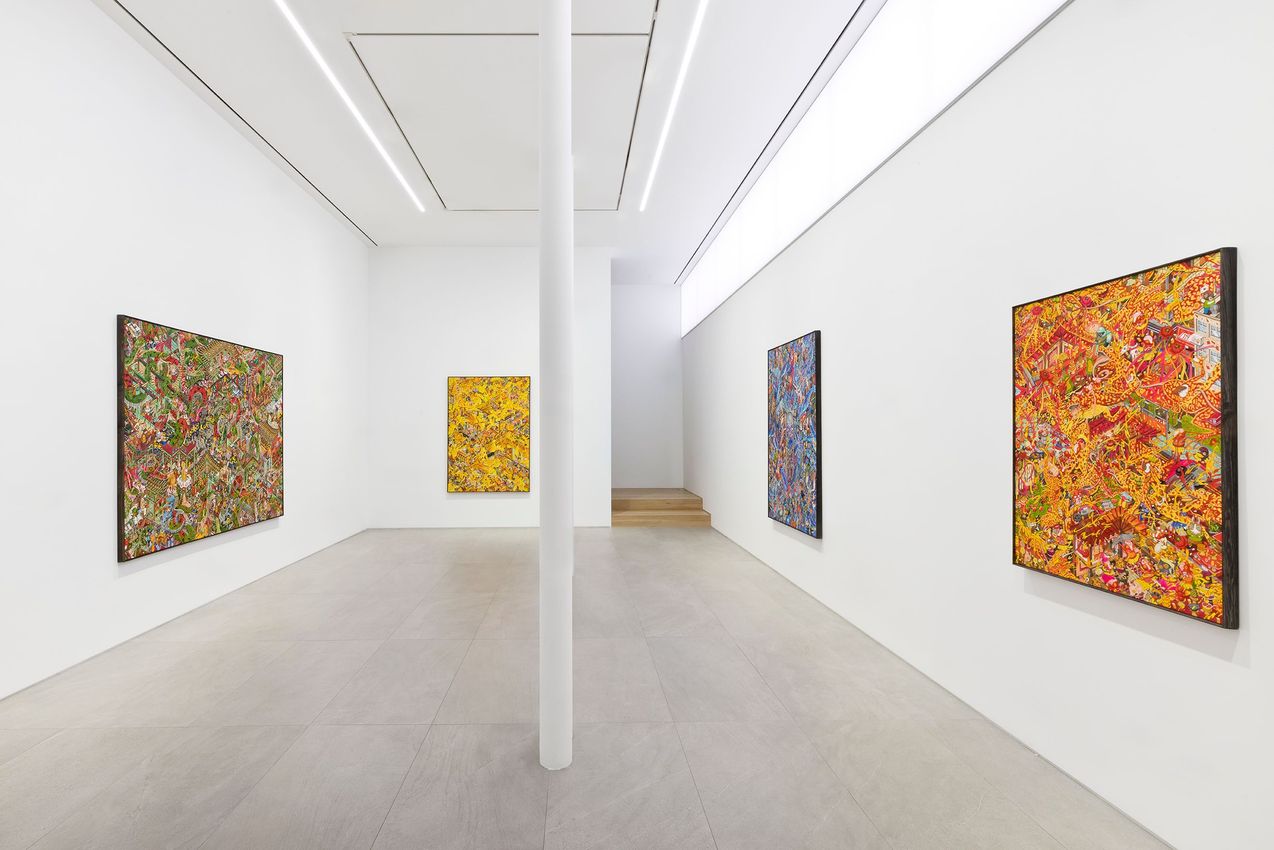
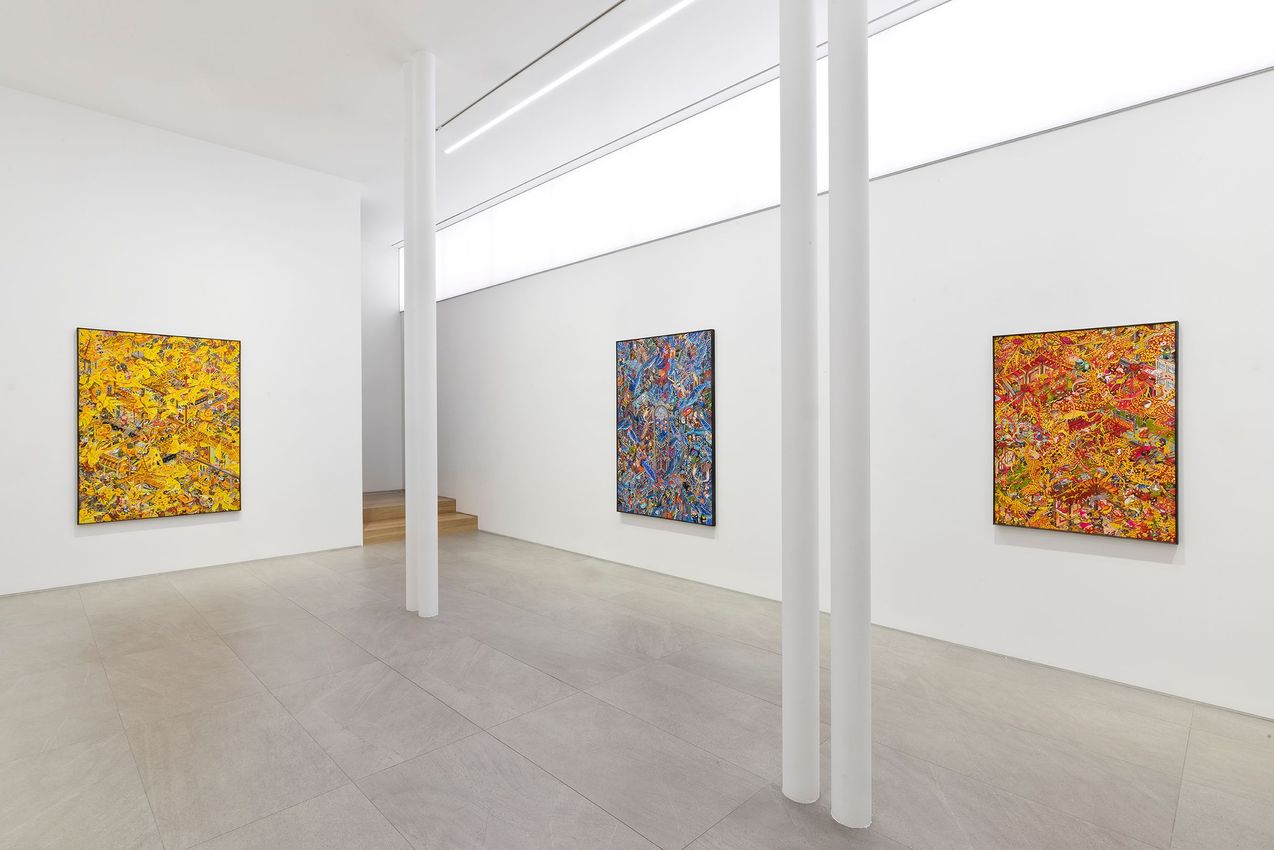
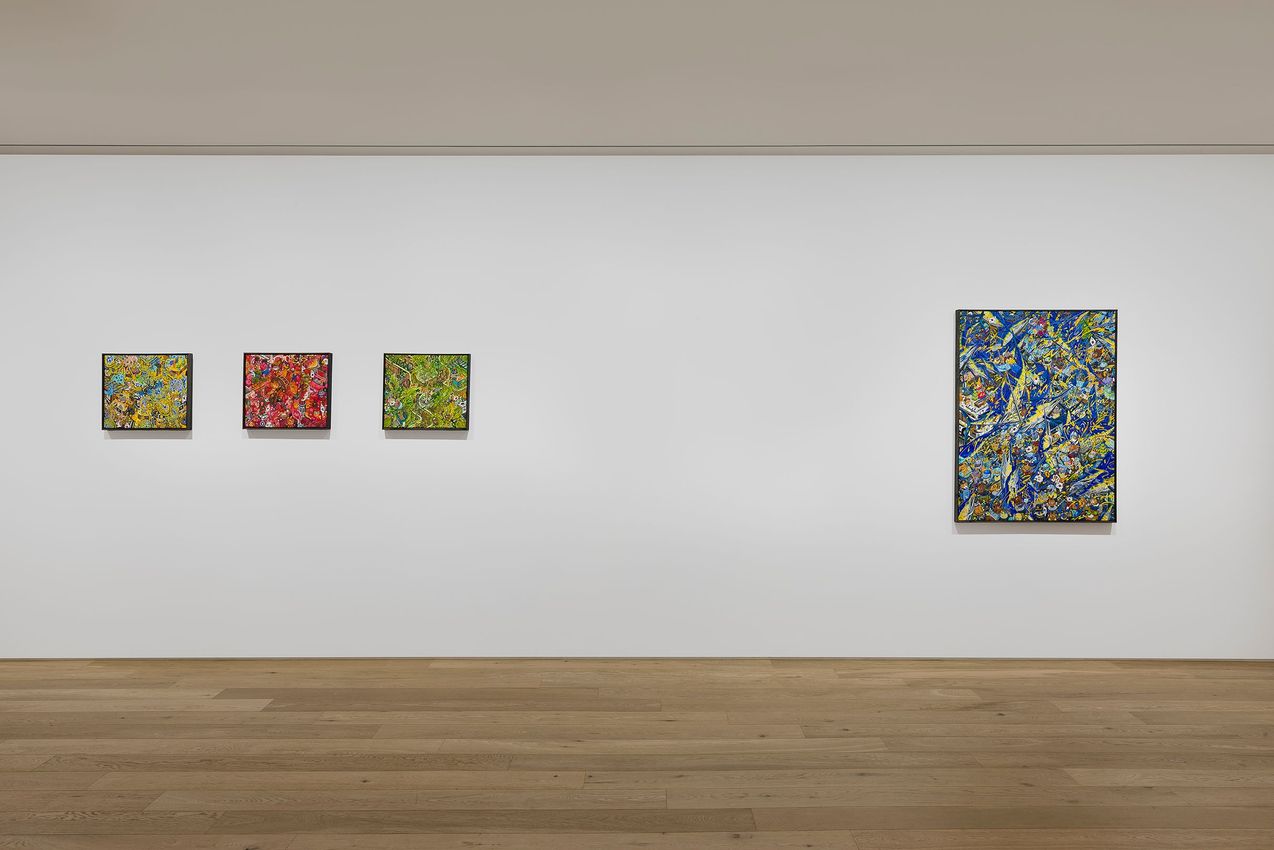
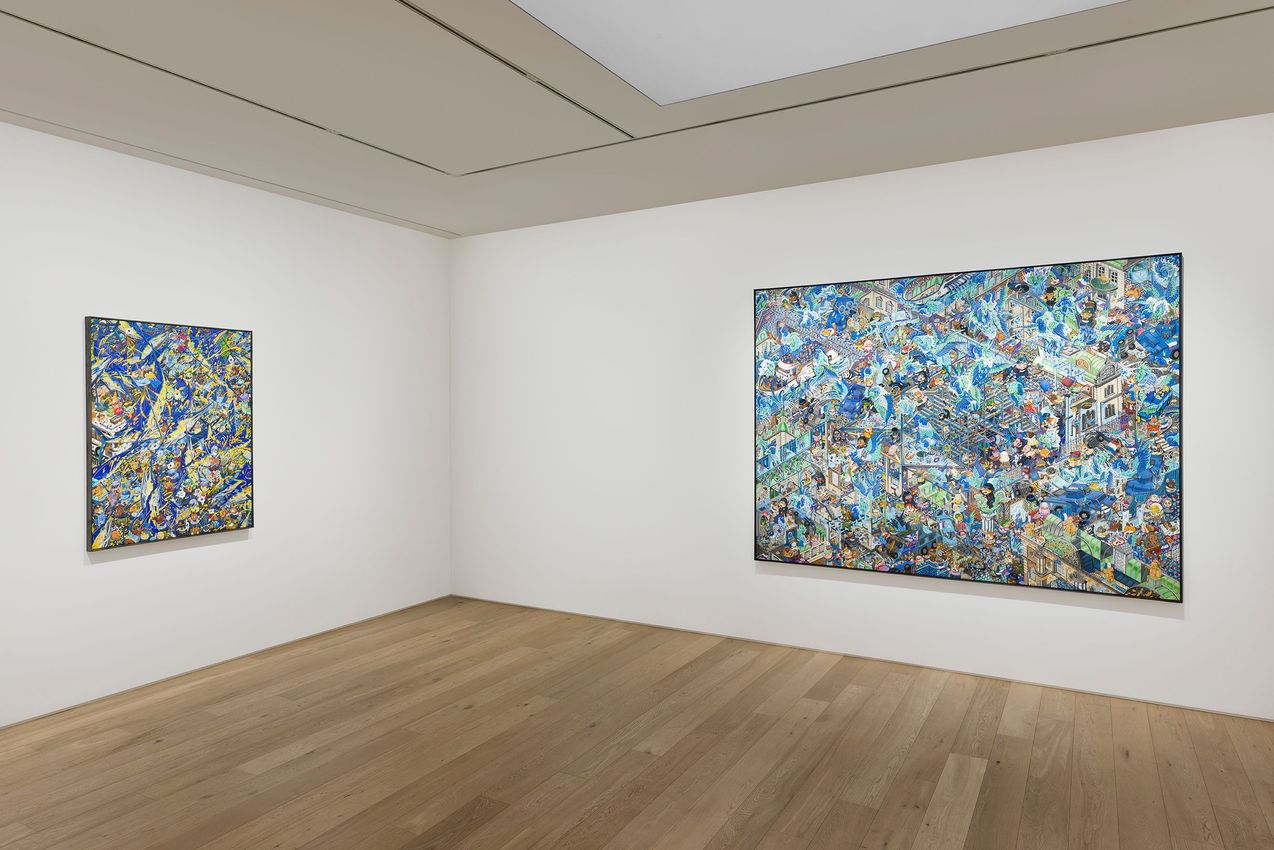
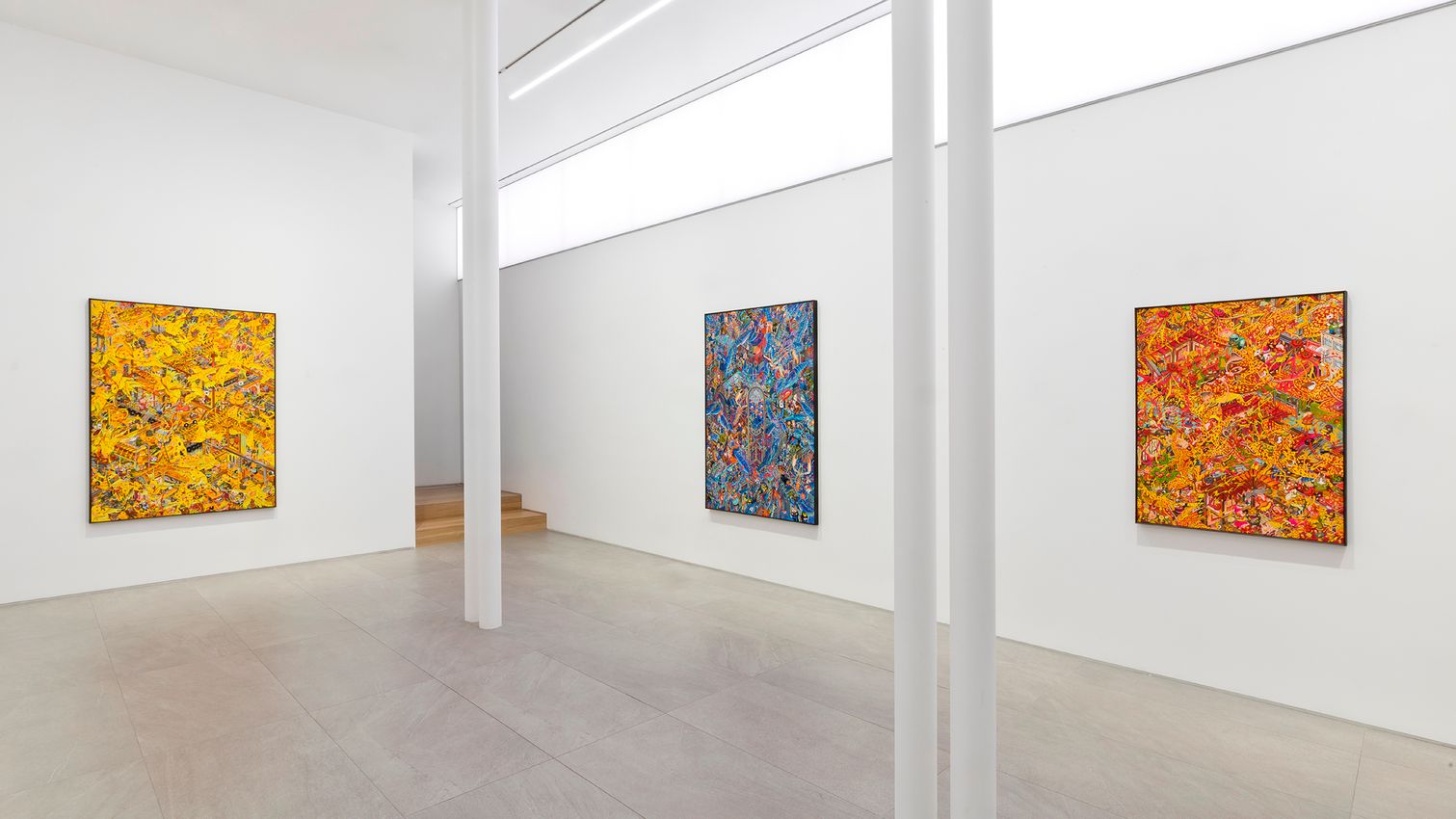
To date, Hun Kyu Kim has approached his religious references in two distinct ways. The first is through the manifestation of dominant animals associated with particular religions. Beginning in 2023, enormous creatures began to emerge across his canvases, asserting their presence; the starting point of this development is marked by Backlash of Blue, which depicts a white oarfish with bright pink fins struggling to survive in a match far beyond its own weight class. In The Prayers, Kim’s new series, these “dominant animals” present themselves even more boldly, carrying out rituals drawn from some imagined mythology. Here, various groups milling about beneath the banner of religious authority—the red crayfish of Christianity, the snake of Buddhism, and the tropical lobster of Catholicism—serve less to represent any one specific faith than to illustrate humanity’s long-standing and boundless desire for power. At the same time, humanity’s distorted desperation, as embodied in absurd belief systems like the “Church of the Rubber Duck,” casts doubt on the role and value of religion itself. In the era of the image, do humans seek solace not in divinity but in mythologized icons? Where does hope end, and belief begin? This tension culminates in Reddish Yellow, where a swarm of canaries engages in a fierce battle against priests and followers offering ritual sacrifices to a rubber duck—a witty yet unsettling scene that deepens the artist’s inquiry.

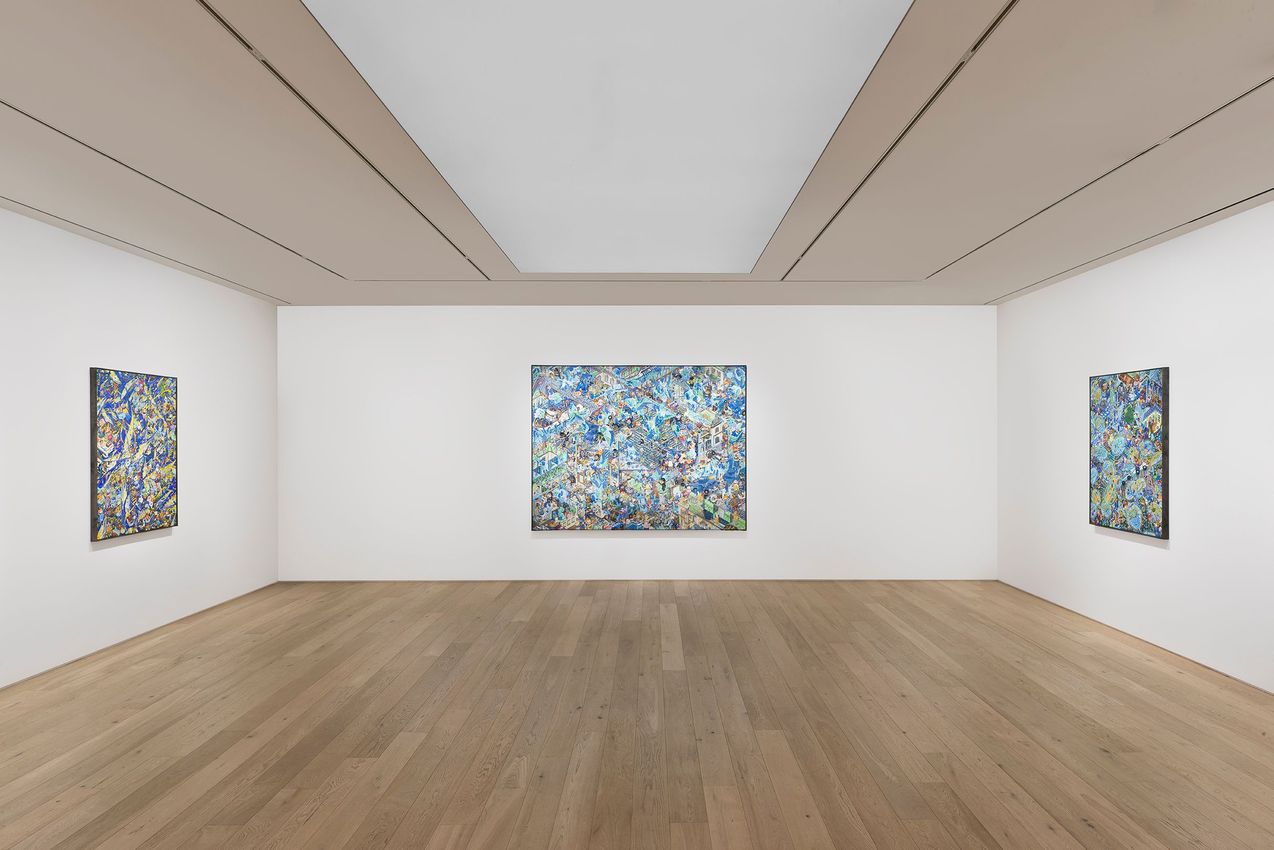
Meanwhile, it is also important to recall that these dominant animals introduce a certain abstraction into the compositions as a whole through their overwhelming scale, repetitive depiction, and organic movement. Such a strategy can be understood as an experiment in creating an illusory effect, creating figures that appear highly detailed and concrete up close, yet take on a patterned, almost abstract quality from afar. This approach becomes even more pronounced in the artist’s second mode of religious engagement: his use of color. Kim has long developed each of his series according to a set of specific internal rules. For instance, in earlier works he explored the properties of light—its directness, dispersion, diffusion, reflection, refraction, and so on—and used them to infiltrate the world of animals, or more precisely, the world of humans. Beginning last year, he shifted his focus to color, producing works in which hues representing Seoul, Paris, and London each determine the overall atmosphere of a given canvas. In these newest works, color serves as a stepping stone to sensing distinct religious worlds. Christianity and Catholicism are expressed through red and blue—mirroring each other through work titles such as Bluish Red and Reddish Blue—while Islam is represented by green, and the parodic religion of the Rubber Duck by yellow.

Moreover, the artist employs color not just as a painterly element but also as a hint toward the workings of various human psychological and spiritual mechanisms. As such, color here functions as a device that simultaneously reveals the inner world of the human being, exposes the realm of religion, and unpacks social reality. For the viewer, the very act of perceiving color becomes the starting point of engagement, an entry into a religious context through which the intricate conflicts and dynamics within that world begin to unfold. For Kim, this very process constitutes a political phenomenon in itself. In several works, the scattered, splattered appearances of color generate a kind of rhythm and cadence across the surface of the canvas, even evoking the performative gestures of dripping. Like a religious rite, the artist’s patient act of applying pigment to silk becomes a gesture of “scattering” finite human existence before the unbounded value of faith itself—an act that effectively fissures established power structures.

Religion involves belief, and belief demands affection. At the opening of this text, I noted that it could be difficult, right at the outset, to find the affection in Hun Kyu Kim’s world. Yet, as one follows the artist’s gaze, traversing spirals of time and fragmented spaces, one eventually finds oneself observing the animals’ chaotic behaviors with growing attention, even empathy, until one realizes one is, in fact, in an encounter with a deeply existential human, enduring—through the body—both social transformation and personal growth. Surprisingly, Kim’s worldview stands upon a belief in both humanity and the world: two entities that remain fundamentally inscrutable. Even as he dubs human nature the seed of conflict, he still believes in the power of individual narrative. Despite being rendered infinitesimal before the vastness of the world, humans are still capable of initiating change, of reversing the current. Within the multidimensional kingdom of animals, through these collisions and mingling of colors, they are searching for an opportunity to speak. As an artist, Hun Kyu Kim continues to weave these narratives together, seeking reconciliation with the external world.

The artist, having explored the dynamics of politics, society, history, and spatial structures, has now arrived at the point of generating waves across the realm of human belief and psychology. While the portrait of the modern human that resides within Hun Kyu Kim may continue, as ever, to wear the guise of an animal, his confession—that “the act of looking inward can itself be an act of political resistance”—will ultimately be the enduring through line of truth running through this war. He is, after all, still waiting for salvation.

Sojeong Kim (Editor, Monthly Art)

Courtesy Perrotin.

Read More

Installation Views

Also Exhibiting at Perrotin

Address
10, Dosan-daero 45-gil
Gangnam-Gu
Seoul
South Korea
Opening Hours
Monday – Saturday
10am – 6pm
(1)
Seoul 10, Dosan-daero 45-gil, Gangnam-Gu
Perrotin
10, Dosan-daero 45-gil, Gangnam-Gu, Seoul, South Korea

Opening hours
Monday – Saturday
10am – 6pm
The art world in focus