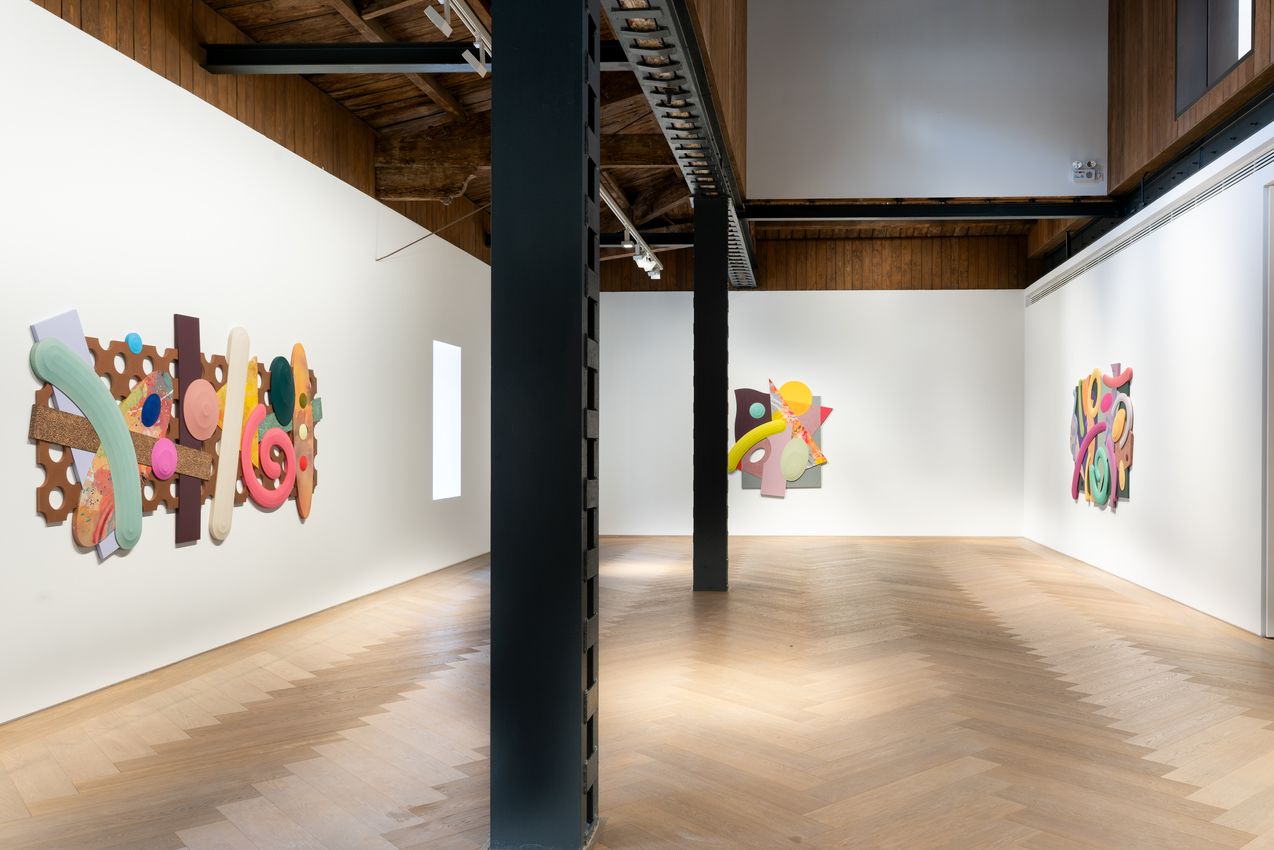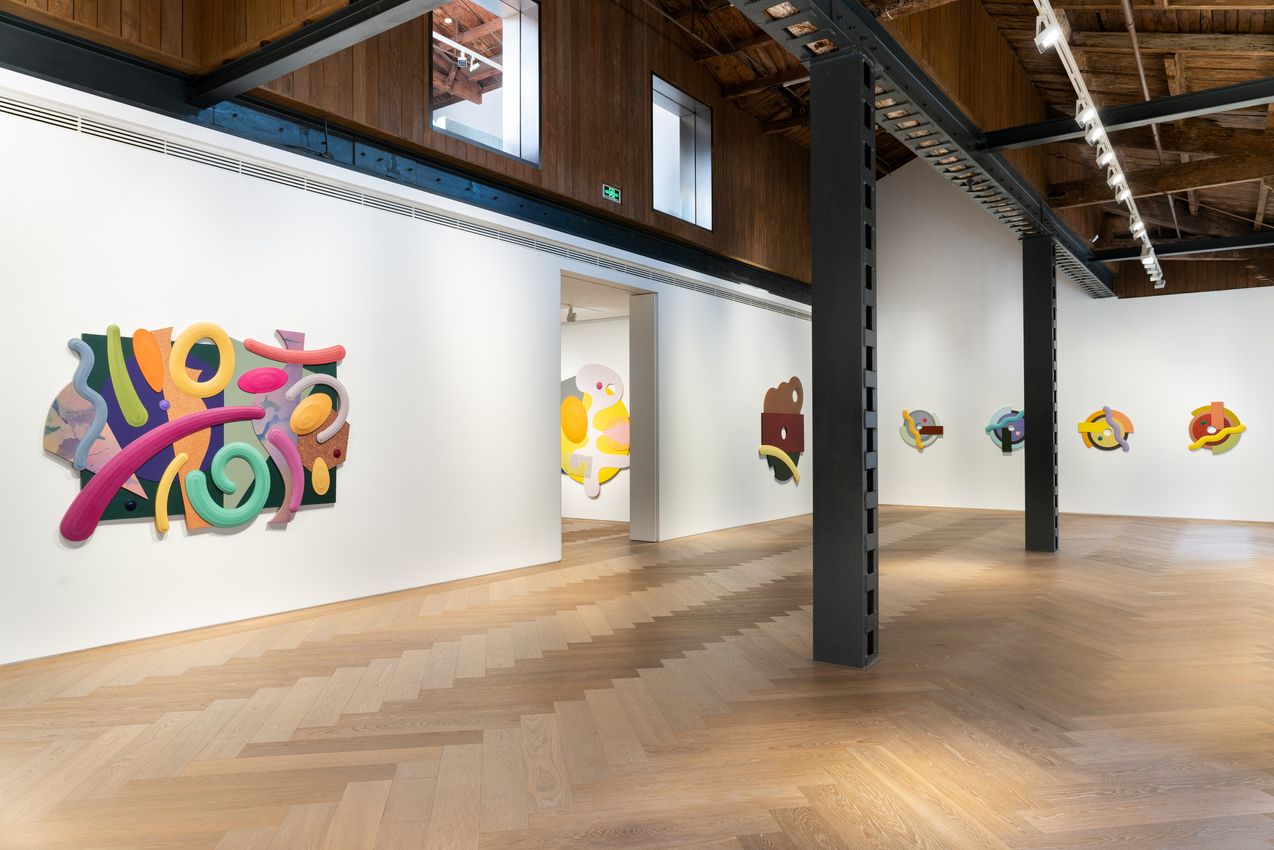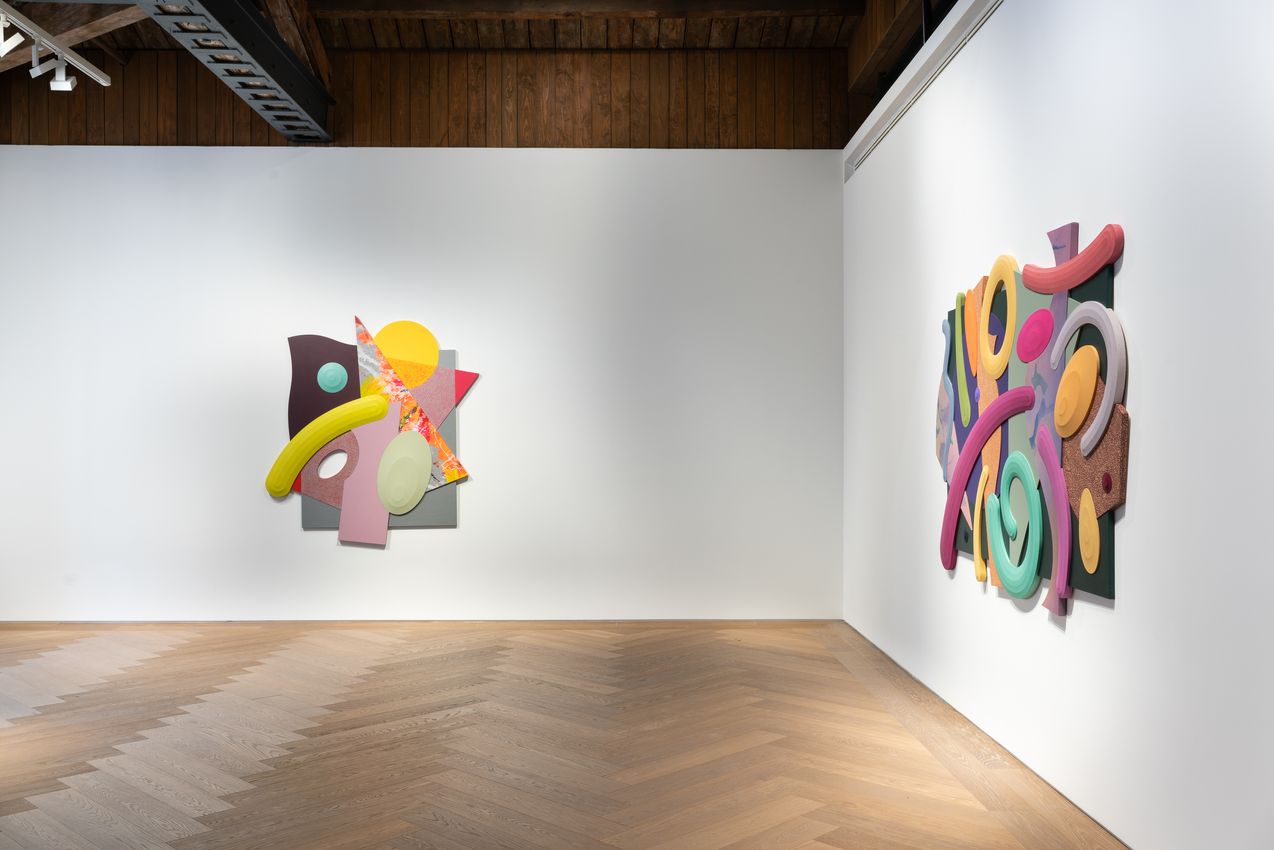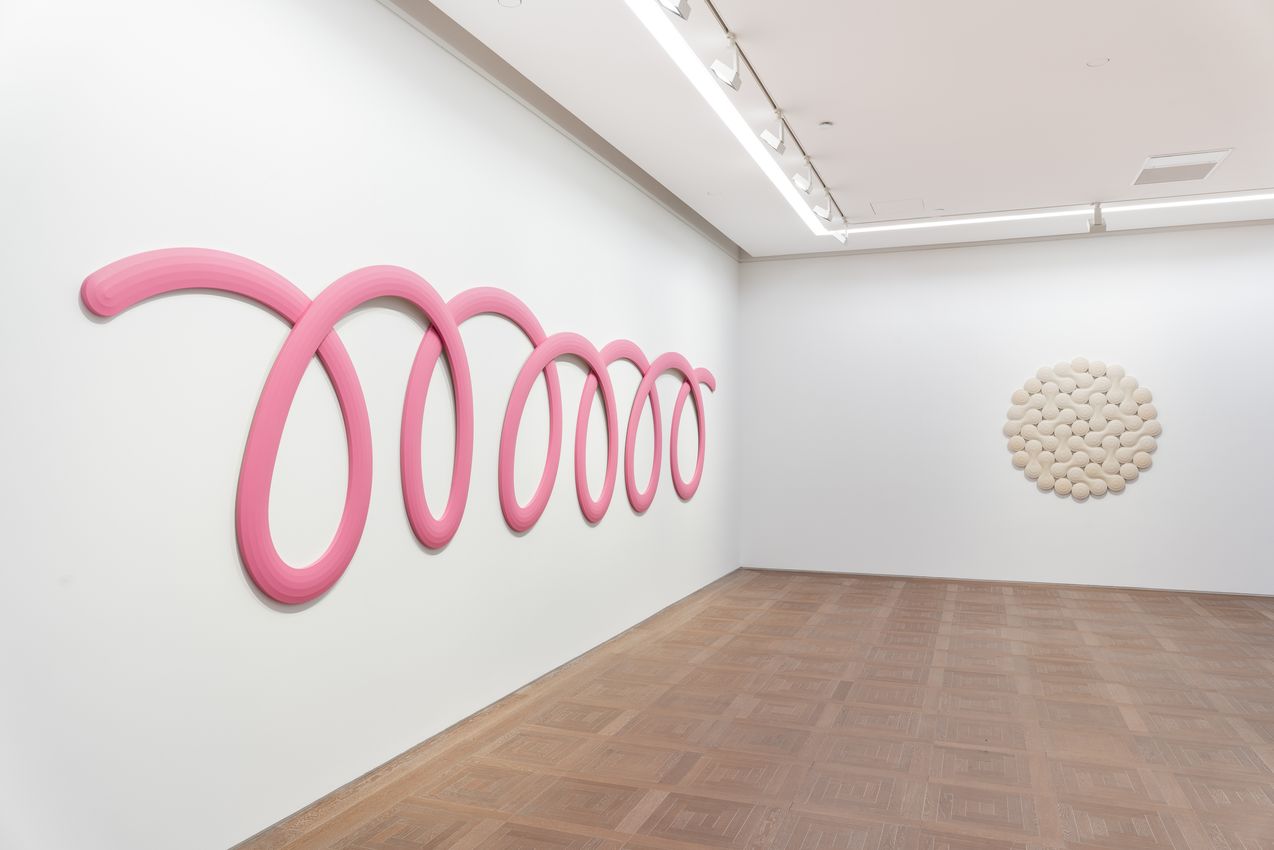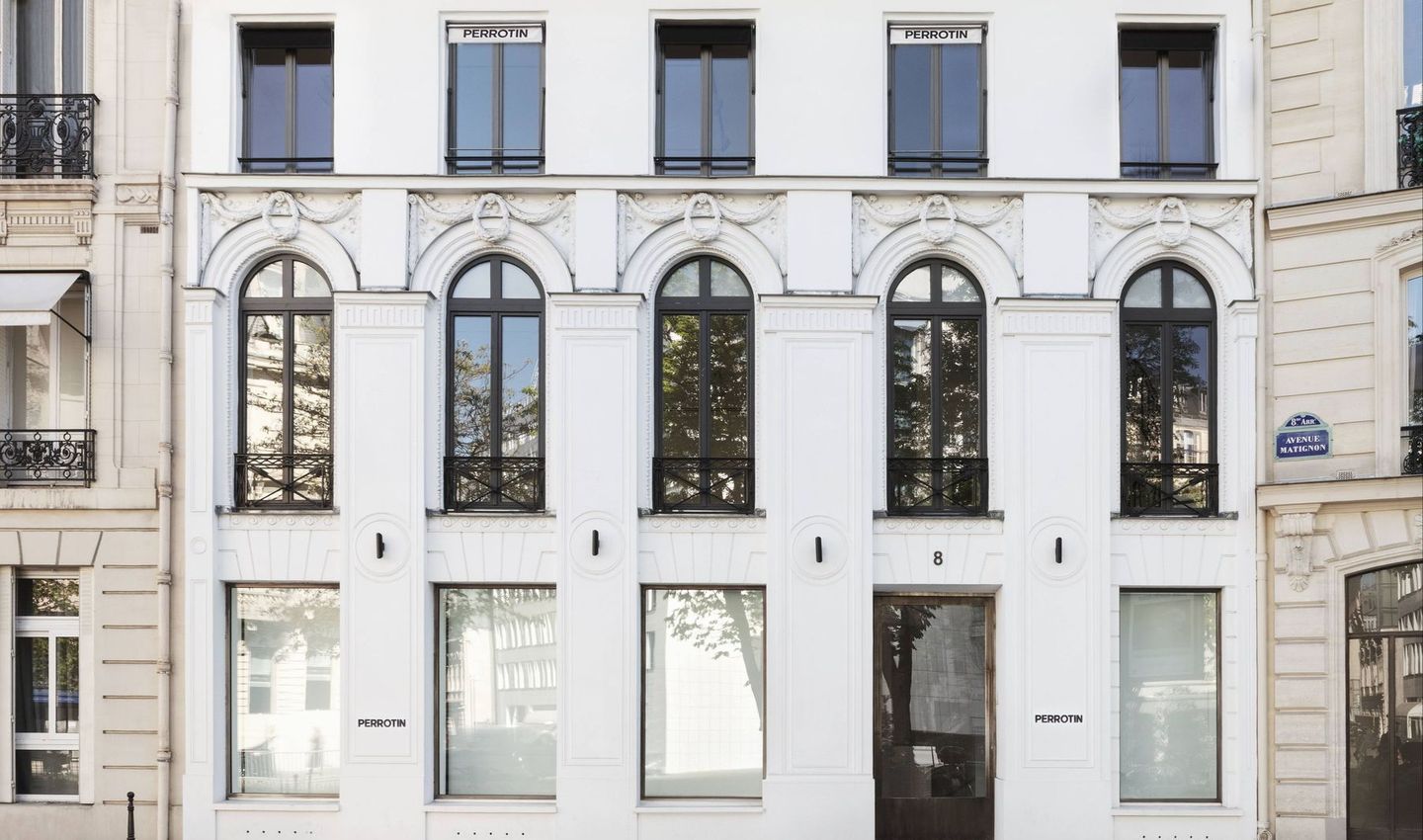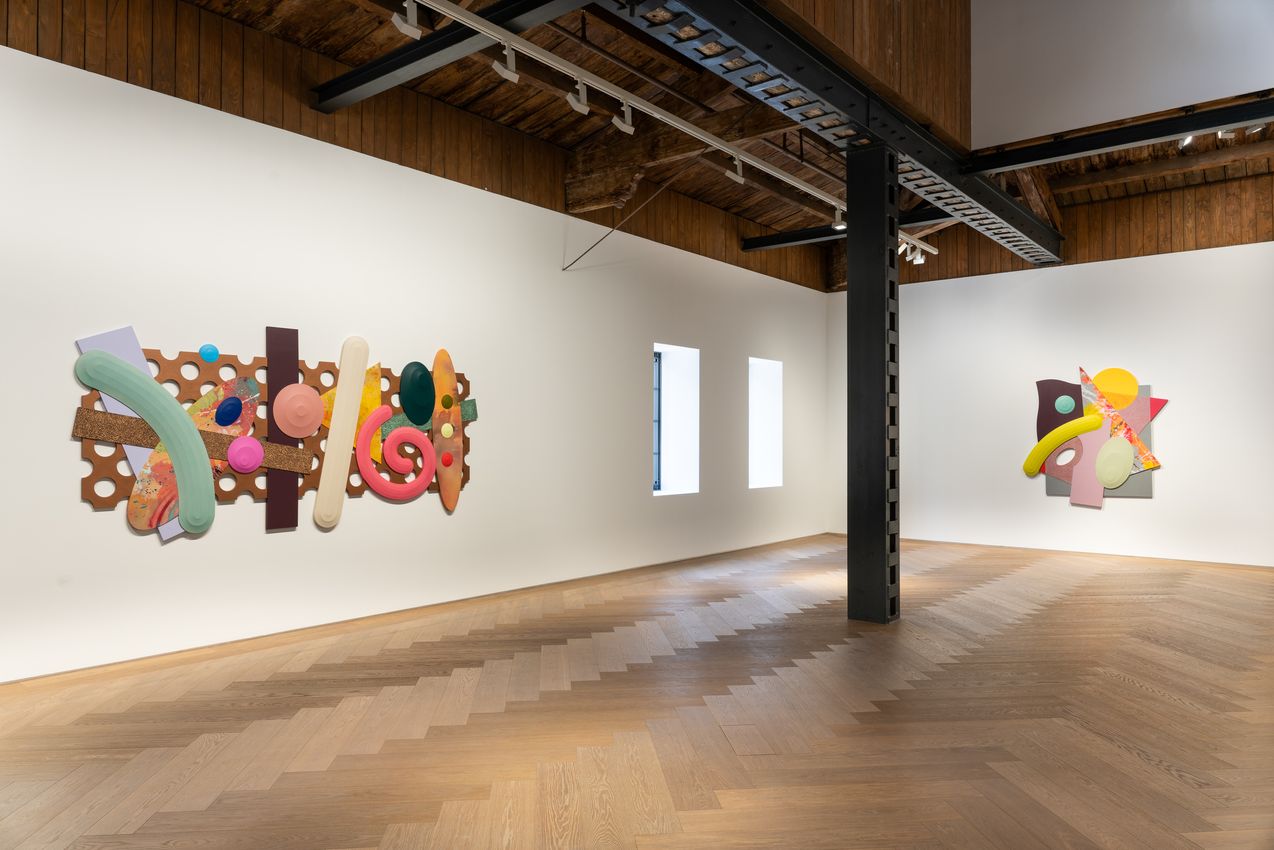
Perrotin Shanghai is pleased to announce Paradise, a solo exhibition by New York based artist, Josh Sperling. This is his sixth show with the gallery, and his first in China.
Sperling draws on the language of minimalist painting from the 1960s and 1970s, working primarily with shaped canvases. He crafts intricate plywood supports over which canvas is stretched and painted in an extending series of signature palettes. In their three-dimensionality, his works blur the lines between painting and sculpture, image and object. Mining a wide range of sources, from design to art history, Sperling has crafted a unique visual vocabulary remarkable for its expressive quality and irrepressible energy.
While Sperling’s shaped canvases and bright colours may call to mind the work of Frank Stella, the technical intricacy of construction at play in these pieces also recalls the combination and finesse found within landmark architecture and design—high-minded modernist Mies van der Rohe meets the self-consciously collaged and vernacular-leaning forms of Ettore Sottsass’s Memphis Group.
Paradise, Sperling’s largest exhibition to date, introduces numerous innovations to his honed repertoire. Sperling here announces both formal and technical developments that signal a bold and exciting direction. New to this exhibition—the addition of stylistic treatments and, in some occurrences, the stark removal of all colour, a gesture that reveals the shaped forms in their natural states.
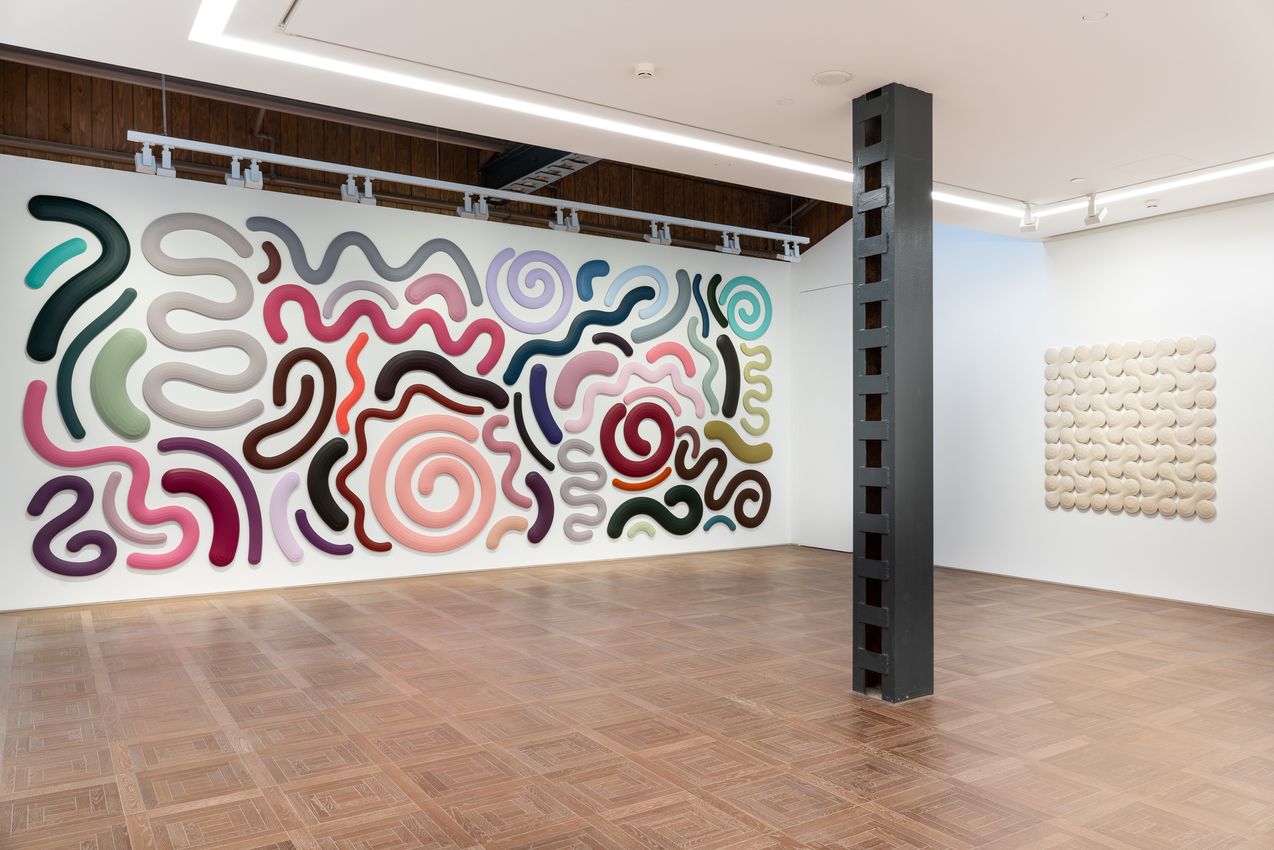
On display throughout the exhibition is a range of Sperling’s recurrent forms—Squiggles, Composites, and Double Bubbles. Squiggles, as the name denotes are canvases that resemble large scale doodles but constructed with a beguiling sense of complexity. From large looping cursives (where the canvas remarkably doubles back upon itself and weaves behind in three dimensions) to a series of gestural undulations in multiple colours.
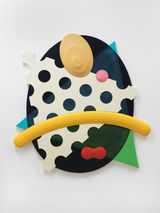
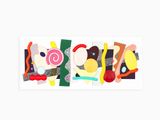
Composites mark the meeting point of many of Sperling’s forms. Here, clusters of shaped canvases nestle in and over each other, jostling for position and calling our attention from all directions. Sperling treats each panel with a different colour or textural application, resulting in a riot of divergent forms. In Fried Paradise or Muh-Chaz-Ih-Me-Oh, Sperling unveils a brand new texture to several canvases within the mix that is reminiscent of industrially treated ‘hammered enamel’ forms. This painted effect magically transforms each pliable canvas into a seemingly hardened fabricated material. Additionally and throughout the show, Sperling also introduces a new visually expressive motif that channels the aesthetic spirit of the mid-century American Abstract Expressionist movement.
Elsewhere in the show are distinct formations of Double Bubbles, small dumb-bell shaped tiered canvases arranged to form larger geometric structures. In certain instances, these double bubbles appear in strict square grids that recall minimal art, and in others Sperling debuts new circular mandala-like arrangements. Throughout these forms on display, Sperling experiments with minimal tones, gradients, and also the entire removal of colour. Without tones, the viewer is left to examine the formalist puzzle-like ingenuity of the component constructions without interruption—a striking advancement that’s impossibly bold and contemplative in equal measure.
About the Artist
Josh Sperling was born in 1984 in Oneonta, New York, USA. Lives and works in Ithaca, New York, USA. The genesis of Josh Sperling’s work springs from kaleidoscopic distillations of multiple art forms and design movements. From the high canon of midcentury minimalism, whereby Sperling’s shaped canvases emanate, to the more industrial replication of form and function found within product and furniture design, Sperling confidently straddles the line between high and low. Sperling’s process begins by meticulously stretching raw canvases over intricate plywood structures and then treating them in a signature palette of colours. These forms are then combined in a puzzle like array with competing structures, effectively (and energetically) dissolving the barrier between painting and sculpture.

Sperling’s work draws on the language of Minimalist painting from the 60s and 70s, with shaped canvases as his main recourse. For these, he crafts intricate plywood supports over which canvas is stretched and painted over in a signature palette of saturated, sometimes clashing colours. In their three-dimensionality, Sperling’s works blur the lines between painting and sculpture, image and object. Mining a wide range of sources, from design to art history, Josh Sperling has crafted a unique visual vocabulary remarkable for its expressive quality and irrepressible energy.

A respected voice in contemporary art discourse.
Focusing on ambitious storytelling and insightful art-world commentary. Ocula Magazine publishes in-depth interviews, critical essays and timely analysis on the artists, exhibitions and ideas driving the global art world.
Learn more about Ocula Magazine
Showcasing the best of the art world.
Ocula partners with galleries from around the world to highlight their artists, artworks and exhibitions. Gallery membership is by application and invitation, with each member vetted by an independent panel.
Learn more about Ocula Membership

Specialises in the sale of major artworks.
Led by a team with deep ties to the world’s leading auction houses, galleries and collectors. Ocula’s advisory team offers bespoke services to high-net-worth clients from around the world who are looking to acquire the best of contemporary and modern art.
Learn more about our team and services