Press Release

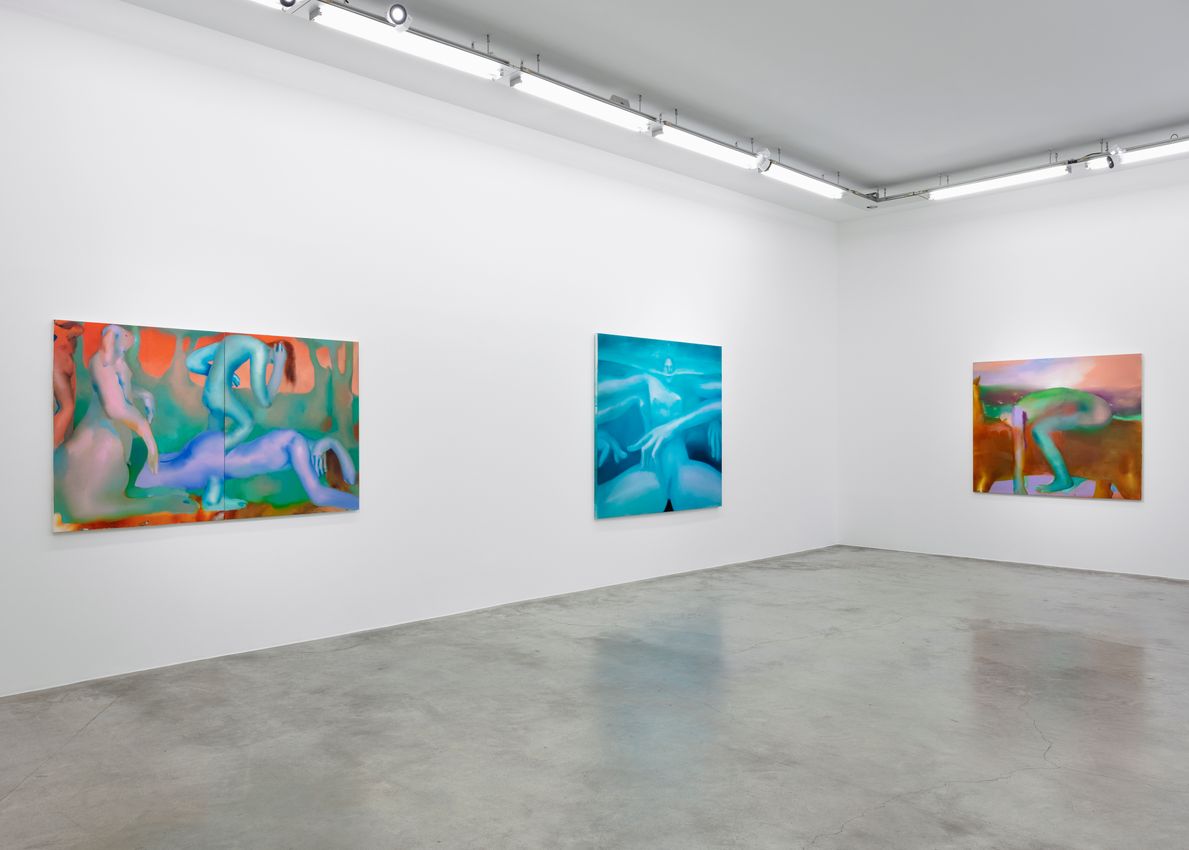
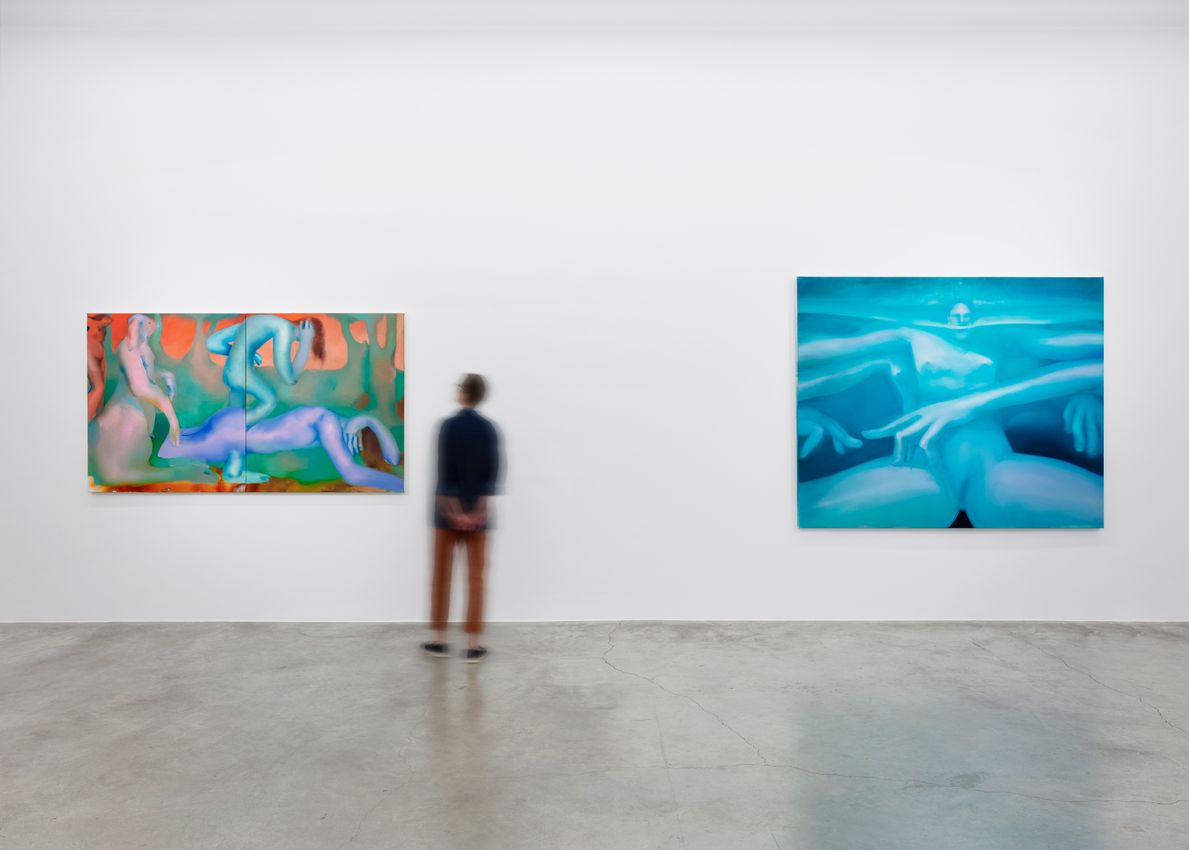
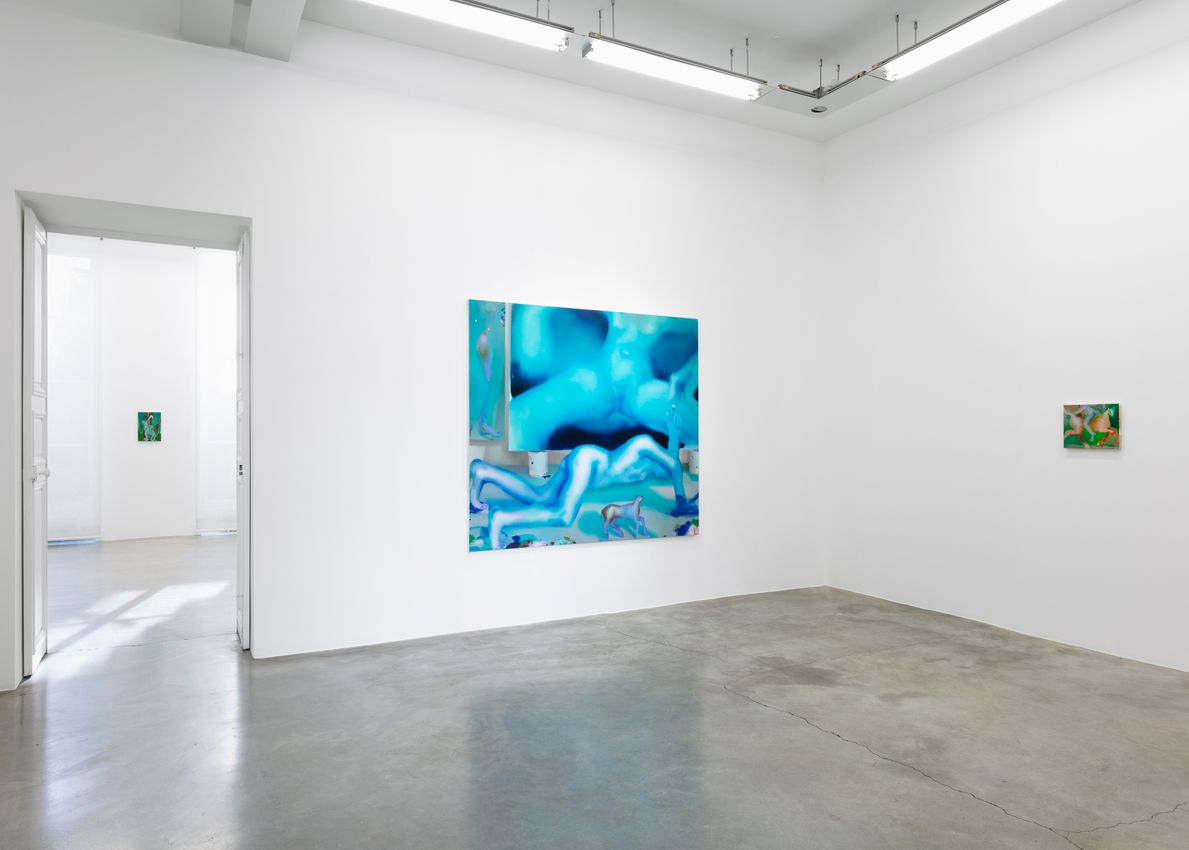
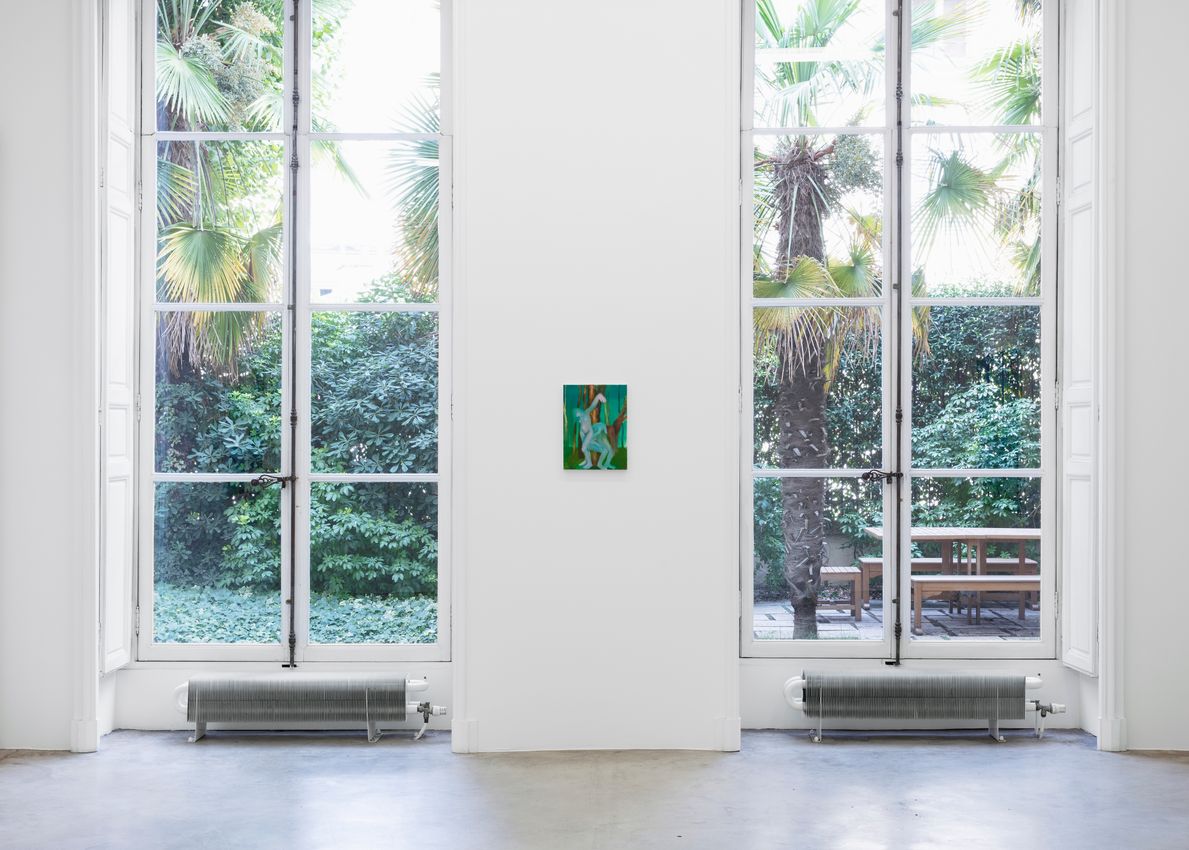
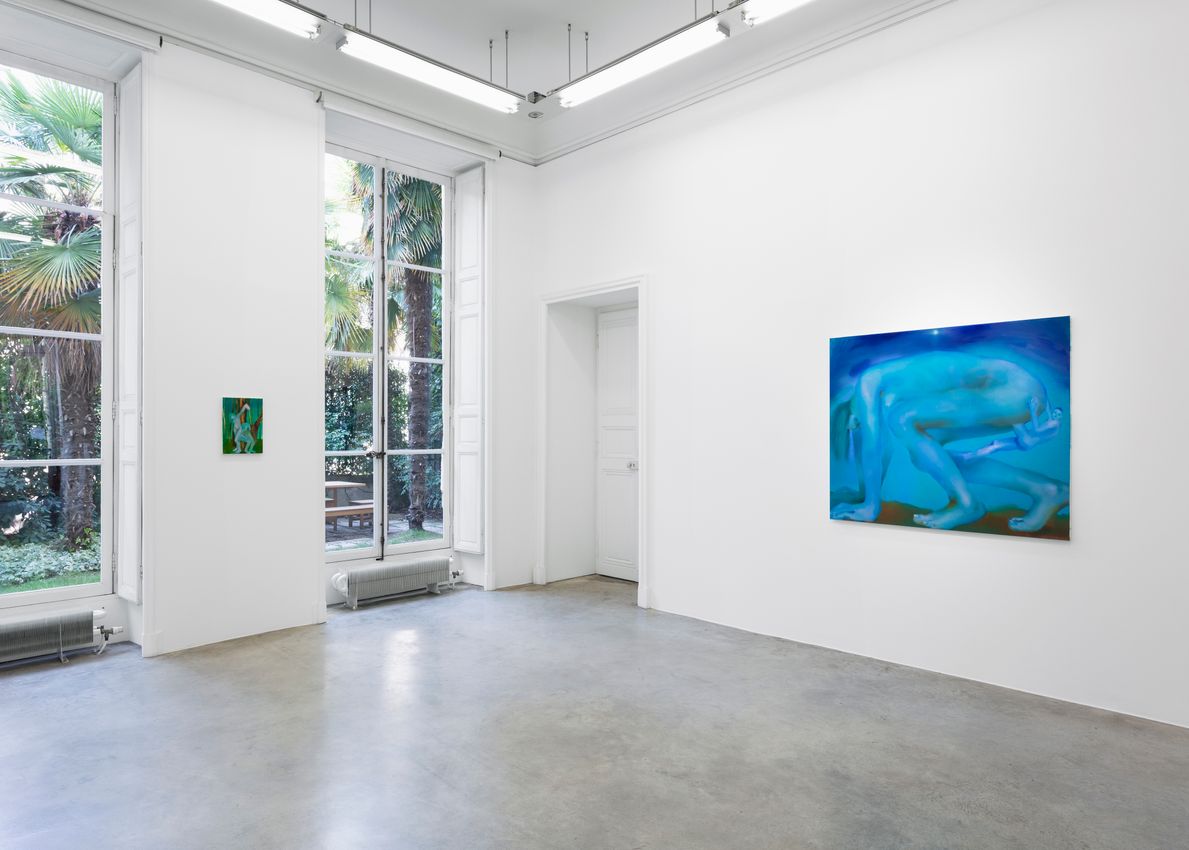
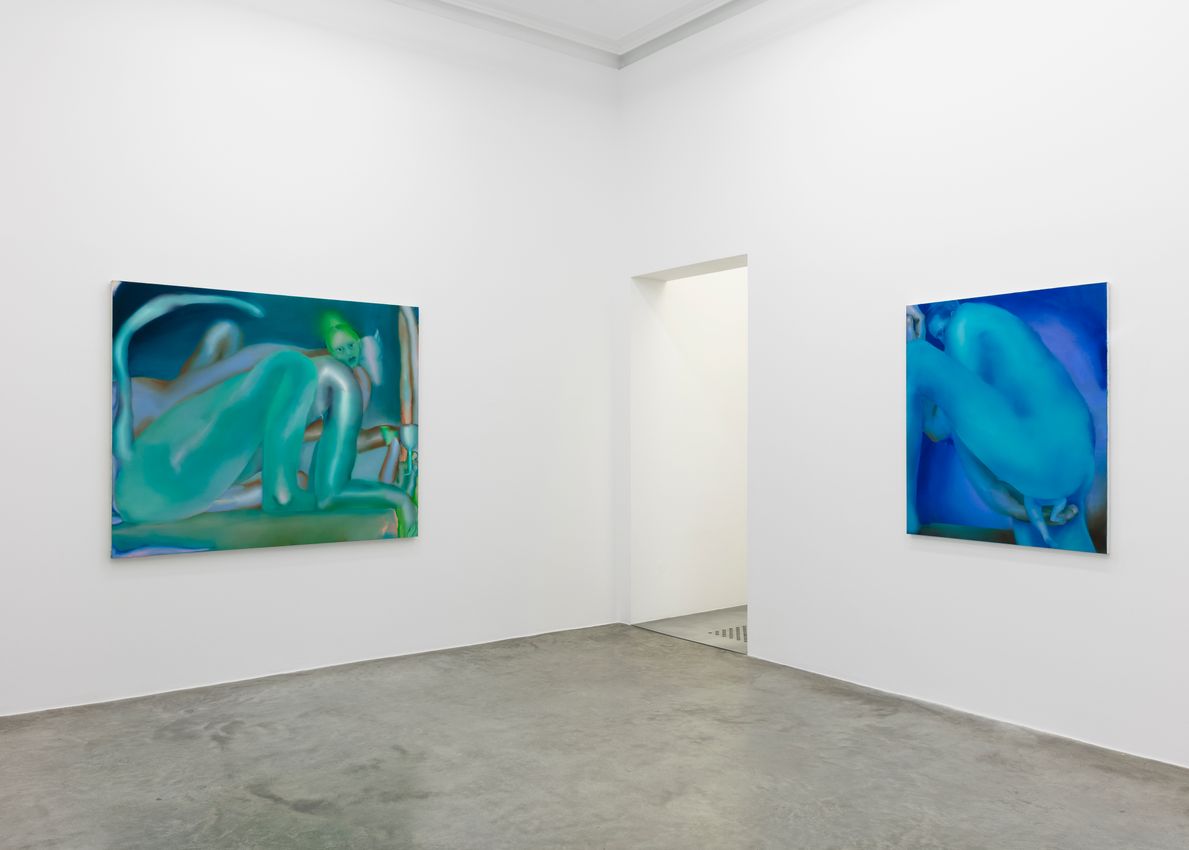
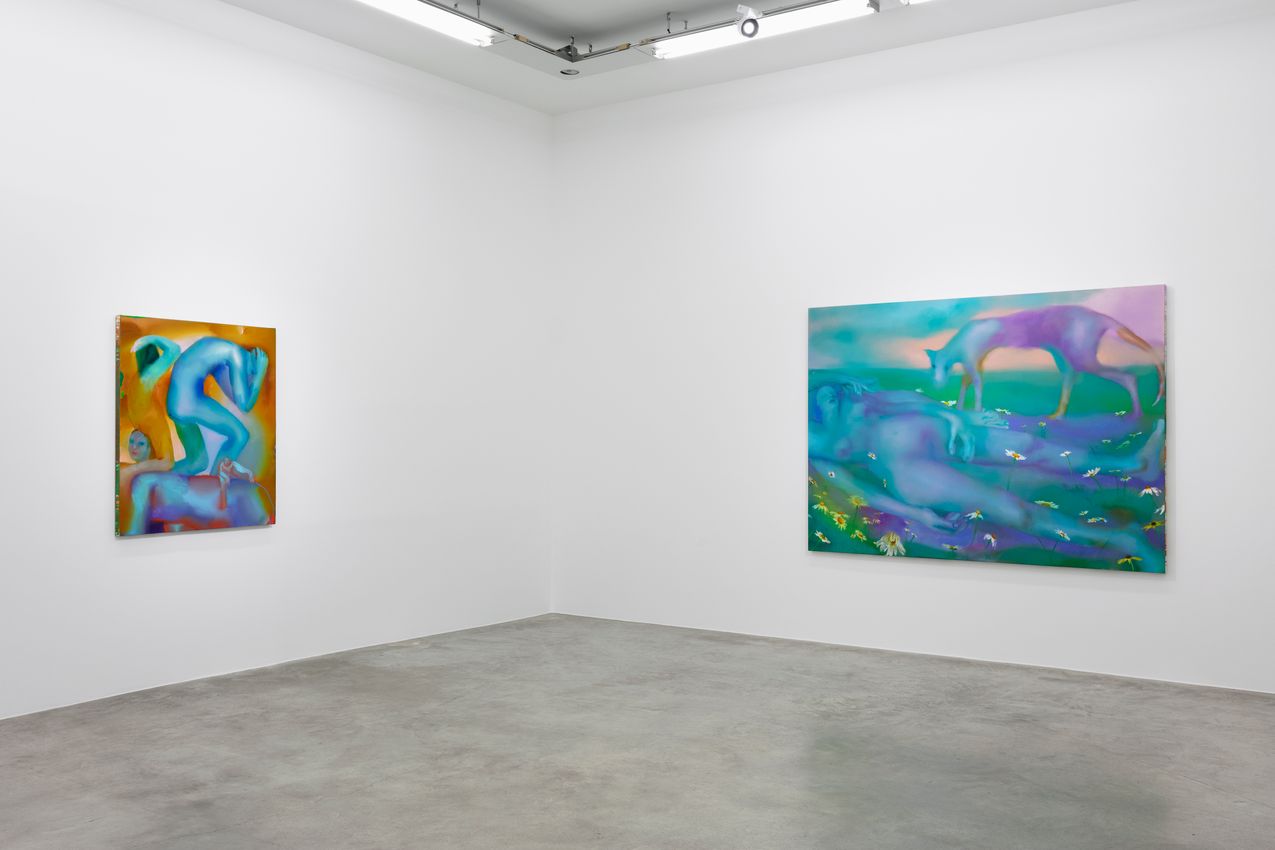
Perrotin is excited to present Dead Leg, Elizabeth Glaessner’s first solo exhibition with the gallery. It brings together fifteenpaintings, made over the course of the past two years, with aselection of recent works on paper.

Since receiving her MFA in 2012, Glaessner has undertaken an evolving pictorial search which she seems to have honed in recent years intoa focused path which suits her development. In Dead Leg, her colourpalette has narrowed to blues, greens and browns; her subjects havebeen refocused around post-apocalyptic situations essentially featuring women in distress; her style, too, has sharpened and asserted itself: the ambitions of her painting are now precise and explicit.

‘Allowing things to not necessarily make sense – that helps me in letting compositional decisions inform a narrative. Not tying myself toreality...that was a critical moment,’ she told Interview magazine in July2014. This is clearly still the case today where the moments that unitethe composition of the painting with its narrative seem to have beenappeased by an asserted distancing from any temptation of reality. Aleg disappears in the rift of the two joined canvases that make upRabid Hole, 2022, and if the progression of the painting suggests it,a pair of legs will end in the heads of birds in Dead Can Dance, 2020,imprinting a surrealist dimension to a painting ultimately closer to symbolism, where pessimism, esotericism and melancholy seem engagedin a three-step waltz. A symbolism in which the very idea of the femmefatale would have given way to the tragic female destinies imposed bya patriarchal system still intact, as seen in the particular postures of itscharacters.

Glaessner’s paintings seem to begin ‘right after’ Masaccio’s Adam and Eve are driven out of paradise in the Brancacci Chapel of theChurch of Carminé in Florence. An ‘after’ nourished by all that separates this extraordinary little fresco from our connected present day.The violence of this narrative departure, where two spurned characters bear their irremediable shame on their very bodies, is also at playin Glaessner’s work. However, Glaessner does not refer to any particular event, rather articulates the conditions of open-ended narratives.It is not clear, for example, whether the small figure in Escapism, 2022 emerges from, or is forced into, the lower abdomen where a hand receives, or forces them. The realities to which the scenes depictedrefer are just as vaporous as their pictorial treatment, and probably justas complex as the treatment of the pictorial material, sometimes soaking the canvas with fluid pigments (leaving the grain visible) andsometimes using impasto techniques to build up the surface. Thescenes are bathed in an enveloping atmosphere, where the narrativeis often less important than the emotions it conveys. One has the feeling of being in front of Loïe Füller performing her serpentine dance inthe thick waters of a rising lake. It is not a question of reconstructingthe succession of events, as you would in a police investigation, thatled these characters to their obvious desolation, but of taking note ofit and, most likely, sharing this feeling because it is also ours. Clearly,these catastrophic characters open the gates to our remorse, oursense of injustice, of guilt, to our cowardice perhaps as much as toour survival instinct.

Curiously, it was Degas who inspired this exhibition. Glaessner recalls a recent visit to Paris and her discovery at the Musée d’Orsay, of1865’s Scene of War in the Middle Ages (or The Misfortunes of theTown of Orléans). ‘When I saw the painting, I was struck by how muchit resonated today. At a time when women’s rights are being strippedaway and our bodies are once again in peril, I’m reminded of the cyclical nature of humanity and how we cannot seem to escape this battlecentred on power and control,’ she confides. And in a literal way, thefemale figure on the right of Degas’s painting lying on the ground,stripped naked, trampled by a horse, is indeed found in Glaessner’sown War in the Middle Ages, 2022. But it is not so much the character that reappears, but the posture, in fact several centuries of pain- ting offer Glaessner an alphabet of postures from which she draws.The fact that her characters sometimes seem to be direct descendants of those in medieval illuminations gives them an unexpectedweight.

To this Degas painting seen at the Musee d’Orsay, and to all the studies of bathers from which Glaessner makes no secret of having beeninspired, the artist adds Angelica Saved by Ruggiero by Jean-Auguste-Dominique Ingres, a painting she saw at the Louvre during thesame trip whose female figure is naked with her hands tied up. TheDegas also draws parallels with Goya’s Disasters of War series whosemorbid titles (Bury and be silent, Nothing can be done about it, Noone is there to help them or Don’t do that either) and imagery represent the consequences of war, and the sexual abuse suffered by Spanish women.

It is not that unusual that so-and-so a figure, from such-and-such a painting has fed Glaessner’s imagination and plastic vocabulary. Thatthe history of painting feeds the present day of painting is the least ofit. What remains of these characters, less tele-transported thanapproximately resuscitated, is their inscription by the artist in settings/landscapes devoid of human construction, a kind of primary natureneither benevolent nor hostile. The theatre of an inevitable purgatory.

Read More

Installation Views

Also Exhibiting at Perrotin

About the Gallery

Emmanuel Perrotin founded his first gallery in 1989 at the age of 21. He has opened since then over 17 different spaces, with the aim of continuing to offer increasingly vibrant and creative environments to experience artists work. He has worked closely with his roster of artists, some since more than 25 years, to help fulfil their ambitious dreams and projects.

View Gallery Profile
Address
76 rue de Turenne
Paris
France
Opening Hours
Tuesday – Saturday
10am – 6pm
(1)
Paris 76 rue de Turenne
Perrotin
76 rue de Turenne, Paris, France
+33 1 42 16 79 79
http://www.perrotin.com

Opening hours
Tuesday – Saturday
10am – 6pm
The art world in focus