Press Release

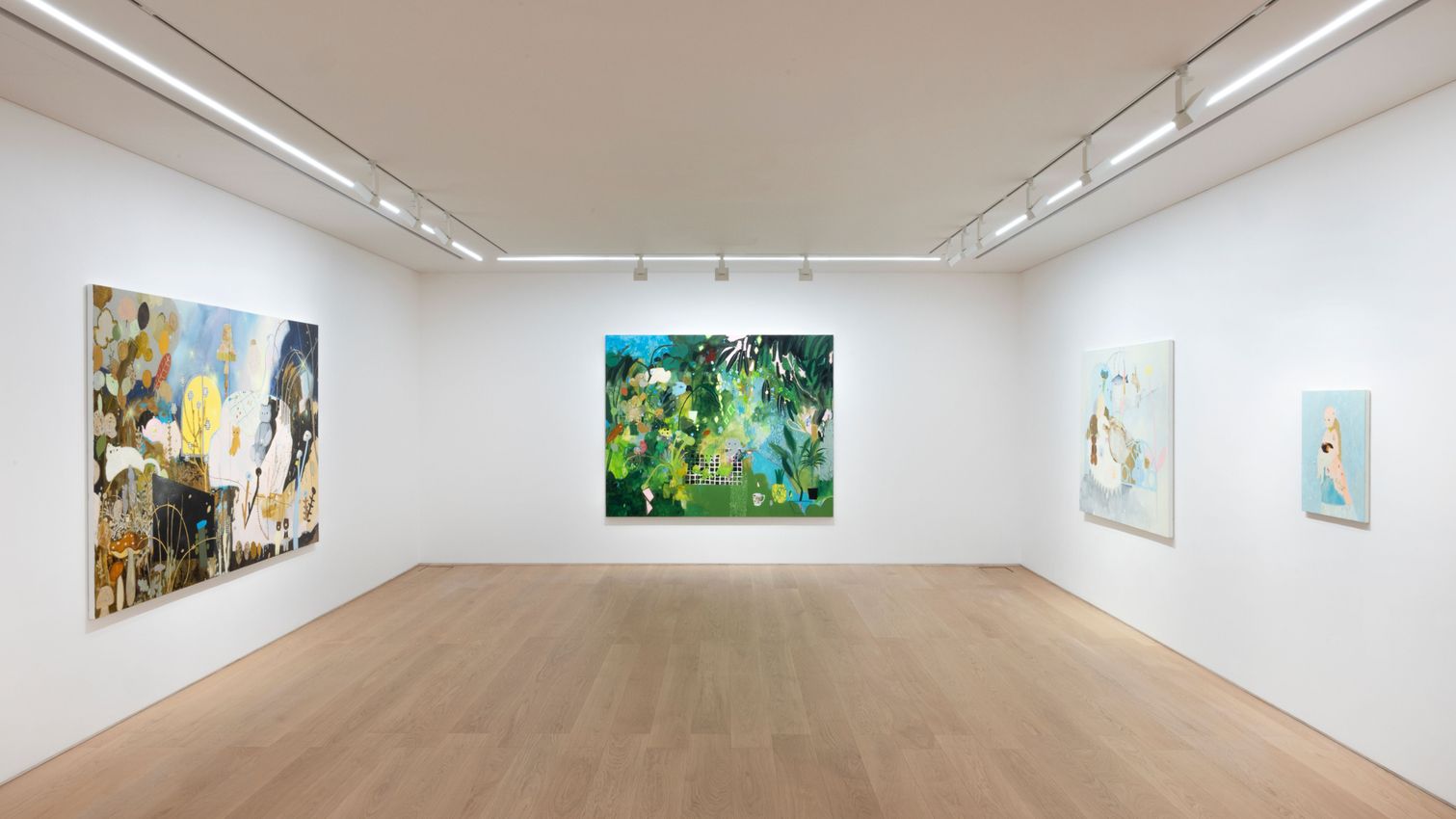
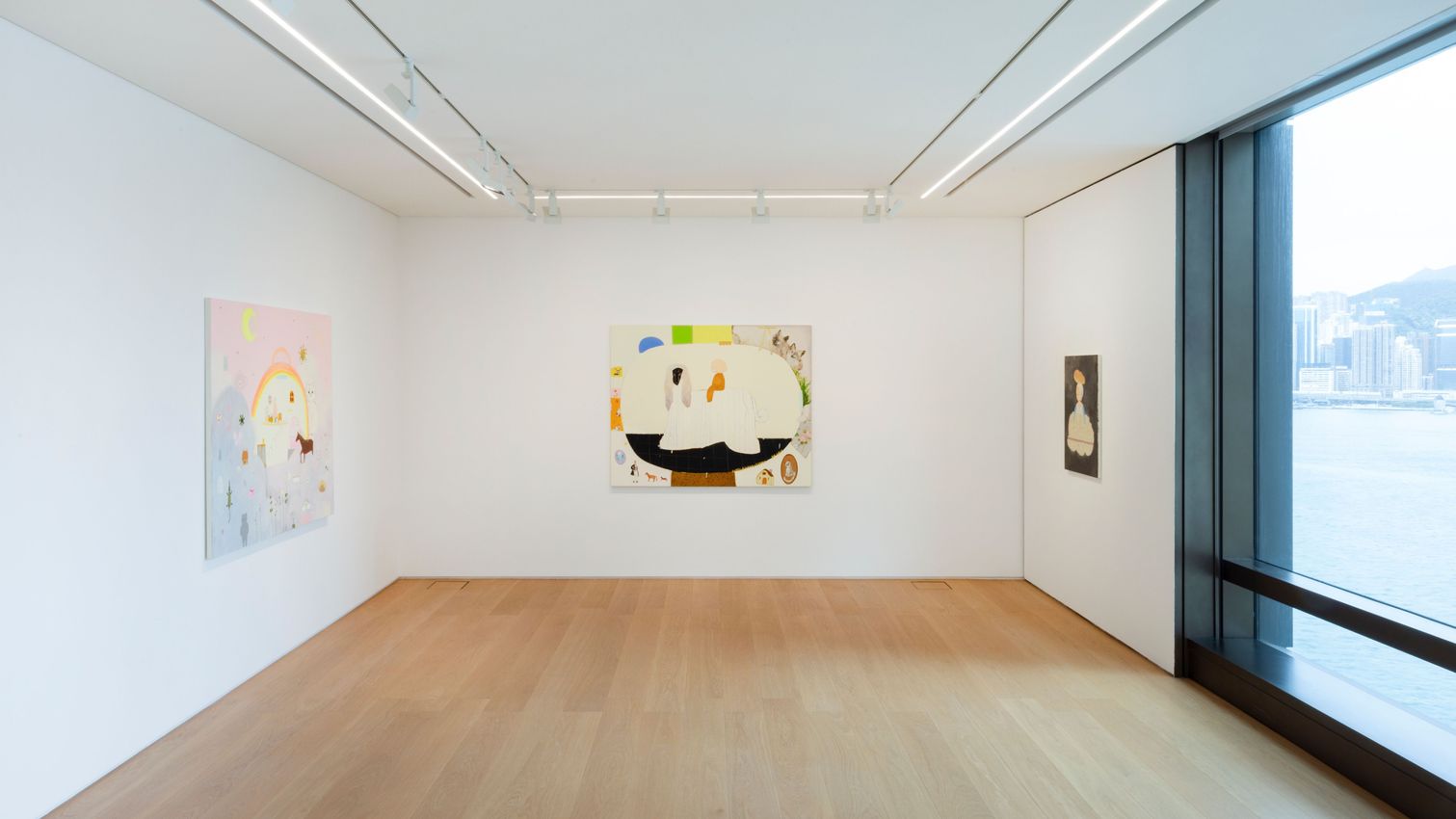
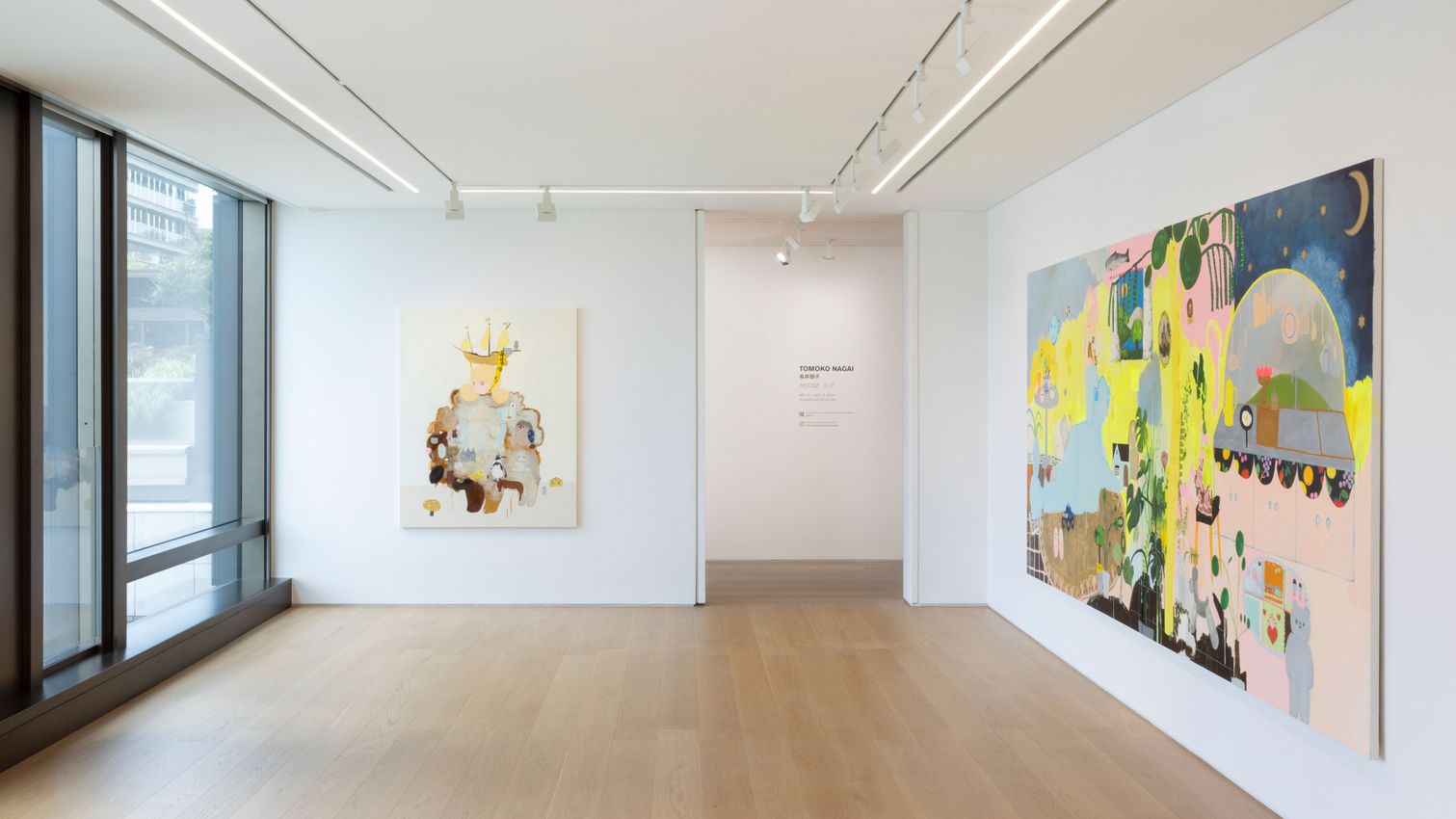
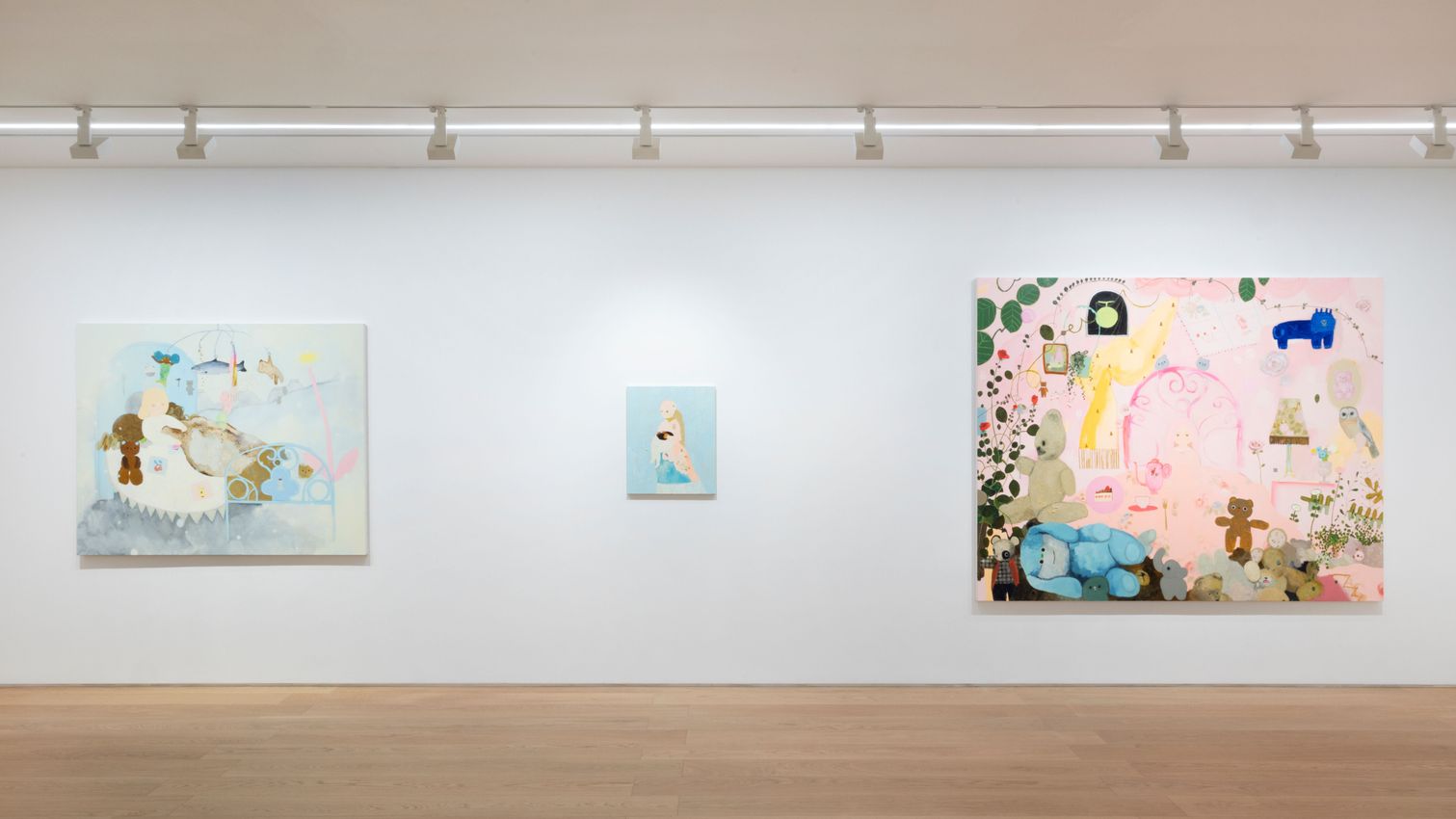
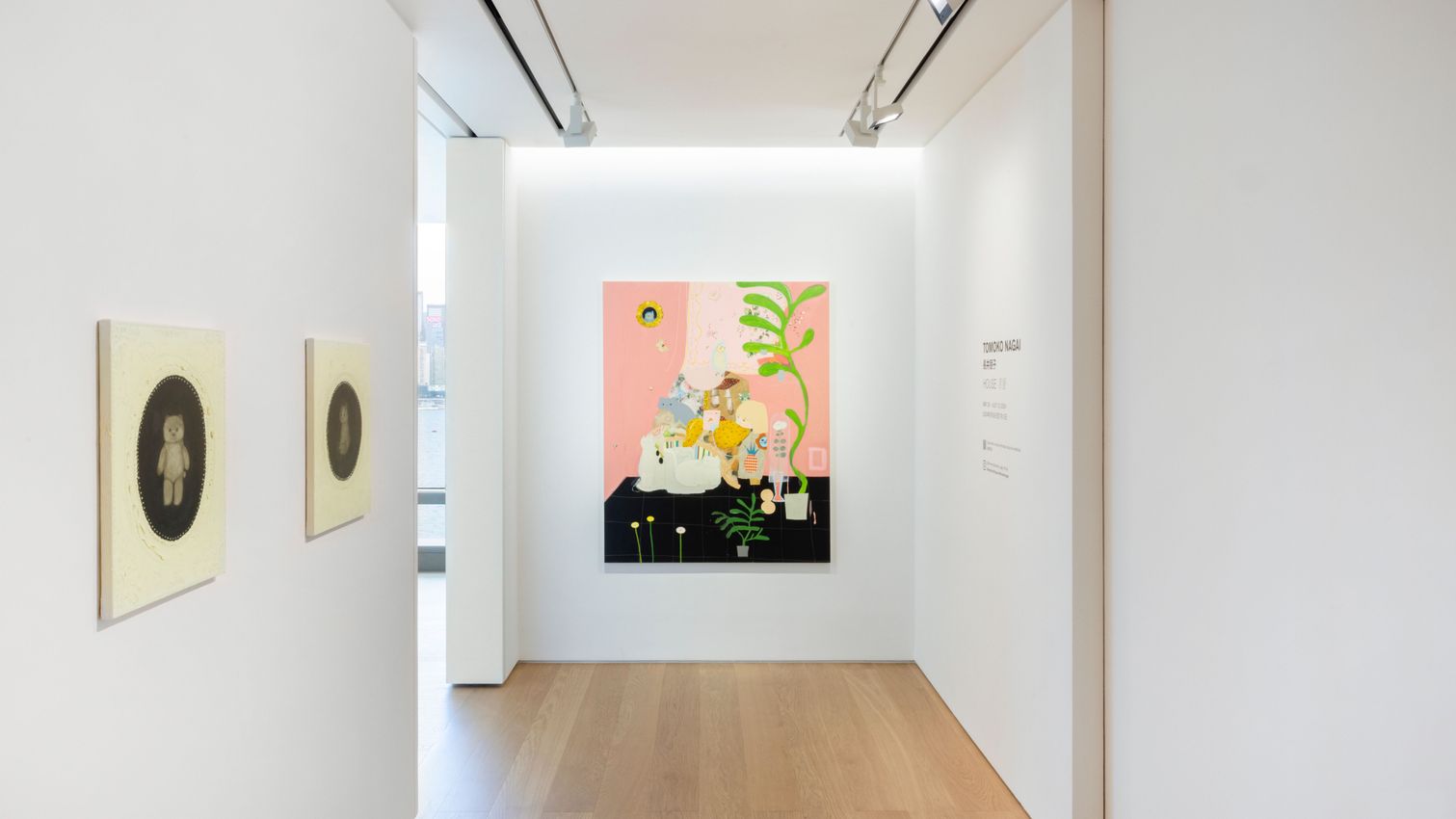
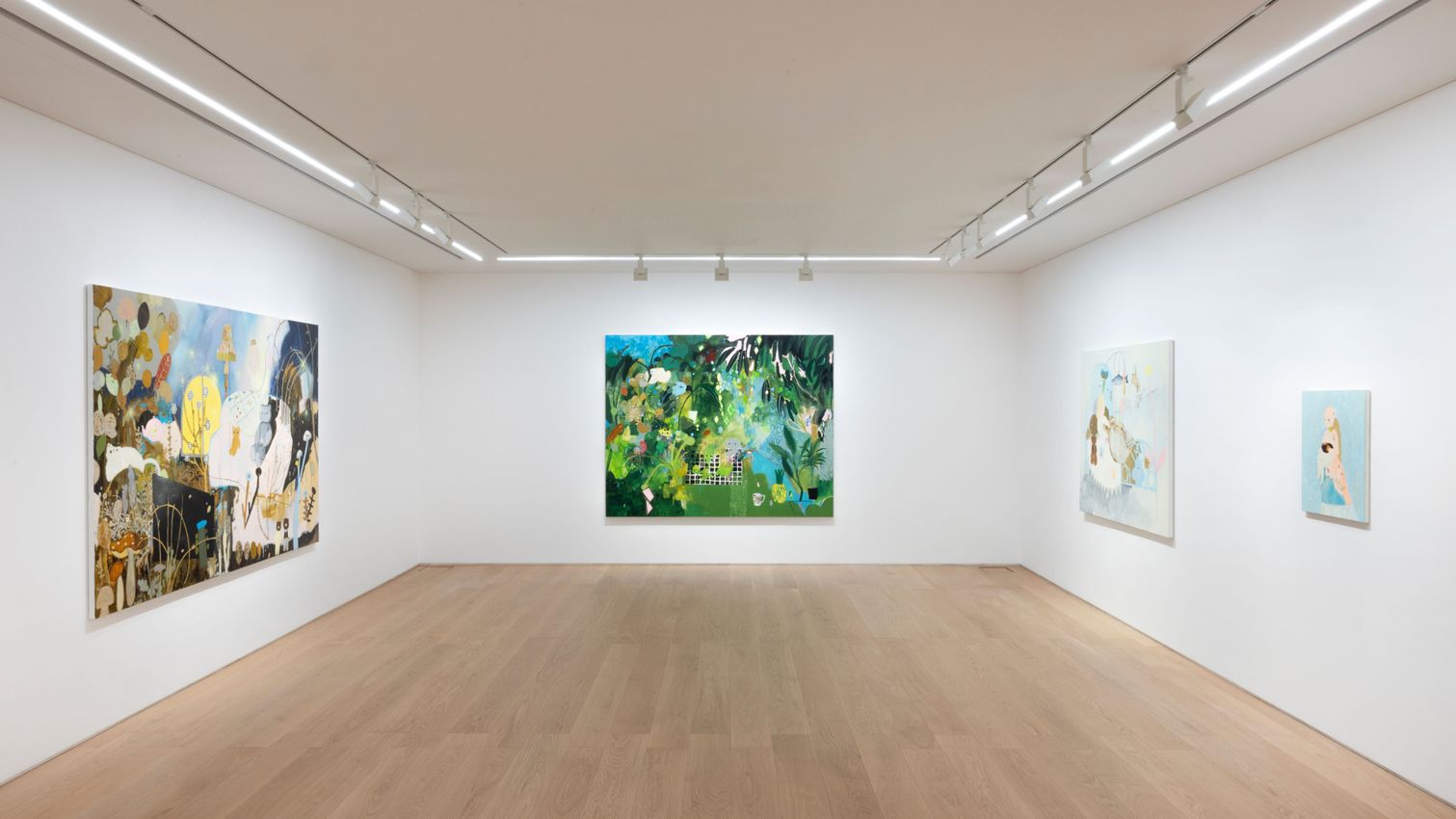
A gentle breeze stirs; butterflies flutter their wings; a teddy bear sits in the room,smiling; the crescent moon casts a soft, pearlescent glow over the kitchen;leaves seem to nestle, tenderly drooping, lulling a little girl into her dreams. Theminutiae of life quietly inhabit every corner, hidden amidst various shades ofverdant green, where lost moments linger...

To translate Tomoko Nagai’s painted scenes into words, one naturally gravitatestowards quiet, delicate, almost whispered phrases—as if more emphatic wordsor a louder voice would break the spell of this dreamlike serenity and tranquility.The stuffed animals, the little girl, and even the pots and pans are transformedinto playthings of a make-believe home, beckoning us to a world that seems farremoved from reality. Here, we are drawn to observe often overlooked detailsand listen to their rhythm. Yet all these elements originate from our shared reality,informed by the artist’s memories and experiences.

Nagai’s earliest memories involve playing with dolls and toys and fabricatingminiature houses for them. She recalls, “I would indulge myself in fantasies,using dolls to enact the scenes. This probably marks the beginning of my artisticendeavors.” Home represents the initial physical space where individuals firstperceive and comprehend the world through their bodies. This corporealjourney extends from one’s home to the surroundings and, ultimately, to the cityone inhabits. Nagai vividly remembers an abandoned station near her childhoodhome, where an object by the tracks—perhaps a part used in freight trains—hadthe shape of a dog. “It seemed like a living entity. And this curious resemblance,like a primal landscape, has stayed with me.” For her, memories need not be anchored to specific entities; they can manifest as ambiguous impressions oreven illusions, deeply rooted in our minds, providing a point of return.

As we grow, our journeys expand from the relatively confined spaces of ourhomes into the wider world. Life, both public and private, pulls us in all directions,catching us off guard. The physical cognizance nurtured in the sanctuary of thehome seems increasingly inadequate under the weight of these pressures. Thecherished, lighter moments of memory are on the brink of vanishing. Nagainavigates universal life experiences—such as the birth of a child and the passingof a beloved pet— by retreating into a fantasy world to confront a growing fearof loss.

But Nagai’s “submersion into the world of fantasy” is not an escape into theirrational. According to the artist, “There are many things in the real world Iadore, such as exquisite landscapes and majestic forests. When I encounterthese captivating tableaux, I think to myself, ‘If only something could be added.‘So, I embellish reality through my imagination, bringing it closer to my idealworld.” Nagai traverses reality and fantasy, never tethered exclusively to either.Through her nuanced perceptions and lived experiences, she crafts a distinctive”third space”—a hybrid domain that hovers between the tangible and theimagined. This space emerges from a unique perspective, shaped by analternative logic and a deeply personal sensory interpretation.

Nagai’s works offer fresh discoveries upon each viewing. In _My Favorite Sofa_(2023), tucked among the lush green foliage, a grey teddy bear and a parrotseem engaged in a silent dialogue while, in the background, a little girl and akitten are engrossed in a Hamtaro story. In Tea Time (2023), a teddy bear sitsatop a lion, preparing for afternoon tea with friends. In Bath Living (2023), thebear luxuriates in a bathtub and greets “the little sprites” in the bushes as lightfilters through the leaves, casting fluttering shadows reminiscent of butterflies.Nagai’s acute observations and perceptions recall Lucretius’ On the Nature ofThings. As Italo Calvino aptly said about the poem, “Knowledge of the worldtends to dissolve the solidity of the world, leading to a perception of all that isinfinitely minute, light, and mobile.” Lucretius urges us to focus on thesemicroscopic, kinetic, subtle worlds to guide us toward hidden, invisible realms:

_For behold whenever_

_The sun’s light and the rays, let in, pour down_

_Across dark halls of houses: thou wilt see_

_The many mites in many a manner mixed_

_Amid a void in the very light of the rays,_

_And battling on, as in eternal strife,_

_And in battalions contending without halt,_

_In meetings, partings, harried up and down._

_From this thou mayest conjecture of what sort_

_The ceaseless tossing of primordial seeds_

_Amid the mightier void—at least so far_

_As small affair can for a vaster serve,_

_And by example put thee on the spoor of knowledge._1

__

Where, then, do Nagai’s paintings lead us? As Lucretius wrote, it is only in adarkened room that we can see the movement of particles in sunlight. Perhapsit is our experiences of loss and decay, or the harshness we face in reality, thatdraw us closer and make us cherish these fragile, ephemeral shimmeringparticles—the serene and beautiful scenes depicted by Nagai. It may beprecisely because of the troubles, cruelty, and misfortunes in life that we areable to recognize, perceive, and truly appreciate beauty. As Misuzu Kanekoexpresses it in her nursery rhyme “Rainbows on Eyelashes”:

_Wipe away, wipe again,_

_Tears that keep flowing down._

_I can’t help but think—_

_—I must surely be_

a child who was found.

__

_On the bridge my lashes make,_

_A beautiful rainbow sways._

_As I look, in wonder stray—_

—what snack will come my way today?

__

In Nagai’s “third space” between reality and fantasy, we retain some of ournaivety, idealism, and rebelliousness amid life’s harsh realities. Through hercreations, we are invited to construct a new home for our adult selves, a placeshaped by our individual visions. This home is a vessel of cherished memories,“a portal to fantastical worlds and a refuge from the brutality of reality,” offeringus a fresh start.

Read More

Installation Views

About the Artist

Tomoko Nagai was born in Aichi Prefecture in 1982. She graduated from Aichi Prefectural University of Fine Arts and Music in 2006, majoring in Oil Painting. She currently lives and works in Toyohashi-city, Aichi.

View Artist Profile

Also Exhibiting at Perrotin

About the Gallery
Emmanuel Perrotin founded his first gallery in 1989 at the age of 21. He has opened since then over 17 different spaces, with the aim of continuing to offer increasingly vibrant and creative environments to experience artists work. He has worked closely with his roster of artists, some since more than 25 years, to help fulfill their ambitious dreams and projects. The gallery is now based in New York, Paris, Hong Kong, Seoul, Tokyo, and participates in all the significant worldwide art fairs each year (Art Basel (Hong Kong, Miami, Basel), Frieze (London, New York), FIAC (Paris), Dallas Art Fair, Art Cologne, Art Stage Jakarta, Expo Chicago, Art021 & West Bund Art & Design, Shanghai, Zona Maco Mexico, amongst others).
View Gallery Profile
Address
807, K11 Atelier Victoria Dockside
18 Salisbury Road
Tsim Sha Tsui
Hong Kong
Hong Kong
Opening Hours
Tuesday – Saturday
11am – 7pm
(1)
Hong Kong 807, K11 Atelier Victoria Dockside, 18 Salisbury Road
Perrotin
807, K11 Atelier Victoria Dockside, 18 Salisbury Road, Tsim Sha Tsui, Hong Kong, Hong Kong
+852 375 821 80
http://www.perrotin.com

Opening hours
Tuesday – Saturday
11am – 7pm
The art world in focus