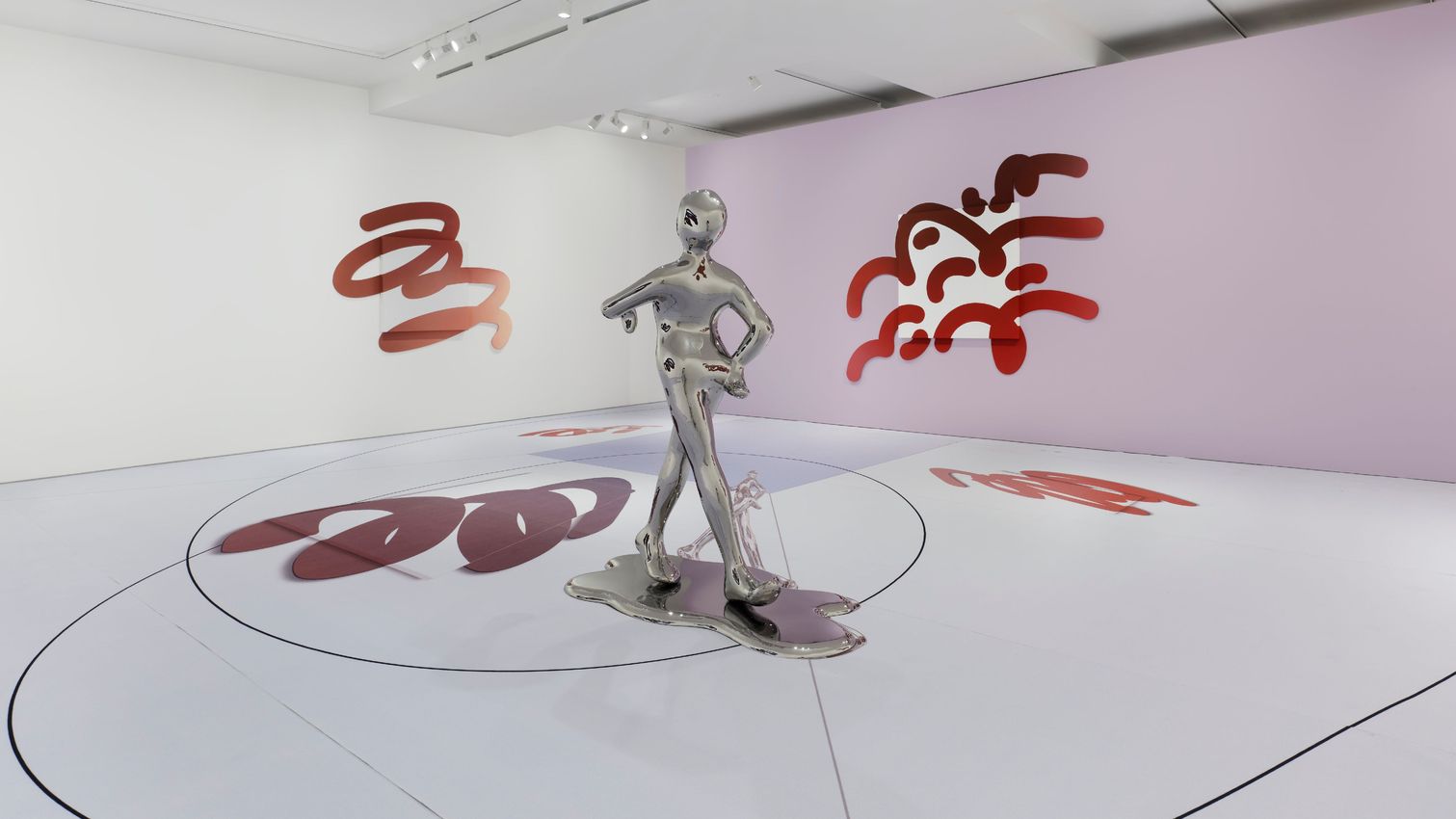




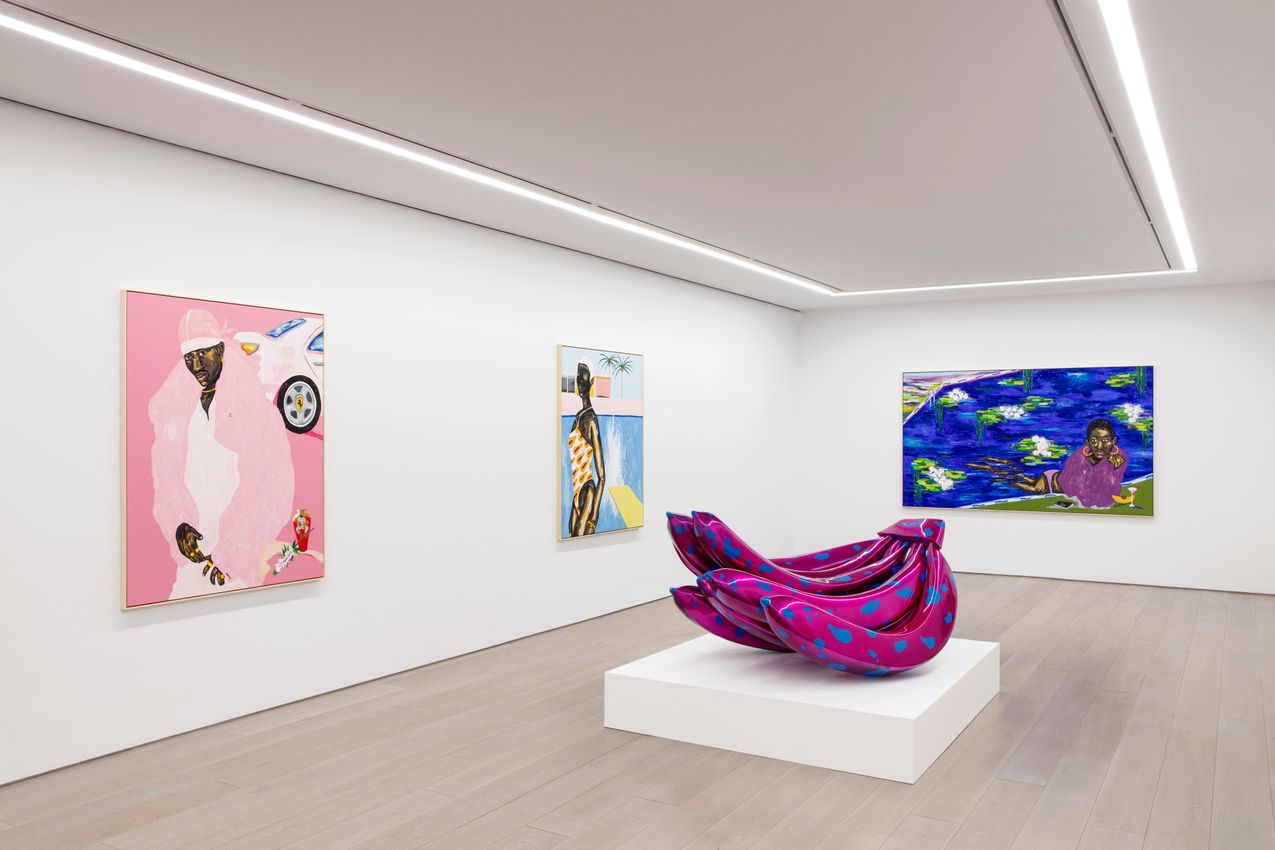
Perrotin New York is pleased to present Zéh Palito’s first solo exhibition with the gallery titled Cars, Pools & Melanin, consisting of new paintings and sculptures.
Zéh Palito and I met in Jardins on a July afternoon in 2024 to discuss his work. Neither of us is from Jardins, a neighbourhood in São Paulo known for its concentration of galleries and art dealers. Zéh Palito is from Limeira, in the countryside of São Paulo, and I am from Minas Gerais, a state with deep ties to São Paulo. We were both visitors, somewhat accustomed to the social codes of that space which we occupy professionally with varying degrees of comfort and discomfort. I introduce this topic because challenging exclusionary codes is one of the central interests in Palito’s painting. In his debut exhibition with Perrotin, he renews this interest by translating these themes into the socio-racial contexts of the United States, depicting Black and Brown bodies occupying leisure spaces in America of the 1940s and ‘50s. He has chosen two symbols to critique segregation mechanisms: swimming pools and automobiles. His new works therefore allude to an important aspect of the struggle for racial equality: the right to leisure.
Drawing on the process of integration that took place in some U.S. states following Brown v. Board of Education (1952-1954), Palito envisions the swimming pool as a space of affirmation. This reference serves as a bitter reminder that, despite legal support, the end of segregation remains an incomplete process in countries marked by racism imposed by the colonial enterprise, such as the United States and Brazil. (Recently, scrutiny of leisure has also occupied Brazilian cultural debates.) Water serves as a symbolic marker of segregation, representing the purity sought by white supremacy. Consequently, in Palito’s paintings, the figures dominate his scenes with a commanding presence.
In Cars, Pools & Melanin, Palito pays tribute to historical and contemporary artists. In each painting, he incorporates miniature replicas of their work, including Andy Warhol’s Campbell soup in A Place in the Sun, a vase with a Mickalene Thomas in Christopher Walking, a notebook with a Kerry James Marshall in Reflections of Clouds on the Water-Lily Pond of the Nile Swim Club, or a cowboy hat with a Van Gogh in The Starry Night at Lake Montebello. While incorporating nods to Western art history, it is the human presence that occupies the centerstage.

A respected voice in contemporary art discourse.
Focusing on ambitious storytelling and insightful art-world commentary. Ocula Magazine publishes in-depth interviews, critical essays and timely analysis on the artists, exhibitions and ideas driving the global art world.
Learn more about Ocula Magazine
Showcasing the best of the art world.
Ocula partners with galleries from around the world to highlight their artists, artworks and exhibitions. Gallery membership is by application and invitation, with each member vetted by an independent panel.
Learn more about Ocula Membership

Specialises in the sale of major artworks.
Led by a team with deep ties to the world’s leading auction houses, galleries and collectors. Ocula’s advisory team offers bespoke services to high-net-worth clients from around the world who are looking to acquire the best of contemporary and modern art.
Learn more about our team and services