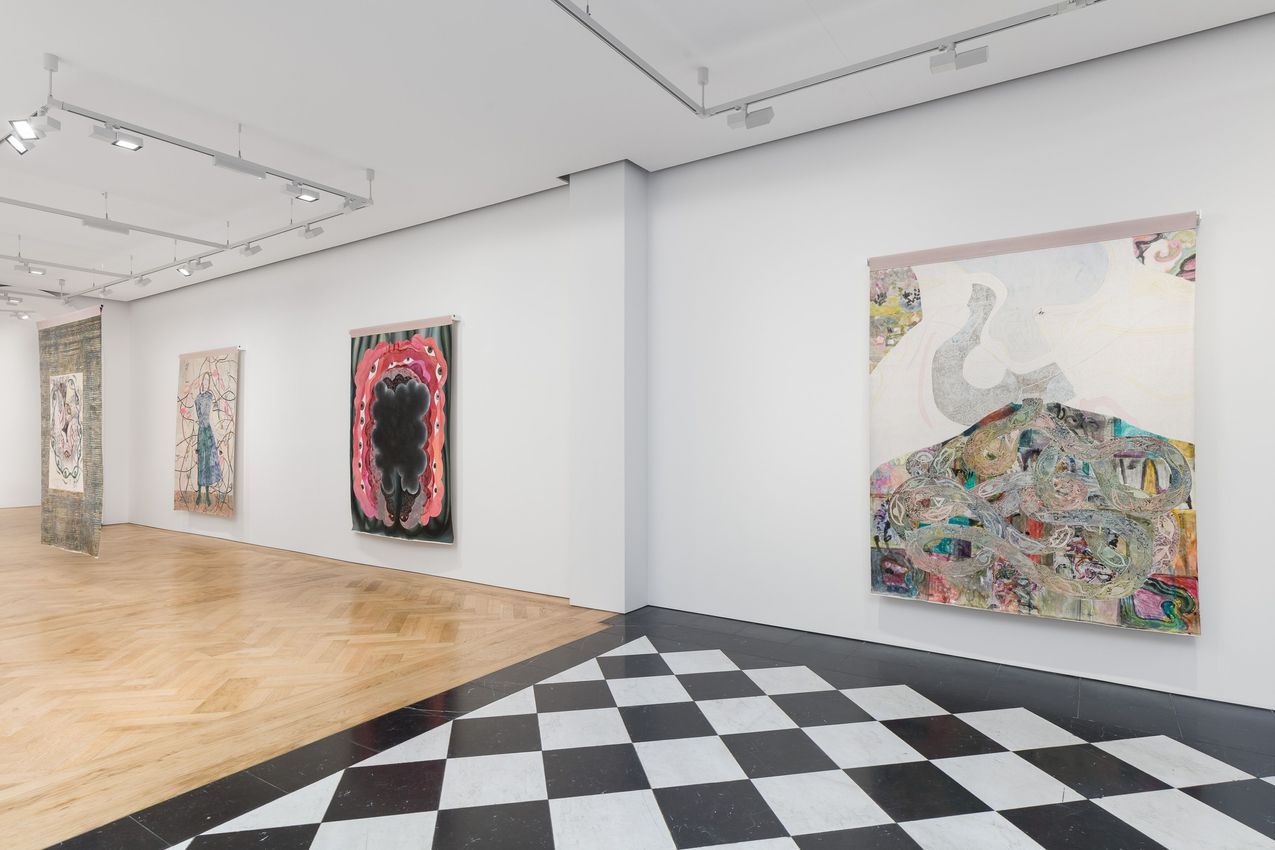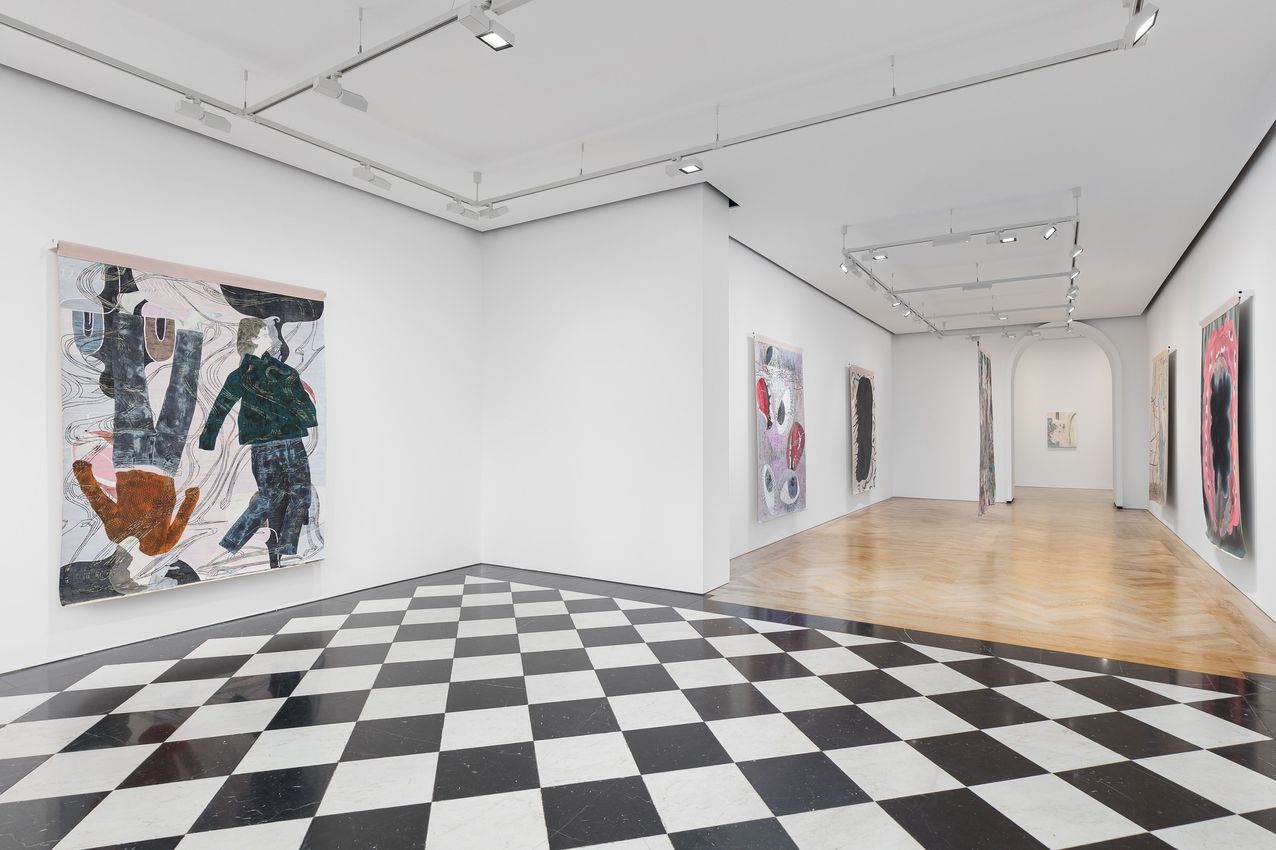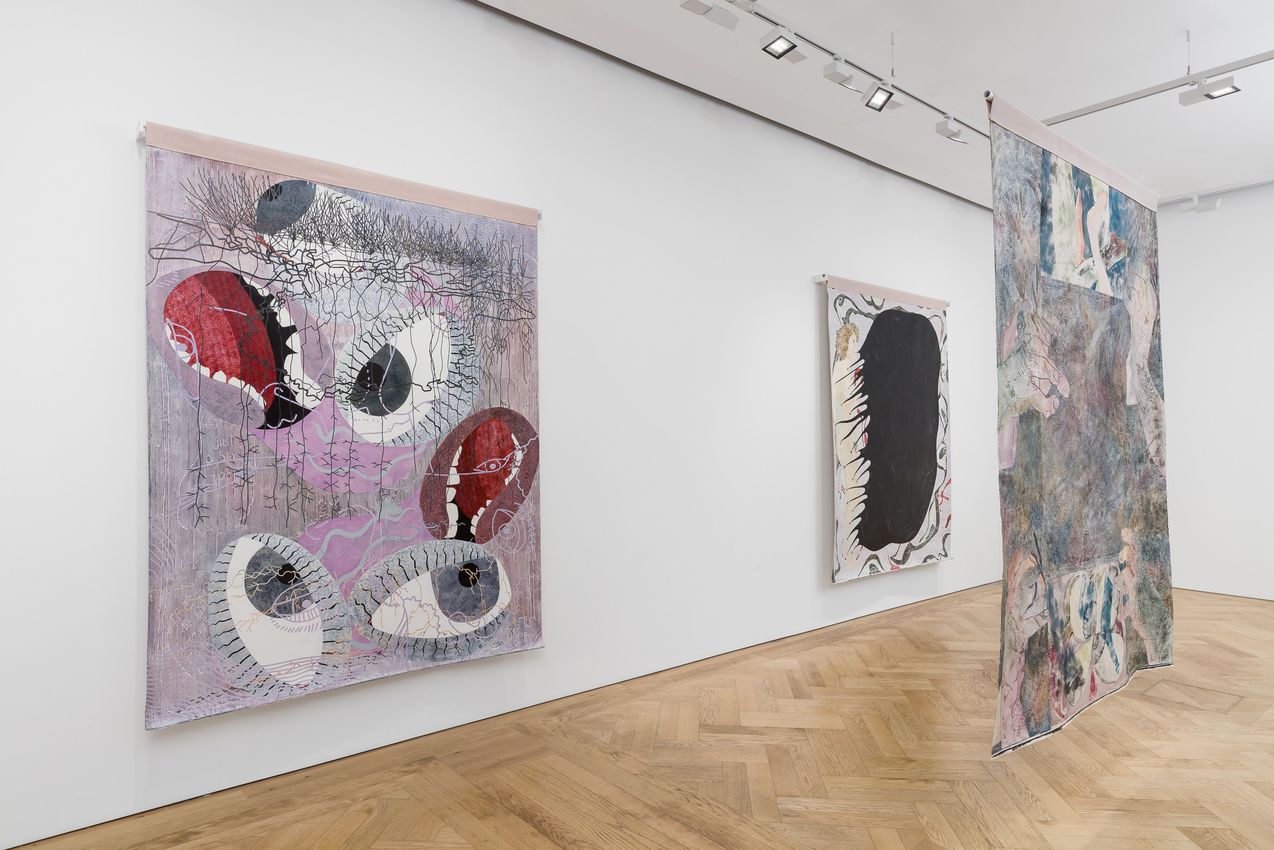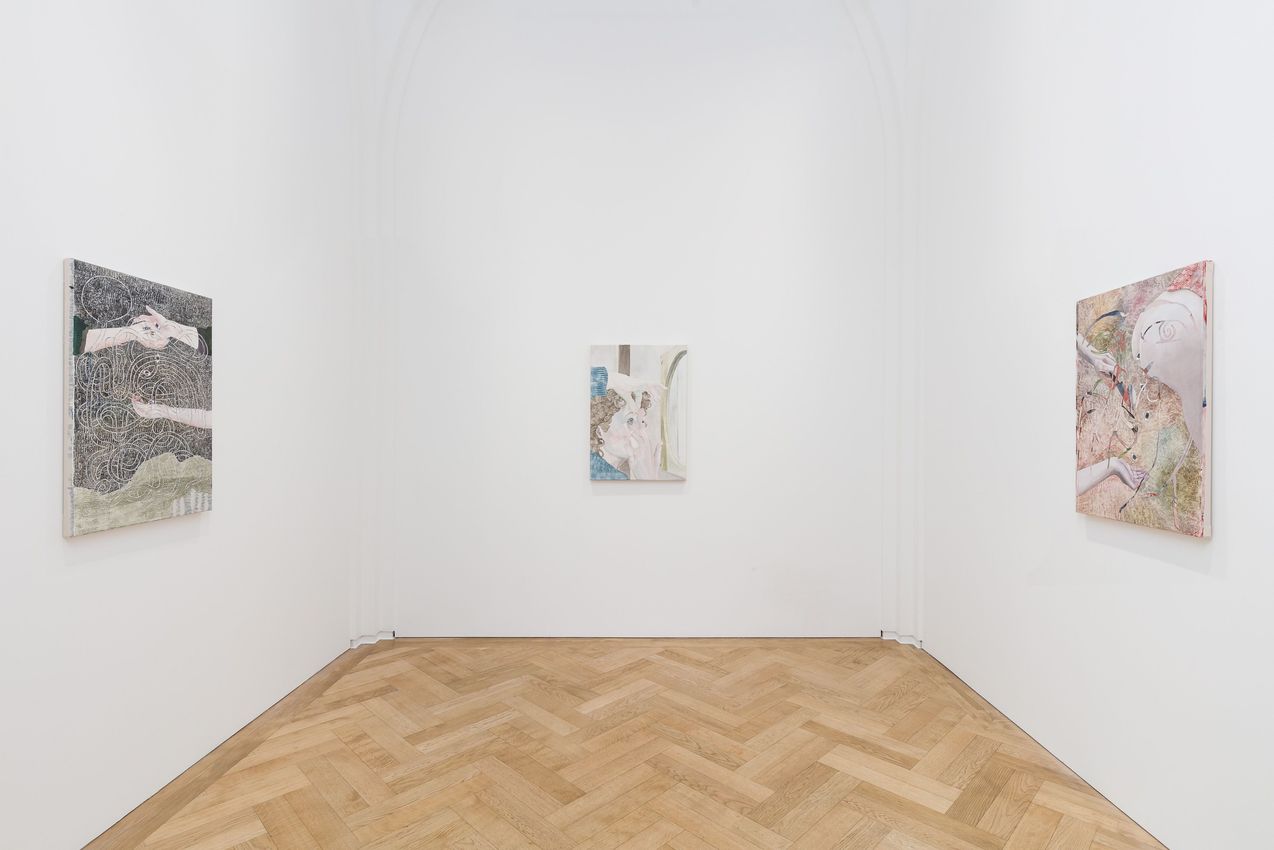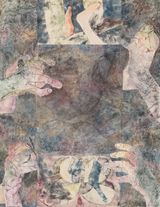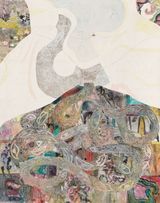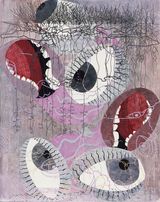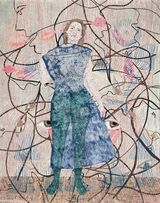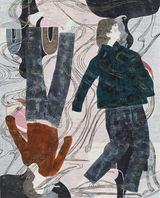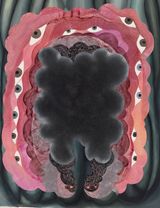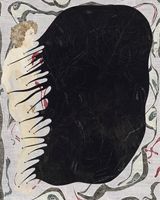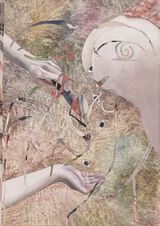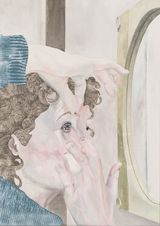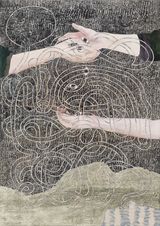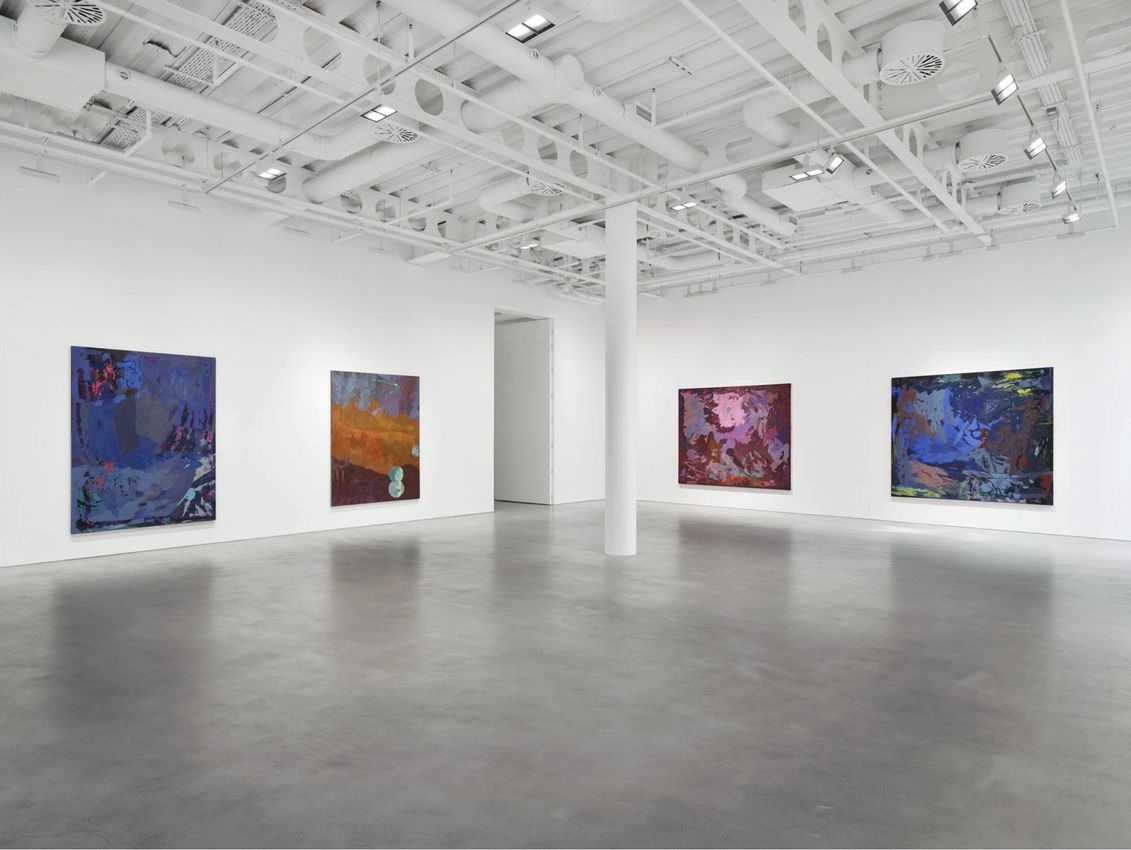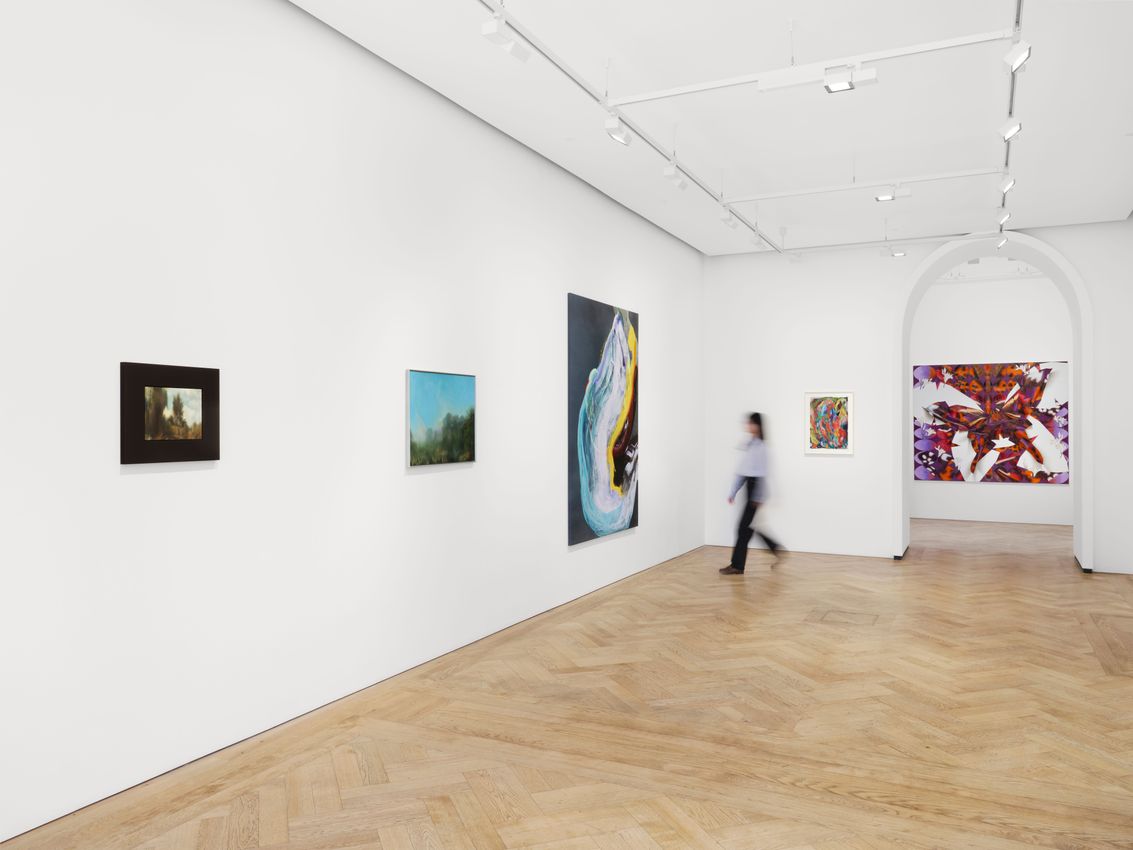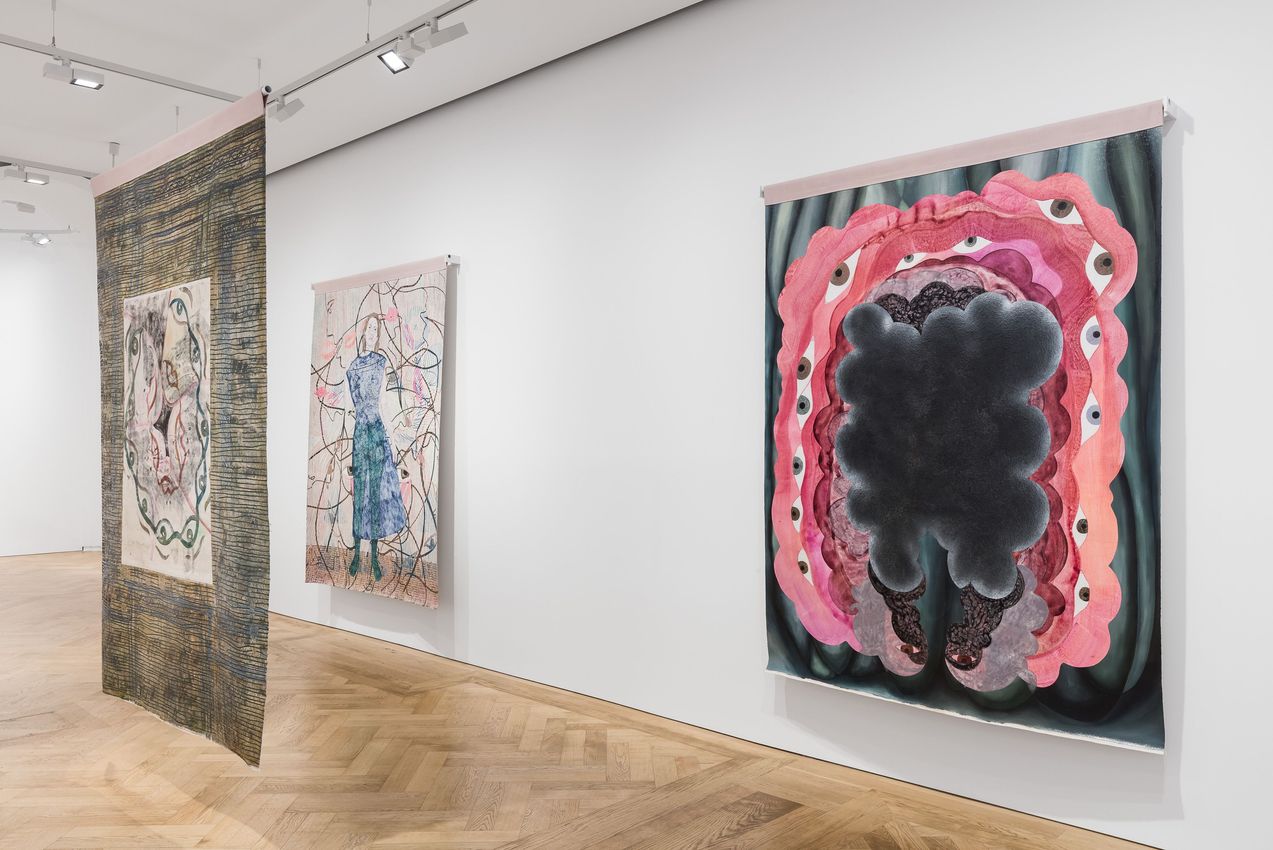
Pilar Corrias is pleased to present Opening, a solo exhibition of new paintings by Helen Johnson. Featuring ten paintings on canvas that were produced while Johnson undertook training as an art therapist, Opening can be understood as a form of self-portrait of the Melbourne-based artist. Inspired by Lacanian psychoanalytic theories, the works on display together produce distinct affective registers for intimate explorations of love, loss, subjecthood and belonging.
During her years in therapeutic training, the artist’s painting practice has reoriented toward psychoanalytical conceptions of the human body. The corporeal body remains a focus alongside these developments, both in scale – which is determined by the artist’s physical reach – and in the approach to figuration. In several works, Johnson assembles various body parts into whole figures like a game of exquisite corpse; elsewhere, atomised fragments coalesce into unfamiliar forms. In Late mirror stage, one of the large canvases on display, two pictorial levels meet in a way previously unseen in the artist’s paintings. Inspired by Lacan’s paper on The Mirror Stage (1949), where a jubilant infant first conceptualises himself as a person in the world, independent of his mother, the work centres on the moment where a swirling ribbon passes between the pinched fingers of a figure belonging to a different register within the composition. The artist considers Late mirror stage to share similarities with her practice as an artist and art therapist; both necessitate shifting between the positions of observer and creator, of producing a mirror image of oneself in order to hold space for others.
Drawing upon imagery remembered from her dreams, Johnson’s approach pays debt to Symbolism and its promotion of subjective, poetic description as a gateway to truth. As the artist explains, ‘rather than functioning as portraiture, these paintings serve as substrates for reckoning with the intensities held within each of us, forged in relation to the worlds we inhabit.’ Lack arose from a recurring anxiety dream of Johnson’s, in which her body, perforated by tiny holes, disintegrates beyond remedy. In Lacanian theory, lack is not understood as deficit, but as a sense of absence established in childhood that forms the base root of desire. In Johnson’s painting, lack is not one single hole but an entire spongiform surface awaiting fulfilment. The holes transform into eyes, forming a topological gaze that looks out to meet the gaze of the viewer, which the artist associates with the Lacanian Other, or the social order as expressed through our relationships. In Constituted object, a body, containing within its form a liquified image of a mirror, offers up a lengthy extrusion of excrement. Eyes and mouths – sites of exchange – once more proliferate, contrasting with the ‘blind’ mirror that symbolises the loss of self that accompanies the loss of a loved one.
The artist likens the process of making to that of a therapeutic session. The paintings’ subjects become elusive, shifting in meaning, seemingly revealing their own unconscious intentions alongside Johnson’s. Suspended from the gallery ceiling, Transference love – the artist’s first work with textural painted elements built up on both sides of the canvas – was produced by a process of emerging imagery becoming obscured and reinscribed. Areas of pared back mono-printing on raw canvas contrast with glossy surfaces, producing a textural dialogue for elements to interrupt one another, become flipped and re-integrated – a metaphor for transformation and change. Once finished, the large paintings are suspended or hung unstretched and unframed, their frayed edges meeting the environment of the gallery space.


Pilar Corrias Gallery is a contemporary art gallery owned by Pilar Corrias.Since its inception, the gallery has worked with emerging and established artists with the central aim of allowing their work to grow both in terms of production of new projects and the making of new exhibitions. Pilar Corrias now represents a total of thirty-five international artists, two-thirds of whom are female.

A respected voice in contemporary art discourse.
Focusing on ambitious storytelling and insightful art-world commentary. Ocula Magazine publishes in-depth interviews, critical essays and timely analysis on the artists, exhibitions and ideas driving the global art world.
Learn more about Ocula Magazine
Showcasing the best of the art world.
Ocula partners with galleries from around the world to highlight their artists, artworks and exhibitions. Gallery membership is by application and invitation, with each member vetted by an independent panel.
Learn more about Ocula Membership

Specialises in the sale of major artworks.
Led by a team with deep ties to the world’s leading auction houses, galleries and collectors. Ocula’s advisory team offers bespoke services to high-net-worth clients from around the world who are looking to acquire the best of contemporary and modern art.
Learn more about our team and services