












Rome’s Rich Artistic Heritage
Rome has always played an important part in the art world. Its artistic significance began in ancient times and flourished during the Renaissance and Baroque periods, attracting artists from all over. Today, the creatives of Italy’s capital—and biggest—city continue to present cutting-edge works amidst a historical backdrop in artists’ studios, galleries, museums, and more.
As the centre of the classical world, Rome is filled with vestiges of its past, from monumental architecture to historical sculpture techniques inherited from ancient Greece. Centuries after the fall of the Roman Empire, the city again became notable for its elevated place in Christian society, especially as Catholic leaders commissioned and encouraged significant works of art. During the 15th-century Renaissance, Italian doyens like Michelangelo and Raphael studied ancient works, creating new masterpieces in elevated imitation. In the 17th century, Rome became a driving force of the Baroque period of art.
Though many of Rome’s great art museums focus on ancient and Renaissance times, the city also developed a thriving modern art scene in the 20th century, with some of the most influential artists being Giorgio de Chirico, Alighiero Boetti, Renato Guttuso, Antonio Donghi, Ferruccio Ferrazzi, Corrado Cagli, Giuseppe Capogrossi, Emanuele Cavalli, Guglielmo Janni, Roberto Melli, Alberto Ziveri, and Fausto Pirandello. Some of these artists were regarded to be part of the modern Scuola Romana movement.
Rome continues to have a lively artistic landscape today. Visitors can find the works of established and emerging artists displayed at national museums, galleries, alternative art spaces, artist’s studios, and fairs across the Eternal City. With hundreds of exhibitions, workshops, and educational projects to engage with in its 15 municipi, there is something for everyone to enjoy.
Art Fairs in Rome
Rome’s art festivals offer enthusiasts and collectors the opportunity to discover new and exciting works in a centralised setting. Those visiting can engage with new exhibitions, participate in thought-provoking workshops, and enjoy rare access to artist studios.
The biggest contemporary art event in Rome is the annual Rome Art Week. First established in 2016, it has since grown to showcase over 600 artists and 190 galleries in its 2024 edition. The art week allows visitors to join free guided tours through different Rome art exhibition spaces, explore open artist studios, and take in the Points of View of curators and art experts.
Another major contemporary art fair is Roma Arte in Nuvola, a new annual art fair that showcases Italian and international artists alike. It provides exhibition spaces for dealer art galleries, solo shows for artists, and dedicated showcases for experimental and young artists. Additionally, it welcomes a Guest Country each year, allowing the country’s national creative board to showcase diverse paintings and sculptures from its most discussed creatives.
Major Museums Anchoring Roman Art
Rome has no shortage of grand museums exhibiting classical and Renaissance-period masterpieces—the most well-known of these being Galleria Borghese (Borghese Gallery), which houses important works by Caravaggio and Raphael and is a must-visit on any trip to the city. Other museums dedicated to pre-modern works include the Musei Capitolini (Capitoline Museums), Museo Nazionale Romano (National Roman Museum), Galleria Doria Pamphilj (Doria Pamphilj Gallery), and Palazzo Barberini (Barberini Palace).
Yet the city is also home to numerous museums where visitors can bask in modern and contemporary artwork. The Museo nazionale delle arti del XXI secolo (MAXXI/National Museum of 21st Century Art) is Rome’s national museum of contemporary art and architecture. It features a permanent collection of works from major Italian and international artists, and its building spans a surface area of 13,500 square metres.
The Galleria Nazionale D’Arte Moderna E Contemporanea (National Gallery of Modern and Contemporary Art) is another public museum dedicated to modern and contemporary art. It houses a collection of over 20,000 works, spanning paintings, drawings, sculptures, and installations, offering visitors a look into the art world from the 1800s to the present day.
Museo de Arte Contemporáneo de Roma (MACRO/Museum of Contemporary Art of Rome) is a municipal museum dedicated to contemporary art. This museum is housed in a former brewery, providing a unique backdrop to its exhibitions. Mattatoio, formerly known as MARCO Testaccio, showcases engaging exhibitions within a 19th-century slaughterhouse. Another civic art museum, the Galleria Comunale d’Arte Moderna, holds a collection of over 3,000 works from the 19th and 20th centuries.
Smaller modern art museums include the Giorgio de Chirico House Museum, the Venanzo Crocetti Museum, Museo Carlo Bilotti (Carlo Bilotti Museum), and Palazzo Merulana (Merulana Palace). These buildings hold impressive permanent collections worth visiting for any appreciator of 20th century works.
Art Districts and Famous Art Galleries in Rome
Galleries and art spaces can be found all across Rome. One of the most notable creative quarters in the city is San Lorenzo—a position highlighted by the SALAD (San Lorenzo Art District) project, which aims to highlight it as the capital’s artistic district. The area features over 10 gallery buildings and is home to over 60 active artists, as well as the historical home of artists part of the 1970s Scuola di San Lorenzo movement, including Bruno Ceccobelli, Nunzio, Piero Pizzi Cannella, and Marco Tirelli.
The Ostiense district is known for the street art that covers its buildings thanks to an initiative proposed by the contemporary art gallery 999Conteporary. Supported by Rome’s Department of Culture, the once-neglected district has now been transformed into a cultural centre that draws in tourists with over 30 murals from internationally famous artists. San Basilio is another district decorated with street art, in part due to the support of local initiatives.
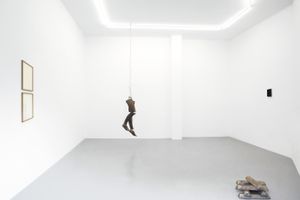
Trastevere, on the west side of the River Tiber, houses an abundance of contemporary art galleries with ever-changing exhibitions. Notable selections include T293, Sant’Andrea de Scaphis, and Dorothy Circus Gallery. The east side of the river is also dotted with gallery buildings, including Roman branches of leading international dealer galleries like Gagosian Rome and Richard Saltoun and more local offerings like Lorcan O’Neill.
Alternative Contemporary Art Spaces in Rome
As a city constantly engaged in learning, Rome is home to various non-profit organisations dedicated to art education and growth. Many of these spaces and groups belong to the Comitato Fondazioni per l’Arte Contemporanea (Committee of Contemporary Art Foundations), which promotes contemporary art across Italy.
One of the most well-known members of the committee is the Fondazione Pastificio Cerere. Once a pasta factory, later turned into a studio by artists of the San Lorenzo Group, the large space is now a contemporary art cultural centre. Visitors can be inspired by the works of young artists through educational projects and public participatory workshops. Other organisations in the Comitato Fondazioni per l’Arte Contemporanea include Fondazione Baruchello, Fondazione Memmo, Fondazione Giuliani, Fondazione Nicola Del Roscio, and the Nomas Foundation.
Beneath its institutions and galleries, Rome is also host to a multitude of artist-run spaces and experimental education initiatives, especially in recent years. These include Studioli, Spazio In Situ, and Castro Projects. These spaces encourage emerging artists to explore innovation and creativity through exhibitions of sculptures, paintings, and photography outside traditional settings.