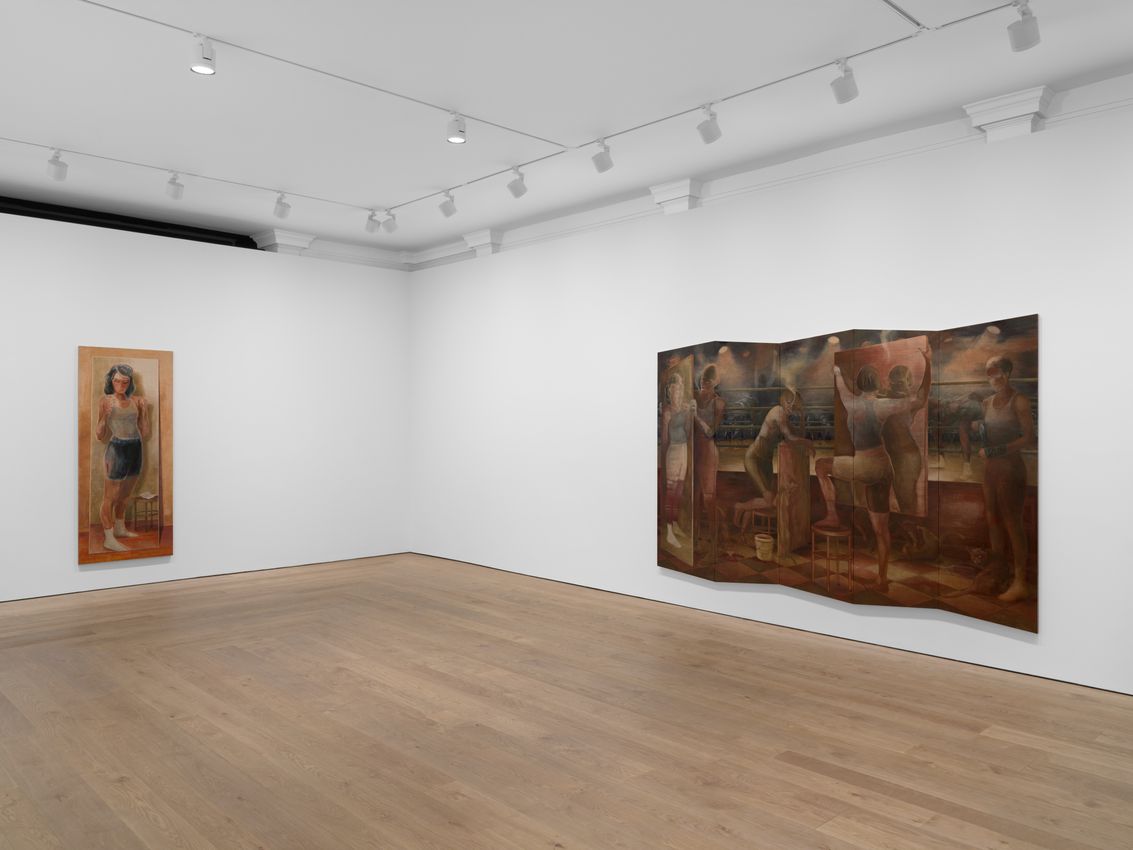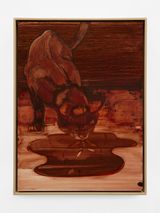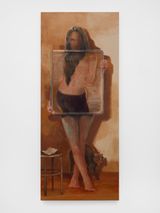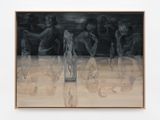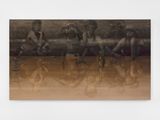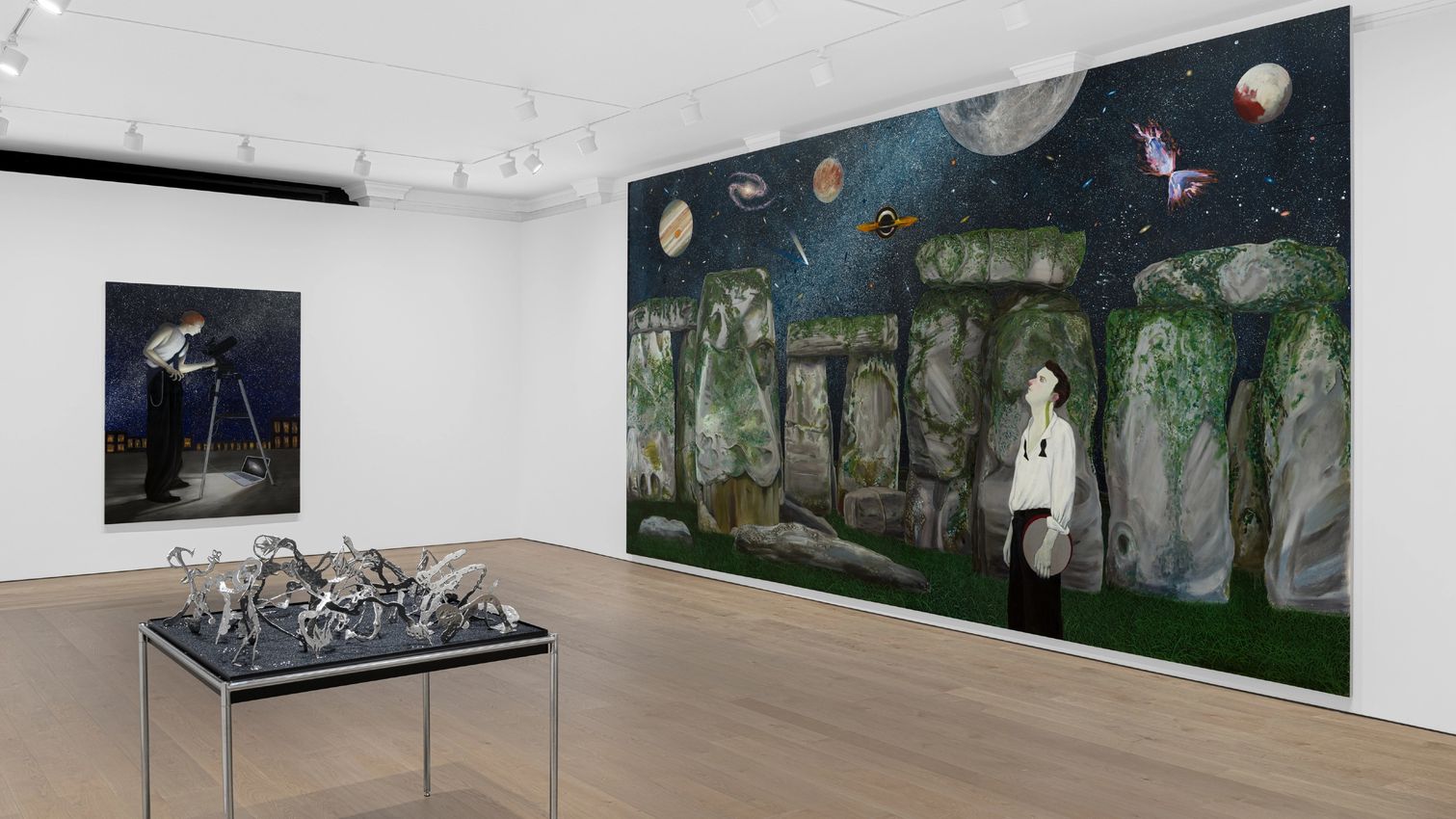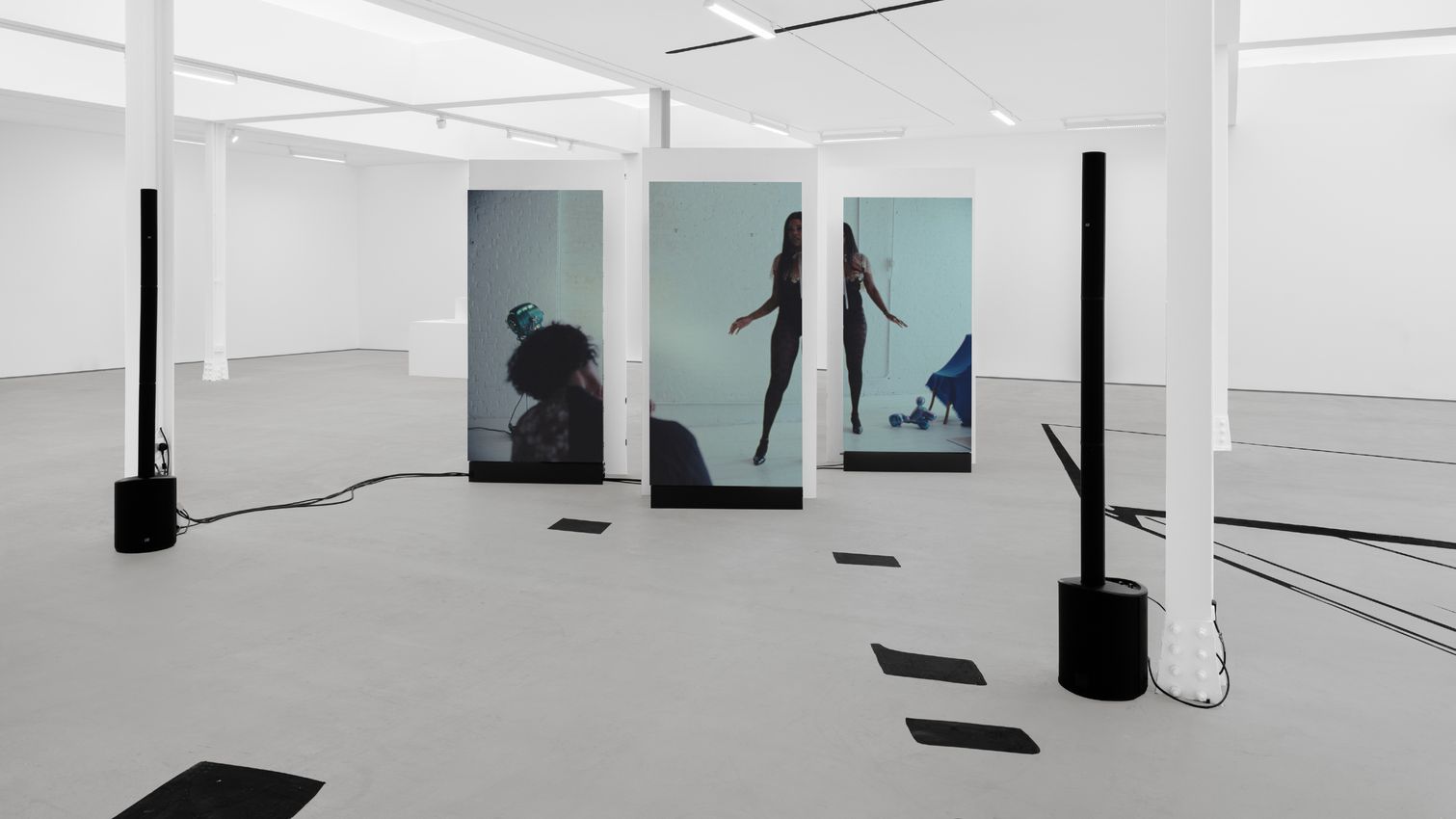
For the opening exhibition of our townhouse gallery on Savile Row, Lisa Brice presents new paintings in three distinct groups arranged sequentially in the spaces of the building. Using a repeated viewpoint to form an architectural horizon across consecutive paintings, the audience is offered a parade of dynamic empowerment.
Known for her depictions of feminine actors in interior spaces and working environments, Brice reflects on the erosion of safety in the current socio-political climate. She gives her protagonists codes of collective assertiveness, an emboldened and defensive response, willing the triumph of the underdog. The characters here are powerful, proactive, effective: they are David not Goliath, Judith not Holofernes. Drawing on images of violence in art history from the likes of Gentileschi, Caravaggio, Manet and Magritte, Brice was similarly inspired by Honor Blackman’s 1965 Book of Self Defence which is illustrated by images showing various men being beaten black-and-blue by the judogi clad siren.
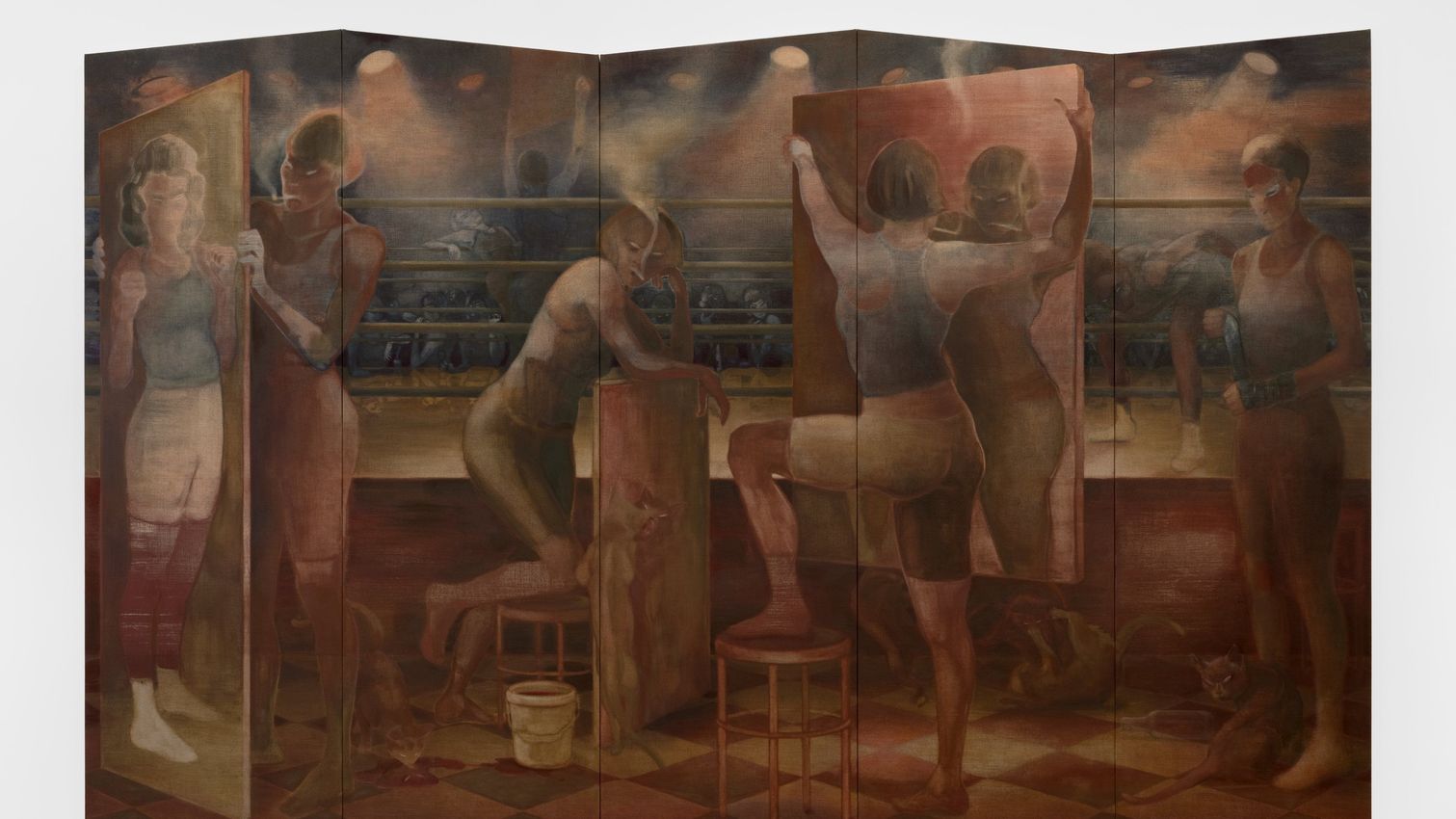
Brice conflates the often-intimate observation of passive groups of women in late 19th and early 20th CenturyFrench painting into a brooding solidarity of resistance. In the group of paintings which picture figures on the horizon of a bar, the protagonists are ready for action, their makeshift weapons near to hand, their victims engaged. These combative bodies appear again as the audience in a smokily-lit fight club that is the subject of another painting. In this ambitious composition, the ring is framed by a parade of athletic combatants who turn the tables on our viewpoint by posing with mirrors in preparation to enter the fray.
In a further development, the palette across all three parts of the exhibition is reduced into firmly sobering tones of black, red, brown and grey in a departure from the vibrancy of earlier works. The grisaille painting of PieterBruegel the Elder, Christ and the Woman taken in Adultery in the Courtauld Collection and Francisco de Goya’s Black Paintings, particularly Atropos (the Fates) are treasured references. The subtle rebellion of the subjects in this exhibition, their strength in numbers against repression or bullying, asks us to imagine the potential of collective action.


Lisa Brice’s paintings interrogate and overturn the male gaze embedded in Western art history. Through her luminous cobalt- and cerulean-hued depictions of women, she reclaims the female nude as an empowered, self-determining presence. Brice shifts the art-historical narrative from passive muse to active maker, portraying women who assert authorship and autonomy within liminal, introspective spaces of intimacy, labour, and defiance.


A respected voice in contemporary art discourse.
Focusing on ambitious storytelling and insightful art-world commentary. Ocula Magazine publishes in-depth interviews, critical essays and timely analysis on the artists, exhibitions and ideas driving the global art world.
Learn more about Ocula Magazine
Showcasing the best of the art world.
Ocula partners with galleries from around the world to highlight their artists, artworks and exhibitions. Gallery membership is by application and invitation, with each member vetted by an independent panel.
Learn more about Ocula Membership

Specialises in the sale of major artworks.
Led by a team with deep ties to the world’s leading auction houses, galleries and collectors. Ocula’s advisory team offers bespoke services to high-net-worth clients from around the world who are looking to acquire the best of contemporary and modern art.
Learn more about our team and services