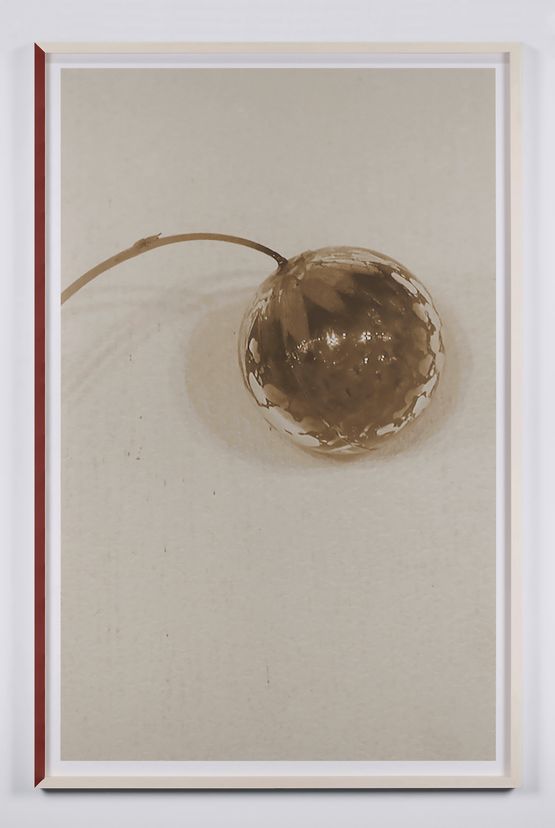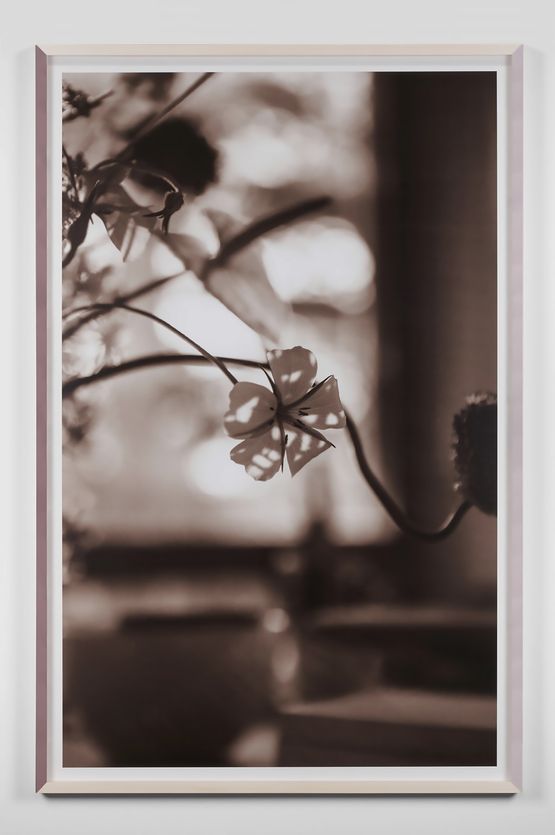
iPhone photography documenting whimsical experiments and discoveries on the artist’s journey are arranged throughout the exhibition space like an epistolary series, sent unaddressed. An installation of a photographed mattress together with the actual one creates a looped resonance, while a hand drawn clock face remains motionless on the wall—halting time. Hirofumi Isoya’s composition of situations speaks in riddles, unfolding materials he finds in his daily life while using mundane methods. Questioning a conception of time that moves in one direction from the past to the future, Isoya demonstrates artistic agency to intervene in our perception of the present by incorporating multiple temporalities throughout his work.
With its title referencing a poetic passage from T.S. Eliot’s Four Quartets (1943), the exhibition is conjured as a silent warning to modern civilization rising from absurd everyday landscapes. In Activation (2021), the artist smashes 5,000-year-old earthenware, dissolves the pieces into mud and ultimately fires the material as a basketball-sized sphere of soil. Its perfect and pure form is condensed with time and characterized by manipulating and homogenizing otherwise disparate materials. Through kneading the present into antiquity, the work points to an ambivalent act of violence in the very process of creation, overwriting the context of its time of production and the meaning associated with it, to activate our thoughts on matters of time.
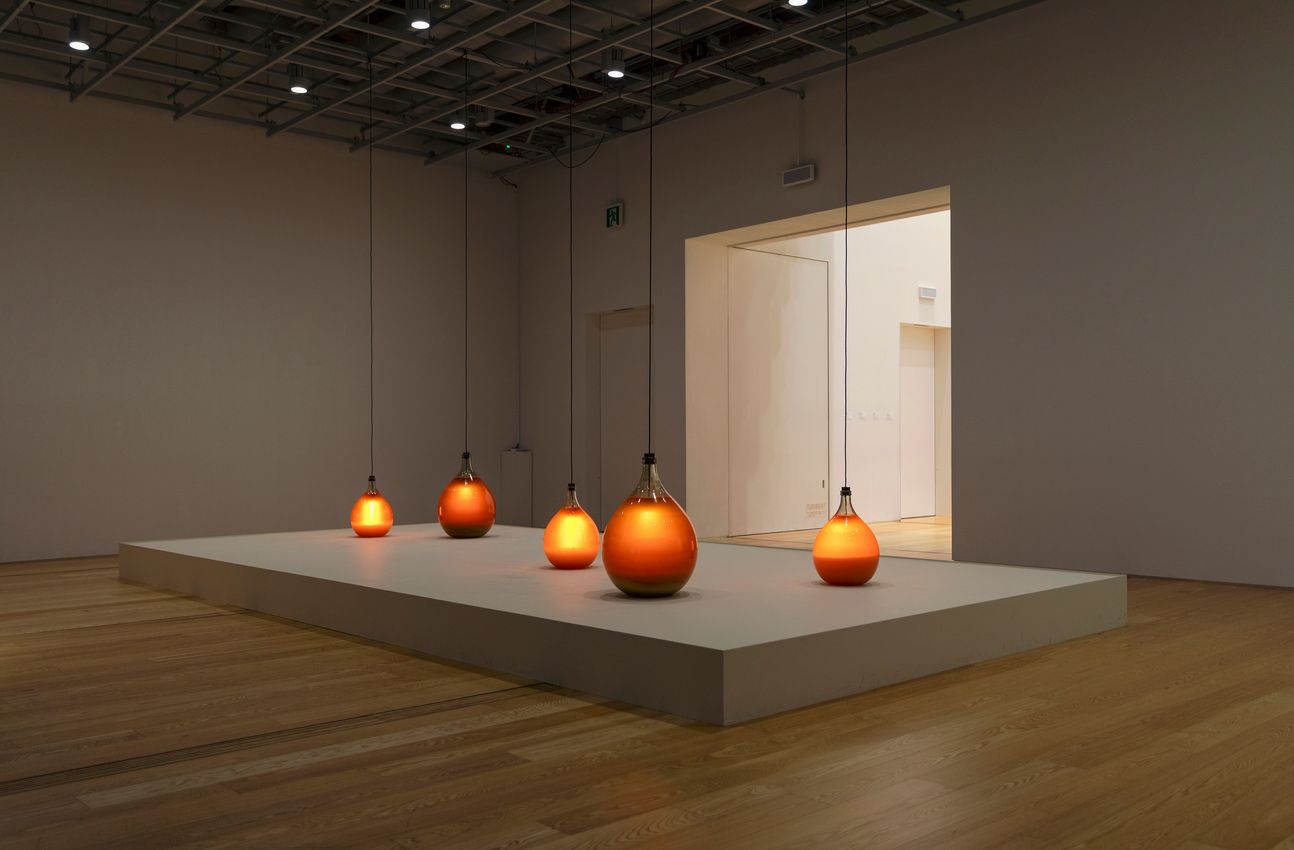
Flowers and Bees, Translucent Archive (2018)—an installation of fish lamps dropped in glass jars—luminates the surroundings in a warm colored light. The jars are filled with honey and remind the viewer of elapsing time and labor of the pollinating bees which collect, store and purify it. The amber liquid forms visible layers of strata according to different sugar levels and statuses, as the densest material sinks and solidifies at the bottom. Adding a red hue of color from architectural LED lights within the white cube, Palilalia and Heat (2021) comprises metal chains and applied moth scales, and suggests insects that fly towards and strike against the light source perceived as moonlight. These works are reminiscent of the order and habits in insect ecology, and allegorically alludes to privileged human existence—inviting further interpretation.
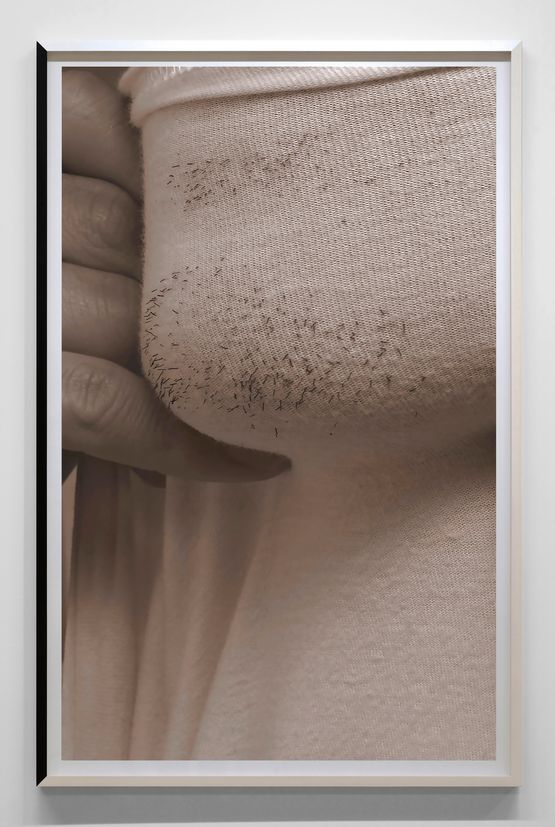
Signs and images run through the exhibition unfolding complex multivocal worlds—appearing as a confectionery paper pasted on an airplane window, a mustache passing through the fabric of a T-shirt, or a broken glass that appears as a ridged terrain. Eliot, a bank clerk and a poet, spent his life between everyday work and the metaphysical, timeless world of symbols and representation. “Go, go, go, said the bird”—flying over children as they play on the ground, leaving behind a profound mystery. Perhaps what is needed to free us from our current sense of one-directional time—from the past to the future, is this bird’s-eye view.

A respected voice in contemporary art discourse.
Focusing on ambitious storytelling and insightful art-world commentary. Ocula Magazine publishes in-depth interviews, critical essays and timely analysis on the artists, exhibitions and ideas driving the global art world.
Learn more about Ocula Magazine
Showcasing the best of the art world.
Ocula partners with galleries from around the world to highlight their artists, artworks and exhibitions. Gallery membership is by application and invitation, with each member vetted by an independent panel.
Learn more about Ocula Membership

Specialises in the sale of major artworks.
Led by a team with deep ties to the world’s leading auction houses, galleries and collectors. Ocula’s advisory team offers bespoke services to high-net-worth clients from around the world who are looking to acquire the best of contemporary and modern art.
Learn more about our team and services