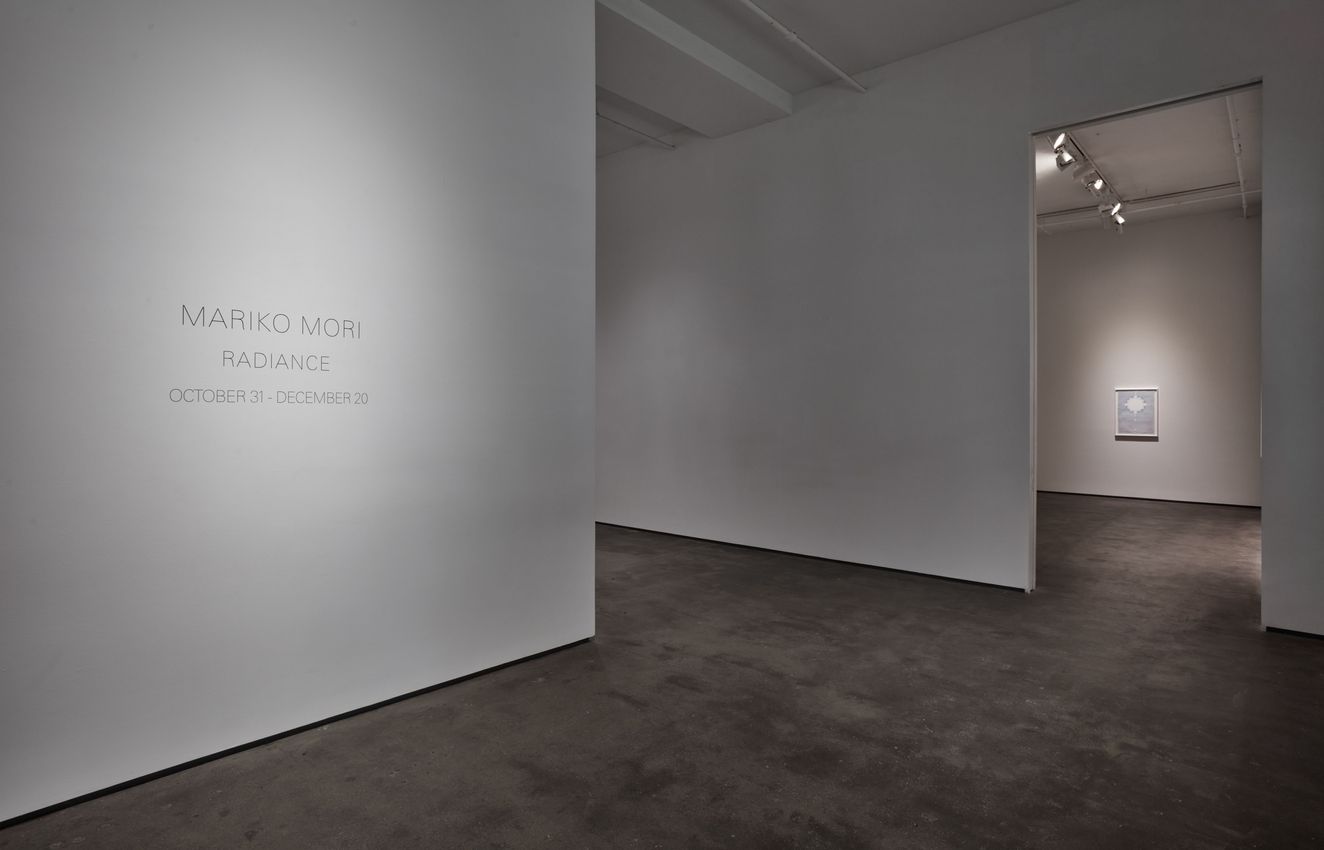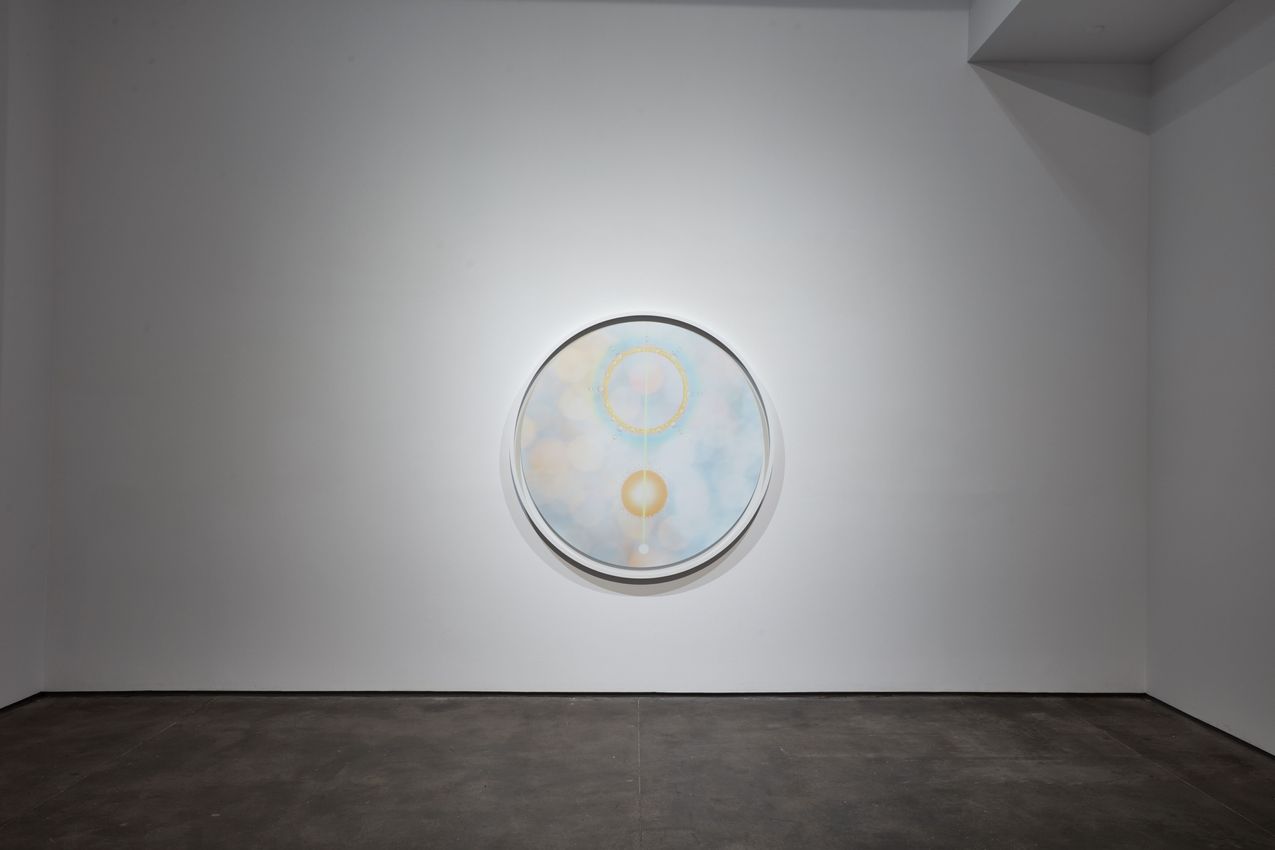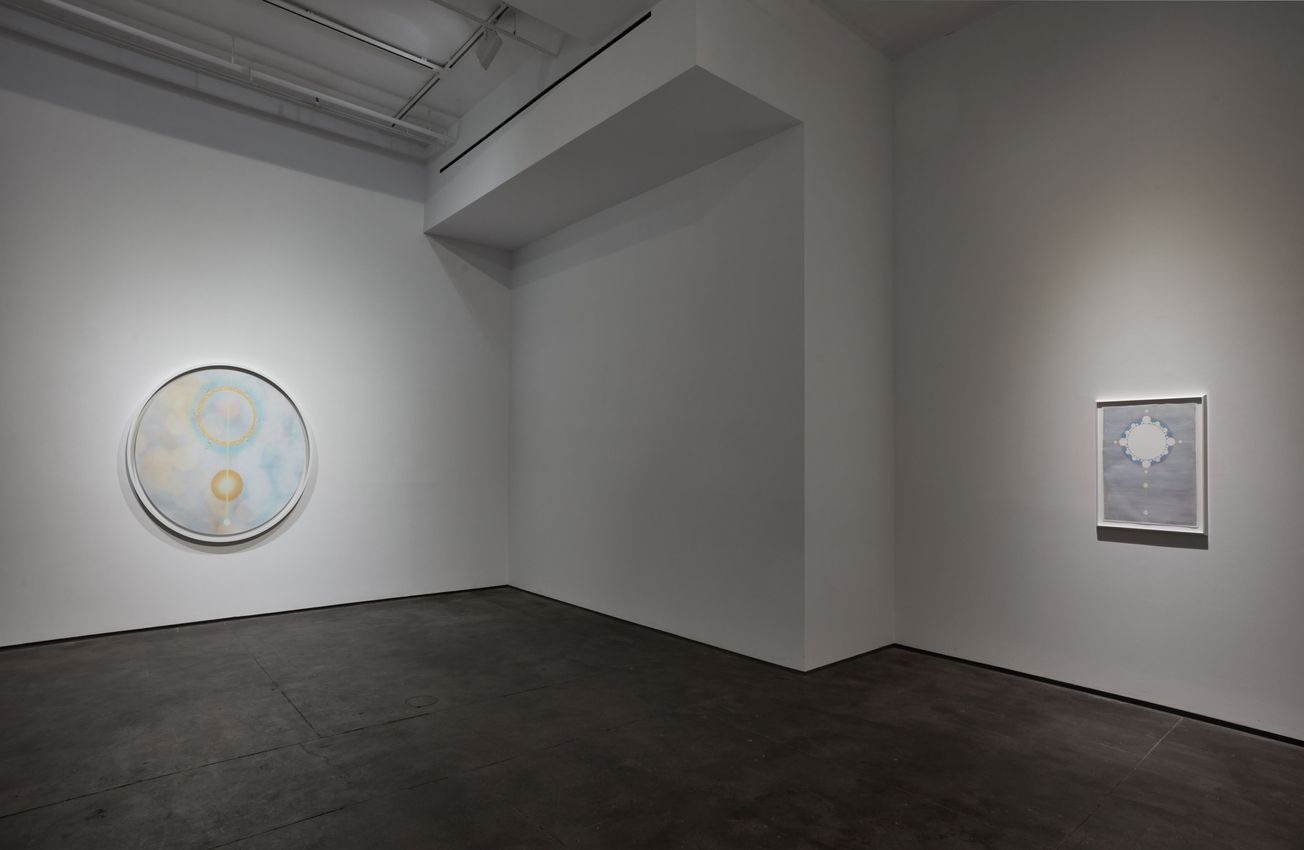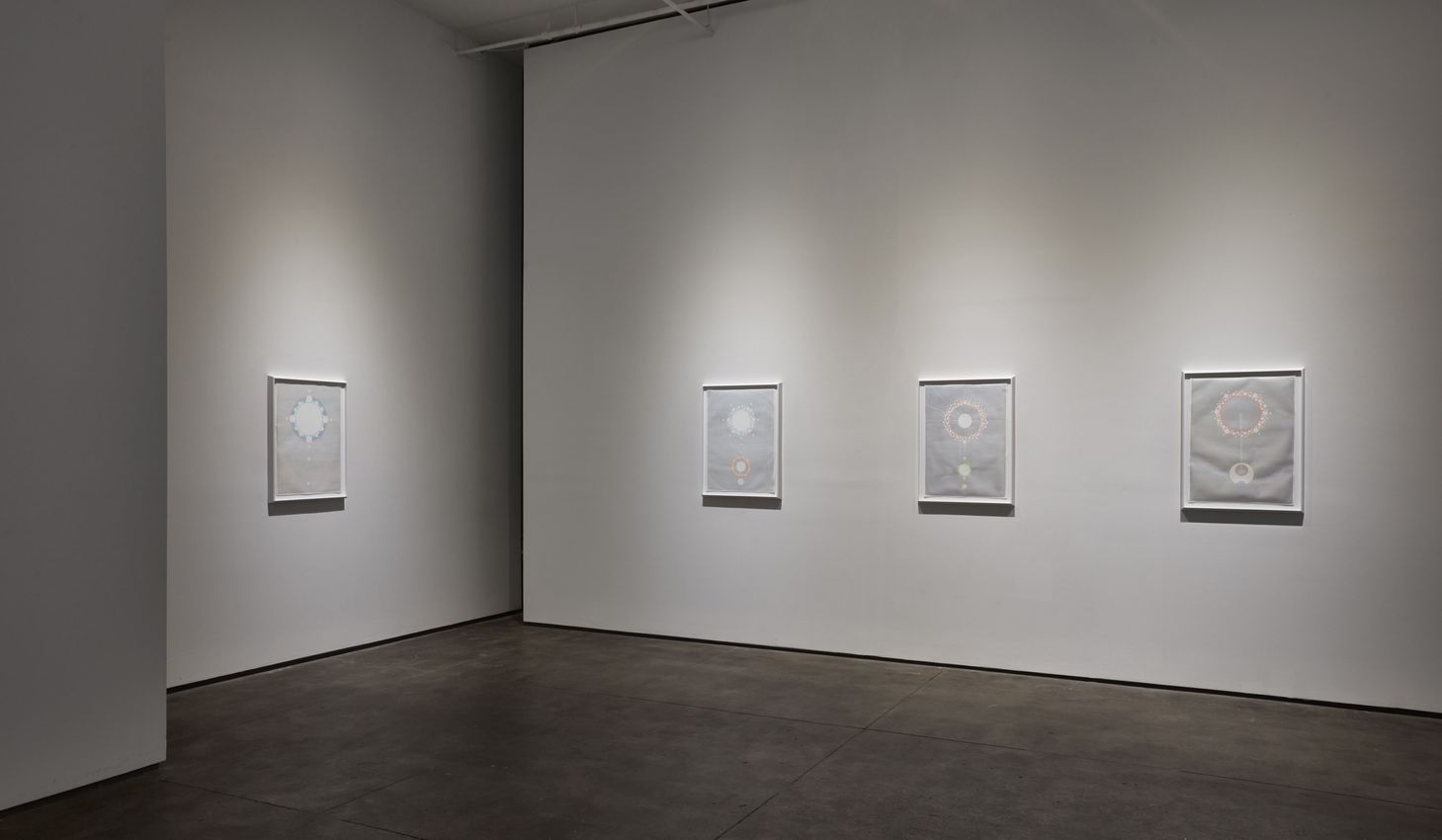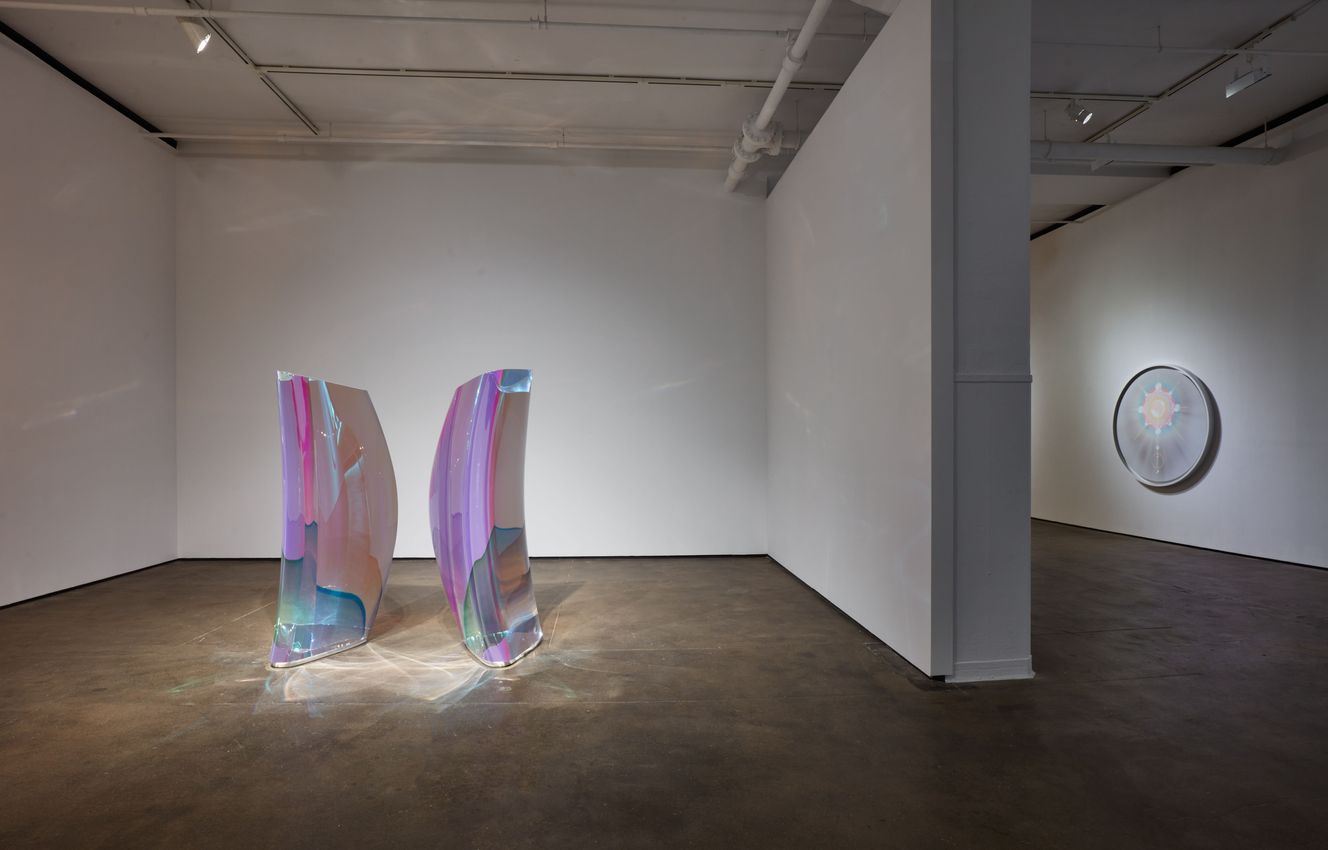
Sean Kelly is delighted to present Radiance, an exhibition of new work by internationally acclaimed artist Mariko Mori. In this deeply contemplative presentation, Mori unites cutting edge technological materials with ancient cosmologies, drawing inspiration from the enduring spiritual traditions of Japan. Spanning sculpture, installation, and works on paper, the exhibition reflects Mori’s long-standing engagement with metaphysical concepts and technical innovation grounded in her cultural heritage.
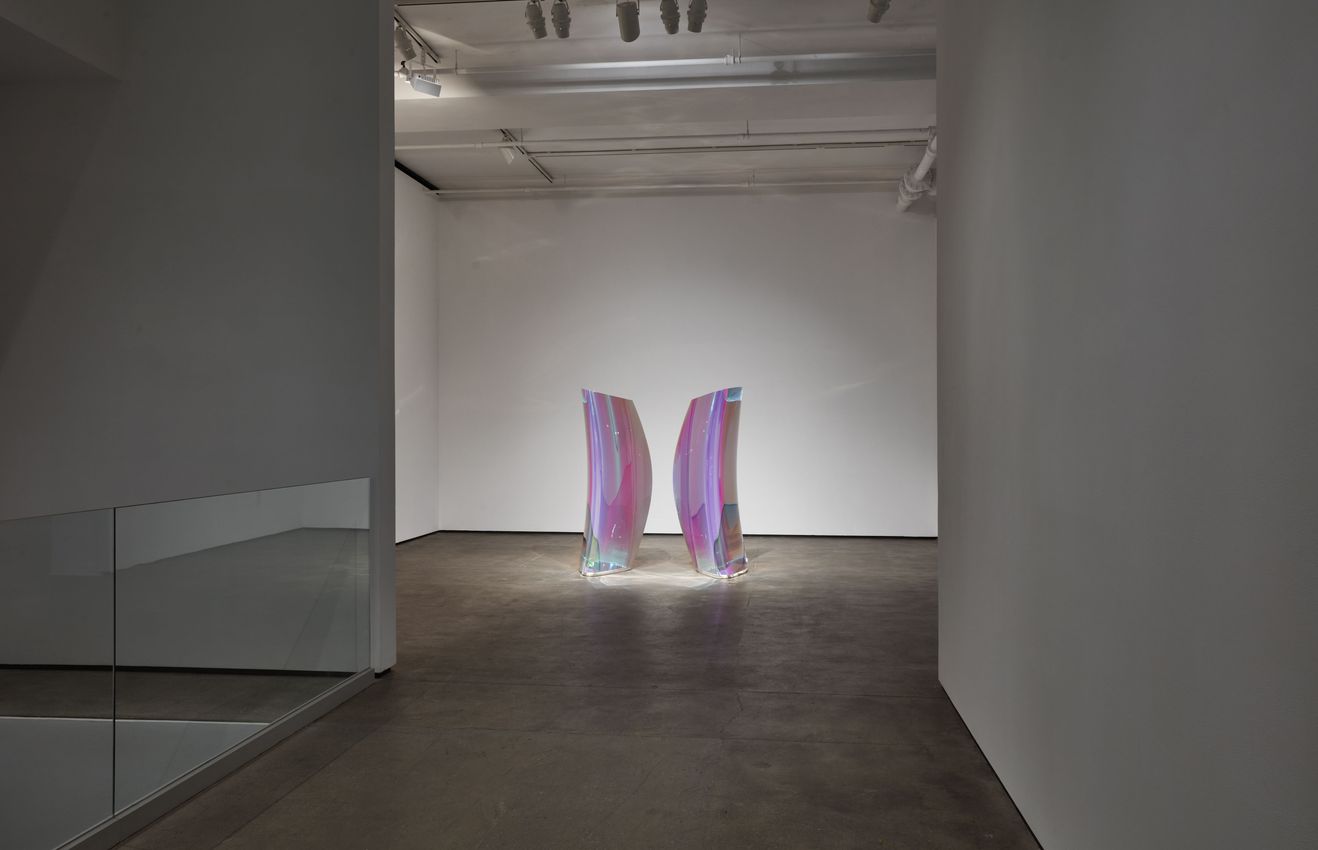
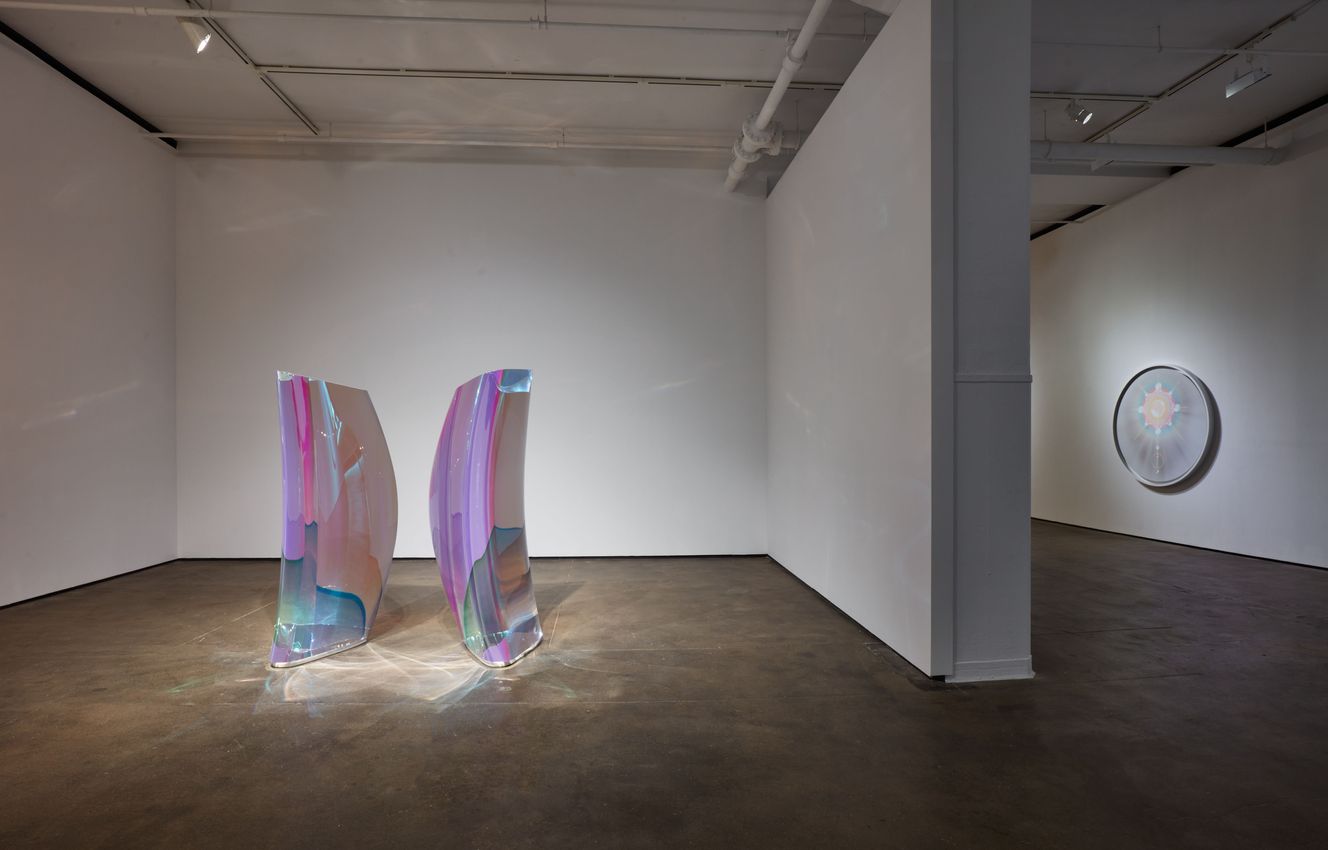
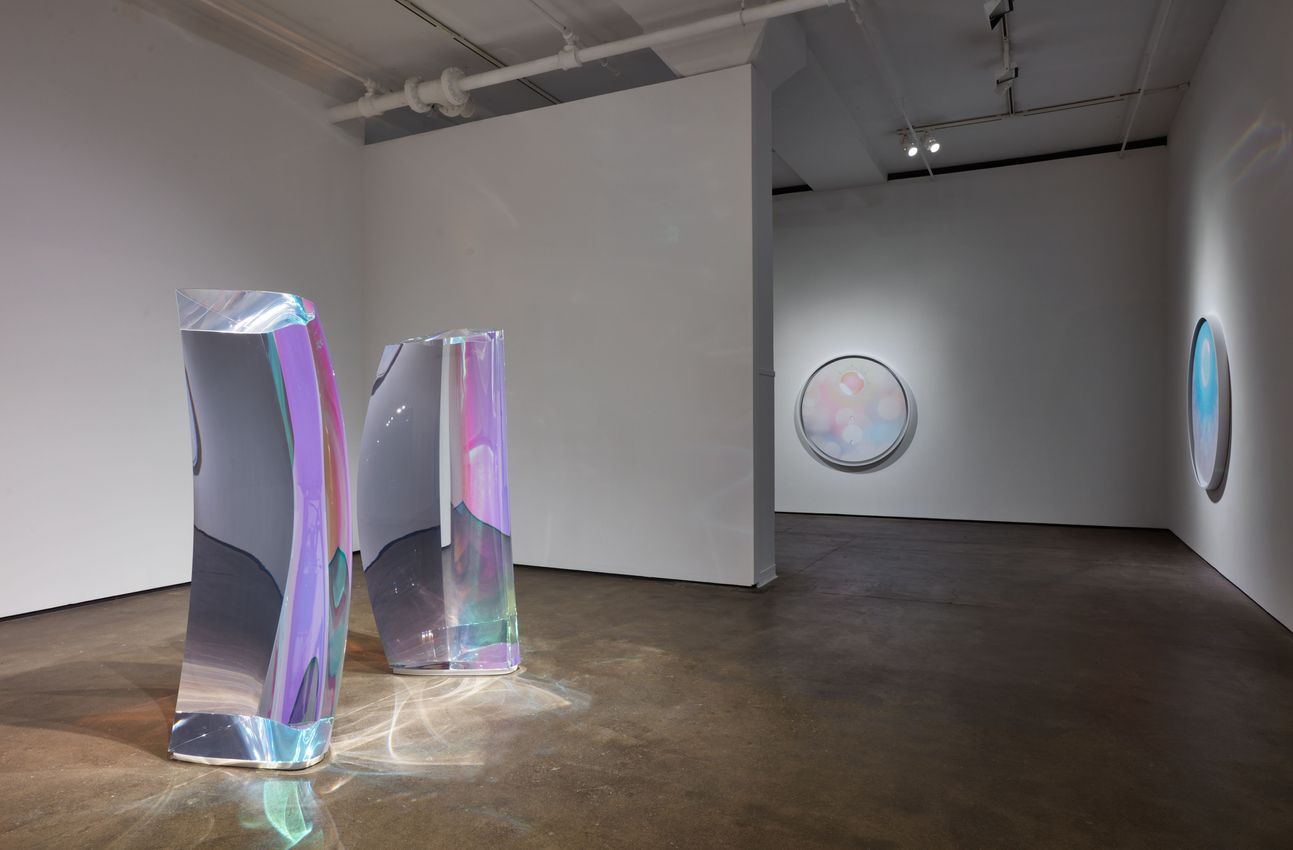
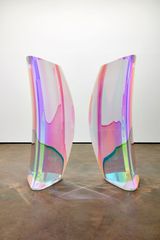
Radiance is rooted in Mori’s extensive research into Japan’s stone cultures from the Jomon (14,000–300 BCE) and Yayoi (300 BCE–300 CE) periods through the Kofun (250–538 CE) and Asuka eras (538–710 CE). Informed by site visits to sacred geological formations across the Japanese archipelago, including the storied rocks of Okinoshima Island and the shrines of Izumo and Awaji, Mori focuses on these ancestral sites through a contemporary lens. Upon entering the main gallery, visitors are greeted by two luminous stone pillars. These works, from Mori’s Stone series, reimagine Japan’s revered rocks, or Iwakura, which for millennia have been sites of divine presence. Their dichroic surfaces shift with ambient light and the viewer’s movement, reimagining invisible energies that recall the stones’ original function as portals to the sacred.
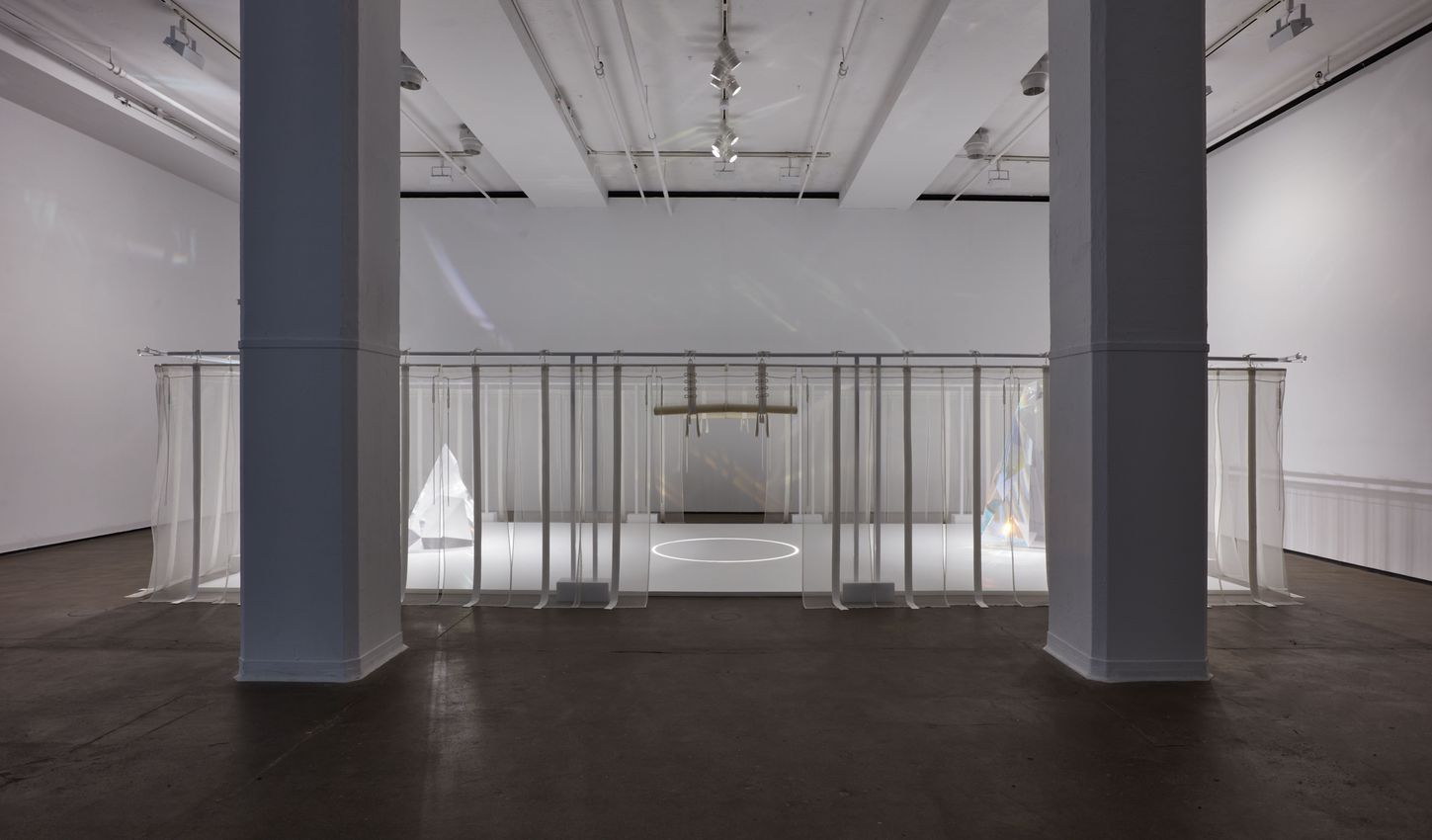
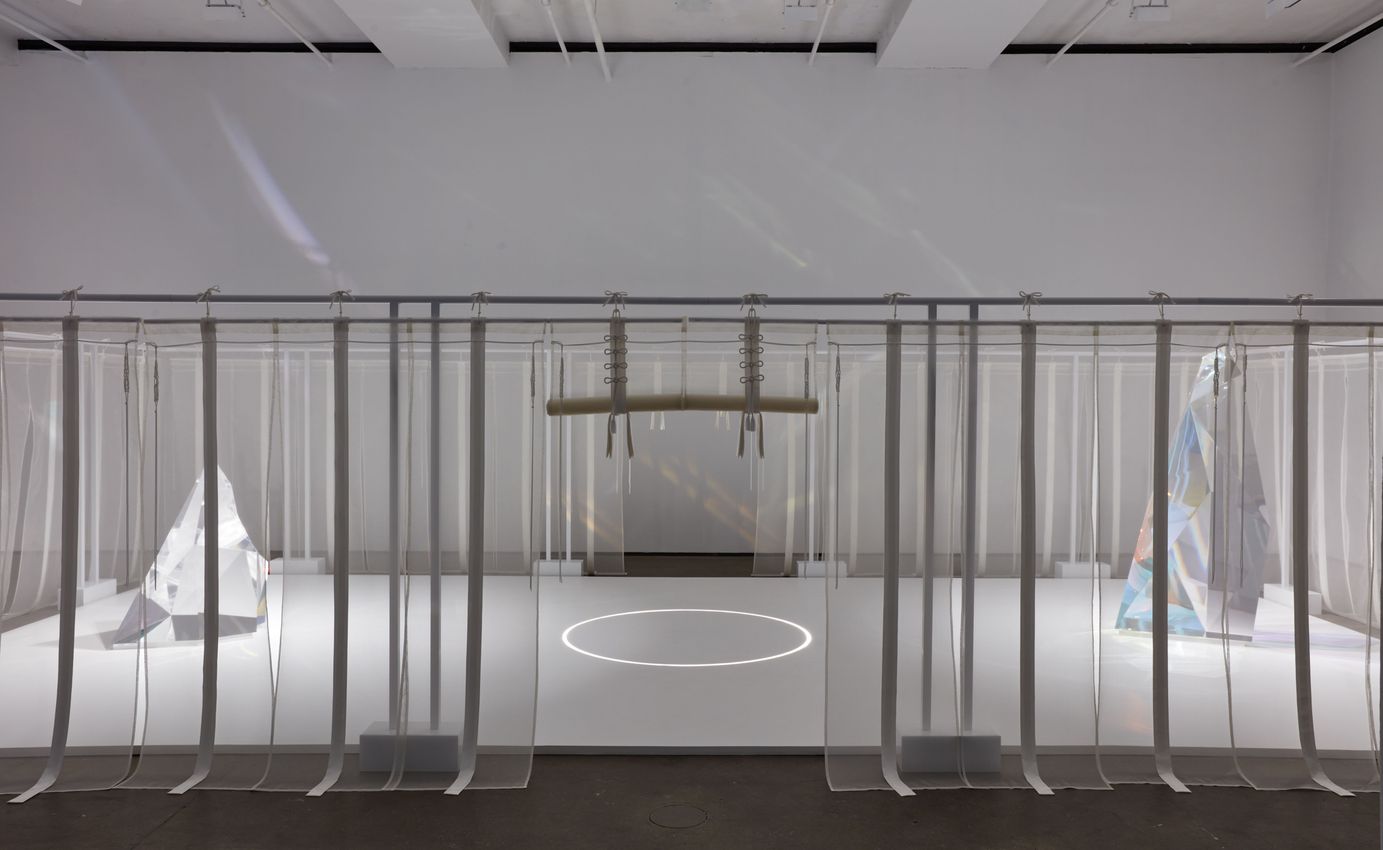
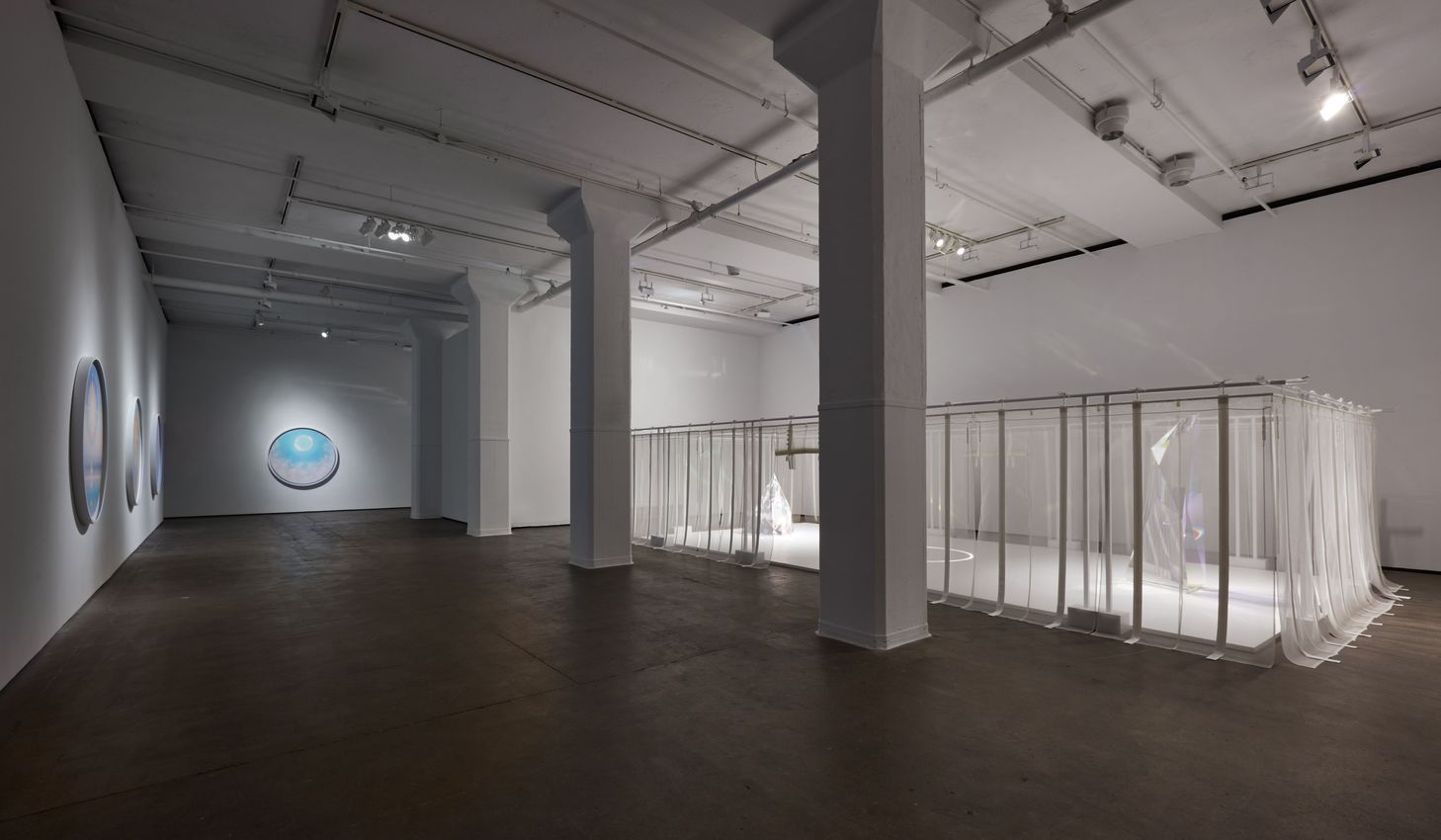
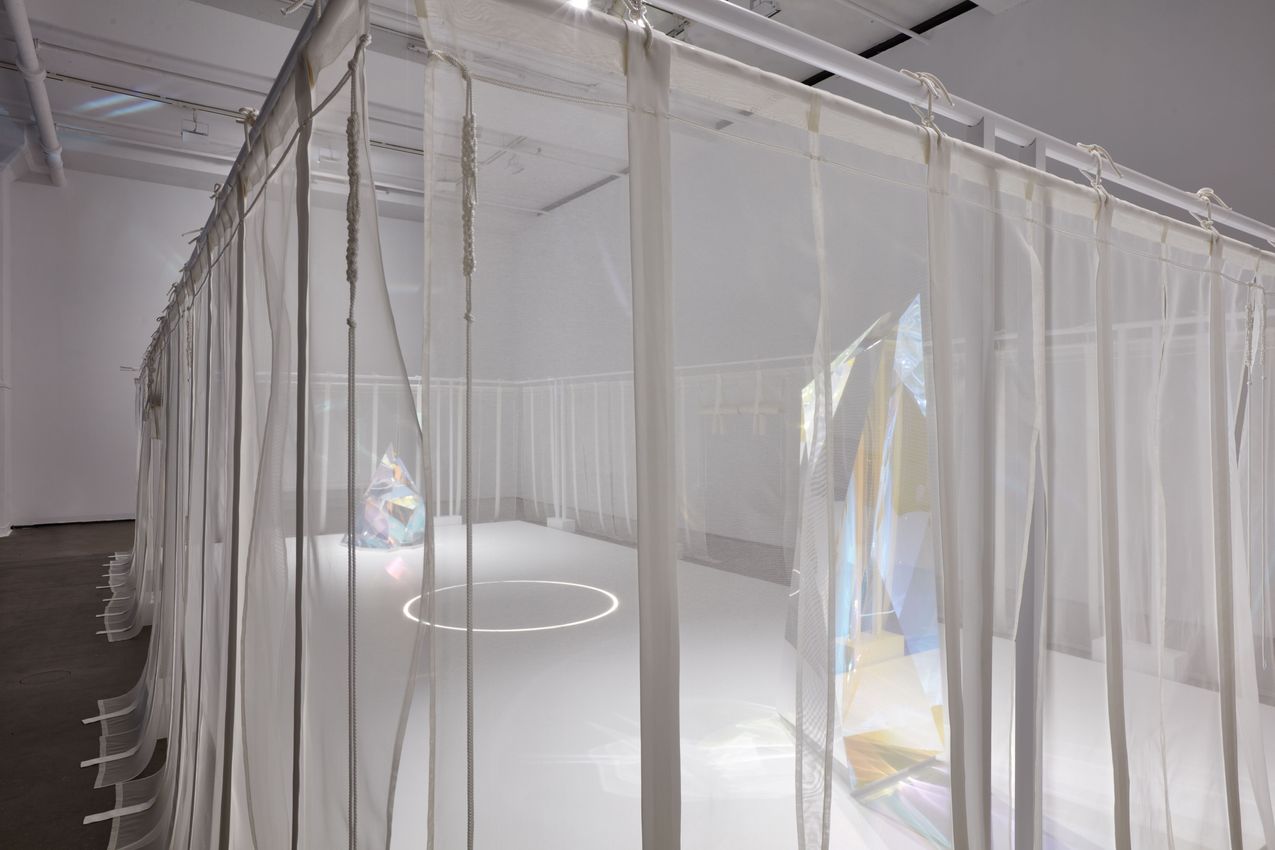
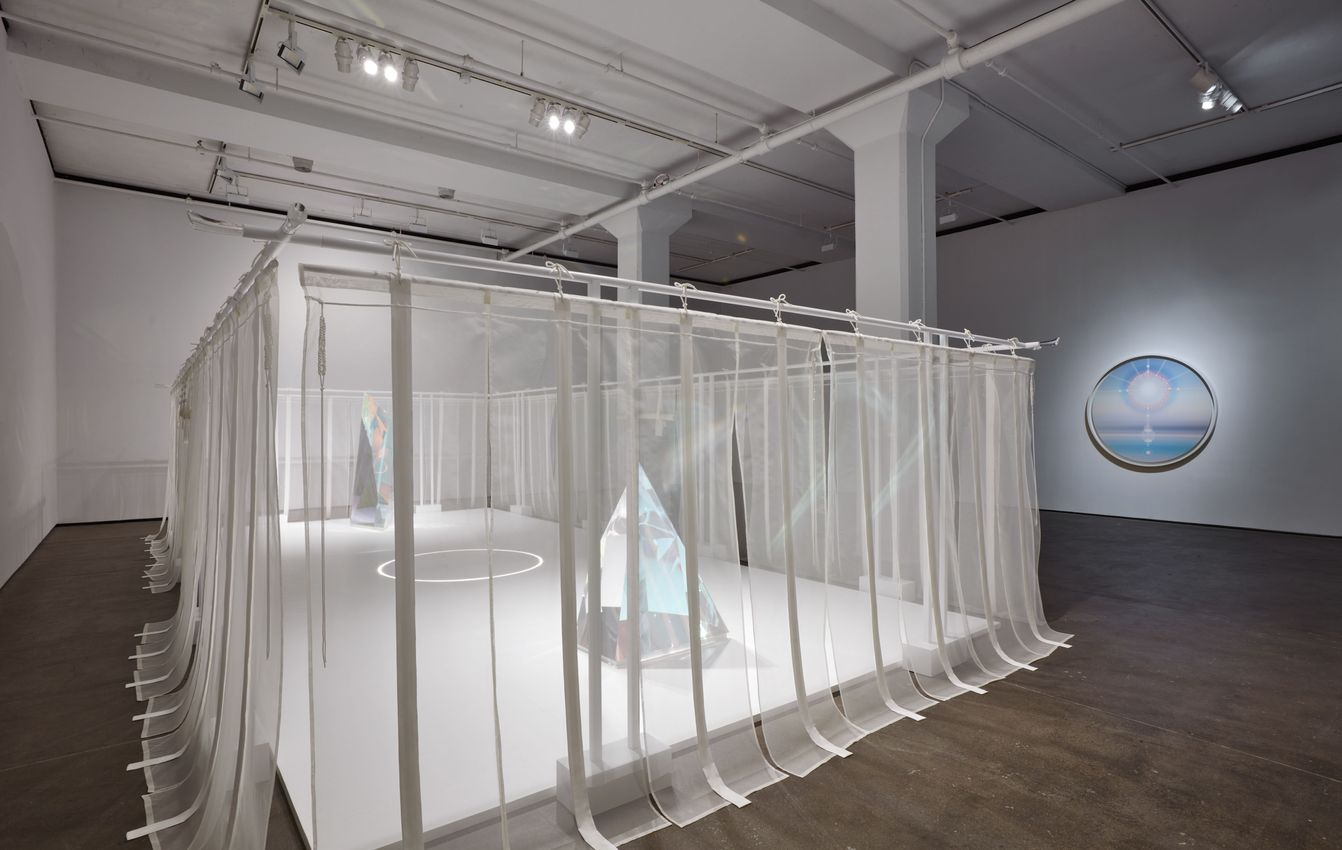
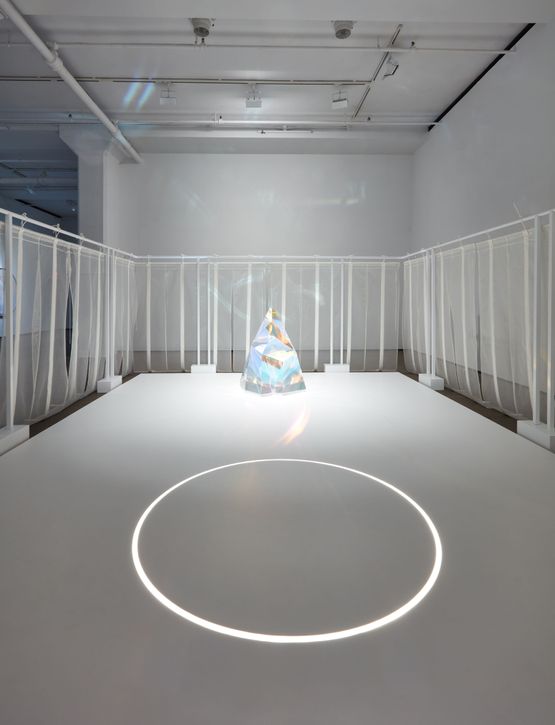
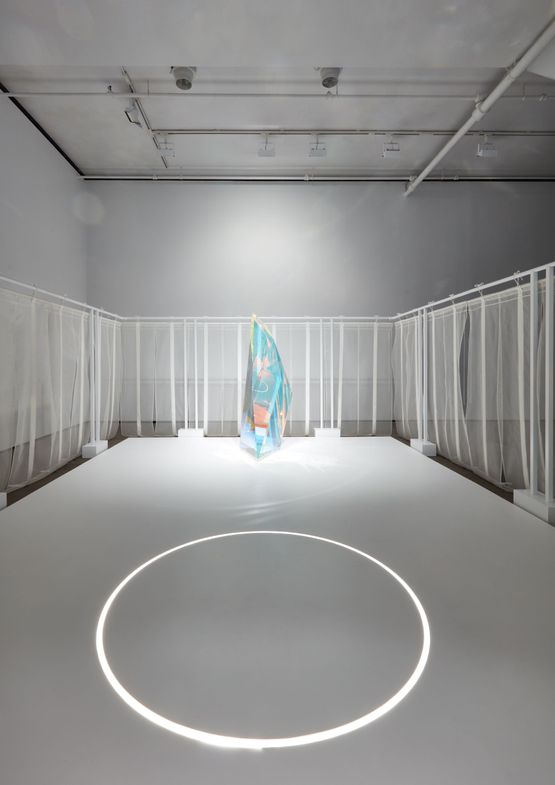
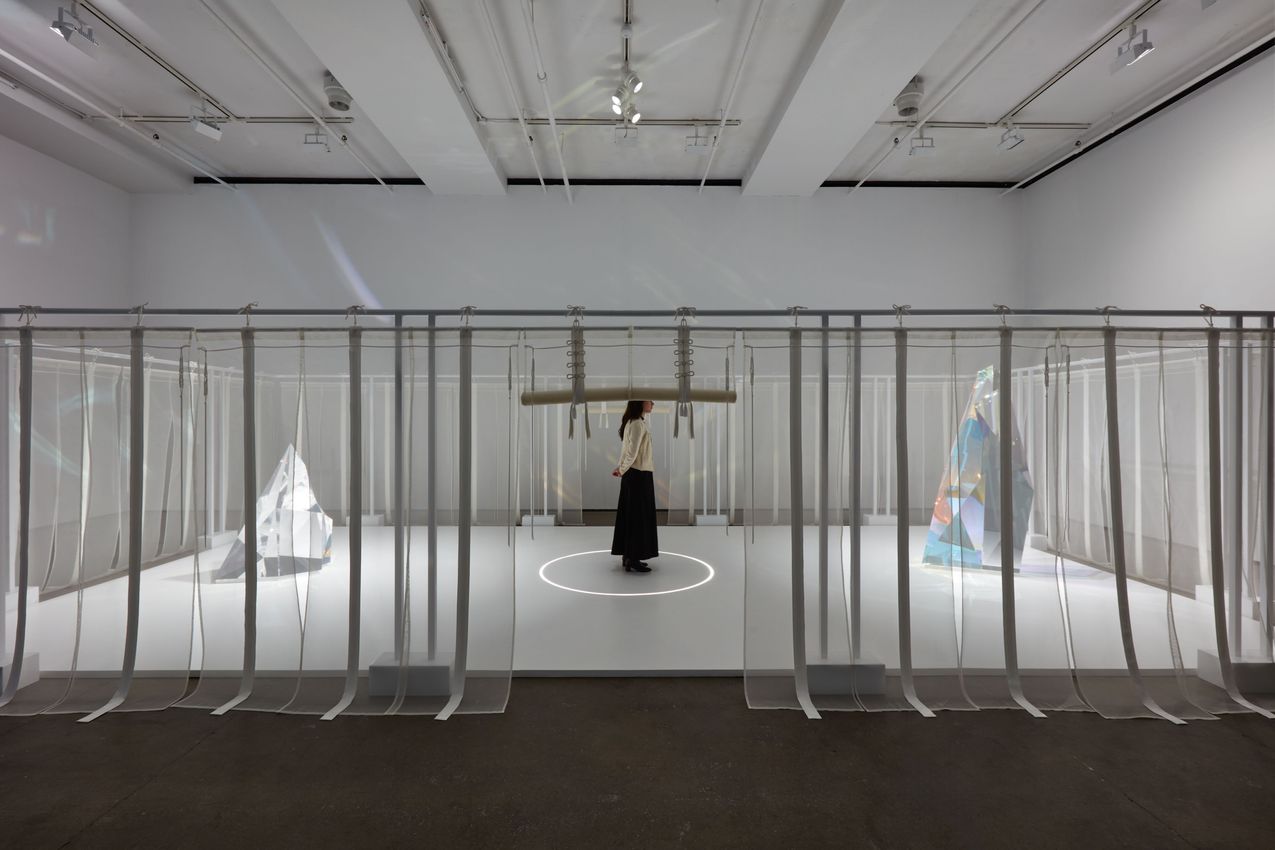
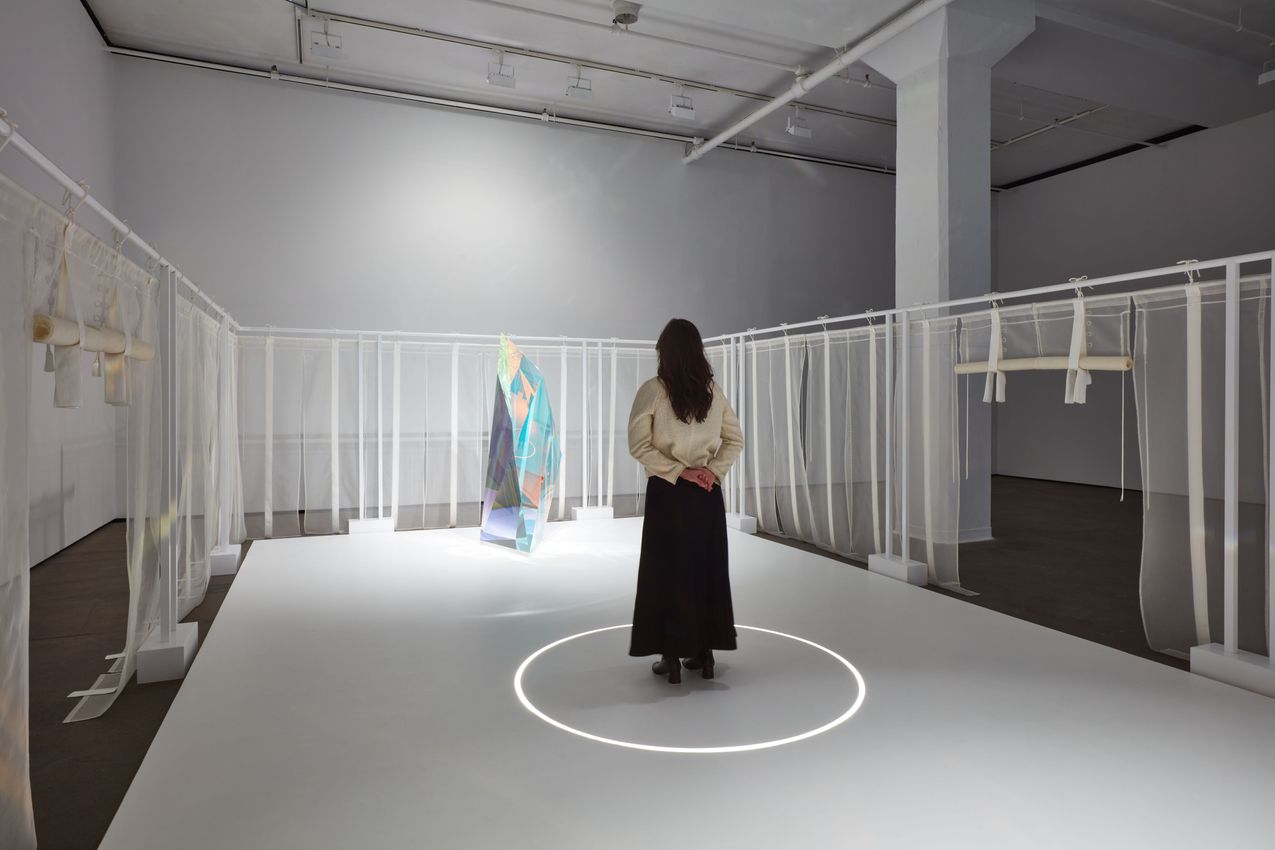
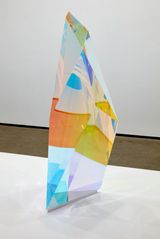
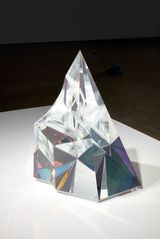
Also in the main gallery, Mori has installed an environment that recreates the spiritual experience of entering shrines in Japan. Presented entirely in white, the installation evokes a space of purity and transcendence. A soft breeze gently moves through the silk veils wrapping the inner sanctum, infusing the work with an almost imperceptible sense of movement and breath. Within this meditative environment are two additional stone works, Kamitate Stone I and Oshito Stone III, their luminous surfaces resonating with the surrounding architecture. Together, the shrine and sculptures form the heart of the exhibition, offering a space of stillness and reflection that connects historic belief systems with Mori’s futuristic vision.
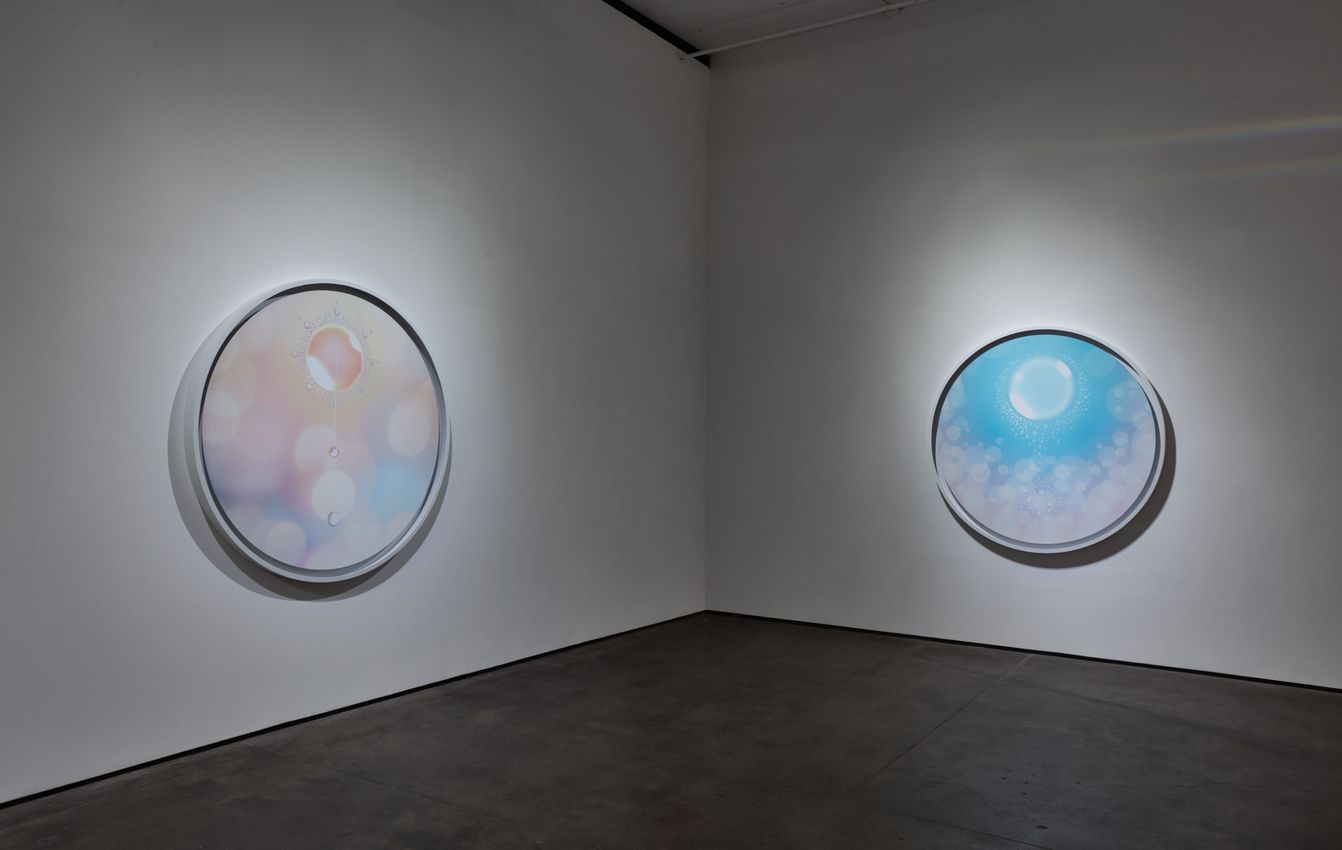
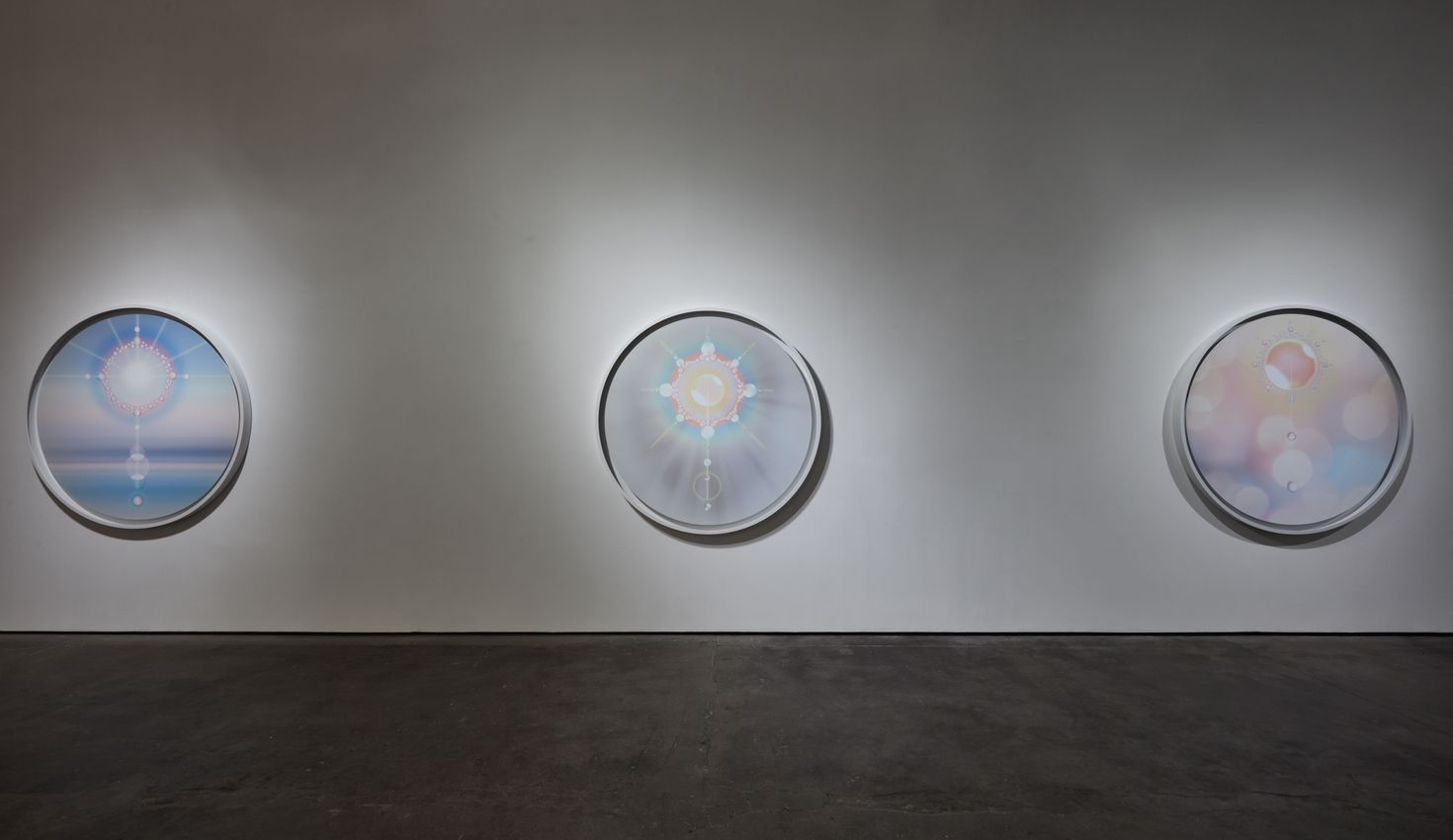
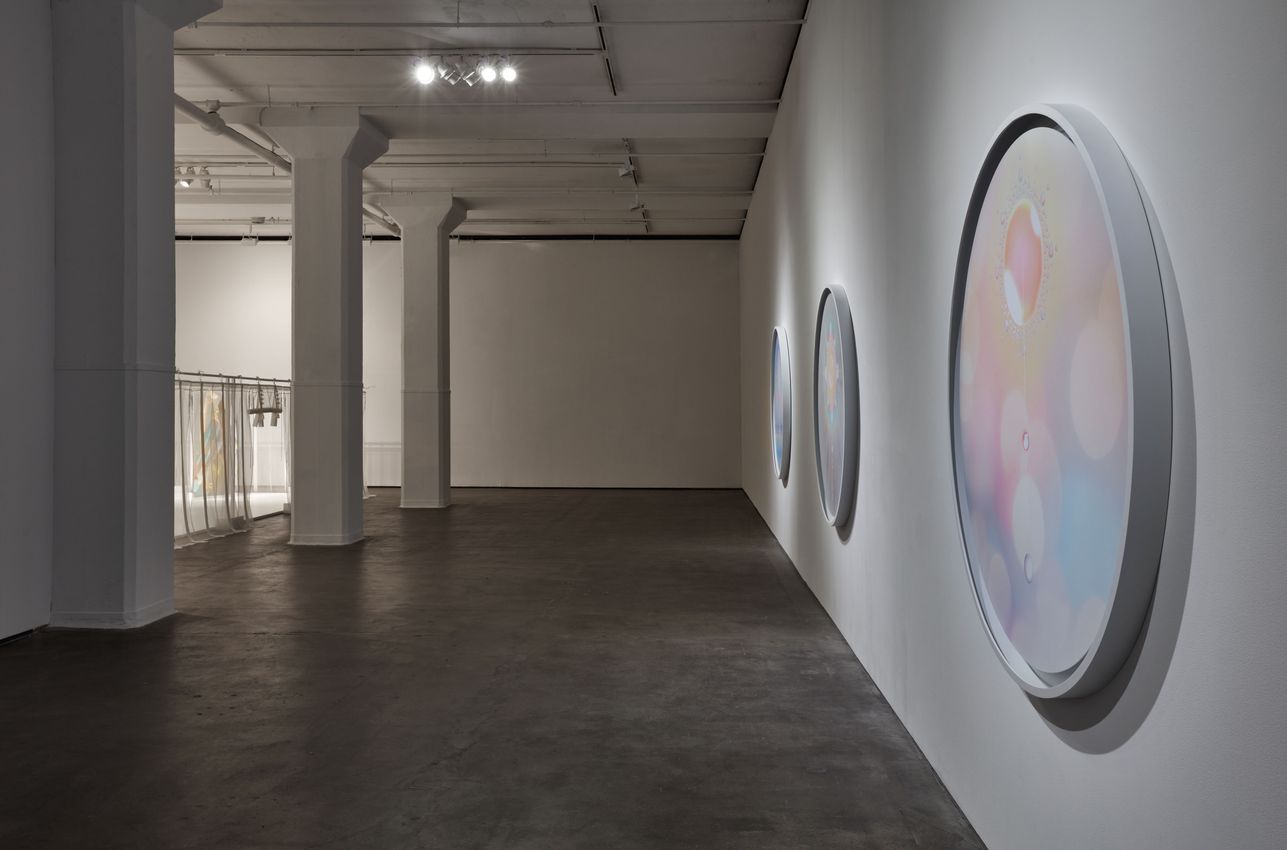
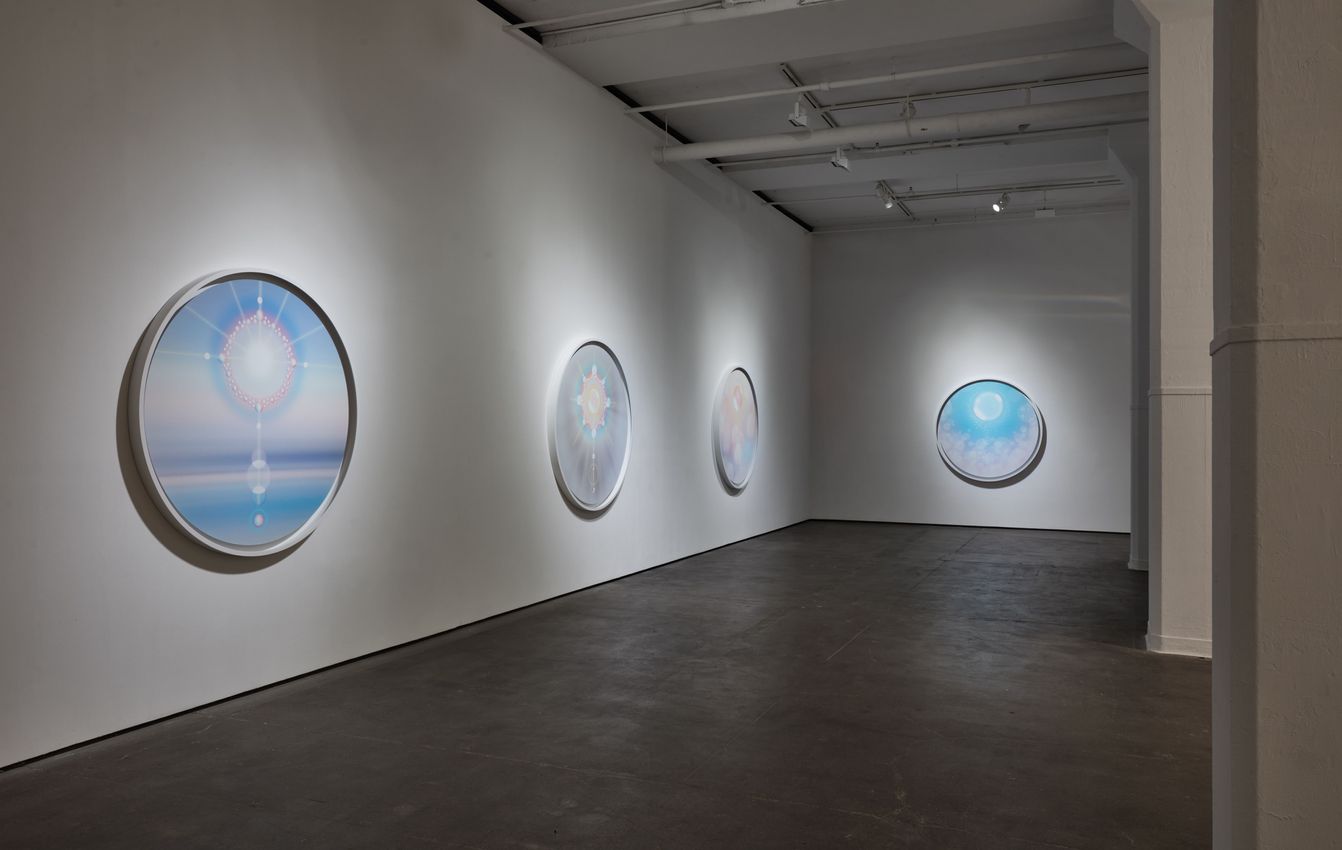
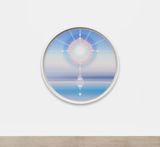
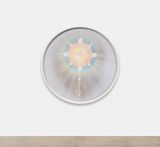
Surrounding this sacred core are Mori’s Unity photo paintings which reflect on the interconnectedness of all things. Rooted in rituals and philosophies such as the Chadō (tea ceremony), they embody Mori’s broader practice at the intersection of art, science, spirituality, and technology. As the artist recalls, the series was inspired by an overwhelming vision of radiant light. Mori recalls, “the manifestation of a profound and boundless love—the primordial source from which all life arises... In that sacred moment, I felt a profound connection to the Great Light. My heart overflowed with the realization that no soul is ever truly alone.” Through these works, Mori conveys this eternal bond between the divine presence and all living beings.
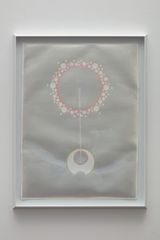
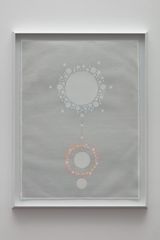
In the front gallery, Mori presents poetic works on silk and paper that extend the meditative quality of the series. Their refined execution and contemplative scale invite close looking, offering an intimate counterpart to the monumental stones and shrine. Together, these works create a rhythm of immersion and reflection that anchors the exhibition.
Radiance expands Mori’s visionary practice, seamlessly intertwining the spiritual and the technological, the material and the immaterial. It invites viewers to journey through spaces of transcendence and reflection, reminding us of the interdependence of humanity, nature, and the cosmos.
Mariko Mori is an internationally acclaimed artist. Her practice explores universal questions at the intersection of life, death, reality, and technology. Her work has been acquired by museums and private collectors worldwide. Mori gained international recognition for her interactive installation, Wave UFO, which debuted at Kunsthaus Bregenz, in Bregenz (Austria) in 2003. The installation was subsequently shown in New York (USA) with Public Art Fund, Genoa (Italy), and was included in the 2005 Venice Biennale (Italy). It was also featured in Oneness, a survey of Mori’s work that opened at the Groninger Museum (Netherlands), then traveled to the ARoS Aarhus Kunstmuseum, in Aarhus (Denmark), the PinchukArtCentre, in Kyiv (Ukraine). Oneness was also exhibited at Centro Cultural Banco do Brasil, in Brasília, Rio de Janeiro and São Paulo (Brazil) in 2011.
Sean Kelly Gallery was founded by its British-born owner in 1991 and operated privately in SoHo until 1995 when its first public space opened at 43 Mercer Street. During these formative years, it established a reputation for diverse, intellectually driven, unconventional exhibitions. The original list of artists represented included Marina Abramović, James Casebere, Callum Innes, Joseph Kosuth and Julião Sarmento – exemplifying the Gallery’s commitment to presenting important, challenging contemporary art.

A respected voice in contemporary art discourse.
Focusing on ambitious storytelling and insightful art-world commentary. Ocula Magazine publishes in-depth interviews, critical essays and timely analysis on the artists, exhibitions and ideas driving the global art world.
Learn more about Ocula Magazine
Showcasing the best of the art world.
Ocula partners with galleries from around the world to highlight their artists, artworks and exhibitions. Gallery membership is by application and invitation, with each member vetted by an independent panel.
Learn more about Ocula Membership

Specialises in the sale of major artworks.
Led by a team with deep ties to the world’s leading auction houses, galleries and collectors. Ocula’s advisory team offers bespoke services to high-net-worth clients from around the world who are looking to acquire the best of contemporary and modern art.
Learn more about our team and services