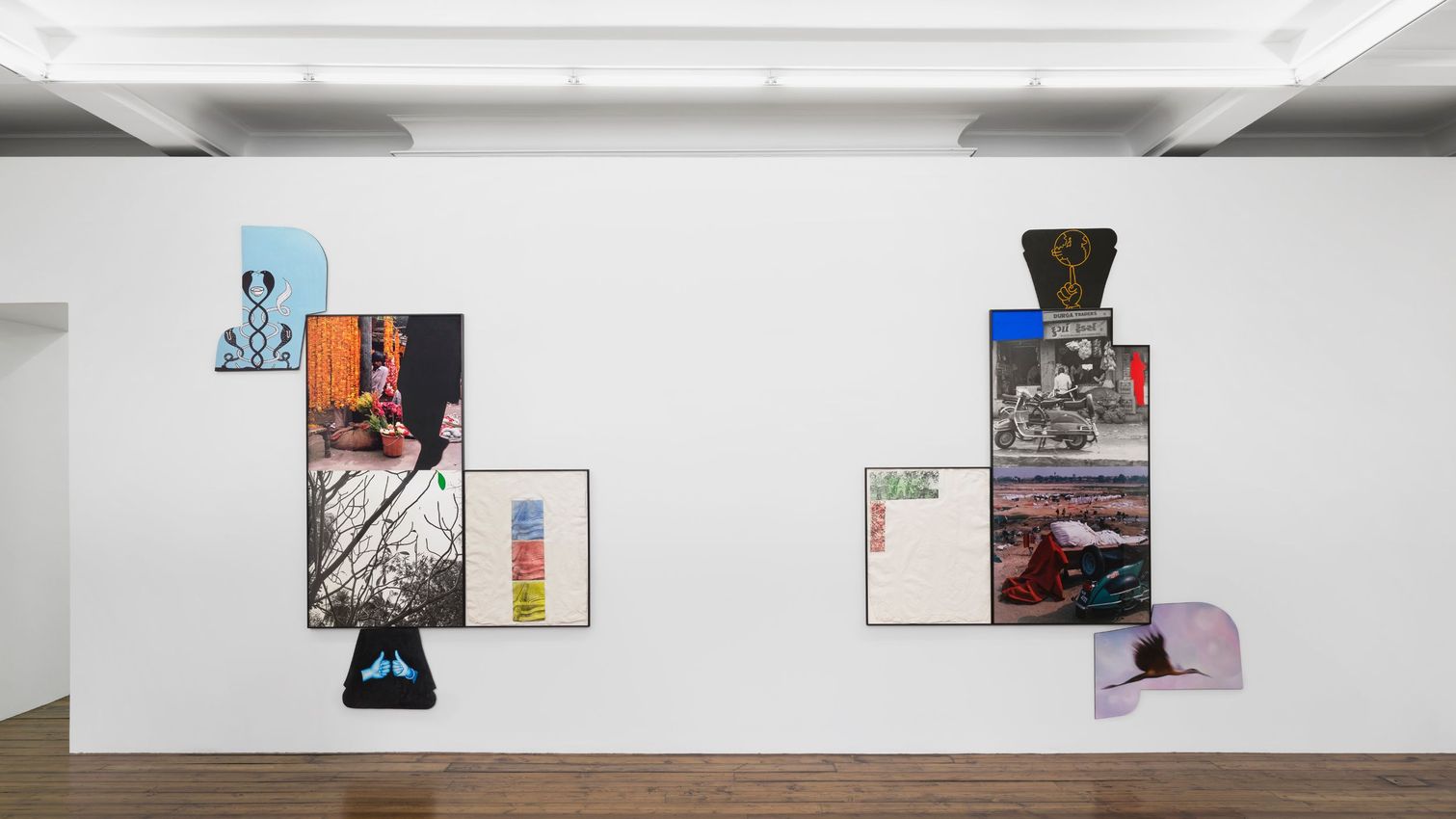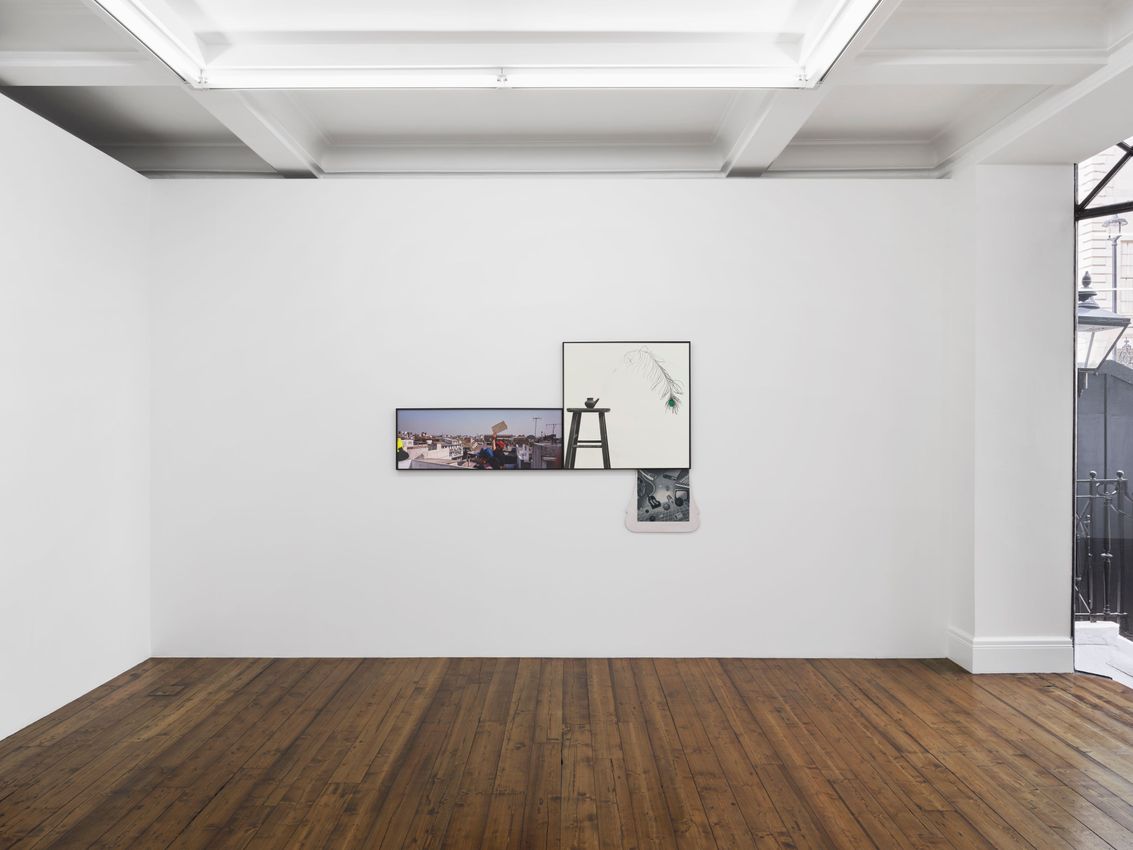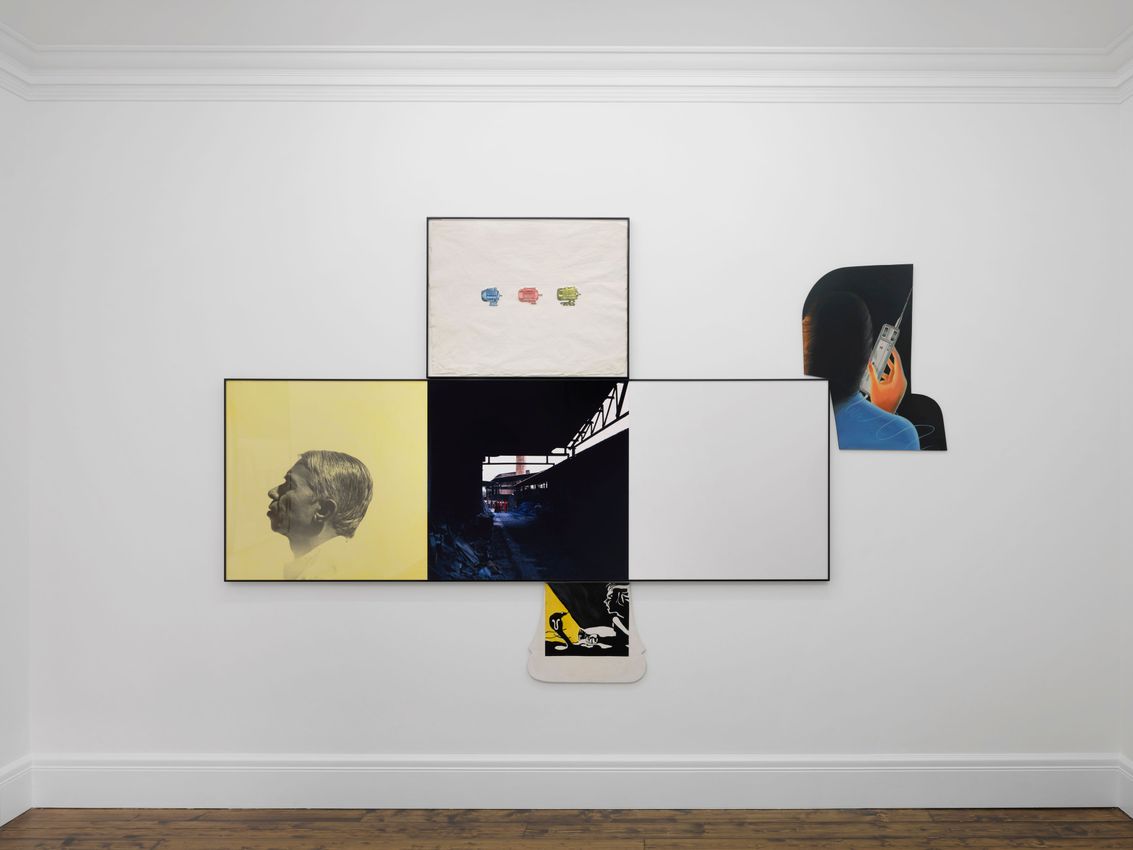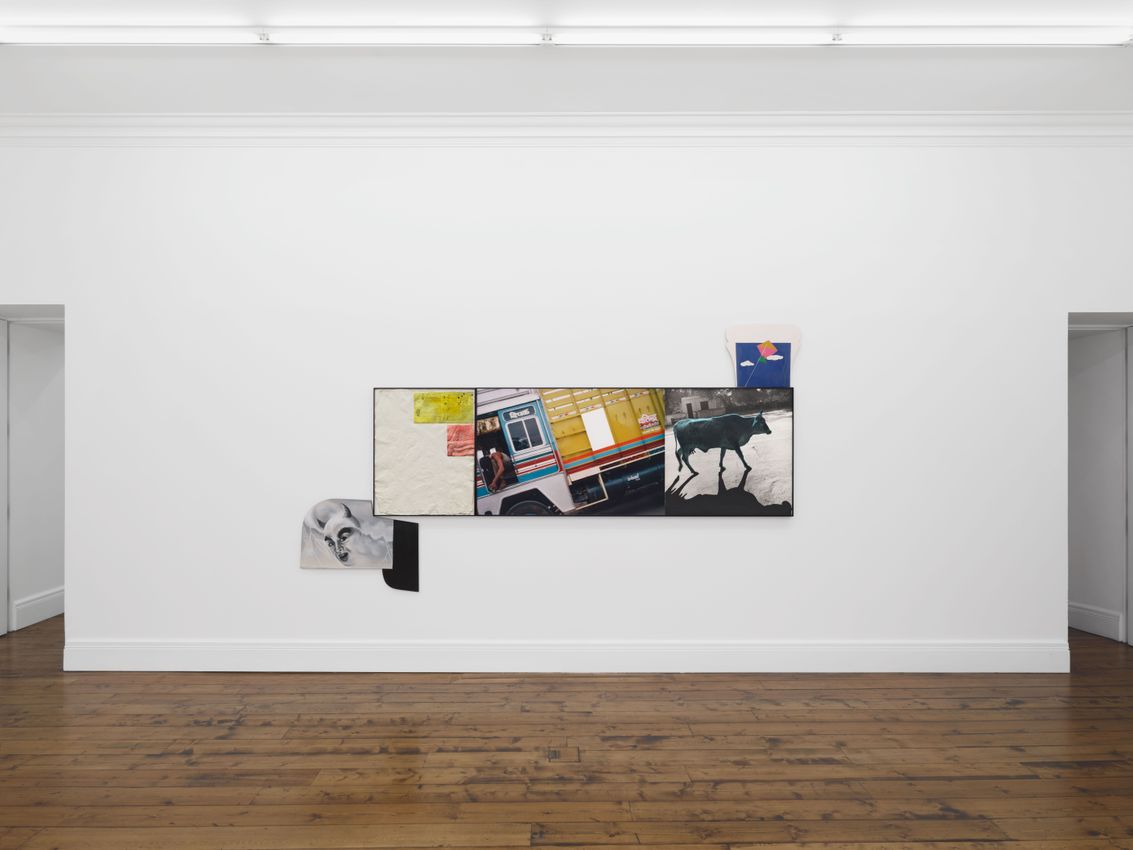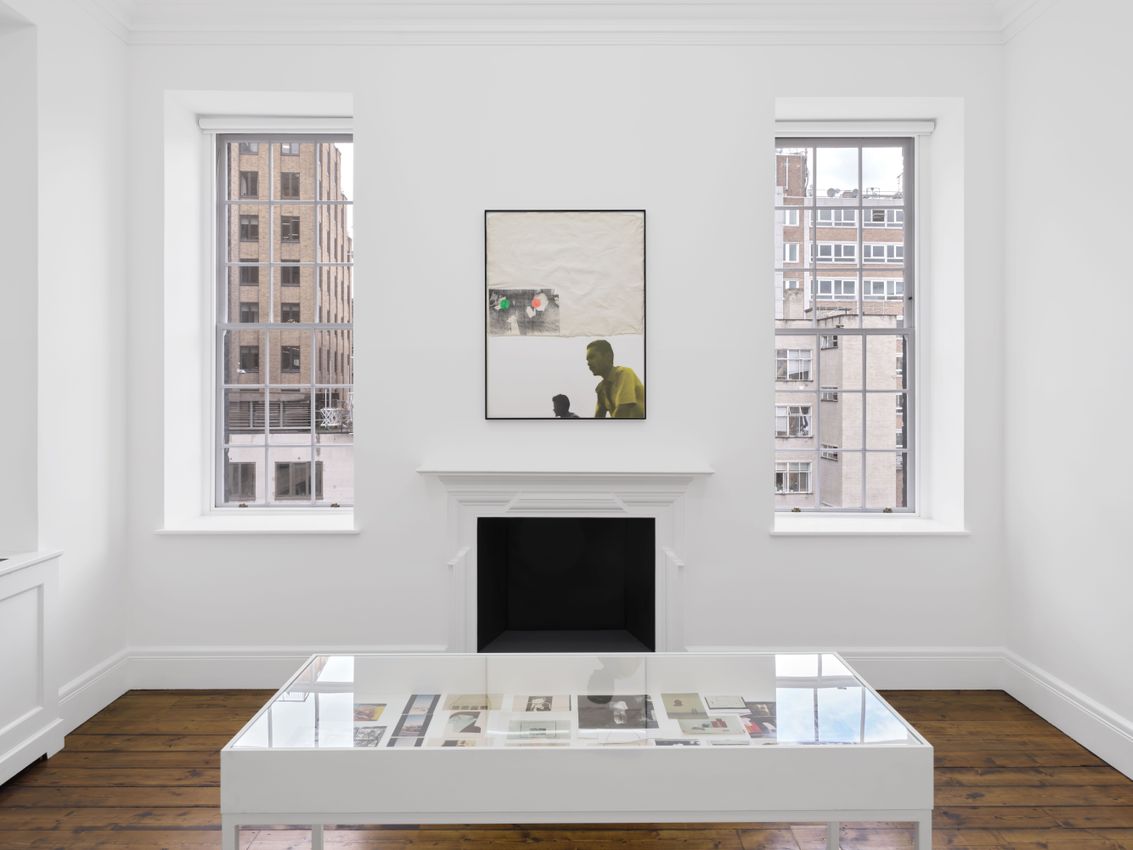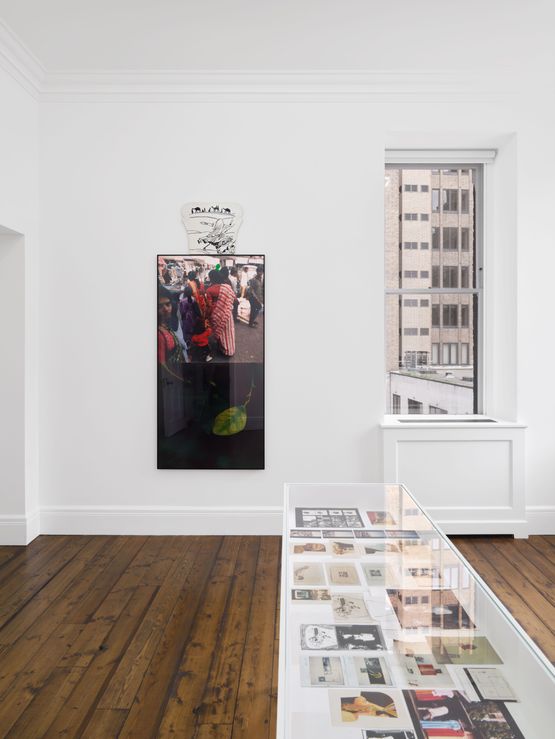
John Baldessari, a pioneer of American Conceptualism, continually challenged clichés and explored the expectations that shape how we perceive works of art. Throughout his storied and influential career, his distinctive approach to painting, photography, source images and texts recontextualised art-historical narratives and rejected traditional boundaries. Drawing from a breadth of sources—advertising, film culture, Marcel Duchamp, and Ludwig Wittgenstein—he created absurdist, complex yet accessible juxtapositions. Monika Sprüth and Philomene Magers are pleased to present Ahmedabad 1992, a solo exhibition of an alluring series of mixed media assemblages Baldessari produced during his residency in India. For the first time in decades, a selection from this unique period in the artist’s oeuvre will be on view at the London gallery.
In the early weeks of 1992, Baldessari was invited to live and work in the expansive compound of the Sarabhai family, Indian industrialists and patrons of the arts, in the Shahibaug district of Ahmedabad. Members of the prominent family formally set up the residency in the 1970s, but the Sarabhais were interacting with artists, designers and architects long beforehand. Like many patrons and cultural protagonists of postindependence India, they actively engaged with foreign artists and established international networks, hoping to restrain revivalist currents and promote a new vision for the country. Following several other established artists, among them his close friend Lynda Benglis, Baldessari resided in the Villa Sarabhai, a red brick and concrete open-plan house designed by Le Corbusier in the 1950s.
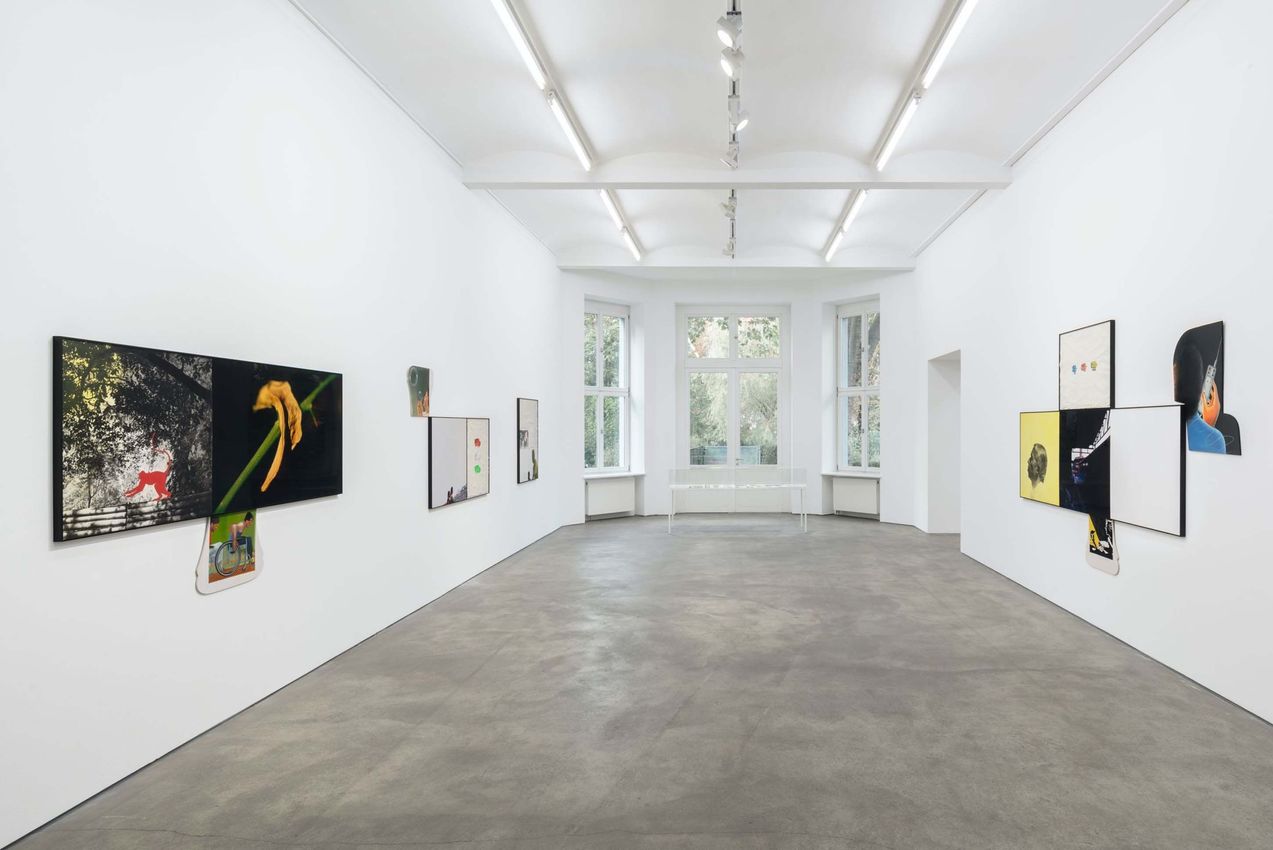
The rarely seen multi-panelled works that stem from Baldessari’s stay are a direct response to his new surroundings, which were inspiring and overwhelming in equal measure and had a lasting impact on the artist’s oeuvre. The collages are composed of his own photographs, some enhanced by paint; an eclectic mix of found imagery; rubber mudflaps painted by local sign painters; Formica pieces modelled after parts of local motorised rickshaws; and printed handmade paper collected from the Gandhi ashram in Ahmedabad. Immersing himself in Indian culture, the Californian photographed the bustling city at a time when India was subject to radical changes due to the emergence of new technologies, globalisation processes, and an influx of Westerners.
The cleverly devised arrangements of Ahmedabad 1992 document this shift. Here, floating electronics in a futuristic cyberspace point towards the burgeoning technological revolution of the ‘90s. There, a sense of motion and transition is reflected in the dominant motifs, including modes of transportation (motorbikes, bicycles, trucks), animals in movement (a cow trotting along the roadside or a bird in flight), and cricket being played or kites being flown. Also at constant play in the series is the alternating and interlacing of looking and being looked at, with several images either observing the action of street scenes or featuring a subject’s direct gaze, and sometimes both.
Cornerstone aspects of Baldessari’s practice, like the mining of pre-existing imagery, fell on fertile ground in a place as visually spectacular as India. Images from magazines and the everyday are deconstructed and reassembled to stress their original ambiguity or curiousness. Figures are painted over, withdrawing the underlying information and complicating the reading of the image. Expanding on this sort of erasure, Baldessari produced the Removal Series (1995) shortly thereafter. Also employed in the present works is the use of dots to cover faces, a predominant feature of the artist’s work from the mid-1980s onward, which simultaneously draws the eye to the point of obfuscation and redirects the viewer towards other parts of the image. The resulting works, which Baldessari produced after his return to Santa Monica, expand beyond the sum of their parts and evoke the atmosphere and complexity of Indian scenery through associative juxtaposition.
The artist’s signature wry humour gives way to a surprisingly raw view of everyday settings. Entered into new contexts, they are recoded and refuse immediate answers, allowing viewers to generate their own responses. The residency provided him with a unique opportunity to not only observe a new environment, which in many ways contrasted his Los Angeles milieu, but also permitted him to turn a critical lens inward for a period of self-reflection. It is the works’ contingent quality—with each element modifying the next—Baldessari’s vibrant use of colour, and the keen eye of an outsider that render the Ahmedabad series an intimate commentary on what it means to look during a moment of reinvention.
Press release courtesy Sprüth Magers


John Baldessari (1932—2020) was a pioneer of American conceptual art. Through his rejection of traditional notions and boundaries, and his expansion of our understanding of what art can be, he became one of the best-known artists of our time. Baldessari was based in Los Angeles and profoundly impacted several generations of visual artists—from David Salle and Jack Goldstein to Cindy Sherman and Barbara Kruger. He has been associated with the gallery since 1995.
Sprüth Magers has expanded from its roots in Cologne (Germany) to become an international gallery dedicated to exhibiting the very best in groundbreaking modern and contemporary art. With galleries located in Berlin Mitte, London’s Mayfair and the Miracle Mile in Los Angeles–as well as an office in Cologne and an outpost in Hong Kong–Sprüth Magers retains close ties with the studios and communities of the German and American artists who form the core of its roster.

A respected voice in contemporary art discourse.
Focusing on ambitious storytelling and insightful art-world commentary. Ocula Magazine publishes in-depth interviews, critical essays and timely analysis on the artists, exhibitions and ideas driving the global art world.
Learn more about Ocula Magazine
Showcasing the best of the art world.
Ocula partners with galleries from around the world to highlight their artists, artworks and exhibitions. Gallery membership is by application and invitation, with each member vetted by an independent panel.
Learn more about Ocula Membership

Specialises in the sale of major artworks.
Led by a team with deep ties to the world’s leading auction houses, galleries and collectors. Ocula’s advisory team offers bespoke services to high-net-worth clients from around the world who are looking to acquire the best of contemporary and modern art.
Learn more about our team and services