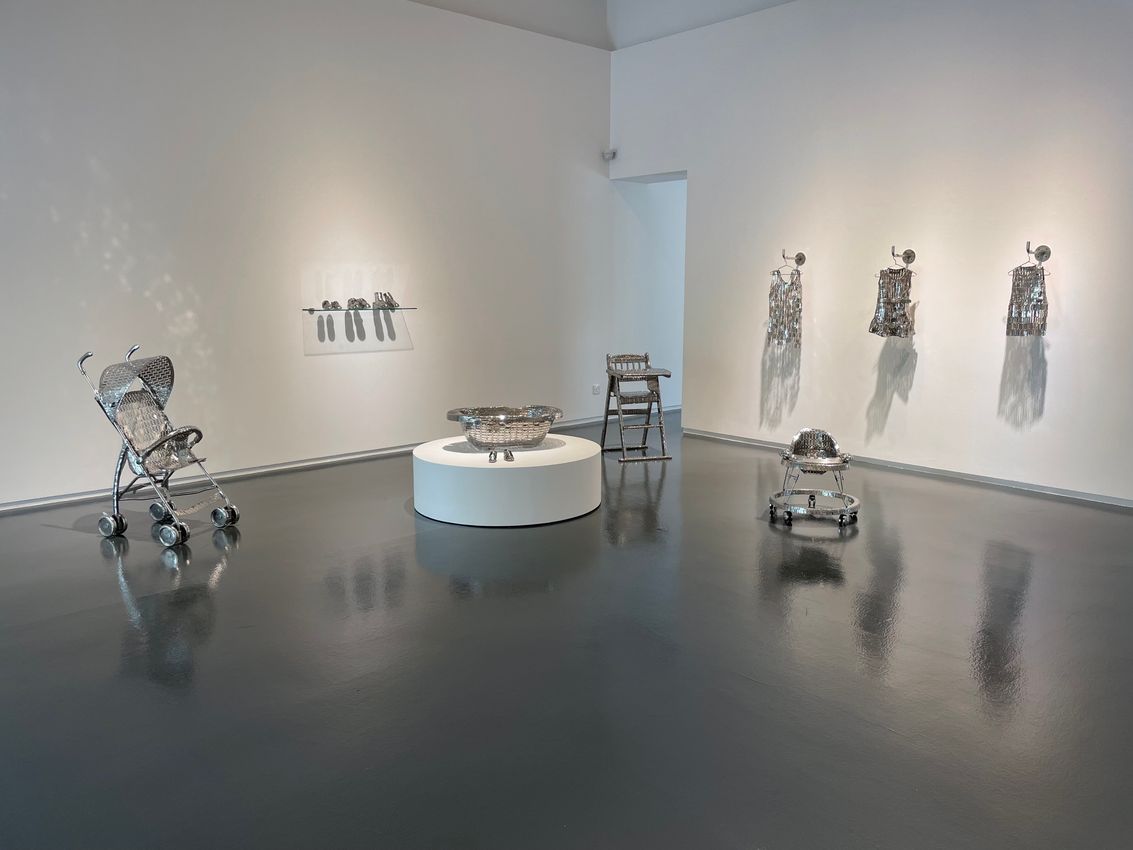
We are pleased to present new sculptures and drawings by acclaimed Bangladeshi artist Tayeba Begum Lipi (b. 1969). The work reflects Lipi’s experience during the pandemic as she coped with feelings of fear and loss while also transitioning to a new phase of life.
Lipi is critically recognised for her long-running sculpture series in which she creates everyday objects using razor blades, a reference to a tool commonly used in childbirth and to the violence women often face in Bangladesh. In 2012, Love Bed, an early work from the series, was included in the acclaimed Guggenheim Museum survey of contemporary Southeast Asian art No Country and is now part of the museum’s permanent collection.
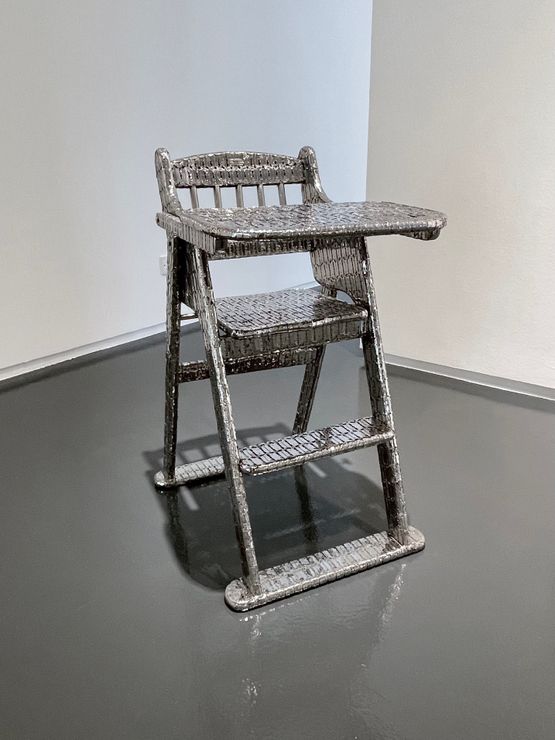
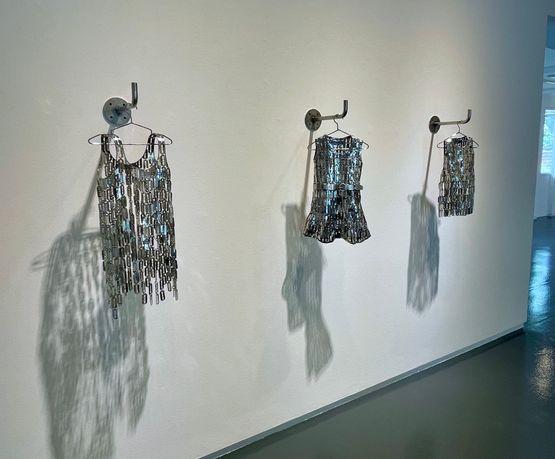
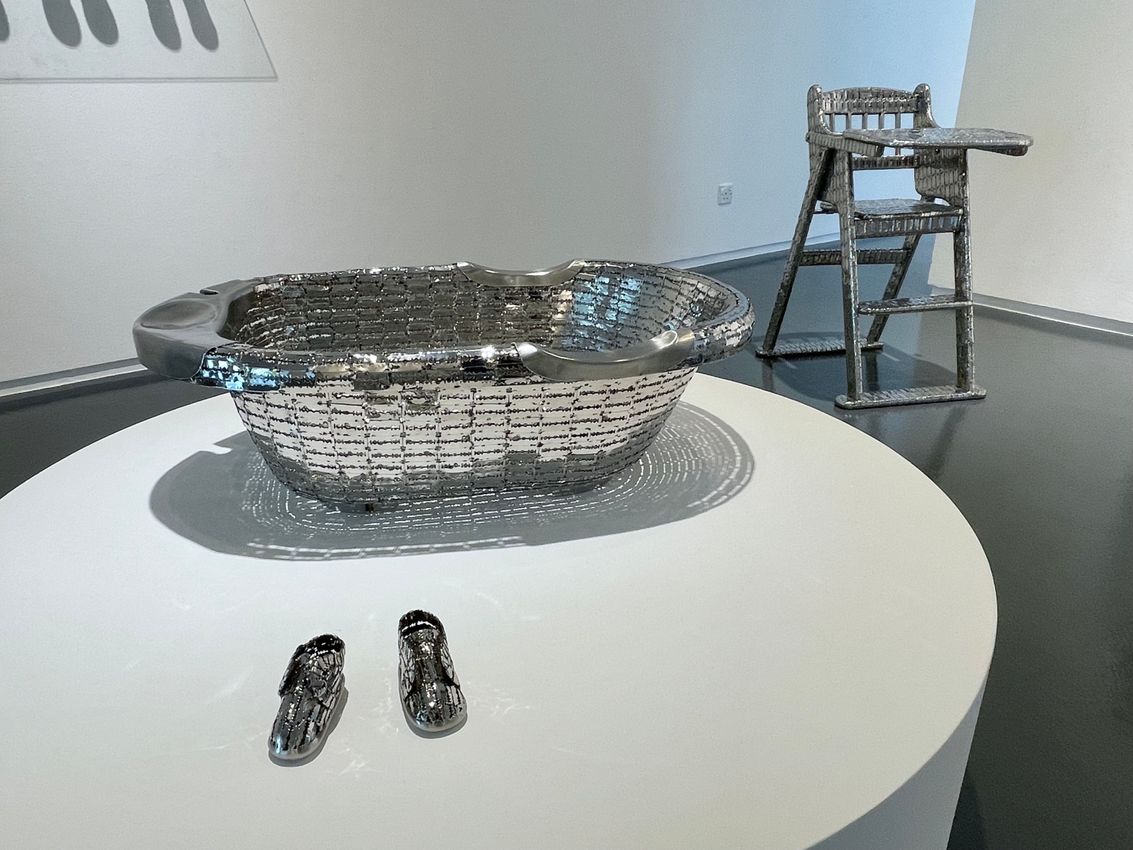
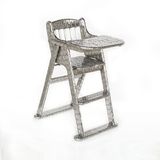
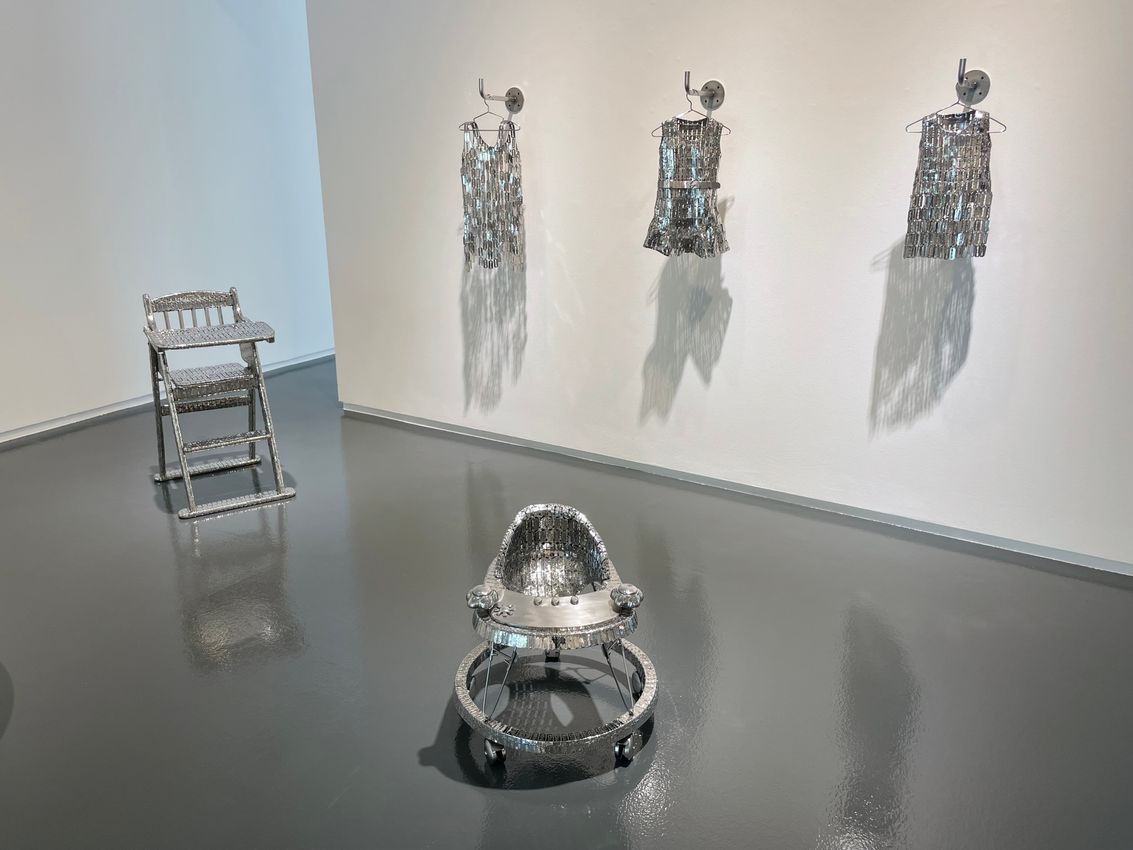
The show features two new groups of razor-blade sculptures. The first is inspired by objects of childhood—life-sized re-creations of strollers, highchairs, dresses and palm-sized baby shoes. The work reflects the artist’s transition to a new phase of life. After enduring painful losses during the pandemic, including the death of several close family members, Lipi’s household expanded with the addition of a baby boy, the child of one of her studio fabricators who lives with Lipi and her artist husband, Mahbubur Rahman.
Assuming a maternal role was not something Lipi thought she would do. In these sculptures, she explores her feelings about motherhood, an experience she sees as central in most women’s lives, but one that had always eluded her. ‘Being engaged with work as practicing artists, my partner and I almost forgot about the life every couple dreams about,’ she says. ‘But time flies and your wounds are healed; you do not look back, but look forward to the extended positive vibes of life.’
The second group of sculptures is a response to the lockdown as her scheduled shows were cancelled, employees were sent home and resources for art-making proved scarce. While the pandemic essentially halted the flow of production in her studio, at the same time, it provided space for Lipi to closely examine what she describes as ‘the small, intimate stuff’ around her.
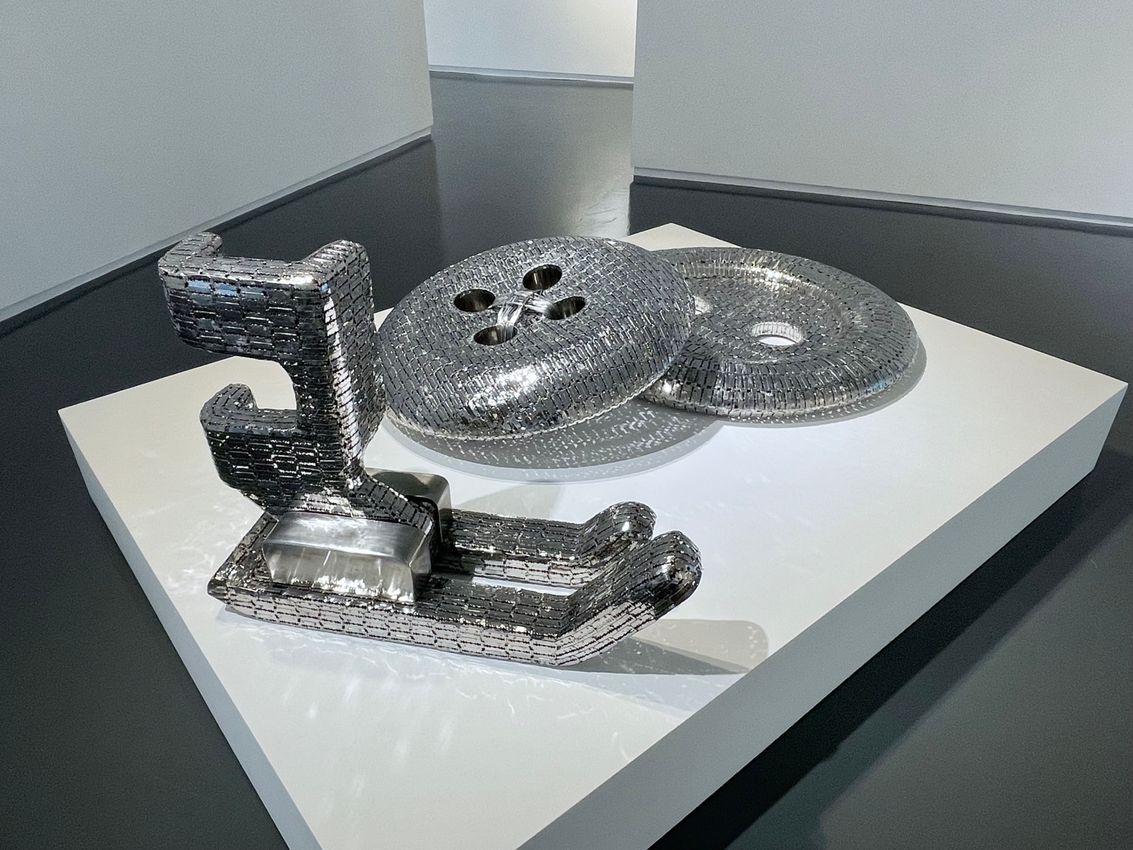
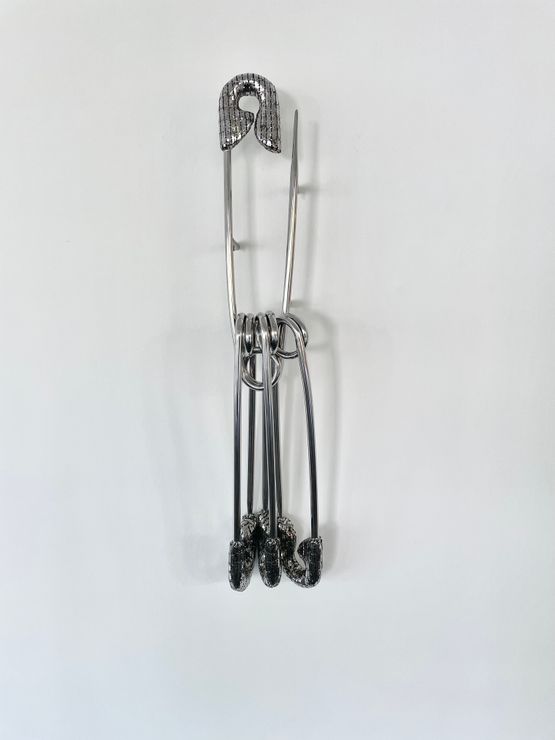
For the first time in her razor-blade series, Lipi plays with scale in witty and dramatic ways by creating small, mundane objects, including buttons, safety pins and sewing-machine parts, in monumental sizes. Each sculpture is stunningly detailed and the intrinsic charm of the oversized proportions assigns significance to trivial items we might otherwise ignore.
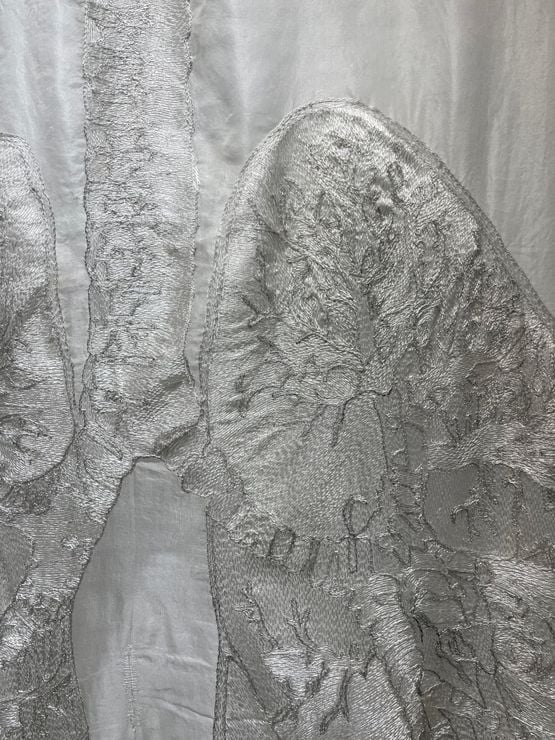
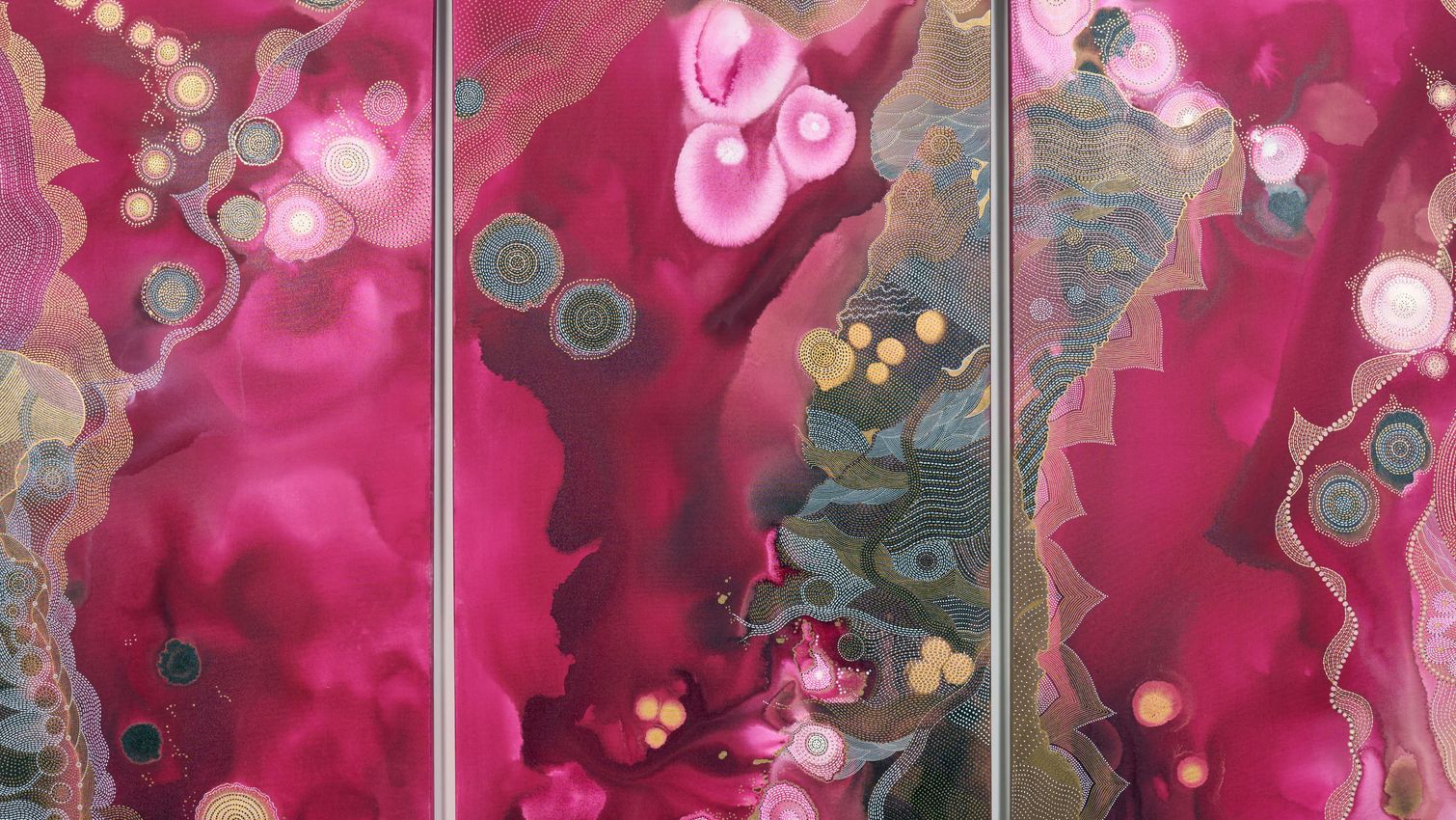
The sculptures are accompanied by six hand-embroidered drawings. It was a time-consuming project Lipi undertook as a way to refocus her mind by engaging in a deliberative and slow-paced process of art-making. Through these works, Lipi reconnected with sewing, a recurring theme in her work and skill she developed at a young age when she and her siblings made their own clothes. Lipi stitches images of human organs onto Nepalese lokta fabric (a painted cloth woven from fibers of high-elevation shrubs native to Nepal). The delicacy of the fabric—a medium Lipi is using for the first time—conveys the fragility of life when exposed to a virus such as Covid.
Tayeba Begum Lipi’s artistic practice is rooted in her experiences growing up in Gaibandha, a small town in Bangladesh. The eleventh of twelve children, she was often present for the home births of nieces and nephews delivered with the help of a local village woman and a razor blade. This visceral memory—the sound of the blade rolling in boiling water and the glint of the sharpened edge—eventually translated into a powerful symbol that plays a recurring role in her work. Although she initially used readymade blades, since 2010 she has had them custom manufactured in gleaming stainless steel, which allows her latitude to create different-sized works.
Lipi completed a master of fine arts degree in drawing and painting at the Faculty of Fine Arts, University of Dhaka in 1993. In 2002 Lipi co-founded the Britto Arts Trust, Bangladesh’s first artist-run alternative arts platform dedicated to organising exhibitions, encouraging intercultural dialogue and providing residencies for international and local artists. She was awarded a Grand Prize at the 11th Asian Art Biennale Bangladesh in 2003 and was the commissioner for the Pavilion of Bangladesh at the 54th Venice Biennale, 2011. In 2012, she was one of the curators for the Kathmandu International Art Festival. She also participated in the 14th Jakarta Biennale and the Colombo Art Biennale in Sri Lanka in 2011 and the Dhaka Art Summit in 2012. In 2000 Lipi was an artist-in-residence at the Irish Museum of Modern Art, Dublin, her first in a number of artist residencies over the past twenty years.
Lipi’s work has been exhibited across the globe at venues including the Solomon R. Guggenheim Museum, New York; the Shanghai Modern Art Museum; the Taiwan National Museum of Fine Art; the Eli and Edythe Broad Art Museum, Lansing, Michigan; and Museum Arnhem, Netherlands. In 2015, her work featured prominently in Frontiers Reimagined at the 56th Venice Biennale. In 2022, she participated in a collaborative presentation at Documenta as part of the Lumbung Member Britto Arts Trust.
Lipi is represented in the collections of the Solomon R. Guggenheim Museum, New York; Smith College Museum of Art, Northampton, Massachusetts; the Fashion Institute of Technology, New York; Birmingham Museum of Art, Alabama; the National Art Gallery of Bangladesh Shilpakala Academy, Dhaka; and the Devi Art Foundation, Delhi.
Tayeba Begum Lipi creates paintings, prints, videos and installations articulating themes of female marginality and the female body. Her sculptural works re-creating everyday objects including beds, bathtubs, strollers, wheelchairs, dressing tables and women’s undergarments use unexpected materials, such as safety pins and razor blades. This purposeful and provocative choice of materials speaks to the violence facing women in Bangladesh, as well as referencing tools used in childbirth in the more underdeveloped parts of the country.
Established in 2000 in New York City, Sundaram Tagore Gallery represents established and emerging artists from around the globe, specializing in work that is aesthetically and intellectually rigorous, infused with humanism and art historically significant. The Singapore branch opened in 2012.

A respected voice in contemporary art discourse.
Focusing on ambitious storytelling and insightful art-world commentary. Ocula Magazine publishes in-depth interviews, critical essays and timely analysis on the artists, exhibitions and ideas driving the global art world.
Learn more about Ocula Magazine
Showcasing the best of the art world.
Ocula partners with galleries from around the world to highlight their artists, artworks and exhibitions. Gallery membership is by application and invitation, with each member vetted by an independent panel.
Learn more about Ocula Membership

Specialises in the sale of major artworks.
Led by a team with deep ties to the world’s leading auction houses, galleries and collectors. Ocula’s advisory team offers bespoke services to high-net-worth clients from around the world who are looking to acquire the best of contemporary and modern art.
Learn more about our team and services