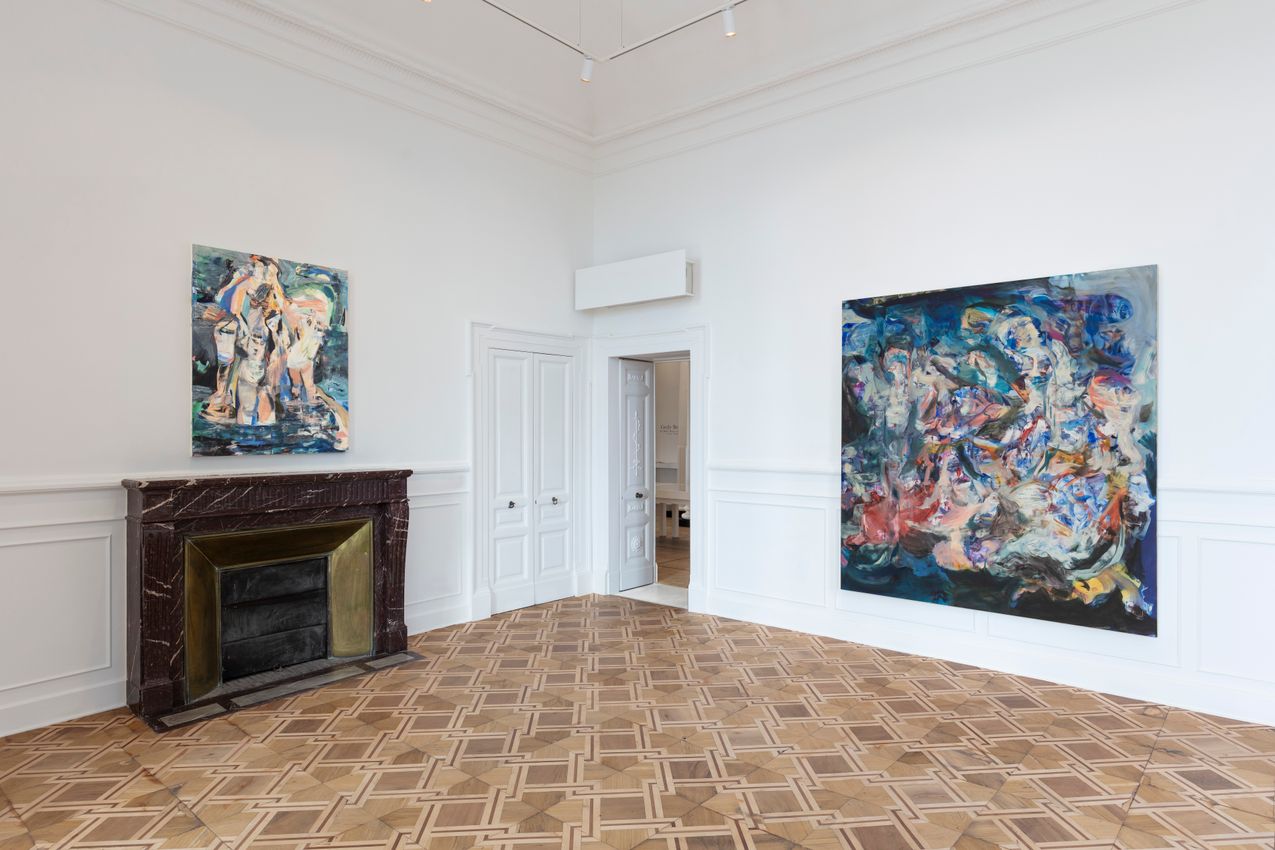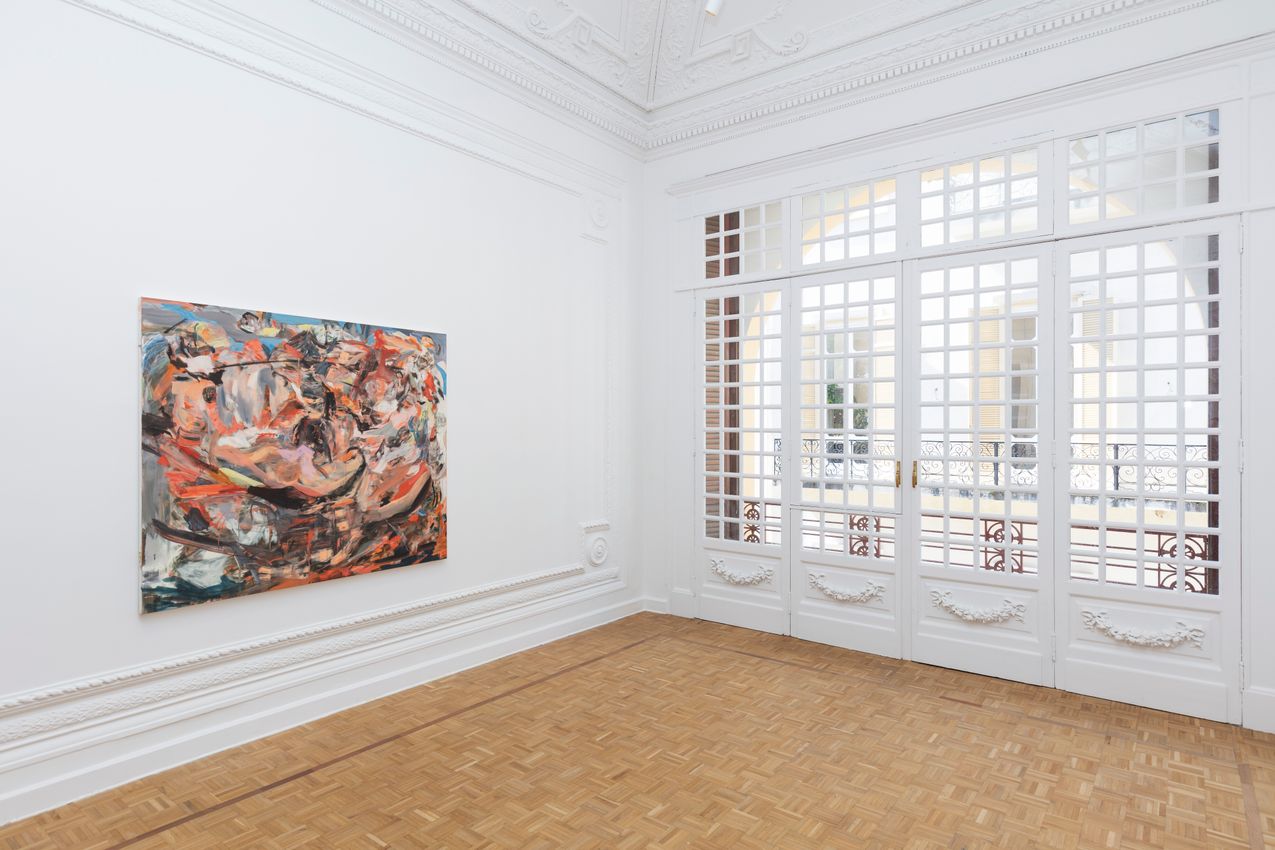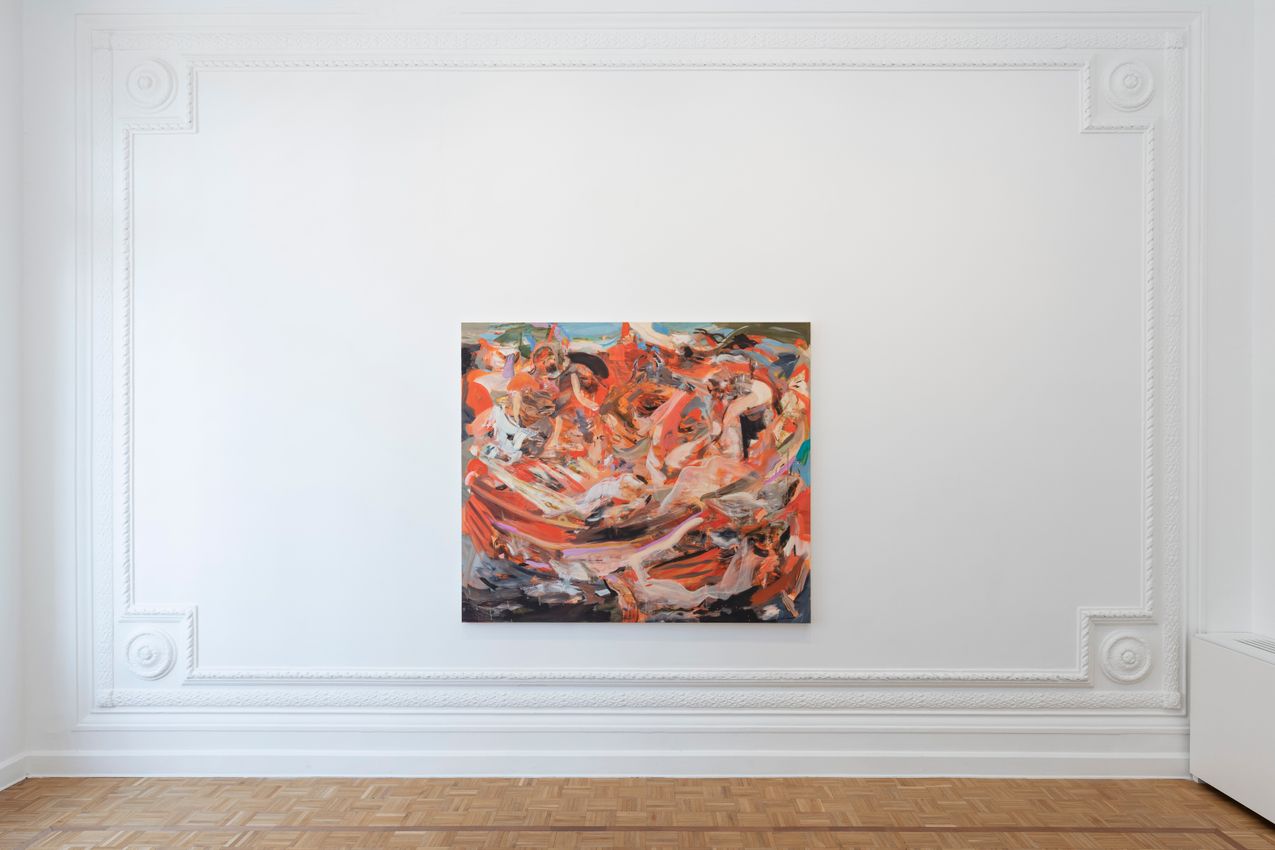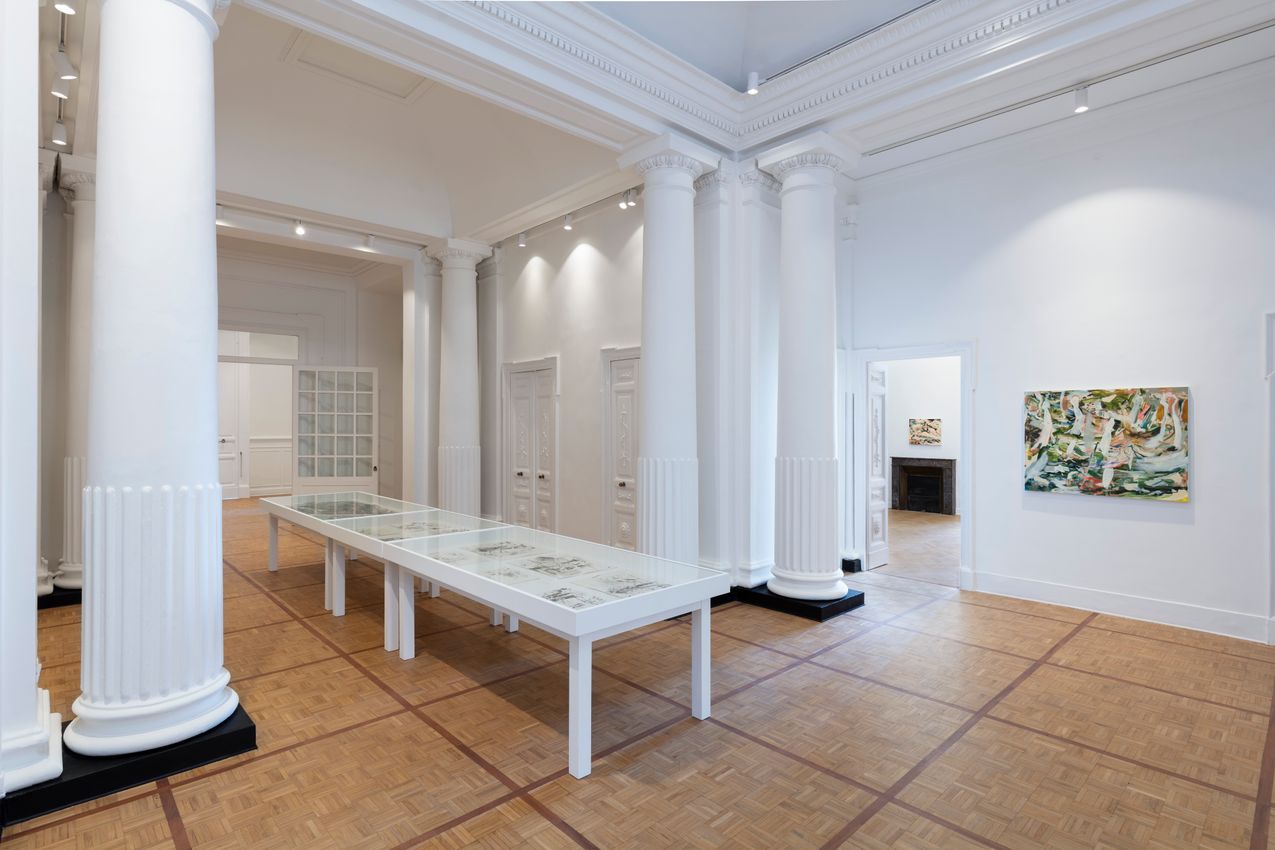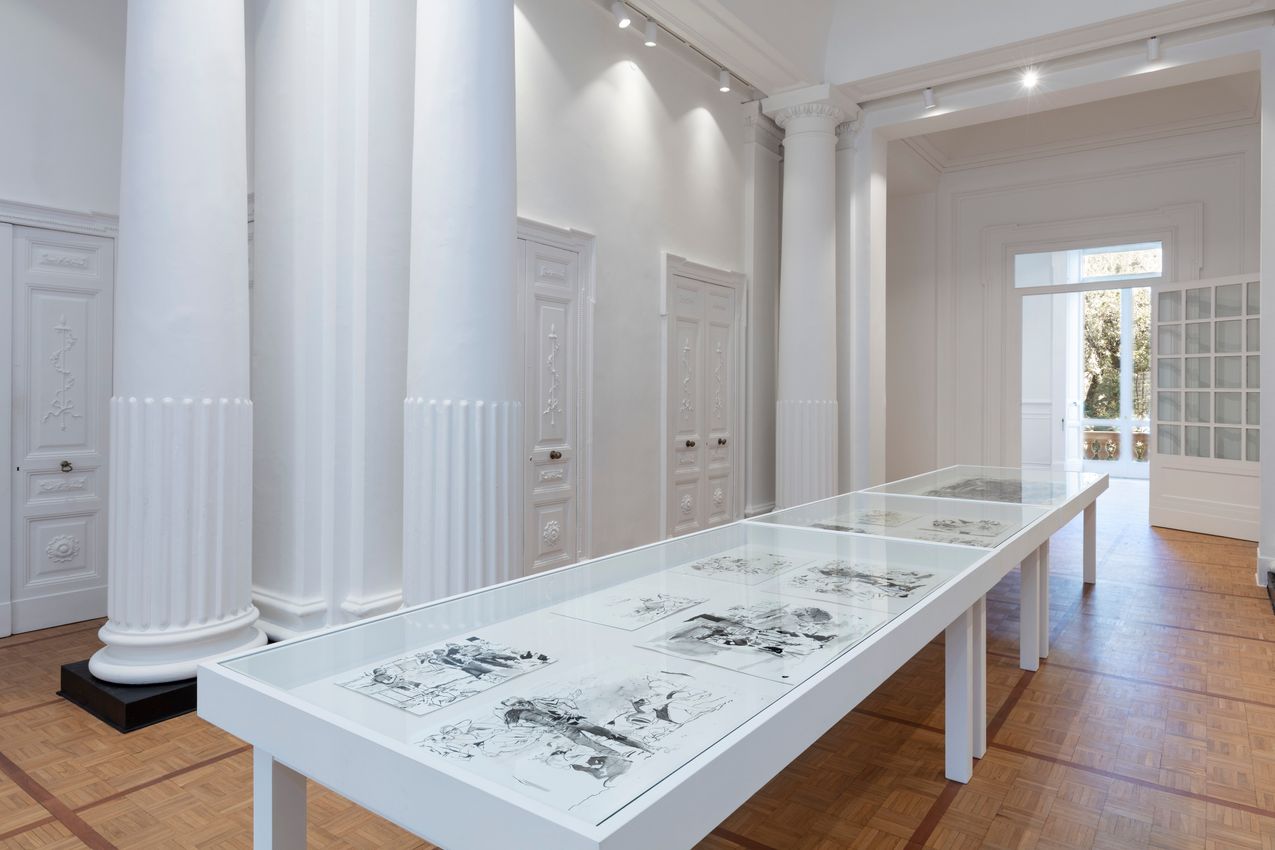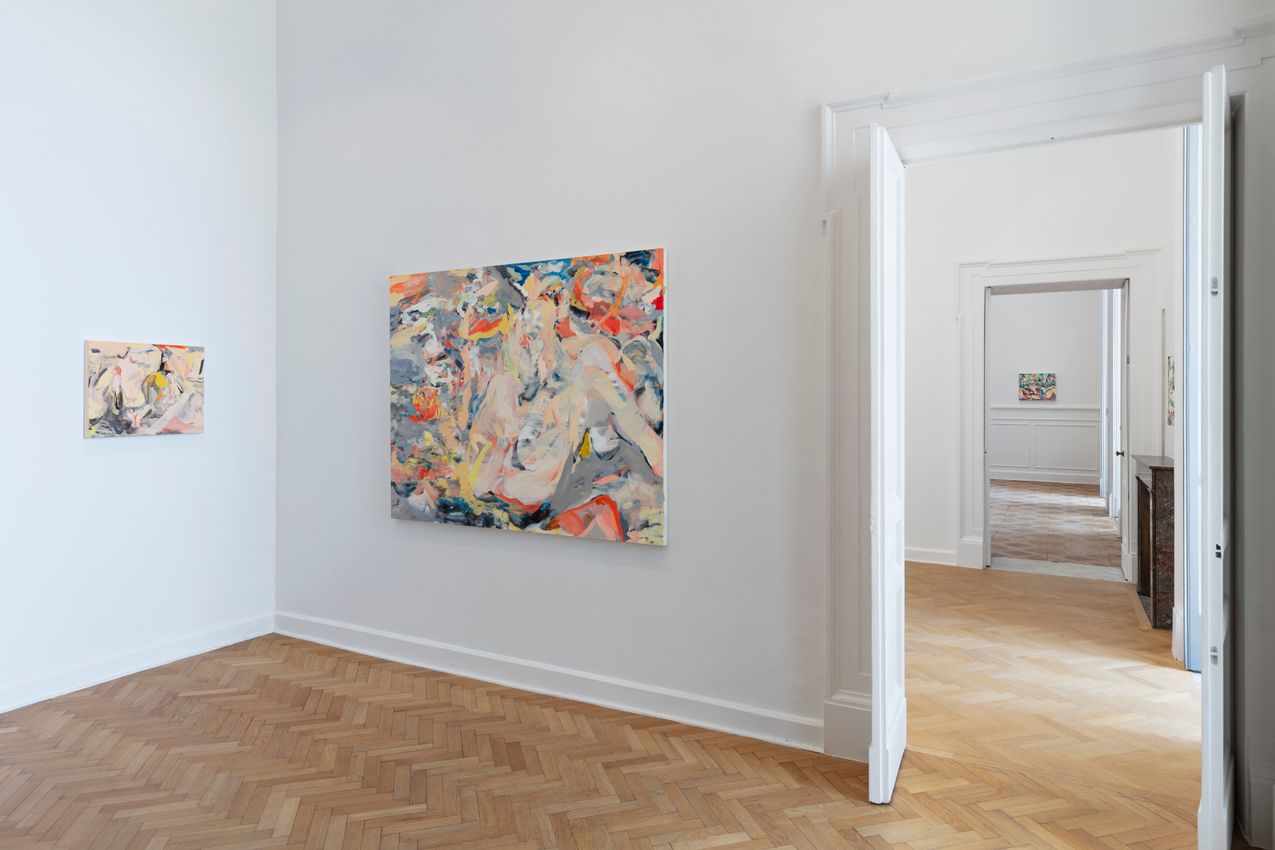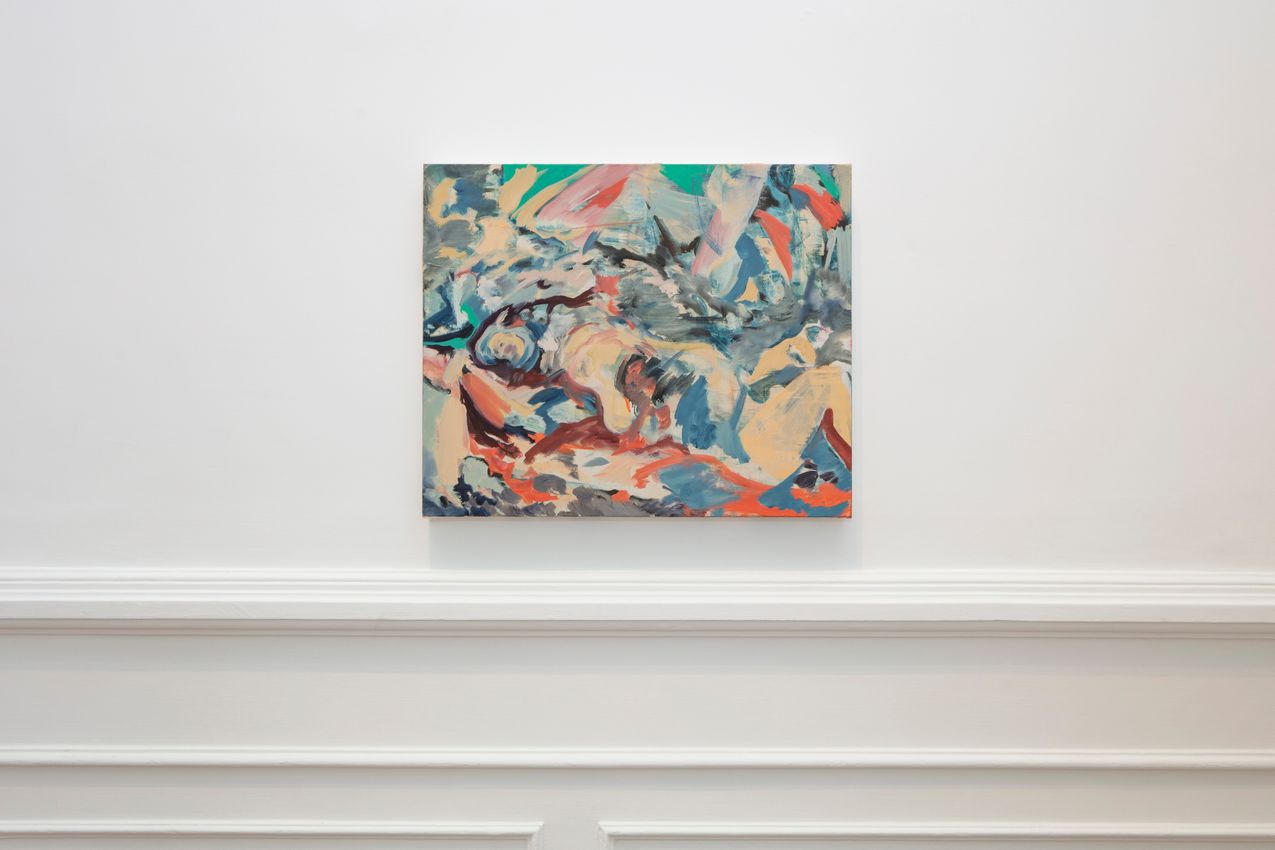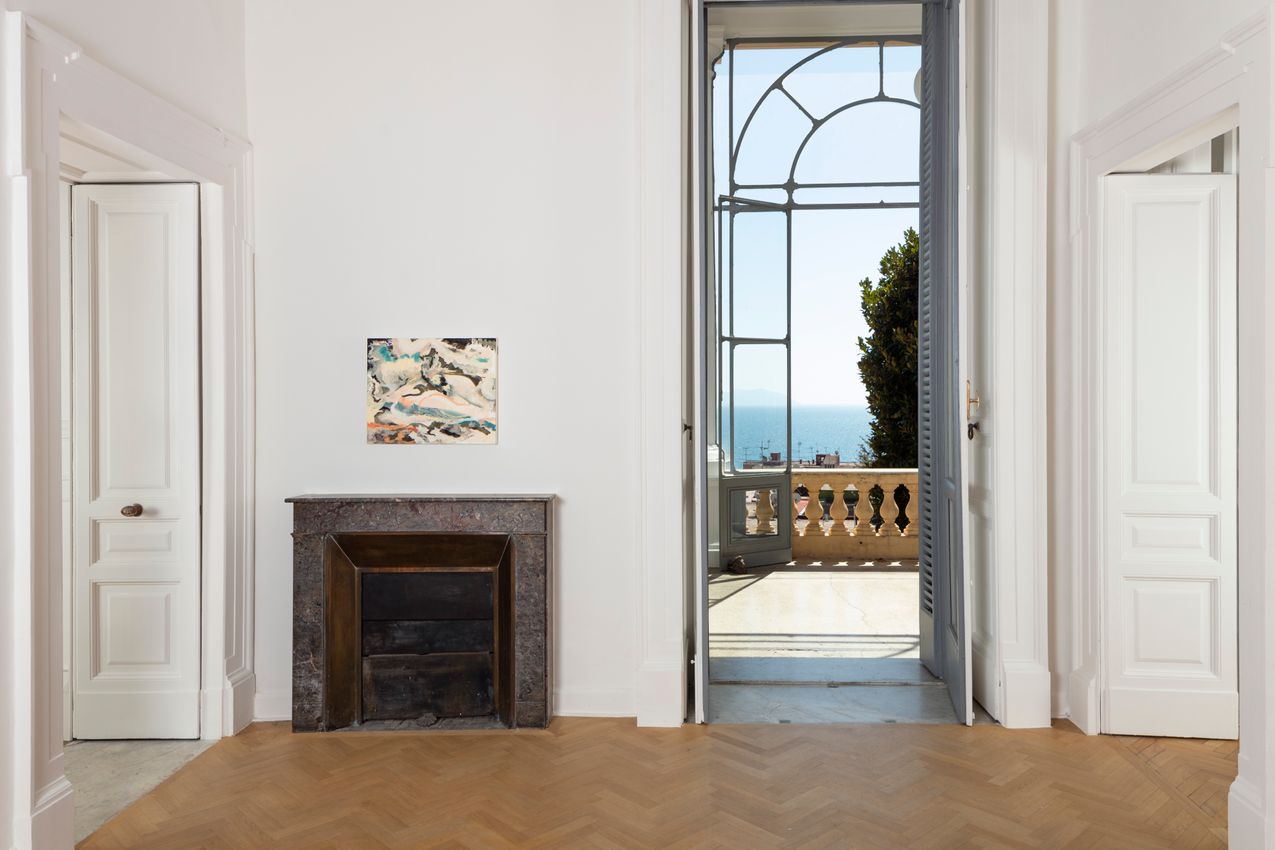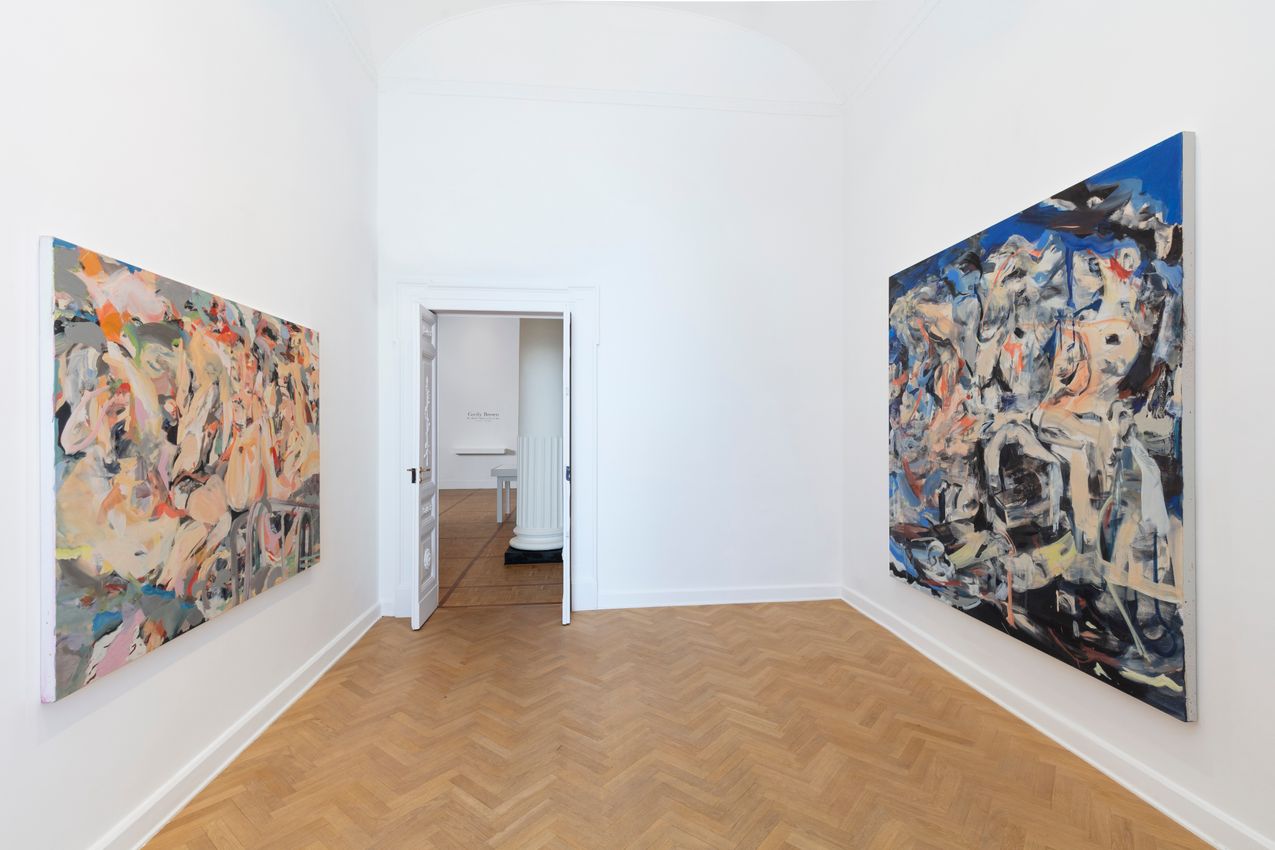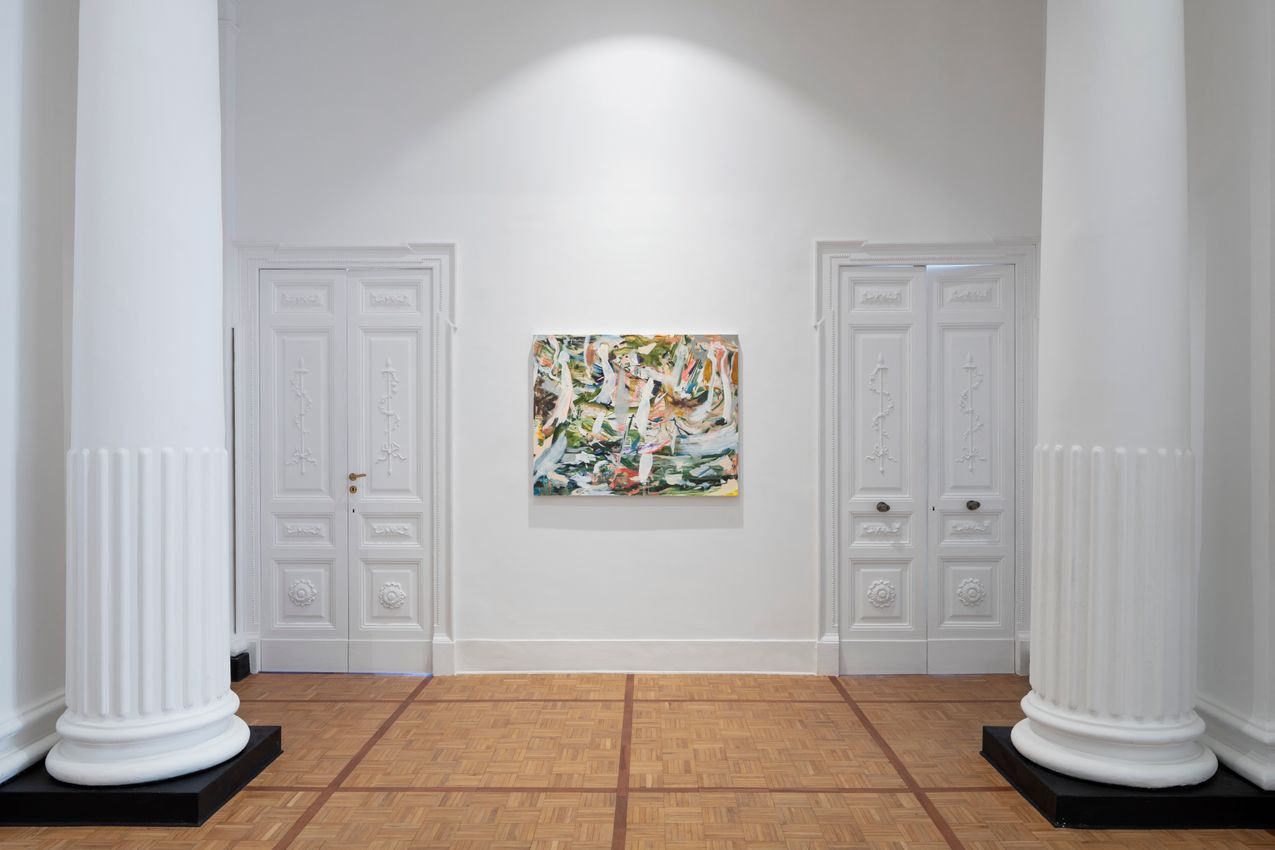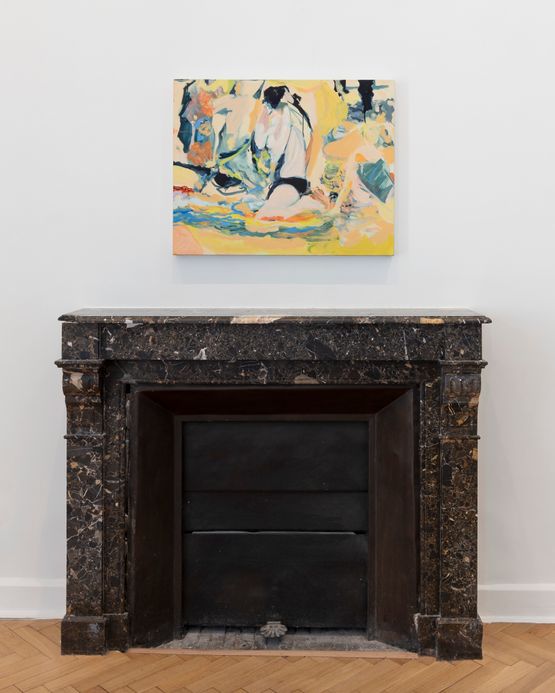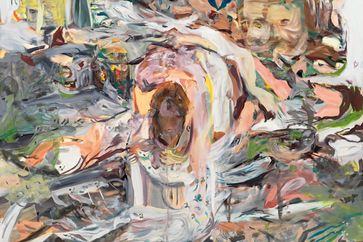



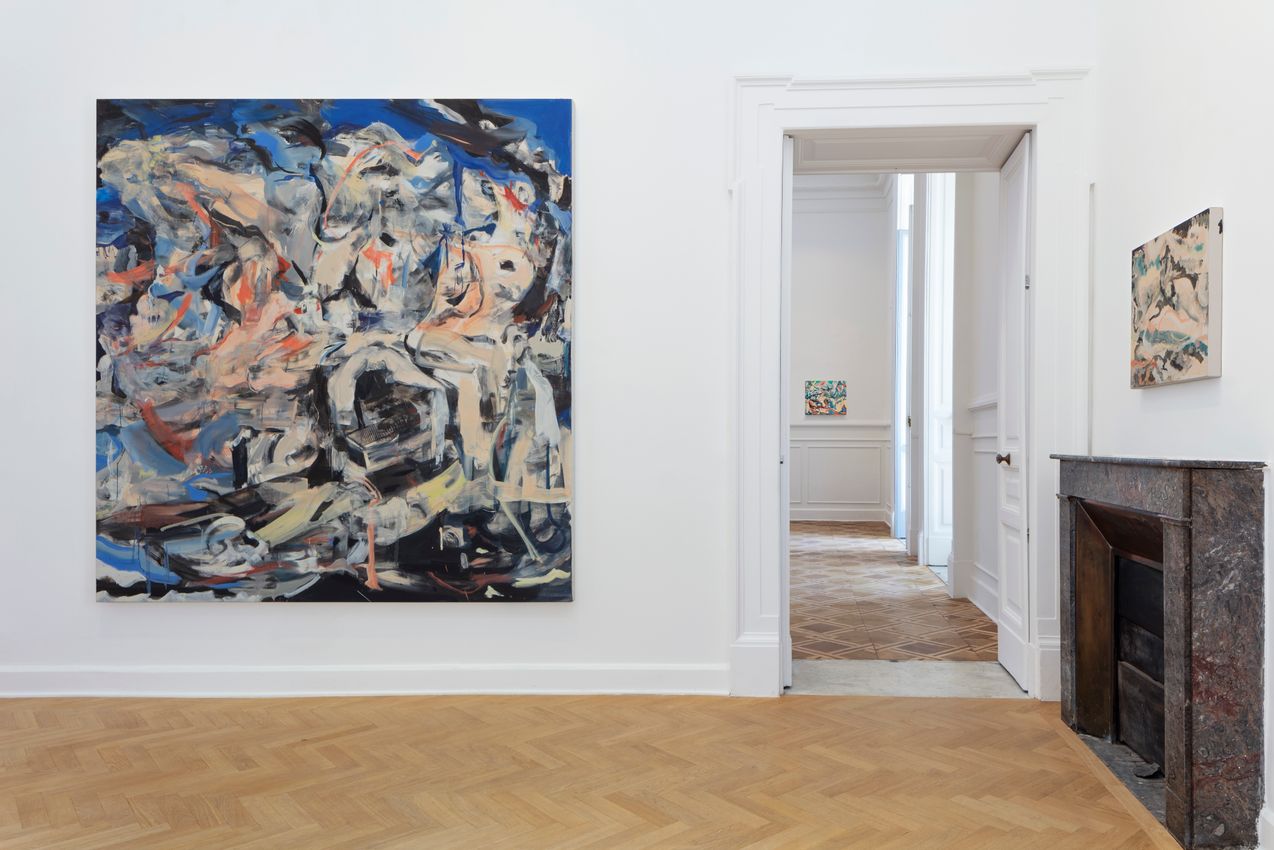
In We Didn’t Mean to Go to Sea, the seventh book in Arthur Ransome’s Swallows and Amazons series of children’s books, an unexpected bank of fog flows across the river, leaving Goblin (the small sailing cutter) no option but to drift from the river into the North Sea. Narratively and aesthetically, fog marks a stage for improvisation, weighted by confusion and alarm. Such tensions coexist in Cecily Brown’s first Naples exhibition, where paintings, pastels, and watercolours elaborate precisely on the significance of the ‘partial view’, utilising the shipwreck as a socio-political, theatrical, and symbolic prism.
As a painter of lush compositions, vibrant tones and sensual brushwork, Brown appears to echo the vivid history and vehemence of Naples, for her work and the city resonate with the same, rare ambiguity. Her paintings bridge the exalted and tumultuous styles of the French ‘Romantiques’, from Gericault’s The Raft of the Medusa (1818—19) to Delacroix’s The Massacre of Chios (1824), transforming their vision with some of her favourite subjects, namely the Nude and the Bathers. For instance, the drawings in The Sirens and Ulysses (after William Etty) (2018) series directly reference Etty’s eponymous work, each elaborating on the last from an alternate viewpoint; where the Sirens’ chimerical carousal is foregrounded in one painting, another reveals the expanded suffering of Ulysses and the sailors.
Brown’s practice is deceptively paradoxical: simultaneously moving toward the ephemeral and corporeal, and yet her paintings contain tangible traces of Romantic, modern and contemporary history. The subject of the Shipwreck becomes the perfect ground for both: an evanescent event of inevitable material decay, as well as an ‘absolute metaphor’ of complex historical precedent.
Whether fictitious, eminently real, or symbolic, Brown’s use of the shipwreck invokes a palimpsest construction. It can be likened to Gianni Vattimo’s philosophical ‘pensiero debole’ (weak thought): to understand and re-configure traces from the history of thought in ways that harmonise with postmodern conditions. Through the acceleration of technological and political change, Brown’s impassioned, expressive content—of shipwrecks, bathers, and beaches—evokes these conflicting currents and resurfacing histories: the rise of migration, environmental and geopolitical crises, and the policing of public space. In We Didn’t Mean to Go to Sea, Brown apprehends the past, returning to the limits and possibilities for painting to maintain critical anchorage over the political.
Cecily Brown was born in London in 1969, she lives and works in New York. Public collections include Solomon R. Guggenheim Museum, New York; Whitney Museum of American Art, New York; Tate, London. Solo exhibitions include: Cecily Brown, Louisiana Museum of Modern Art, Humblebaek, Denmark (2018); Triumph of the Vanities II, The Metropolitan Opera House, New York (2018); If Paradise Were Half as Nice, Instituto Tomie Ohtake, Sao Paulo; travelling to: Museo Oscar Niemeyer, Curitiba, Brazil; The Iberê Camargo Foundation, Porto Alegre, Brazil (2018); Cecily Brown: Rehearsal, MCA Santa Barbara, CA (2018); Cecily Brown: Shipwreck Drawings, the Whitworth Art Gallery, Manchester, UK (2017); Cecily Brown: Rehearsal, The Drawing Center, New York (2017); Madrepora, Thomas Dane Gallery, London, UK (2017).
Cecily Brown is a British painter best known for large-scale canvases that fuse abstraction and figuration through dense, vibrant brushwork and fragmented motifs of bodies, landscapes, and vanitas imagery. Drawing on Willem de Kooning, Francis Bacon, Joan Mitchell, and Old Masters such as Rubens, Poussin, and Goya, her paintings explore desire, mortality, eroticism, and the instability of images, often pushing representations of the body toward the grotesque.

Thomas Dane Gallery was established in March 2004 and is situated in two spaces at 3 & 11 Duke Street, St James’s, SW1; and as of January 2018 also in the Chiaia district of Naples.
A respected voice in contemporary art discourse.
Focusing on ambitious storytelling and insightful art-world commentary. Ocula Magazine publishes in-depth interviews, critical essays and timely analysis on the artists, exhibitions and ideas driving the global art world.
Learn more about Ocula Magazine
Showcasing the best of the art world.
Ocula partners with galleries from around the world to highlight their artists, artworks and exhibitions. Gallery membership is by application and invitation, with each member vetted by an independent panel.
Learn more about Ocula Membership

Specialises in the sale of major artworks.
Led by a team with deep ties to the world’s leading auction houses, galleries and collectors. Ocula’s advisory team offers bespoke services to high-net-worth clients from around the world who are looking to acquire the best of contemporary and modern art.
Learn more about our team and services