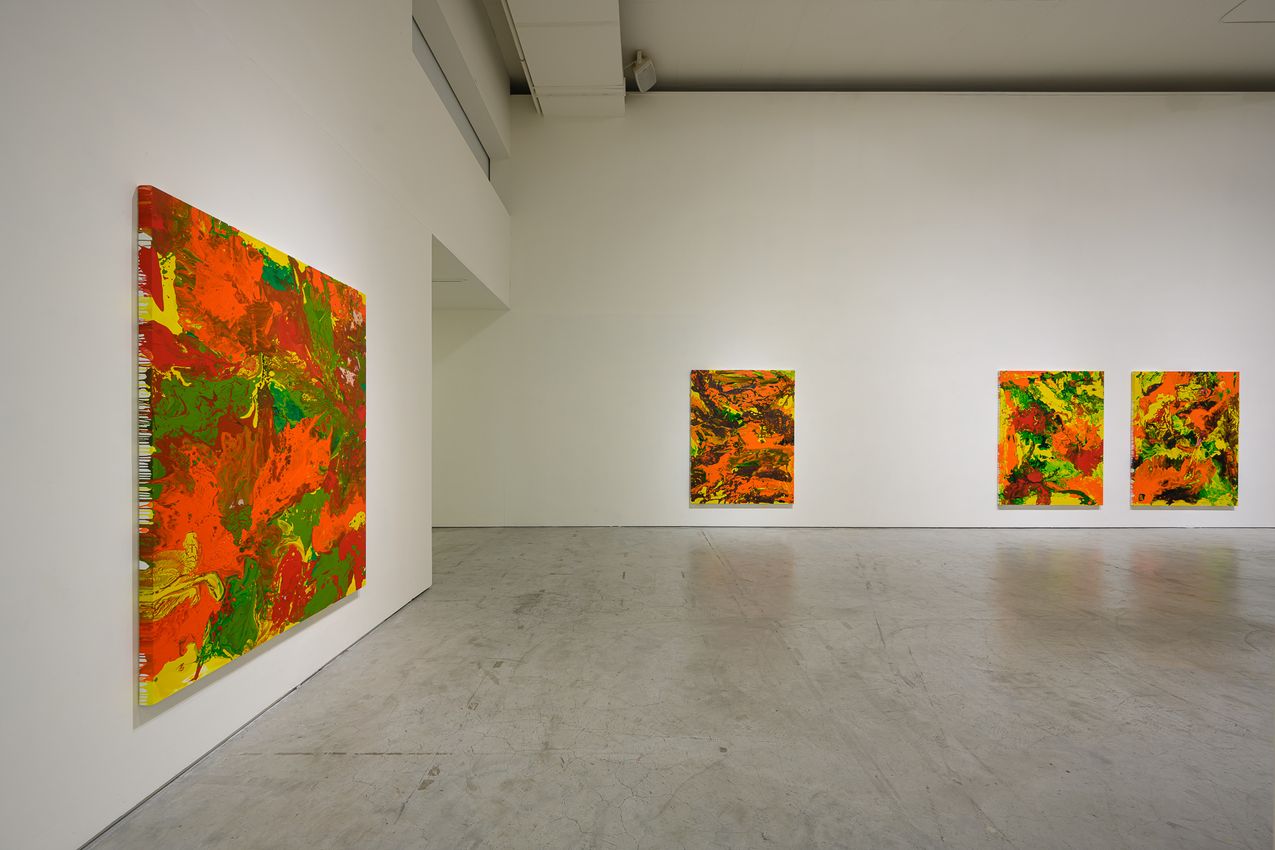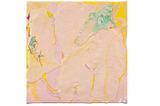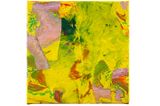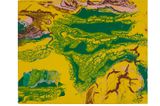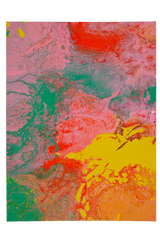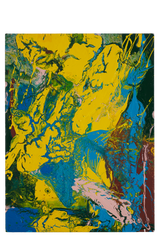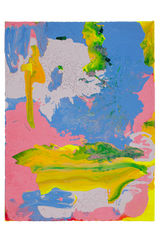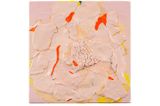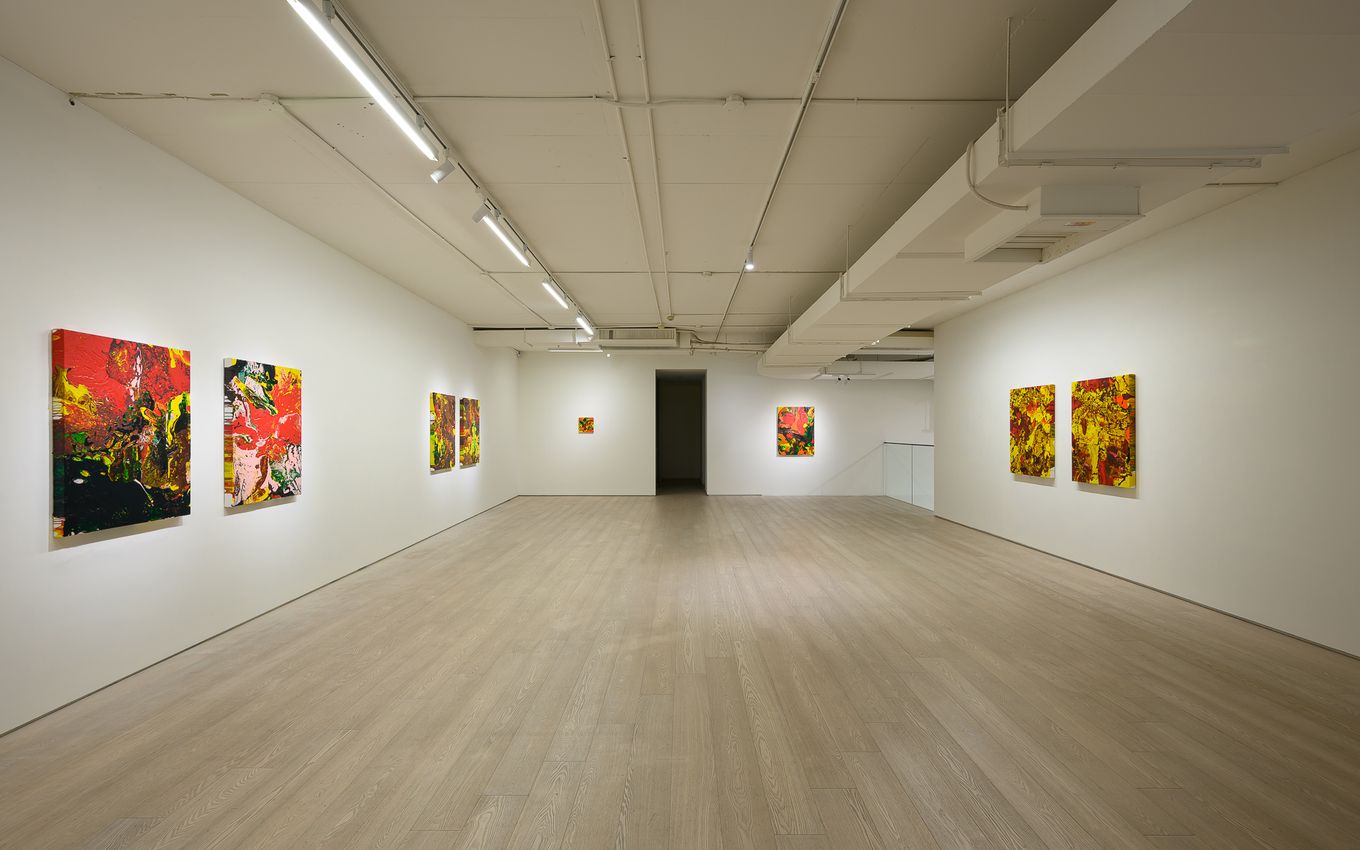
Art making is a process of constant dialogue and grapple between the artist and her work. It is in this way that the artist is able to find equilibrium in the company of her work. Such process seems to never end. To sublimate years long vicissitudes into honest works of art becomes a nuanced decision. Jenny Chen’s work resides in perpetual flux. If art making is a journey from 0 to 1, what she attempts to capture is the vagaries along the way. What we finally witness is merely the sum of the process.
Passionate and stalwart, Chen leaves a strong first impression. Surprises lurk between her and the works she makes: These large-scale paintings, animated by unrestrained splashes of colour, turn out to be conjured through the graceful hands of this slender lady. With a BA degree in Western language and literature, she dabbled in art after she was married, and slowly gravitated toward the manual act of splashing and smearing paint. She was admitted to the Pratt Institute at the age of 40, and with her family’s blessing, went alone to study for her MFA degree in New York. It was during her time in New York that she absorbed the artistic energy and pluralistic milieu that the city had to offer. The eclectic cultural influences blended and shaped her interiority, as the artist came to form her visual language. Despite the Western techniques and concepts she has imbibed, she maintains an essence and sense of philosophy that is particular to the East. In addition to her native culture, dance, music, and literature serve as her inspiration, infusing her work with a rhythmic buoyancy that suggests a singular vision.
Emanating from Chen’s work is a certain verve, cadence, temporality, lyricism. The work, for her, parallels the artist’s inner world; it mirrors what the artist sees, says, and thinks. Every experience percolates through her practice into her work. Painting becomes her creative palimpsest: ‘My practice revolves around a sense of freedom that is absolutely personal and uncurbed. I don’t have any preconceived notions before I begin. Instead, I allow the paint to flow and form a terrain of its own. I believe in the paint’s ability to express what I want to convey. Of course there is a primary concern for life and nature in my work. I believe that art cannot be separated from life, because artistic creation is the reflection of everything. I also believe that art comes from instinct; instinct does not change, nor does it fall within the confines of time and space. I want my feelings to echo the outside world. Artistic creation is, after all, the manifestation of the artist’s psyche, an ultimate response to life itself.’
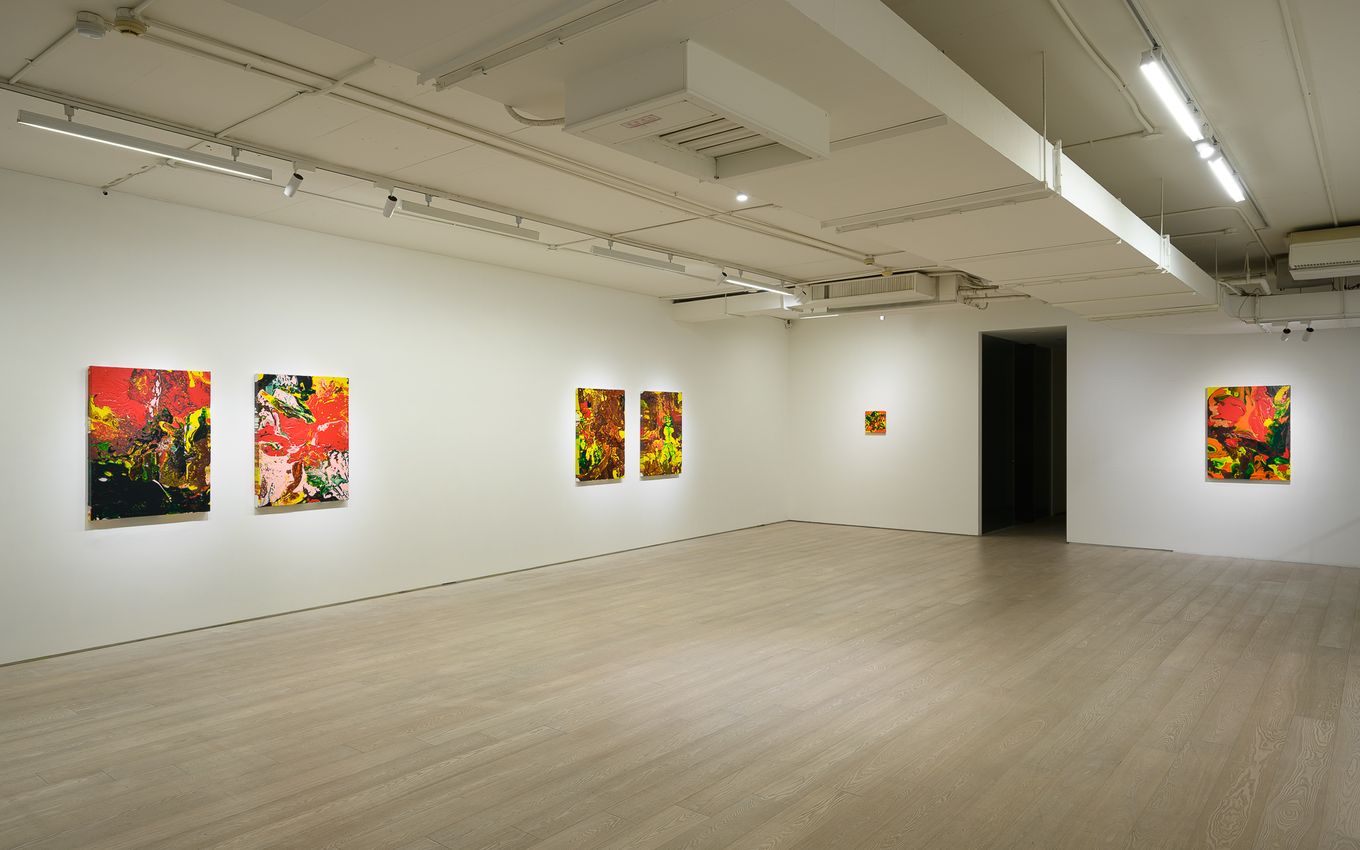
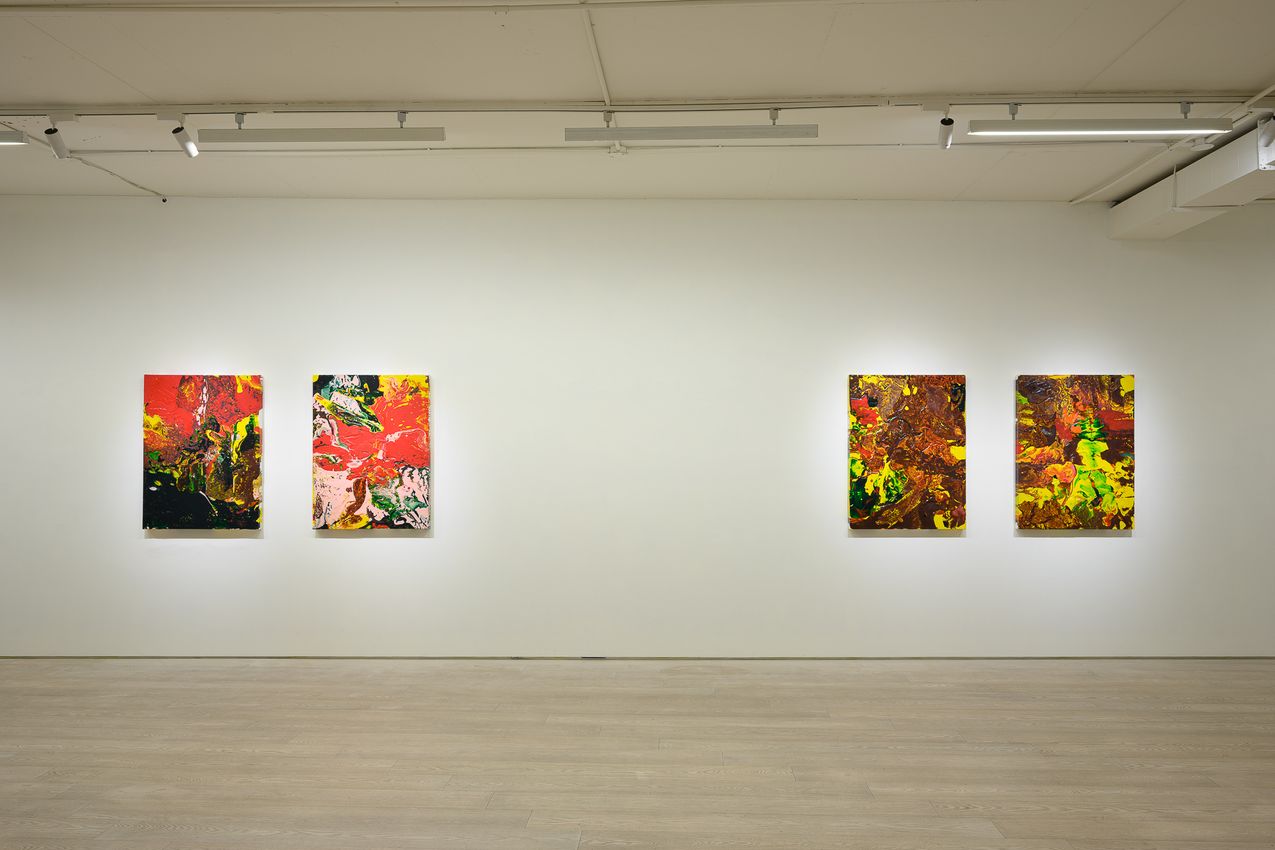
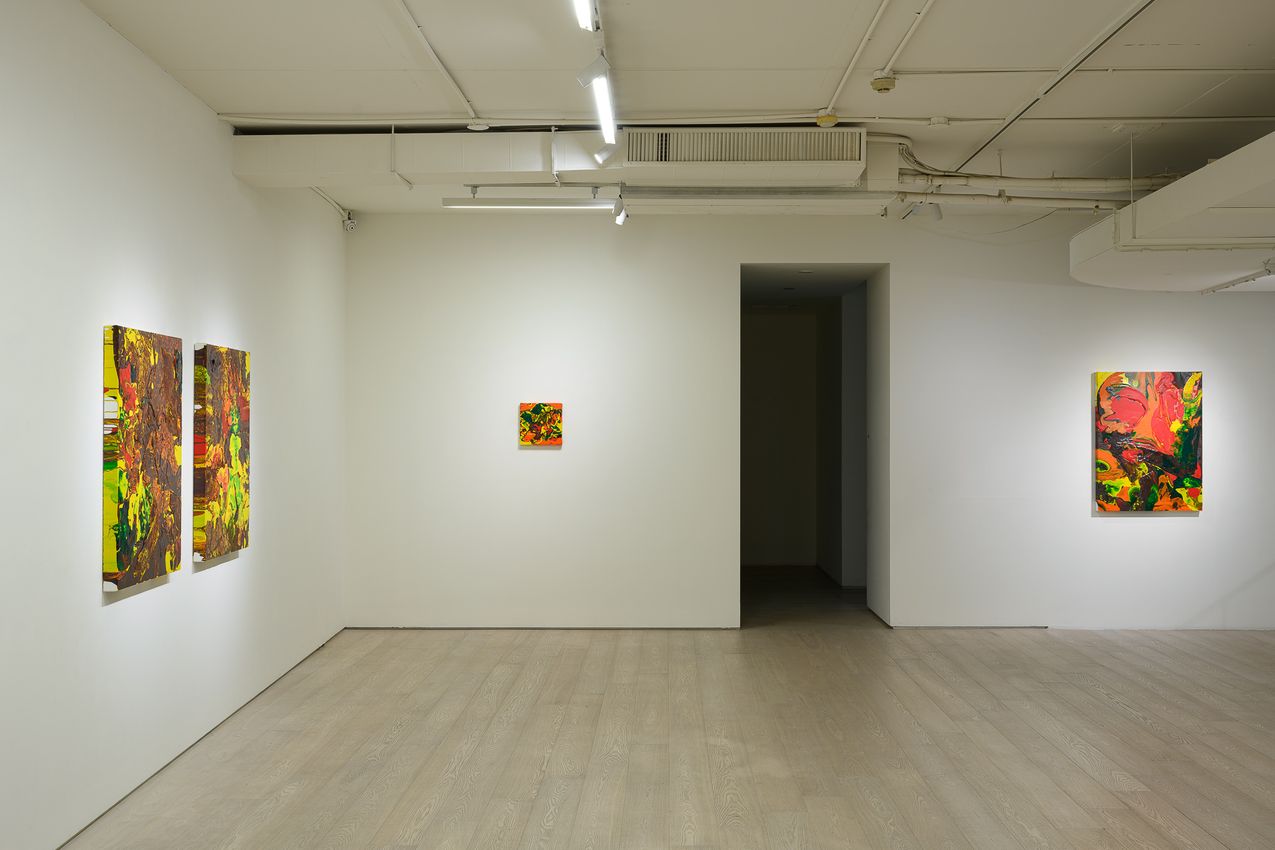
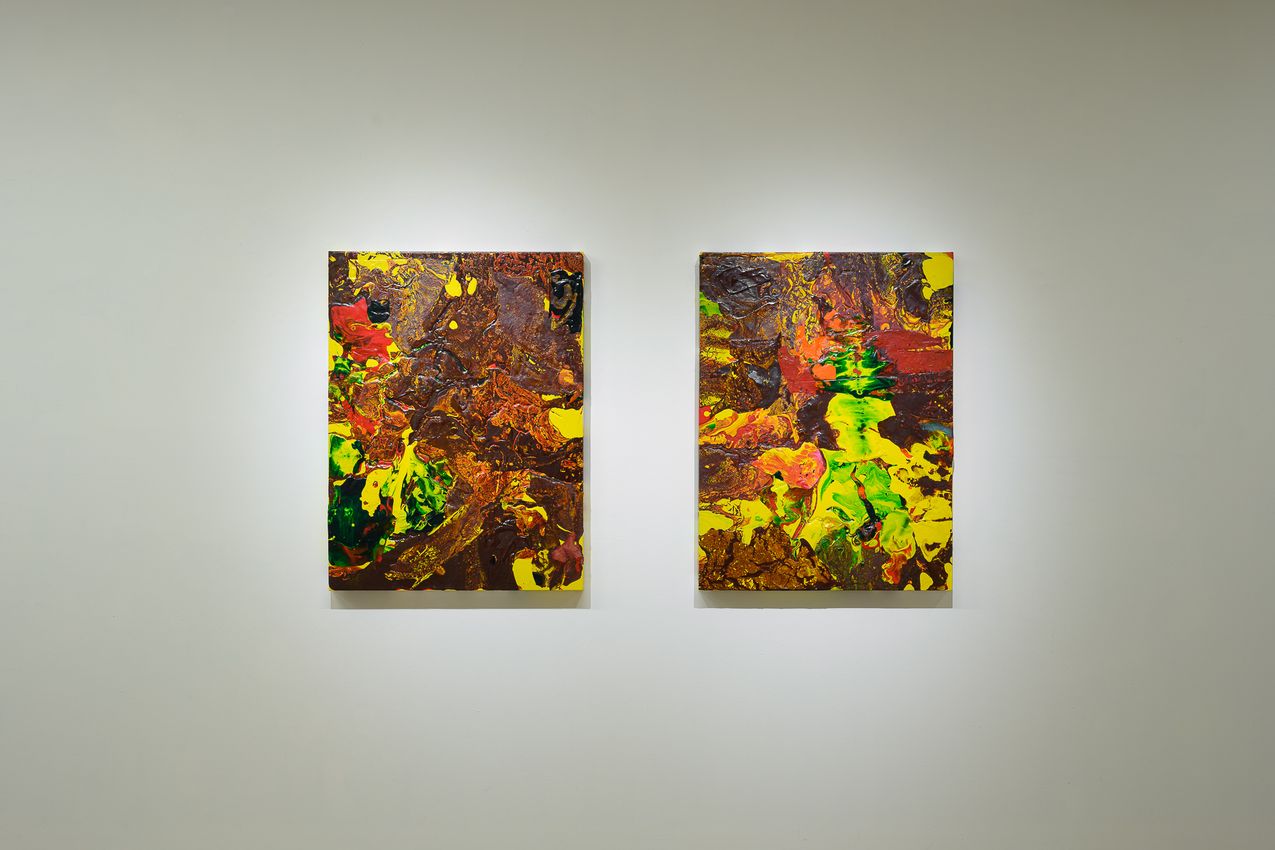
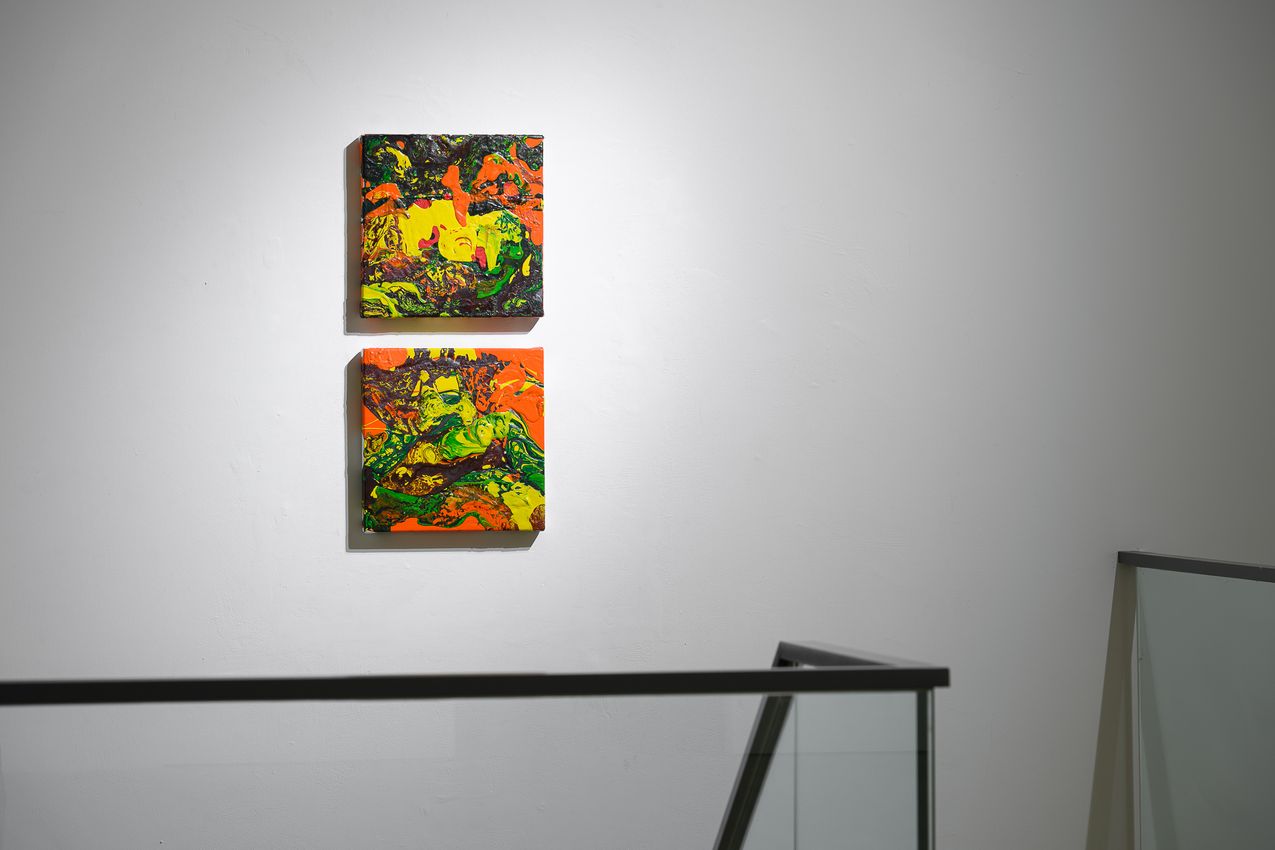
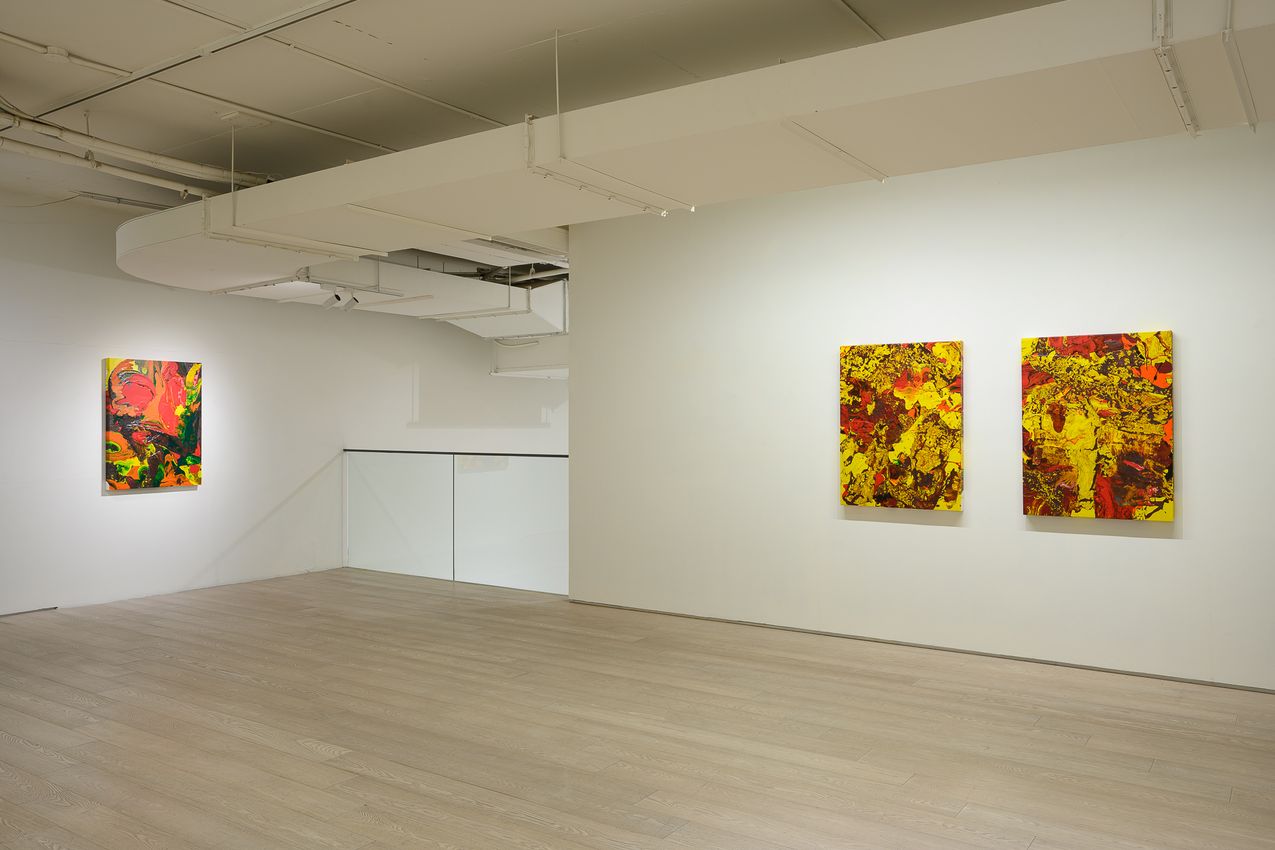
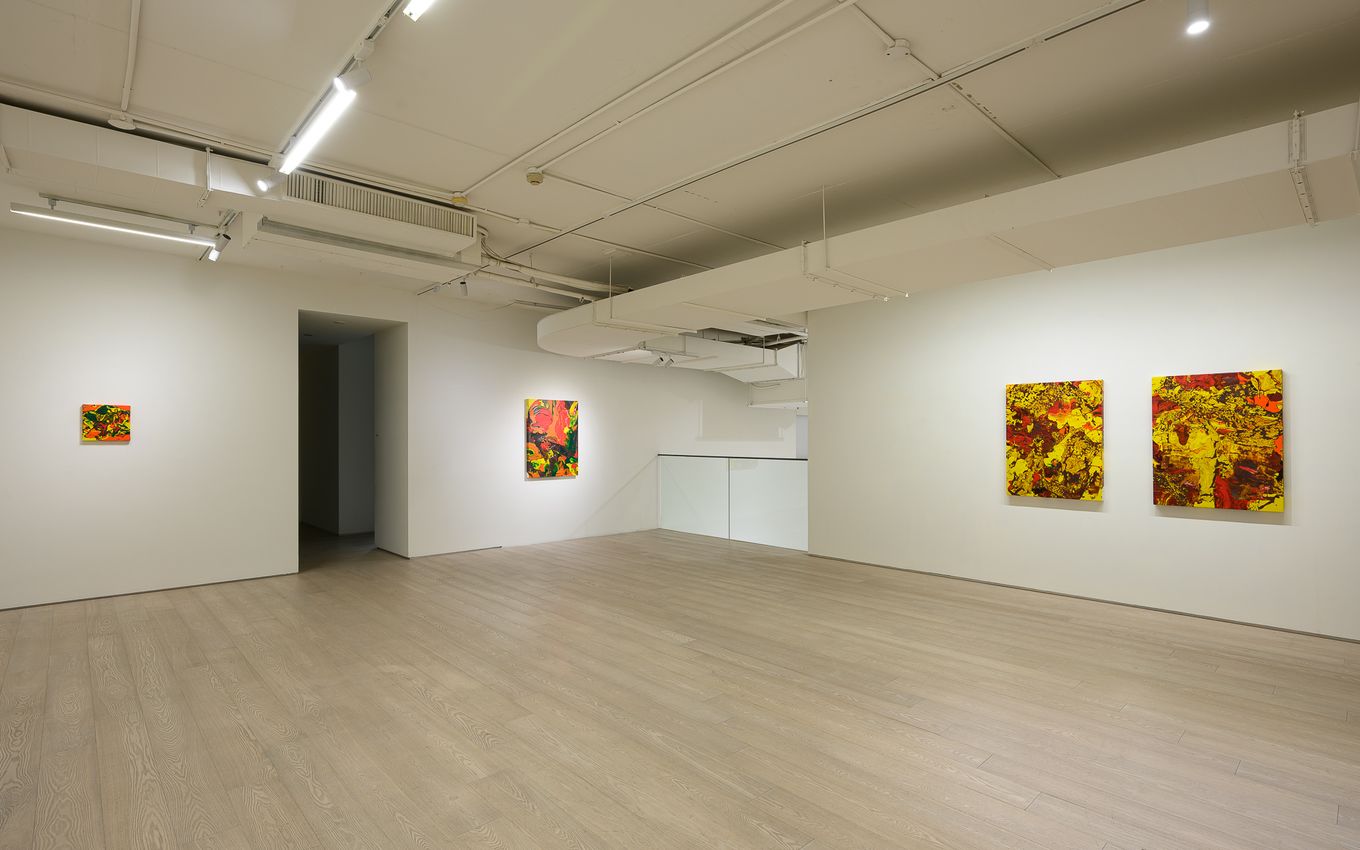
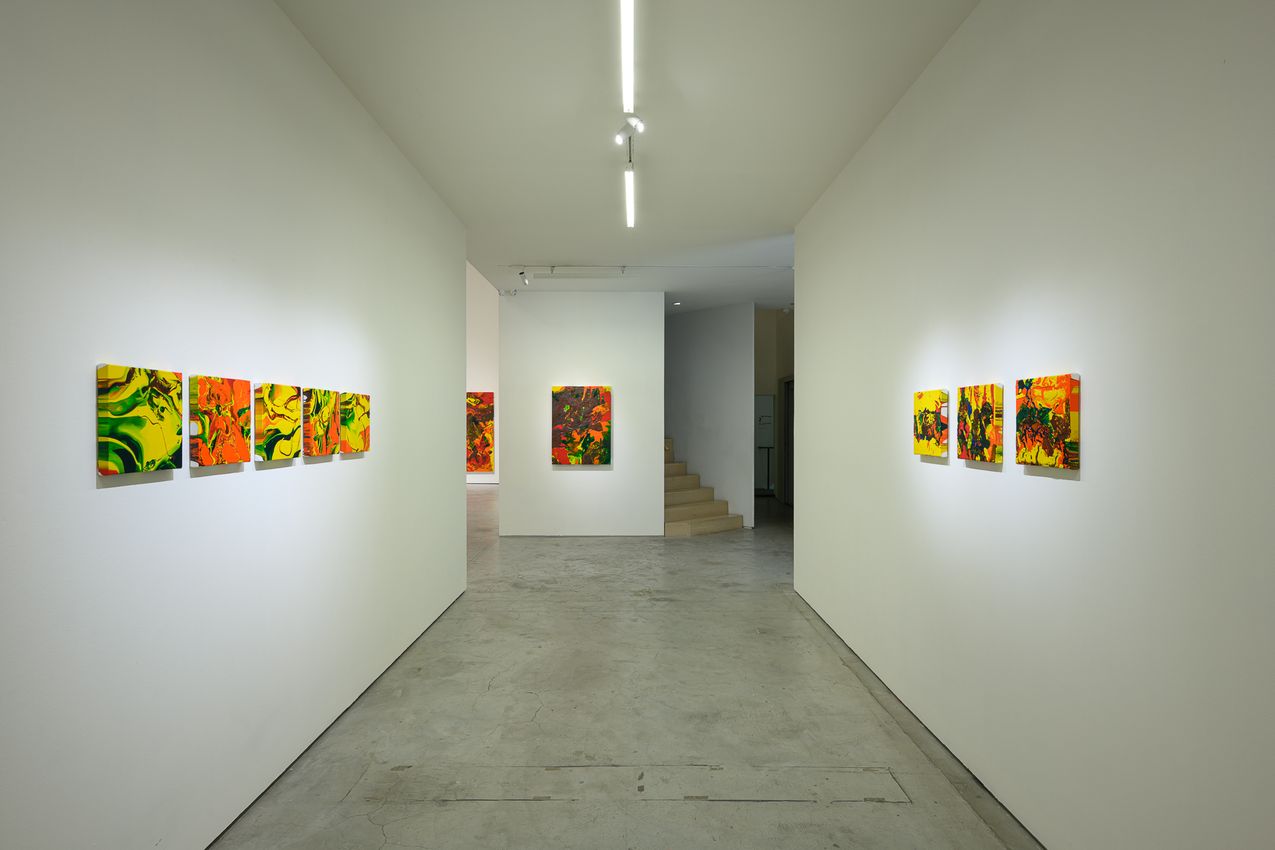
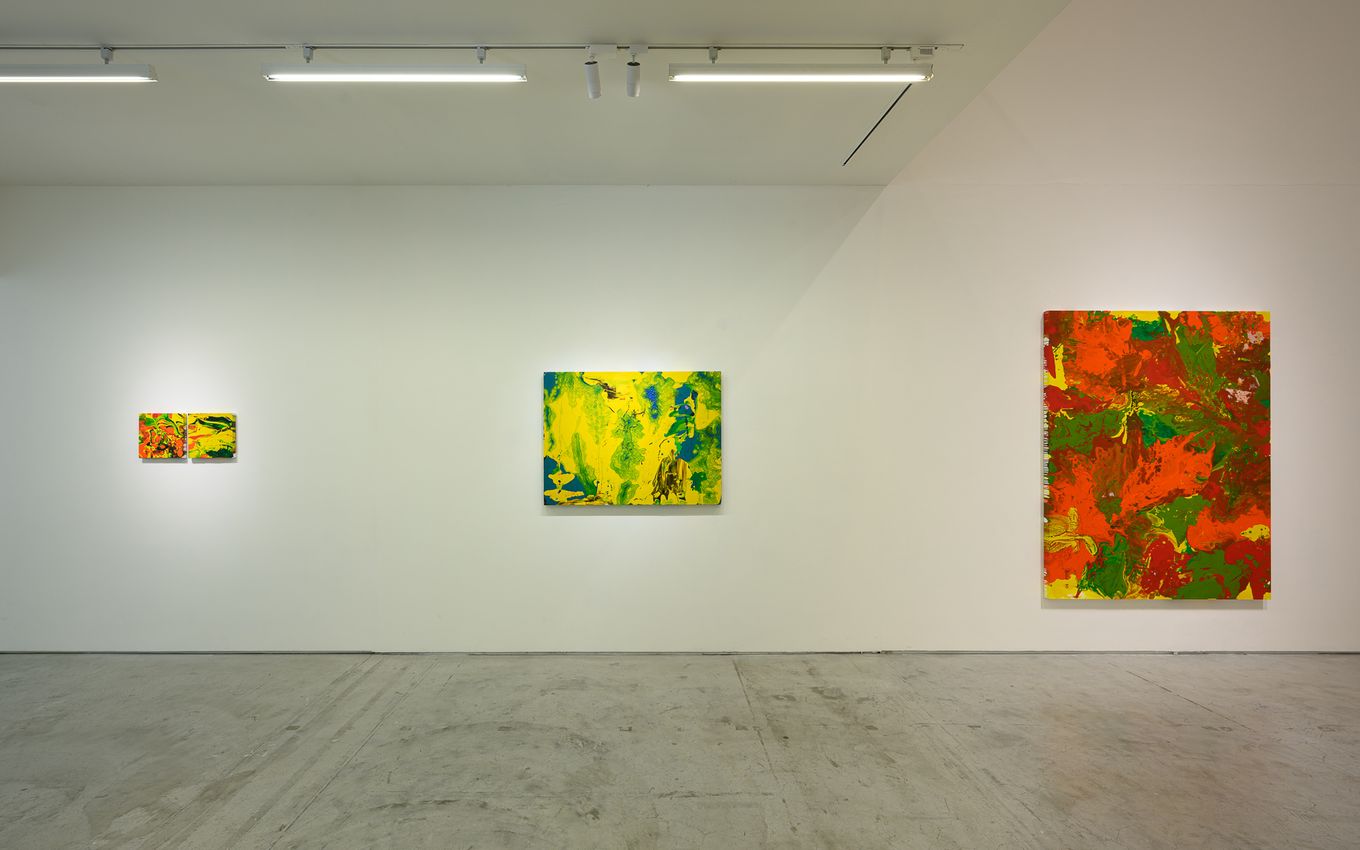
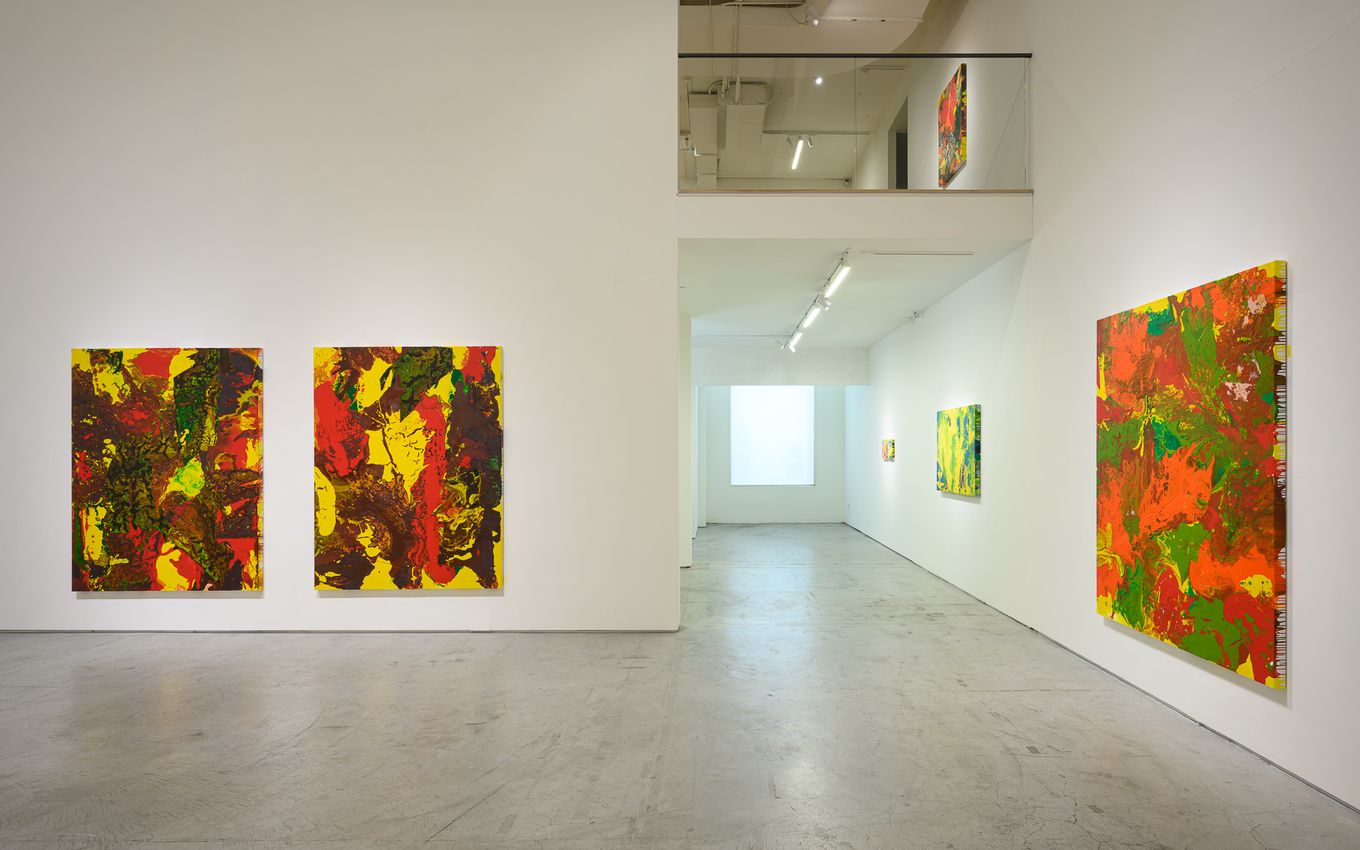
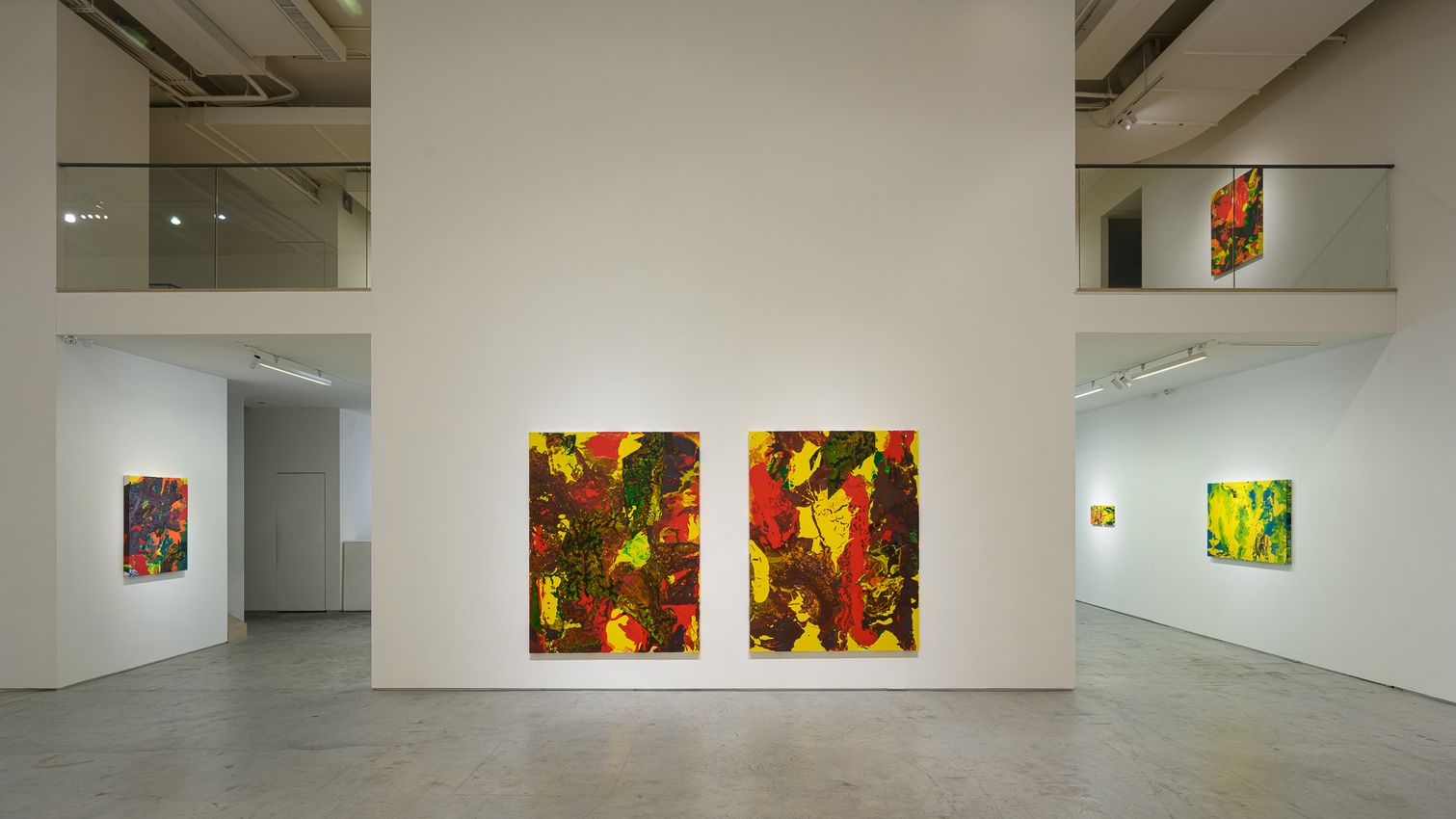
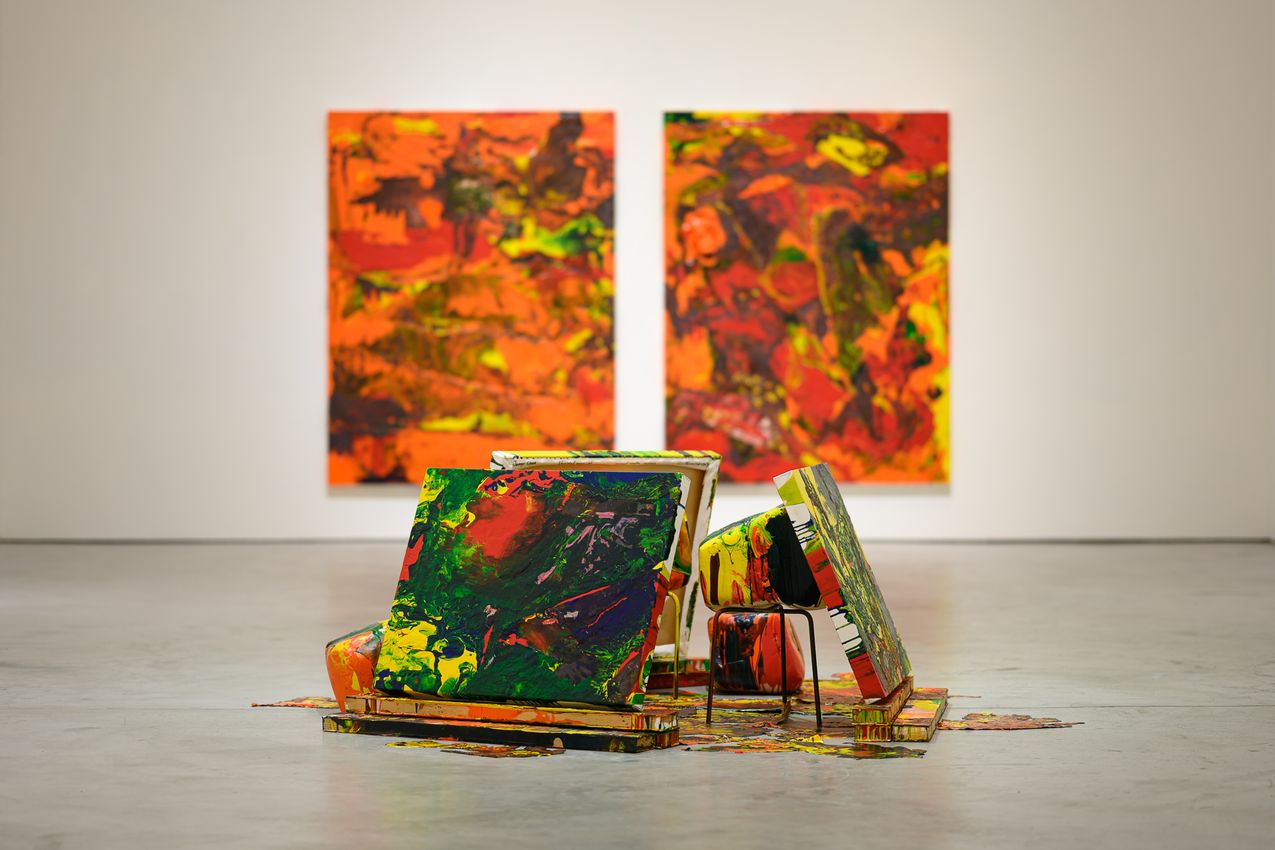
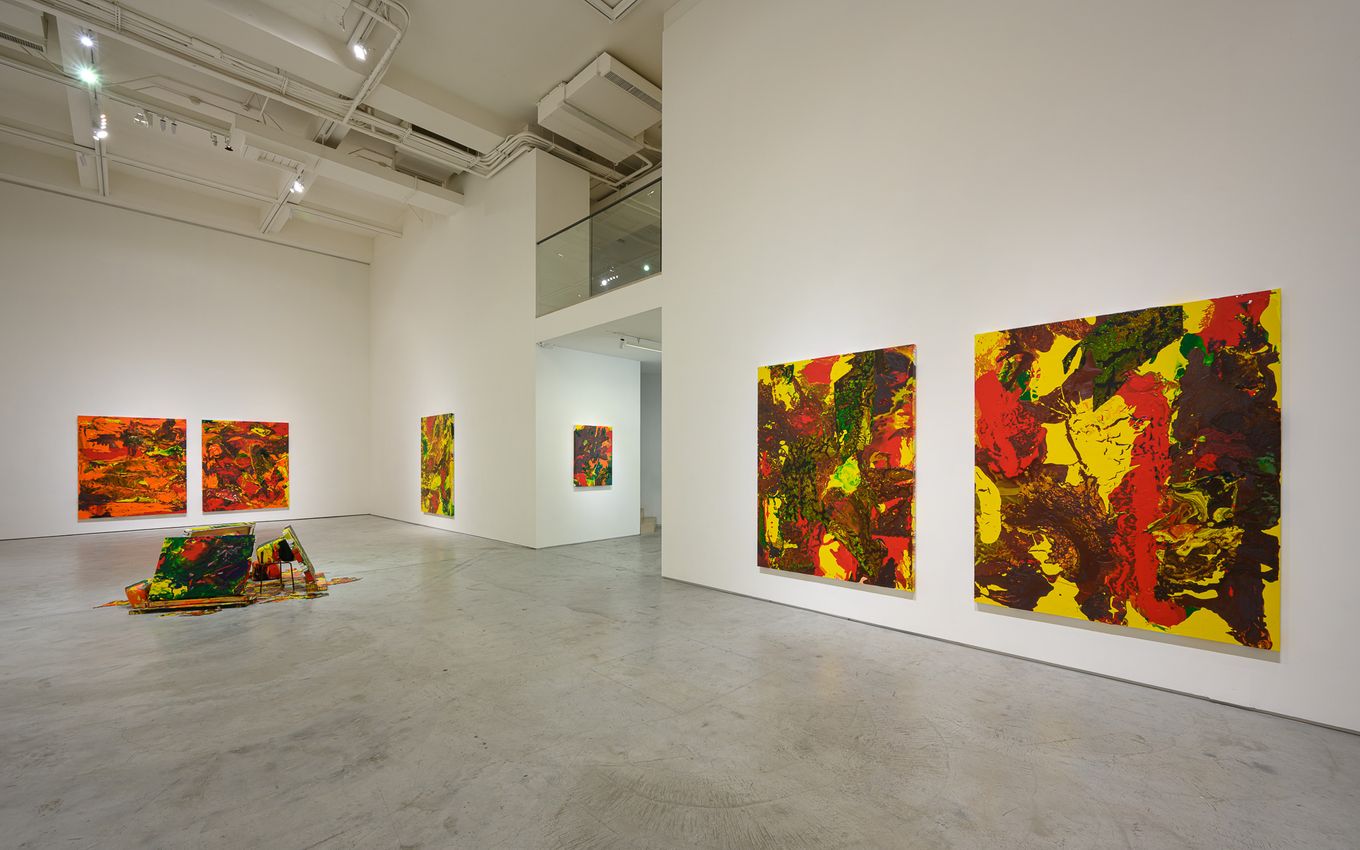
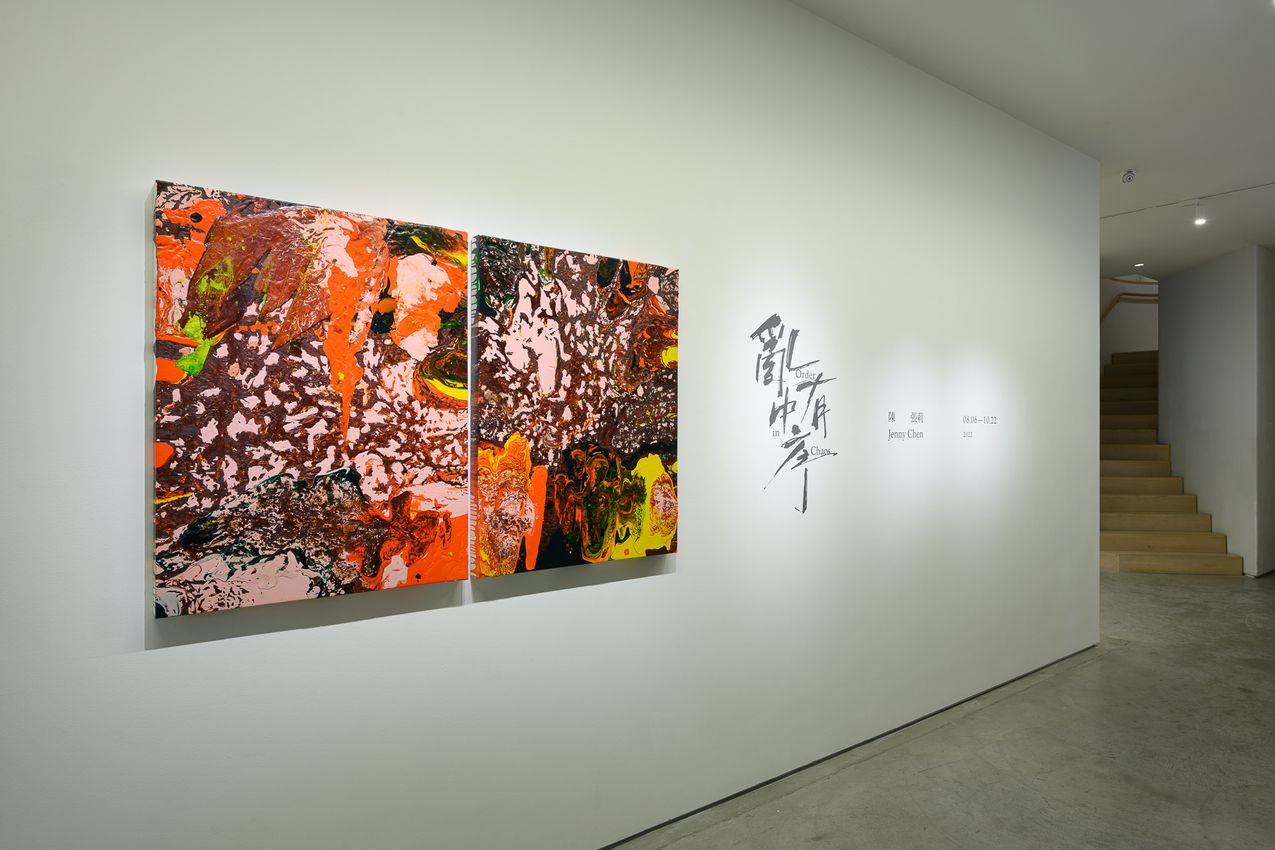
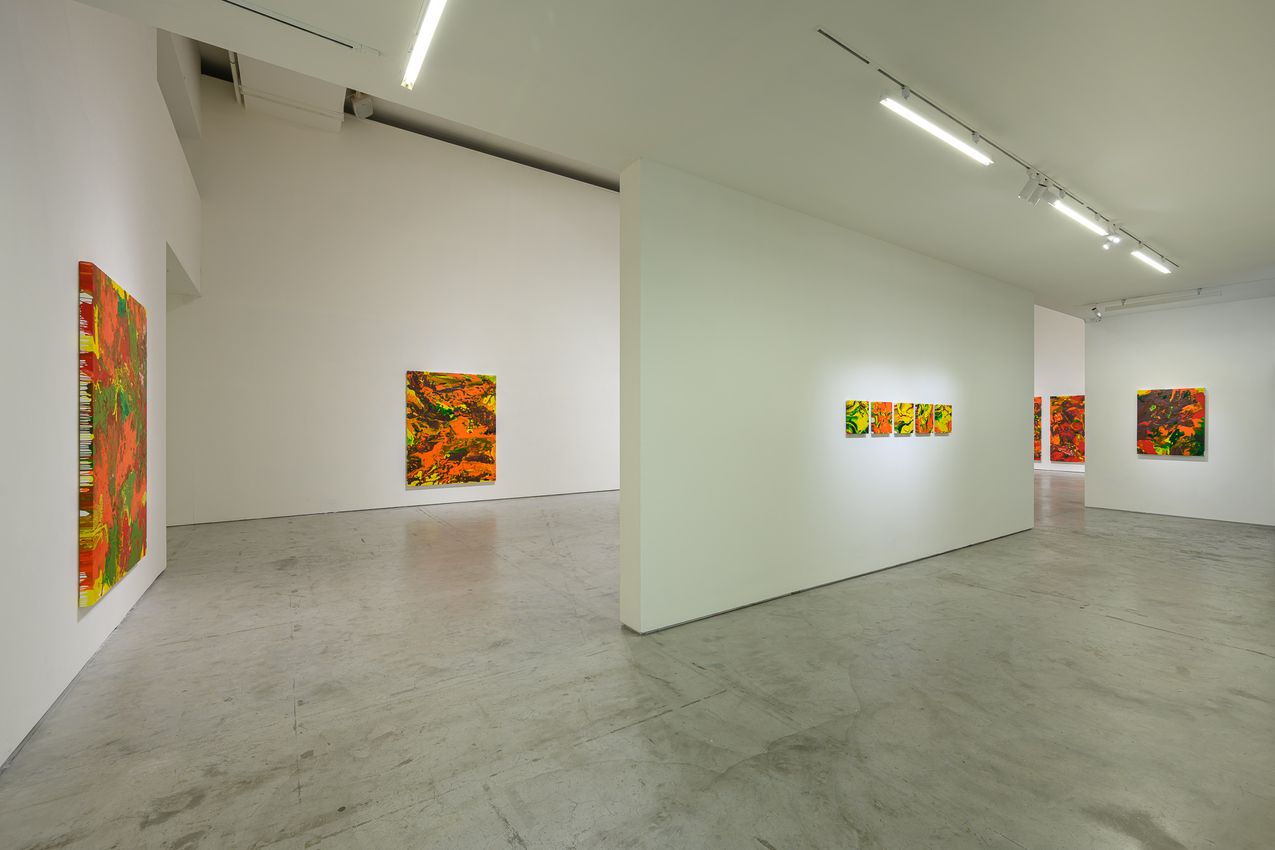
Past principles or perspectives no longer concern the artist. She is more interested in the liberation of composition, in the synergy between the body and the canvas: how the movement of the body translates her strength and emotion, embodied in the organic flow of line and colour. The first solo exhibition of the artist since her return from the U.S. in 2020, Order in Chaos crystallises the changes and differences she has experienced during the past two years. Her personal feelings run unbridled in the layering of pigments, the fusion of hues and shades, enfolding the viewer in a lingering sense of chromatic exuberance. The exhibition title is inspired by Chen’s observation of New York: a city pregnant with cultural heterogeneity, despite the noise, tumult, and clamour, is just the perfect environment for contemporary art to thrive and nurture a sense of order in chaos. Echoing this harmony amidst turmoil, the artist’s abstract shapes and colours coalesce into spontaneous landscapes filtered through her mind’s eye. At times fast, at times slow, a palpable sense of speed reigns in her work: compositions converge or sprawl, dictated by the flow of paint. The use of only primary colours heightens the visual force of her abstraction; the texture of the canvas formed by collaged paint fragments and the preexisting painted layer leavens the surface with an elemental tactility.
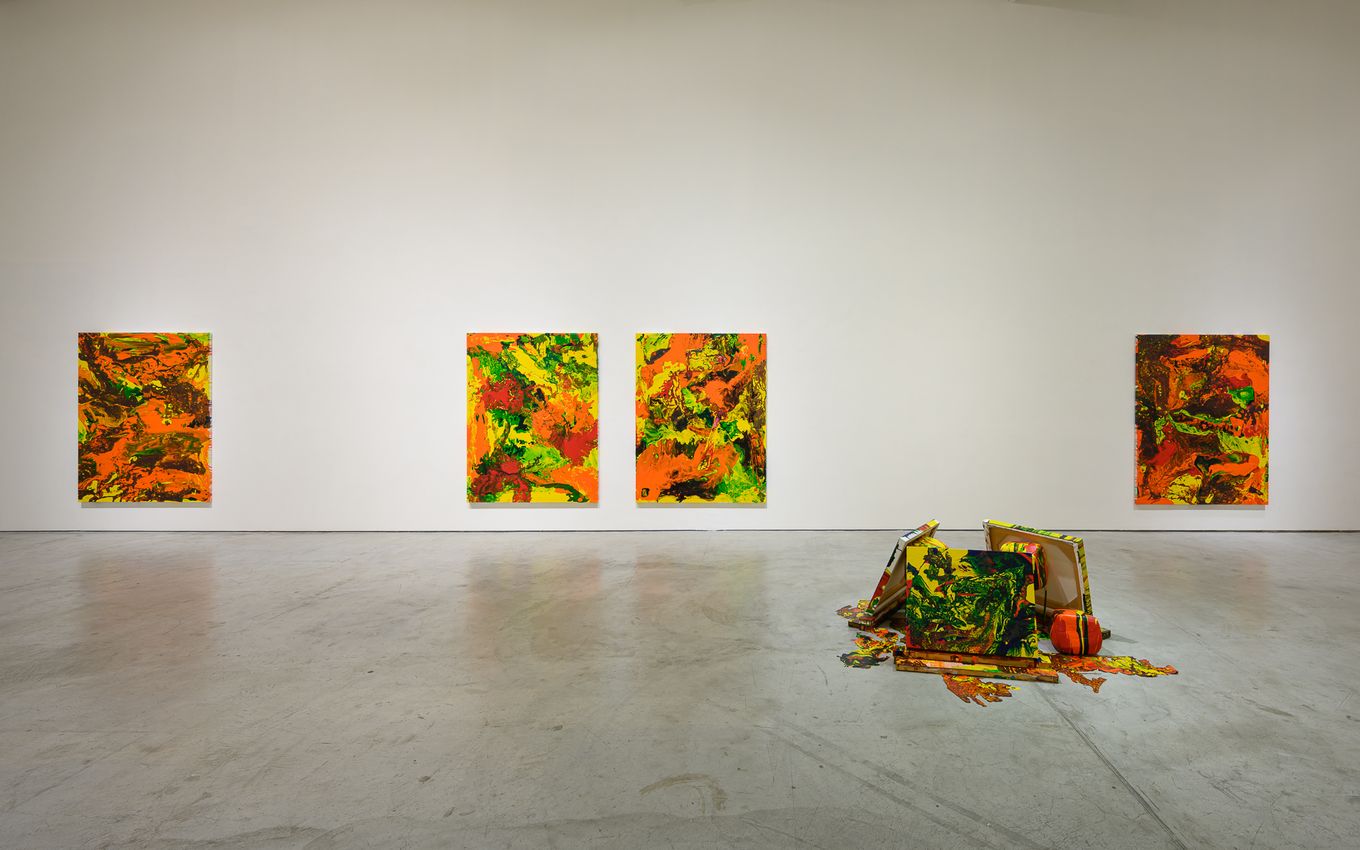
By splashing paint and allowing it to meander across the canvas, Chen captures a spatial dimension in her physical movement. Dried paint fragments found during the art-making process are collaged back onto the canvas, attesting to a temporal dimension encapsulated in her endeavour to conjoin what was once lost and what has been conceived. This approach lends a three-dimensionality to the canvas, intuitively layered and textured, light and shadow engaged in a painterly pas de deux. Dwelling in between stillness and dynamism, plane and dimension, time and space is the artist’s sense of the world.
The vicissitudes of Chen’s life challenge her equanimity, but she has managed to still her mind through the ebb and flow. Art, for her, is a way to adjust the frame of mind, and appease her physical discomfort. All the rituals that could stimulate the cranial nerves and ripples of the mind have allowed her to distill her experiences into metaphysical musing, and this, for her, is how art resonates with her. Order in Chaos invites the viewer to experience her works up close, a culmination of her decades-long practice. In addition to 43 paintings, a site-specific installation is also on view. Comprising three of the artist’s works with paint fragments and unstretched painted canvases mounted on metal stands, this installation provides a glimpse into the artist’s studio and her peregrination between dimensions. For Jenny Chen, the times we inhabit are debilitatingly tempestuous, but there is always a way to find balance and order in chaos. As she opens herself during the course of painting, she feels each work reverberate with space, with her spirit. The flowing, layering, settling, blending of paint evoke in varying ways her resilience and ease.
Born in 1944 in Chongqing, Chinam, Jenny Chen has a BA degree in Western language and literature from the National Chengchi University, Taipei, Taiwan, and a MFA degree from the Pratt Institute, New York, U.S. She has exhibited internationally since 1987, including the Taipei Fine Arts Museum, Taipei, Taiwan; Kuandu Museum of Fine Arts, Taipei, Taiwan; Asia University Museum of Modern Art, Taichung, Taiwan; Shanghai Art Museum, Shanghai, China; National Art Museum of China, Beijing, China; Lincoln Center for the Performing Arts, New York, U.S.; and Grand Palais, Paris, France, among others. Her work is housed in the collections of the Pratt Institute, Shanghai Art Museum, National Taiwan Museum of Fine Arts, Taipei Fine Arts Museum, and Kaohsiung Museum of Fine Arts.
Jenny Chen is a Taiwanese artist residing in New York, she paints in an abstract method that is free flowing and recognizable, creating her representative personal style. Inspired by the flowing state of nature, carefully recording changes within each moment through methods of abstract painting, video and three-dimensional sculpture. Chen is known for her use of Western art vocabulary to highlight the relationship between her painting style and Chinese painting. She seeks changes in her creative spirit, and attempts to transform her inner sensibility into the real world through various mediums. In the process of creation, Chen is constantly searching for the possibilities, and accumulating experiences to become her material in her future works. Since 1987, her works have been exhibited at the Taipei Fine Arts Museum, Kuandu Museum of Fine Arts, Shanghai Art Museum, Lincoln Center in New York, La Galerie Internationale and the Grand Palais in Paris and the 17th Annual Asian International Art Exhibition in Seoul, South Korea as well as at various institutes and private art galleries. Chen’s artwork is housed in the collections of various organizations, such as the Pratt Institute, National Taiwan Museum of Fine Arts, Taipei Fine Arts Museum, Kaohsiung Museum of Fine Arts, and Shanghai Art Museum.
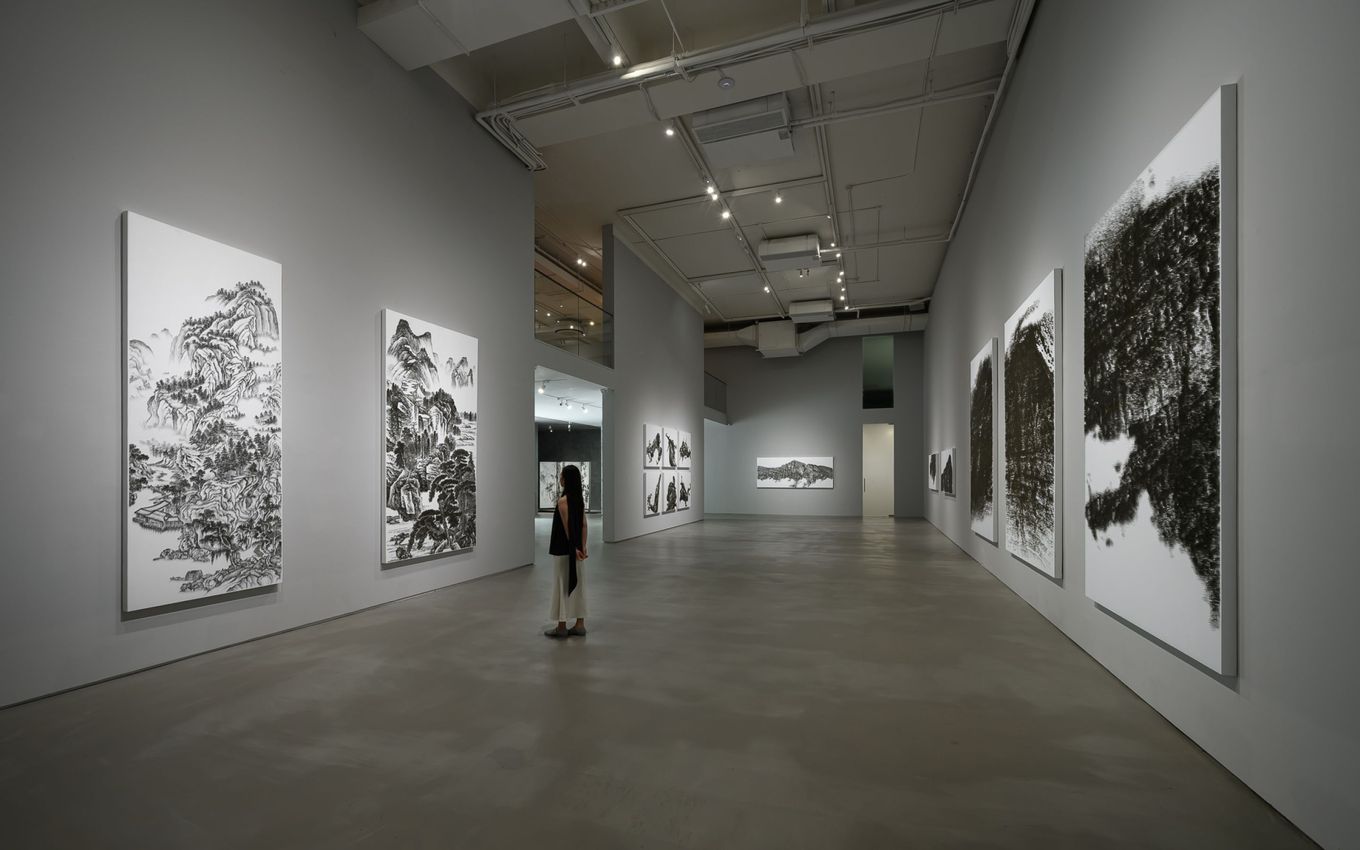
The Tina Keng Gallery has its roots in the Lin & Keng Gallery (1992–2009) based in Taipei, Taiwan and Beijing, China. Delving into Chinese art history, Lin & Keng was instrumental in promoting the work of Asian classical masters. The Tina Keng Gallery has continued this tradition by supporting Greater Chinese contemporary art, with a steadfast focus on nurturing Taiwanese art.

A respected voice in contemporary art discourse.
Focusing on ambitious storytelling and insightful art-world commentary. Ocula Magazine publishes in-depth interviews, critical essays and timely analysis on the artists, exhibitions and ideas driving the global art world.
Learn more about Ocula Magazine
Showcasing the best of the art world.
Ocula partners with galleries from around the world to highlight their artists, artworks and exhibitions. Gallery membership is by application and invitation, with each member vetted by an independent panel.
Learn more about Ocula Membership

Specialises in the sale of major artworks.
Led by a team with deep ties to the world’s leading auction houses, galleries and collectors. Ocula’s advisory team offers bespoke services to high-net-worth clients from around the world who are looking to acquire the best of contemporary and modern art.
Learn more about our team and services