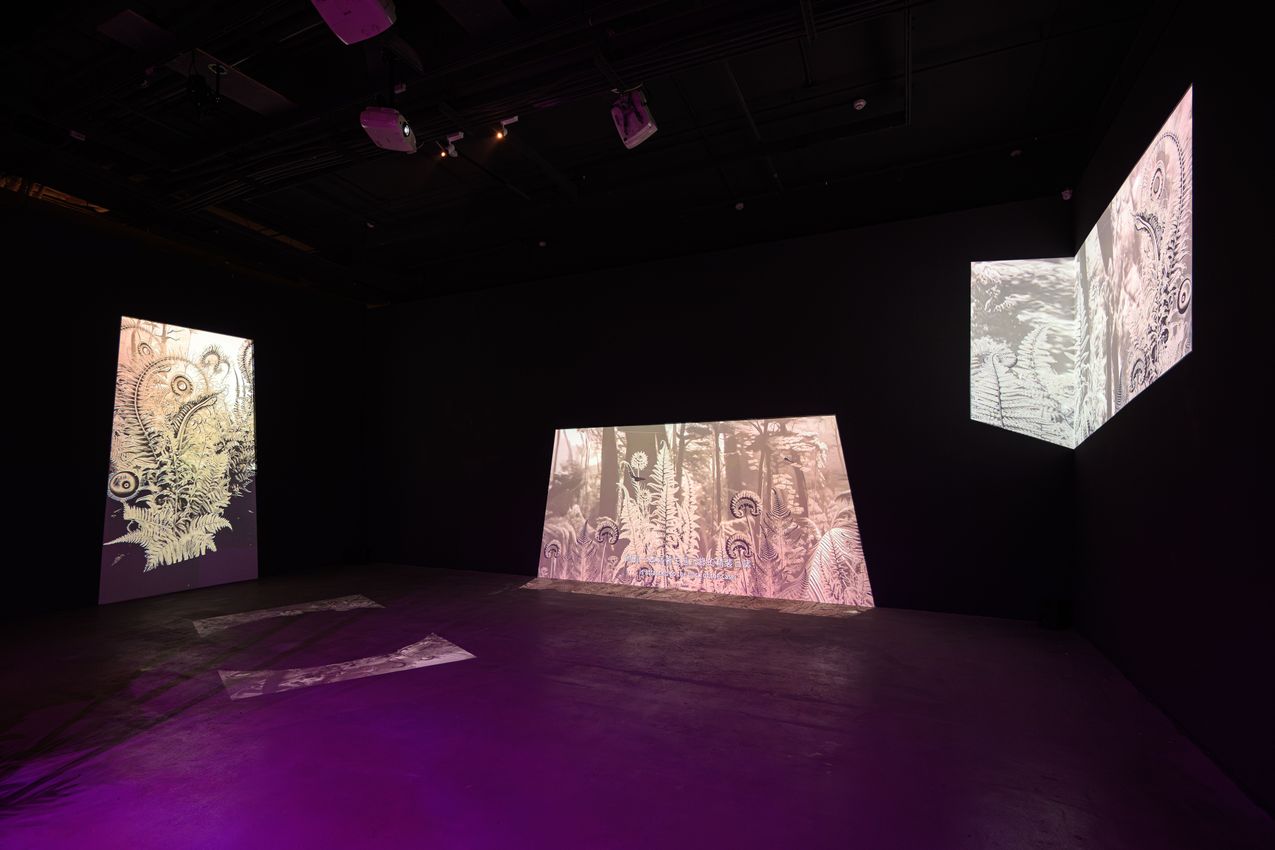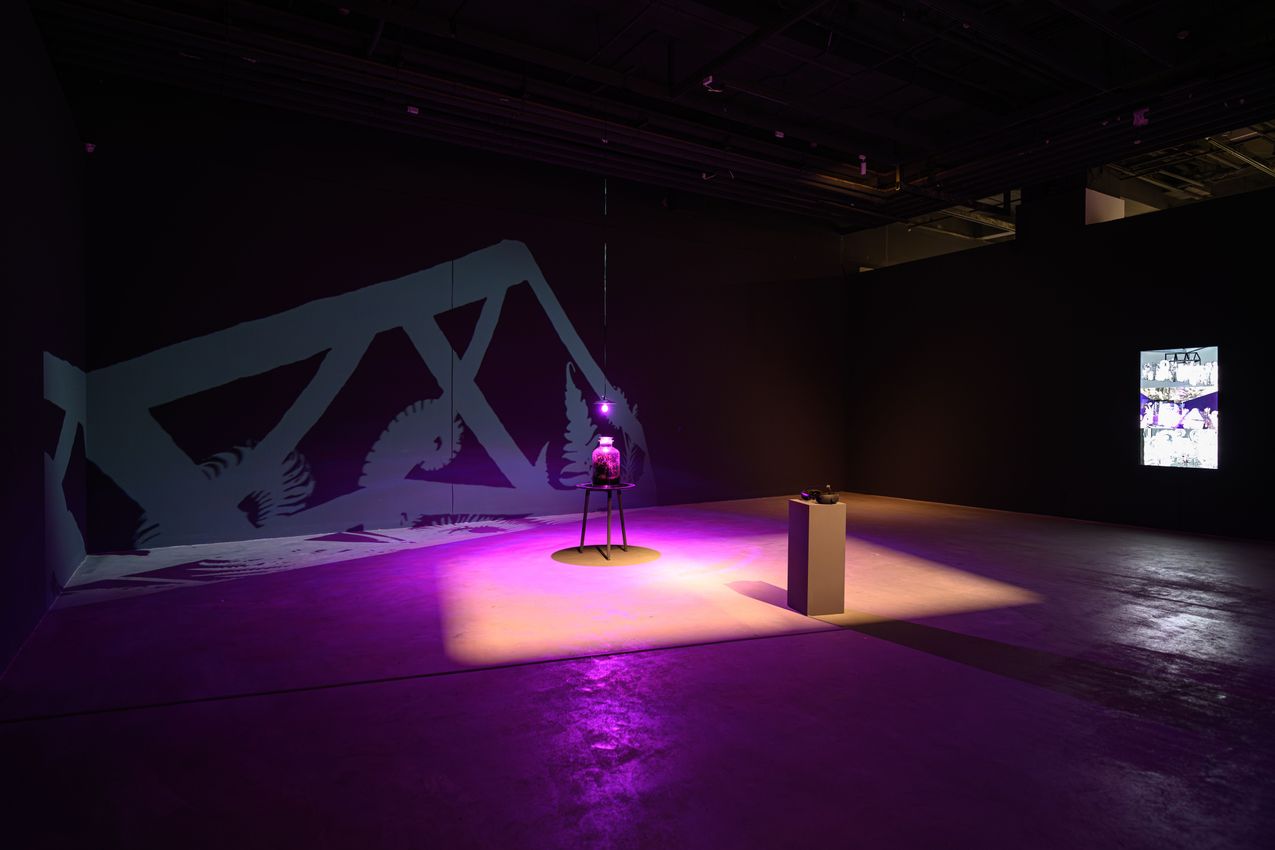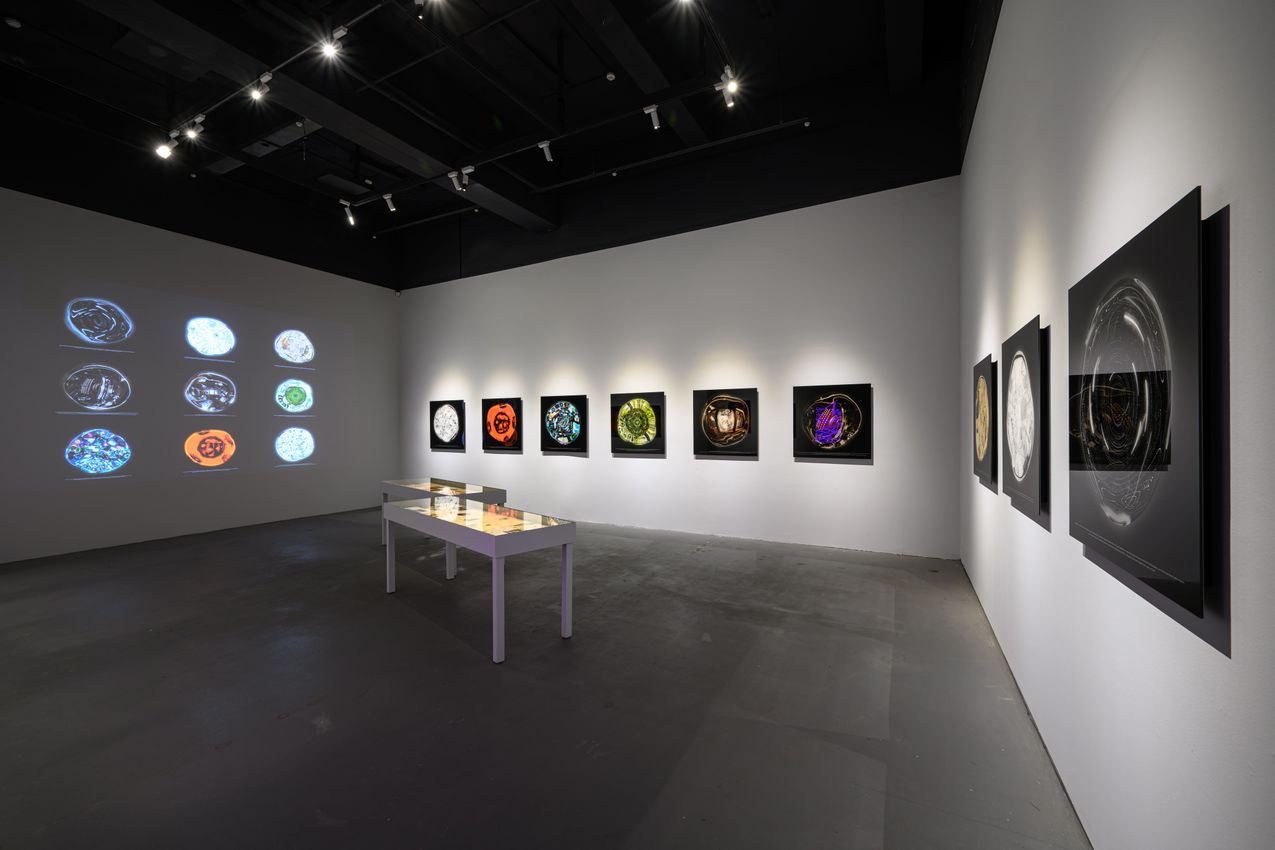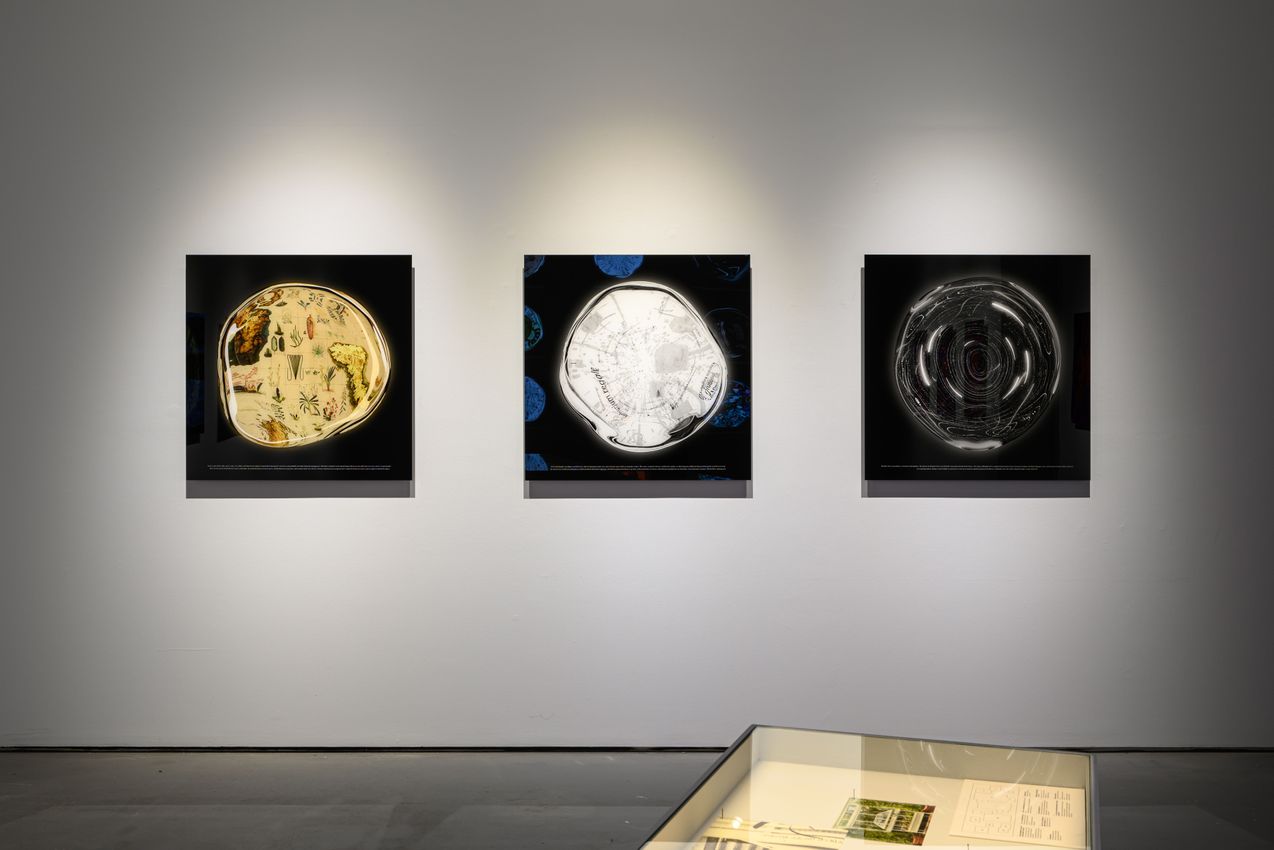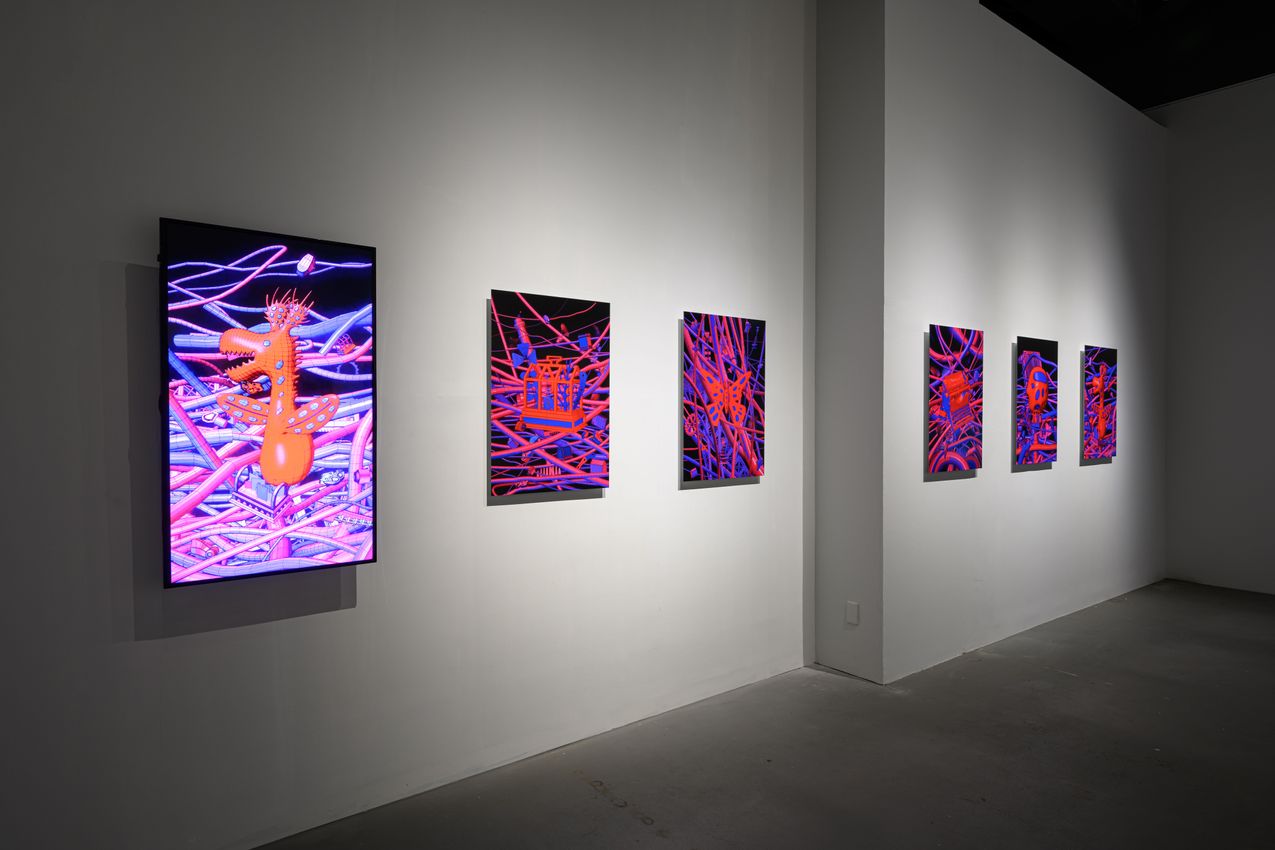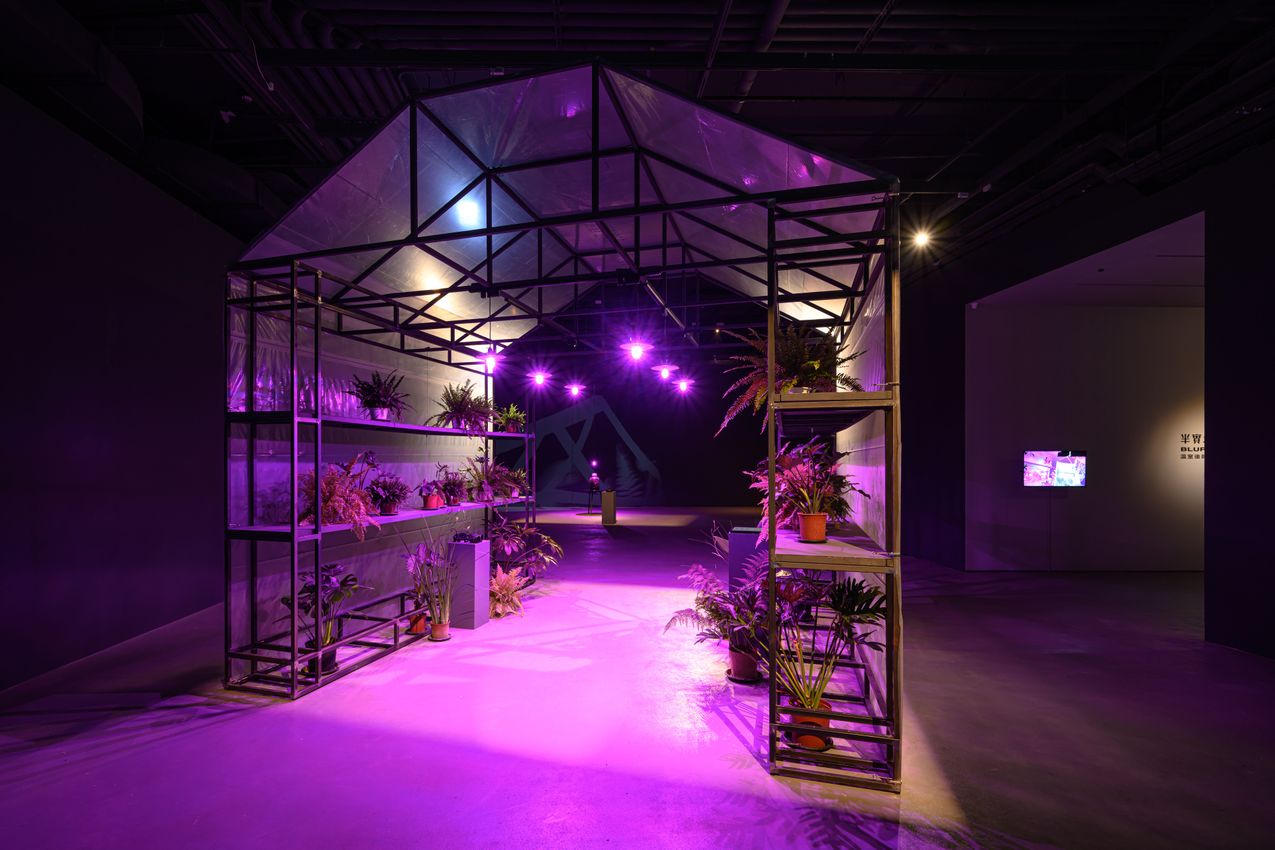
Blurring Realities: Greenhouse and Beyond is an extension of the collaborative project Streaming Colony: Nesting Terrariums, presented by Wu Chi-Yu and Chen Pu in 2023. Diverging from Streaming Colony, inspired by a closed ecological system in the Wardian case, where a 360-degree immersive surround projection constructs a sealed ecological system within the exhibition space, exploring how generative artificial intelligence constructs within the micro-ecosystem of a greenhouse an alternative ecological structure for the future, Blurring Realities takes the technological aspect a step further by incorporating mixed reality (MR) devices.
‘Blurring realities’ refers to the blurred and noisy process of generative artificial intelligence in computation, where the database’s packets diverge along the timeline. This branching of the timeline allows materials from known history to be computed into entirely new images of the world. To expand the concept of blurring realities to the Wardian case, the biosphere within this portable greenhouse, originally used for horticulture and transplanting colonial crops, is isolated from the external environment the moment the lid is closed. This is conducive to the survival of species within the box during long-distance shipping, but simultaneously interrupts the history of a transplanted ecosystem, initiating another timeline that parallels that of the native habitat.
Generative artificial intelligence operates in a similar manner, continuously computing various images like a slot machine. Its endless reality stems from the limited samples within the database — akin to how we prompt it through an Internet interface. When we input prompts into generative AI tools, such as Midjourney’s image generator, and gain glimpses of the world within the database through dialogue, it becomes a form of communication and messaging between parallel histories. This marks a moment in the timeline where the system diverges after training, creating a micro-ecosystem generated through Web crawlers. This microecosystem is shaped through a diffusion model — a process of reverse recognition within the blurring noise. Within this model, realistic lighting, textures, and alternate histories that have never occurred are generated.
Blurring Realities utilises MR to unfurl a translucent membrane formed at the intersection of a biome, historical facts, and visual imaging within the exhibition space. The intention is to explore another aspect of microhabitat: the microcosm generated by the database. Simultaneously, we can view the moments in time established by these databases as fractures in a parallel spacetime. These fractures do not adhere to the temporality of artificial intelligence’s understanding of the world; instead, they represent divergent points parallel to existing history.
The application of MR technology in Blurring Realities provides an effective realisation of this parallel worldview. In the space where the virtual and the real intertwine, scenes from parallel histories continuously unfold before the viewer’s eyes. Contrary to the profiles of future ecological landscapes derived from known historical records, these scenes scattered throughout the exhibition, generated through artificial intelligence algorithms, lean more towards a reality that is gradually separating and no longer complete.
Blurring Realities: Greenhouse and Beyond navigates the boundary between the virtual and the real, giving birth to an alternative greenhouse ecosystem nurtured by artificial intelligence.


A forerunner of Taiwanese modern art, the Tina Keng Gallery hinges upon the philosophy that art is a reflection of the times. The Tina Keng Gallery has its roots in the Lin & Keng Gallery (1992–2009) based in Taipei, Taiwan and Beijing, China. Delving into Western painting and Chinese art history, Lin & Keng tirelessly promoted the work of Asian classical masters, cultivating a critical thought on Greater Chinese modern art. The Tina Keng Gallery has continued this tradition by centering its focus on Asia, further excavating art history and rediscovering modern aesthetics. Upon this foundation, the Tina Keng Gallery is steadfast in nurturing Taiwanese modern and contemporary art, with hopes to capture the changing states of art through writings of history, in so doing highlighting the cultural underpinnings of its worldview. Art arises from culture, and culture mirrors the times. The Tina Keng Gallery endeavors not only to support Greater Chinese modern and contemporary art, but to shape a perspective that is elementally Asian.

A respected voice in contemporary art discourse.
Focusing on ambitious storytelling and insightful art-world commentary. Ocula Magazine publishes in-depth interviews, critical essays and timely analysis on the artists, exhibitions and ideas driving the global art world.
Learn more about Ocula Magazine
Showcasing the best of the art world.
Ocula partners with galleries from around the world to highlight their artists, artworks and exhibitions. Gallery membership is by application and invitation, with each member vetted by an independent panel.
Learn more about Ocula Membership

Specialises in the sale of major artworks.
Led by a team with deep ties to the world’s leading auction houses, galleries and collectors. Ocula’s advisory team offers bespoke services to high-net-worth clients from around the world who are looking to acquire the best of contemporary and modern art.
Learn more about our team and services