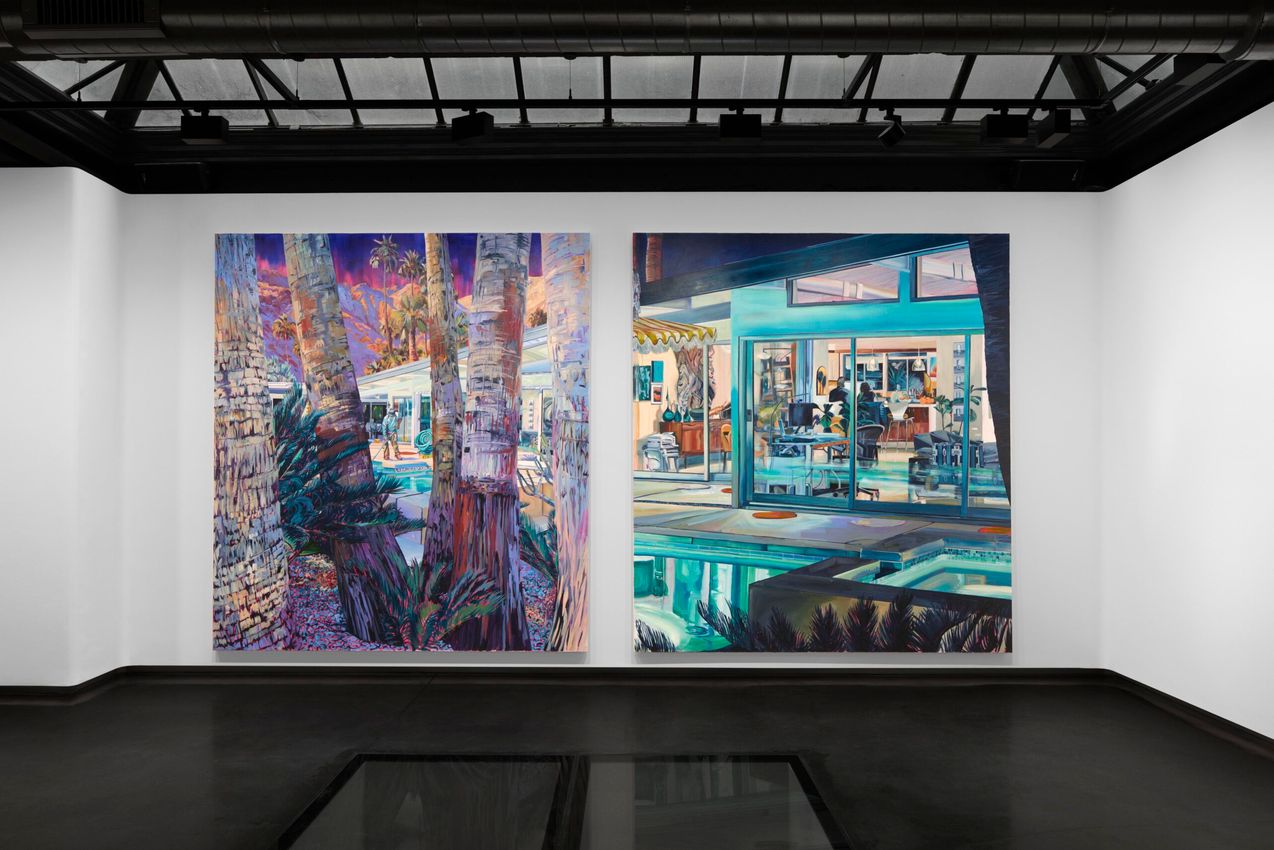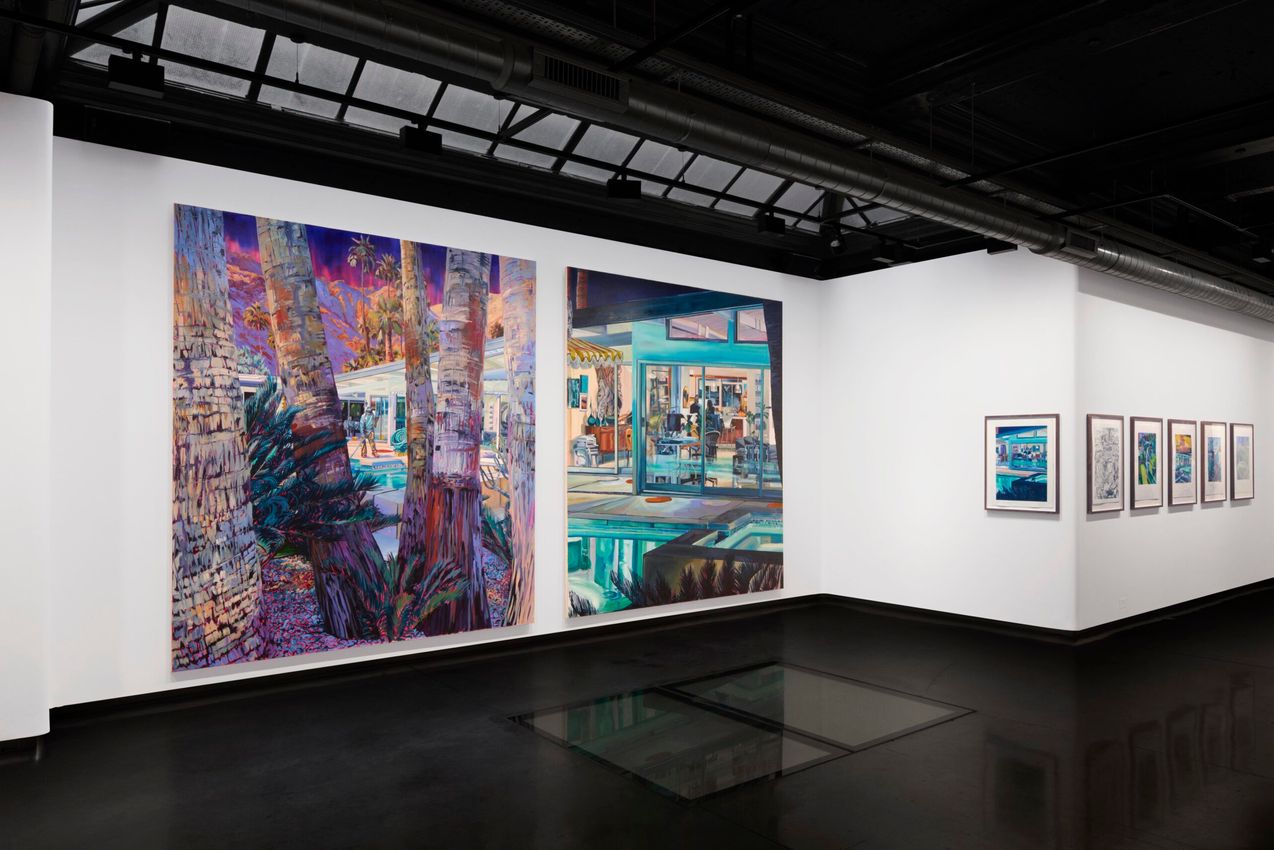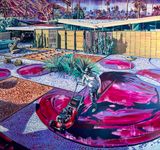
Rex Southwick’s newest solo exhibition with Unit London takes its name from the Latin word “topia”, a word rooted in representations of landscape in which both natural and artificial features provide a sense of place.
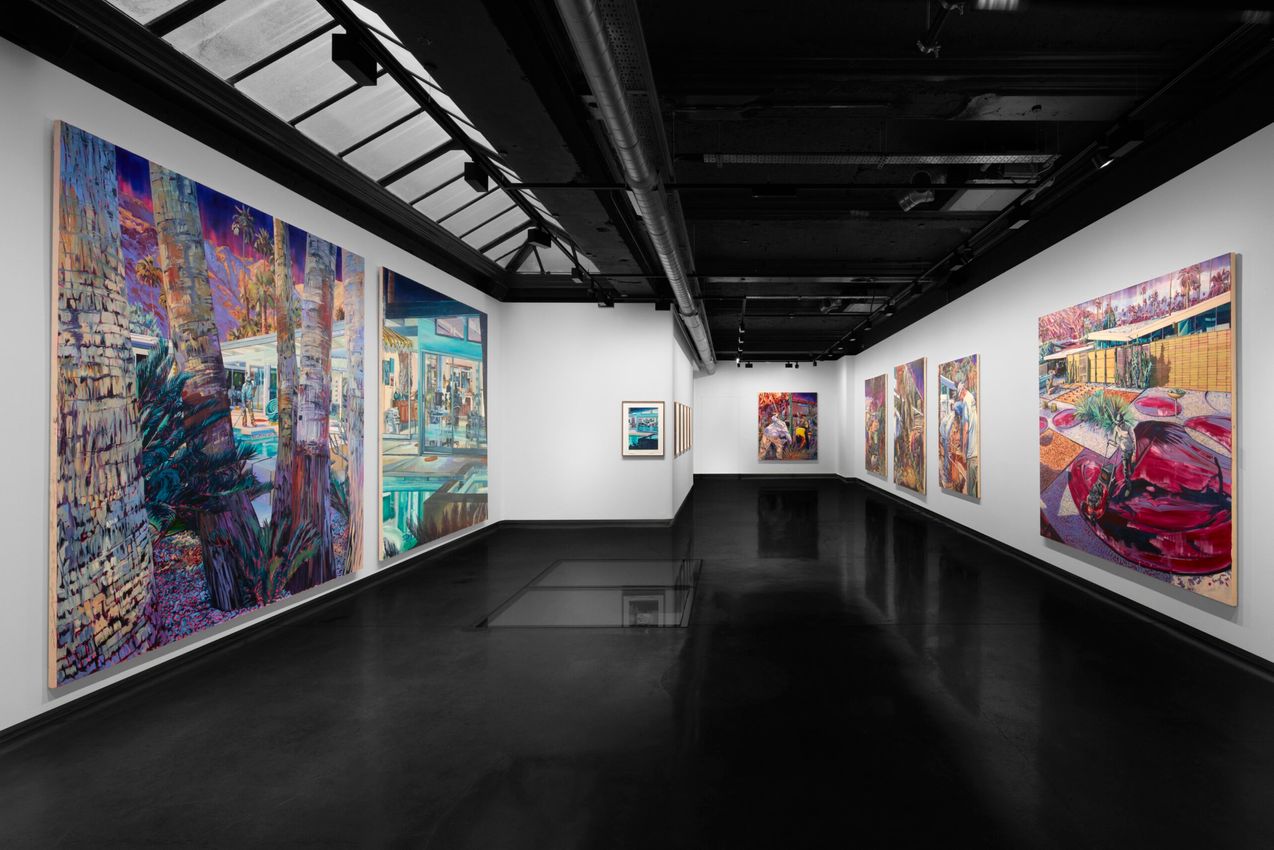
Unlike its etymological siblings “utopia” and “dystopia”, “topia” describes a more direct representation of a place without connotation or embellishment. Inspired by this concept, Southwick’s Topia presents the familiarity of the well-known resort city, Palm Springs, in an objective, yet distinctive light. Topia presents a series of large-scale canvas works that explore the mid-century and desert modern architecture of the iconic location of Palm Springs. The exhibition examines the city in relation to the continuously evolving desert landscape and the people who inhabit, build and maintain it. Two years in the making, Topia chronicles Southwick’s time in Palm Springs, depicting the push and pull between man-made and natural environments.
For the artist, Palm Springs has always embodied a sense of fascination and myth, seemingly defined by its ties to the film industry and the legacy of Old Hollywood. However, the city’s roots are much more ancient than its commonly associated heritage allows. The area has rich Native American history which has mostly faded away or been built over to make room for new real estate developments. Now, the most tangible links Palm Springs has to its past are its street names. Topia observes these more overlooked aspects of Palm Springs, reflecting on the invisible labour that has been crucial to its construction and maintenance. A purely observational and objective body of work, Topia studies the illusions created by these picture-perfect environments, shedding light on the unseen work that underpins the Palm Springs area and California as a whole.
To create these artworks, Southwick spent months documenting and living in Palm Springs, working with family-run landscape installation companies and construction crews to gain access to private homes. Topia is therefore imbued with a more personal dimension than any of Southwick’s previous bodies of work, which were created remotely and not from in person observation. First, the artist captures his vignettes in black and white photography. Working from an archive of images, Southwick paints his large works first and then creates smaller retrospective studies. The artist’s use of large canvases and his highly saturated colour palette is reminiscent of religious imagery, reflecting the frequent romanticisation of Palm Springs.
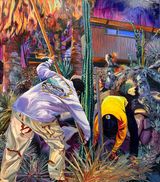
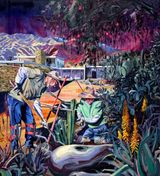
Yet, Southwick’s artworks undercut any sense of idealisation. Unlike images from real estate brochures, his paintings are always occupied by people at work. In addition to mid-century architecture, landscapers, cleaners and labourers are the protagonists of Southwick’s artworks. For example, in Planting the Flag, two landscape workers plant a cactus in the soil outside the Dr. Franz Alexander House. The bent position of the figures, the angled stake and the title of the painting suggest militaristic undertones influenced by American Civil War imagery. However, Southwick upends the expectations of this type of nationalistic imagery, ironically transposing them onto the mundane task of planting a cactus.
In this sense, Topia is concerned by the gulf between perceptions and reality. The exhibition considers how these perfectly built environments, surrounded by seemingly natural greenery, are in fact heavily manufactured and cultivated. Topia appears to break the spell conjured by these flawless real estate developments, typified by those found in Palm Springs. Instead of hiding the behind-the-scenes aspects of this famous location, Southwick brings them to the fore, casting the people who are pruning every hedge, sweeping every patio and laying every brick in vivid colour.


Rex Southwick’s highly saturated paintings verge on the self-referential: they are concerned with the often gritty process of creating something deemed beautiful. Southwick depicts luxury domestic spaces in different stages of construction, challenging the stream of idealised images that flood our digital feeds. His work is a celebration of paint over pixel; canvas over screen.
Unit seeks to preserve the artist’s essential role as the flag-bearer of creativity in our future.

A respected voice in contemporary art discourse.
Focusing on ambitious storytelling and insightful art-world commentary. Ocula Magazine publishes in-depth interviews, critical essays and timely analysis on the artists, exhibitions and ideas driving the global art world.
Learn more about Ocula Magazine
Showcasing the best of the art world.
Ocula partners with galleries from around the world to highlight their artists, artworks and exhibitions. Gallery membership is by application and invitation, with each member vetted by an independent panel.
Learn more about Ocula Membership

Specialises in the sale of major artworks.
Led by a team with deep ties to the world’s leading auction houses, galleries and collectors. Ocula’s advisory team offers bespoke services to high-net-worth clients from around the world who are looking to acquire the best of contemporary and modern art.
Learn more about our team and services