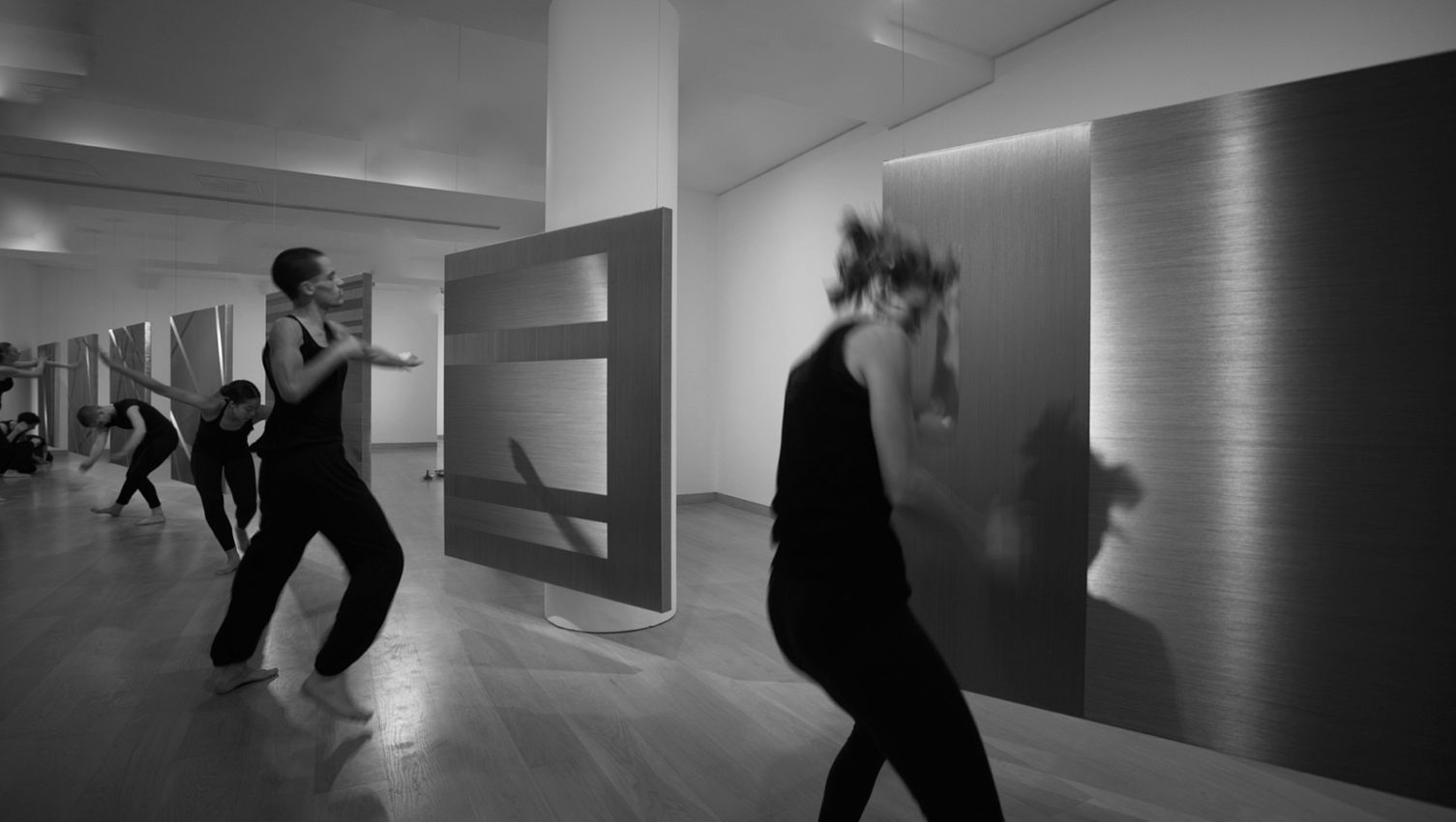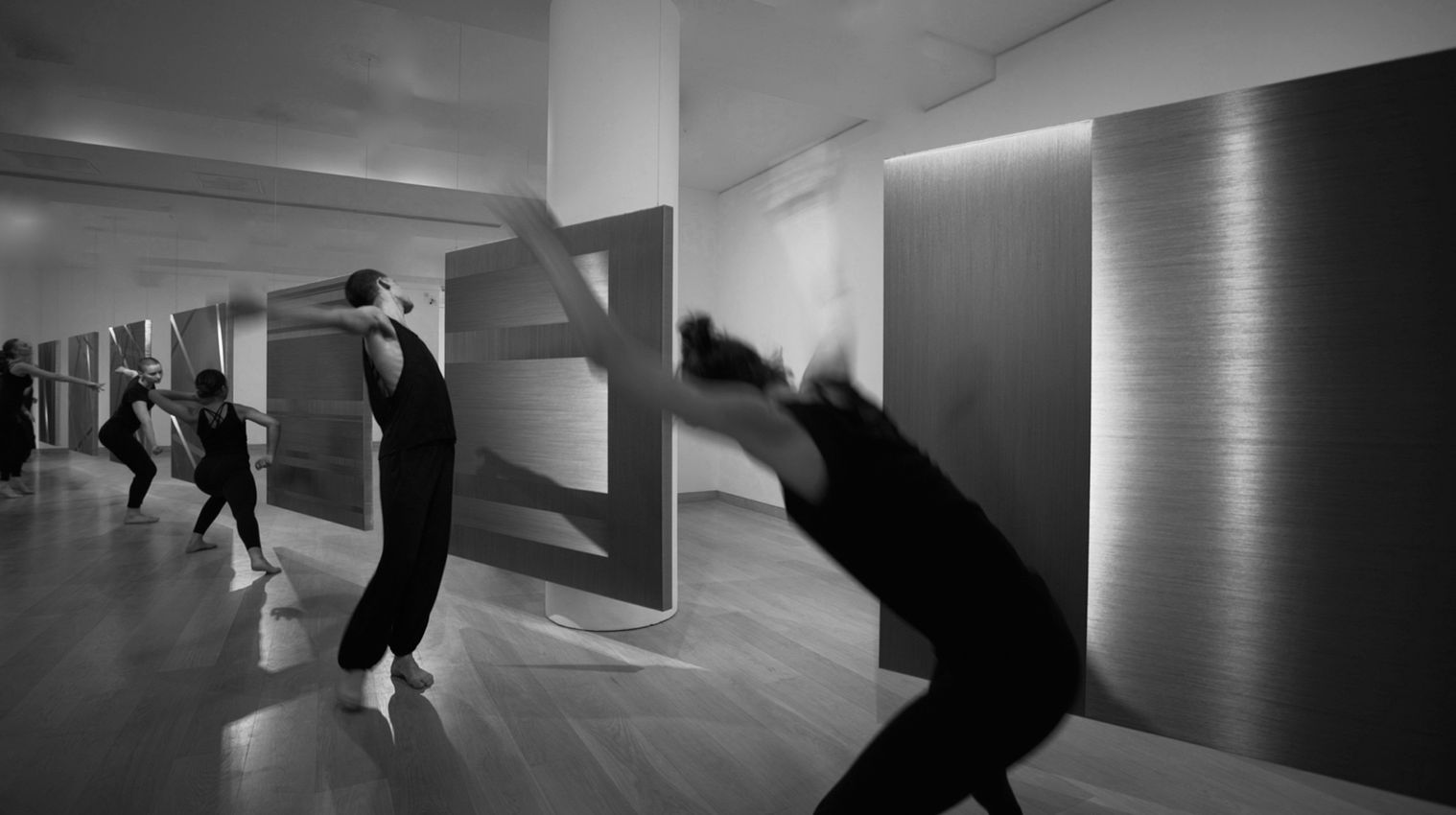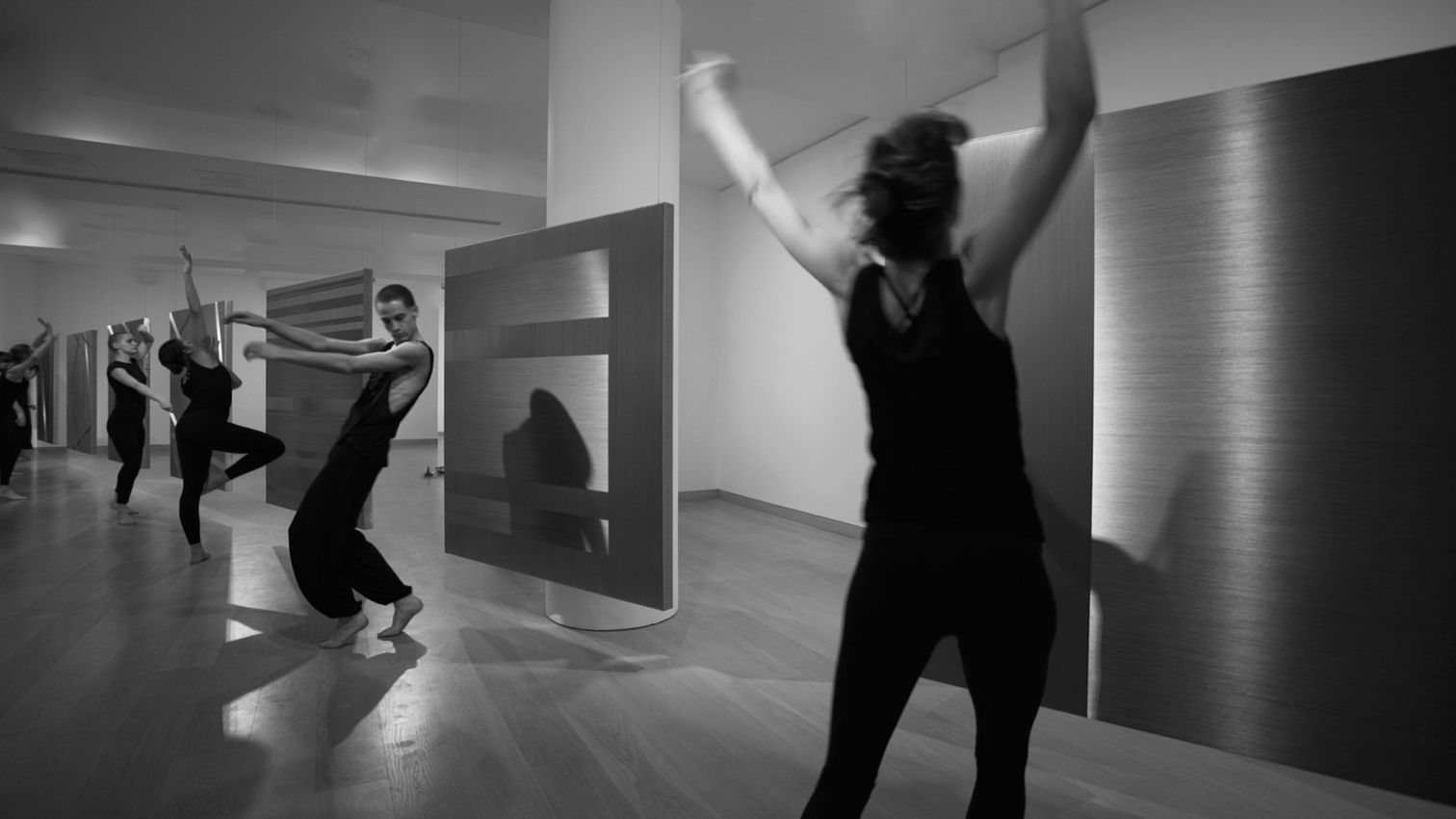
Waddington Custot is pleased to present Body Disruptions, a solo exhibition of works by London-based performer and artist Alice Anderson. Bringing together sculptures and drawings from solo and collective performances, the exhibition will include regular performances of Anderson’s new and unseen work, Transitional Dances (2019), for which she will be joined by performers and drummers.
In Body Disruptions, Anderson takes as a starting point the development of technologies such as biotechnology, nanotechnology and artificial intelligence to improve and perfect our human capabilities, and celebrates body weaknesses and brain failures as a reminder of what makes us human.
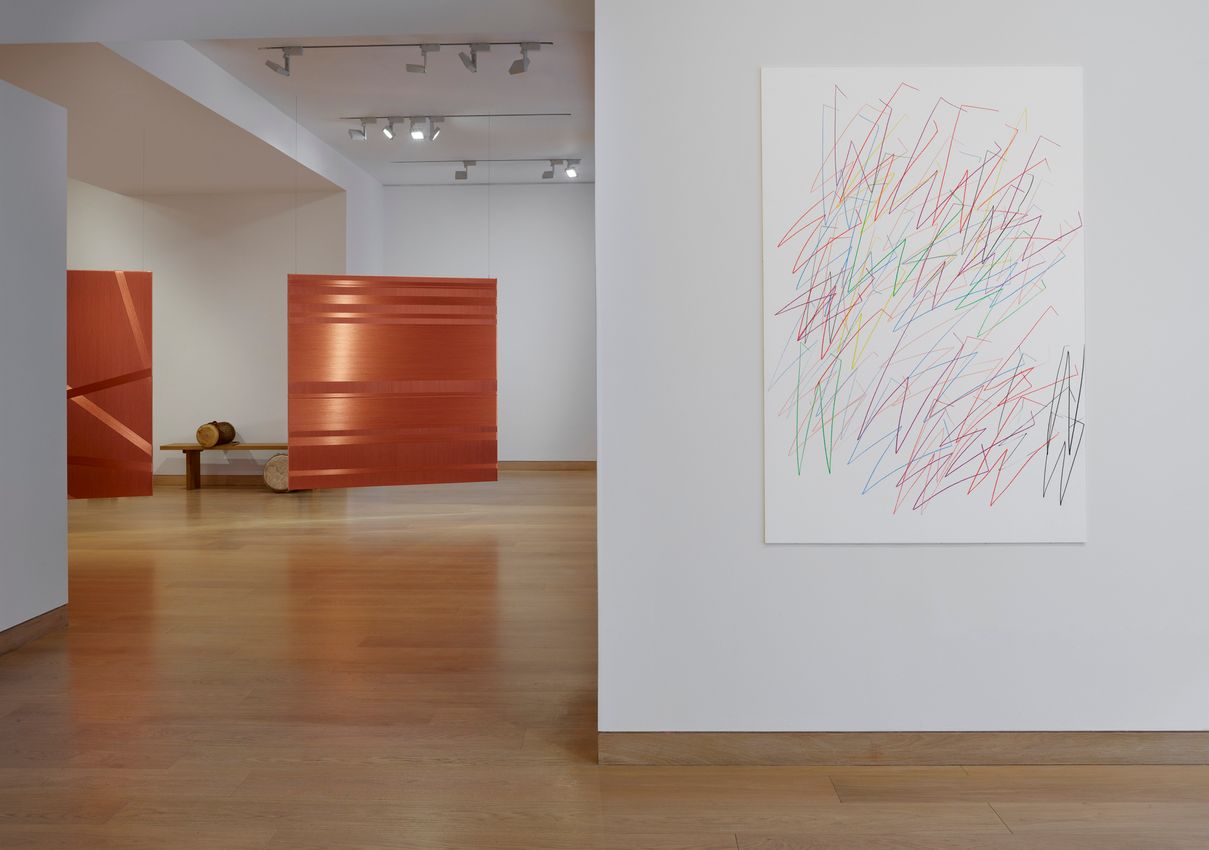
At the entrance to the gallery, a rhythmic sound will invite the visitor to enter the performative universe of Alice Anderson. The first works in the show, the Lost Gestures (2018) drawing series, is made from the repetitive sign-making of crayon on paper of various computer keyboard symbols such as the hashtag, double slash, and parentheses. The obsessive repetition of the digital signs drawn by Anderson generates an audible and visual rhythm; it is drawn at an increasing speed, which in time causes the gesture to be ‘lost’. Whenever the gesture is ‘lost’ (when an error occurs and produces a different motif) Anderson signifies this change by adding a new colour. The rhythmic sound of the crayon repeatedly striking the surface of the paper will initiate a dance performed by Ino Riga whose improvised movement will be based on the sound of Anderson’s drawing. When the performance is complete, the finished drawing exists both as a visual record of the performance, and an artwork of layered and interwoven gestures. The correlated inaccurate gestures, which AI algorithms would have identified as errors, have generated the creation of patterns.
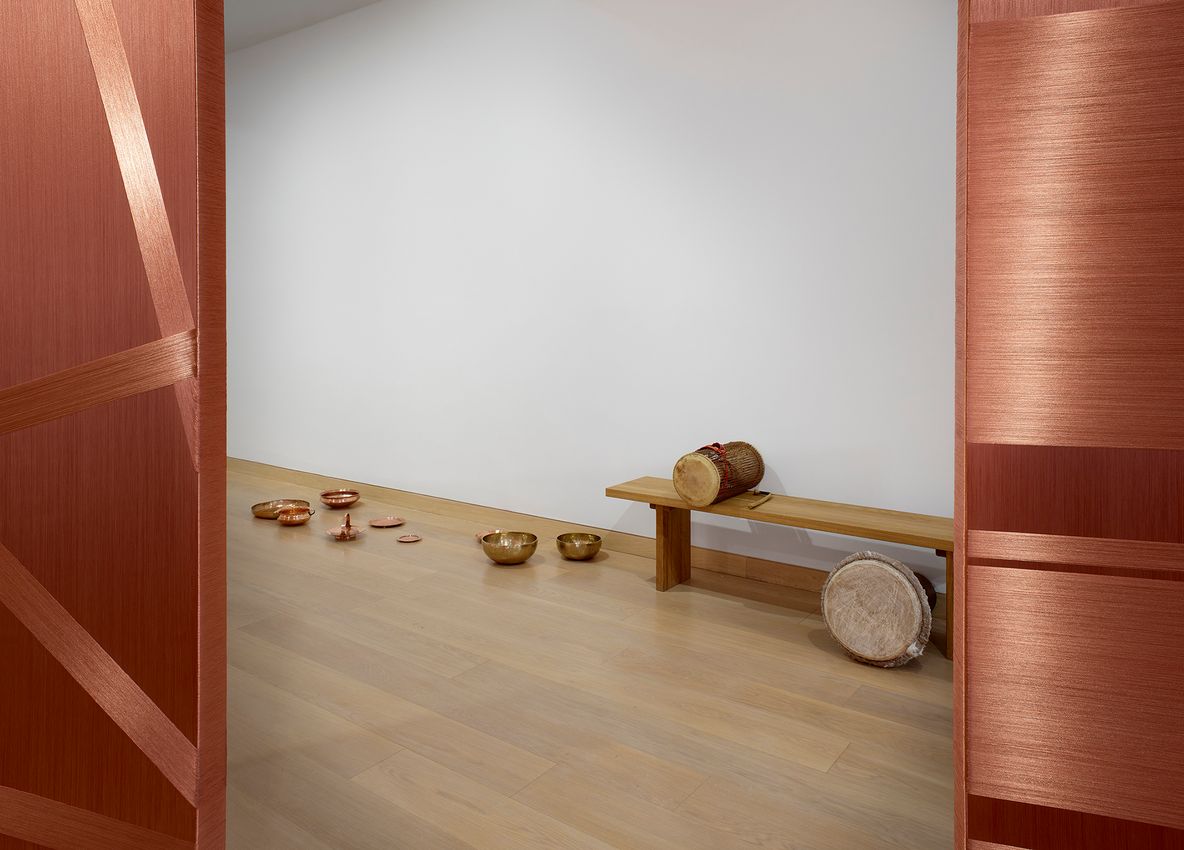
The challenges that technologies present for humanity has directed Anderson’s research to the culture of the Indiens Kogi, a community of the Sierra Nevada de Santa Marta, Colombia, which celebrates humanity and nature through ancestral rituals, and further works in the exhibition draw on the importance of ritual to our connection with the physical world.
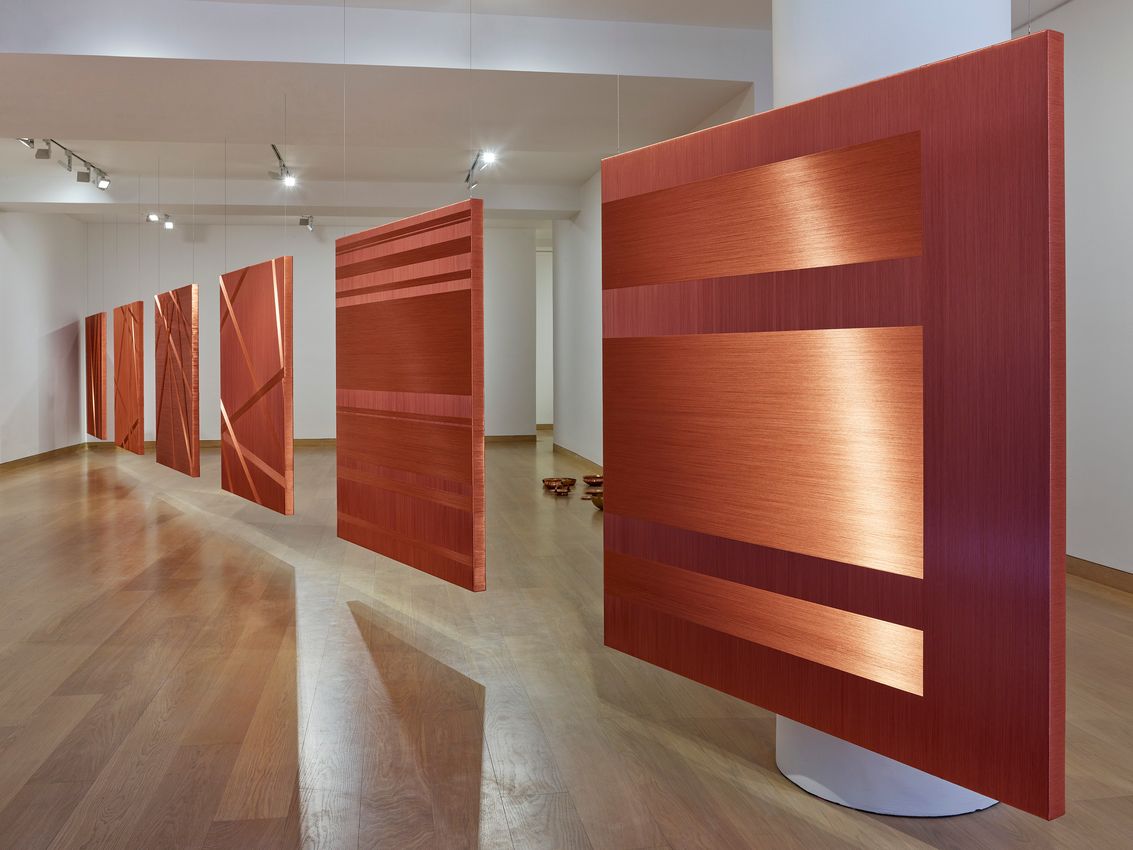
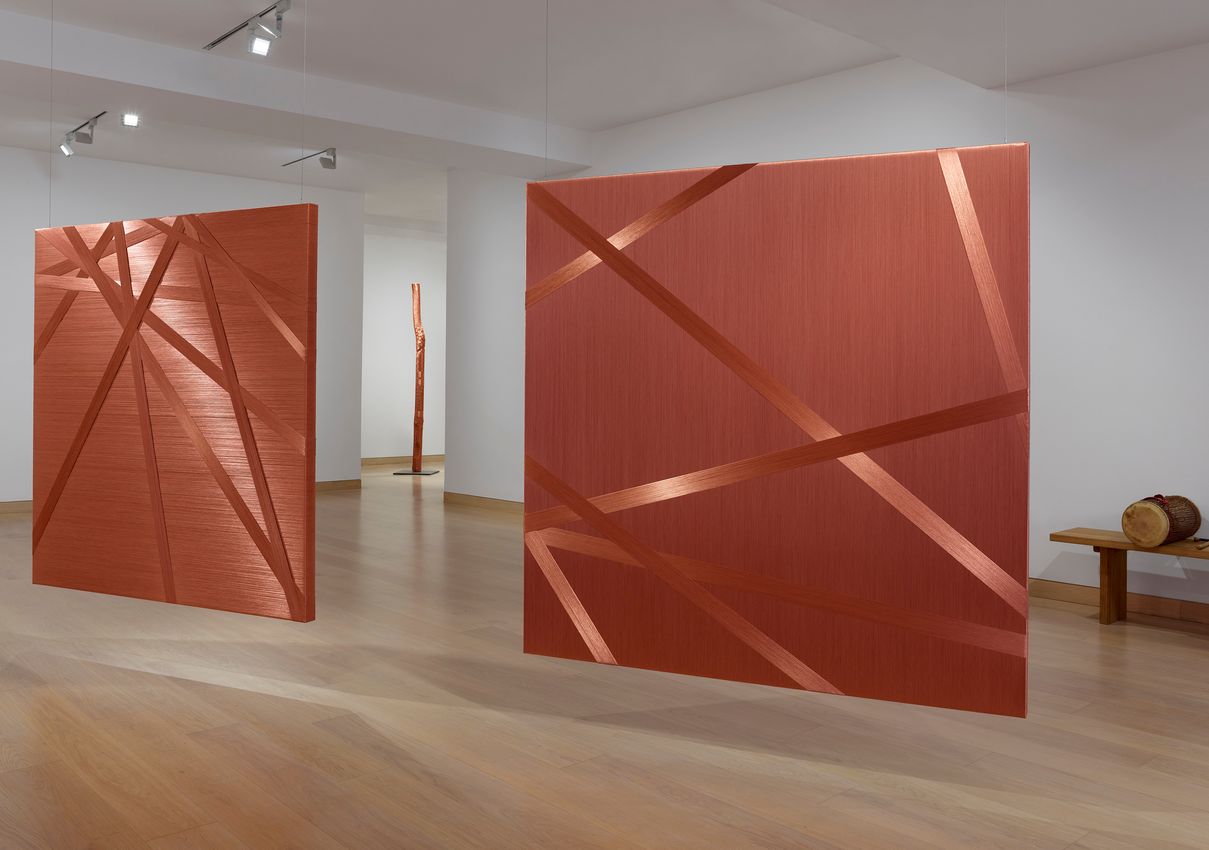
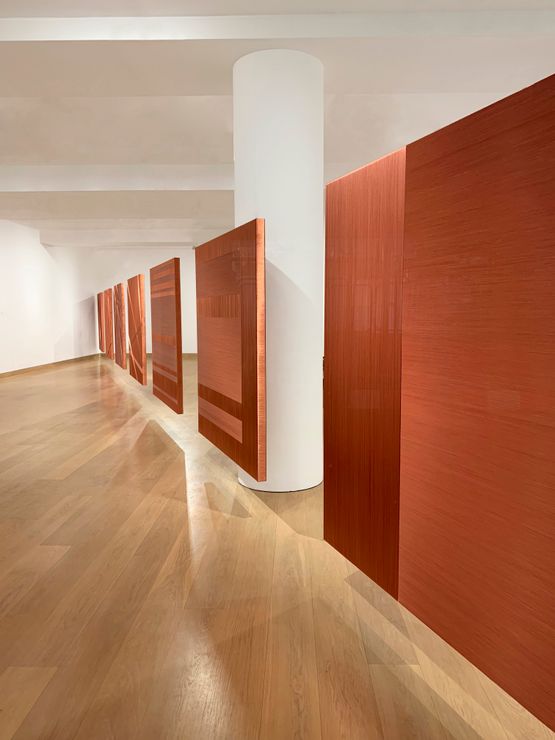
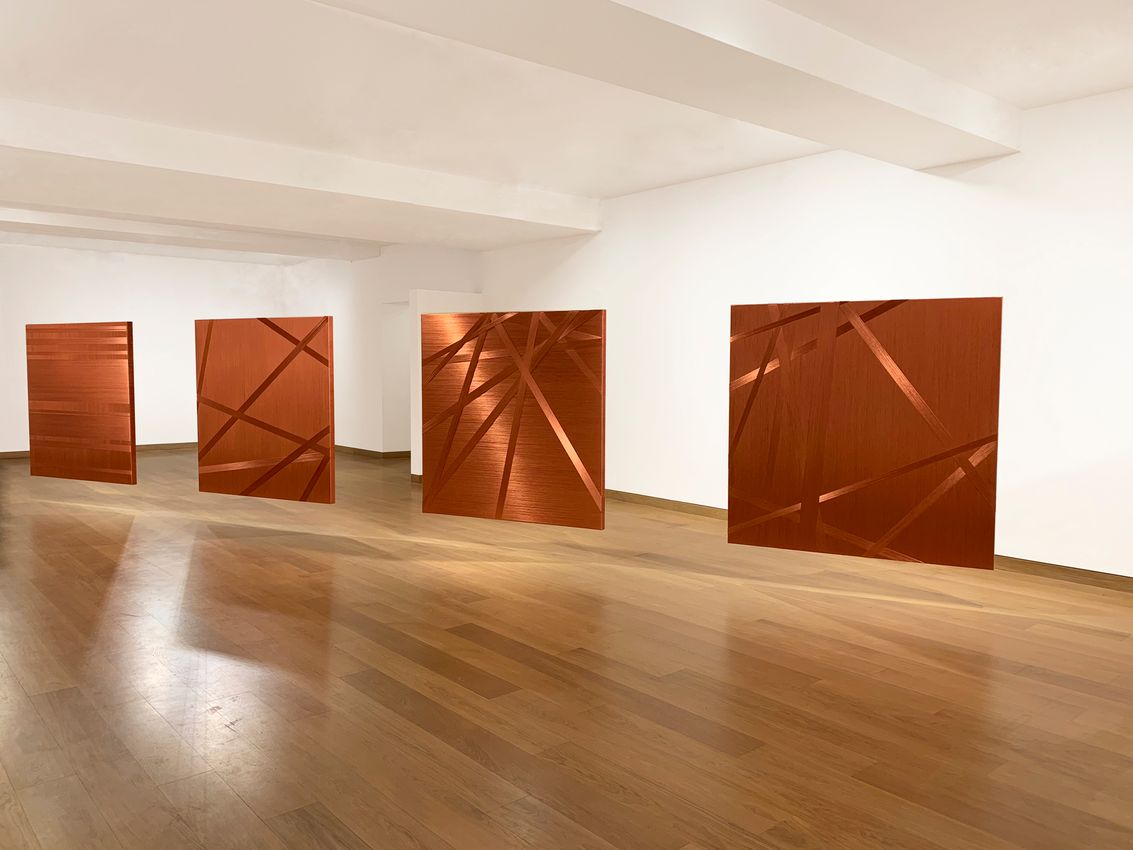
The main gallery will exhibit Anderson’s new monolithic sculptures from the ongoing series Body Itineraries (2019). These are created with copper-coloured wire, a material which permeates Anderson’s oeuvre as a reference to the connectivity of the digital world. The woven patterned surfaces are made by orbiting a square object with copper-coloured wire at alternating speeds and with different movements. Each motif corresponds to a change of direction that has happened to release body tension or pain. Anderson’s square sculptures are, for the artist, like sacred surfaces in which time and space have been inscribed through the meditative movements of her performances.
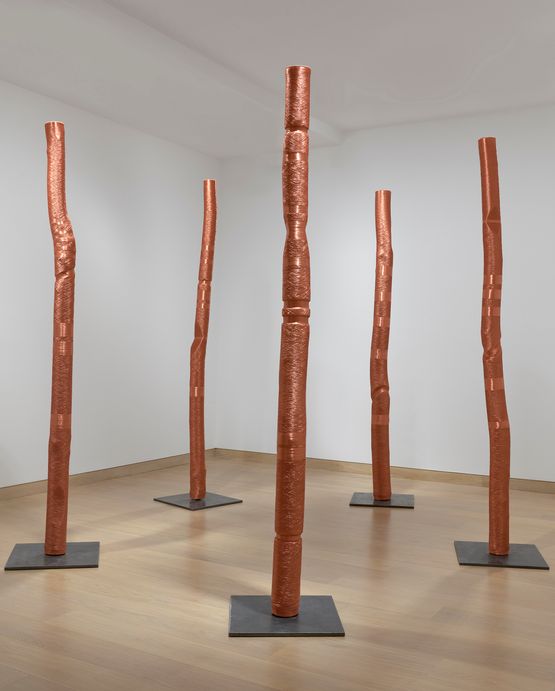
The exhibition will end with five totems from the performative sculpture Nuhé (2018), which has been woven over several collective performances to reach the total 21 structural elements of a nuhé, a temple and political gathering place for the Kogi community. In the ‘memorisation’ of Nuhé, performers each travelled around one of the two-metre high columns with copper-coloured wire recording the marks of their bodies’ disruptions. In collectively crystallising the architectural elements, they experience an intimate knowledge of the physical object through their human body, while participating in a communal ritual that reflects the social bond of the group that built it.
The accompanying exhibition catalogue will feature newly commissioned texts by independent curator and researcher Rose Lejeune, art critic and psychoanalyst Annabelle Gugnon and anthropologist Max Carocci alongside a series of talks and live performances.


Alice Anderson lives and works in London. Anderson locates her practice at the fulcrum between movement informed by ancestral cultures and the ubiquitous world of technology and its algorithmic systems. Her animist approach advocates a total reconnection to Nature through ritual dance. She is one of the very few artists who creates paintings and sculptures during performances, remaking and rethinking the wired connections between consciousness, body, and machine, what she calls ‘human/non-human interactions’. In 2020, Anderson was nominated for the Prix Marcel Duchamp.


Waddington Custot was formed through the partnership of French art dealer Stephane Custot and long-time London art dealer Leslie Waddington, in 2010. Located in Cork Street since 1958, formerly as Waddington Galleries, the gallery has a rich heritage and an international reputation for quality and expertise in works by modern and contemporary masters, with a particular focus on monumental sculpture.

A respected voice in contemporary art discourse.
Focusing on ambitious storytelling and insightful art-world commentary. Ocula Magazine publishes in-depth interviews, critical essays and timely analysis on the artists, exhibitions and ideas driving the global art world.
Learn more about Ocula Magazine
Showcasing the best of the art world.
Ocula partners with galleries from around the world to highlight their artists, artworks and exhibitions. Gallery membership is by application and invitation, with each member vetted by an independent panel.
Learn more about Ocula Membership

Specialises in the sale of major artworks.
Led by a team with deep ties to the world’s leading auction houses, galleries and collectors. Ocula’s advisory team offers bespoke services to high-net-worth clients from around the world who are looking to acquire the best of contemporary and modern art.
Learn more about our team and services