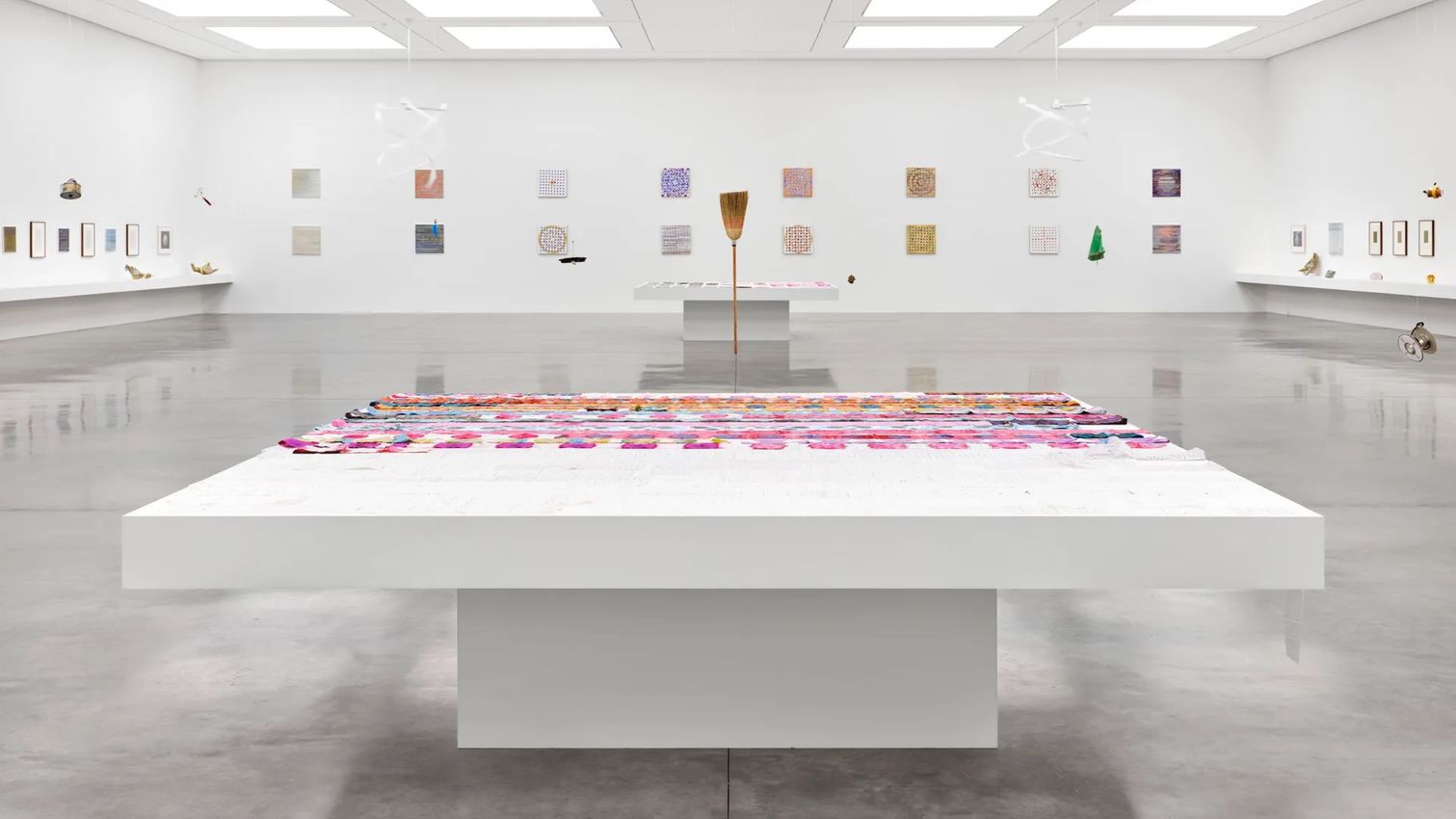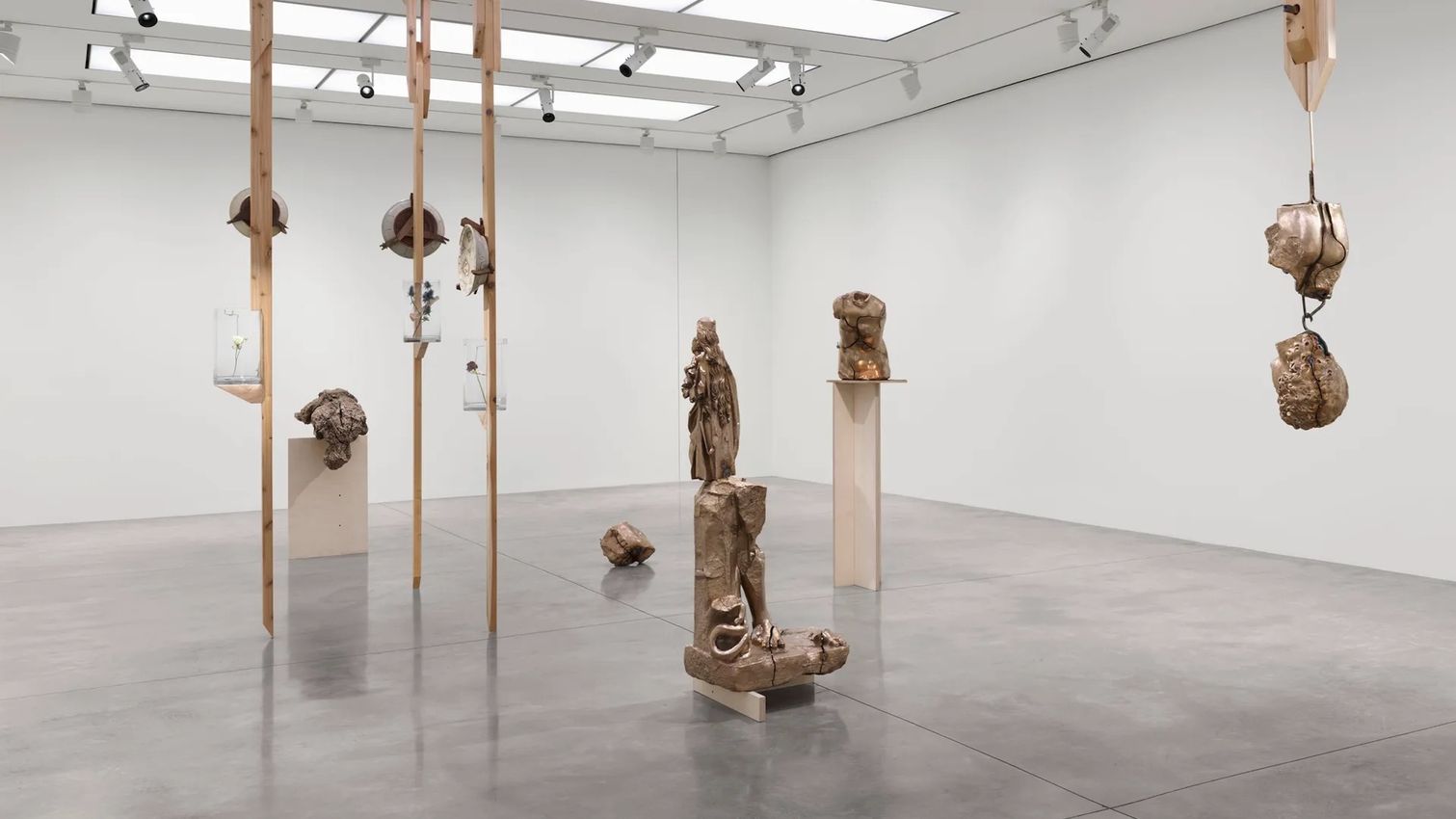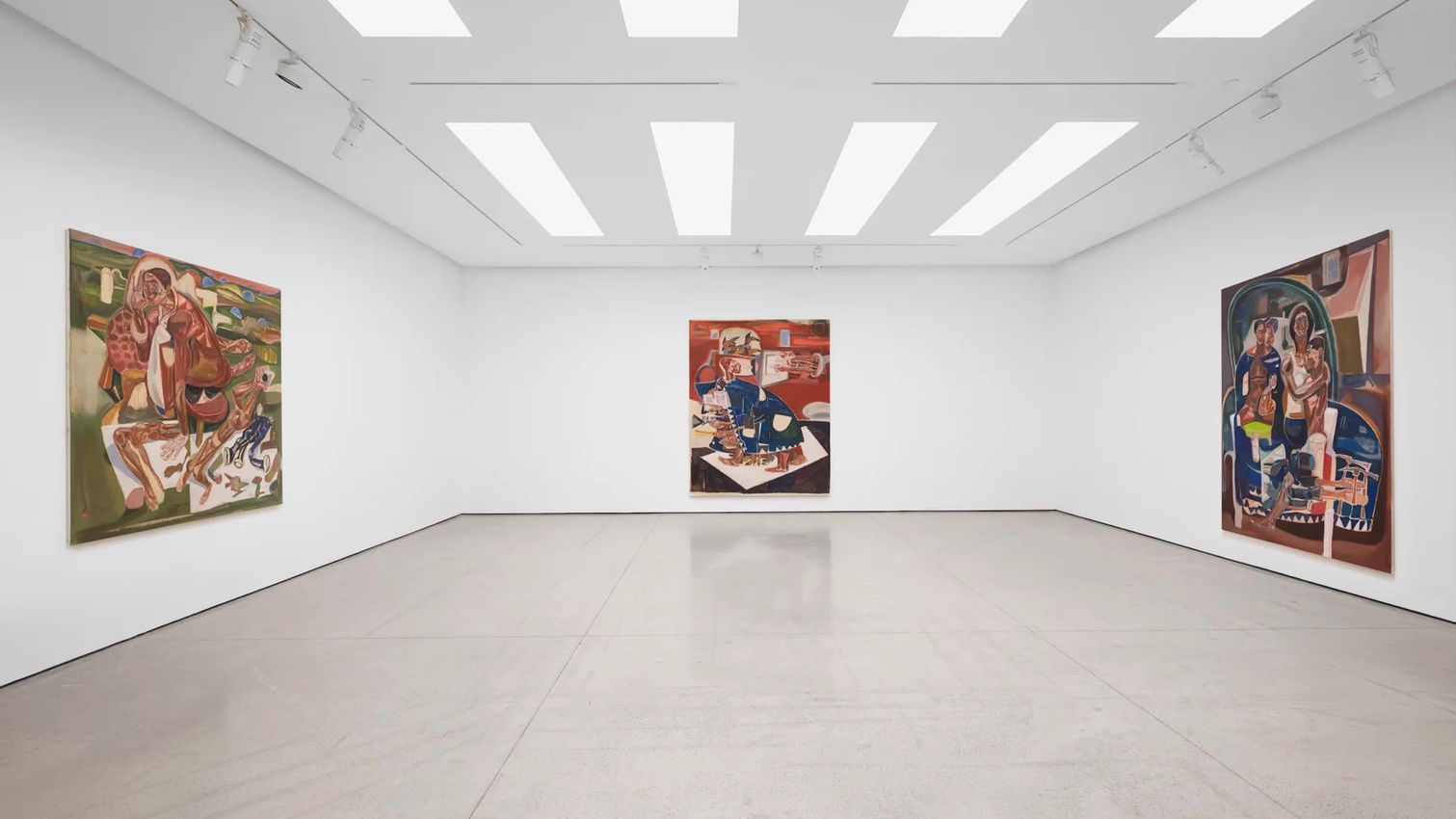
White Cube is pleased to present ‘A SPELL OF GOOD THINGS’ by Ibrahim Mahama, the artist’s first solo exhibition in New York, which draws together ideas of physical labour, post-colonial collapse and reclamation. Best known for his ambitious installations, in which he covers entire buildings with repurposed jute sacks, Mahama has for many years gathered materials abandoned through institutional decline in Ghana. Forged during the period of growing confidence in the 1960s and 1970s – when newly independent West African nations were imagining a way forward after British colonial rule – Mahama regards these objects as carriers of both optimism and failure. Relics of self-ruling Ghana’s shortcomings in delivering on its pledges to its people, Mahama’s salvaged materials reflect an attunement to ‘the voids embedded within failures’ and their latent potential.
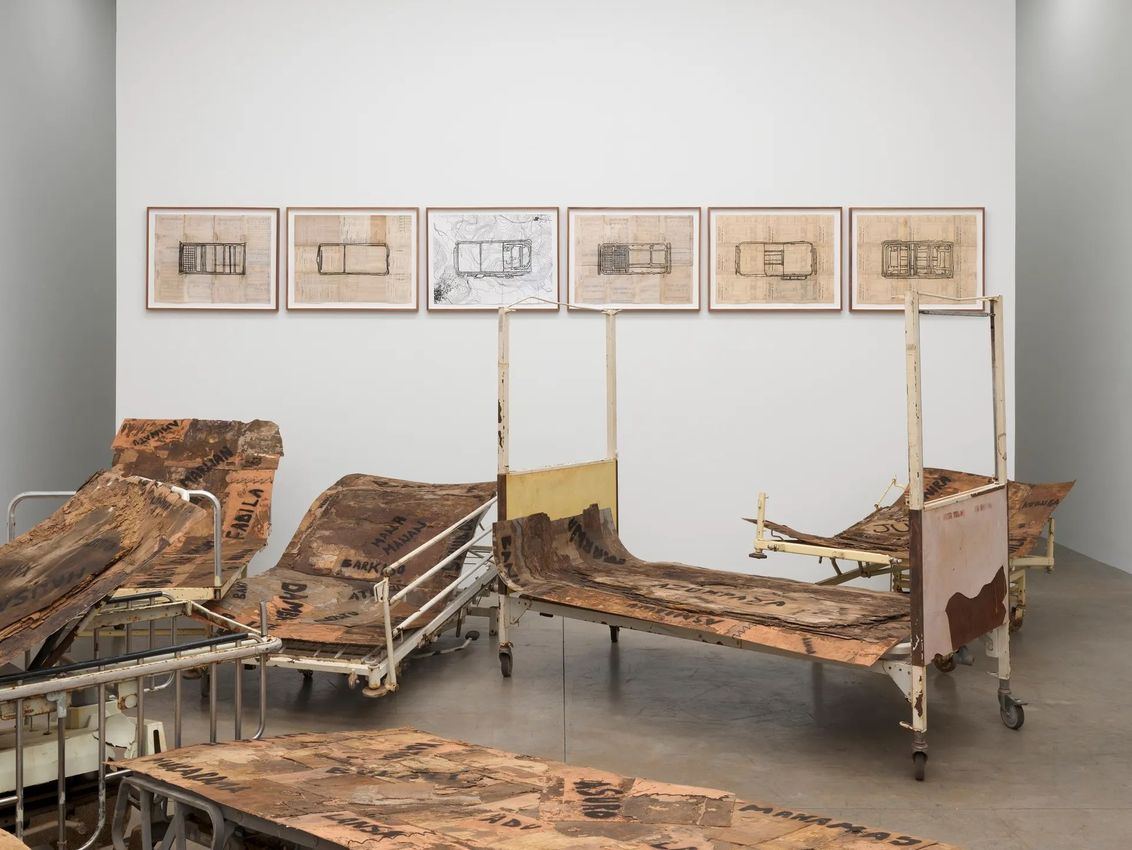
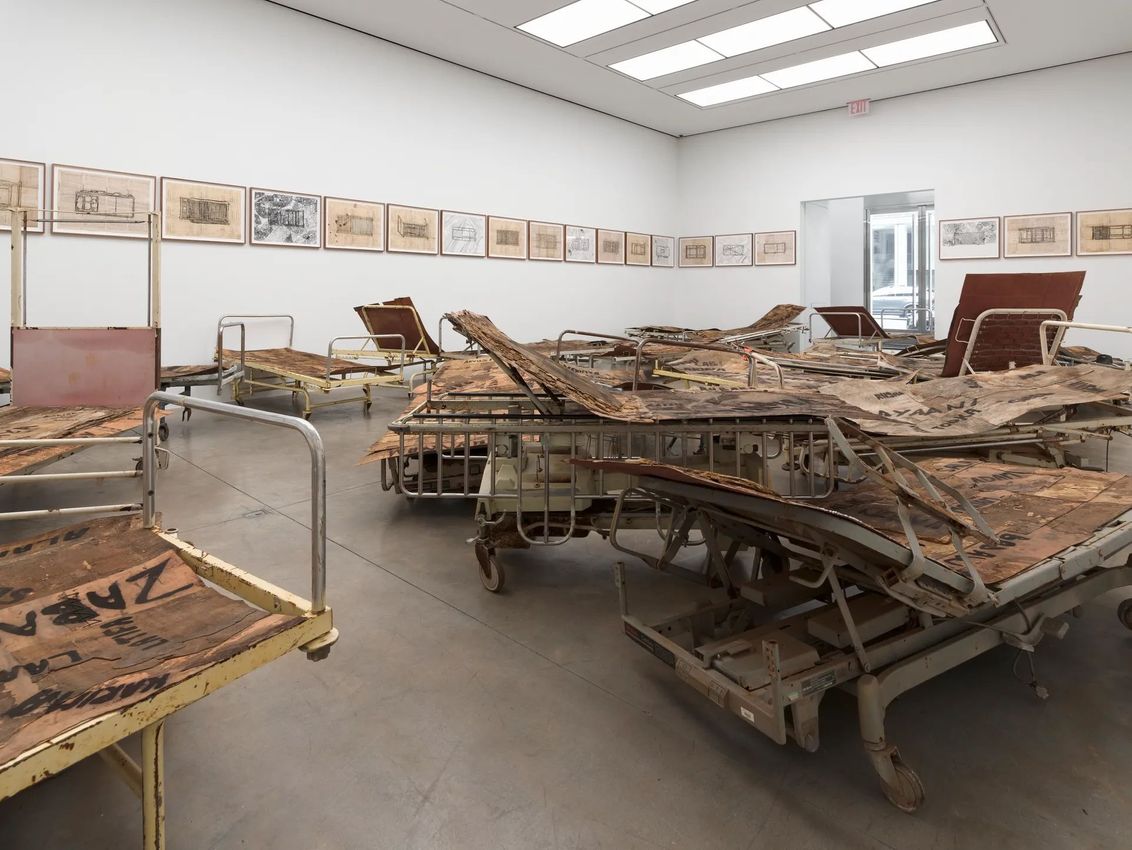
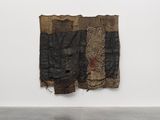
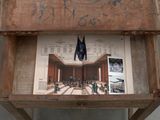
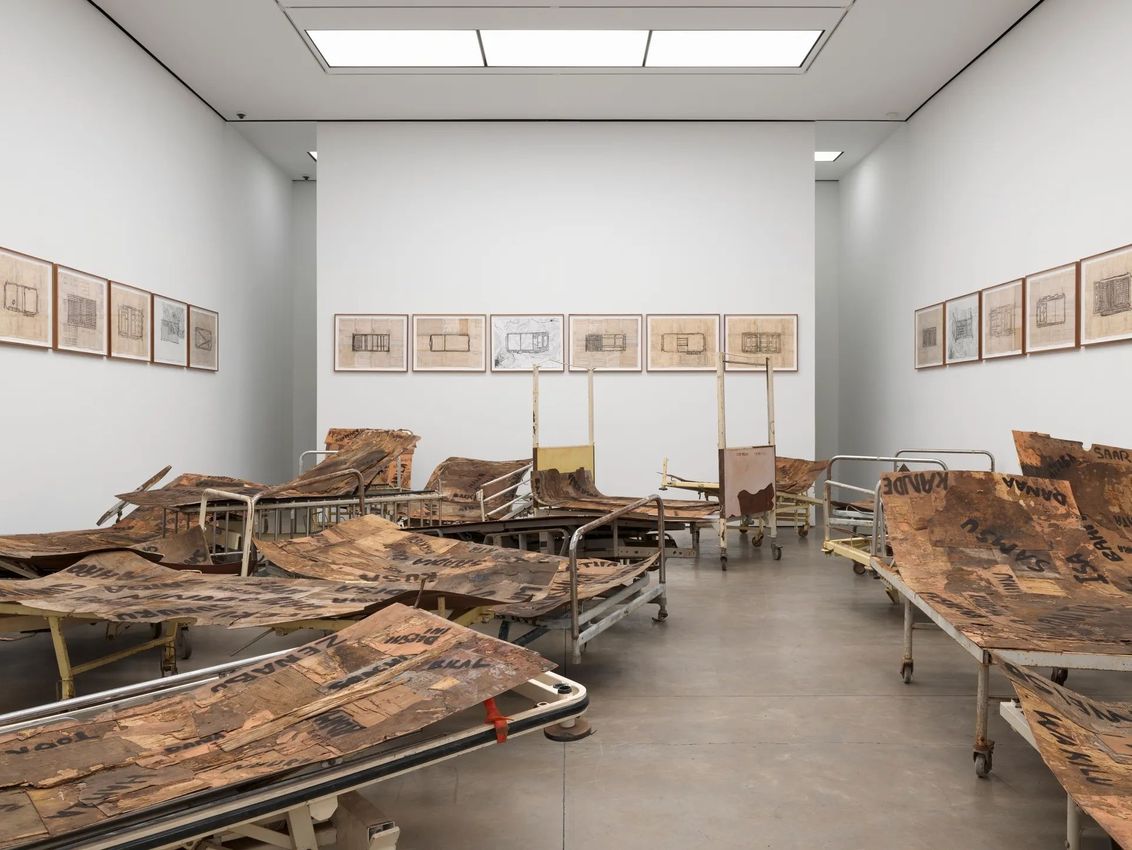
The exhibition’s eponymous installation, A SPELL OF GOOD THINGS (2024), draws its title from contemporary writer Ayòbámi Adébáyò’s roman à clef of the same name. Resonating with Adébáyò’s exploration of the systemic issues of post-colonial Nigeria, Mahama’s installation draws attention to questions of occupation, politics and infrastructure in his own native Ghana. Occupying the gallery’s main space, an assemblage of decrepit beds from the Tamale Teaching Hospital in Northern Ghana – where Mahama lives and works – sit alongside parts salvaged from the interiors of defunct train carriages. Several of the hospital beds are covered with leather ‘sheets’, inscribed with the names of individuals who died at the hospital, those displaced or migrated due to post-Independence economic instability, and the names of locations drawn from British colonial maps, tattooed with carbon sourced from kerosene lamps. Built in the 1970s, the hospital was commissioned by the then-Head of State, Colonel Ignatius K. Acheampong, as a training site for medical professionals and the primary hospital for the northern region. Despite projected success, severe resource shortages resulted in numerous preventable deaths at the facility, including, most poignantly, that of Mahama’s own brother.
Parts of the leather ‘sheets’ Mahama incorporates are sourced from the furnishings of abandoned trains of the former Gold Coast Railway. Established by the British in the late 1800s primarily for the transportation of minerals and cocoa, the railway was constructed by migrant labourers from Ghana’s northern regions, who travelled south for work. The journey, coupled with their harsh working conditions, resulted in significant injuries and fatalities – a reality that Mahama insinuates through the mechanical breakdowns, or ‘deaths’, of the trains themselves. The leather sheets bear the impressions of the wooden supports they originally covered, and fragments of splintered wood create a cartographical scarring on their surfaces. Noting that the process of tearing the leather away was akin to peeling skin, Mahama sees the ‘tattooing’ of these sheets as a symbolic means of reopening the wounds of this history to interrogate post-Independence conditions and the latent potentials within its failures.
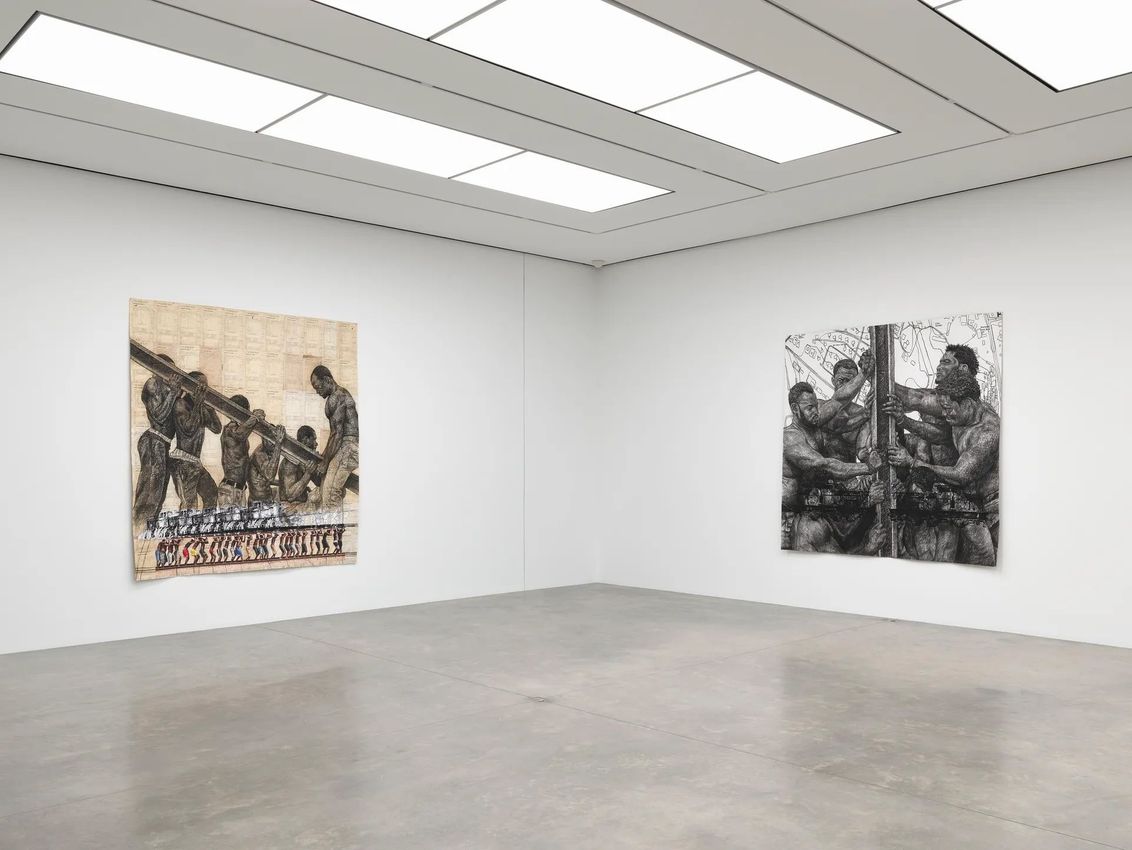
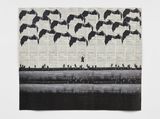
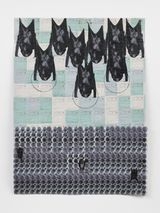
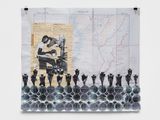
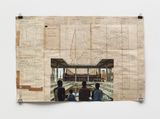
In 2023, Mahama negotiated with the Ghanaian Railway Development Ministry to salvage entire train carriages, tracks and a number of machine parts from the pre- and post-Independence era that would otherwise have been discarded as scrap metal. These relics were transported nearly 700 kilometres by truck from Southern Ghana to RedClay Studio in Tamale – a cultural institution established by Mahama in 2020 – to be converted to classrooms, libraries, studio spaces and sculptures. The sheer scale of this endeavour, which also marked the arrival of railways of any kind in Northern Ghana, is documented in a number of large charcoal drawings displayed in the second-floor gallery. In these works, Mahama depicts the workers building the railway at RedClay, superimposed on archival maps of the region. Through this imagery, the artist seeks to retrace a line between the history of the tracks and the bodies of the men who bear their load – pointing to a literal and metaphorical burden, the artist here entwines the physical weight of the labour with the gravity of social and political exertion.
Be they jute sacks, hospital beds or train parts, the artist understands the use of these objects in combination as inextricably linked with the loss of life, infrastructural collapse and widespread deterioration that has marred Ghana’s post-Independence era. By contrast, art, for Mahama, becomes a vessel of boundless ‘potential and possibility’, a medium which transcends the bureaucratic barriers that have perpetuated these failures. Through its transformative acts of reclamation and empowerment, Mahama’s work beckons us to ‘gather new forms of courage, new forms of imagination, to push the world forward in a more sustainable way.’
Press release courtesy White Cube


Ibrahim Mahama uses the transformation of materials to explore themes of commodity, migration, globalisation and economic exchange. Often made in collaboration with others, his large-scale installations employ materials gathered from urban environments, such as remnants of wood, or jute sacks which are stitched together and draped over architectural structures. Mahama’s interest in material, process and audience first led him to focus on jute sacks that are synonymous with the trade markets of Ghana where he lives and works. Fabricated in South East Asia, the sacks are imported by the Ghana Cocoa Boards to transport cocoa beans and eventually end up as multi-functional objects, used for the transportation of food, charcoal and other commodities. ‘You find different points of aesthetics within the surface of the sacks’ fabric’, Mahama has said. ‘I am interested in how crisis and failure are absorbed into this material with a strong reference to global transaction and how capitalist structures work.’


An international art powerhouse, White Cube was established in 1993 in London by art dealer Jay Jopling. In its space on Duke Street, it served as the early exhibition venue for many now internationally acclaimed British artists, including Tracey Emin, Gilbert & George, Rachel Kneebone and Antony Gormley, who still show with the gallery today.

A respected voice in contemporary art discourse.
Focusing on ambitious storytelling and insightful art-world commentary. Ocula Magazine publishes in-depth interviews, critical essays and timely analysis on the artists, exhibitions and ideas driving the global art world.
Learn more about Ocula Magazine
Showcasing the best of the art world.
Ocula partners with galleries from around the world to highlight their artists, artworks and exhibitions. Gallery membership is by application and invitation, with each member vetted by an independent panel.
Learn more about Ocula Membership

Specialises in the sale of major artworks.
Led by a team with deep ties to the world’s leading auction houses, galleries and collectors. Ocula’s advisory team offers bespoke services to high-net-worth clients from around the world who are looking to acquire the best of contemporary and modern art.
Learn more about our team and services