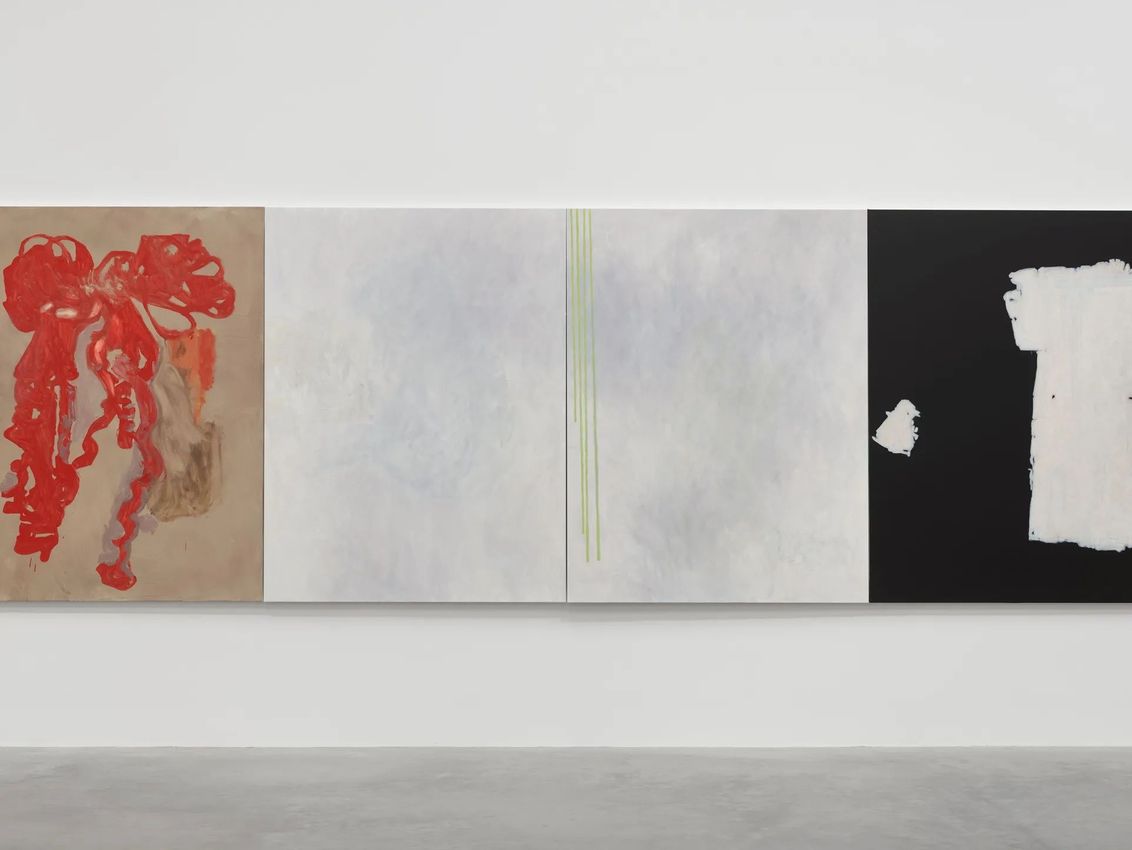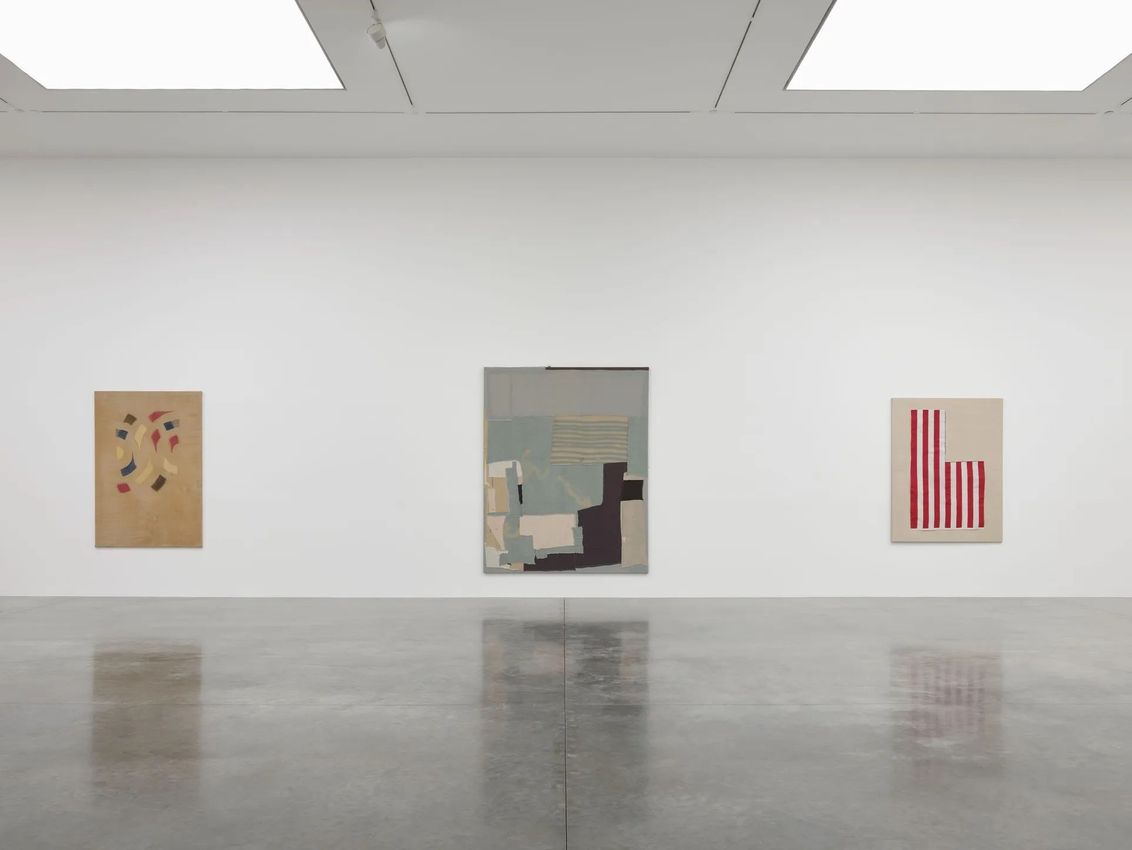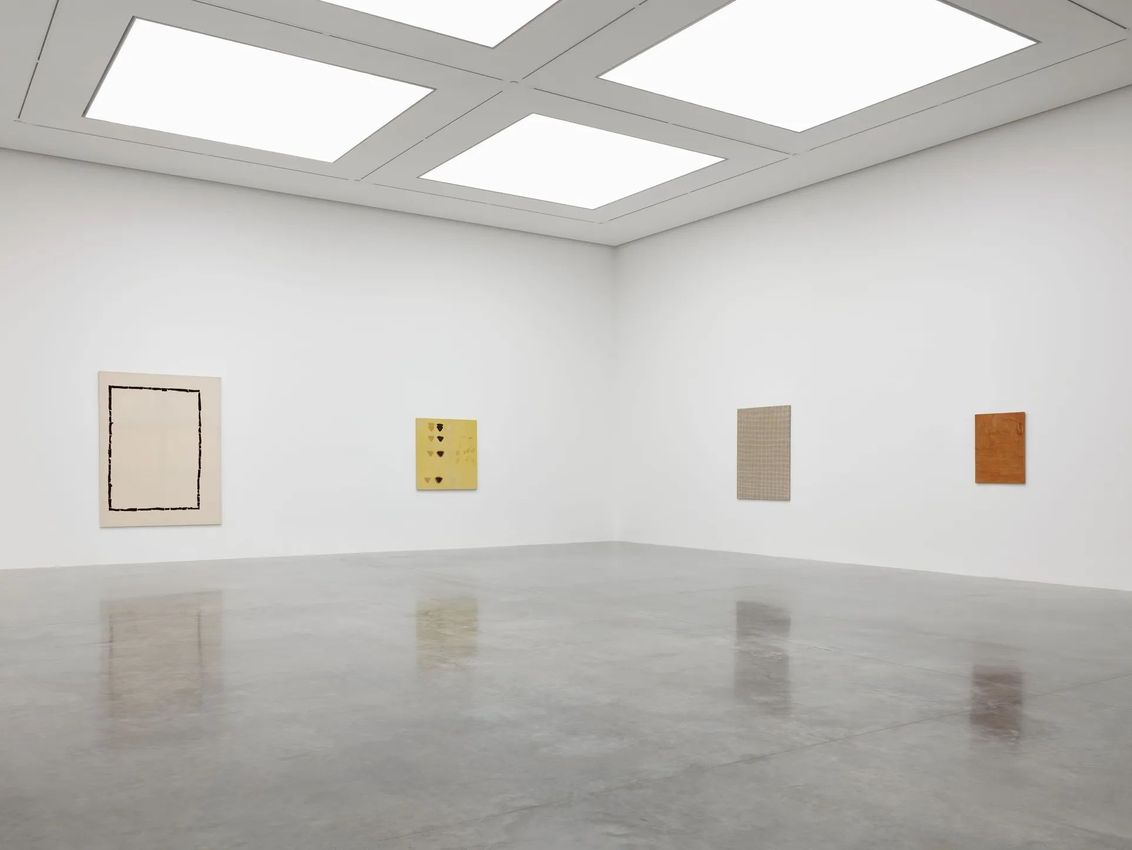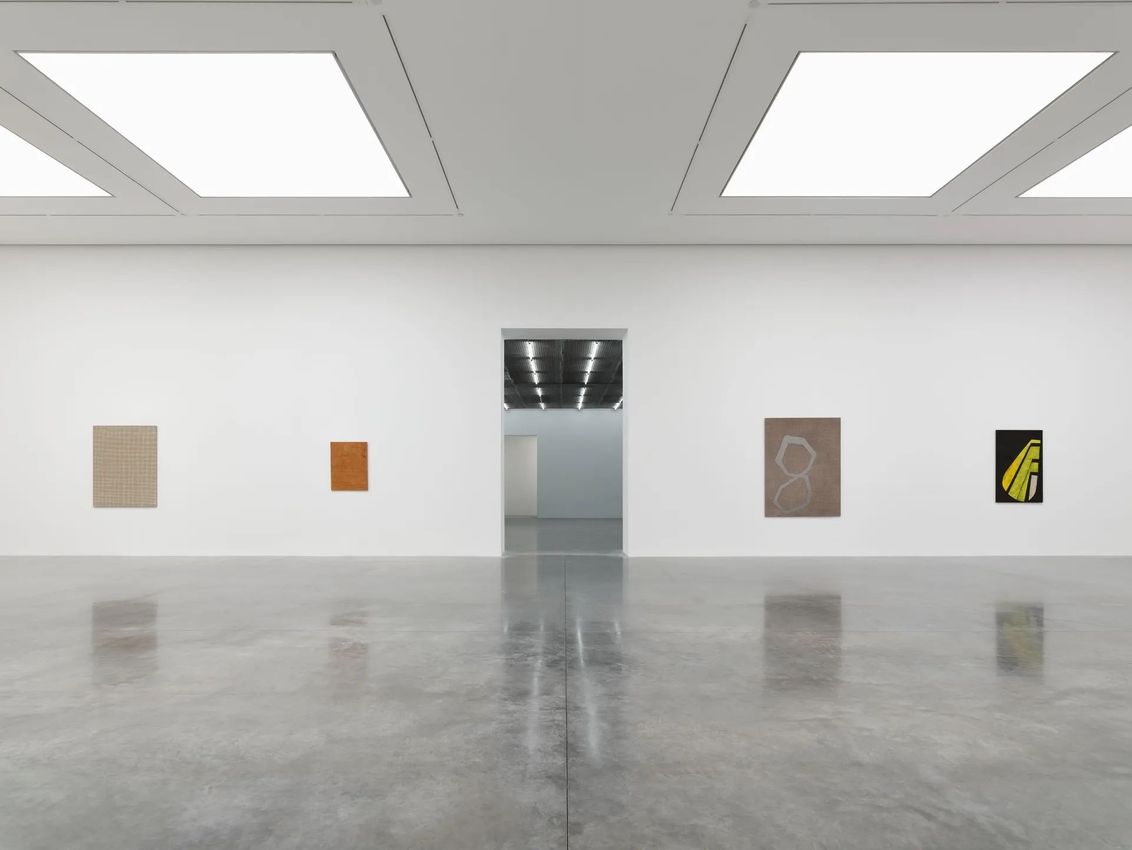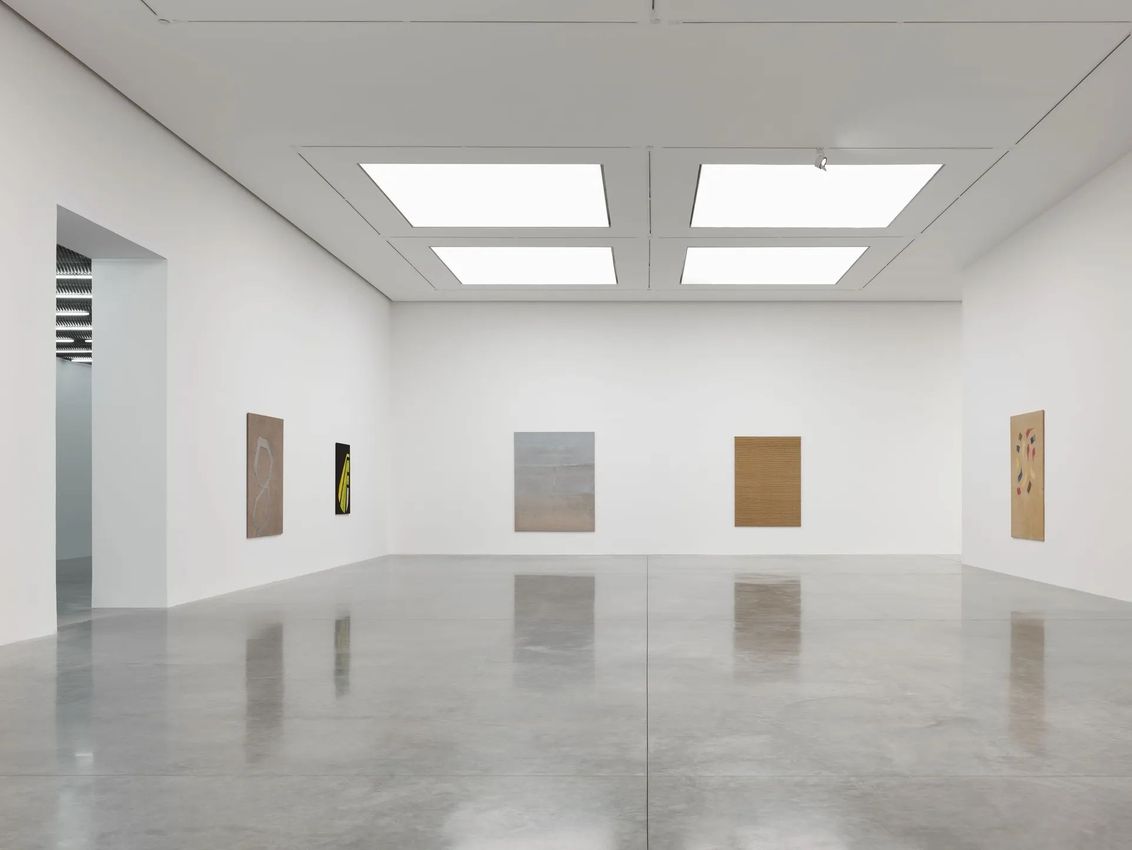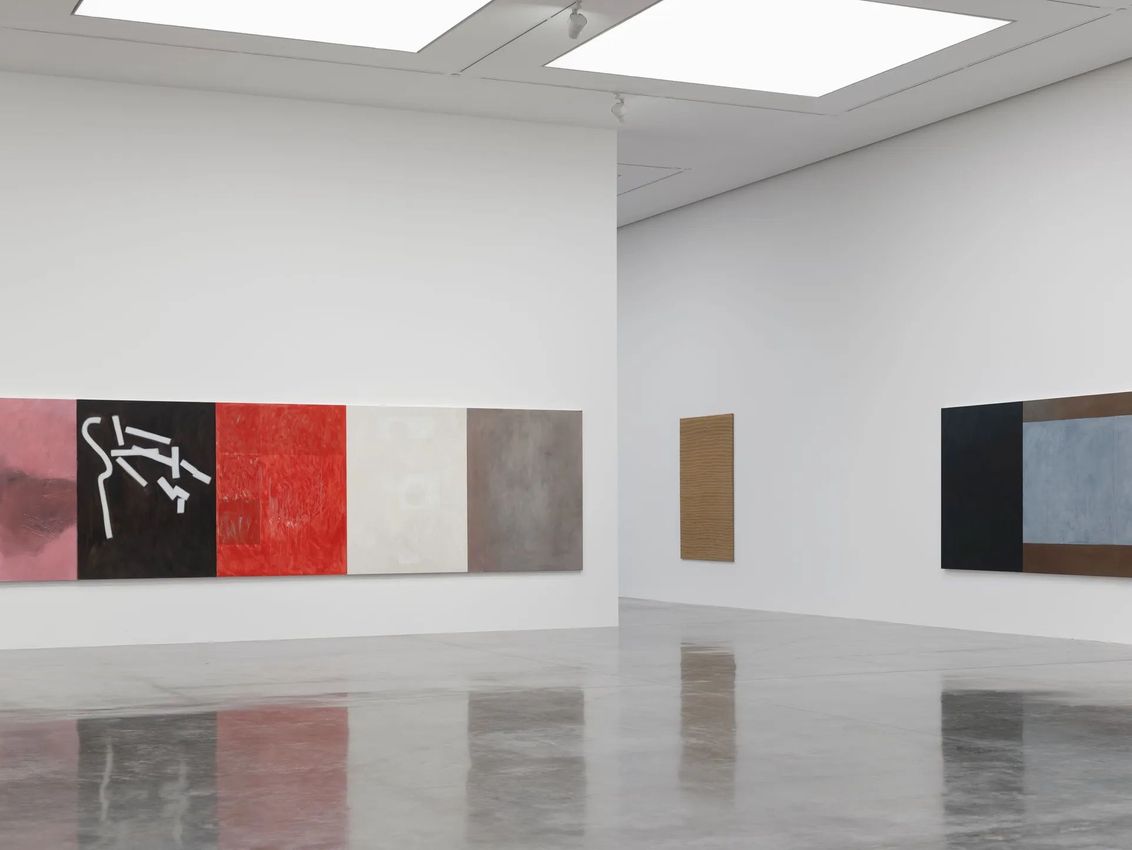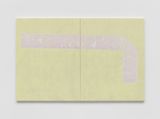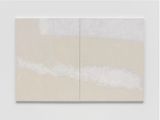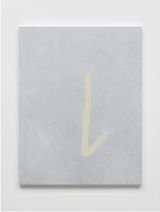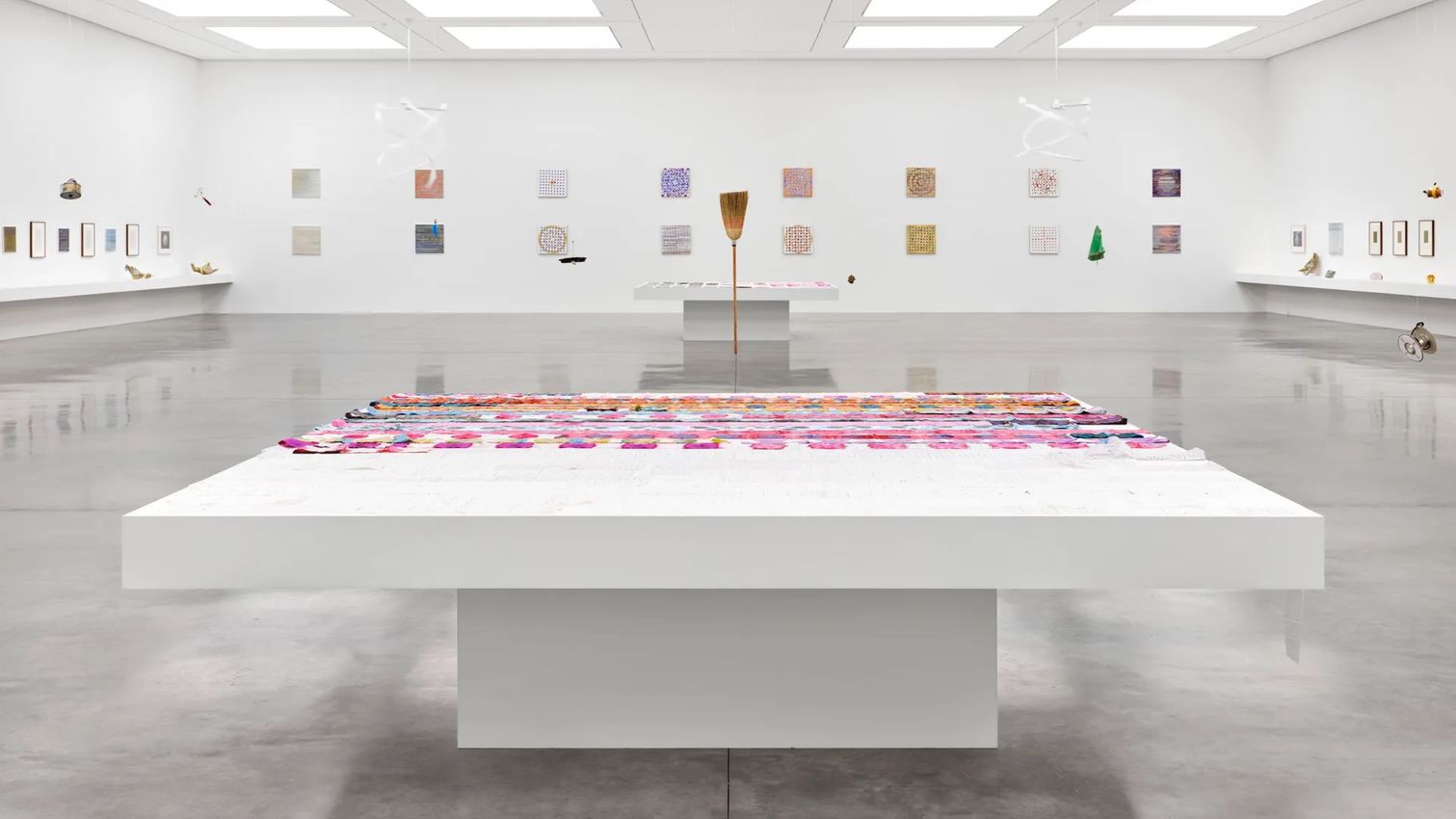
Sergej Jensen returns to White Cube Bermondsey for the first time in eight years with a solo exhibition featuring over 50 paintings. Drawing on a wide range of materials and formal references, Jensen is primarily known for his textile works, which incorporate a variety of fabrics including burlap, linen, silk and wool.
A selection of work from the past two decades displays Jensen’s varied formal treatments of the pictorial, often maintaining a reservation toward painting, revering its absence by ‘painting without paint’. Instead, the ‘painterly’ – in the sense of texture, tonality, gesture and density – has been attributed to Jensen’s use of textiles and surfaces. Bleached, stained or dyed fabrics are spread over stretchers, partly sewn or patched with other fabric samples, developing a highly malleable method of image-making to create a processed abstraction that is both expressive and withholding. Featuring an array of forms, these works also play with key elements of painterly composition, such as surface and frame, spatial illusion and internal geometry. In several paintings, including Untitled (2001), Jensen has used chlorine to bleach the image, so that faint lines appear as spritzed stains, as though released from an atomiser; or in _Untitled _(1999), where small, bleached triangles float upwards in loose, vertical arrangements. Sewn elements using found pieces of worn material, patched and collaged together, make up _Untitled (Flag) _(2004), Somatic intelligence (2010) and _Melle _(2002), the latter featuring a thin line of small black velvet squares in a delicate frame around the perimeter of the painting. Material becomes an interface in Jensen’s works: burlap, linen, velvet, cotton, silk and knitted wool are manipulated by a minimal framework of abstraction, recalling histories of both the readymade and the handmade.
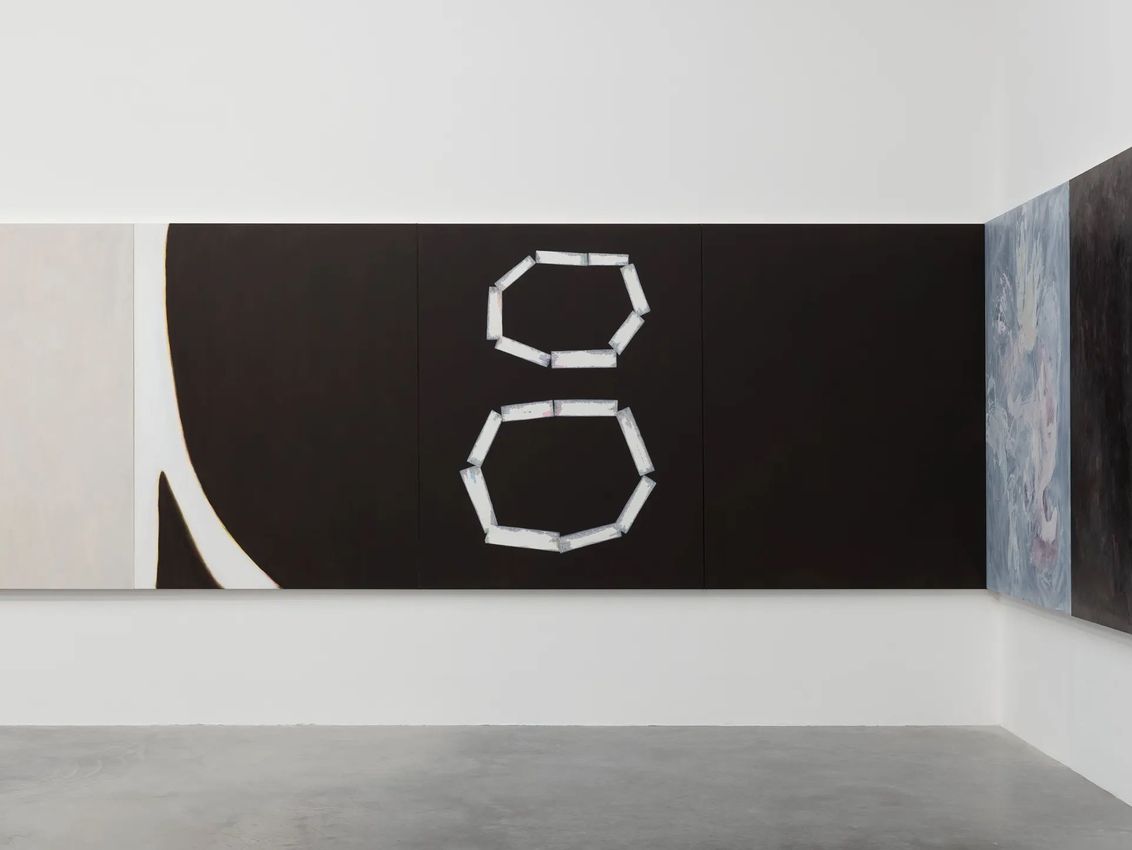
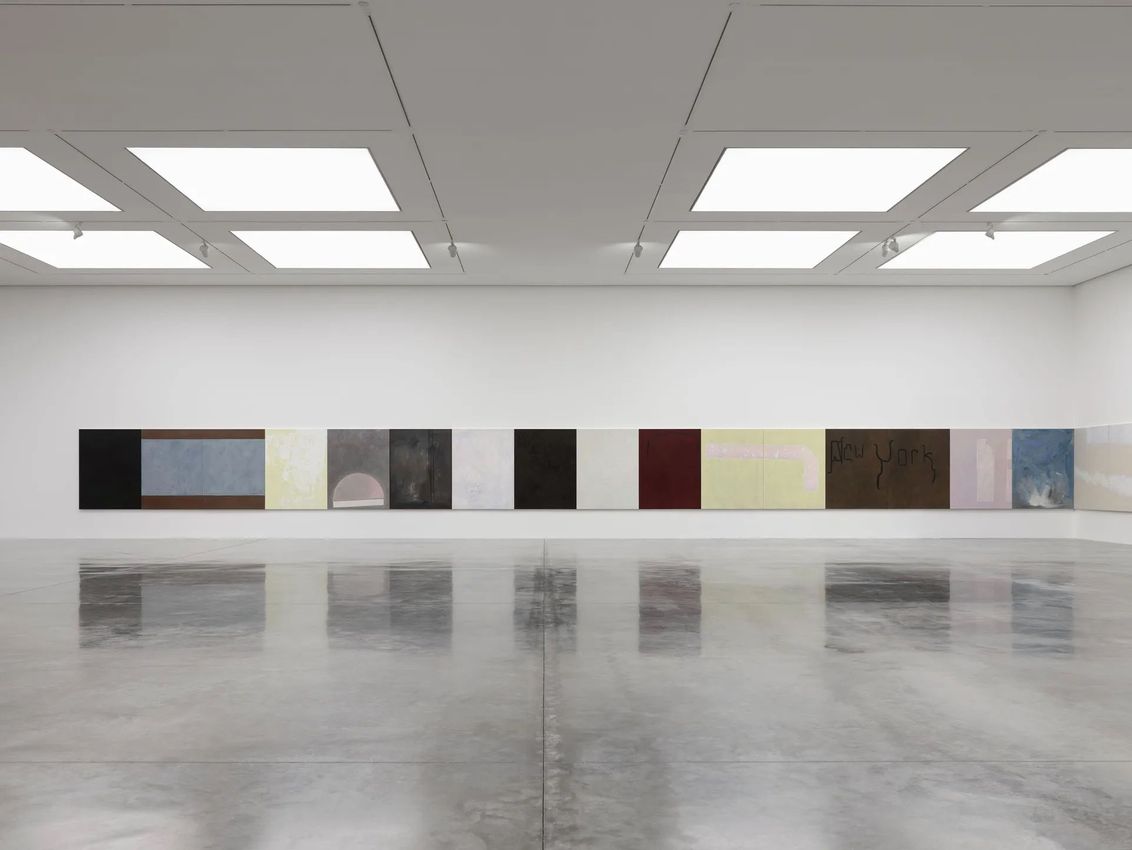
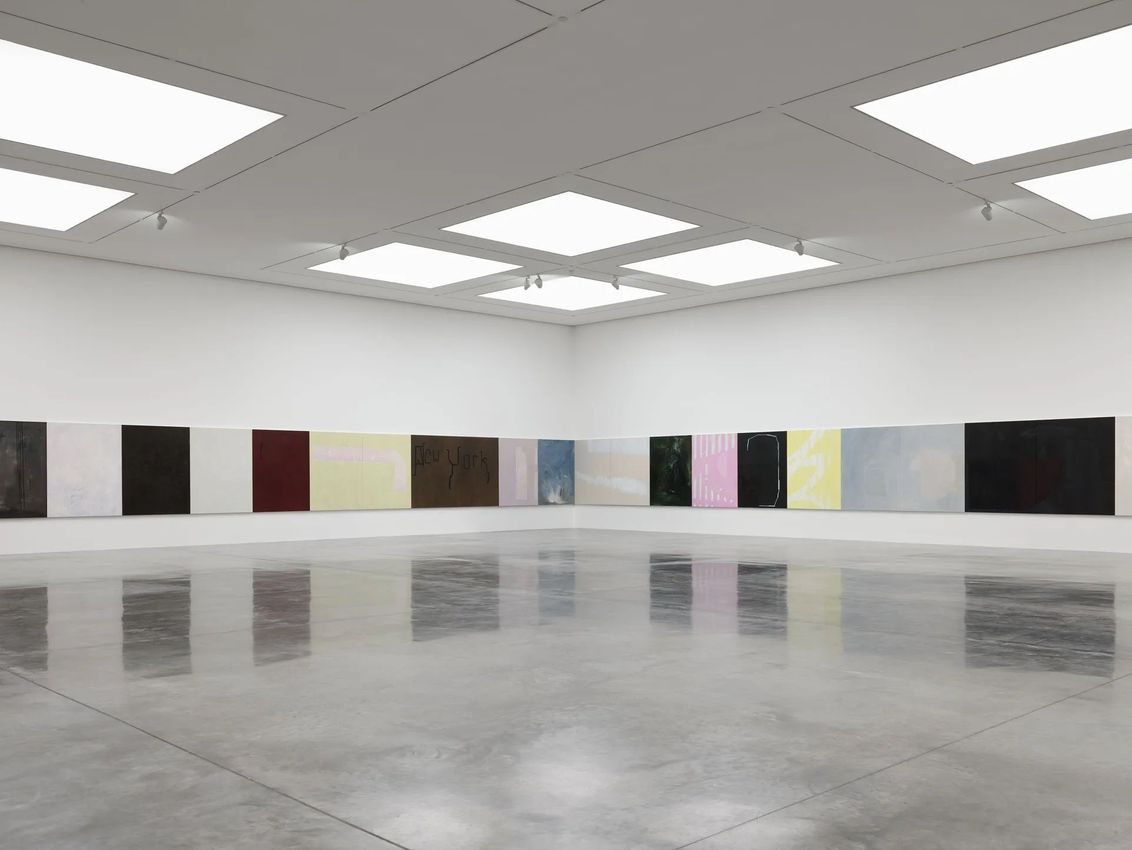
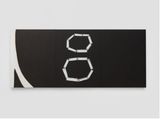
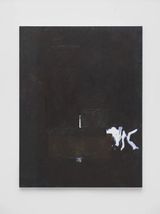
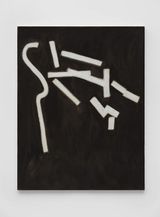
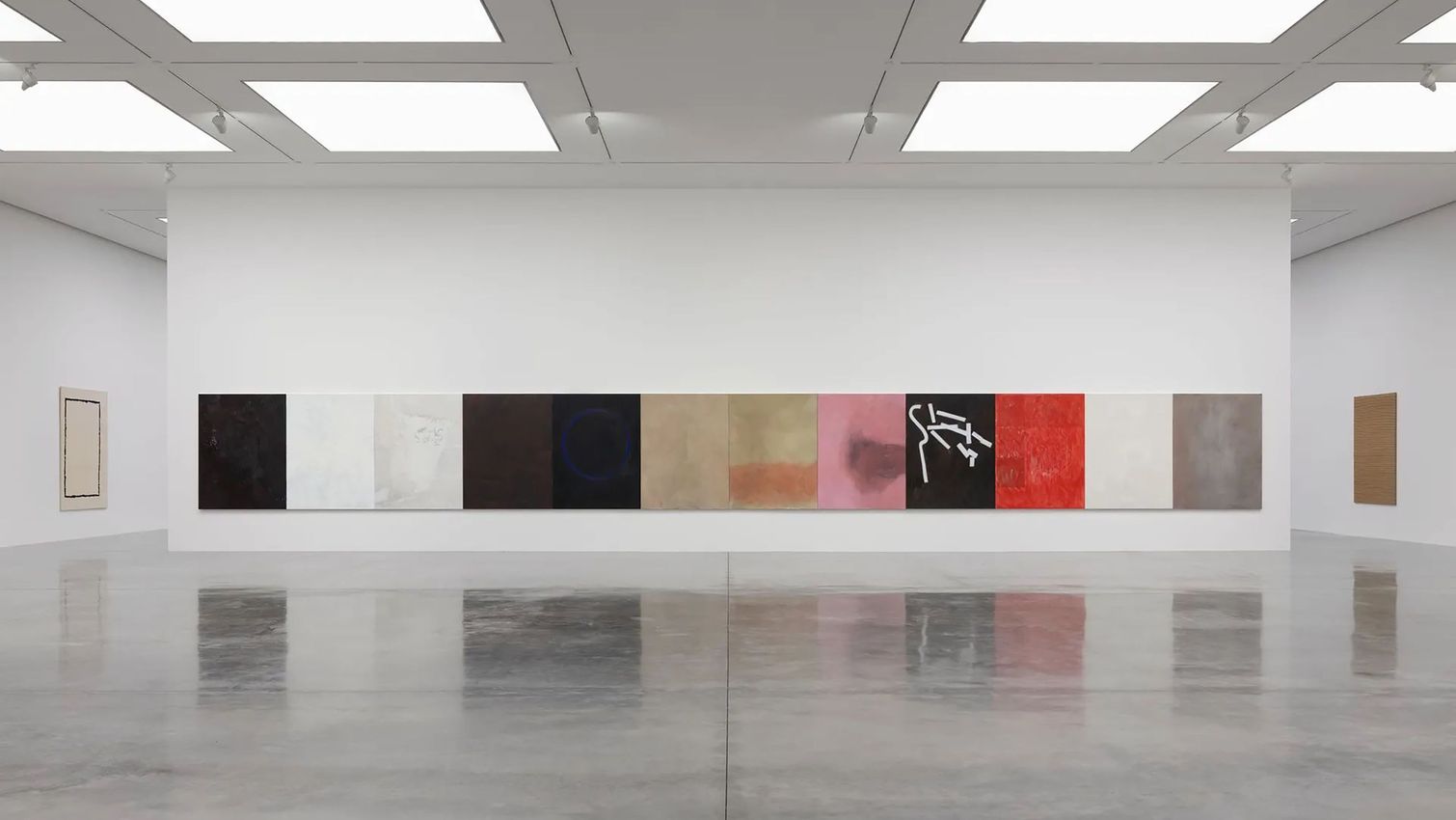
In the new series, ‘Shadow Paintings’ (all 2024), Jensen turns to the medium of oil paint. Installed as one continuous frieze around the walls of the gallery space, the paintings feature shadowy elemental forms. Echoing the sewn geometries of the artist’s textile works, their faded or worn motifs and linear marks appear as repairs or sutures across their impasto surface. Underpainting and material layering are occasionally visible as thin bands of colour at the paintings’ edge, some near monochromes, others featuring metallic reflections and patterns of tonal variation. In several compositions, numerical or linguistic systems emerge: in one painting, a double circle fashioned from small white rectilinear forms creates a figure 8 upon a black ground, while in others incomplete letters denote an indecipherable language. More overtly, one painting uses distorted, blocky letters to spell out the words ‘New York’. Here, the language is roughly sketched across the diptych’s adjacent panels. Andy Warhol’s Shadows (1978–79) – a series conceived as a ‘single’ work in up to 102 parts that Warhol installed edge-to-edge around the perimeter of a room, creating, as Warhol described, a ‘disco décor’ – forms the impetus of this new suite of works. Providing the framework for Jensen’s abstractions, Warhol’s work is treated here as a ‘genre’ within painting.
Like Shadows, Jensen’s new paintings together arrive at a single installation: an ongoing body of work that interprets similarly insubstantial, threshold moments. Jensen’s assessment of the medium of painting extends beyond the work’s edges, alluding to the apparatus of the installation site as well as the art object’s broader circulation and exchange. As Stéphanie Moisdon states: ‘A deadpan desecrator and a silent spectator devoid of any intent to destroy or deconstruct, Jensen observes the ephemeral, intermediate nature of these things that are extracted from a dual, irreconcilable space between art history and a non-heroic, post punk counter-culture.’


Sergej Jensen’s work draws on a wide range of materials and formal references. Primarily known for his textile works, his lyrical compositions incorporate a variety of fabrics, from burlap and linen to silk and wool.


An international art powerhouse, White Cube was established in 1993 in London by art dealer Jay Jopling. In its space on Duke Street, it served as the early exhibition venue for many now internationally acclaimed British artists, including Tracey Emin, Gilbert & George, Rachel Kneebone and Antony Gormley, who still show with the gallery today.
A respected voice in contemporary art discourse.
Focusing on ambitious storytelling and insightful art-world commentary. Ocula Magazine publishes in-depth interviews, critical essays and timely analysis on the artists, exhibitions and ideas driving the global art world.
Learn more about Ocula Magazine
Showcasing the best of the art world.
Ocula partners with galleries from around the world to highlight their artists, artworks and exhibitions. Gallery membership is by application and invitation, with each member vetted by an independent panel.
Learn more about Ocula Membership

Specialises in the sale of major artworks.
Led by a team with deep ties to the world’s leading auction houses, galleries and collectors. Ocula’s advisory team offers bespoke services to high-net-worth clients from around the world who are looking to acquire the best of contemporary and modern art.
Learn more about our team and services