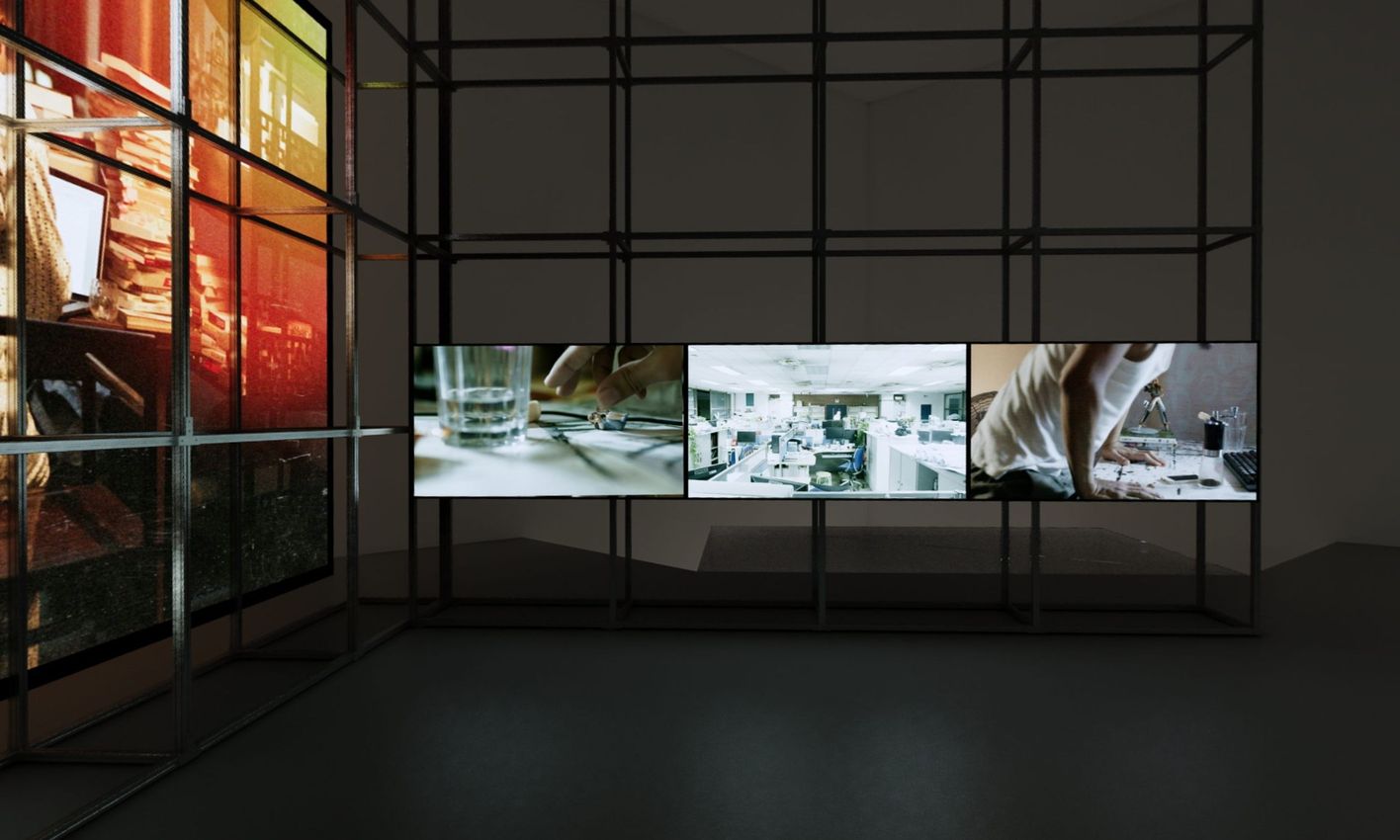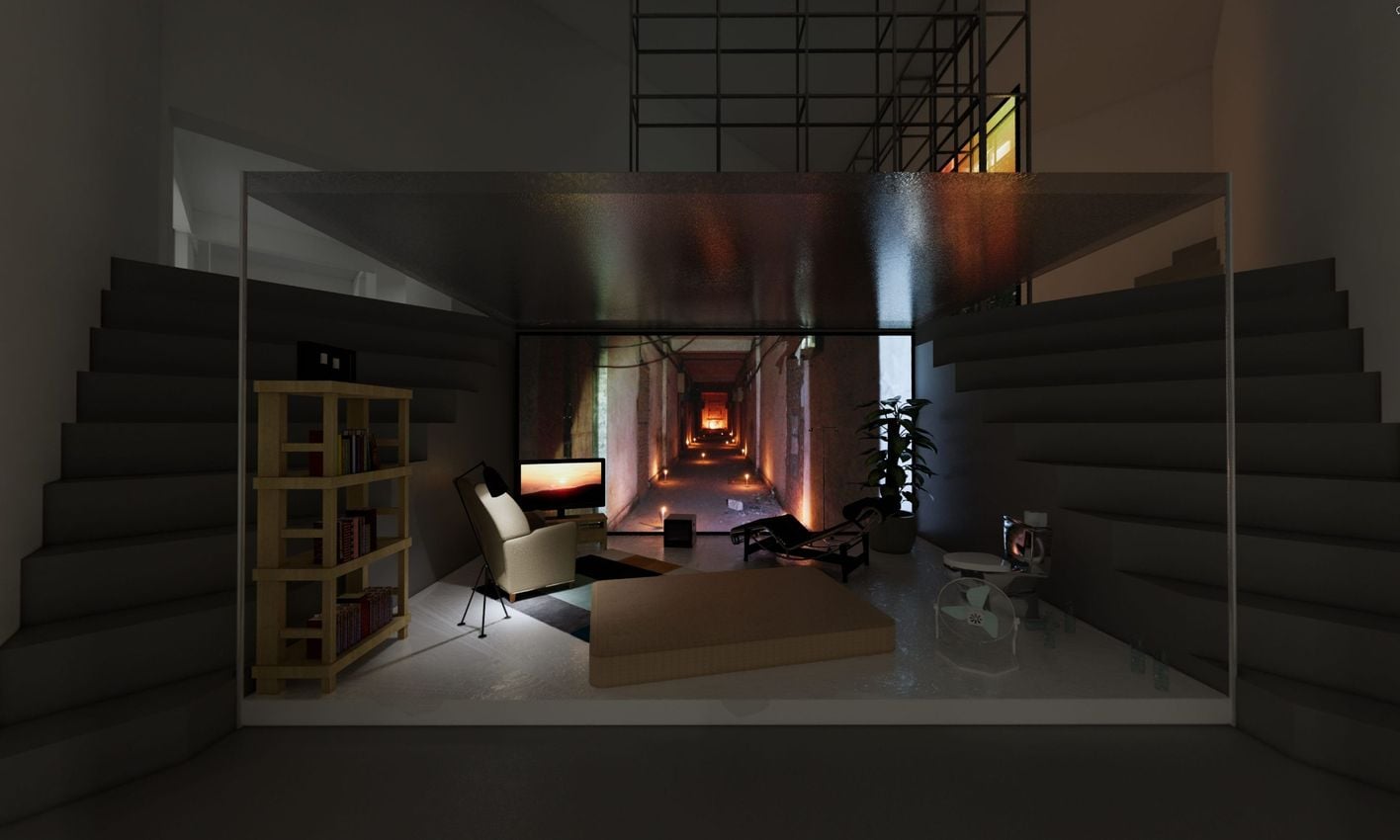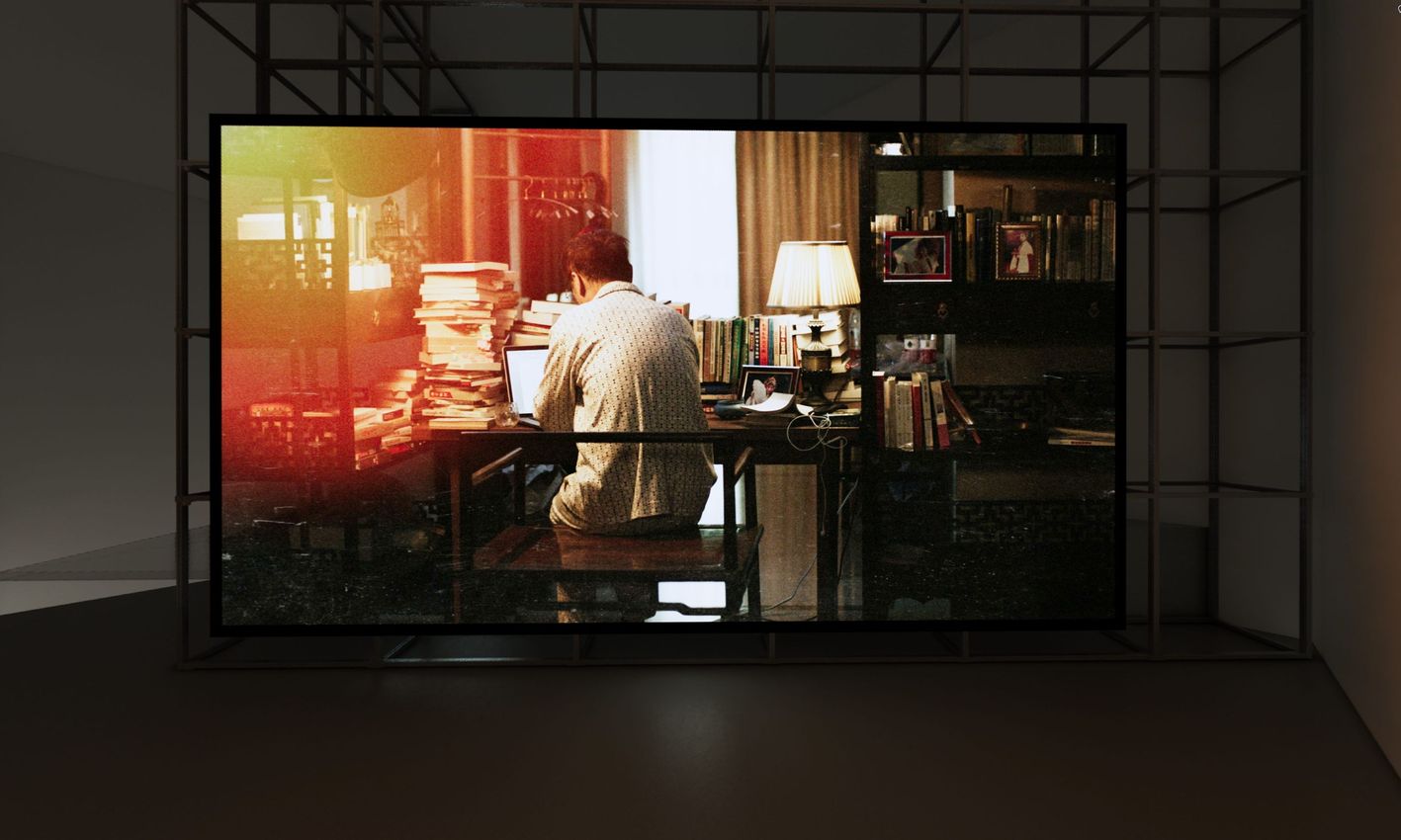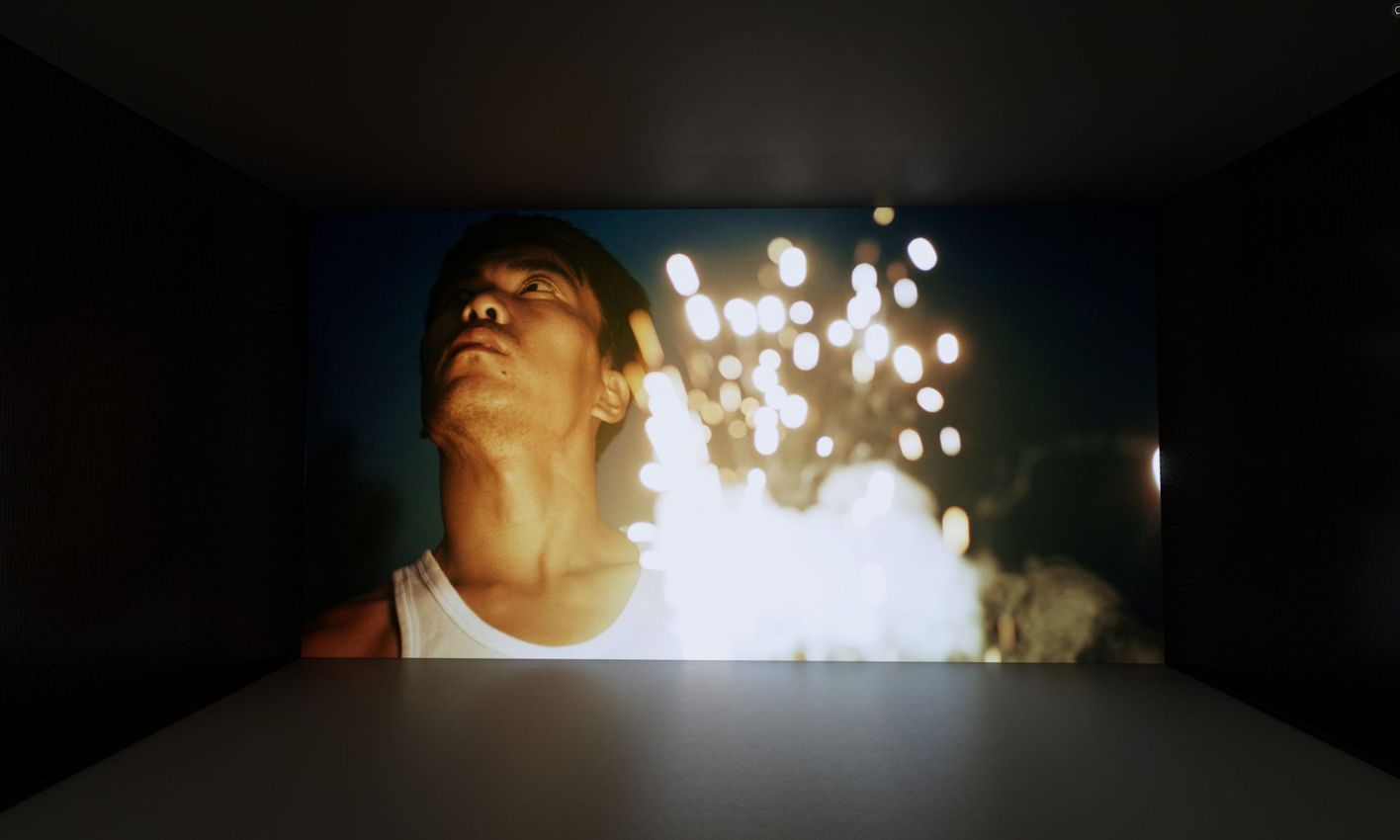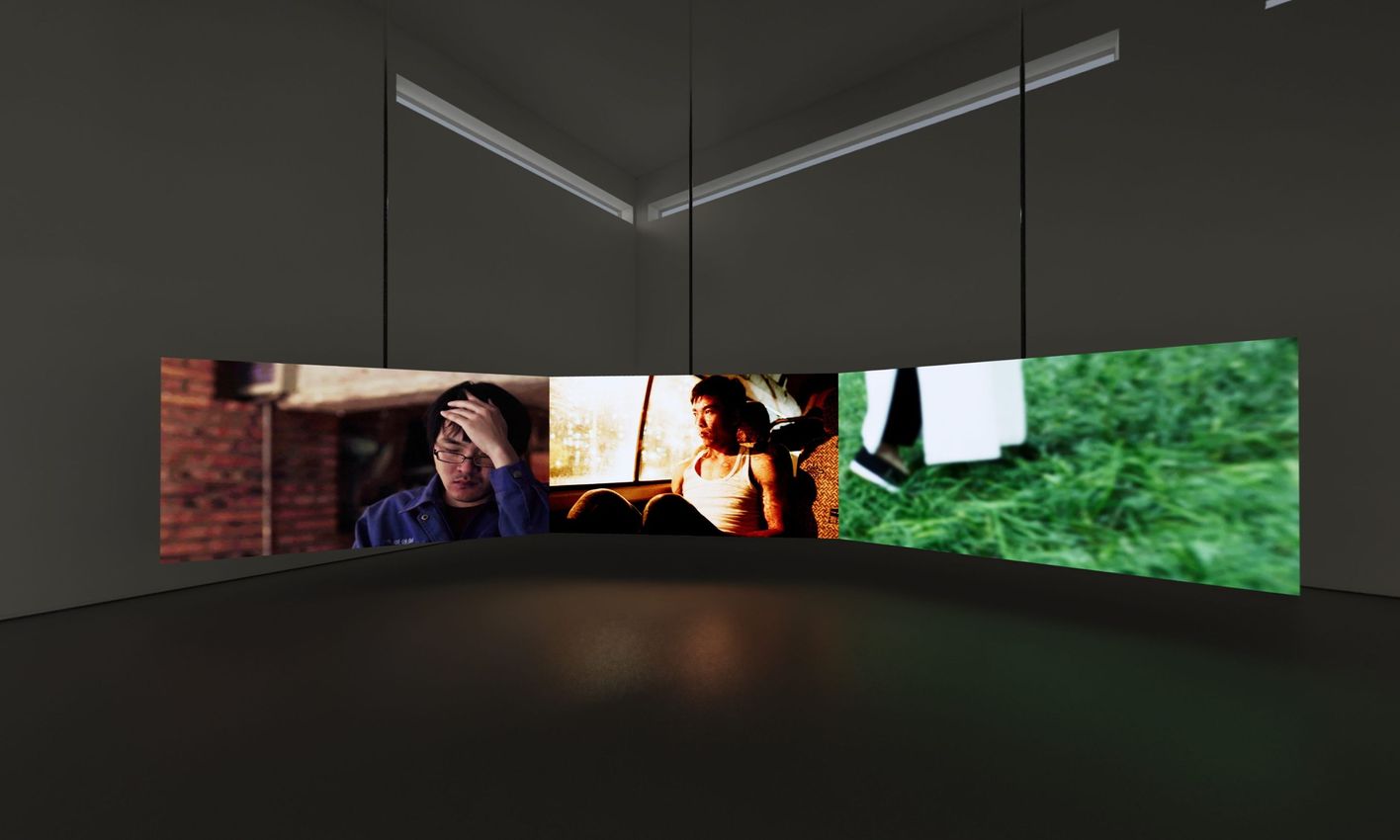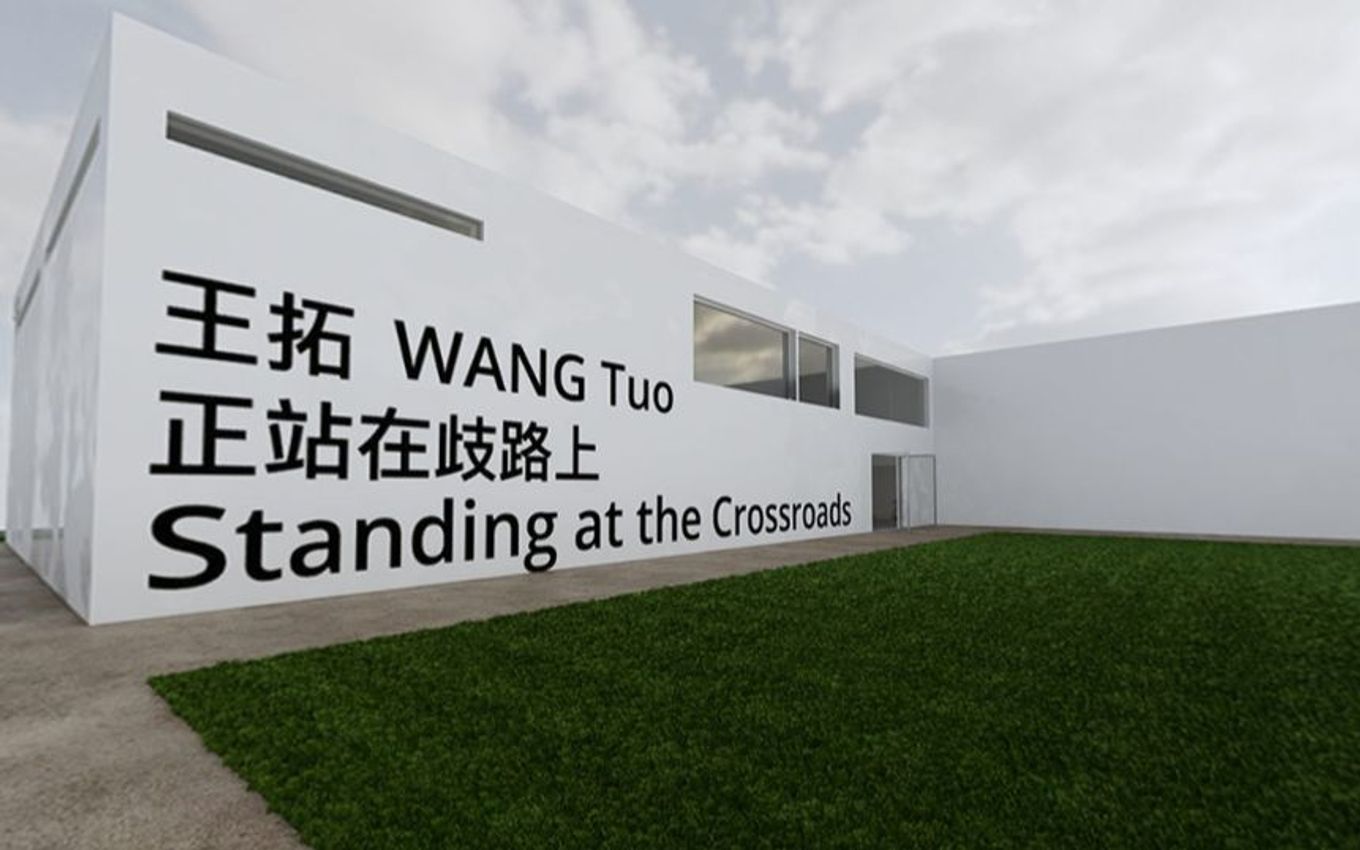
White Space Beijing is delighted to announce Wang Tuo’s second solo exhibition, “Standing at the Crossroad,” will be launched online on April 30, 2020, comprises of five works of single-channel videos, multi-channel videos and video installations Wang Tuo has completed over the last two years. Amid this turbulent time when the world is in turmoil, how should an individual handle oneself, make choices, and move forward against the grain? The title of this exhibition draws from Lu Xun’s Beijing Communications published on the Supplement of Henan Journal in 1925. The writer offered various advice to the youths at the time on “survival,” “livelihood,” and “development,” as well as on choosing between abiding to “ancient adage” and the pursuit of “freedom.” For the people living in the present, the condition of the world has become more fragmented and complicated. The differences in people’s actions have only become more disparate. Hence, could returning and re-estimating this crossroad, again and again, become the imminent decision for the present? Appropriating this title for the exhibition could be considered a response from the artist today to the then writer a century later. Taking architecture (Spiral, Obsessions), trauma (Symptomatic Silence of Complicit Forgetting), and China’s Northeast (Smoke and Fire, Distorting Words) as apparent clues, Wang Tuo’s recent practice interrogates the rudimentary causes for a series of violent events involving specific individuals. These works explore the mutual construction between individual personas and collective ideologies and the ways in which they transgress specific temporal, spatial, cultural, and other dimensional boundaries, to overlap, follow suit, rip apart and transform. Staged in different contexts, these tragedies present the seemingly reincarnated and uncanny properties through the artist’s juxtaposition and regrouping, to point at the often overlooked, details embedded deeply in these contradictory sites. If “God exists in the details,” then for Wang Tuo, these details are implicit in the process of turning a verb into a noun: act/action, perform/performance, move/movement. The action builds behaviors that induce a state of affairs; the state of affairs develops into action, involving structures engrained with meaning. Without a temporal frame, these structures underscore the past, imply the present, and predict the future. By rehearsing and reversing this process repetitively, a contemporary apocalypse consists of the body, documentations, concepts, narration, and aesthetics, is revealed. Fiction mottles reality; desire overlaps memories. These five works of moving images, which come from diverse sources and head in divergent directions, invite people from all walks of life to conjure in the virtual exhibition halls.
Born and raised in Changchun, China, Wang Tuo currently lives and works in Beijing. Wang Tuo employs various mediums and a process that combined interview, reality show and the theatre of absurd to construct a maze of melodrama. Through his performative manipulation on individuals’ lived experiences and intervention in intellectual legacies such as literature, film, theatre and art history, Wang’s practice attempts to examine the unreliable relationship between the contemporary human status, myth and cultural archive. In the self-referential environments that he constructs, dramatic, often humorous as well as absurd aspects of the concept of society are exposed. Wang’s practice also seeks to develop a discourse on how present ideology is derived from its historical context continues to adapt to changing condition.

Founded in 2004 in the 798 Art District of Beijing, the contemporary art gallery White Space has successfully launched the careers of numerous emerging artists over the past ten years, bringing their work to leading biennials, museums and art institutions nationally and internationally. The gallery was relocated to the current 1,500-square-meter space in Caochangdi in 2009 to embark on a new series of art programs, becoming the first contemporary art gallery in China to focus on working with young artists. The gallery has worked alongside each artist to deepen individual artistic practices through its curatorial and research-oriented approach, cooperating extensively with art institutions, curators and critics, and becoming one of the foremost pioneering spaces for art in China and Asia.

A respected voice in contemporary art discourse.
Focusing on ambitious storytelling and insightful art-world commentary. Ocula Magazine publishes in-depth interviews, critical essays and timely analysis on the artists, exhibitions and ideas driving the global art world.
Learn more about Ocula Magazine
Showcasing the best of the art world.
Ocula partners with galleries from around the world to highlight their artists, artworks and exhibitions. Gallery membership is by application and invitation, with each member vetted by an independent panel.
Learn more about Ocula Membership

Specialises in the sale of major artworks.
Led by a team with deep ties to the world’s leading auction houses, galleries and collectors. Ocula’s advisory team offers bespoke services to high-net-worth clients from around the world who are looking to acquire the best of contemporary and modern art.
Learn more about our team and services