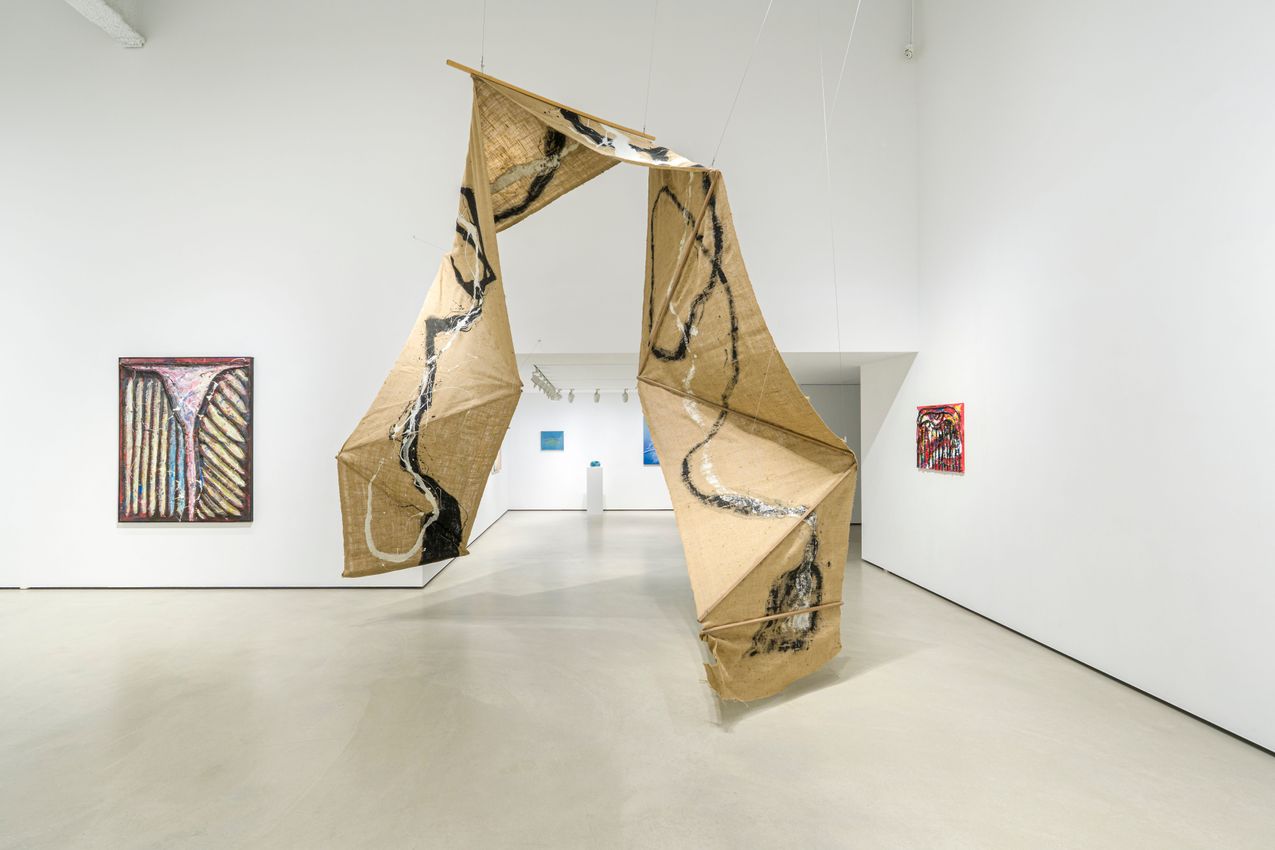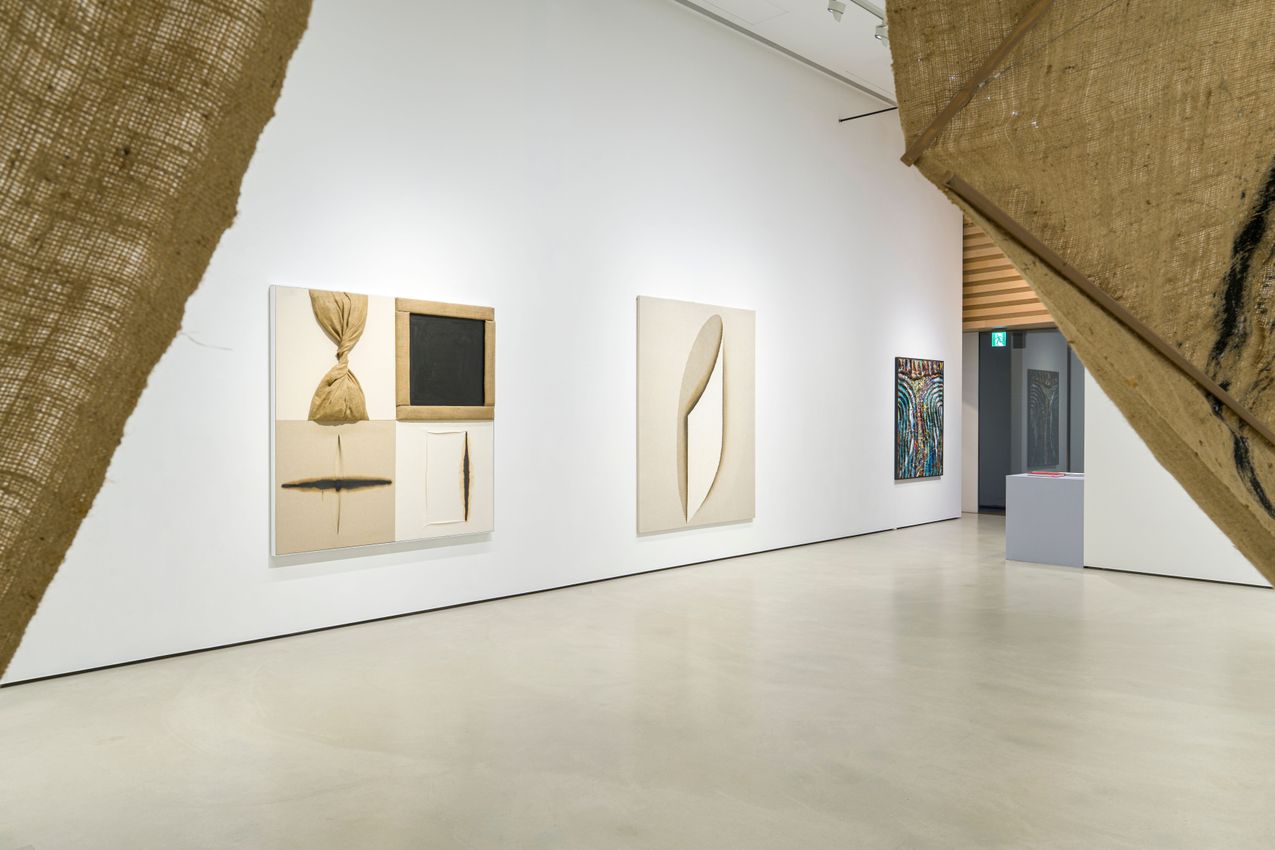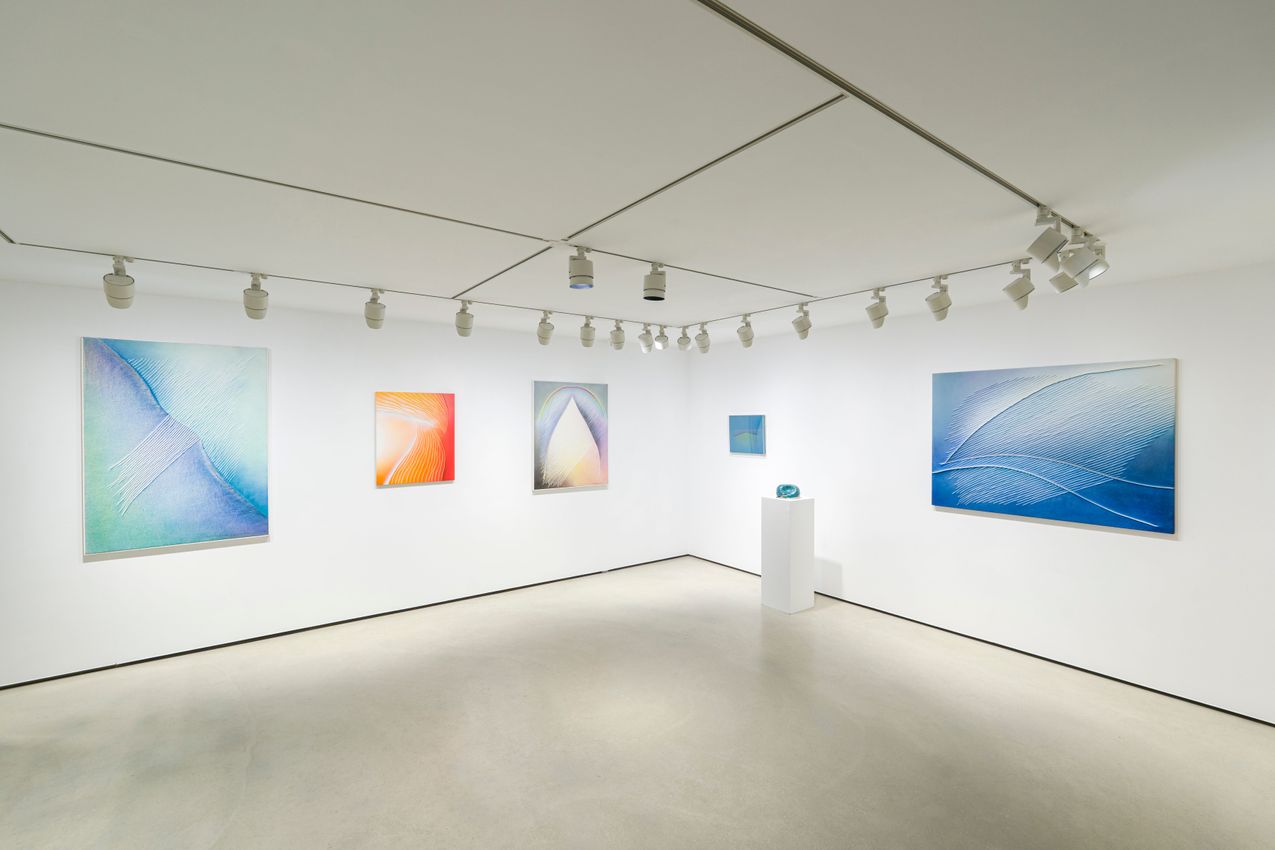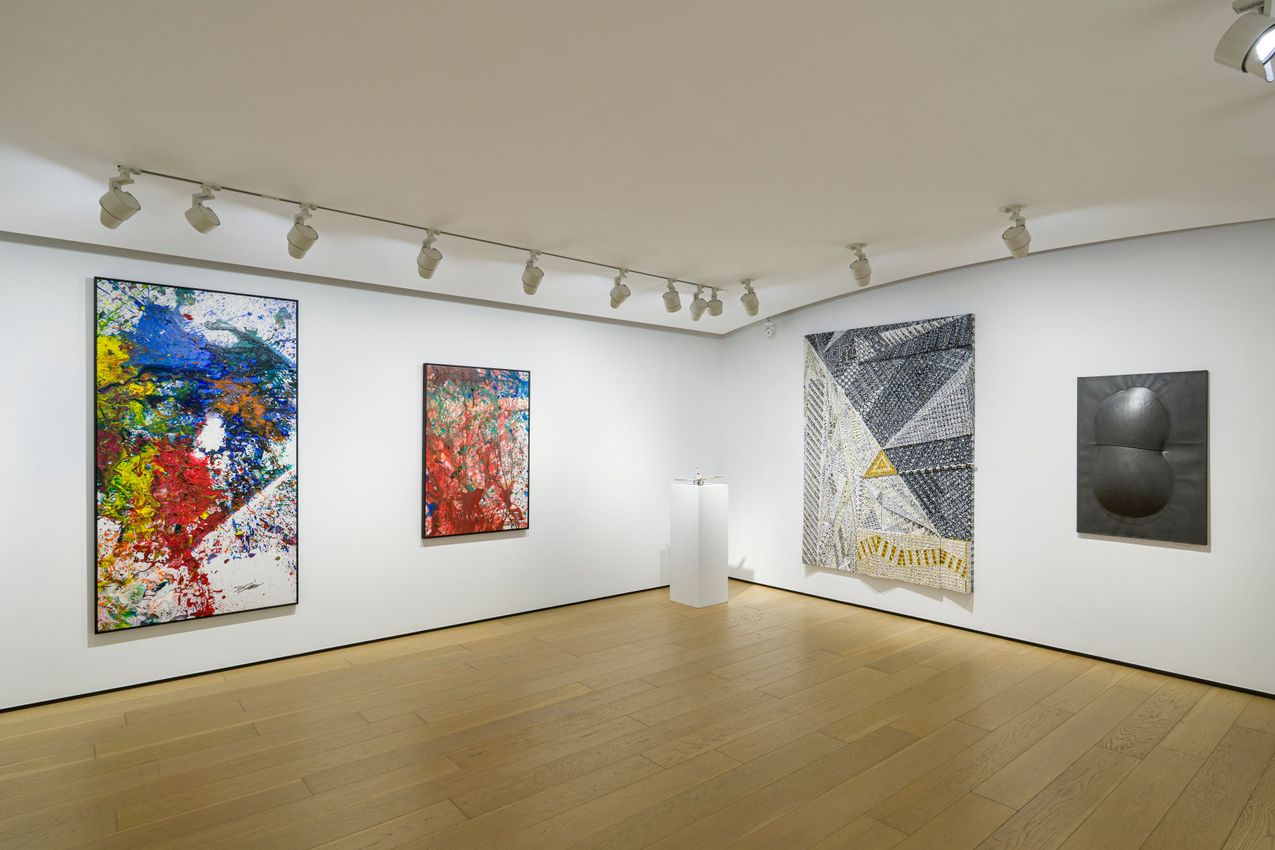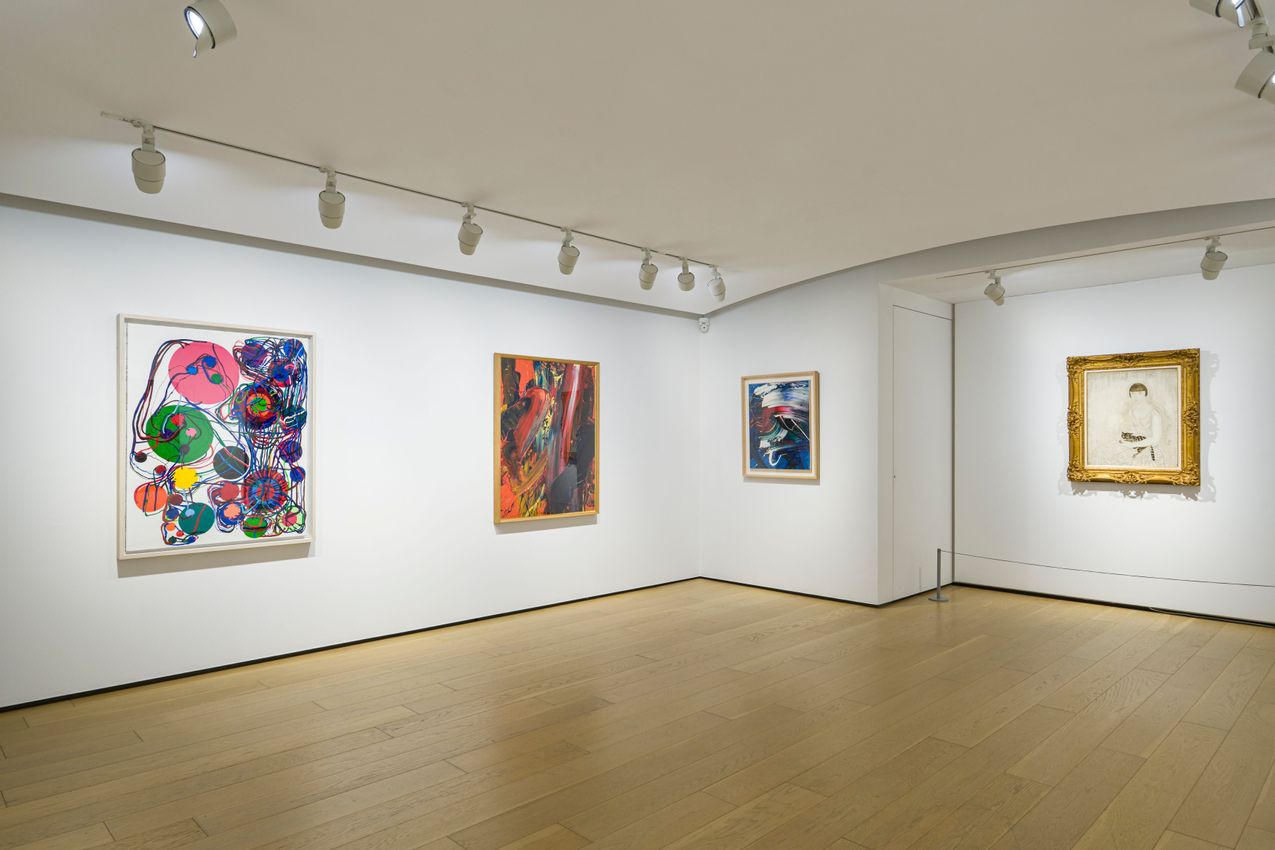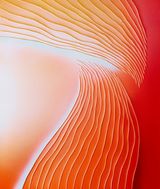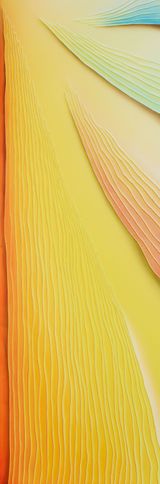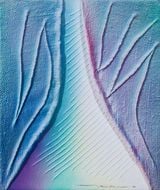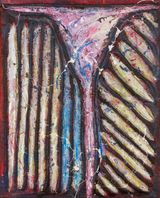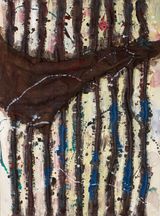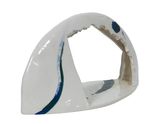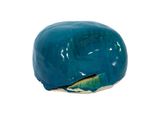
Whitestone Gallery Taipei is honored to present Tsuyoshi MAEKAWA: 1960–Present, showcasing the artist’s early works from the 1960s, when he joined the Gutai Art Association (also known as “Gutai”), his mid-career developments following the group’s dissolution in 1972, and the mature works of his later period. Tsuyoshi Maekawa is renowned for his use of burlap as a primary medium, which he has explored to its fullest potential. His works range from the grand and monumental compositions on coarse burlap to the elegant and delicate stitching on cotton and linen fabrics, demonstrating his relentless exploration of materials and his masterful control of form and energy, continuously opening new chapters in his artistic practice.
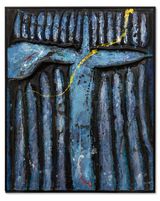
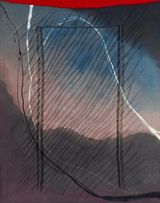
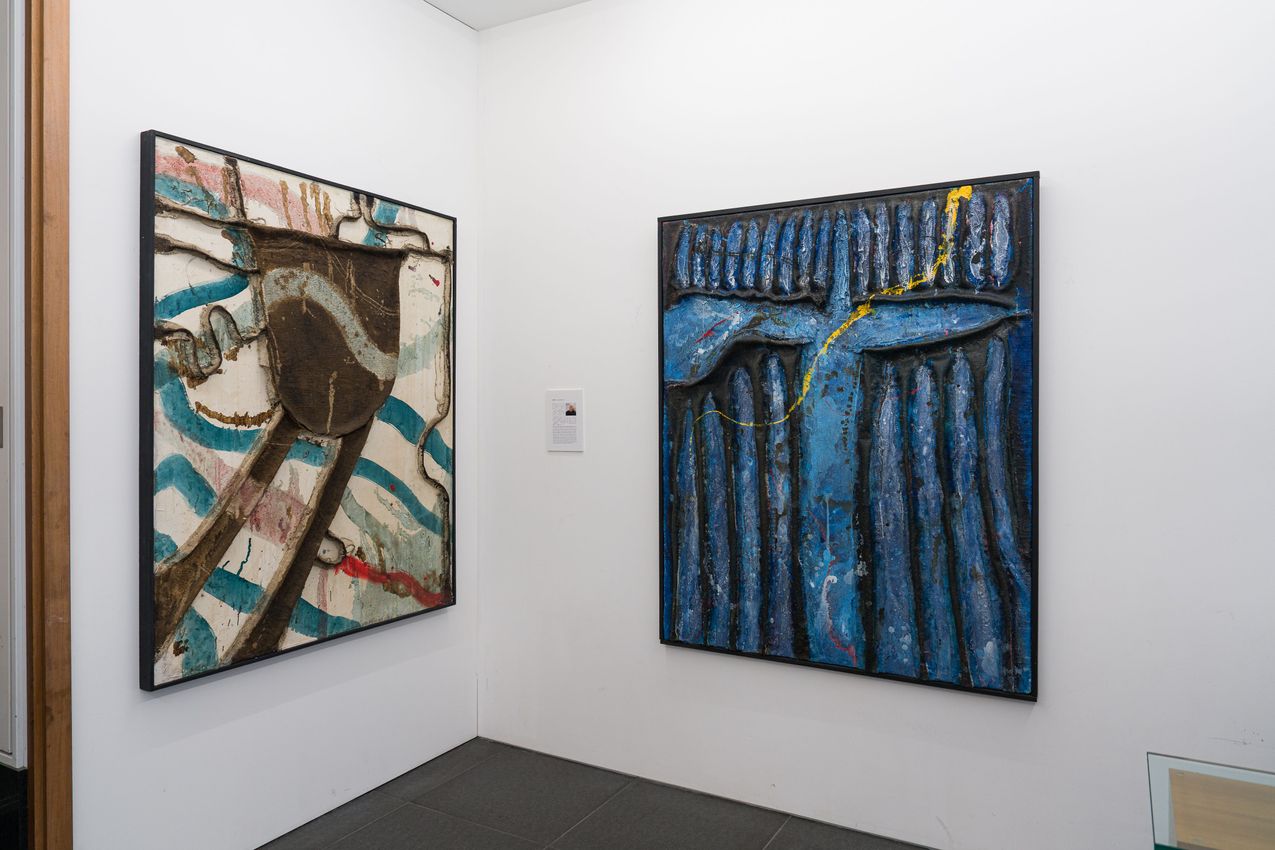
Maekawa first participated in the 8th Gutai Art Exhibition in 1959 and officially became a member of the Gutai Art Association in 1962. That same year, he took part in the 11th Gutai Art Exhibition and subsequently held his debut solo exhibition at the Gutai Pinacotheca in 1963. During this period, Maekawa developed his distinctive artistic vocabulary by manipulating burlap through tearing, sewing, and creating folds to construct surfaces charged with texture and kinetic tension. His compositions often feature fields of color and linear elements set against dark, earthen, or neutral grounds, establishing a rhythmic visual structure. His treatment of pigment and fabric reflects Gutai’s core aesthetic of embracing the material’s inherent qualities. Work (Nanameni) A-20 (1963) and Work 130931 (1963) stand as representative works from this formative phase.
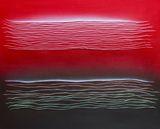
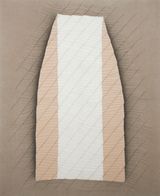
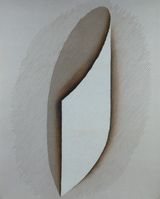
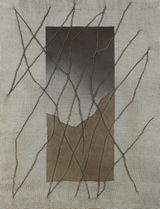
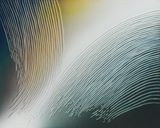
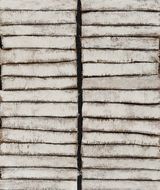
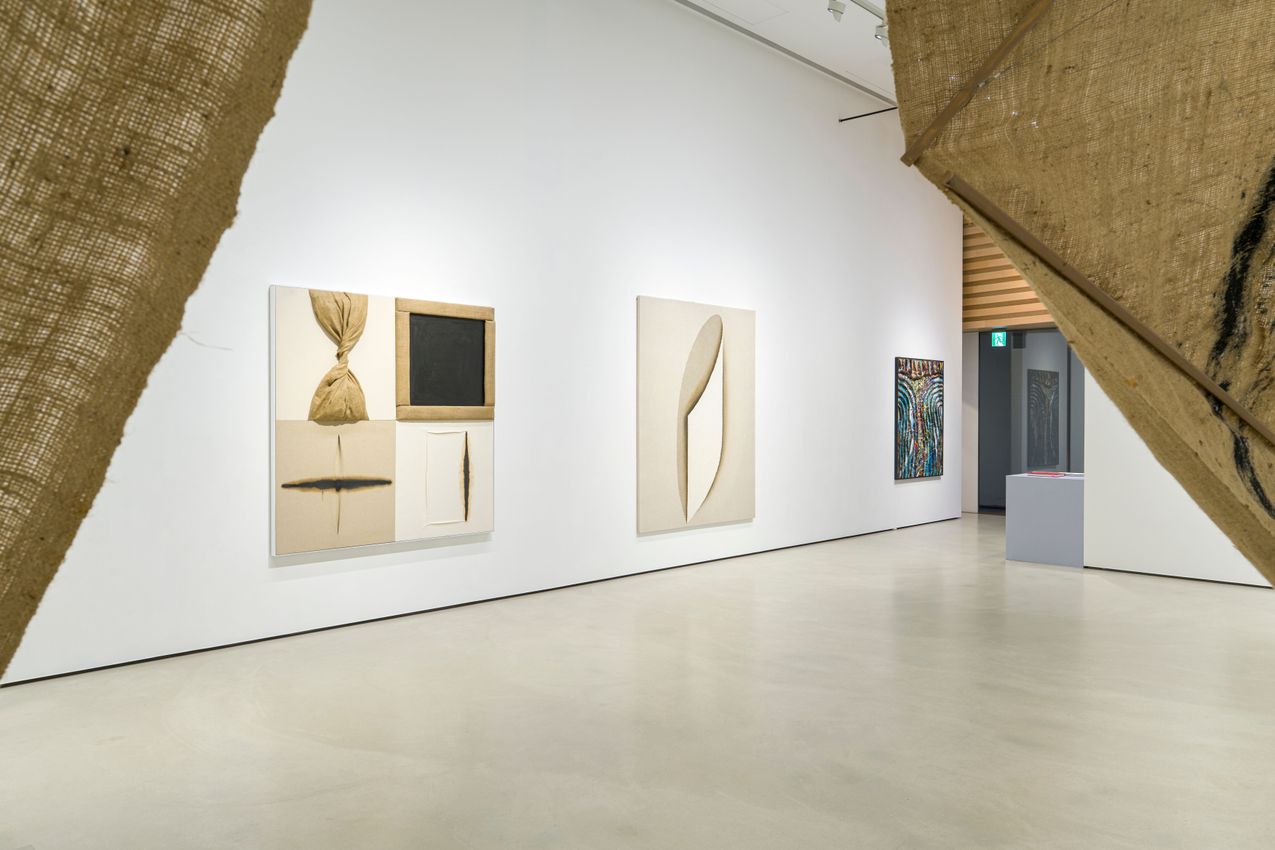
After the Gutai Art Association disbanded in 1972, Maekawa began to work with a thinner type of hemp cloth. His palette became increasingly subdued, and in many cases, he eliminated pigment altogether to foreground the natural chromatic qualities of the material itself. The compositions grew simpler and more geometric, while delicate folds and layers emerged subtly across the surface. Works from this period received recognition at major exhibitions, including the Contemporary Art Exhibition of Japan and the Japan–France Contemporary Art Exhibition. The piece Untitled 170904 (1991), featured in this exhibition, is a prime example of this refined approach. In addition, Maekawa employed cotton cloth to construct finely articulated layers, as seen in Untitled 160404 (1977), Untitled 150472 (1986), and Untitled 2002002 (2009). These works offer a poetic and restrained visual experience, evoking the sensation of viewing landscapes from above—the mountains, oceans, and terrain subtly emerging within the textures and compositions created by Maekawa.
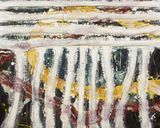
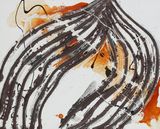
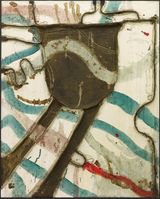
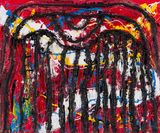
In recent years, Maekawa has returned to burlap, amplifying the folds and protruding textures found in his early works. These richly layered compositions demonstrate his persistent determination to break conventions and continually reinvent his visual language, allowing his practice to reach a new level of maturity within a contemporary context. In Untitled 150304 (2014), fluid, river-like lines flow across the surface, while bold applications of blue, red, and yellow—evoking the energetic force of Jackson Pollock’s pours—anchor the composition at its center. On both sides, undulating blue-green textures lend the work a sense of depth and gravitas. Maekawa’s use of color here conveys a decisiveness and expansiveness, further reinforcing the commanding presence of the work.
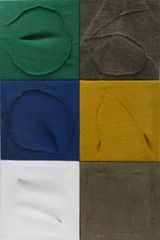
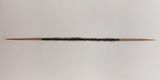
In Untitled (2020), six small works form a minimal composition, highlighting the purity of lines and textures. This work distills Maekawa’s decades of experimental practice into a refined and meditative visual language, demonstrating his mature technique. For this exhibition, the artist has also created three new works this year: Work 2509002, Work 2509003, and Work 2509006. These pieces clearly reflect Maekawa’s continuous creative energy, with his artistic spirit remaining vibrant to this day. Looking back over his more than six decades of artistic practice—from his early Gutai period in the 1960s to the present—Maekawa has consistently pursued a rigorous exploration of his unique visual language, demonstrating an enduring and ever-deepening vitality in his art.
Tsuyoshi Maekawa was born in 1936 in Osaka, Japan, and graduated from the Design Course at Osaka Kogei High School in 1955. He officially became a member of the second generation of the Gutai Art Association in 1962. Over a career spanning more than six decades, Maekawa has exhibited extensively in Japan and abroad. His recent exhibitions include the solo exhibition Cotton Cloth at AAEF Art Center, Shanghai, China (2025); the group exhibition Worlds in Balance: Art in Japan from the Postwar to the Present at the Okura Museum of Art, Tokyo, Japan (2023); and the solo exhibition Tsuyoshi Maekawa: The Pioneer of Postwar Japanese Art at Whitestone Gallery, Taipei, Taiwan (2021). Maekawa has received numerous awards, including the Osaka Citizen Cultural Award (Cultural Merit) and the Tokyo Metropolitan Art Museum Award at the Contemporary Art Exhibition of Japan.
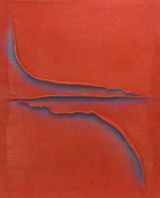
Maekawa uses burlap as a main material on his creation throughout his career: burlap becomes almost a synonym of the artist to the extent that it comes first in our mind whenever referring to Tsuyoshi Maekawa. Before Maekawa’s appearance, there are a few artists who also use burlaps, such as Joan Miró and Alberto Burri in the history of art, but Maekawa is the first one who shows his lifelong persistence in its materiality. Not only attaching and sewing burlaps with three-dimensional expression on canvas, Maekawa always gives a coloring with oil on the surface; it is a testimony of the artist’s stir persistence to the tableaux regardless of his pursuit for undulating effect. Alongside with Shuji Mukai and Takesada Matsutani, Maekawa is the representative figure from Gutai’s second generation. After dissolution of Gutai, Maekawa never stops to be full of creative activities including many exhibitions in overseas.


Established in 1967, Whitestone Gallery is a leading Japanese gallery presenting a broad spectrum of Japanese art from the post-war to contemporary in spaces across East Asia.

A respected voice in contemporary art discourse.
Focusing on ambitious storytelling and insightful art-world commentary. Ocula Magazine publishes in-depth interviews, critical essays and timely analysis on the artists, exhibitions and ideas driving the global art world.
Learn more about Ocula Magazine
Showcasing the best of the art world.
Ocula partners with galleries from around the world to highlight their artists, artworks and exhibitions. Gallery membership is by application and invitation, with each member vetted by an independent panel.
Learn more about Ocula Membership

Specialises in the sale of major artworks.
Led by a team with deep ties to the world’s leading auction houses, galleries and collectors. Ocula’s advisory team offers bespoke services to high-net-worth clients from around the world who are looking to acquire the best of contemporary and modern art.
Learn more about our team and services