Wilding Cran Gallery is pleased to present Blobs and Bod, an exhibition of recent sculptural works by renowned photographer and multimedia artist Polly Borland.
Known for her psychologically charged portraiture and documentary photography, Borland’s latest series marks a shift into sculptural form: one that continues her exploration of the human body as a site of discomfort, vulnerability, and transformation. The exhibition Blobs and Bod, pushes this inquiry further, presenting figures that are by turns playful, grotesque, and tender.
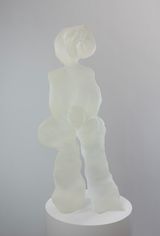
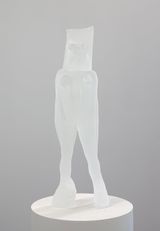
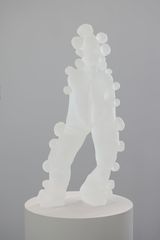
Through uncanny figurative distortion, Blobs and Bod investigates the relationship between identity and the body, pulling it apart to reveal a current of fluidity. Working with live models, Borland uses materials such as foam, nylon, and rubber bands—compressing and distorting the human form into unfamiliar configurations. These intuitive constructions are immediately 3D scanned and cast in situ, preserved within the moment of their creation. The resulting sculptures conjure a quite literal sense of cocooning, shielding the body as it rests in a raw, unmediated state.
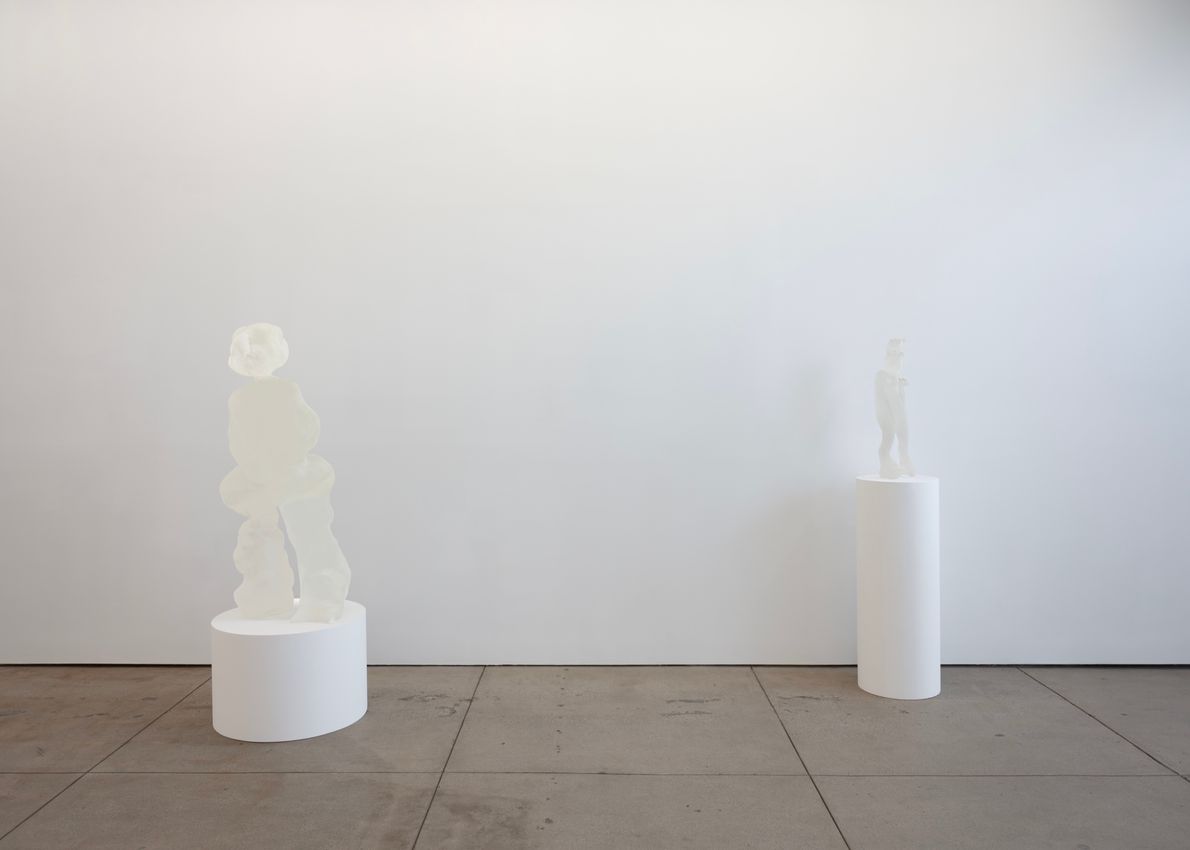
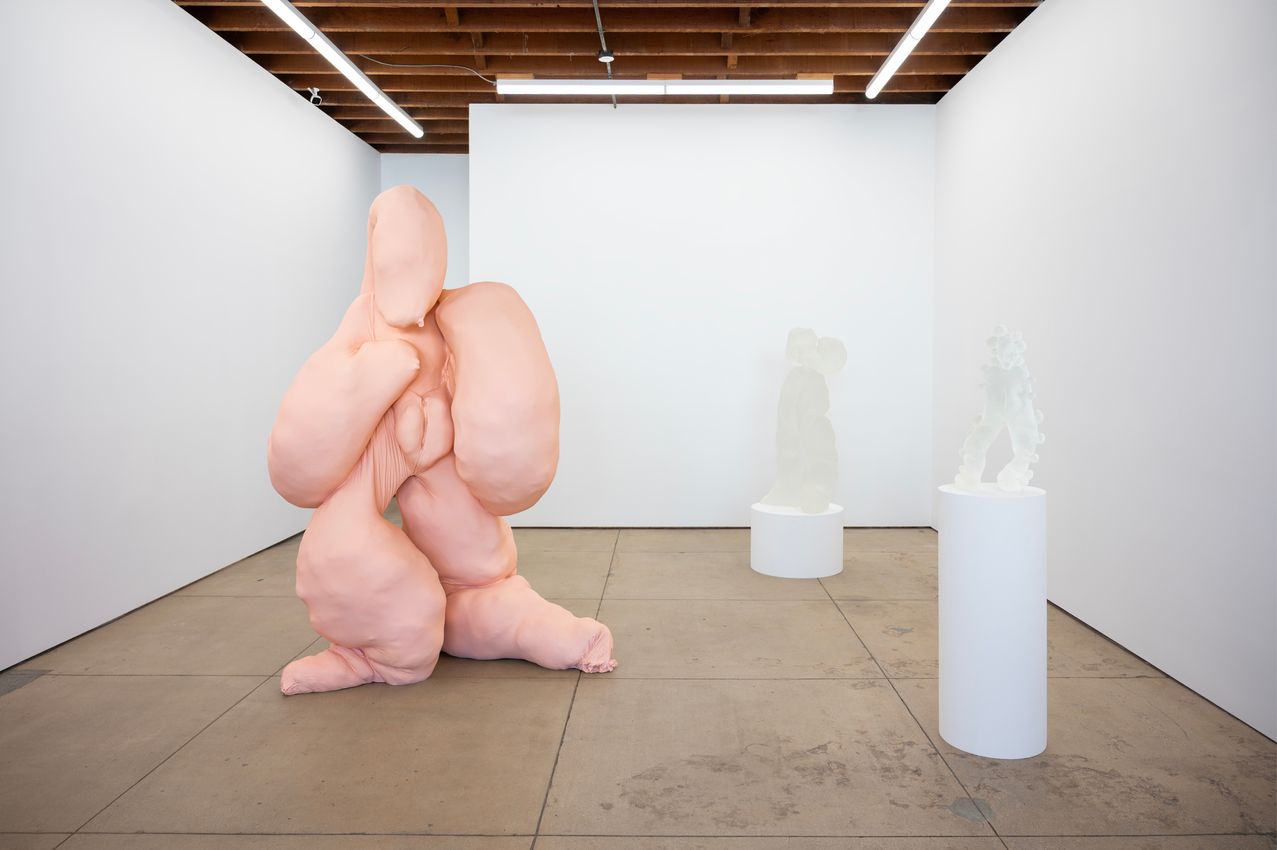
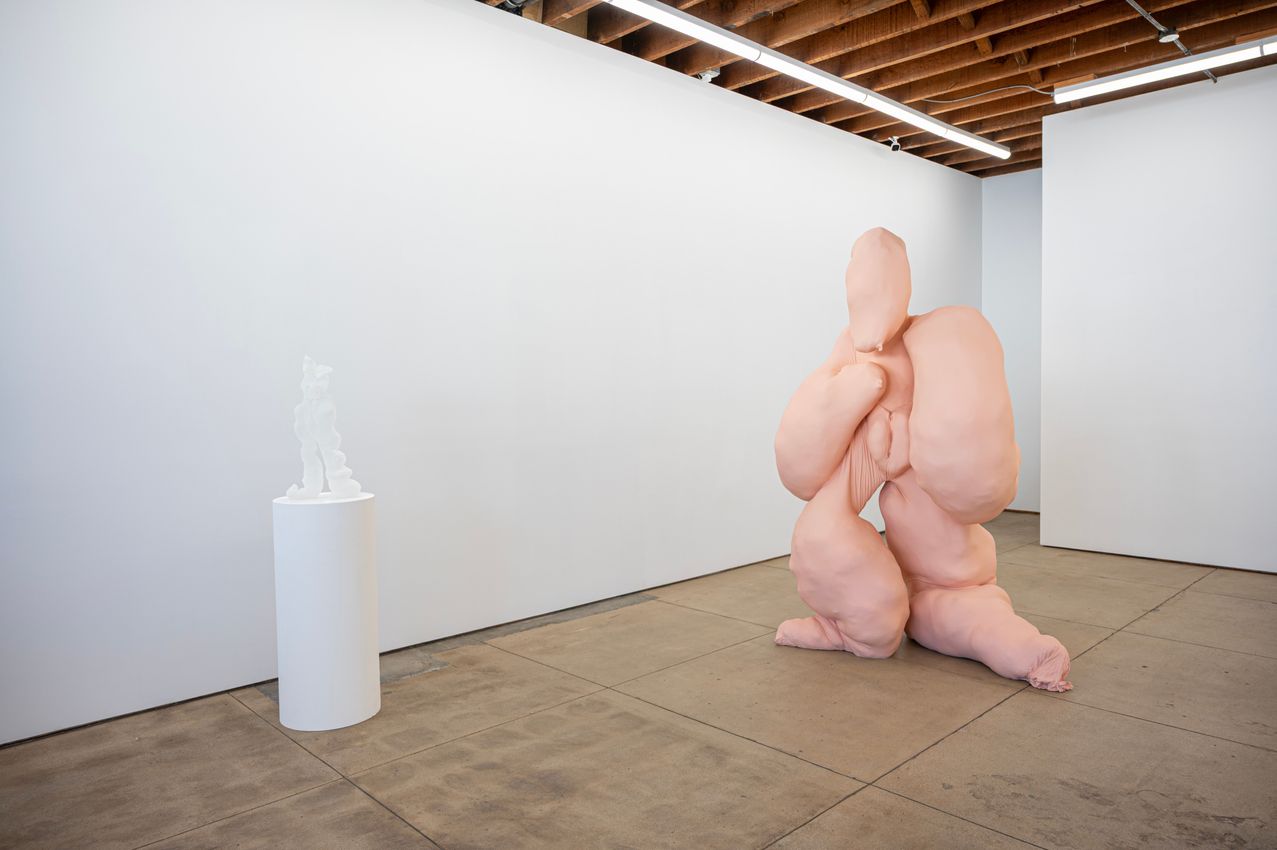
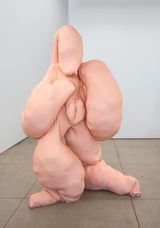
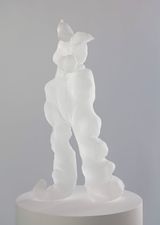
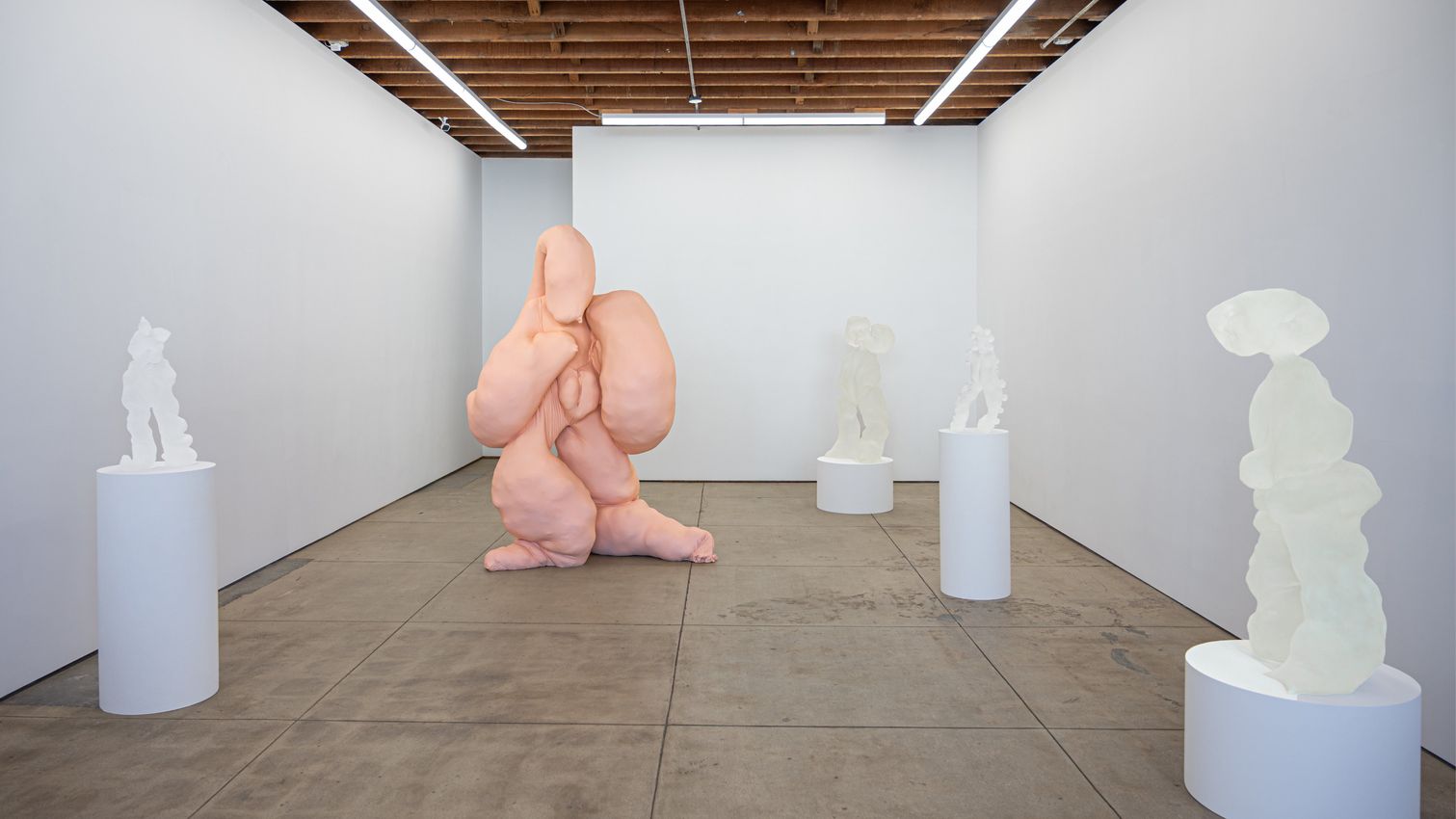
At the heart of the exhibition stands BOD, a 7-foot aluminium creature, rendered mute, sightless, and devoid of clear agency. Balancing mass with vulnerability, BOD’s fleshy pink surface and puckered, swollen limbs, relay a sense of softness laid bare, inviting empathy amidst feelings of unease. Surrounding BOD’s monolithic form, we find a constellation of smaller, accompanying BLOB sculptures. Cast in translucent resin and ranging in scale, these beings flicker between the otherworldly and familiar. As light emanates from different angles, hints of anatomical details emerge and vanish—the shadow of an eye socket, a nose, a frozen gesture. Together suspended in a state of metamorphosis, Borland’s sculptures embrace tensions of ambiguity and objectification in an affectionate, yet wry take on the societal complexities of embodiment.
Within the sculptural series of Blobs and Bod, Polly Borland challenges the seriousness with which we traditionally view the body—as a vessel of meaning, gender, identity, and performance. To be rendered as a blob is a form of liberation, where identity dissolves and sensation emerges. When exhibited together, the works on view create a quiet fellowship, a reminder that within the lumps and folds of our bodies lies something fluid and primal, unremarkably tender, and deeply communal.
Polly Borland (b. 1959, Melbourne, AU) lives and works in Los Angeles, CA. Borland’s work has been exhibited internationally, with significant exhibitions in Australia, the UK, Europe, and throughout the United States. Notably, her major museum exhibition Polyverse was held at the National Gallery of Victoria, Melbourne, in 2018. Selected solo exhibitions include We Are Family, Sullivan+Strumpf, Melbourne, AU (2024); Blobs, Lyles & King, New York, NY (2023); Nudie, Nino Mier Gallery, Los Angeles, CA (2021); The Babies, Nino Mier Gallery, Los Angeles, CA (2017); YOU, Kasmin Gallery, New York, NY (2013) and Smudge, Paul Kasmin Gallery, New York, NY (2011). Selected group exhibitions include Namedropping, Museum of Old and New Art, Hobart, AU (2024); Polly Borland & Penny Slinger: Playpen, Lyles & King, New York, NY (2023); Inaugural Exhibition, Nino Mier Gallery, Brussels, BE (2021); LA On Fire, Wilding Cran Gallery, Los Angeles, CA (2019) and Gossamer, curated by Zoe Bedeaux, Carl Freedman Gallery, Margate, UK (2019). Internationally, Borland has exhibited at numerous institutions: the National Portrait Gallery, London, UK; the National Gallery of Australia, Canberra, AU; The Museum of Old and New Art (MONA), Hobart, Tasmania, AU; Windsor Castle, Windsor, UK; and the Institute of Modern Art, Brisbane. Publications include MORPH, Polly Borland, Perimeter Editions (2018); Polly Borland SMUDGE, Actar (2011); Polly Borland: Bunny, Other Criteria (2008); The Babies, Polly Borland, essay by Susan Sontag, PowerHouse Books (2001); and Polly Borland: Australians, National Portrait Gallery, London (2000). Her work is in public and private collections, including The Andy Warhol Foundation for the Visual Arts, National Portrait Gallery, London; National Gallery of Victoria, Melbourne; and Damien Hirst’s Murderme Collection.
This is Polly Borland’s first solo exhibition at Wilding Cran Gallery.


Polly Borland’s photographic practice has straddled commercial/photographic documentary, and fine art practice, and is characterised by an edgy sensibility that lends her images tension and resonance. Her concerns have included identity, the outcast, beauty and ugliness. Drawn to the weird and wonderful, Borland’s left-of-centre approach transforms the ordinary, even banal, into the extraordinary.
Founded in 2014 in Los Angeles’ Lower Arts District, by Anthony Cran and Naomi deLuce Wilding, Wilding Cran Gallery represents international contemporary artists working in various mediums. The gallery supports local and universal social causes through arts education programming and philanthropic partnerships. In 2025 Wilding Cran moved to its new Melrose Hill location.

A respected voice in contemporary art discourse.
Focusing on ambitious storytelling and insightful art-world commentary. Ocula Magazine publishes in-depth interviews, critical essays and timely analysis on the artists, exhibitions and ideas driving the global art world.
Learn more about Ocula Magazine
Showcasing the best of the art world.
Ocula partners with galleries from around the world to highlight their artists, artworks and exhibitions. Gallery membership is by application and invitation, with each member vetted by an independent panel.
Learn more about Ocula Membership

Specialises in the sale of major artworks.
Led by a team with deep ties to the world’s leading auction houses, galleries and collectors. Ocula’s advisory team offers bespoke services to high-net-worth clients from around the world who are looking to acquire the best of contemporary and modern art.
Learn more about our team and services