



Press Release

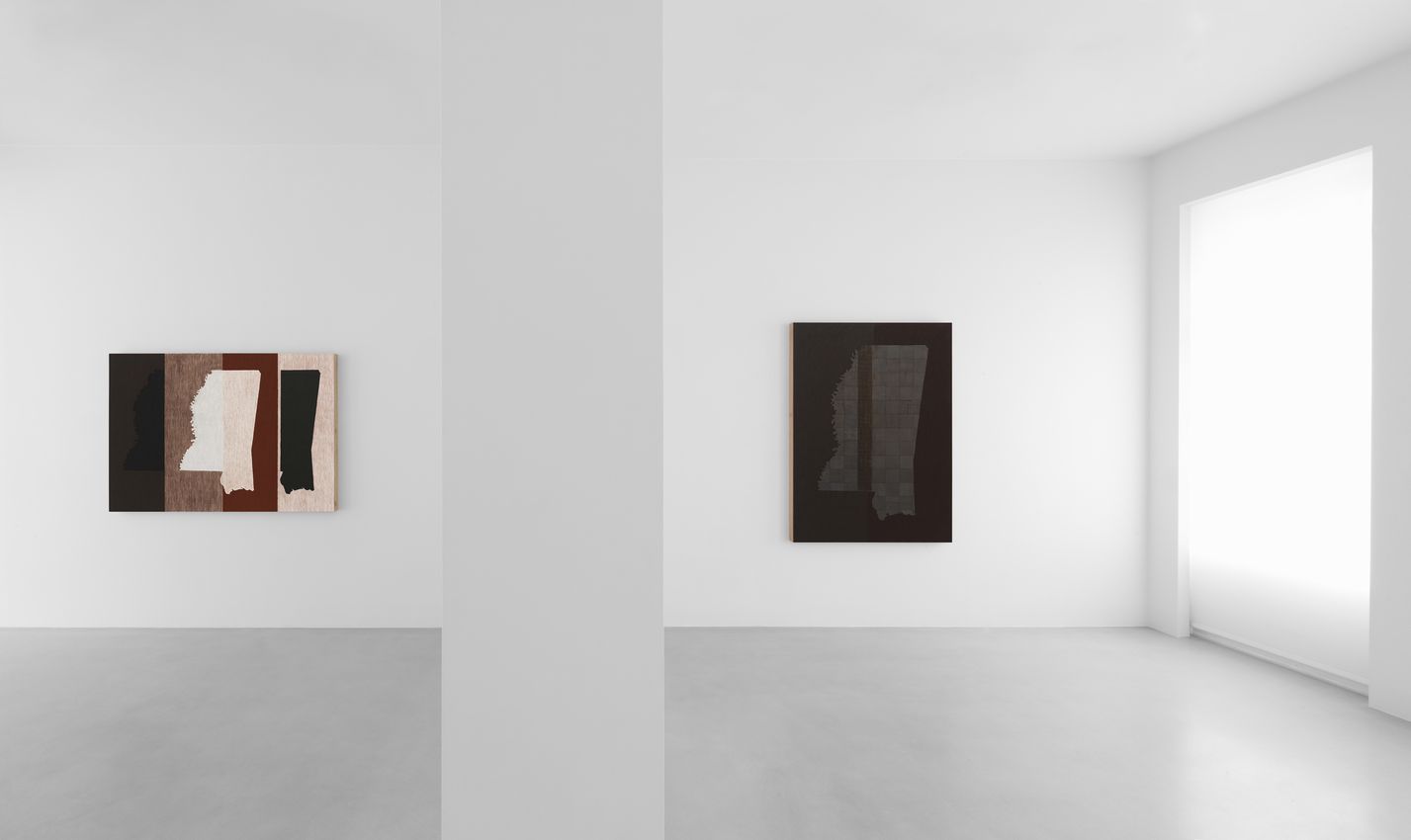
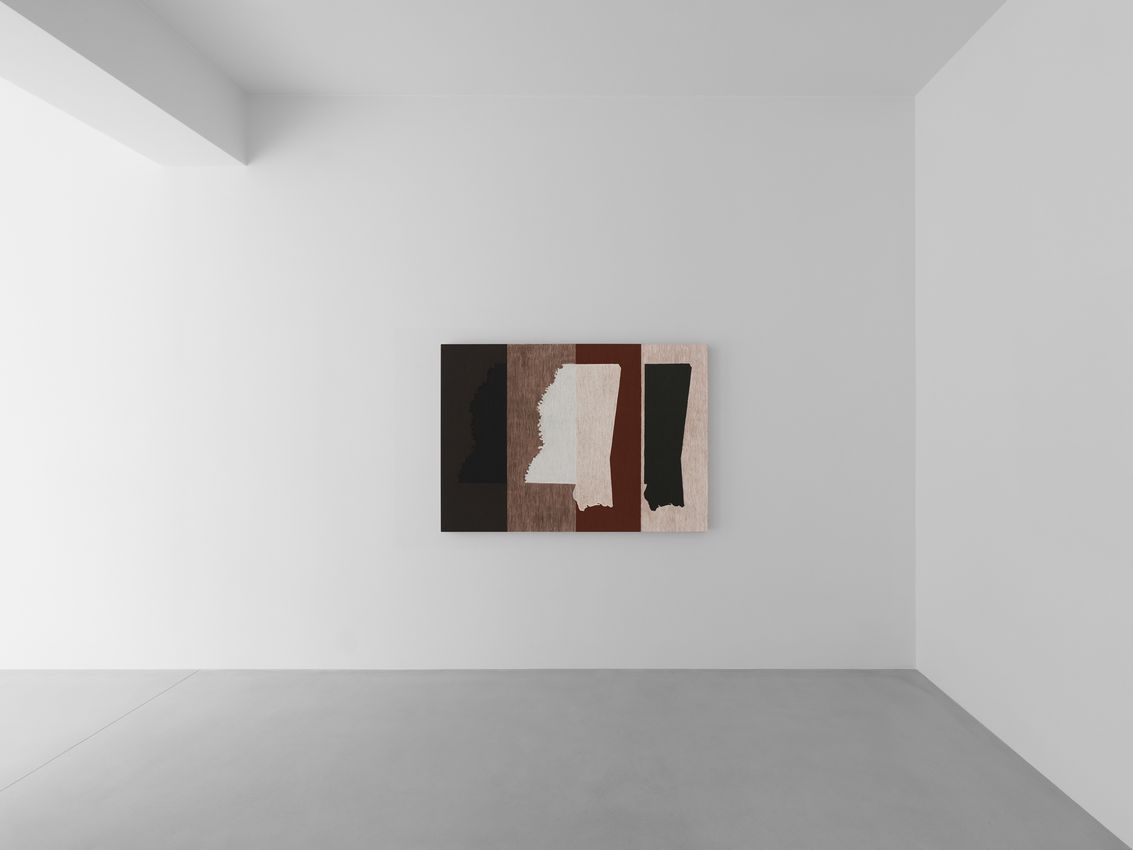
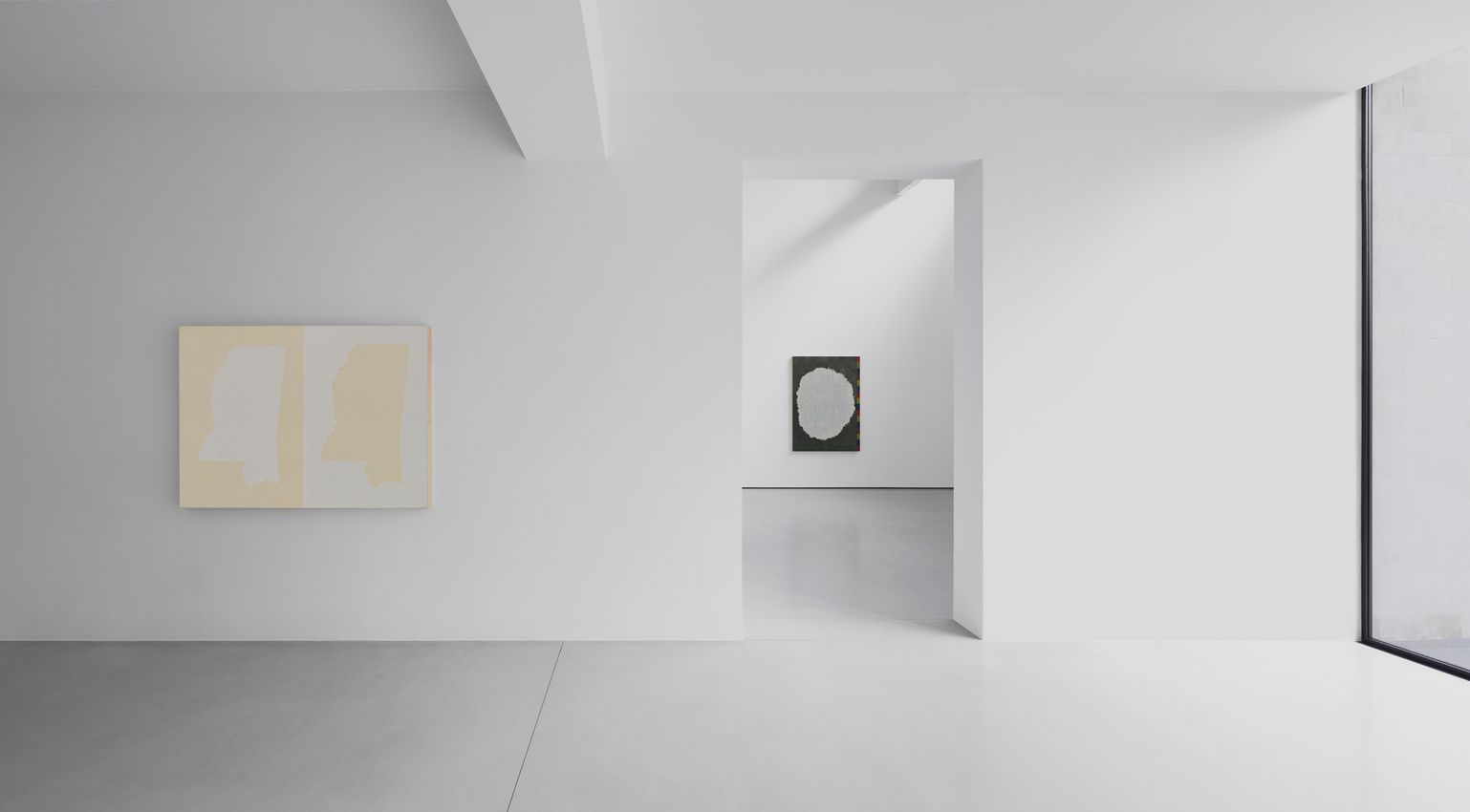
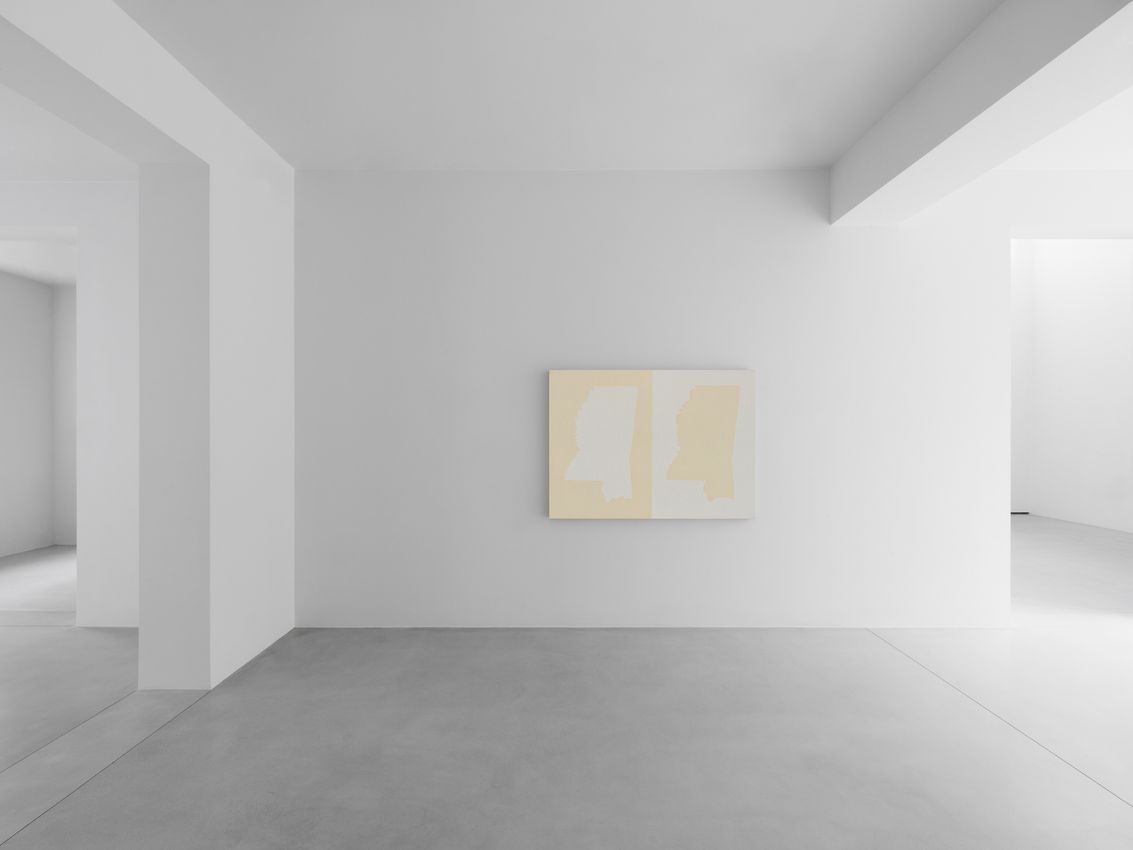
Rawness Dancing: With Intellect is an exhibition dedicated to the pioneering work of American artist McArthur Binion (b. 1946, Mississippi). Curated by Anne Pontégnie, it showcases the development of Binion’s work over the course of the last 15 years. Different series are brought together for the first time, divided into three themes across three floors. Highlights include a rare early work from 1985, together with a series of DNA works, the never previously exhibited Haints series (2014) and a group of six new Visual:Ear paintings (2023-24). McArthur Binion’s work blends elements of minimalism and conceptualism with autobiographical and cultural narratives, resulting in paintings and drawings that are both visually compelling and emotionally resonant. Over the years, his art has evolved through changes in technique, theme, and the exploration of personal and historical memory. The title alludes to the harmony between emotional and physical labour, as described by the artist: “my intellect and rawness are dancing together”.

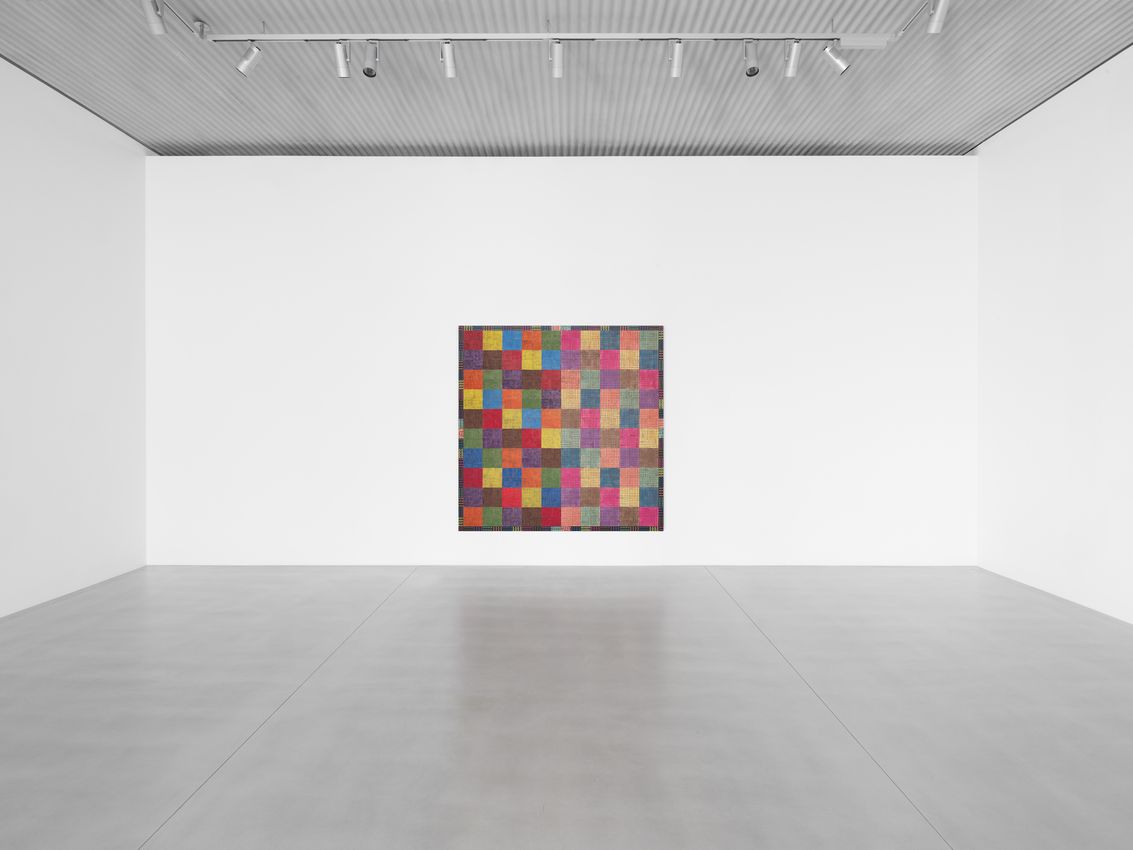
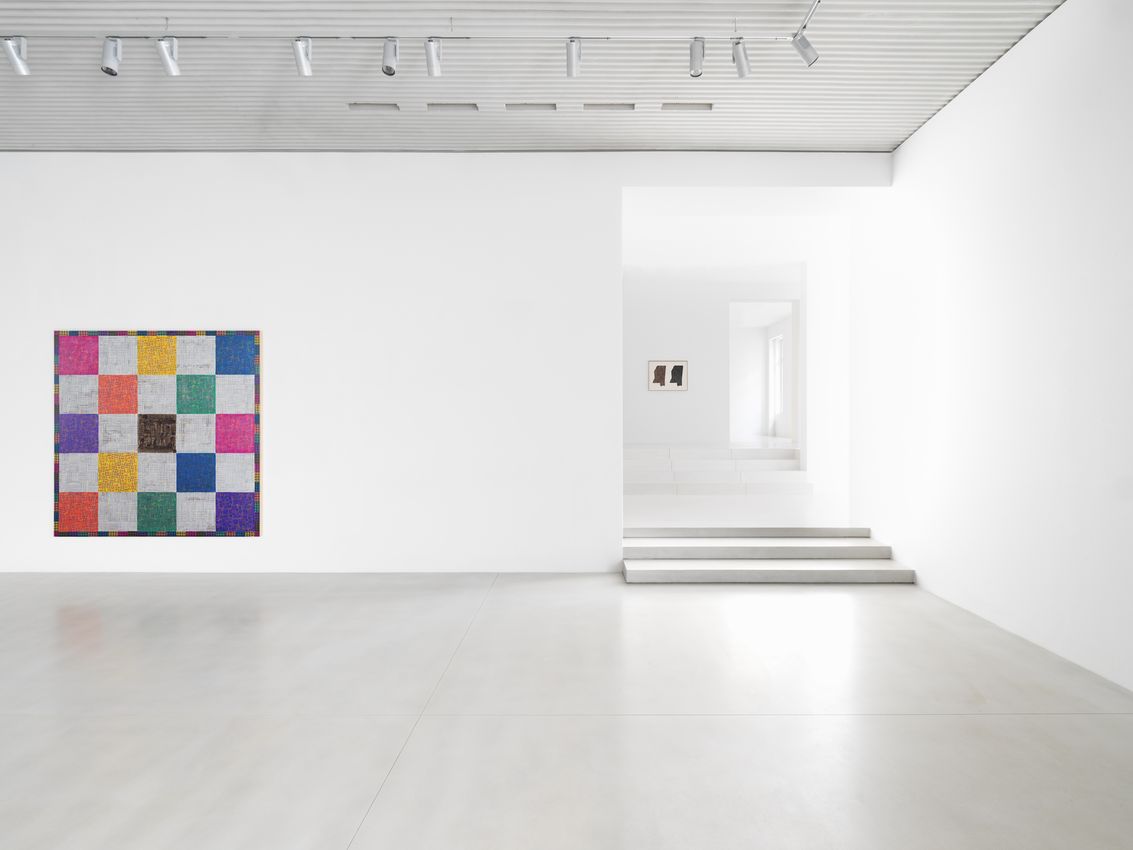
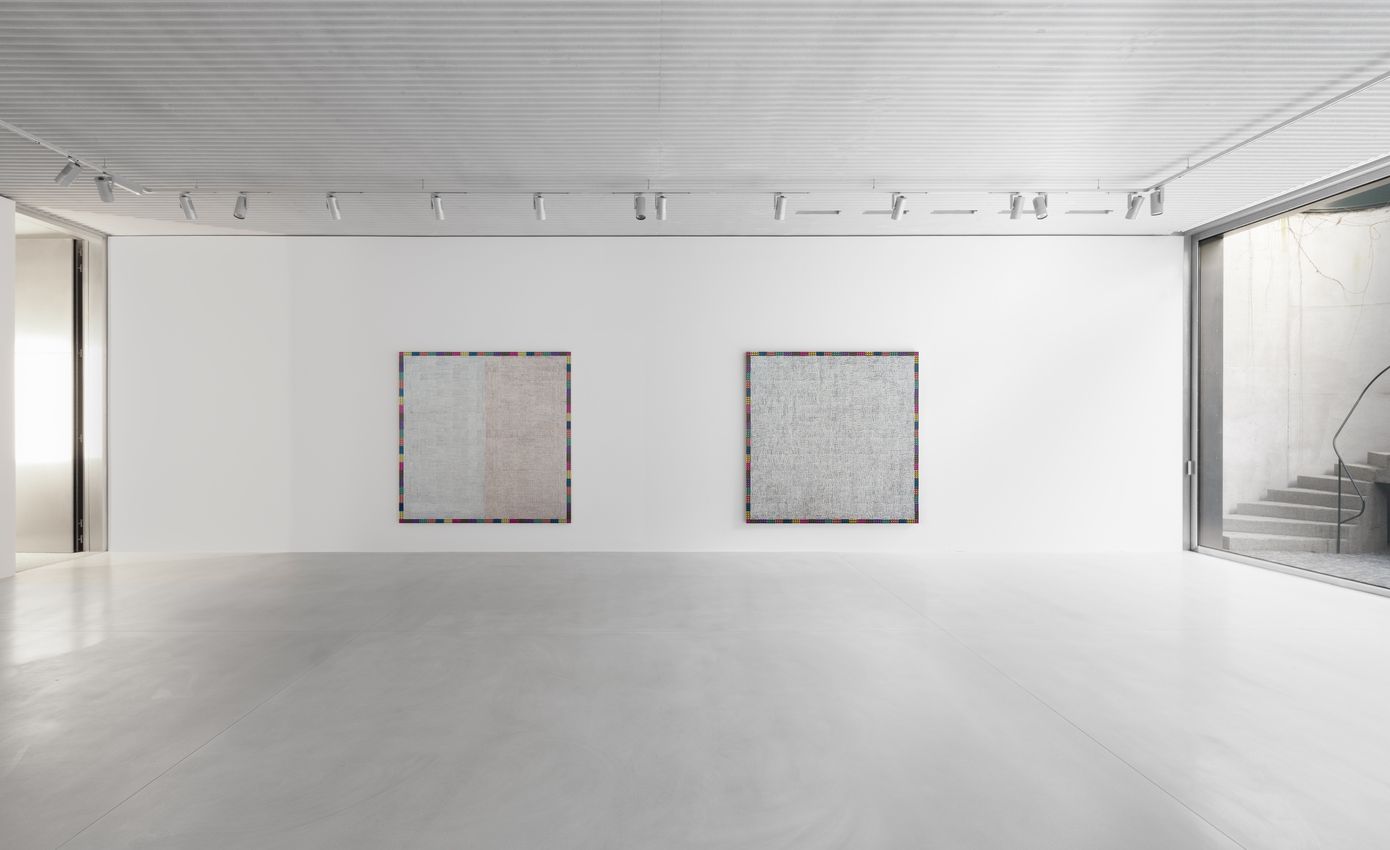
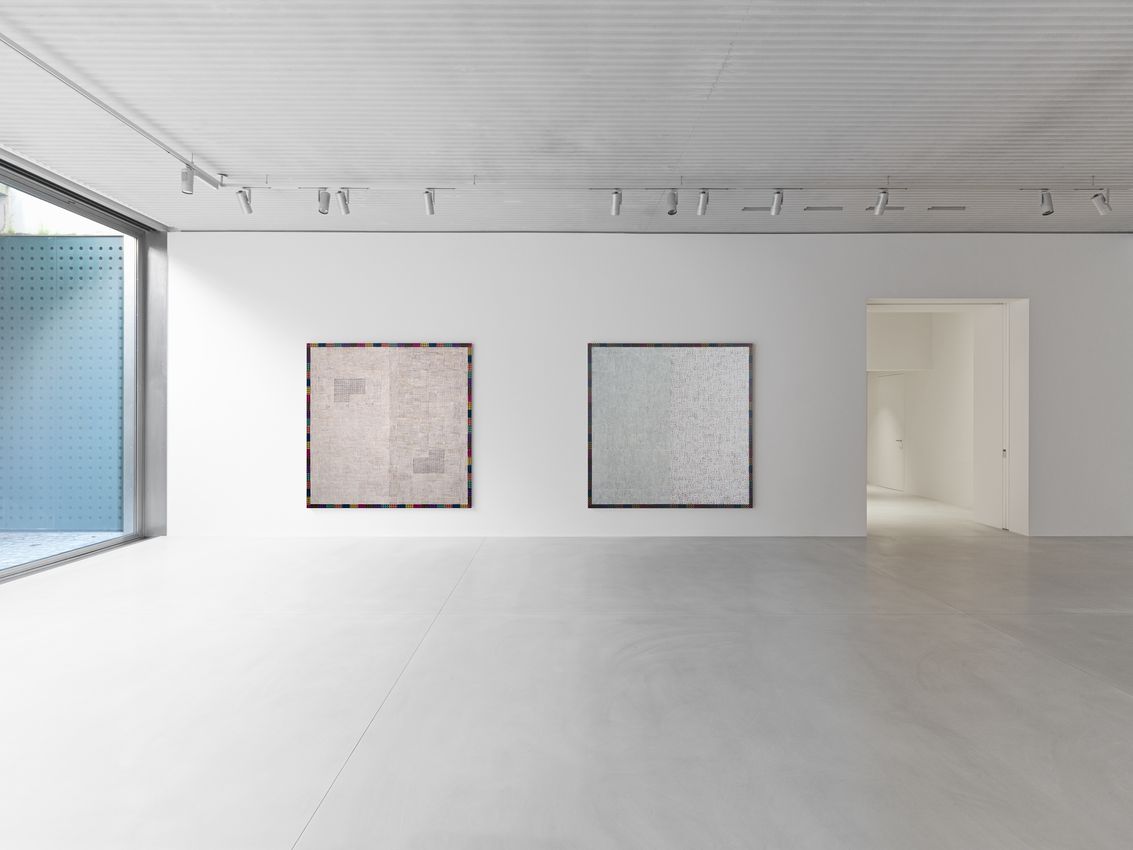
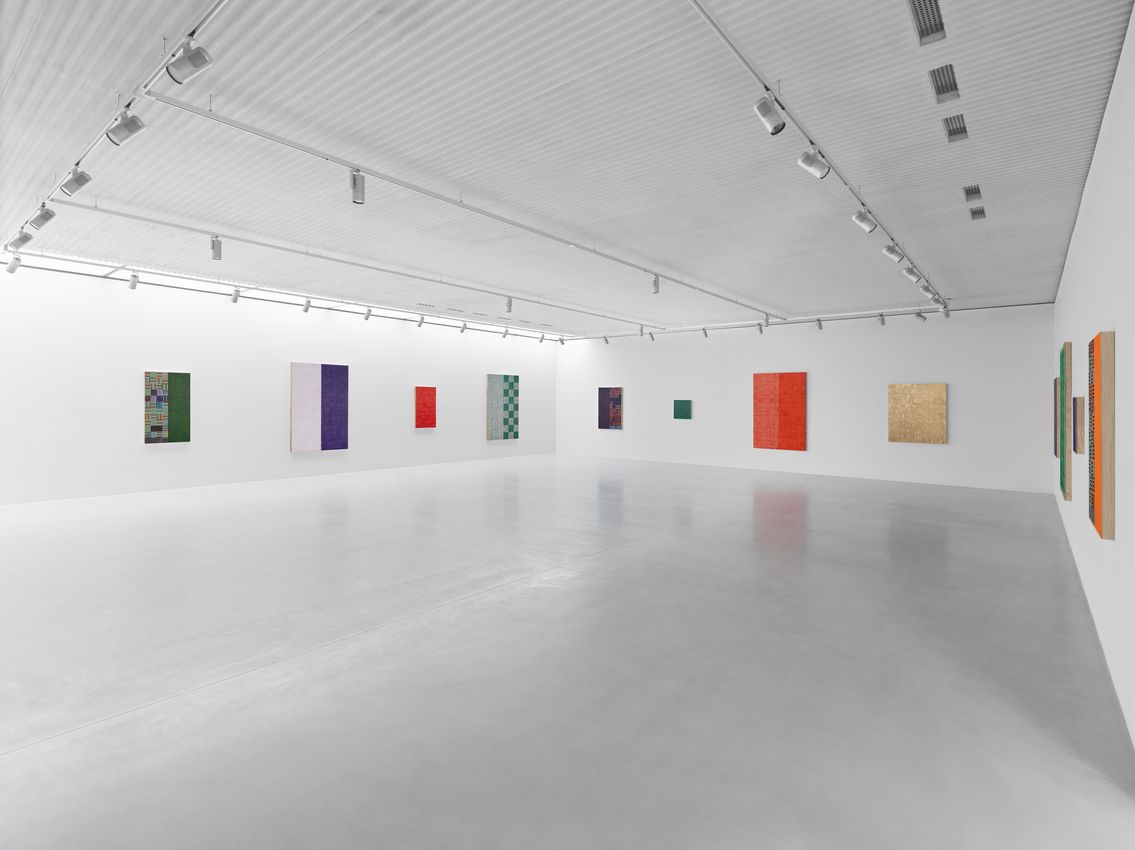
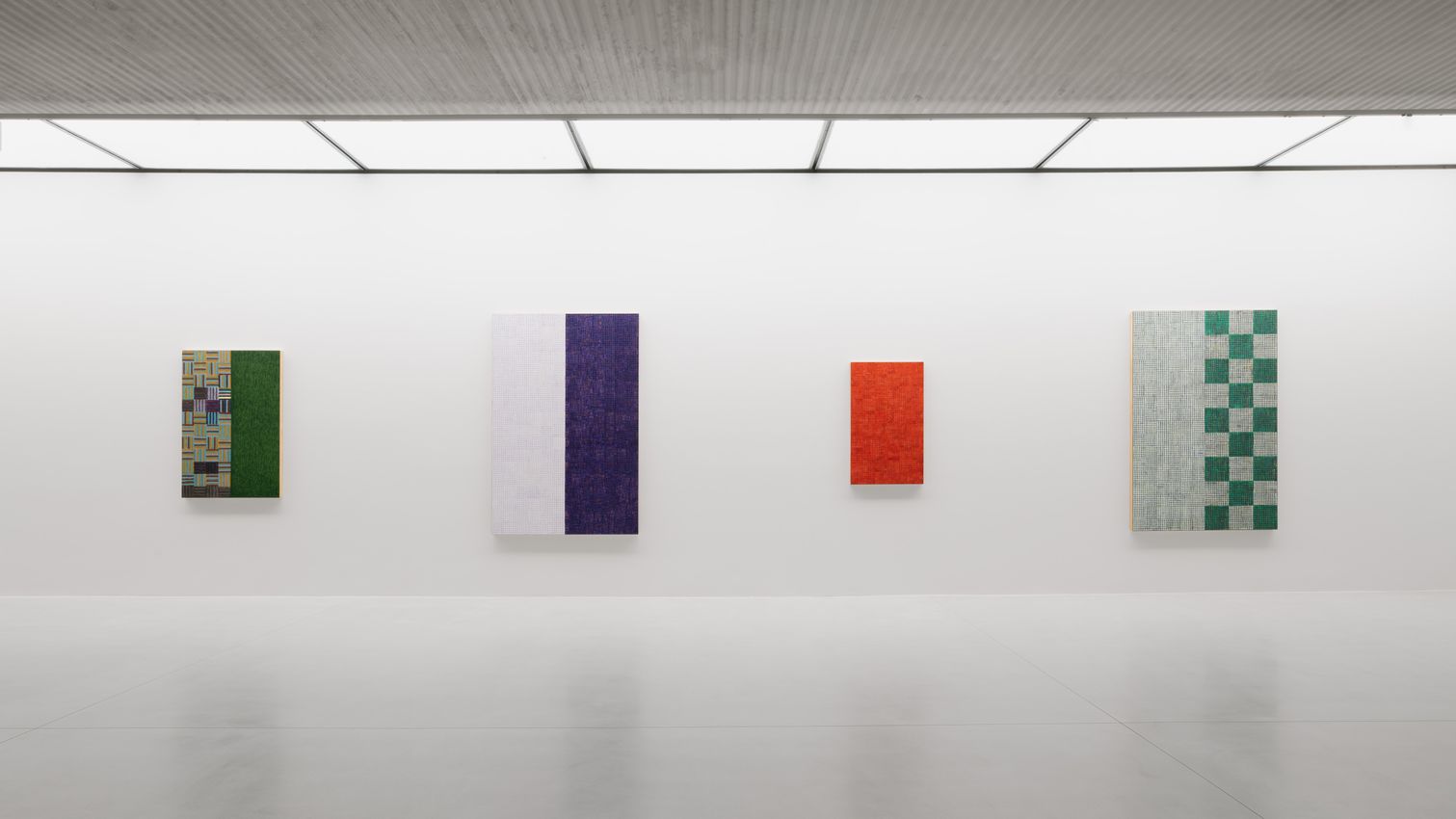
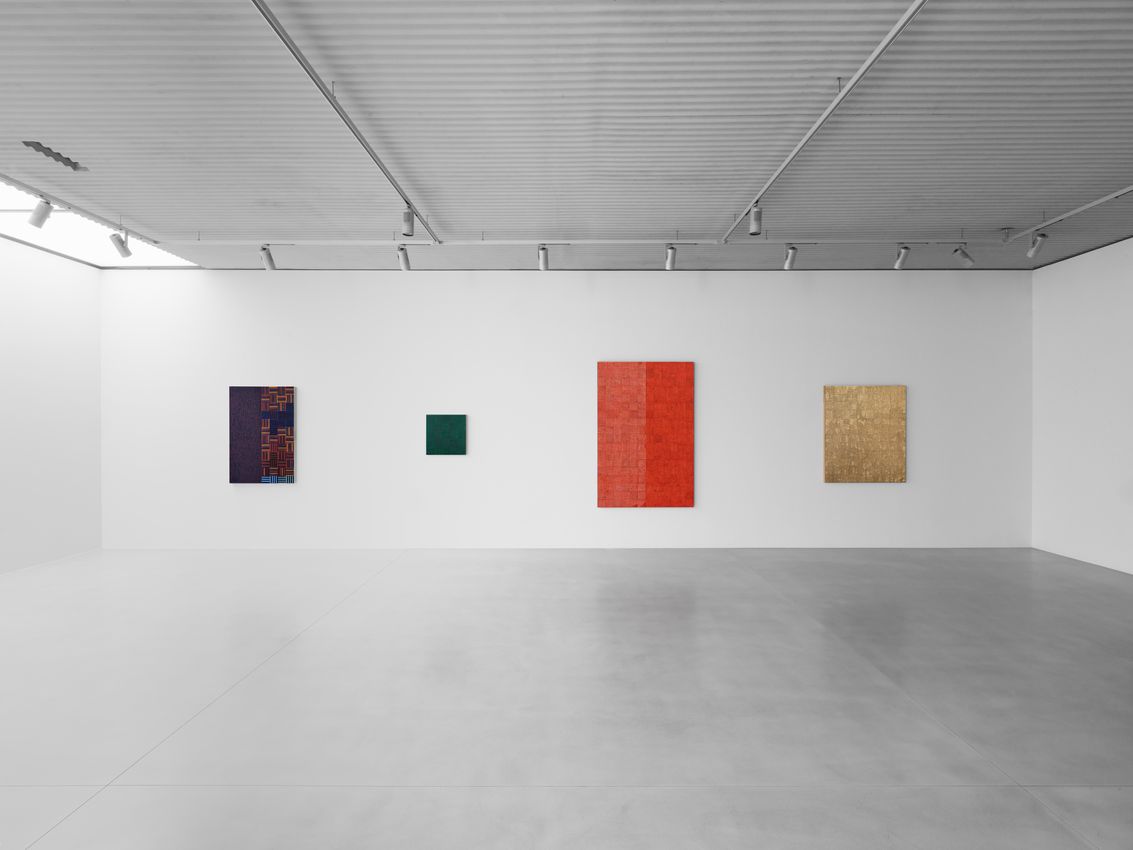
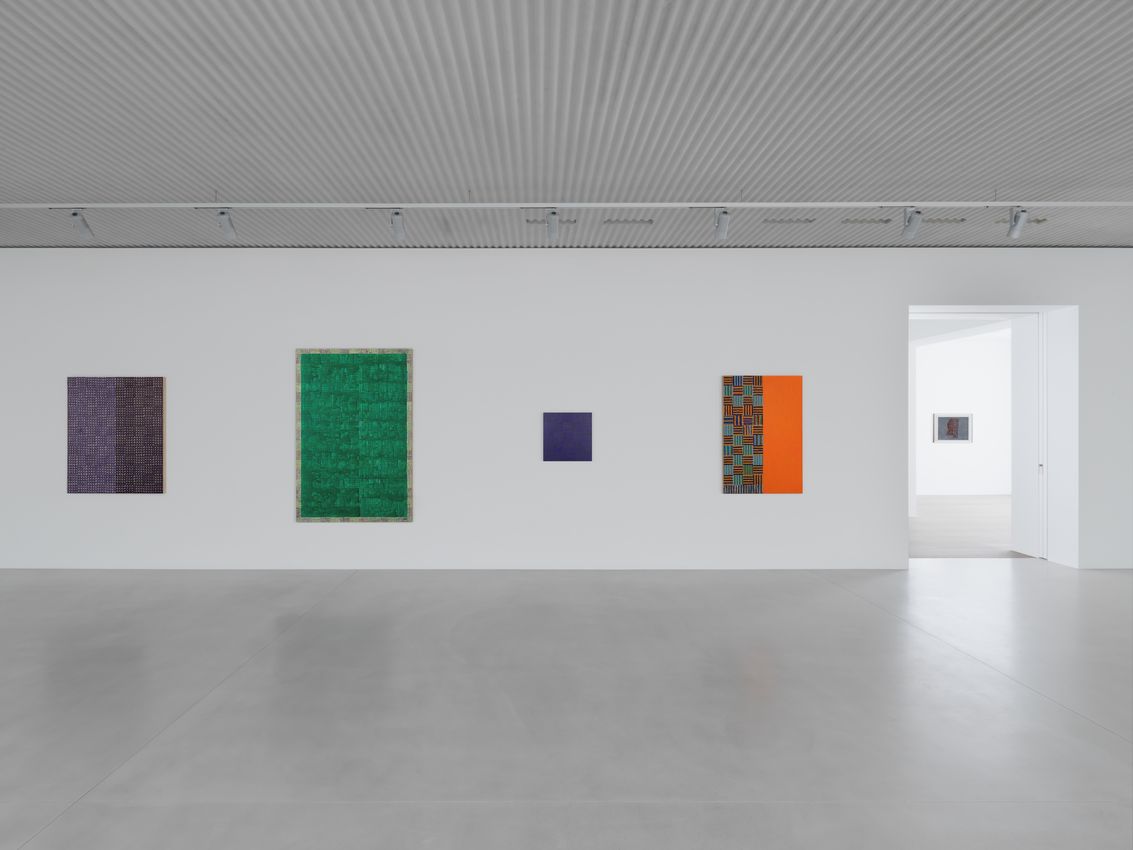
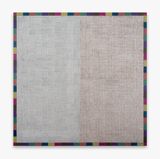
The exhibition opens with McArthur Binion’s latest paintings in the Visual: Ear series, a tribute to Jazz records of particular significance to the artist. The series comprises of 12 paintings in total, half of which are exhibited here for the first time. The first room includes, for example, Visual:Ear (Maestro Duke), a tribute to Duke Ellington, and Visual:Ear (Unit Structures), honouring Cecil Taylor’s album. They are bordered with photographs of the musicians repeated alongside the edges of the paintings, a framing device reminiscent of quilts. The Visual:Ear paintings are a continuation of Binion’s exploration of music and visual abstraction, dating back to his time at the Cranbrook Academy of Art. It was here that he created Drawn Symphony:in:Sane Minor, a hand-drawn piece on musical manuscript paper, in 1971. Binion introduced the ‘visual ear’ concept in his 1973 graduation thesis, which represents his first attempt to visualise music. The current Visual: Ear series began in 2021, with each painting built on a collaged base of musical scores. He calls this layer, which varies from series to series, the ‘underconscious’. Using oil sticks, Binion creates dense, repetitive markings that form geometric patterns and grids, partially hiding the initial imagery. This interplay of concealment and revelation invites viewers to explore the music-inspired and personal narratives within the artwork. Born in Mississippi, the birthplace of the blues, Binion was immersed in a cultural milieu that valued rhythm, improvisation and storytelling – qualities that still reverberate through his work. Within the gridded compositions, he combines methodical, dynamic structures with layering techniques, similar to the rhythms and improvisation of blues and jazz. Binion uses music as a source of creativity and a way of analysing the structure and emotions in his work. The lighter variants of the series are displayed on the floor below.

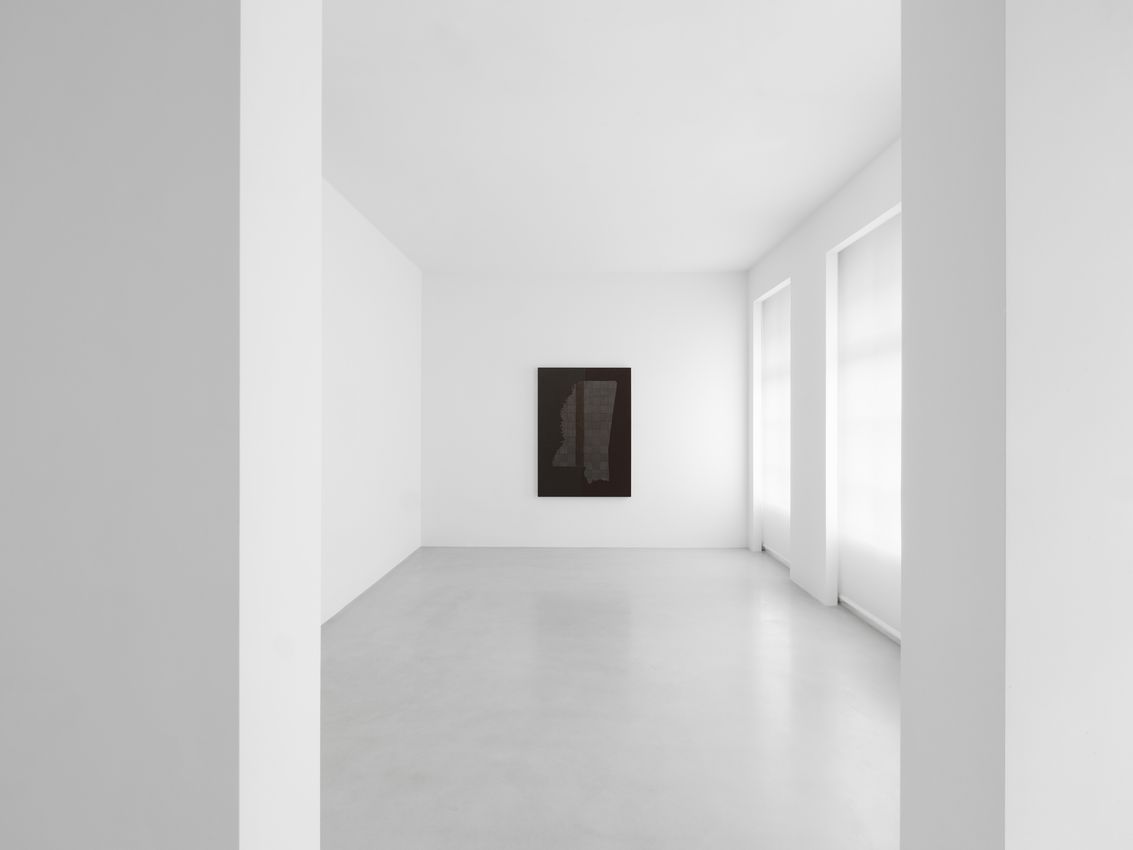
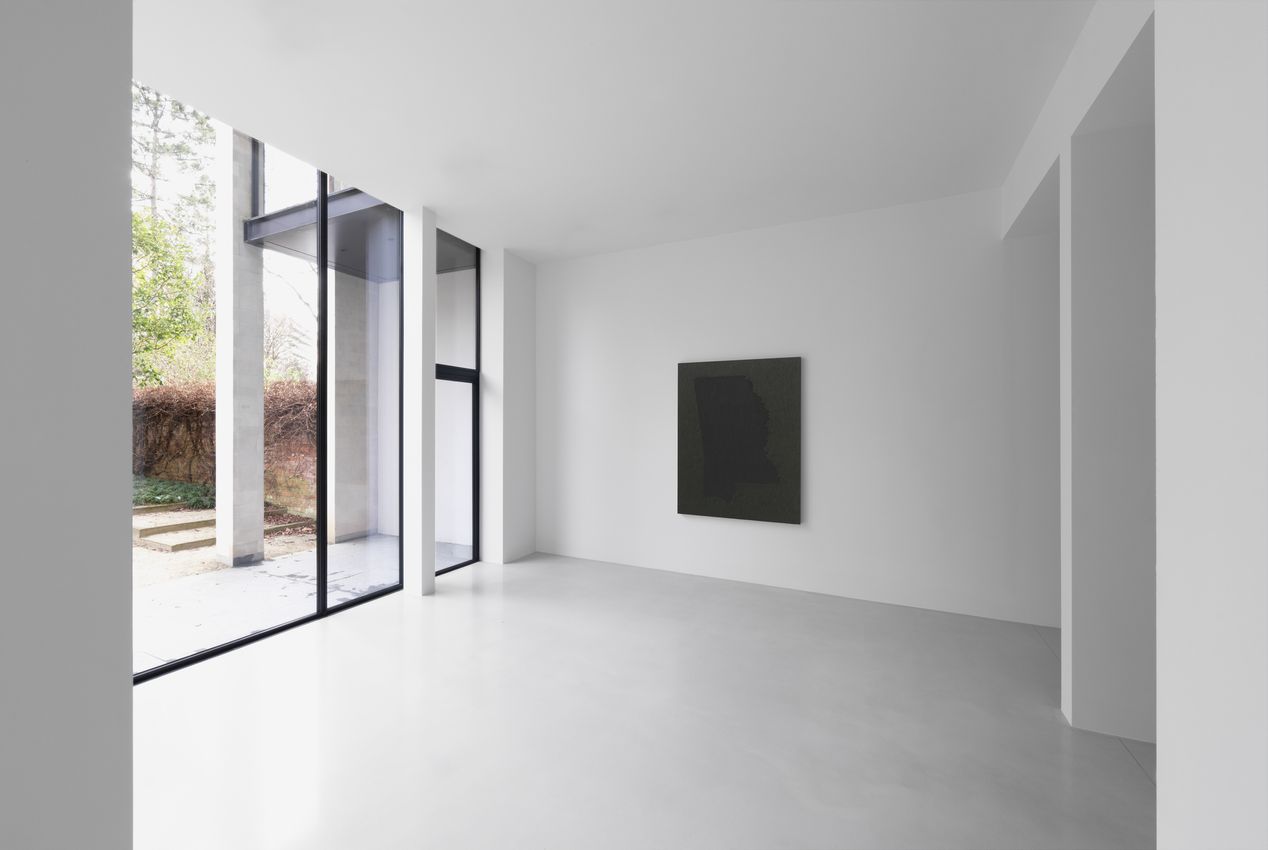
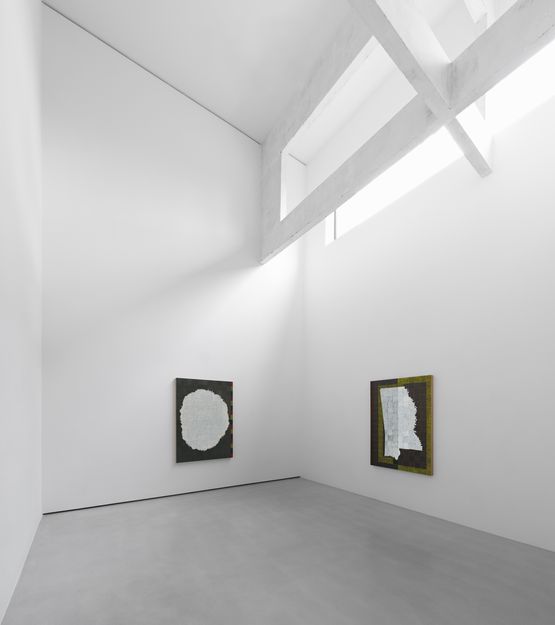
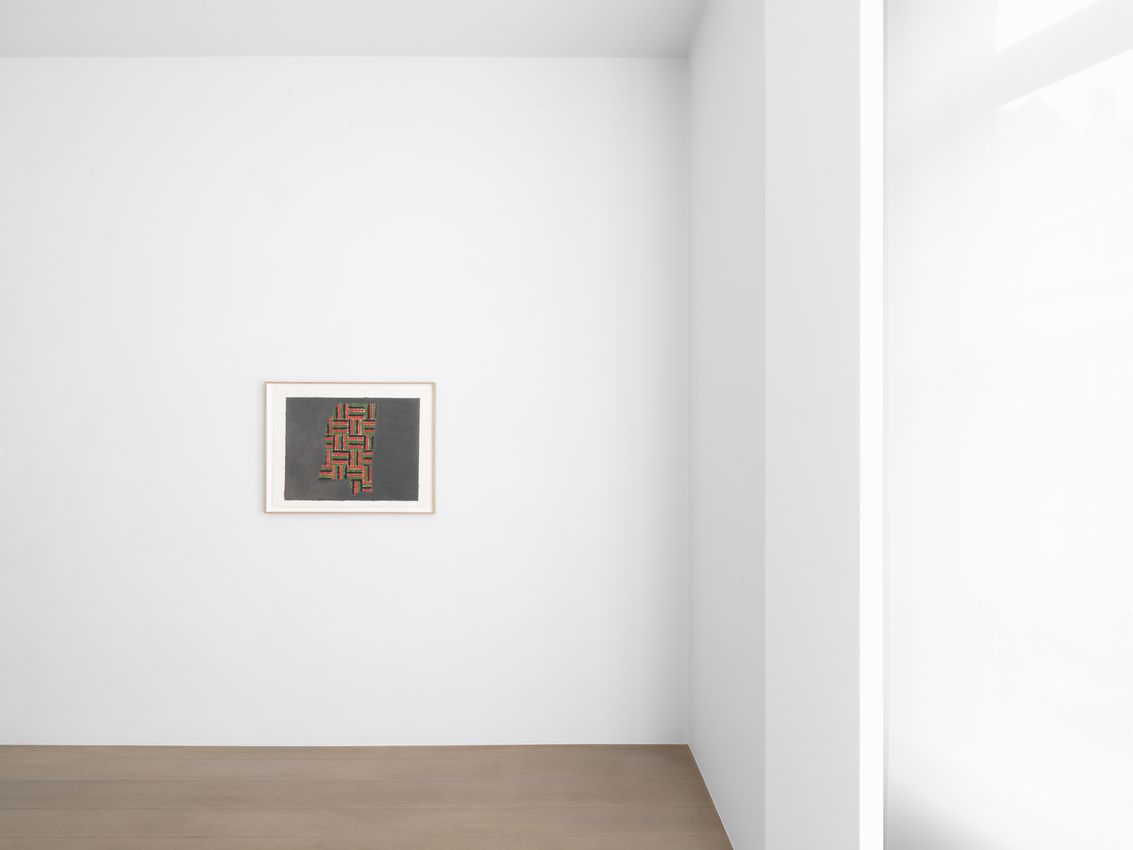
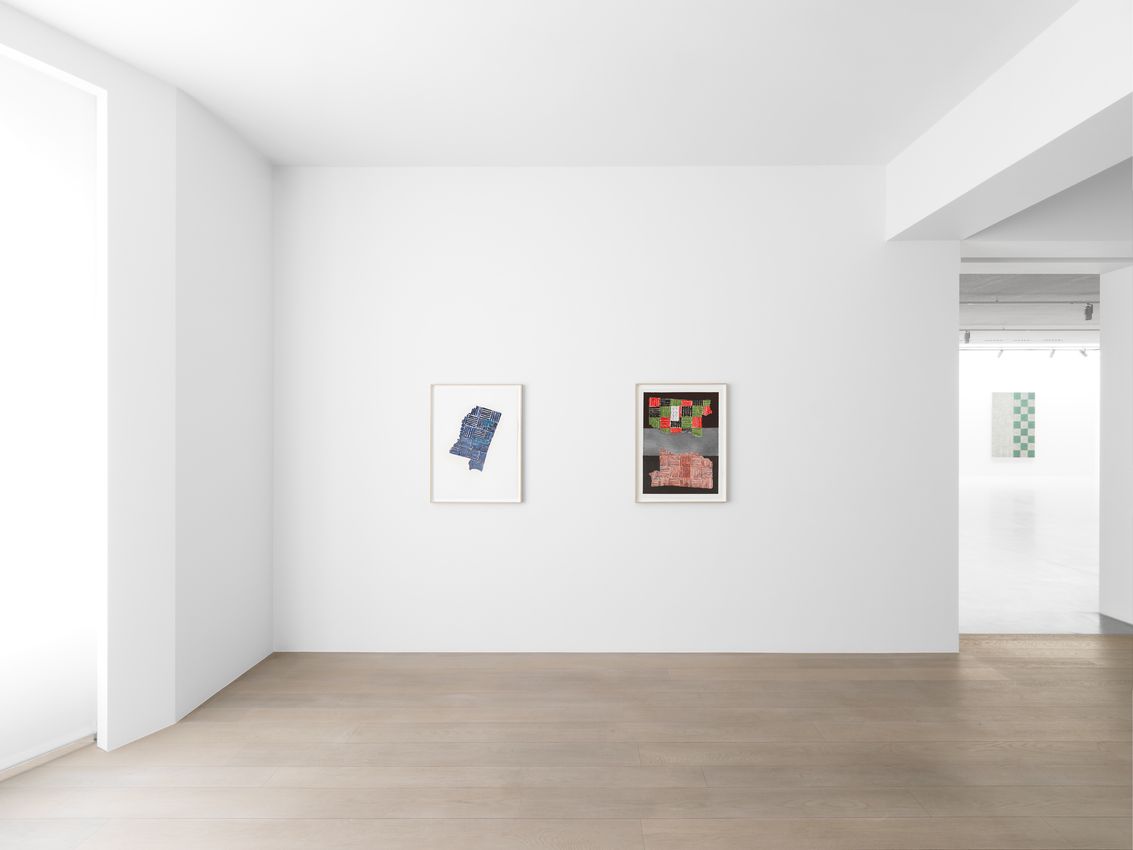
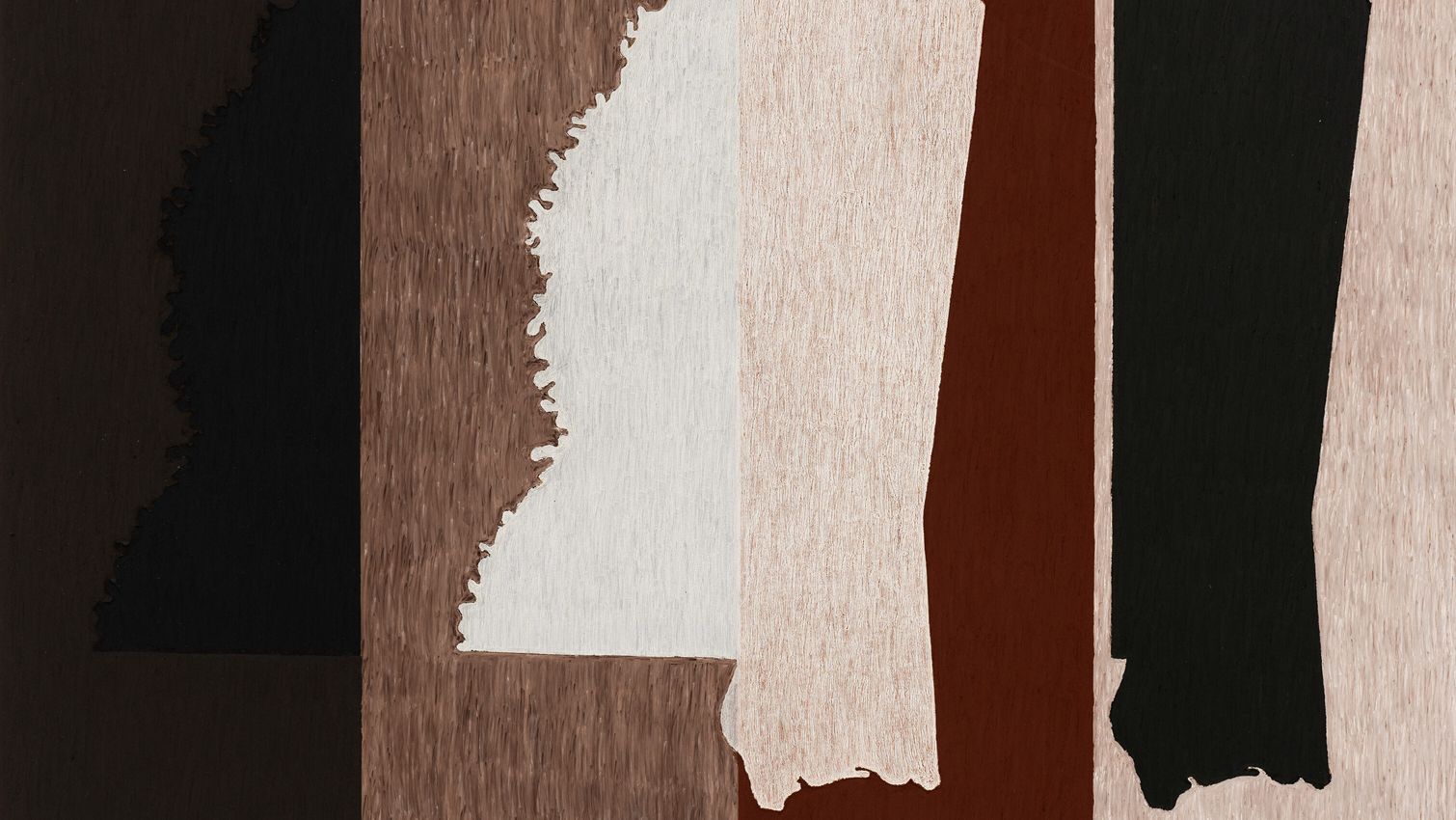
The Haints series (2014) in the adjacent rooms consists of ten works that explore the artist’s Mississippi roots and Southern upbringing. Haint is an alternate spelling of ‘haunt’, a term used by African-Americans to describe ghosts or restless spirits. McArthur Binion elaborates: “They involve reverse maps of Mississippi, and are an extension of the DNA:Studies. They are larger self-portraits about who I am and how I live – all the information is there. These works are specifically about me. They are about my involvement with haints and Mississippi... Haints are about people that you knew that are dead – so the ghosts are real. It’s really emotional with the work.” In a break with his typical practice, the Haints are devoid of an underconscious. He continues: “I associate the haints with the legend of people down South crawling out of their skin; I’ve been looking for haints all of my life. The haints swirl around all of the maltreatment that has happened in Mississippi for centuries and centuries – the lynchings, the rape, the regular straight up murders, etc. My father worked seven days a week and made $7.32 per week. So I know what haints are.”

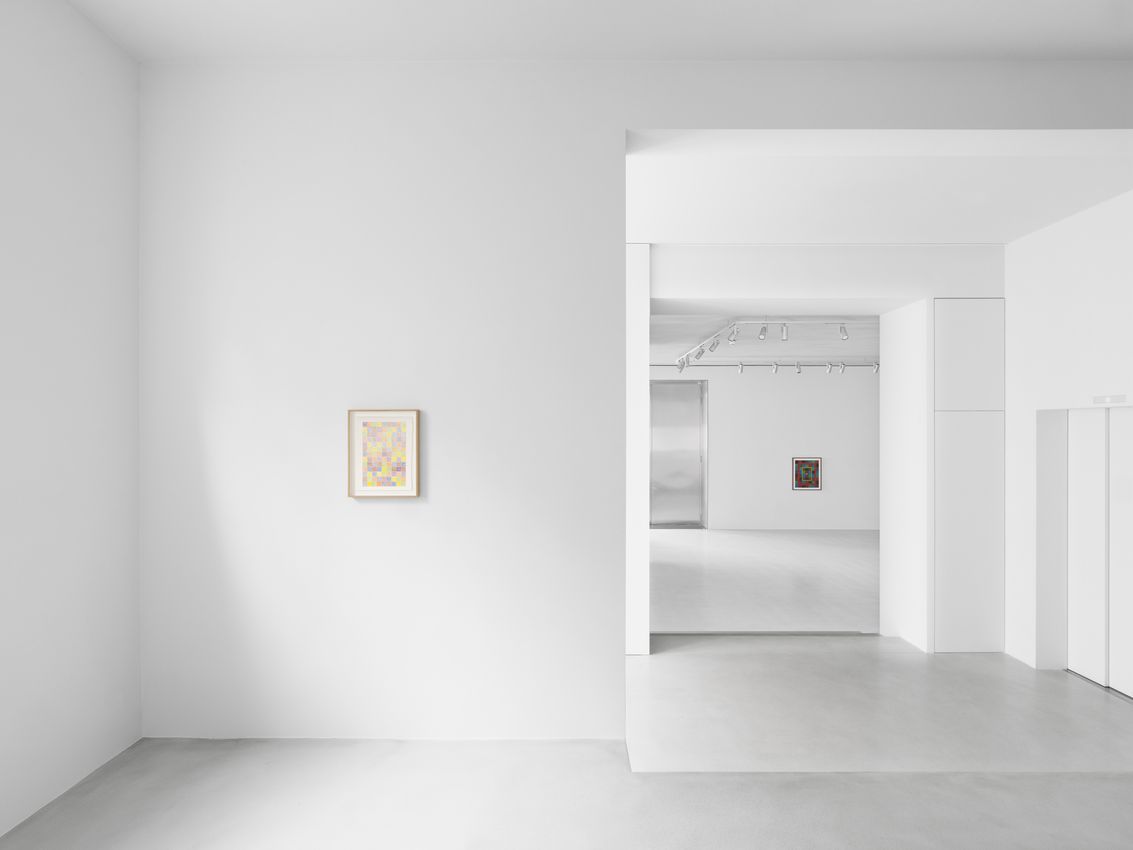
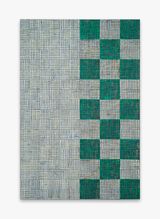
A selection of the artist’s DNA:Studies are shown on the first floor, alongside smaller format works from both the Hand:Work and Visual:Ear series. Colour, autobiography and technique are key focal points in this display. Binion’s DNA:Studies, a subset of the broader DNA series, is a cornerstone of his practice. Central to this body of work is Binion’s replication of his old address and telephone book as the underconscious, a uniquely private artefact that encapsulates years of relationships, connections and memories. With its handwritten entries and worn pages, the book is a literal and symbolic repository of his life experiences. He says: “Each day for the months I painted those, I relived every day of my life because of all of those names.” The names and numbers, partially obscured by layers of oil stick or crayon, are visible upon close examination, adding a narrative layer to the otherwise austere, minimalist grids. The repetitive mark-making, a hallmark of Binion’s practice, recalls the meditative labour of memory and identity formation. It also evokes the physicality and discipline of his early life, spent working on a farm in rural Mississippi.

This contemplative yet physically demanding process also transforms the grid into a tangible record of the artist’s presence. His gestures both conceal and reveal, creating a dynamic tension that reflects the complexity of memory and identity. Binion’s works are thus defined by the proportions of his body, such as hand span and arm length, as well as his physical agility. In the series Hand:Work, Binion makes this connection explicit by incorporating images of his own hand into the underconscious. By foregrounding the physical nature of his practice, Binion challenges the impersonal, mechanical associations of abstraction and minimalism. His art becomes a testament to the interplay between the intellectual and the corporeal, the personal and the universal. Through this embodied approach, Binion transforms the act of making art into a profound exploration of what it means to inhabit a body and a history. He creates works that are as much about the process of becoming as they are about the final form.

Read More

Installation Views

About the Artist

In a career spanning four decades, McArthur Binion (b. 1946, Macon, Mississippi, USA) has gained recognition as an artist, writer and teacher. He became the first African American to obtain a master’s degree in fine arts in painting from Cranbrook Academy of Art (1973) and also holds a degree in creative writing. These dual passions – words and images – define his life and work to this day. After graduating, Binion moved to New York and immersed himself in the city’s vibrant creative scene, then dominated by minimalism and Pop Art. Friends with artists such as Brice Marden and Jean-Michel Basquiat, Binion pursued an artistic career and accepted the first of several notable teaching positions.

View Artist Profile

Also Exhibiting at Xavier Hufkens

About the Gallery
Xavier Hufkens is one of Europe’s leading galleries for contemporary art. Located in Brussels, the gallery maintains a diverse exhibition programme with solo exhibitions of the gallery artists as well as group exhibitions and special projects. The gallery deals in a distinctive combination of painting, drawing, sculpture, photography, video and installation-based work.

The origins of the gallery date back to 1987, when Xavier Hufkens opened a gallery space in an un-refurbished warehouse in the neighbourhood of the South Station (Midi) in Brussels. During the early years, the focus of the gallery was upon mid-career and emerging artists and the gallery is known for having introduced some of the most influential contemporary artists to Brussels at a time when they were still relatively unknown. British sculptor Antony Gormley, who is still affiliated with the gallery, Felix Gonzalez-Torres and Rosemarie Trockel all showed in Belgium for the first time with Xavier Hufkens (Gormley in 1987; Gonzalez-Torres in 1991 and Trockel in 1993).

In 1992, the gallery moved to a 19th-century townhouse at 6 rue Saint-Georges, close to the Avenue Louise. Completely renovated by Belgian architects Paul Robbrecht, Hilde Daem and Marie-José Van Hee, the house quickly gained a reputation for being not just one of the most beautiful contemporary art spaces in the Belgian capital, but also one of the most interesting. The expanded exhibition programme coincided with the additional representation of a number of established artists from Belgium and abroad, including Richard Artschwager, Thierry De Cordier and Jan Vercruysse. In 1997, Hufkens expanded the gallery further by annexing the adjacent building and a number of new artists joined the gallery, including Louise Bourgeois, Roni Horn and Thomas Houseago.

A second space in the same street, at 107 rue Saint-Georges, opened in spring 2013. Located in the Galerie Rivoli, a mixed-use commercial development from the 1970s, the new gallery space was designed by Swiss architect Harry Gugger, who was previously in partnership with Herzog and De Meuron. Slegten & Toegemann, Brussels, managed the project. A third space opened in spring 2020, located at 44 Rue Van Eyck, designed by architect Bernard Dubois.

An eclectic but very clear vision underpins all of the gallery’s activities: ‘The definition of the gallery was established from the start. The common thread, then and now, is quality over and above everything else, which I find more intellectually challenging than a forced definition. From the early days I juxtaposed established artists such as Michelangelo Pistoletto with someone like Felix Gonzalez-Torres when he was totally unknown. Today I still mix my work: I have no problem showing Malcolm Morley … alongside Robert Ryman, or Willem de Kooning.’ [Xavier Hufkens in The Art Newspaper, Issue 220, January 2011, published online: 20 January 2011]

Xavier Hufkens represents some thirty artists from different generations. He was part of the six-member selection committee for Art Basel during seven years and also participates in up to five international Arts Fairs annually. The gallery has partnerships with the estates of Louise Bourgeois, Willem de Kooning, Robert Mapplethorpe and Alice Neel.
View Gallery Profile
Address
6 rue St-Georges
St-Jorisstraat
Brussels
Belgium
Opening Hours
Tuesday – Saturday
11am – 6pm
(1)
Brussels 6 rue St-Georges
Xavier Hufkens
6 rue St-Georges, St-Jorisstraat, Brussels, Belgium

Opening hours
Tuesday – Saturday
11am – 6pm
The art world in focus