The art world in focus
Subscribe to our newsletter for news and insights on artists, galleries and exhibitions.
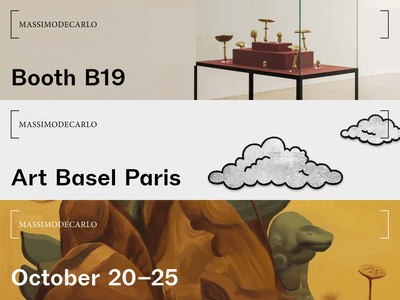

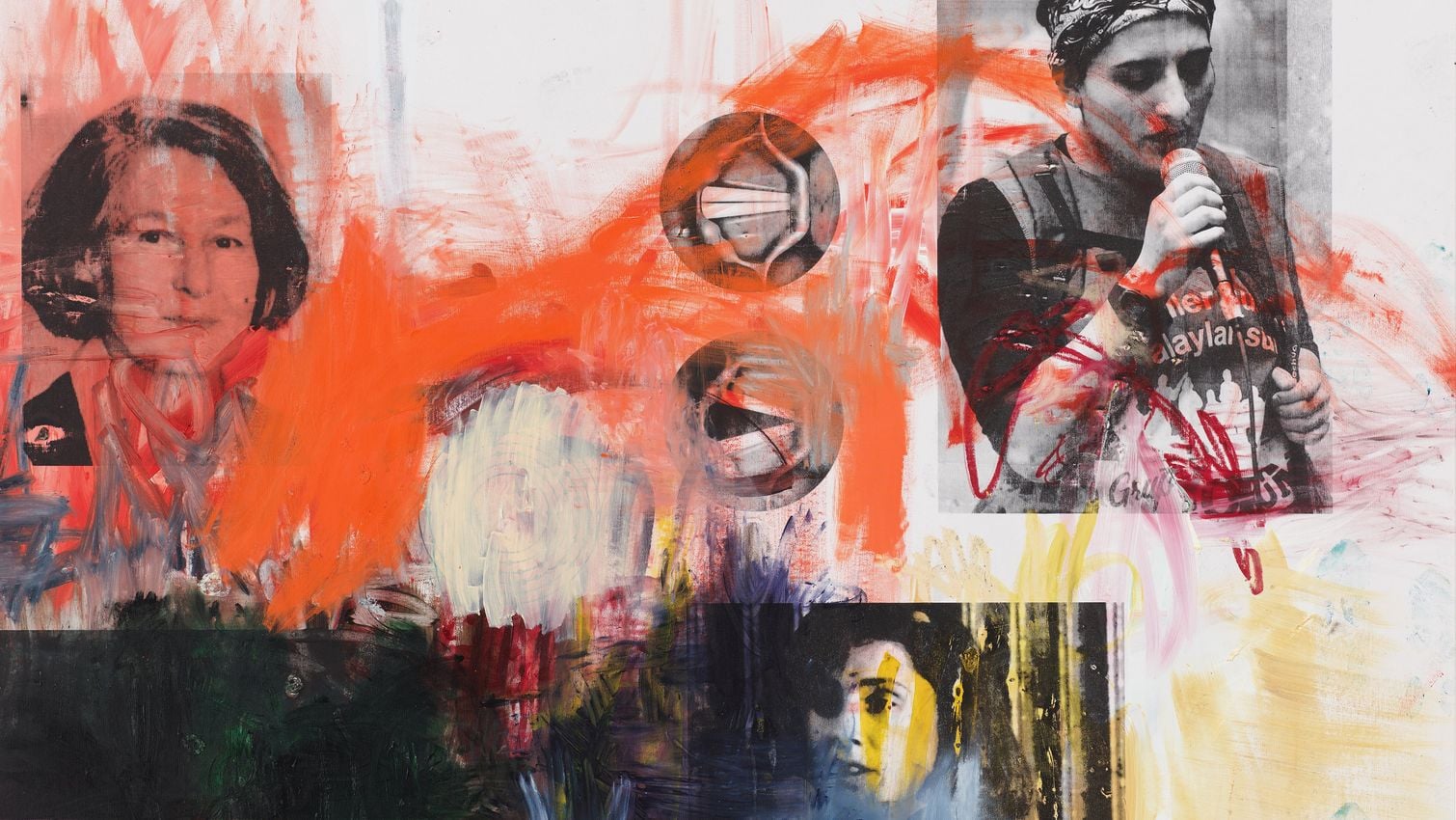
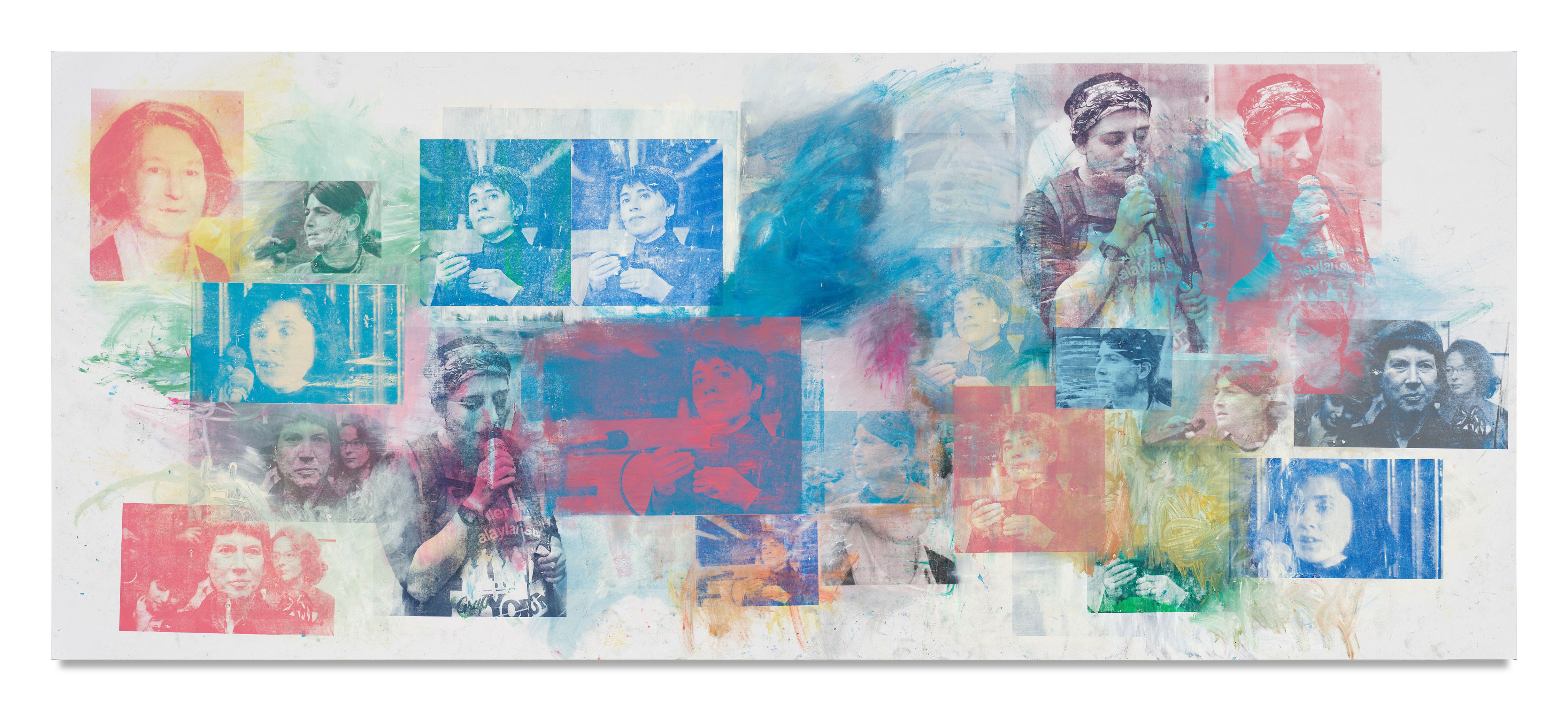
When you look at the women who appear in the recent canvases of Kurdish-born, Berlin-based artist Leyla Yenirce, they shoot that gaze straight back at you. Screen-printed from photographs circulated in the media, alongside images taken from the artist’s own archive, these monochrome portraits ground Yenirce’s work in a contemporary framework that includes R&B and folk musicians, Kurdish activists and politicians, writers and novelists, and even her own former music teacher. Each woman included in Yenirce’s compositions has been influential in the artist’s work and life, while the act of incorporating these role models so directly sees her contend with the creative liberties and constraints of appropriation.
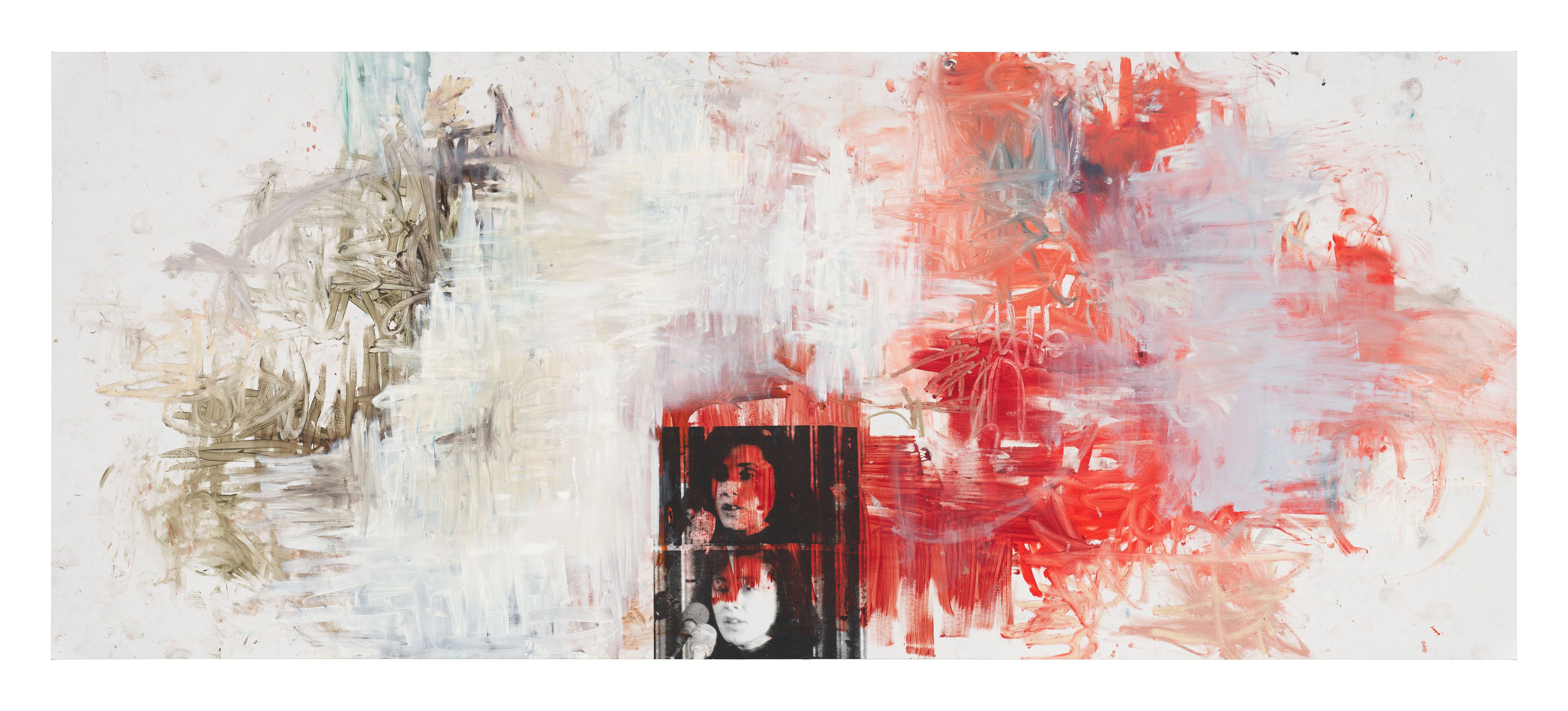
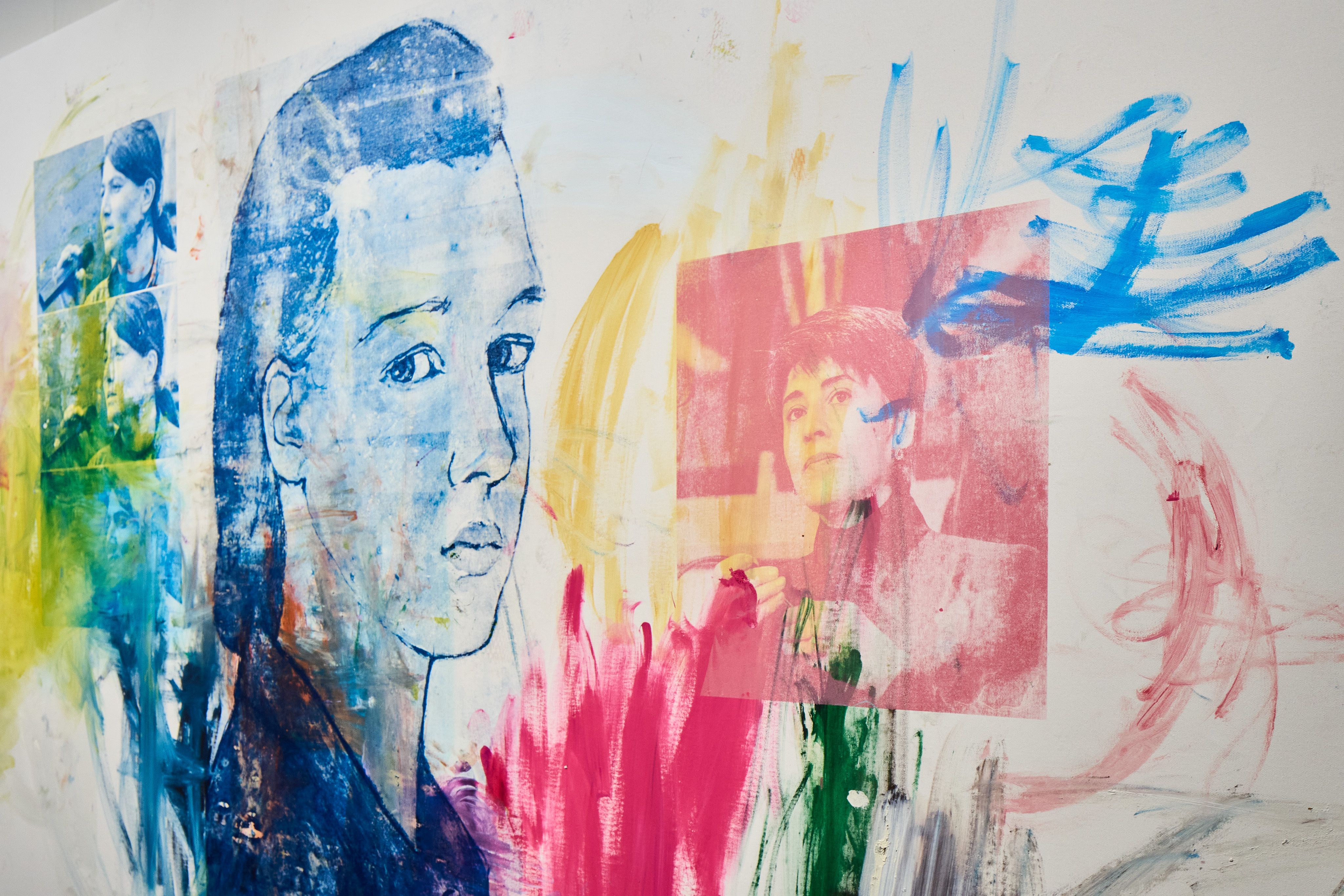
In her latest exhibition at Oldenberg State Museum, titled Werdegang (which translates from German as “career” or “life path”), she brings these female protagonists together as members of a fictional choir. They speak, sing and shout into microphones. It is this focus on the amplification of the voice that raises a central question of who gets to speak up and be heard—and who does not. The scrawled, frenetic brushwork around these printed photographs serves to at turns hide and reveal Yenirce’s imaginary choir, who emerge from deep blotches of black paint contrasted with pastel shades of pink, turquoise and a deep blood red. A performer and noise musician herself alongside her visual arts practice, Yenirce is intimately familiar with how even a single shriek or growl can challenge patriarchal expectations of female expression, and how the voice can become a weapon.
Leyla Yenirce: The idea for the choir was based on a quote from Life? or Theatre? (published in 1981), a graphic novel that was painted by Charlotte Salomon between 1940 and 1942 while she was in hiding from the Nazis. She was later murdered at Auschwitz. I was fascinated by this body of work, which is so raw and impressive. You can see how fast she painted and how many ideas she had, and the way she uses language. There is one quote where her singing teacher says to her, “The gold in the throat is the expression of the soul.” This stayed with me.
So, I created a fictional choir and screen-printed images of them into the works. There are all these different women on microphones, which touches upon the technical equipment that amplifies the voice. The choir consists of real women, but it’s a choir of women that I appropriated by taking their images.
“Appropriation is my reaction to the overflooding and numbness of images today”
LY: They are role models for me. We have Natalia Ginzburg, and there’s this image of her in the paintings where she looks very hopeful and reassuring. There is also an actual image of Charlotte Salomon, and then above her is an image of Leyla Zana talking into a microphone. She is the Kurdish politician who I was named after, and she was imprisoned for 10 years for speaking Kurdish in the Turkish parliament.
Previously, I appropriated the image of five young Kurdish female fighters. They were all looking to one girl in the middle of them who was writing a note, and I thought that it kind of looked like they were writing a song, which made me think that it could be a girl band. I’m absolutely aware of the ambivalences of that appropriation, which comes with many facets that are problematic as well as celebratory. And for me, it’s also how to make sense of all this material that I encounter, all these images, and how to process them. I think it’s also a reaction to the overflooding and numbness of images today. When I work with these images for months, I feel like I’ve really had a close encounter.
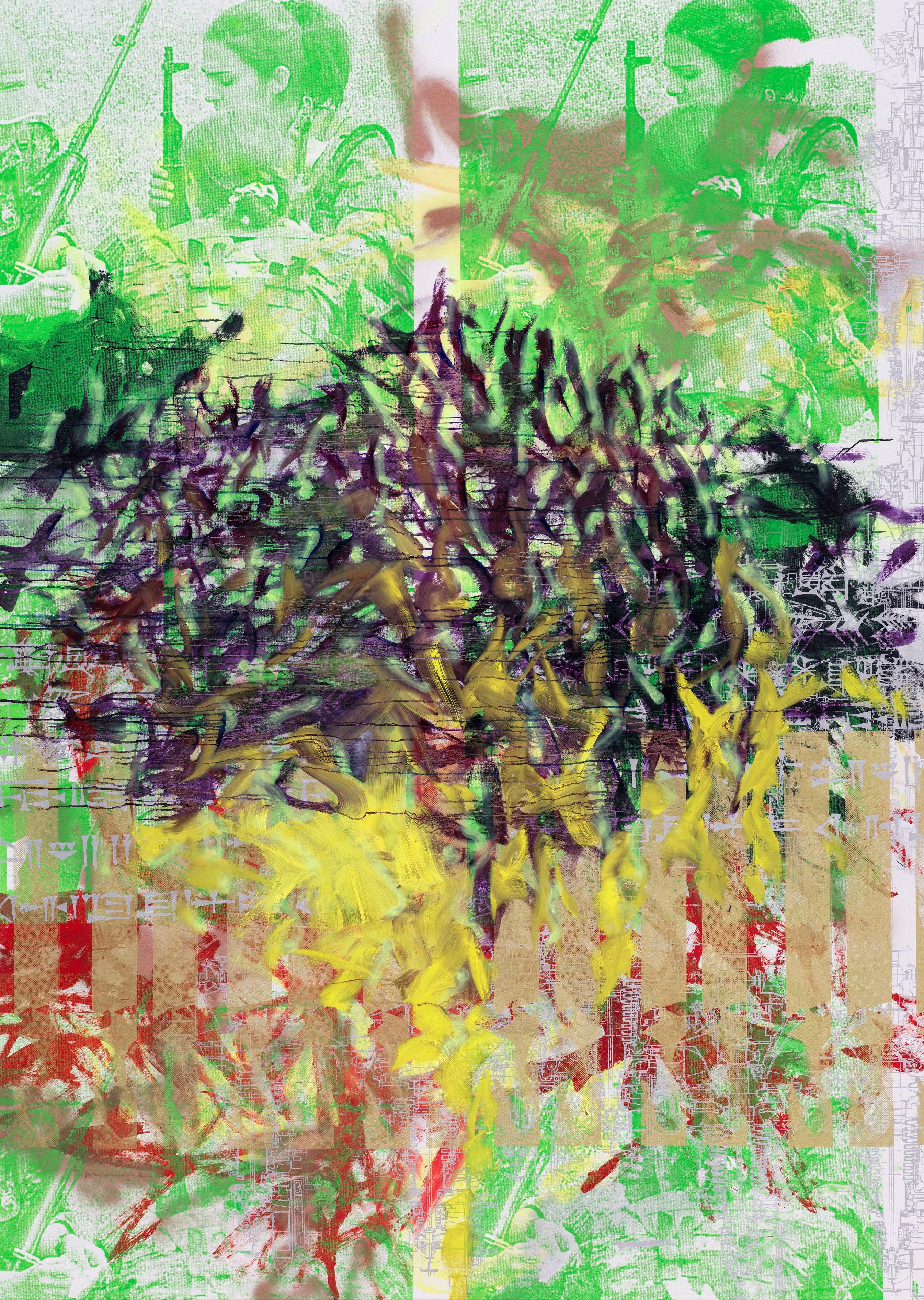
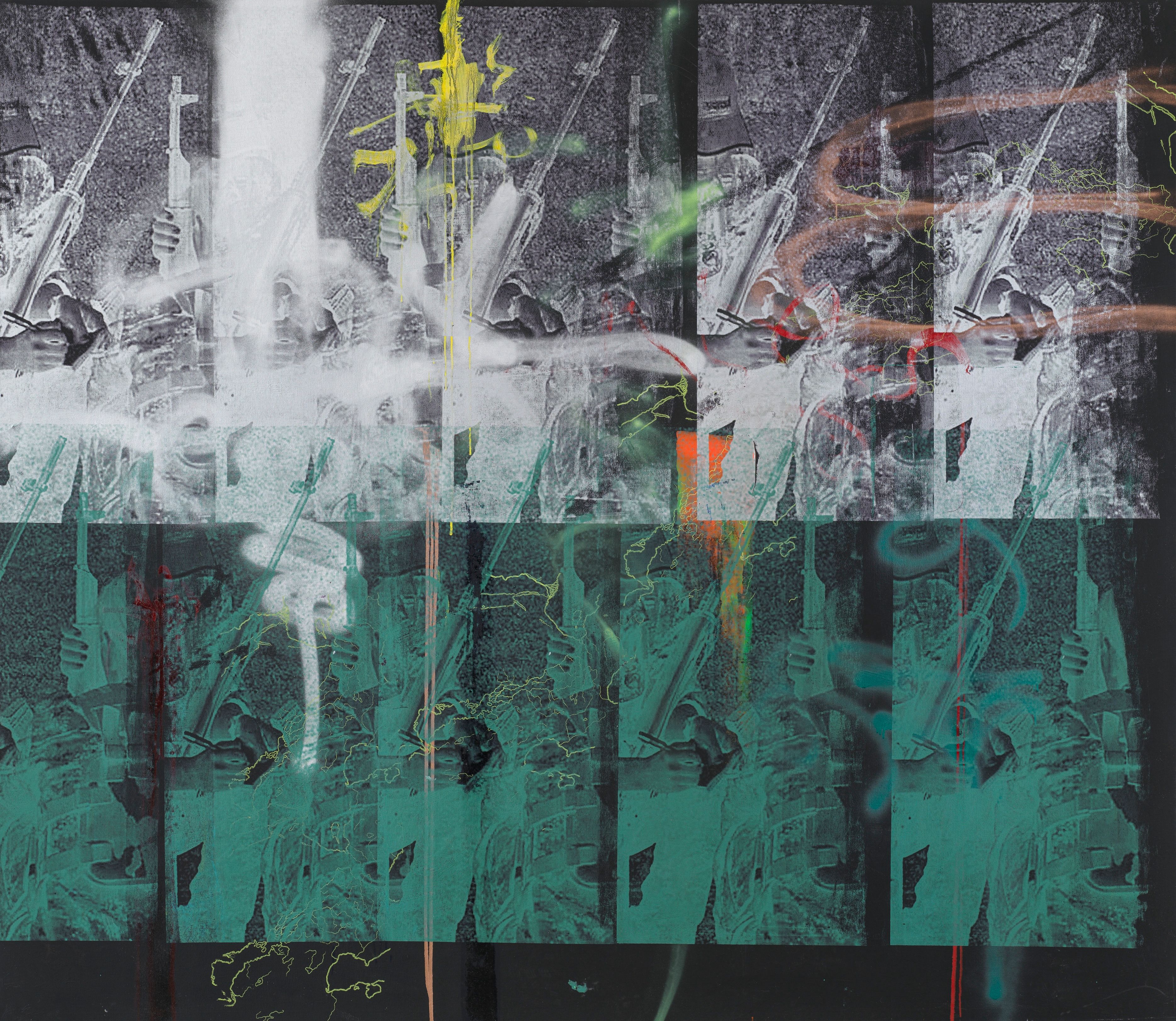
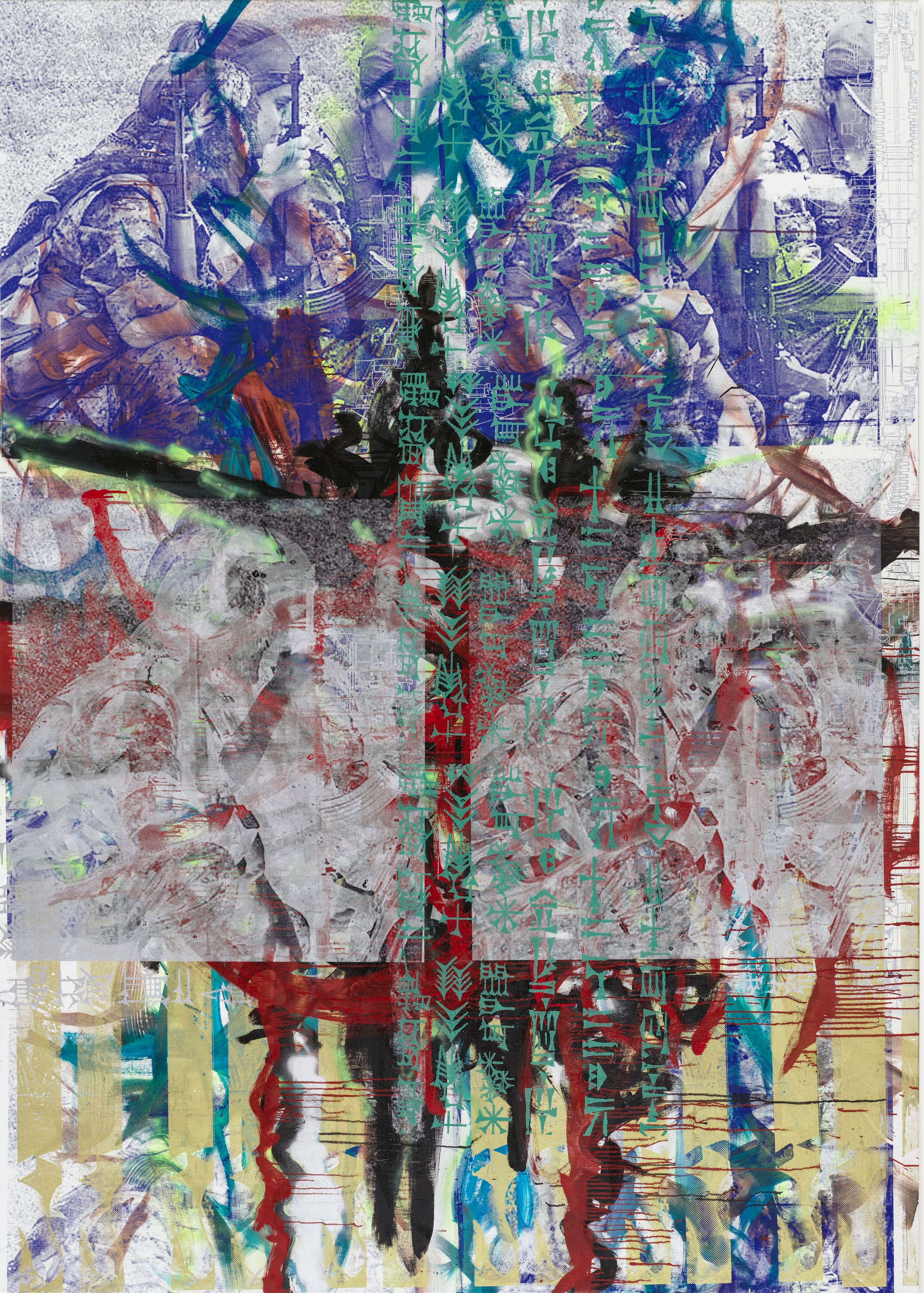
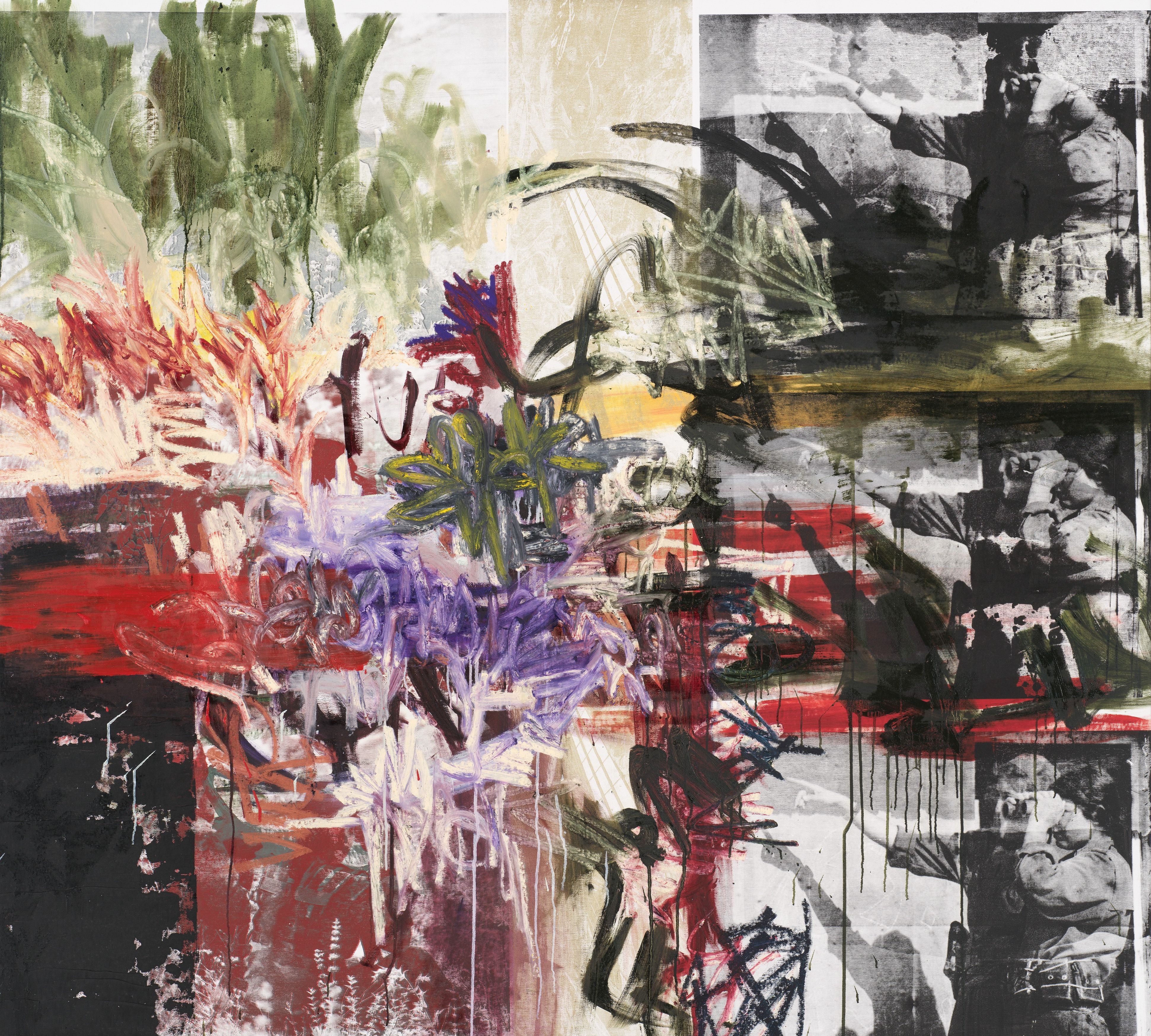
LY: I call it sometimes an anthropology of responsibility. I don’t really feel like I wanted to make work about my Kurdish identity, but I care deeply about all these women dying so young and being so courageous to fight for other women’s rights. I also see the connection we have. I was born in Kurdistan but I grew up in Oldenburg, a town in the north of Germany. I moved to the west so I can live safely while others who stayed there are fighting for other women to free them from ISIS. I’m very interested in how the death of all these young women is a condition of my own opportunity to live, and it creates a drive in my own life. Why do I work with these images? I’m here in the West so I draw this connection through media. It’s through all these images and all these videos.
LY: Yes, when I want to manipulate myself. I usually paint in silence because the paintings are already so loud and colourful. But when I have a deadline, I just need to pump myself up. I can get too much in my head when I’m making something. Then I know: OK, we need a revolution. I need to destroy everything. I put on music just so I can feel free again.
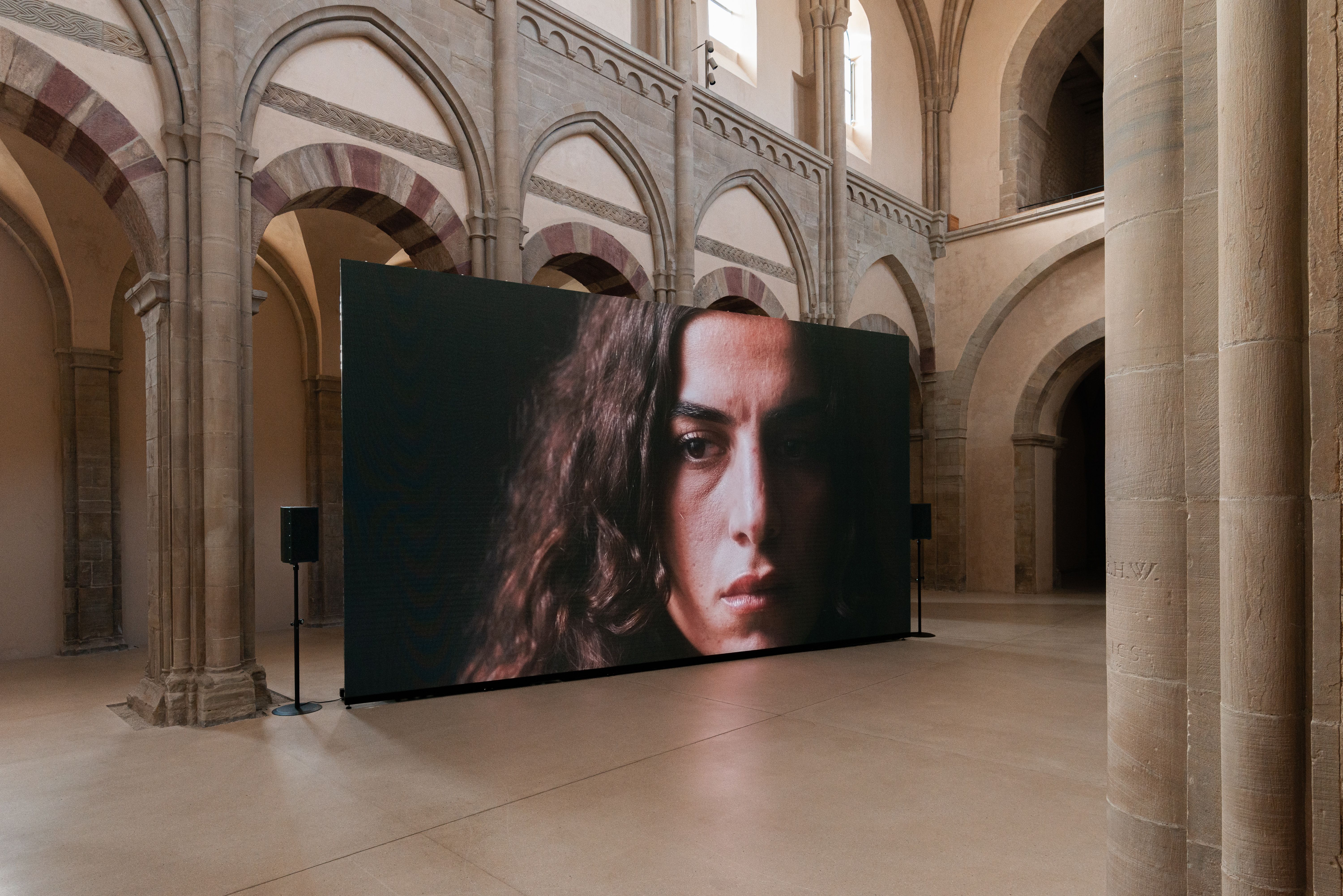
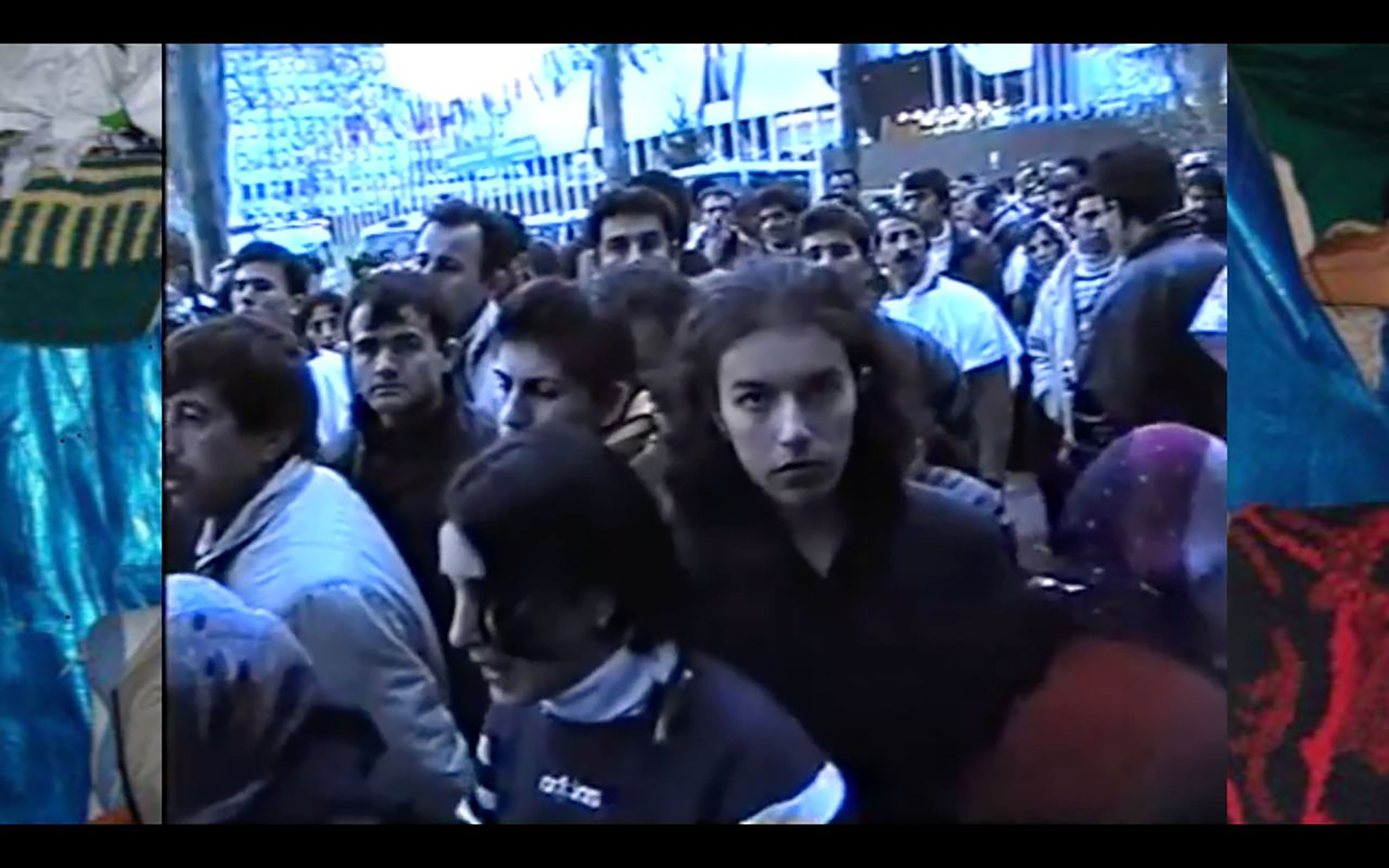
LY: Walking is a very big part of my practice. If I were to try to understand my practice, it would be through walking. I just like to walk and walk. I love walking in cities like New York and, well… Paris is another game. It’s such a flaneuse city. Even walking in Berlin, I have so much fun.
“The big benefit of coming from the working class was that when I went to art school, I really knew how to work, work, work”
LY: Art was not part of my youth or upbringing. I come from a working-class migrant family. I studied anthropology before I studied art because it wasn’t even close to my mind to go to art school. I never made art when I was young. It was only through anthropology that I got the instruments to deconstruct my environment, and at some point understood that art could be an option, too. But the big benefit of coming from the working class was that when I went to art school, I really knew how to work, work, work.
LY: I have a collection of calendars. I have, like, the calendar from the Kurdish Labour Party, where you have all these images of war on them. And then I have a calendar by the Yazidi Community Centre from Oldenberg with all these religious cult symbols. And then I have a trucker calendar, which reminds me of my dad, who is a trucker. I have a calendar from a Chinese restaurant in the place where I grew up. I just hang them all next to each other. It’s nice to see all these different years and different contexts together. —[O]
A respected voice in contemporary art discourse.
Focusing on ambitious storytelling and insightful art-world commentary. Ocula Magazine publishes in-depth interviews, critical essays and timely analysis on the artists, exhibitions and ideas driving the global art world.
Learn more about Ocula Magazine
Showcasing the best of the art world.
Ocula partners with galleries from around the world to highlight their artists, artworks and exhibitions. Gallery membership is by application and invitation, with each member vetted by an independent panel.
Learn more about Ocula Membership
Specialises in the sale of major artworks.
Led by a team with deep ties to the world’s leading auction houses, galleries and collectors. Ocula’s advisory team offers bespoke services to high-net-worth clients from around the world who are looking to acquire the best of contemporary and modern art.
Learn more about our team and services