Press Release

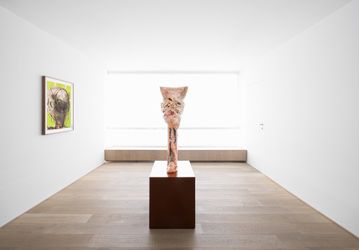
Xavier Hufkens is pleased to announce Huma Bhabha‘s (b. 1962) first solo exhibition with the gallery. Featuring new sculptures and drawings, The Setup presents an overview of the visual and material language that the artist has been developing for over three decades.

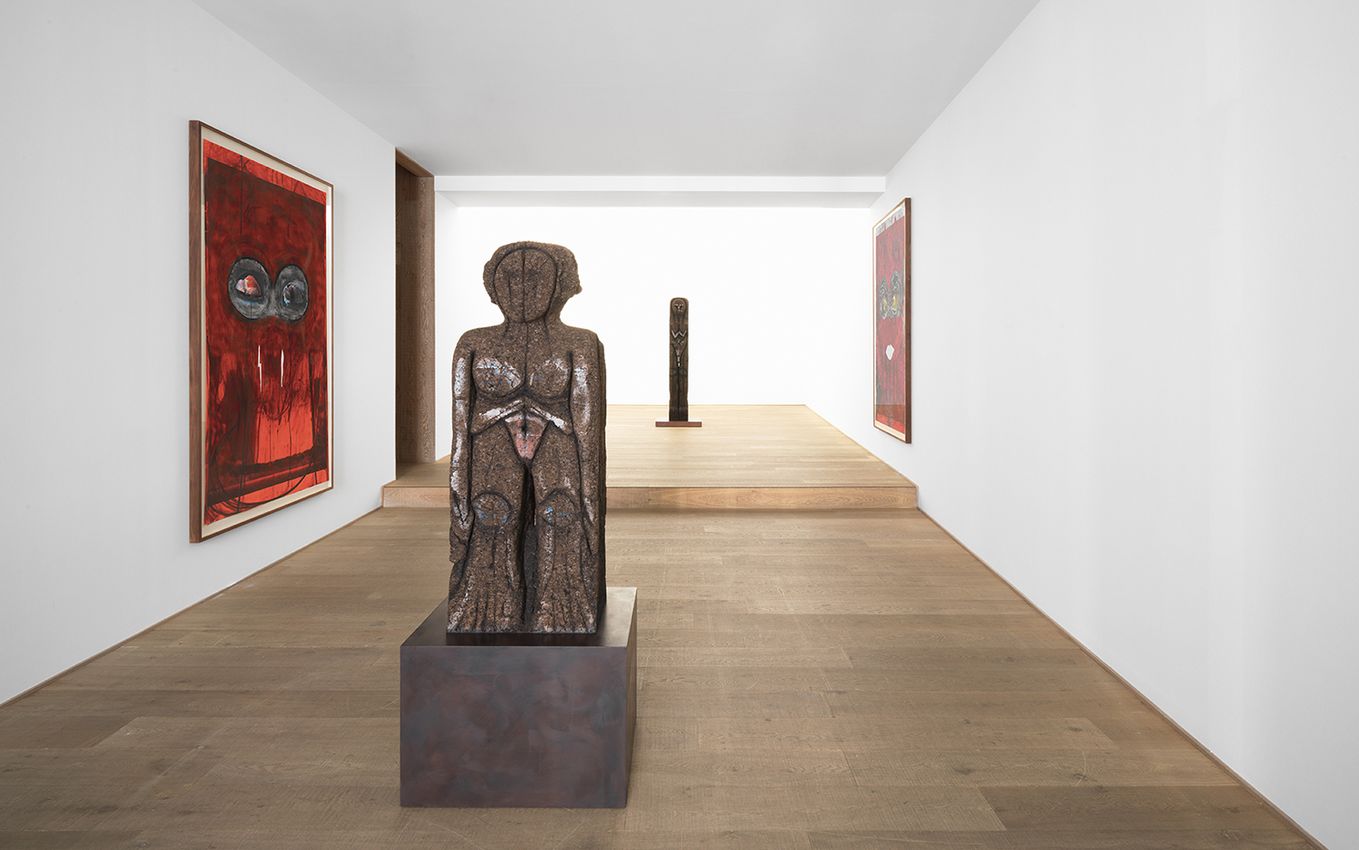
Bhabha’s sculptures are informed by a myriad of cultural references and executed in an equally diverse range of materials, processes and techniques. She is known for her evocative assemblages, crafted from modest and unconventional materials (clay, Styrofoam, wood, wire, plaster, jute, paint) and for her powerful, totemic figures in materials such as cork or bronze.

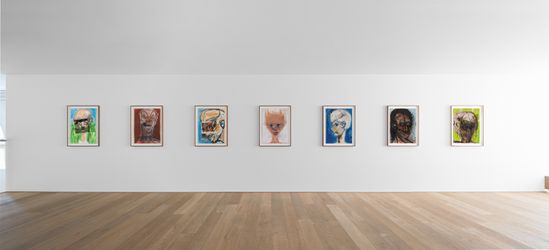
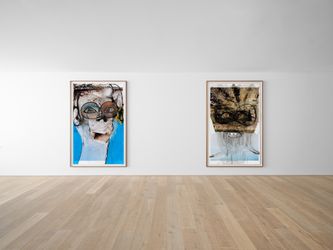
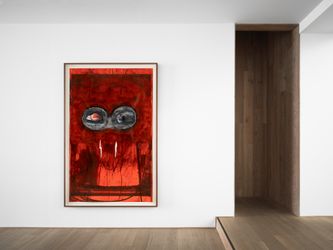
In parallel, Bhabha also creates complex, multi-layered works on paper in which the fearsome and the strange are rendered penetrating and beautiful. The exhibition brings together these various strands of Bhabha’s oeuvre in an installation that plays with the notion of reciprocal gazes: multiple pairs of two and three-dimensional eyes meet one another in exchanges that are further activated, disrupted or intensified by the viewer’s own act of looking.

Like an archaeologist or time-traveller, Bhabha moves back and forth between a wealth of visual traditions and different modes of temporality. Past, present and future are of equal relevance and significance in her work. She draws upon the iconographic languages and formal vocabularies of ancient archetypes (Greek and Roman statuary, Egyptian votive sculptures, African and Asian art), those of the modern era (with a particular focus on the twentieth-century artistic canon), contemporary culture (advertising, cinema, literature), and even the future (science fiction). Both Western and non-Western artefacts are sources of inspiration, with Bhabha’s work often betraying a latent tension between differing value systems, artistic functions, and forms of cultural production.

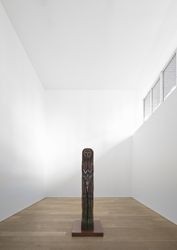
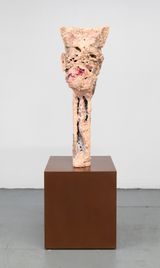
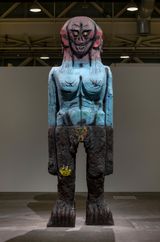
The Interlocutor and The Ambitious One, both made this year, are roughly hewn from cork and painted with acrylic, oil stick and lipstick–a gesture that serves to underscore the dichotomy between sacred, and eternal forms and everyday disposable materials. Carving and mark-making are crucial to Huma Bhabha, who considers such traces to be vital components of her work. The raw forms can be interpreted, on the one hand, as a homage to the anonymous hands of past masters, but on the other, to the vicissitudes of time. The gnarled, rough-looking surfaces of works such as Open Door or A Thousand Faces also call to mind the destruction of once venerated sculptures through iconoclasm or conflict, but also, finally, to their resanctification in museums.

In utilising such ancient languages to tell new stories, Bhabha engages in an act of mythopoesis, which is defined as the creative utilisation of a time-worn myth by an artist so as to crystallise the meaning of the current social and cultural situation. Bhabha says: ‘There is so much physical destruction happening in different parts of the world, to the extent that many functioning cities look like archaeological digs. One of the ways I like to approach the past is in a cinematic way, reimagining the past and projecting towards the future, just as movies often do.’ The title of the show, The Setup, implies an intended scheme or trick involving the exhibition’s characters. Are they cogs in a machine trapped in a setup, controlled by con men who are (mis)leading humanity towards a disastrous end?

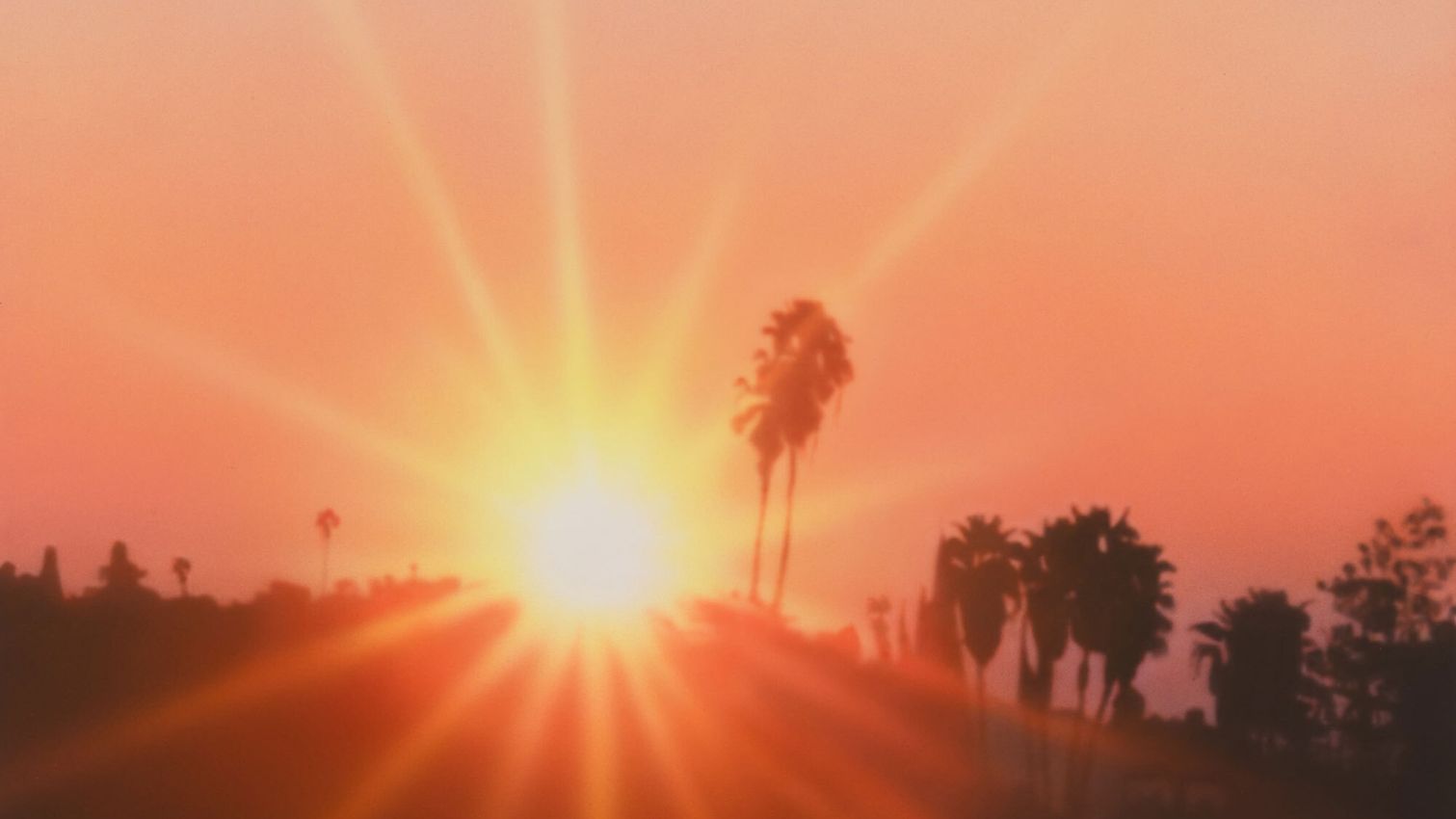
Bhabha’s graphic works take the form of expressive drawings on her own photographs or prints (many of which relate to Karachi, her place of birth), often with collaged elements drawn from calendars and magazines. Here too, the pictorial surface demands a form of visual excavation. She says, ‘Each layer and each mark are a story. For me, it is my process and the more layers the more complexed, complicated and intense the work becomes.’ Although presented as portraits, the deranged expressions and strange hybrid features of the subjects–part alien, part animal, part human–create a disturbing, semi-apocalyptic atmosphere that cannot be linked to any specific time, place or history. Animals and landscapes are recurrent themes in Bhabha’s oeuvre and point to an anxiety about the breakdown of the ecosystem. Several of the works feature mask-like rings for eyes, which creates an effect the artist has likened to ‘looking through a window,’ a reminder, perhaps, of the belief that eyes are linked to the soul and directly reflect our deepest emotions and fears.

Huma Bhabha (b. 1962) was born in Karachi, Pakistan and lives and works in Poughkeepsie, New York. Recent solo exhibitions include: Huma Bhabha: Against Time, BALTIC Centre for Contemporary Art, Gateshead, UK (2020- 21); Huma Bhabha: They Live, The Institute of Contemporary Art Boston, MA, USA (2019); We Come in Peace, Roof Garden Commission, Metropolitan Museum of Art, New York, NY, USA (2018) and Unnatural Histories, MoMA PS1, Long Island City, NY, USA (2012).

Read More

Installation Views

About the Artist

Huma Bhabha is primarily known for her figurative and often monumental sculptures in striking combinations of materials. Using salvaged objects such as fragments of furniture and industrial polystyrene boxes, and a wide range of media including clay, wood, cork, paper, plastic, rubber and metal, Bhabha creates sculptures that hover between the recognisably human and the otherworldly. Important to her practice, Bhabha also makes drawings on photographs and on paper, working with collage. Employing a distinctly personal visual language, she explores the human figure—an enduring presence in the art of all cultures and periods. Rich textural and tonal contrasts, particularly the juxtaposition of vivid, jewel-like colours with dark and muted hues, or the combination of organic and industrial materials, further intensify the supernatural qualities of her oeuvre. Bhabha will carve, scratch or paint the surfaces of her work, often adding expressive lines that not only convey physical attributes but also emotional states. Inspired by diverse cultural, literary and art-historical sources, her work conjures up a wealth of references: static and totemic, it alludes to the ancient Greek kouro or early African, Egyptian and Indian sculptures; charged and gestural, it evokes the language of modernism, expressionism and other more recent artistic developments. Sci-fi, horror movies, current events, popular novels and memories of Karachi also permeate her narratives. Resonant and multi-layered, her work transcends time and place to constitute an exploration of eternal themes such as war, colonialism and displacement.

View Artist Profile

Also Exhibiting at Xavier Hufkens

About the Gallery
Xavier Hufkens is one of Europe’s leading galleries for contemporary art. Located in Brussels, the gallery maintains a diverse exhibition programme with solo exhibitions of the gallery artists as well as group exhibitions and special projects. The gallery deals in a distinctive combination of painting, drawing, sculpture, photography, video and installation-based work.

The origins of the gallery date back to 1987, when Xavier Hufkens opened a gallery space in an un-refurbished warehouse in the neighbourhood of the South Station (Midi) in Brussels. During the early years, the focus of the gallery was upon mid-career and emerging artists and the gallery is known for having introduced some of the most influential contemporary artists to Brussels at a time when they were still relatively unknown. British sculptor Antony Gormley, who is still affiliated with the gallery, Felix Gonzalez-Torres and Rosemarie Trockel all showed in Belgium for the first time with Xavier Hufkens (Gormley in 1987; Gonzalez-Torres in 1991 and Trockel in 1993).

In 1992, the gallery moved to a 19th-century townhouse at 6 rue Saint-Georges, close to the Avenue Louise. Completely renovated by Belgian architects Paul Robbrecht, Hilde Daem and Marie-José Van Hee, the house quickly gained a reputation for being not just one of the most beautiful contemporary art spaces in the Belgian capital, but also one of the most interesting. The expanded exhibition programme coincided with the additional representation of a number of established artists from Belgium and abroad, including Richard Artschwager, Thierry De Cordier and Jan Vercruysse. In 1997, Hufkens expanded the gallery further by annexing the adjacent building and a number of new artists joined the gallery, including Louise Bourgeois, Roni Horn and Thomas Houseago.

A second space in the same street, at 107 rue Saint-Georges, opened in spring 2013. Located in the Galerie Rivoli, a mixed-use commercial development from the 1970s, the new gallery space was designed by Swiss architect Harry Gugger, who was previously in partnership with Herzog and De Meuron. Slegten & Toegemann, Brussels, managed the project.

An eclectic but very clear vision underpins all of the gallery’s activities: ‘The definition of the gallery was established from the start. The common thread, then and now, is quality over and above everything else, which I find more intellectually challenging than a forced definition. From the early days I juxtaposed established artists such as Michelangelo Pistoletto with someone like Felix Gonzalez-Torres when he was totally unknown. Today I still mix my work: I have no problem showing Malcolm Morley … alongside Robert Ryman, or Willem de Kooning.’ [Xavier Hufkens in The Art Newspaper, Issue 220, January 2011, published online: 20 January 2011]

Xavier Hufkens represents some thirty artists from different generations. He was part of the six-member selection committee for Art Basel during seven years and also participates in up to five international Arts Fairs annually. The gallery has partnerships with the estates of Louise Bourgeois, Willem de Kooning, Robert Mapplethorpe and Alice Neel.
View Gallery Profile
Address
107 rue St-Georges
St-Jorisstraat
Brussels
Belgium
Opening Hours
Tuesday – Saturday
11am – 6pm
(1)
Brussels 107 rue St-Georges
Xavier Hufkens
107 rue St-Georges, St-Jorisstraat, Brussels, Belgium

Opening hours
Tuesday – Saturday
11am – 6pm
The art world in focus