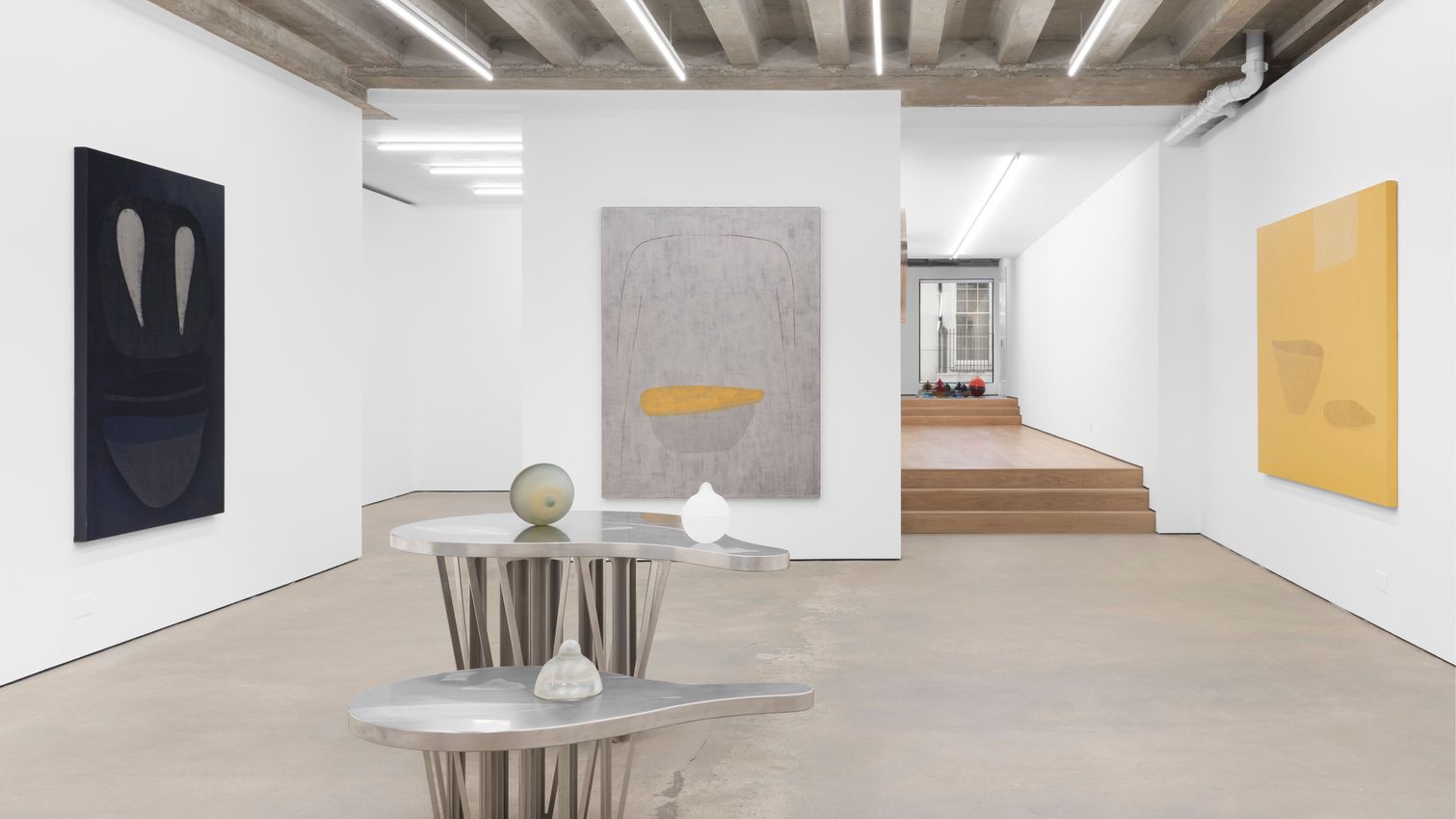
Ames Yavuz is pleased to present Gathering Tables, the first solo exhibition in the UK by leading Thai contemporary artist, Pinaree Sanpitak.
Over more than forty years, Sanpitak has built a practice based on meditative and recursive explorations of the human body, constantly made anew with material, conceptual and social-participatory experimentations. The Thai artist, who established herself in the thriving Southeast Asian contemporary art scene of the 1980s, has become well known for carving a deeply personal approach to art-making among global and local movements. The experience of giving birth to her son in 1993 brought a new awareness of the potentiality and enigma of the female body, and led to the discovery of the breast as a motif, which has since become a site of constant return. Not simply a stand-in for a woman’s body, the breast form is a portal for the artist, opening up broader investigations into the sensate, corporeal and spiritual. It is thus also a point of departure, the breast meeting with other form-concepts such as that of the Buddhist stupa (or memorial) leading to what Sanpitak calls the ‘Breast Stupa’, a form bringing the sacred into confluence with the sensuous. Especially since 2000, the artist has thought of the body as a generative vessel, holding, receiving and radiating. Rather than describing an already-complete object or determining a fixed identity, the body offers a porous space of experience and transformation in Sanpitak’s oeuvre. The works extend from the fullness of her lived and felt experience as an artist, woman and mother, and breathe and evolve alongside collaborators, viewers and participants.
Gathering Tables draws some of its key ideas from Sanpitak’s ongoing ritual-led collaborative project Breast Stupa Cookery, in each iteration of which the artist invites a chef to reinterpret her symbolic universe and create a meal using specially designed breast stupa-shaped cooking moulds and crockery. Cooking and dining here become a fluid performance between the artist, chefs and guests, the ritual activating the artist’s understanding of the body as an unbounded, changeable and communal entity. A new material exploration by the artist in the form of hand-engraved stainless-steel tables grounds the exhibition and offers a tangible physical metaphor to the notion of gathering. ‘We need to come to the table,’ the artist invites us. ‘This is a site to convene, connect and exchange.’
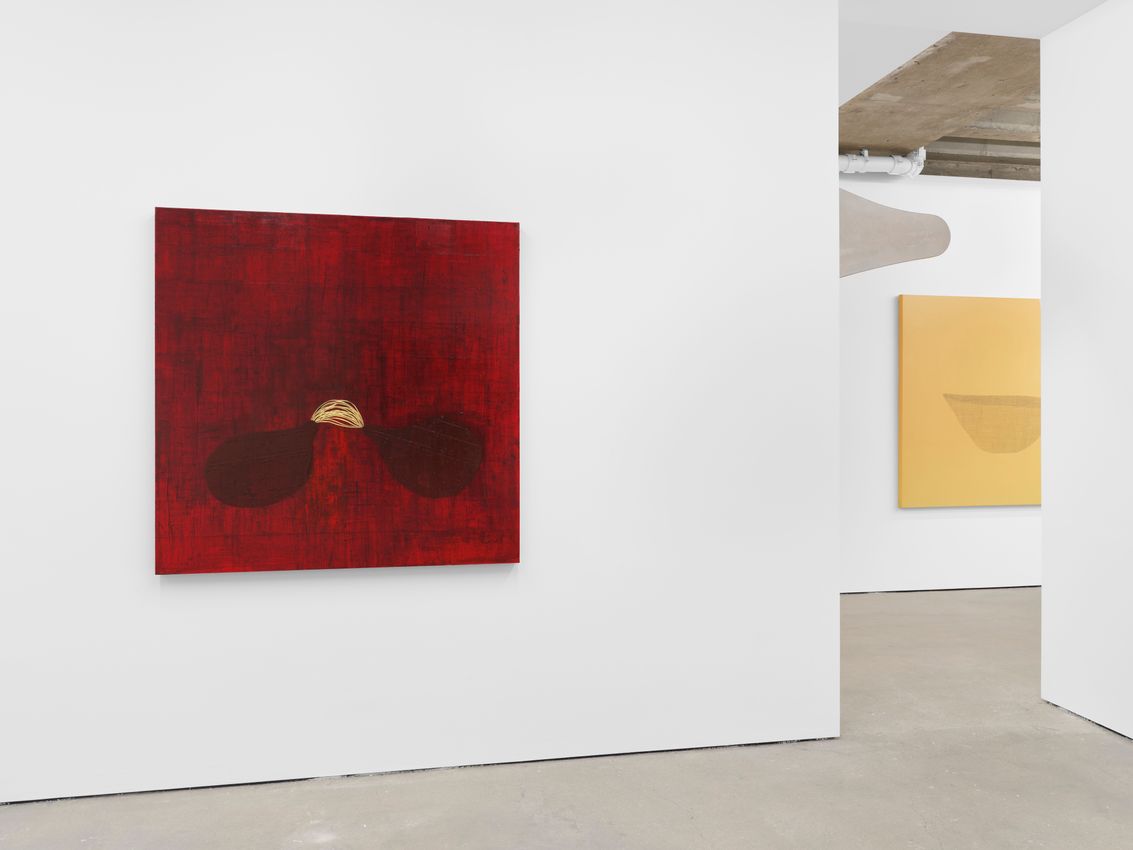
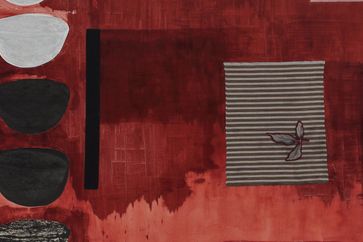
Collage in the artist’s large canvases repeat the notion of gathering, at the level of process. A photograph of fruit/ vegetables taken by the artist sits nestled within a form Sanpitak calls the ‘breast fruit’ in Balancing Cloud, for example; the fruit being a recurring image with which the artist has thought through ideas of birth and origin. In Ancestral Forest, a piece of fabric cut from a garment in her son’s fashion label, Shone Puipia, floats among painted forms. A reflective process drives the work, gathering and layering associations through personal and deep time.
In works such as Cloud and Eggs, Sanpitak’s forms seem to disappear into an ethereal haze. Drawing from the Pali-Sanskrit word payotara, simultaneously meaning ‘beholder of milk’ and beholder of water’, the body-vessel here abstracts and dissipates to an outer limit, into the atmosphere. ‘The breast is unpredictable, sensual, a provider of sustenance and of drink. Not unlike clouds...,’ the artist says.


Widely known for her ‘breast stupa’ motif, Thai artist Pinaree Sanpitak is equally known for her fluid transitions between ideas and mediums, constantly building on prior works and concepts. The critically recognised conceptual artist is often categorised as a feminist artist who focuses on the female self and motherhood, but while much of Sanpitak’s practice explores womanhood and the female body, her work is largely an exploration of the human form and humanity, seeing the body as a site of experience and impressions. Her works (sculpture, painting, drawing, installation, ceramic, printmaking, photography, performance) often delve into the affectual relationships between humans and draw on themes of fertility and comfort.


A respected voice in contemporary art discourse.
Focusing on ambitious storytelling and insightful art-world commentary. Ocula Magazine publishes in-depth interviews, critical essays and timely analysis on the artists, exhibitions and ideas driving the global art world.
Learn more about Ocula Magazine
Showcasing the best of the art world.
Ocula partners with galleries from around the world to highlight their artists, artworks and exhibitions. Gallery membership is by application and invitation, with each member vetted by an independent panel.
Learn more about Ocula Membership

Specialises in the sale of major artworks.
Led by a team with deep ties to the world’s leading auction houses, galleries and collectors. Ocula’s advisory team offers bespoke services to high-net-worth clients from around the world who are looking to acquire the best of contemporary and modern art.
Learn more about our team and services