



Press Release

Philip Metten (b. 1977 in Genk) presents his second solo exhibition at Zeno X Gallery.

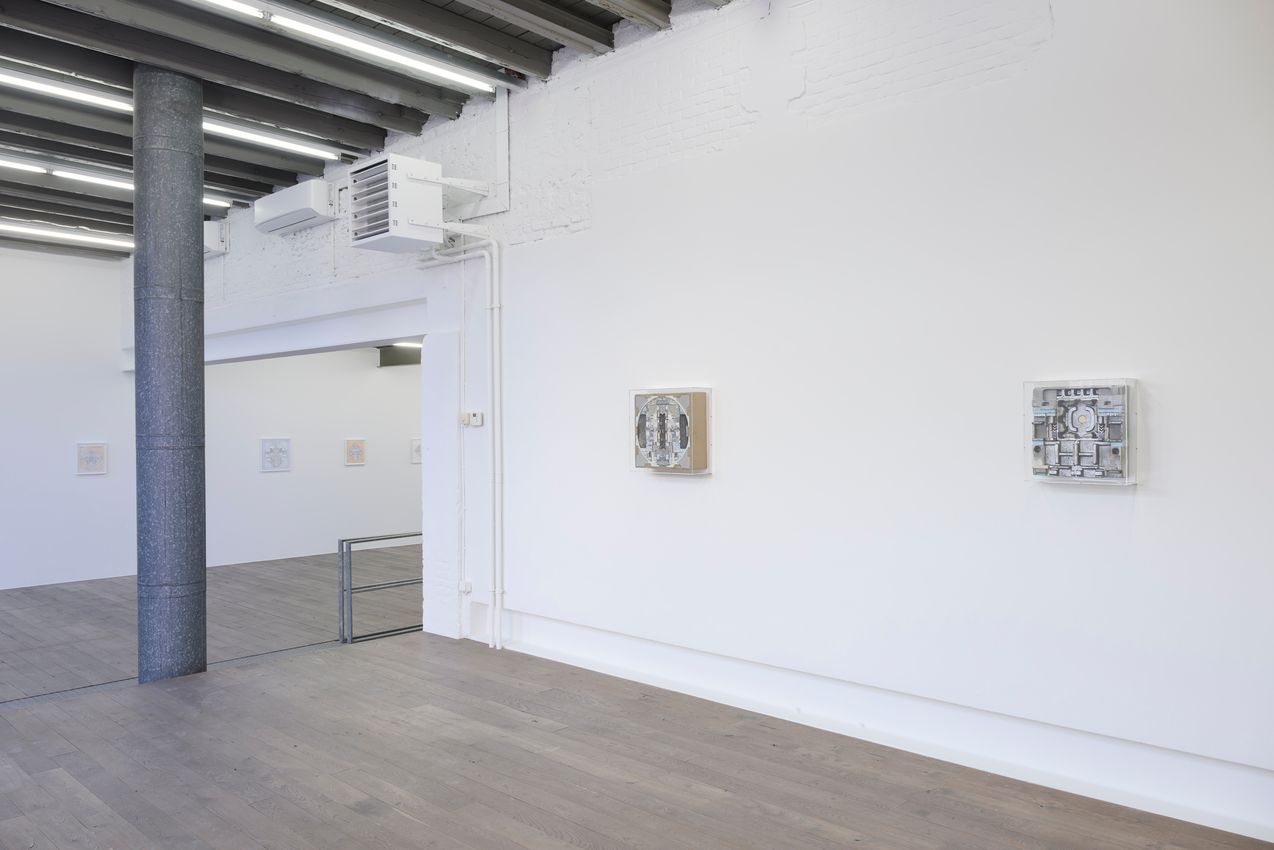
The exhibition offers an overview of the works Metten created in recent years and gives aninsight into the different stages he went through. He experimented with different materials andmedia, ranging from paper collages to wall sculptures in papier-mâché and paintings.

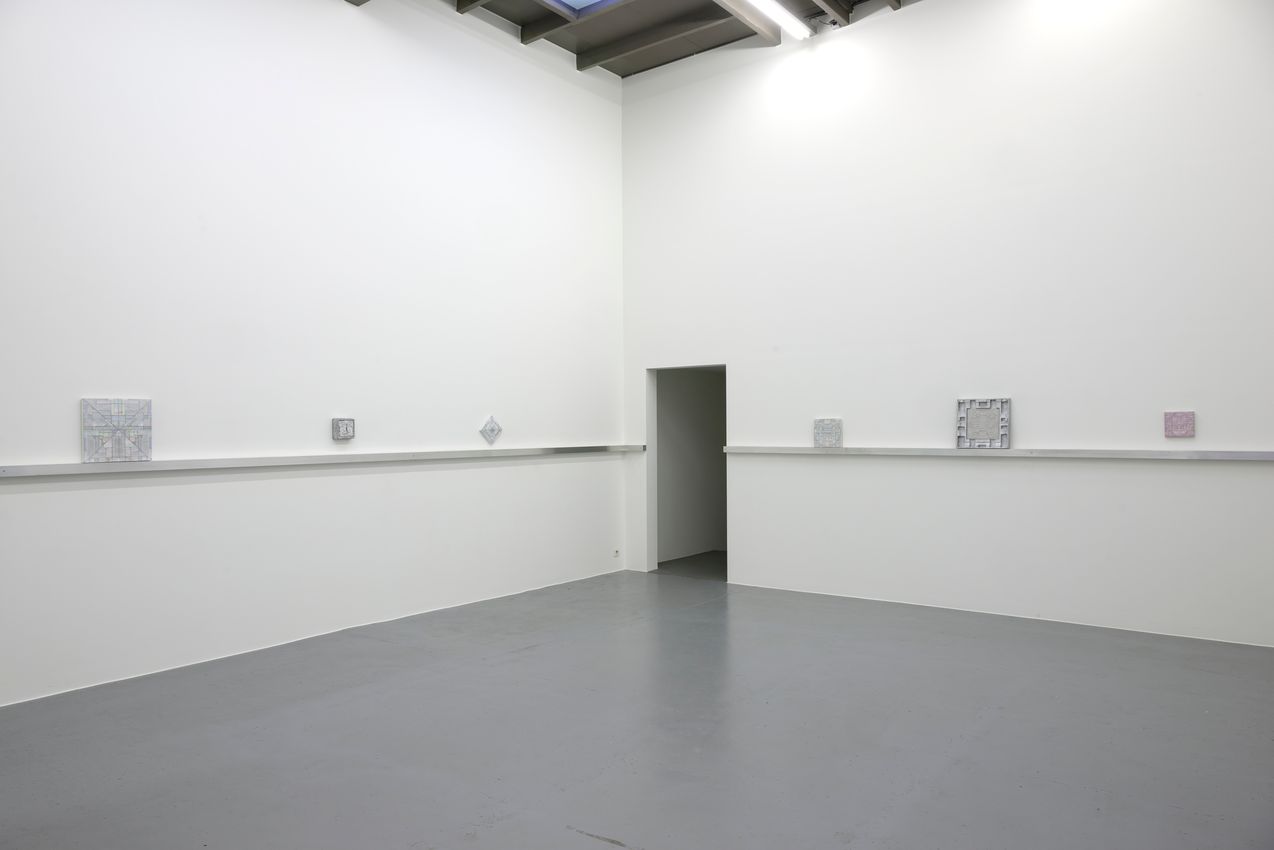
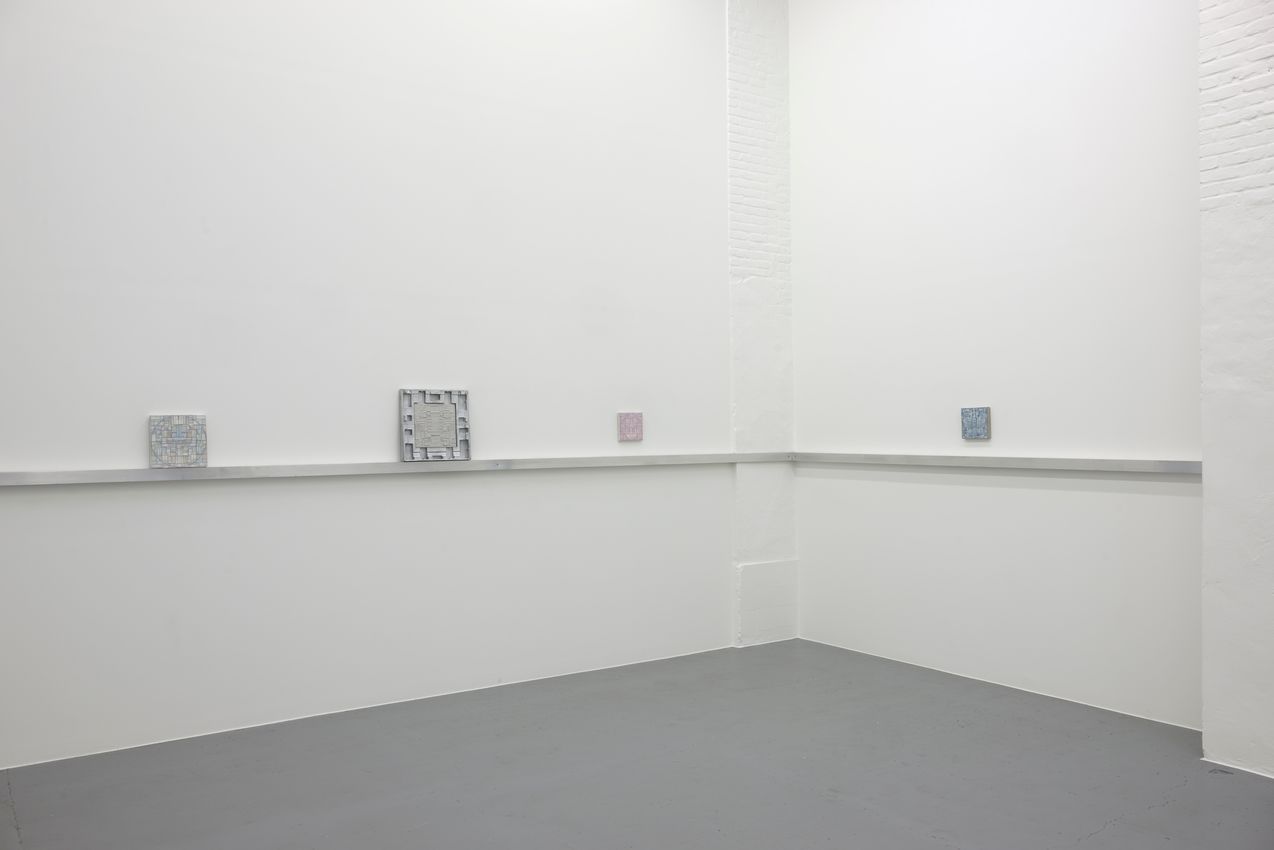
In the first space, an aluminium profile acts both as a zero point and as a thread that connectsthe various works. This scenographic intervention is characteristic of Philip Metten’s workmethod: he often sets out a certain system, creating more room for interpretation in theprocess. In 2015, for instance, he designed a sculpture that could also be used freely asthe scenography for a group exhibition at Extra City Kunsthal. Aluminium is ubiquitous inMetten’s architectural practice: the material plays a prominent role in the interior of the ESSENrestaurant in Borgerhout and also recurs as the ‘skeleton’ of his mobile CINEMA. Aluminiumis often employed to demarcate a space or to create a spatial drawing. The intervention in thegallery is concise but impactful. The aluminium profile serves as a plinth and emphasizes thesculptural rather than the pictorial qualities of the collages and paintings.

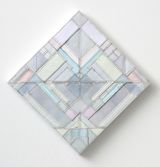
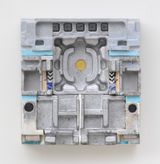
The paintings are visually related to Metten’s paper collages and are constructed in a similarway. Instead of shreds of paper, Metten cuts up painted pieces of linen canvas which he thenstitches together layer by layer, like a city expanding from a core. The superposition of layersturn the paintings simultaneously into reliefs. What stands out in these paintings is the factthat Metten stays true to the use of colour in his works on paper. The pastel colours refer tothe millimetre paper used to make technical drawings, of which the artist has amassed a largecollection. In some paintings, Metten evokes the stitched seams by scratching the canvaswith a needle and filling in the grooves with paint.

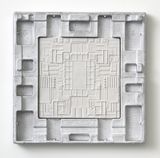
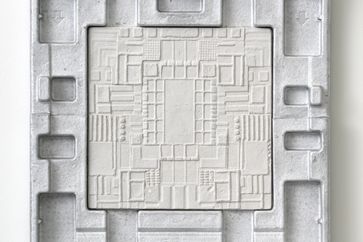
Philip Metten’s paper collages have become increasingly spatial in recent years. He makescasts in papier-mâché that act as surroundings rather than frames for the collages. Thepapier-mâché is made with the remainders of the collages, as a result of which the paperis used purely as a material in the cast and applied in a pictorial way in the collage. Thecasts are made using the plastic packaging of food and consumer items. The design ofthese standardised packages is reminiscent of Metten’s own formal idiom and also ties inwith his interest in the functionality and human scale that usually characterise these objects.Packaging made of polystyrene and cardboard is cut and assembled by Metten. They areboth autonomous artworks and preliminary studies or models for possible structures orfaçades. The assemblages and collages are invariably constructed from separate fragmentsthat Metten brings together without having a predetermined end result in mind. The finalimage refers to topographical maps, architecture and (pixelated) screens.

Philip Metten’s new book is titled Five Works. It was designed by Joris Kritis and publishedby Roma Publications. The volume offers an overview of the artist’s architectural andscenographic practice through five cases: a bar (BAR, 2013), the façade of an art gallery (153.Stanton, 2015), the scenography for a group exhibition (The Corner Show, 2015), a mobilecinema (CINEMA, 2017) and a restaurant in Borgerhout (ESSEN, 2021).

Read More

Installation Views

About the Artist

In his practice Philip Metten freely moves between the respective media and regimes of sculpture and architecture, purposefully suspending disciplinary differences. Bringing together sculpture, drawing, interior and building design with kaleidoscopic intensity, the artist develops a visual language that espouses future with prehistory. As he draws upon references from ancient sculpture, modernist and postmodernist architecture, to science-fi film and experimental cinema, Metten presents us with works that can be read as either mask or architectural model, heraldic sign or urban topography, ancient emblem or futuristic insignia.

View Artist Profile Philip Metten contemporary artist
About the Gallery

In 1981, Frank and Eliane Demaegd founded Zeno X Gallery in an early 20th century townhouse in the Antwerp South district. In the early years the program of the gallery was mainly focused on architecture and installations with artists such as John Körmeling, Rem Koolhaas, Anne-Mie Van Kerckhoven and Patrick Van Caeckenbergh. Nowadays the gallery represents around thirty artists which operate in many different mediums such as painting, sculpture, film, photography and performance.

View Gallery Profile
Address
Godtsstraat 15
Borgerhout
Antwerp
Belgium
Opening Hours
Wed - Sat, 1pm - 5pm
Or by appointment
(1)
Antwerp Godtsstraat 15
Zeno X Gallery
Godtsstraat 15, Borgerhout, Antwerp, Belgium
+32 321 616 26
http://www.zeno-x.com

Opening hours
Wed - Sat, 1pm - 5pm
Or by appointment
The art world in focus
