





ANNA-EVA BERGMAN
1909-1987, SwedenAnna-Eva Bergman’s artistic practice was rooted in rhythm, combining lines, shapes and colours to produce abstract paintings inspired by the landscapes of Scandinavia and the Iberian Peninsula. Her talent for observation led to an early career as a press illustrator and cartoonist.
Early Years
Born in Stockholm, Bergman grew up in Norway and attended Oslo’s School of Applied Arts (1927) and the School of Applied Arts in Vienna (1928). She relocated to Paris in 1929, studying at the Academy André Lhote and the Académie Scandinave. Bergman was ill with digestive disorders for much of her adult life, including periods of hospitalisation.
In Paris, she met and married German painter Hans Hartung. They lived together in Germany and Minorca until their separation in 1937 (they remarried in 1957. Bergman and Hartung spent much of their second marriage in Antibes, France, which is now home to the Fondation Hartung-Bergman.
Anna-Eva Bergman: Artworks
Bergman began her career by painting in a figurative style, but during the 1950s she moved towards abstraction, concentrating on rhythm and line. At this point, she also began painting with metal leaf, which creates light. Her abstract images reflect nature and architecture.
- Composition (1951) was a commercial commission, a tryptich painted for Hotell Farris Bad in Larvik. It marks her change in direction towards abstraction. The painting was moved to the Hotel Royal in Oslo, but the guests were not impressed and it disappeared from public view.
- N° 35-1958 (1958) demonstrates Bergman’s fascination with nature. A circular foil cut-out, painted over in turquoise, is evocative of a celestial body.
- N° 2-1967 Glacier (1967) also uses sheet metal to evoke the coldness of glaciers, following Bergman’s travels around Norway.
- Horizons were a key part of Anna-Eva Bergman’s later works (from both Spanish and Norwegian landscapes); 1971’s Horizon à une ligne depicts the horizon as a single line cutting through the canvas.
Anna-Eva Bergman: Exhibitions
Select Solo Exhibitions
- Becoming Anna-Eva Bergman, National Museum, Oslo (2024)
- A Journey Within, Musée d’Art Moderne, Paris (2023)
- From North to South, Rhythms, Bombas Gens, Valencia (2018–2019)
Select Group Exhibitions
- And We’ll Never Be Parted, Kunsthalle Praha, Prague (2025)
- Escape from Reason: Nordic Art and the Occult, Sørlandets Kunstmuseum, Kristiansand (2022)
- Restons Unis: Sous Le Soleil Exactement, (Let’s Stay United: Right Under the Sun) Perrotin, Paris (2020)
Anna-Eva Bergman FAQs
Did Anna-Eva Bergman and Hans Hartung break up?
Yes, Anna-Eva Bergman broke up with Hans Hartung, whom she had married in 1929. In April 1937, she wrote a letter outlining her reasons for leaving the marriage, including that she needed to develop as an artist in her own right. However, they regained contact after the Second World War and remarried (as artistic equals) in 1957. They remained married until her death in 1987 (Hartung died in 1989).
What were Anna-Eva Bergman’s influences?
Anna-Eva Bergman’s early work was influenced by Edvard Munch; she was also inspired by Symbolism. In Austria in 1928, studying under Professor Eugen Steinhof at the Kunstgewerbeschule in Vienna, she produced her first abstract paintings. A move to Paris saw her work influenced by the modernist realists of the Neue Sachlichkeit, including Otto Dix. When she started painting again after the Second World War, she moved away from figuration (encouraged by surrealist painter Bjarne Rise) towards compositions featuring floating shapes.
What materials and techniques did Anna-Eva Bergman use?
Anna-Eva Bergman’s work from the 1950s until the late 1960s is notable for its use of gold and silver leaf. She pasted the metal leaf to her canvases to create shapes that catch the light. She also painted over the leaf and allowed it to reappear through scratches or incisions. In her later years, her style simplified and her colour palette became more limited.
Ocula


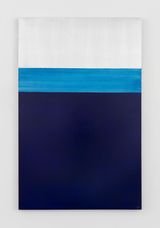


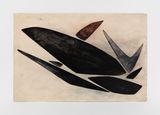


Explore Anna-Eva Bergman's Exhibitions




Explore and Follow Artists Shaping Contemporary Art
A respected voice in contemporary art discourse.
Focusing on ambitious storytelling and insightful art-world commentary. Ocula Magazine publishes in-depth interviews, critical essays and timely analysis on the artists, exhibitions and ideas driving the global art world.
Learn more about Ocula Magazine
Showcasing the best of the art world.
Ocula partners with galleries from around the world to highlight their artists, artworks and exhibitions. Gallery membership is by application and invitation, with each member vetted by an independent panel.
Learn more about Ocula Membership
Specialises in the sale of major artworks.
Led by a team with deep ties to the world’s leading auction houses, galleries and collectors. Ocula’s advisory team offers bespoke services to high-net-worth clients from around the world who are looking to acquire the best of contemporary and modern art.
Learn more about our team and services