





CARLO GUAITA
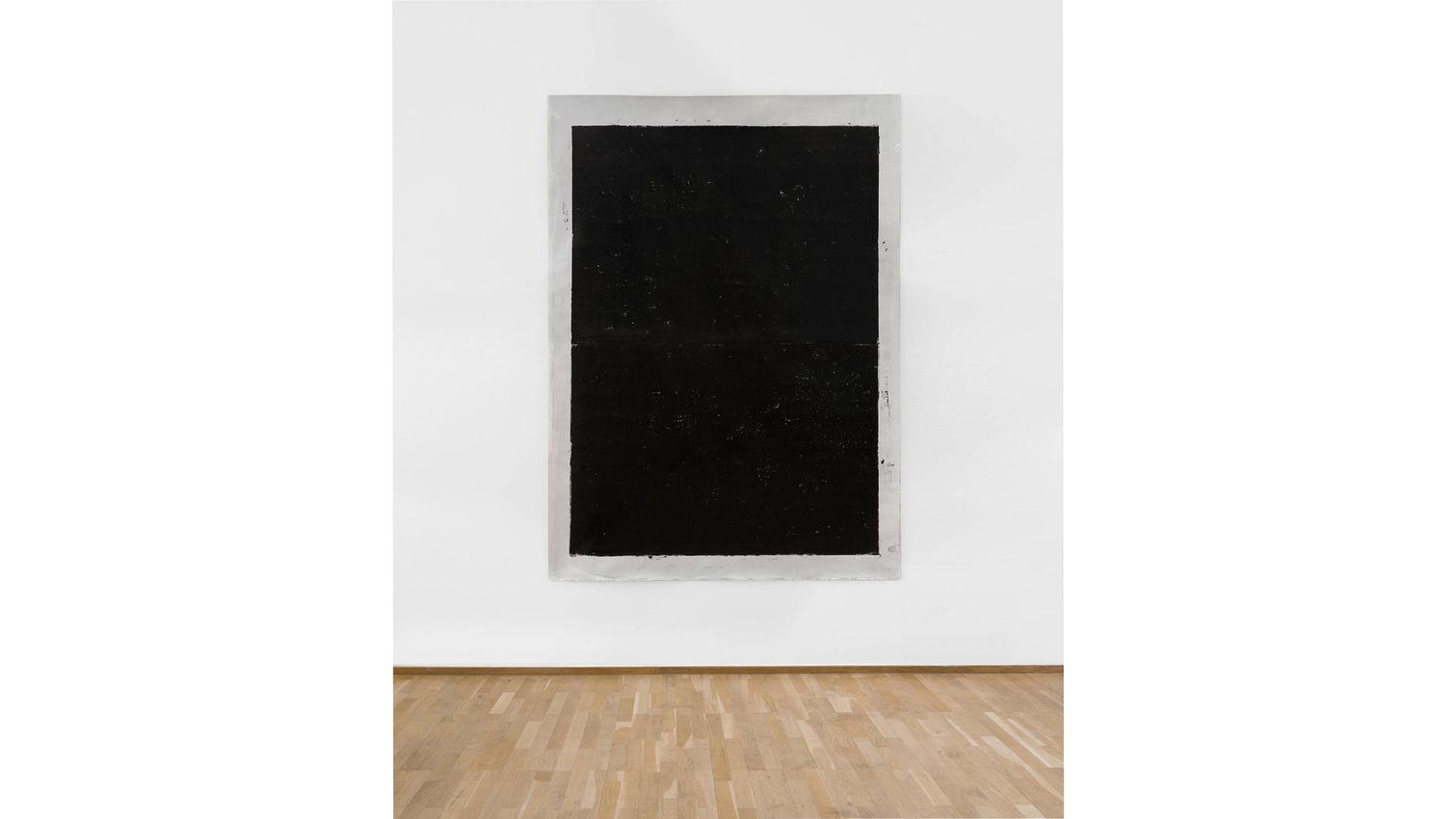
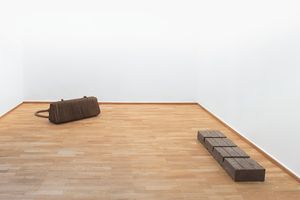
b. 1954, ItalyCarlo Guaita, an Italian artist born in Palermo in 1954, takes us on a journey through sculpture (cement, stone or cardboard), painting and books, playing with a demanding lexical grammar that is manifested above all in the titles of series on which he has been working for years now, such as Dagherrotipi, Orizzonte, I Colassati, Instead of poetry, I Vuoti, Enciclopedia Incerta, Fantasmi, Pozzi, Immersi ...These are sometimes also the titles of small booklets that the artist publishes almost every year. It is difficult to describe Carlo Guaita’s work, so varied and complex is it, but we can find some characteristic elements: the stratification, the play on language, the color black...
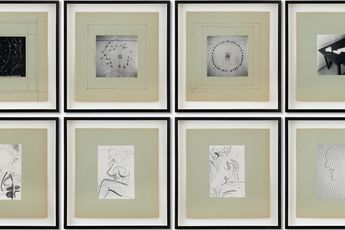
In the series Dagherrotipi ou Pozzi, for example, these are small paintings, made as always with Guaita on the simplest possible material, even fragile, by endlessly passing and repassing a diluted color. The color is not extended but left to horizontal sedimentation. Observed from a distance, the Dagherrotipi appear flat and reflective, but when viewed up close they reveal themselves to be absorbent, saturated, and deep. As Denis Viva says in his text: “Often, but not always, black makes its appearance. Its intensity is such that it lets us perceive a presence rather than an absence.... It should be a total absence of light, but paradoxically, it has its own force of emanation. Sometimes it is due to saturation, a layer, a pressure, a tearing. In all cases, it is an absence obtained by stratification... Under the layer of black, like a kind of overwriting, there are sometimes illustrations. Guaita never chooses them at random, although they are part of a very vast repertoire from which they emerged with a fair dose of indifference. Not because they are equivalent, but because they participate in the same project.” These are the tables of Enlightenment iconography whose roots are found in the books and illustrations of the Encyclopedia, from the 18th century to the present day.
Courtesy Galerie Bernard Bouche





Explore and Follow Artists Shaping Contemporary Art
A respected voice in contemporary art discourse.
Focusing on ambitious storytelling and insightful art-world commentary. Ocula Magazine publishes in-depth interviews, critical essays and timely analysis on the artists, exhibitions and ideas driving the global art world.
Learn more about Ocula Magazine
Showcasing the best of the art world.
Ocula partners with galleries from around the world to highlight their artists, artworks and exhibitions. Gallery membership is by application and invitation, with each member vetted by an independent panel.
Learn more about Ocula Membership
Specialises in the sale of major artworks.
Led by a team with deep ties to the world’s leading auction houses, galleries and collectors. Ocula’s advisory team offers bespoke services to high-net-worth clients from around the world who are looking to acquire the best of contemporary and modern art.
Learn more about our team and services