Significant early works by Carolee Schneemann include Four Fur Cutting Boards (1962—1963), a kinetic painting-sculpture hybrid comprised of cutting boards, fur scraps, glass, motorised components, and other found objects, along with bold, gestural paint strokes that revealed her painting background.
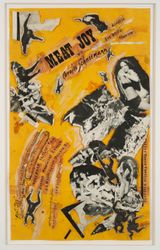
For her provocative performances Eye Body (1963) and Meat Joy (1964), Schneemann organised both her own and other performers’ nude or partially-nude bodies to engage expressively with various forms of meat, found objects, and paint materials in pioneering explorations of performance and improvisation in art, aligned with the ‘happenings’ of the time.
Schneemann also produced numerous conceptual films, including Fuses (1964)—an explicit performance-based video exploring desire, sexuality, and eroticism—and Plumb Line (1968), an experimental narrative film.
Art, Performance, and the Female Body
Schneemann’s works can be seen as feminist interpretations of the conceptual principles that guided the artistic movements of her era, including action painting, abstract expressionism, performance art, Fluxus, Structural film, and ‘happenings’. Foregrounding her own experiences and actions, Schneemann invited her audiences to consider the body as a vessel for knowledge and experience, and the female body as a source and site for artistic expression, while challenging the inherent dominant masculinity of contemporary art discourse and practice.
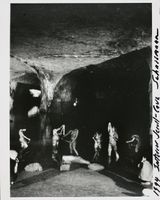
One of the 20th-century’s most iconic avantgarde works, Schneemann’s Interior Scroll (1975) was a multi-part performance that culminated in the nude artist drawing a paper scroll out of her vagina and reading its contents aloud.
In More Than Meat Joy: Performance Works and Selected Writings (1979), Schneemann wrote: ‘I thought of the vagina in many ways — physically, conceptually: as a sculptural form, an architectural referent, the source of sacred knowledge, ecstacy, birth passage, transformation. ... This source of ‘interior knowledge’ would be symbolized as the primary index unifying spirit and flesh ... the source of conceptualizing, of interacting with materials, of imagining the world and composing its images.’
Later Years and Teaching
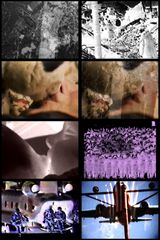
Later works by Schneeman include Infinity Kisses I (Cluny) (1981—1987), a photographic series capturing the artist kissing her cat 140 times; Terminal Velocity (2001), a series of black-and-white newspaper scans of people falling from the World Trade Center following the 9/11 terrorist attacks; and Devour (2003—2004), a video installation juxtaposing war footage with everyday American life.
In her lifetime, Schneemann held teaching positions at the California Institute of the Arts, the School of the Art Institute of Chicago, Hunter College, Rutgers University, and SUNY New Paltz.