


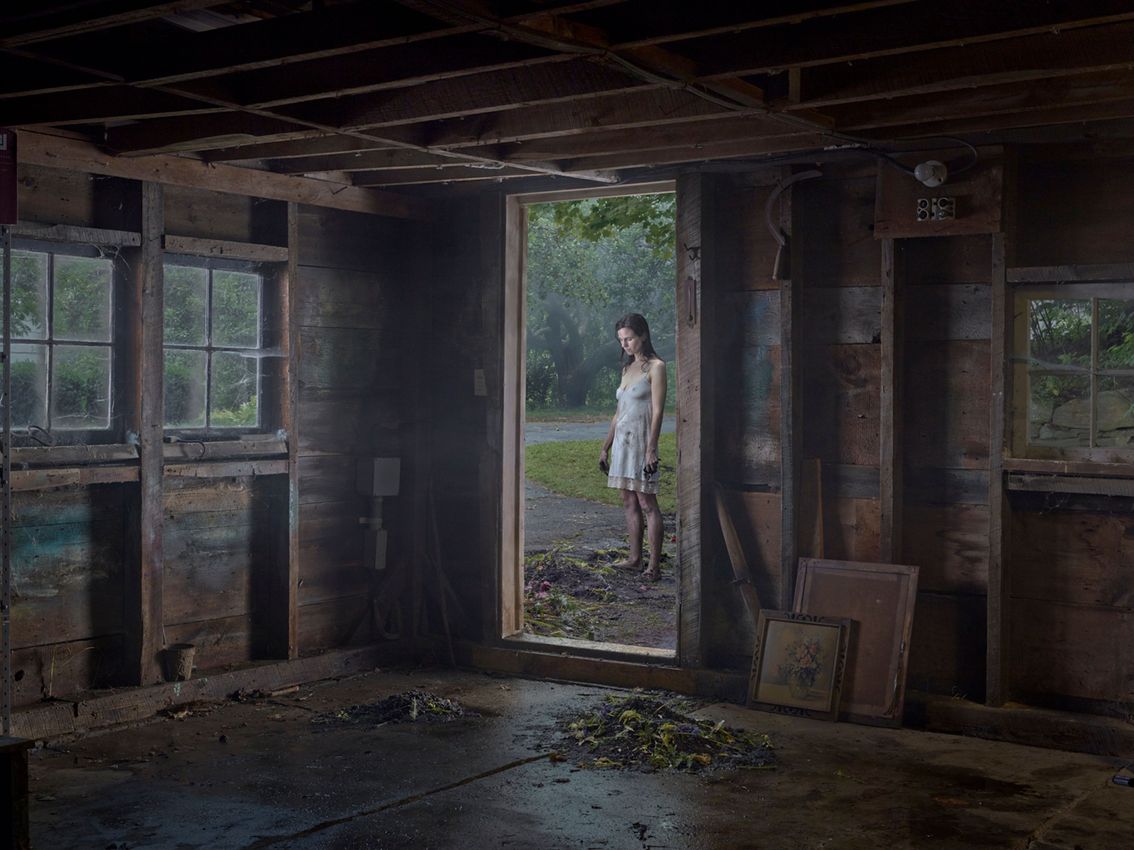
GREGORY CREWDSON
b. 1962, United StatesGregory Crewdson mines everyday American experience to produce elaborate, detailed and often surreal photographs of small-town life. Known for creating meticulously constructed sets and working with movie-sized production teams, his images project isolation, thought and mystery.
Early Years
Gregory Crewdson was born in 1962 in Brooklyn, New York City, to a psychologist father and a mother who taught the Alexander technique. He spent summers in a cabin in Becket, Massachusetts, in an area called the Berkshires (where he subsequently shot many of his photos). Crewdson’s father took him to MoMA in 1972 to visit the Diane Arbus retrospective. He studied at SUNY Purchase between 1981—1985, gaining his BFA, which he followed with an MFA from Yale School of Art in 1988.
Gregory Crewsdon: Artworks
“Making pictures happens simultaneously with all of life,” Crewdson says on his Substack, “all the ups and the downs, throughout everything I do, and across every activity.” Crewdson’s cinematic images dive beneath the surface of suburban, everyday life in America, revealing the intensity in the ordinary. Crewdson works collaboratively, with a movie-style production process and large crews of technicians, actors and set designers. His photographs have a theatrical quality, often depicting isolated figures, seemingly deep in reverie.
- In 1996, a period of personal upheaval for the artist, Crewdson lived alone in the family cabin in the Berkshires, Massachusetts. He decided that every night, he would go outside and photograph fireflies—over two months, he shot thousands of images, but when he had the contact sheets processed, he was emotionally unable to look at them. It was not until 2014 that he was able to revisit the project, which he then fell in love with, leading to the exhibition Gregory Crewdson: Fireflies.
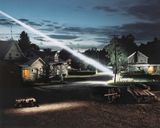
- Crewdson’s Twilight series (1998—2002) was a selection of large-format, psychologically realist photographs exploring themes of imagination and memory, viewing suburban space through nocturnal eyes. Shot in and around the town of Lee, Massachusetts, the production team comprised more than 30 technicians and assistants (and a tree surgeon). Speaking to The New York Times in 2020, Crewdson said: “Twilight is this magic hour. It’s the perfect hour between day and night, when ambient and artificial light come together. It’s a time of transcendence when extraordinary things happen.”
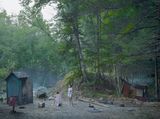
- Cathedral of the Pines (2013_2014) was made in the forests surrounding the town of Becket, Massachusetts. Crewdson’s images recalled American and European paintings from the 19th century, and the figures he depicted explored ideas and tensions surrounding intimacy, isolation, separation and connection.
Gregory Crewdson: Select Exhibitions
Select Solo Exhibitions
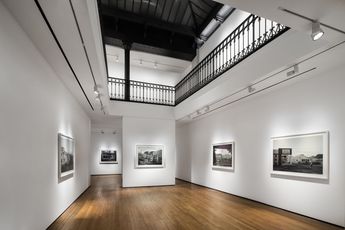
- Eveningside, Templon, Brussels (2026)
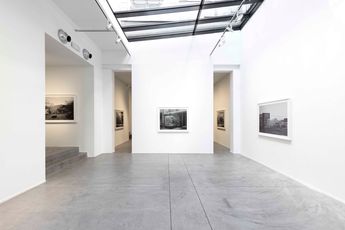
- Eveningside, Templon, Paris (2023)
- Eveningside, Gallerie d’Italia, Turin (2022)
- Gregory Crewdson: An Eclipse of Moths, Gagosian, Beverly Hills (2020)
- Gregory Crewdson: Cathedral of the Pines, Gagosian Gallery, New York Cty (2016) (and touring)
- Gregory Crewdson: Dream House, The San Diego Museum of Art (2015)
- Gregory Crewdson: Fireflies, Wave Hill, Bronx (2014)
- Gregory Crewdson: Sanctuary, White Cube, London (2011) (and touring)
- Gregory Crewdson Luhring Augustine, New York City (2008)
- Dream House, John Berggruen Gallery, San Francisco (2003)
- Twilight, Emily Tsingou Gallery, London (1999)
- Ginza Artspace, Tokyo (1996)
- Houston Centre for Photography (1992)
Select Group Exhibitions
- In Shadows We Bloom, Reflex Amsterdam (2024)
- Contours of Reality, Topography of Art, Paris (2023)
- Edward Hopper and the American Hotel, Virginia Museum of Fine Arts, Richmond (2019)
- Pair(s), Maison Particulière, Brussels (2015)
- At the Window: The Photographer’s View, The J Paul Getty Museum, Los Angeles (2013)
- Meet Me Inside, Gagosian Gallery, Beverly Hills (2010)
- Picasso to Pop: A Growing Contemporary Collection, Phoenix Art Museum (2004)
- Chorus of Light: Photographs from the Sir Elton John Collection, High Museum of Art, Atlanta (2001)
- Telling Tales, The Art Gallery of New South Wales, Sydney (1998)
- Animal Farm, Corcoran Gallery, Santa Monica (1994)
- Pleasures and Terrors in Domestic Comfort, MoMA, New York City (1991)
Further Reading
- Gregory Crewdson’s Instagram
- Gregory Crewdson’s Substack
- Artist profile page at Templon
- Artist profile page at Gagosian
Gregory Crewdson FAQs
Has Gregory Crewdson taken pictures of celebrities?
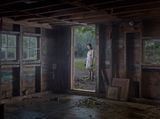
Yes, in 2002 Gregory Crewdson shot Dream House, a series of photographs of famous actors, commissioned by The New York Times Magazine (although not in a traditional editorial or fashion context). In 2002, Kathy Ryan (then director of photography for The New York Times Magazine) commissioned Crewdson to shoot a standalone portfolio. The previous year, Crewdson had been working in Vermont when he was shown a house that had been empty for a decade but whose furniture and fittings hadn’t been disturbed. Although actors including Gwyneth Paltrow, Tilda Swinton and Phillip Seymour Hoffman took part, it wasn’t a “showbusiness” project—each actor inhabited a role, but without an emotional interpretation beyond Crewdson’s direction.
How does Gregory Crewdson direct the people in his photographs?
Crewdson likes to create “a necessary alienation” between himself and his subjects, often telling them he wants “something less”. He doesn’t suggest narrative or plot or motivation because “a photograph is frozen and mute” with “no before and after”—this gives viewers the opportunity to project their own narrative on to the picture.
What was Gregory Crewdson’s Beneath the Roses?
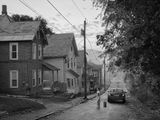
Beneath the Roses is one of Crewdson’s most well-known collections of photographs, 20 large-scale images of small-town America. In Untitled (2003), a pregnant woman stands on a street corner as the sun comes up; a car waits at the traffic lights. In another Untitled image, a naked couple sleep on mattresses in a garden, surrounded by discarded furniture.
Ocula

View Gregory Crewdson's Artworks


















Explore Gregory Crewdson's Exhibitions






Explore and Follow Artists Shaping Contemporary Art
A respected voice in contemporary art discourse.
Focusing on ambitious storytelling and insightful art-world commentary. Ocula Magazine publishes in-depth interviews, critical essays and timely analysis on the artists, exhibitions and ideas driving the global art world.
Learn more about Ocula Magazine
Showcasing the best of the art world.
Ocula partners with galleries from around the world to highlight their artists, artworks and exhibitions. Gallery membership is by application and invitation, with each member vetted by an independent panel.
Learn more about Ocula Membership
Specialises in the sale of major artworks.
Led by a team with deep ties to the world’s leading auction houses, galleries and collectors. Ocula’s advisory team offers bespoke services to high-net-worth clients from around the world who are looking to acquire the best of contemporary and modern art.
Learn more about our team and services