





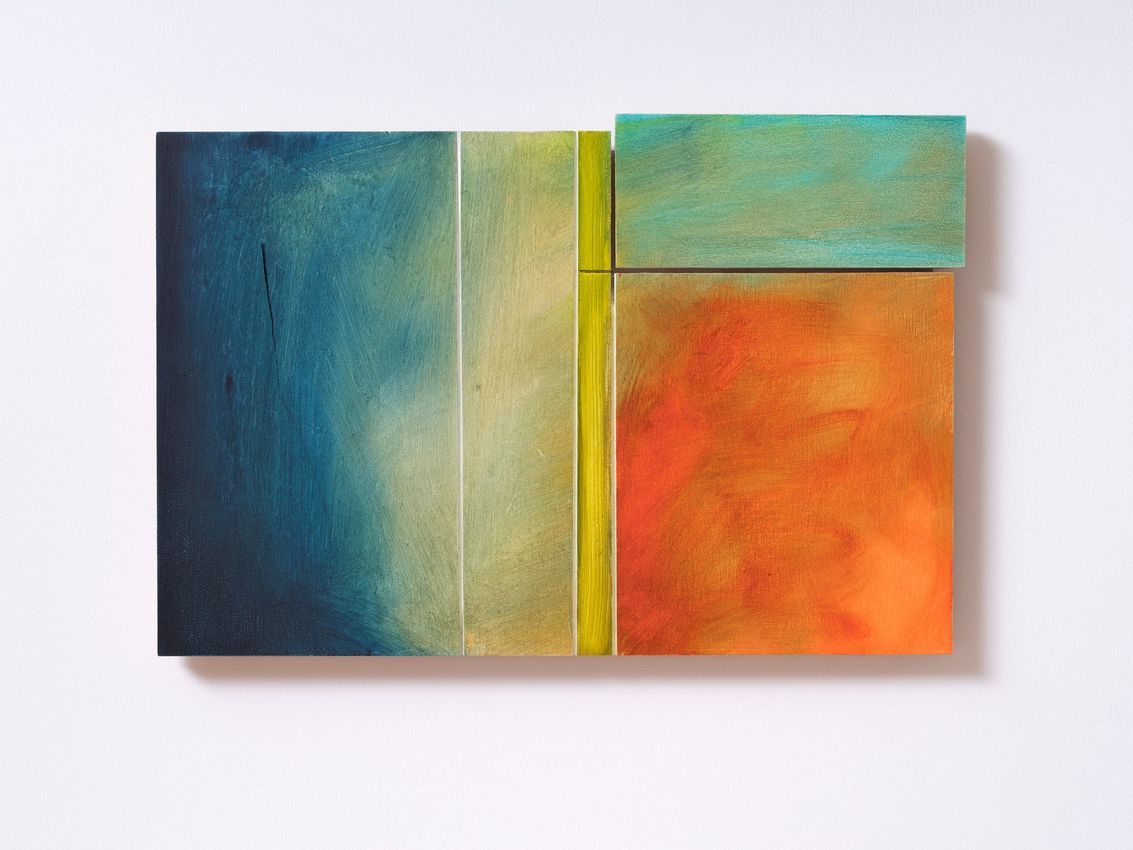
JAMES ROSS
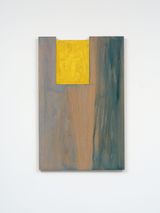
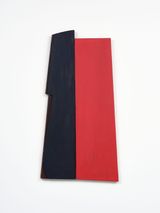
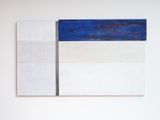
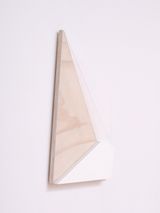
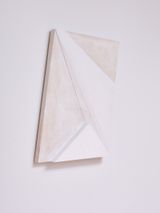
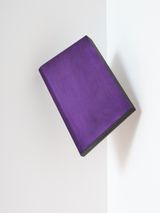
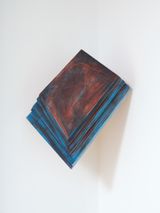
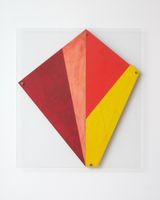
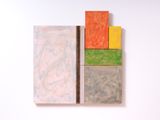
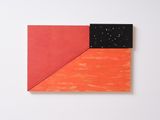
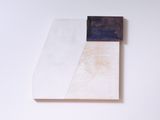
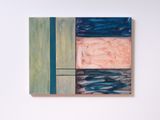
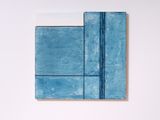
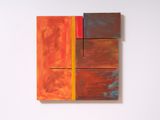
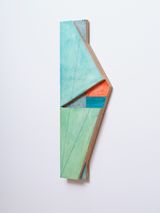
New ZealandJames Ross is known for his innovative multi-panel paintings that exploit unusual contours or occasionally cut-out holes to avoid conventional rectangular formats. In the nineteen seventies he created trapezoid colour-field abstractions that alluded to the vertical human form in a landscape. In the mid nineteen eighties he developed the more baroque format for which he is now known, with a more agitated surface area and images of anamorphically distorted skulls or the moving female form, sometimes with carefully positioned isolated circular components. In the late 1990s Ross began to make more minimalist works, with drawn-on, kite-shaped, diamond forms made up of butted-up panels. These had circular or rectangular panes ofglass suspended over their painted surfaces via screws, exerting a tension on the contours below. His most recent paintings abandon the glass and have tilted coloured plywood planes projecting out from the wall, attached to it only by one edge. They are more aggressively sculptural.

View James Ross' Artworks


























Explore and Follow Artists Shaping Contemporary Art
A respected voice in contemporary art discourse.
Focusing on ambitious storytelling and insightful art-world commentary. Ocula Magazine publishes in-depth interviews, critical essays and timely analysis on the artists, exhibitions and ideas driving the global art world.
Learn more about Ocula Magazine
Showcasing the best of the art world.
Ocula partners with galleries from around the world to highlight their artists, artworks and exhibitions. Gallery membership is by application and invitation, with each member vetted by an independent panel.
Learn more about Ocula Membership
Specialises in the sale of major artworks.
Led by a team with deep ties to the world’s leading auction houses, galleries and collectors. Ocula’s advisory team offers bespoke services to high-net-worth clients from around the world who are looking to acquire the best of contemporary and modern art.
Learn more about our team and services