





JOLINE KWAKKENBOS
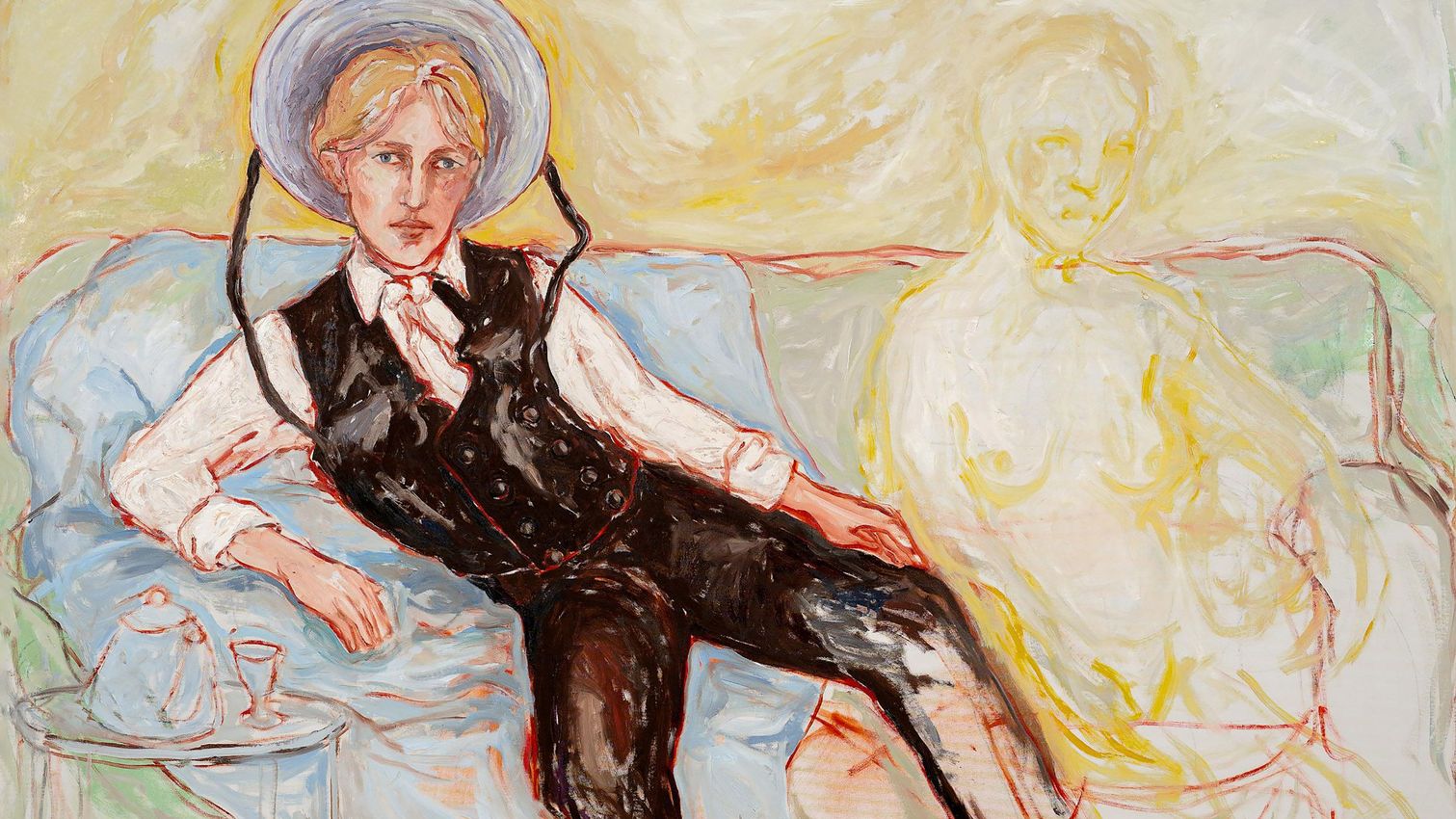
b. 1997, NetherlandsDutch painter Joline Kwakkenbos is known for expressive, autobiographical self-portraits that reflect on queerness, femininity, memory, and femininity. In 2026, Carl Freedman announced representation and her first solo exhibition, to be presented in Margate.
Early years and background
Joline Kwakkenbos grew up in a small Dutch farming village near Utrecht, where drawing and painting became a way to escape the conservatism of her surroundings and to develop her own imaginative world. She has described how the flat meadows, animals, and relative isolation of rural life fostered both introspection and a strong sense of fantasy that later informed her art.
Kwakkenbos completed a bachelor’s degree in Fashion Design in 2019, discovering that her visual language could transfer from garment making to painting during and after her studies. Her early fashion training continues to shape the attention she pays to clothing, textiles, and historical dress in her paintings, where garments often act as extensions of the figure’s inner life.
After focusing more fully on painting from 2017, she developed a practice centred on self-portraiture, using her own image to process experiences of sexuality, identity, and personal history. She is associated with the Tracey Emin Foundation and TKE Studios in Margate, joining a community of artists engaged with intimate, figurative approaches to contemporary art.
Joline Kwakkenbos Artworks
Joline Kwakkenbos’ artworks are predominantly oil paintings on linen in which she appears in different guises, using colour, costume, gesture, and detailed settings to explore plural, shifting identities. Combining autobiographical material with fictional and historical references, she treats each painting as a ‘version’ of herself through which broader questions of queer identity, femininity, and visibility in art history can be tested.
Self-portraiture and identity
Kwakkenbos began making self-portraits in 2017, initially to understand aspects of herself that felt unresolved or difficult, such as trauma, sexuality, and the pressures of normative femininity. Early works, including a self-portrait in which she appears as Lady Justice flanked by two temporal versions of herself, set the tone for an ongoing exploration of identity as something layered and time-based rather than fixed.
Her portraits often depict herself as free-spirited, spiritual, seductive, historical, or vulnerable, oscillating between empowerment and fragility within a single image. Across these paintings, self-representation functions as a tool to reclaim space for women and queer figures within the traditions of figurative painting that have historically marginalised such subjects.
Colour, garments, and narrative
An intuitive use of colour is central to Kwakkenbos’ painting style, with heightened, sometimes unexpected palettes that convey mood and psychological tension. Backgrounds, fabrics, and surface textures are never neutral; they form part of a narrative scaffold that situates the figure in interior worlds shaped by memory, fantasy, and cultural reference.
Her training in fashion design informs the detailed garments that populate her canvases, which range from historically inflected dresses to idiosyncratic contemporary outfits. Many of these garments are conceived or made by the artist, and they function as both costume and armour—devices through which she can shift roles, try on different selves, and question expectations around gendered appearance.
Autobiography, queerness, and fiction
Kwakkenbos describes her practice as autobiographical but suffused with fiction, acknowledging that what she paints ‘is not always the truth’ but an expansion of what she knows herself to be. Themes of queer identity appear not only in overt subject matter but also in the refusal of stable roles, the layering of different personas, and the use of clothing and pose to challenge normative narratives.
In interviews, she has emphasised that painting her own body is a way to reclaim and rewrite stories from which women and queer voices have historically been excluded, aligning her work with broader feminist and queer currents in contemporary painting. Her self-portraits form a kind of visual archive of her existence, charting evolving identities while speaking to wider communities whose experiences have often been absent from the canon.
Joline Kwakkenbos Exhibitions
Joline Kwakkenbos is linked to the Tracey Emin Foundation in Margate and has participated in associated shows. In 2026, Carl Freedman announced representation and a solo exhibition in to be presented in Margate.
Select group exhibitions
- Crossing Into Darkness, group exhibition curated by Dame Tracey Emin, Carl Freedman Gallery, Margate, 18 January – 12 April 2026
- Shape Shifters, two-person exhibition with Elissa Cray, TKE Studios / Tracey Emin Foundation, Margate
- Group and story-based presentations with Homecoming Gallery, including international fairs and projects highlighting her self-portrait paintings
Follow the artist on Ocula to learn more about Joline Kwakkenbos’ art for sale.
More Reading
Joline Kwakkenbos’ practice has been featured in interviews and profiles. You can read more about her work via her profile on Tracey Emin Foundation site.
You can follow the artist on Ocula to be updated when new articles are published.
Joline Kwakkenbos FAQs
Who is Joline Kwakkenbos?
Joline Kwakkenbos is a Dutch contemporary artist and painter born in 1997 in Hilversum, Netherlands, known for expressive self-portraits that explore queer identity, memory, and femininity. You can follow Joline Kwakkenbos on Ocula to learn more about her work.
Where can I see work by Joline Kwakkenbos?
You can see work by Joline Kwakkenbos through Carl Freedman Gallery, which announced representation of the artist in 2026 and also a solo show.
Are there any lesser-known and interesting facts about Joline Kwakkenbos?
A lesser-known aspect of Joline Kwakkenbos’ practice is her background in fashion design, which means she often conceives or makes the garments that appear in her paintings, blurring the line between fashion, costume, and painting.
What is a notable quote by Joline Kwakkenbos?
Speaking about her self-portraits, Joline Kwakkenbos has described them as ‘versions’ of herself that allow her to become ‘something more than I know or see’, emphasising the speculative, open-ended nature of identity in her work. She has also spoken about using painting to reclaim narratives from which women and queer figures were historically excluded, noting in Homecoming that ‘it’s not just about my own identity—it’s about all identities that were never given permission to take up space’.
Where does Joline Kwakkenbos live?
Joline Kwakkenbos lives and works between the Netherlands and Margate-connected contexts, maintaining strong ties to the Dutch landscape while participating in the Tracey Emin Foundation and Carl Freedman Gallery communities. Her experiences of growing up in a small Dutch village and later connecting with international art circles continue to inform the emotional and spatial worlds in her paintings.
How is Joline Kwakkenbos’ name pronounced?
Joline Kwakkenbos’ name is commonly pronounced ‘yo-LEE-nuh KWAH-ken-boss’, following Dutch pronunciation patterns for her given name and surname. Alternative pronunciations may be heard in non-Dutch contexts, but this version aligns most closely with Dutch usage.
Where can I buy Joline Kwakkenbos’ work?
Joline Kwakkenbos is represented by leading contemporary art gallery Carl Freedman Gallery in Margate, where collectors can enquire directly about acquiring her paintings. You can also get in touch with Ocula‘s art advisory team to find out more about buying or selling work by Joline Kwakkenbos.
What materials and techniques does Joline Kwakkenbos use?
Joline Kwakkenbos primarily paints in oil on linen, building her images through layered brushwork, subtle shifts in colour, and careful attention to light and texture. She draws on her fashion background to incorporate detailed garments and textiles into the compositions, using these elements to shape the narrative and psychological atmosphere of each artwork.
How does Joline Kwakkenbos’ fashion design background influence her art?
Joline Kwakkenbos’ training in fashion design influences how she structures bodies, garments, and silhouettes, as well as her sensitivity to fabric, drape, and historical clothing references. This background allows her to treat clothing in her paintings as a primary vehicle for storytelling and identity play rather than as mere decoration.
How does Joline Kwakkenbos explore queerness in her paintings?
In her paintings, Joline Kwakkenbos explores queerness through shifting roles, layered personas, and the refusal of fixed gendered scripts, rather than through didactic imagery. The works offer space for queer experiences within the history of figurative painting by foregrounding a lesbian protagonist who visibly occupies central pictorial space.
How does Joline Kwakkenbos relate to self-portraiture in art history?
Joline Kwakkenbos’ self-portrait practice sits within a lineage of artists who use their own image to probe identity and memory, while explicitly bringing queer and feminist perspectives into that tradition. Critics have noted that her paintings push self-portraiture toward a cumulative record—a “legacy” of many selves over time—rather than a single definitive likeness.
Ocula | 2026


Explore and Follow Artists Shaping Contemporary Art
A respected voice in contemporary art discourse.
Focusing on ambitious storytelling and insightful art-world commentary. Ocula Magazine publishes in-depth interviews, critical essays and timely analysis on the artists, exhibitions and ideas driving the global art world.
Learn more about Ocula Magazine
Showcasing the best of the art world.
Ocula partners with galleries from around the world to highlight their artists, artworks and exhibitions. Gallery membership is by application and invitation, with each member vetted by an independent panel.
Learn more about Ocula Membership
Specialises in the sale of major artworks.
Led by a team with deep ties to the world’s leading auction houses, galleries and collectors. Ocula’s advisory team offers bespoke services to high-net-worth clients from around the world who are looking to acquire the best of contemporary and modern art.
Learn more about our team and services