





LIANG WEI
b. 1966, ChinaLiang Wei is a painter and video artist based in Beijing. She graduated from L’Art Plastiques Universite Des Sciences Humanines De Strasbourg, France in 1999.
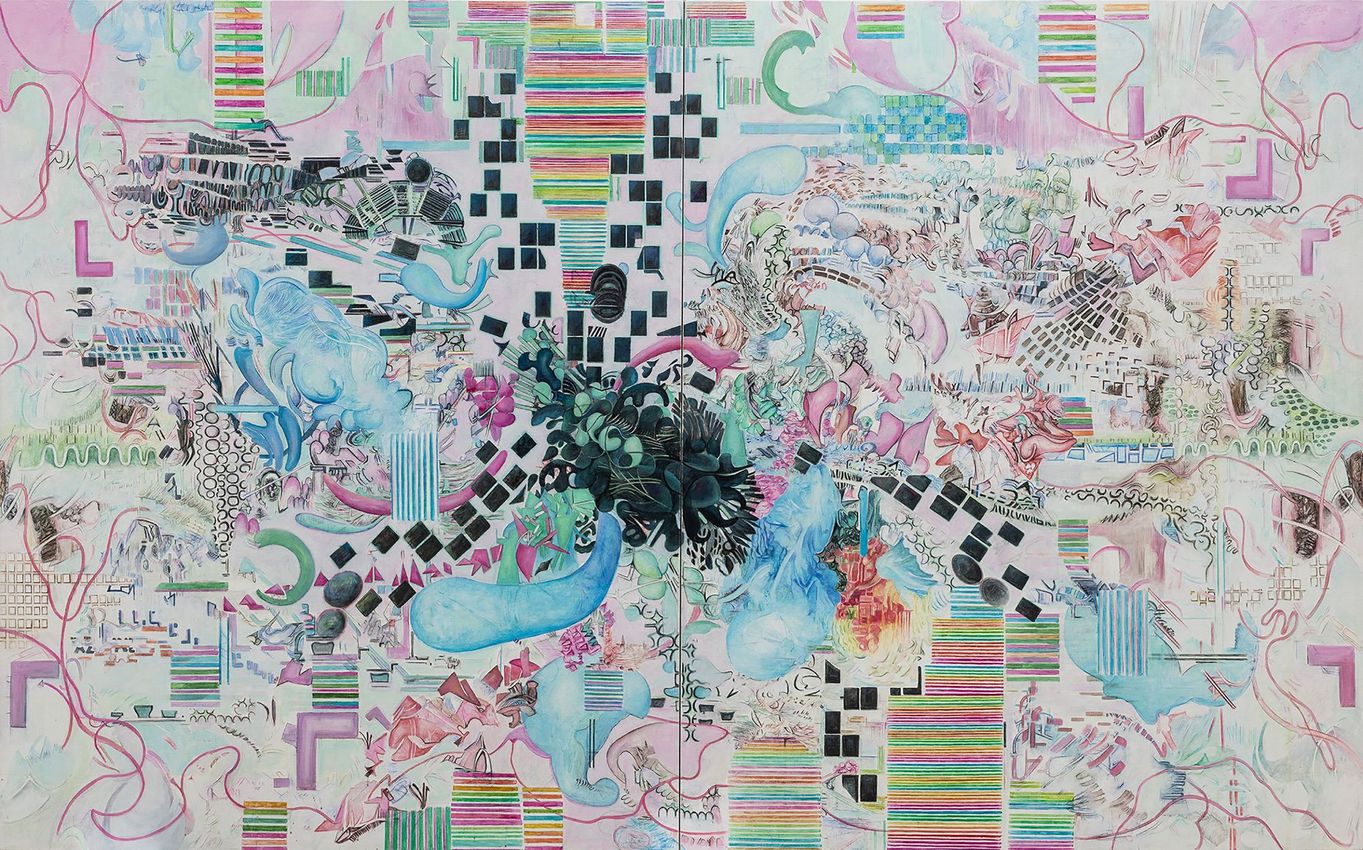
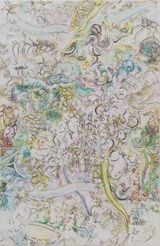
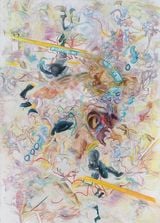
Liang Wei’s working method mirrors the fractured state of the physical world, in which old things and ideas are demolished, broken up, reused, and bastardized in order to create new realities. Objects overlap each other, merge or destroy each other. However, in this process the artist has given them new potential. By giving objects on her canvases almost organic properties, their virtual life force is combined with viewers’ imagination to create morphogenic potential for new objects and narratives to emerge. In her work, Liang Wei wants to create a disruption; through that mechanism you enter into her domain where we find our mind connecting lines to forge forms, and structure a world after our own imagining and sensory experience.
There are two important points of reference that give Liang Wei’s work a unique structure. First is artificial intelligence and the symbiotic relationship between physical reality and the virtual, and the second is classical ideas of composition. AI is a kind of computer based organism, using programs to ‘grow’ programs, and these programs reshape reality. Liang Wei has found this to be a powerful metaphor for her way of constructing images. At the same time, the Chinese idea of the landscape with multiple vanishing points, perspectives, and stories convey painting as a macrocosm, a whole world compressed in time and space. This has allowed Liang Wei ‘grow’ compositions organically without needing to worry about one common point of view. However, more recently, she has drawn on the sense of movement and drama that early Christian painting uses to convey biblical stories. As a result, there is more solidity to the forms that appear on her canvas, bringing the characters, rather than topography, to the foreground of her image.
Liang Wei’s work has been shown in One, and the Same, Magician Space, Beijing (2021); Duration: Chinese Art in Transformation, Beijing Minsheng Art Museum, Beijing (2020); Folded Silence, Bernier/Eliades Gallery, Brussels, Belgian (2019); Out of Ink, Pera Museum, Istanbul (2019); Before Itself, Magician Space, Beijing (2018); .com/.cn, K11 Art Foundation, MoMA PS1, Hong Kong, Shanghai (2017); Vague Necessity, Magician Space, Beijing (2016); The Garden of Diversion, Sifang Art Museum, Nanjing (2013); Place of Residence-with Artists from Brazil and China, ShanghART H-Space, Shanghai (2012); Moving Image In China 1988–2011, Minsheng Art Museum, Shanghai (2011); City Net Asia 2007, Seoul Museum of Art, Seoul (2007); The 12th Kolkata Film Festival, India (2006); China Power Station, Battersea Power Station, London (2005).
Courtesy Magician Space









Explore and Follow Artists Shaping Contemporary Art
A respected voice in contemporary art discourse.
Focusing on ambitious storytelling and insightful art-world commentary. Ocula Magazine publishes in-depth interviews, critical essays and timely analysis on the artists, exhibitions and ideas driving the global art world.
Learn more about Ocula Magazine
Showcasing the best of the art world.
Ocula partners with galleries from around the world to highlight their artists, artworks and exhibitions. Gallery membership is by application and invitation, with each member vetted by an independent panel.
Learn more about Ocula Membership
Specialises in the sale of major artworks.
Led by a team with deep ties to the world’s leading auction houses, galleries and collectors. Ocula’s advisory team offers bespoke services to high-net-worth clients from around the world who are looking to acquire the best of contemporary and modern art.
Learn more about our team and services