The art world in focus
Subscribe to our newsletter for news and insights on artists, galleries and exhibitions.

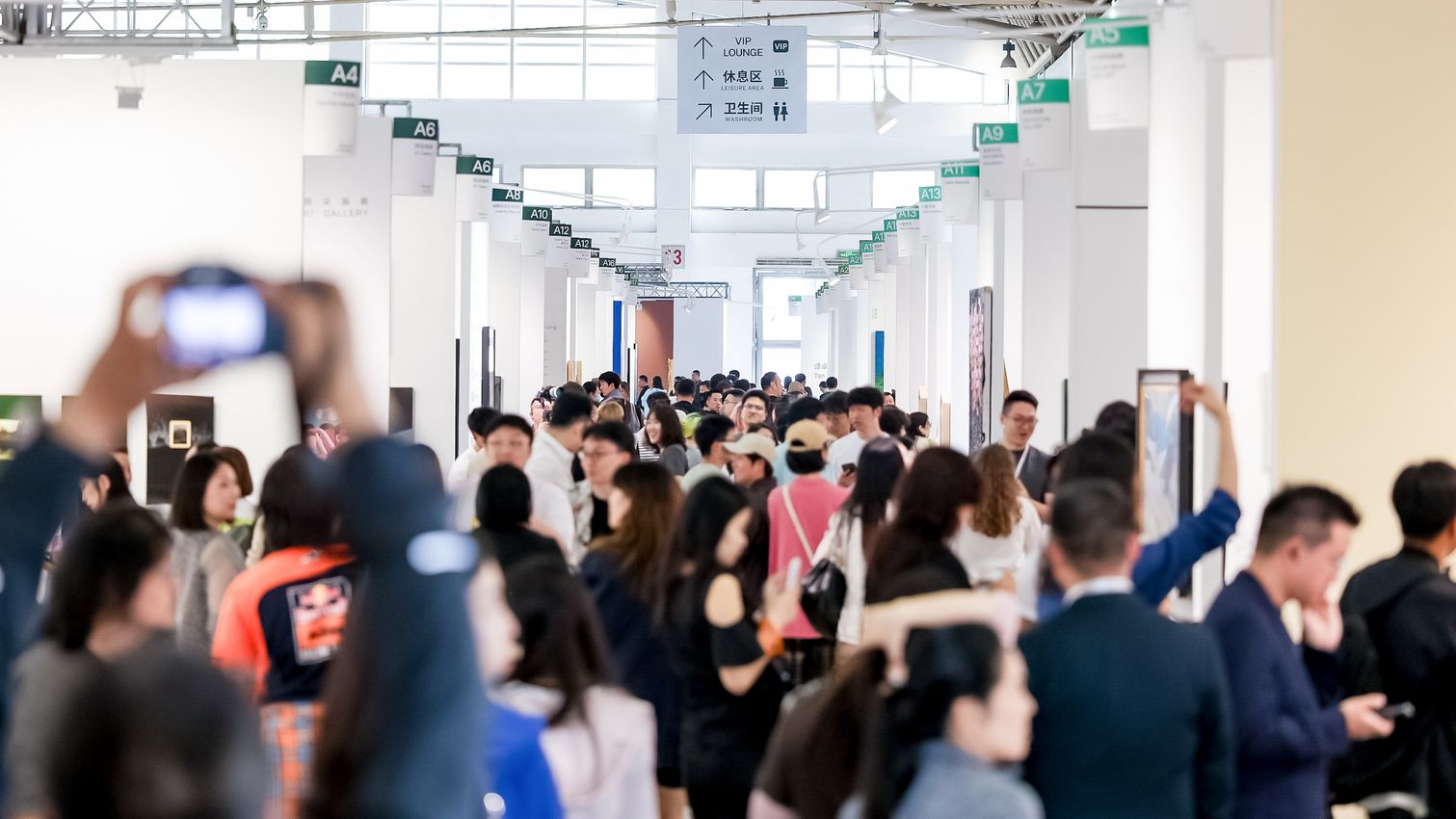
Beijing in May resembles an art-world relay: collectors, curators, artists and writers move between gallery openings, museum exhibitions, dinners, talks and late-night gatherings spread across the city. One of the key anchors in that calendar is Beijing Dangdai Art Fair 2026, which opened on 21 May at the National Agricultural Exhibition Center, bringing together 144 participating institutions from 49 cities across 22 countries. Running through 24 May, the fair occupies nearly 20,000 square metres and forms part of the wider “Beijing Art Season”, alongside events including Gallery Weekend Beijing and Beijing Design Week.
Since its launch in 2018, Beijing Dangdai has gradually filled a gap in the Chinese capital’s art ecosystem. While Beijing has long been home to many of China’s leading museums, artists and galleries, it lacked a contemporary art fair of sustained international scale before Beijing Dangdai emerged. The city has never suffered from a shortage of collectors, but transactions have traditionally taken place through private gallery previews and personal networks rather than a fair-driven ecosystem. In that context, the challenge for Beijing Dangdai was always larger than commerce alone.
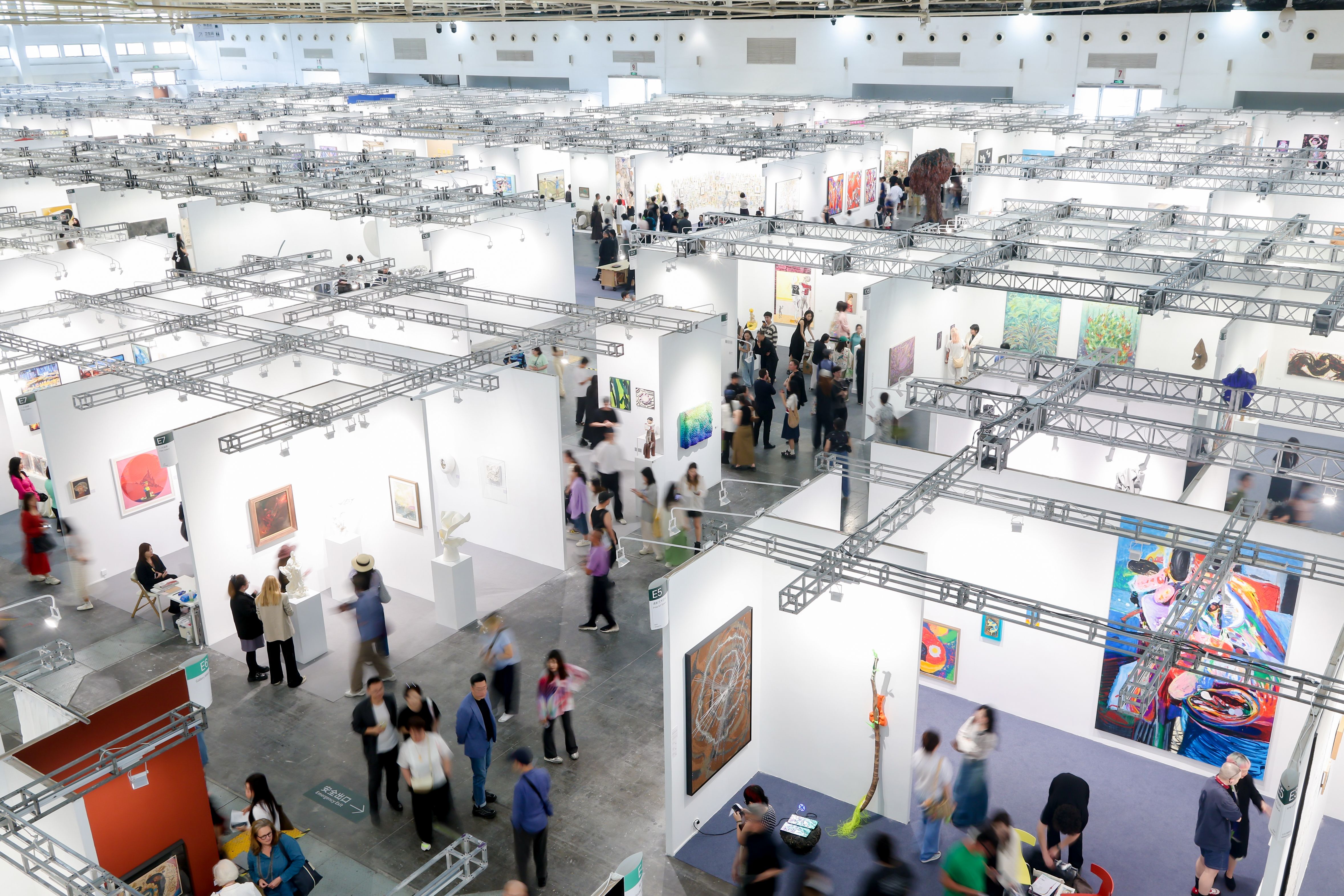
Over the past eight years, the fair has increasingly positioned itself as a citywide cultural platform linking exhibitions, institutions and public programming. This year’s edition carries the theme “Land Trace”, a curatorial framework referencing geography, movement and locally rooted experience, providing a loose connective thread across the event’s curated sectors and public programming.
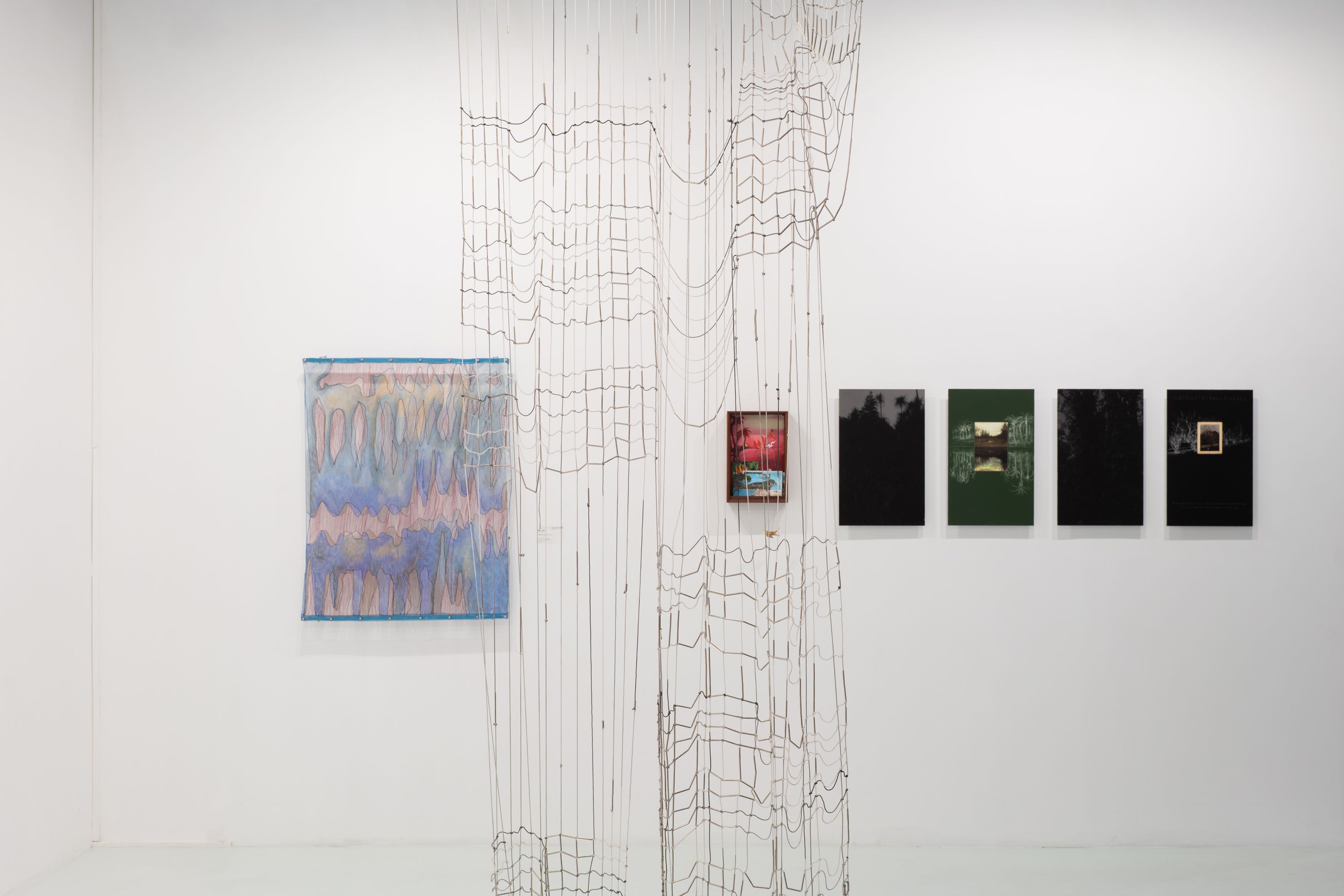
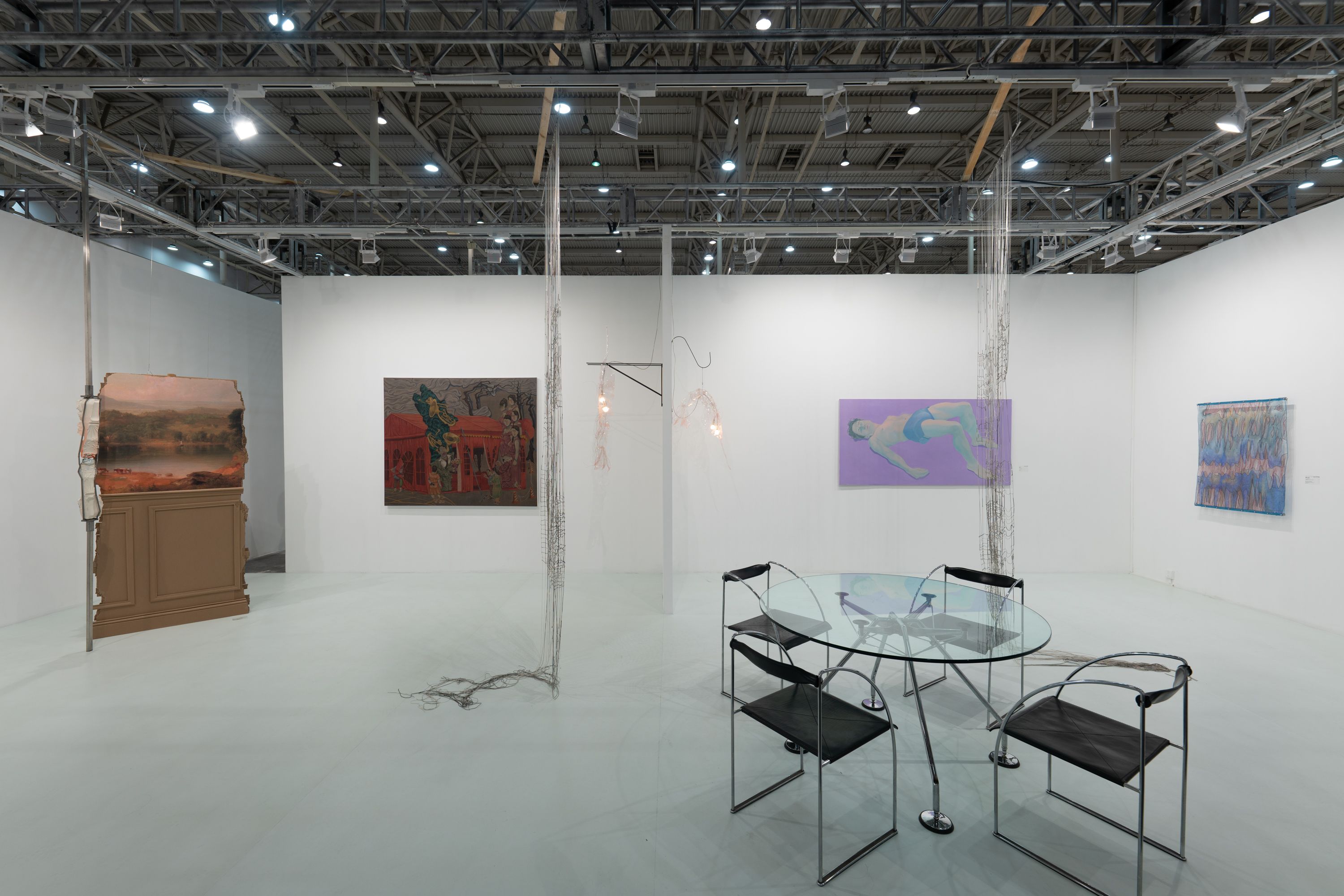
The strongest presentations often emerged through exhibition-making rather than spectacle. The fair’s Best Booth Award went to Beijing and Berlin-based Hua International. Hua Xiaochan, founder of the gallery, described the award as “a recognition of the gallery’s long-term commitment to discovering and promoting experimental artists”. The booth was designed to have a lightly theatrical environment divided by semi-transparent net curtains made from cotton and metal by French artist Fanny Gicquel. Nearby, two baby-pink prawn-shaped light installations by Berlin-based artist Kasia Fudakowski hung back-to-back on the walls, while the pathway towards the rear of the booth was partially obstructed by an irregular cardboard structure by New York-based collective CFGNY, recreating the gesso-coated interior of a generic American office building.
Unusually for a commercial fair booth, Hua International opened its back entrance directly into In the Cool of Summer, a special curated section bringing together seven Europe-based galleries including Galerie Thomas Schulte, Galerie Judin and PSM. Curated by Yang Tiange, the presentation featured 52 works installed within a wooden architectural structure inserted into the fair hall, conceived as a connective passage between Asia and Europe.
Among the highlights were a series of rarely seen minimalist paintings on wood by Richard Nonas, alongside a corner dedicated to German artist Katinka Bock. Her sculptures paired domestic fixtures such as wash basins and heat sinks with rough, stone-like forms, while gelatin silver photographs transformed ordinary objects into images charged with voyeuristic tension and quiet surrealism. Together, the installation offered a contemplative pause amid the visual density of the fair.
Some local galleries treated the fair as an exhibition space rather than a conventional sales floor. Magician Space recreated a studio-like corner devoted to Chinese artist Liang Wei, with walls densely layered in drawings and sketches alongside recent canvases that trace the artist’s move towards more concentrated compositions. Another Beijing gallery, White Space, presented a booth dedicated to Berlin-based Christine Sun Kim, following the artist’s major solo exhibition at the Whitney Museum of American Art last year. The presentation ranged from intimate drawings to murals featuring her signature black-and-white wave motifs.
Elsewhere, Beijing Dangdai continued its support of non-profit and experimental initiatives from across China. Hangzhou-based Imago Kinetics presented a booth filled with cashier counters in the fair’s Special Art Project sector. The installation by Hangzhou-based multimedia artist Zhang Liaoyuan, titled End Point, transforms transactional data streams into projected images of water currents, flowing sand and figures walking across lawns. The work recast capitalist systems as sprawling organic networks extending into psychological and spiritual life. —[O]

A respected voice in contemporary art discourse.
Focusing on ambitious storytelling and insightful art-world commentary. Ocula Magazine publishes in-depth interviews, critical essays and timely analysis on the artists, exhibitions and ideas driving the global art world.
Learn more about Ocula Magazine
Showcasing the best of the art world.
Ocula partners with galleries from around the world to highlight their artists, artworks and exhibitions. Gallery membership is by application and invitation, with each member vetted by an independent panel.
Learn more about Ocula Membership
Specialises in the sale of major artworks.
Led by a team with deep ties to the world’s leading auction houses, galleries and collectors. Ocula’s advisory team offers bespoke services to high-net-worth clients from around the world who are looking to acquire the best of contemporary and modern art.
Learn more about our team and services