






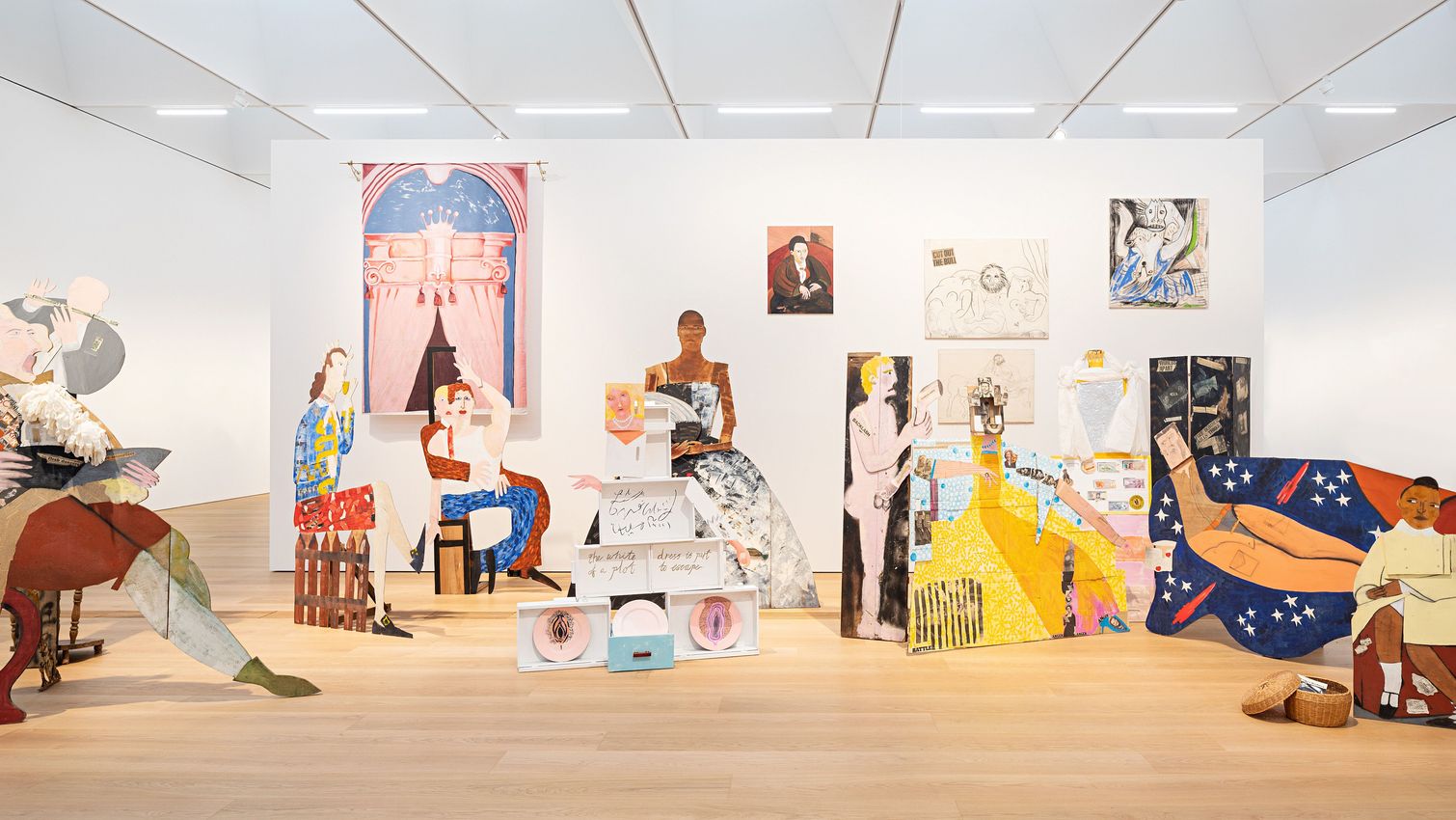
LUBAINA HIMID
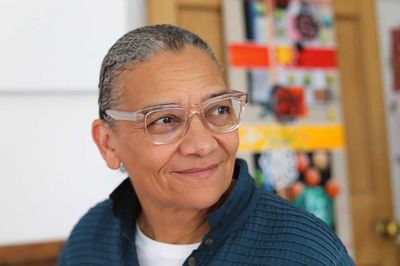
b. 1954, TanzaniaA self-described “painter and a cultural activist,” Lubaina Himid rose to prominence in the 1980s as a pioneer of the British Black Arts Movement and a staunch advocate for the contributions of women of color to the visual arts. Organizing groundbreaking shows in community-centered or disused spaces as well as preeminent London institutions, Himid created sites for Black artists and communities to exhibit and to congregate. Her 1985 ICA exhibition The Thin Black Line, for instance, manifested a more inclusive vision of contemporary art in the UK, showing her own work and that of her peers in institutional settings typically denied to them.
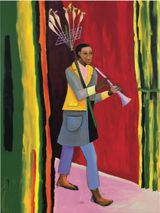
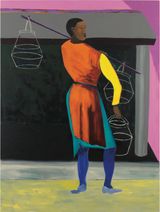
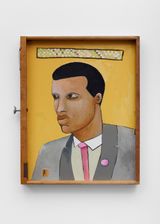
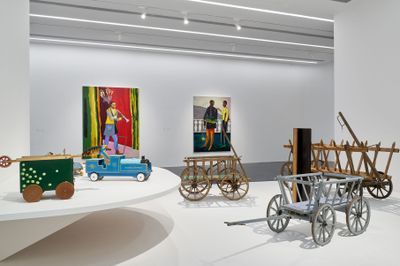
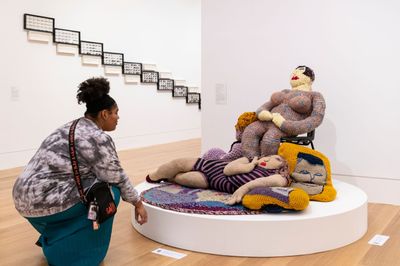
Himid’s curatorial priorities also extend to her own art, which over the past decade has gained international acclaim for exposing the human toll of empire while affirming the centrality of Black subjects. Trained in theater design, her practice unfurls across a range of media—from traditional canvas to life-sized cut-outs in elaborate scenes, to sculptural installations that repurpose domestic objects. For example, Himid’s celebrated mixed-media tableau, _A Fashionable Marriage _(1986) both appropriates and subverts William Hogarth’s satiric painting, _Marriage A-la-Mode _(1743). Echoing the historical work’s themes of societal hedonism and greed, she updates Hogarth’s stock characters to reflect the power imbalances that that still steer the art world.
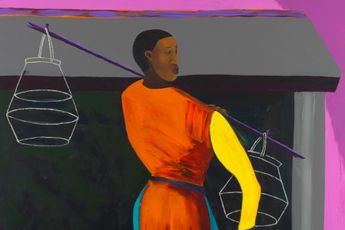
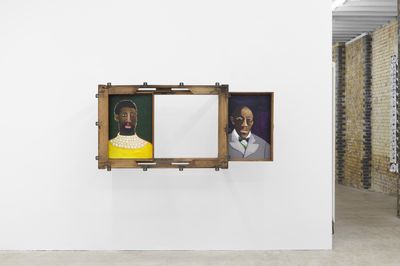
Born in Zanzibar in 1954, Himid immigrated to London as an infant, and maritime themes of arrival or displacement recur in her work—nods to both her own origins and the wider experience of the African diaspora. Troubling details can emerge from seductively rendered, jewel-toned scenes—as Fred Moten has noted, Himid’s “celebration in, and of, color” also reinforces her seriousness of purpose, becoming “the ultimate solemnity.” Bold in line and vibrant in hue, her recent paintings combine stylized depiction and psychological depth, reimagining the relations that might have been between people whose lives and stories were otherwise lost. “Characters are not always in the same time zone or history zone,” Himid has said. “They crisscross through time and talk to each other (and you) about how the past holds clues to the present, and is a place of potential action.”
Courtesy Greene Naftali

Works at Greene Naftali

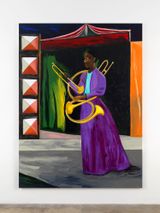

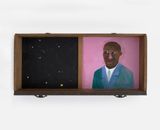






Recently Exhibited

Works Elsewhere




Lubaina Himid in Ocula Magazine










Explore and Follow Artists Shaping Contemporary Art
A respected voice in contemporary art discourse.
Focusing on ambitious storytelling and insightful art-world commentary. Ocula Magazine publishes in-depth interviews, critical essays and timely analysis on the artists, exhibitions and ideas driving the global art world.
Learn more about Ocula Magazine
Showcasing the best of the art world.
Ocula partners with galleries from around the world to highlight their artists, artworks and exhibitions. Gallery membership is by application and invitation, with each member vetted by an independent panel.
Learn more about Ocula Membership
Specialises in the sale of major artworks.
Led by a team with deep ties to the world’s leading auction houses, galleries and collectors. Ocula’s advisory team offers bespoke services to high-net-worth clients from around the world who are looking to acquire the best of contemporary and modern art.
Learn more about our team and services