






MARC CHAGALL
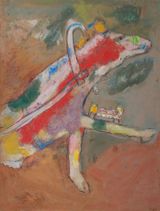
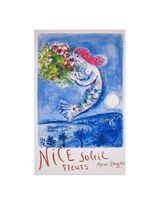
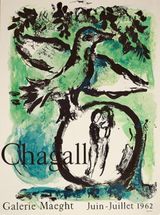
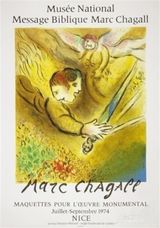
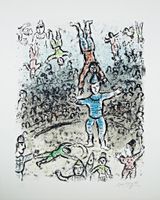
1887-1985, BelarusRenowned for his blend of modernism and unique, deeply personal form of expression in his art, Marc Chagall was a prolific Jewish artist born to a highly religious family in Liozna, a small town near Vitebsk, Belarus, then part of the Russian Empire. His vibrant, imaginative works anticipated the dreamy imagery of the Surrealists, and starkly recorded the turmoil and chaos of twentieth century Europe. While Chagall certainly engaged with the various art movements of the early twentieth century, namely Fauvism and Cubism, it is his personal experiences and use of religious and folklore imagery that differentiates him, imbuing and informing all his work. His Jewish roots are a notable element of his style, through both his own understanding and experience with Judaism and the displacement and horror Jews faced over the first half of the twentieth century.
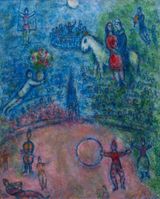
Colour and fantasy are important aspects of Chagall’s practice, providing the means to push the boundaries of his art. An expressive, explosive use of colour picked up from Fauvism serves to highlight shifts in movement, form and rhythm. Fantastic subject matter laden with mysticism also wove its way in but rather than serving as an escape, Chagall’s imagery served to represent both his inner thoughts and the atmospheres of the world as he experienced it.
This personal self expressive aspect to Chagall’s art is its defining element. He saw his work as a form of self-expression rather than as a part of the various European avant-garde art movements.
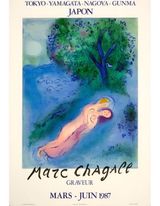
Chagall’s many major exhibitions include retrospectives at the Galerie Barbazanges-Hodebert, Paris (1924) and at the Kunsthalle Basel in Switzerland (1933); the Museum of Modern Art, New York (1946); the Louvre, Paris (1967); the Philadelphia Museum of Art (1985); the Réunion des Musées Nationaux (2003) and the Luxembourg Museum in Paris (2013). Stained glass window commissions include for the synagogue of the Hadassah University Medical Center, Jerusalem (1962); a ceiling for the Paris Opéra (1964); and a window for the United Nations building, New York (1964).
Courtesy Bailly Gallery

Works at Bailly Gallery



Recently Exhibited



Works Elsewhere
















Explore and Follow Artists Shaping Contemporary Art
A respected voice in contemporary art discourse.
Focusing on ambitious storytelling and insightful art-world commentary. Ocula Magazine publishes in-depth interviews, critical essays and timely analysis on the artists, exhibitions and ideas driving the global art world.
Learn more about Ocula Magazine
Showcasing the best of the art world.
Ocula partners with galleries from around the world to highlight their artists, artworks and exhibitions. Gallery membership is by application and invitation, with each member vetted by an independent panel.
Learn more about Ocula Membership
Specialises in the sale of major artworks.
Led by a team with deep ties to the world’s leading auction houses, galleries and collectors. Ocula’s advisory team offers bespoke services to high-net-worth clients from around the world who are looking to acquire the best of contemporary and modern art.
Learn more about our team and services