






PARK SEO-BO
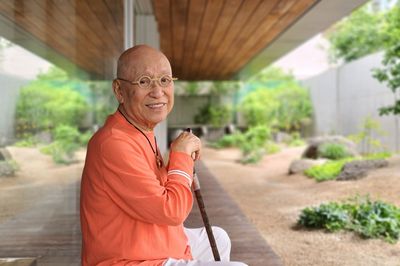
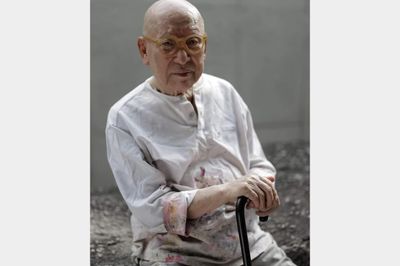
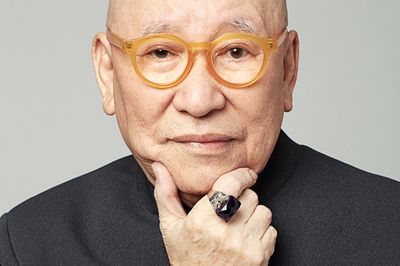
1931-2023, South KoreaBorn under Japanese occupation, Park Seo-Bo (b. 1931) is known as one of Korea’s most significant early modernists as well as a vital interlocutor of Korea’s cultural history. In the 1950’s he was one of the first to introduce abstraction into what was then a very conservative art world, balancing tradition with the rising influence of the West. Park’s steadfast commitment to pushing boundaries and embracing new vocabularies of expression has consistently resulted in new and influential bodies of work widely heralded both in Korea and abroad.
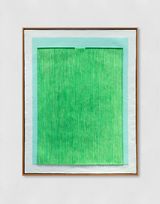
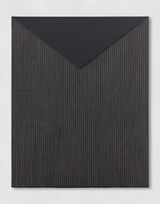
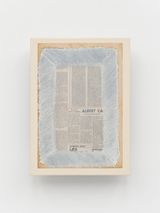
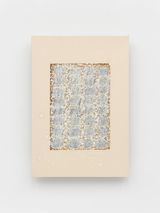
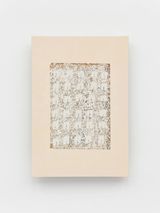
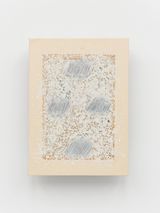
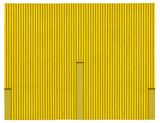
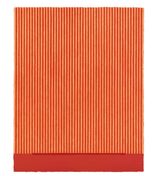
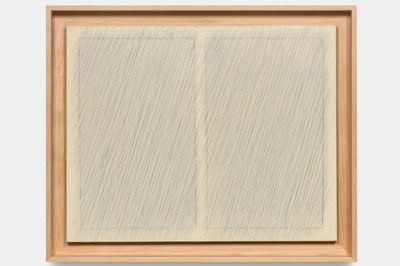
First developed in 1967, ‘Ecriture’ is an ongoing series of monochromes in which Park covers his canvas with a single colour and manipulates the still-wet surface with repetitive, carving gestures—actions that resemble the writing of a script. While in earlier works he used a pencil or stylus to create these repetitive marks, beginning in the 1980s he introduced Hanji paper into the series, layering and scraping the pulp on the wet surface to create a unique sequence of sculptural lines that seem to float on top of the canvas. The resulting relief paintings stimulate the viewer’s perception, evoking architectural space and the phenomenology of seeing. Art historian Alexandra Munroe has characterised this work as embodying an ‘ecstatic minimalism.’ In the early 2000s Park expanded his neutral pallet and began using vibrant colours in his works influenced by the grandeur of nature.
Park Seo-Bo has been widely celebrated throughout his career for championing Korean art, and was awarded the Artist of the Year prize from the Korean Fine Arts Association in 2008 and the Silver Crown Cultural Medal in Korea in 2011. His work has been exhibited internationally, including the Venice Biennale (2015, 1988), Samsung Museum of Art, Seoul (2014), Busan Museum of Art (2010), Portland Museum of Art, Oregon (2010), Singapore Art Museum (2008), Kunsthalle Wien, Vienna (2007), The Miyagi Museum of Art, Sendai (1993), Tate Liverpool (1992), Brooklyn Museum, New York (1981), and Expo ‘67, Montreal (1967). His work is included in the collections of the Hirshhorn Museum and Sculpture Garden, Washington, Solomon R. Guggenheim Museum, New York, M+, Hong Kong, Guggenheim Abu Dhabi, UAE, The National Museum of Contemporary Art, Seoul, and the Museum of Contemporary Art, Tokyo, amongst others.
Courtesy Tina Kim Gallery
Works at Tina Kim Gallery



Recently Exhibited


Exhibiting Elsewhere



Works Elsewhere















Park Seo-Bo in Ocula Magazine








Explore and Follow Artists Shaping Contemporary Art
A respected voice in contemporary art discourse.
Focusing on ambitious storytelling and insightful art-world commentary. Ocula Magazine publishes in-depth interviews, critical essays and timely analysis on the artists, exhibitions and ideas driving the global art world.
Learn more about Ocula Magazine
Showcasing the best of the art world.
Ocula partners with galleries from around the world to highlight their artists, artworks and exhibitions. Gallery membership is by application and invitation, with each member vetted by an independent panel.
Learn more about Ocula Membership
Specialises in the sale of major artworks.
Led by a team with deep ties to the world’s leading auction houses, galleries and collectors. Ocula’s advisory team offers bespoke services to high-net-worth clients from around the world who are looking to acquire the best of contemporary and modern art.
Learn more about our team and services