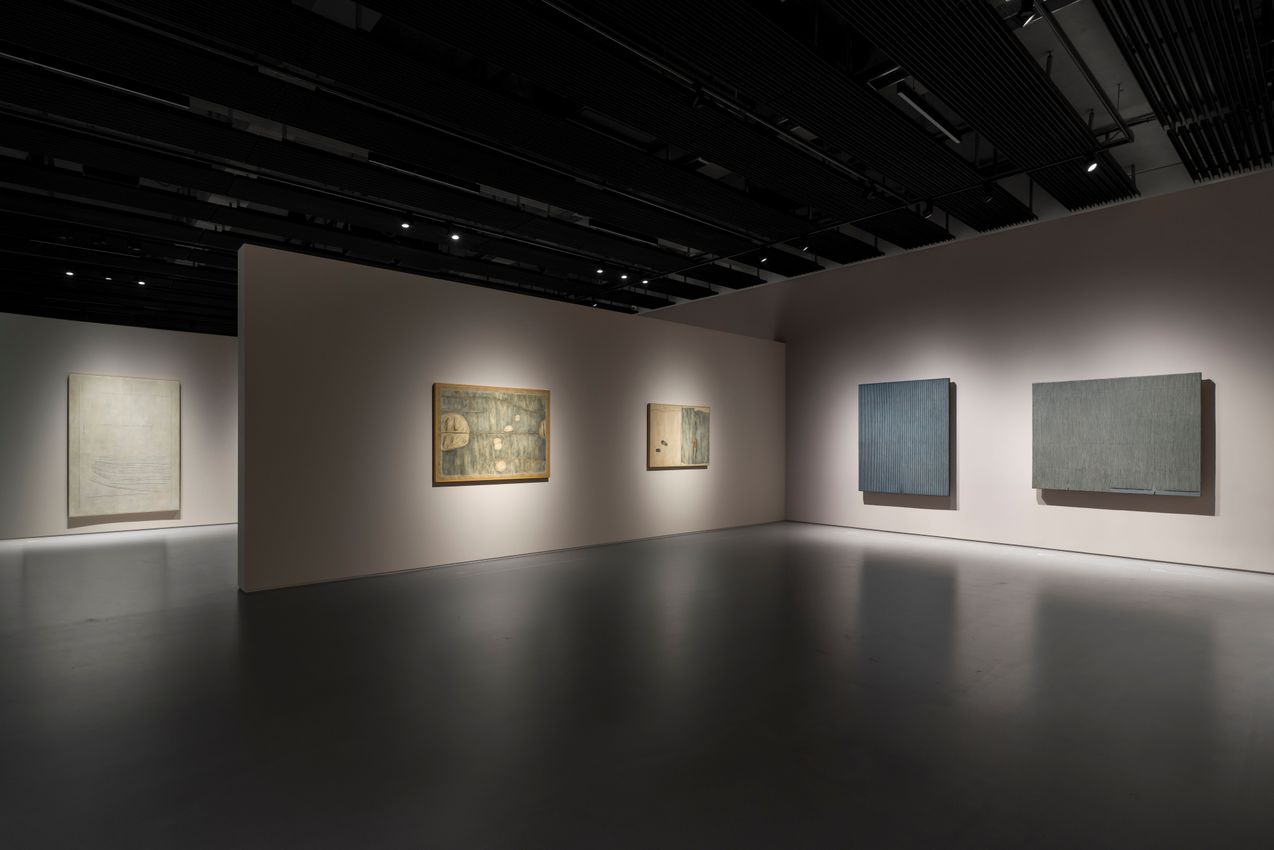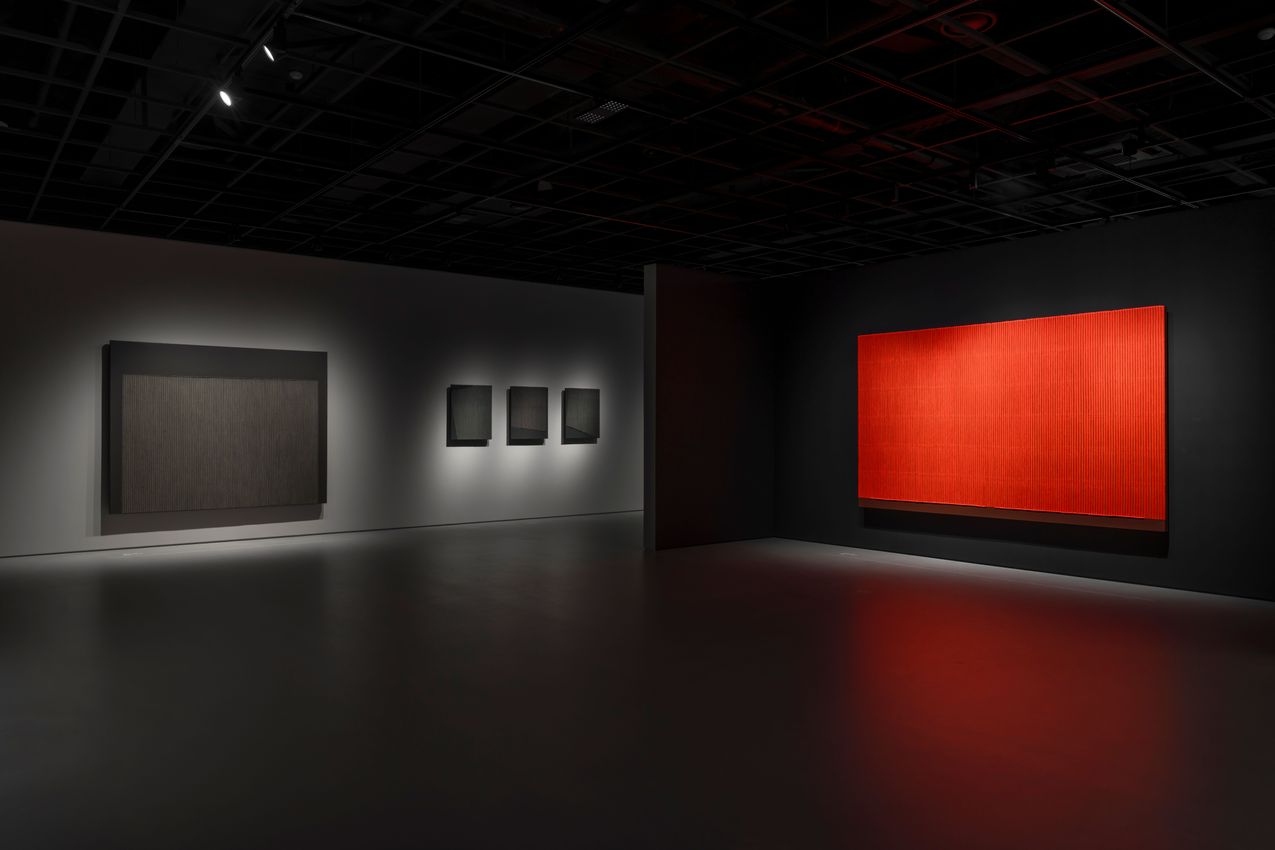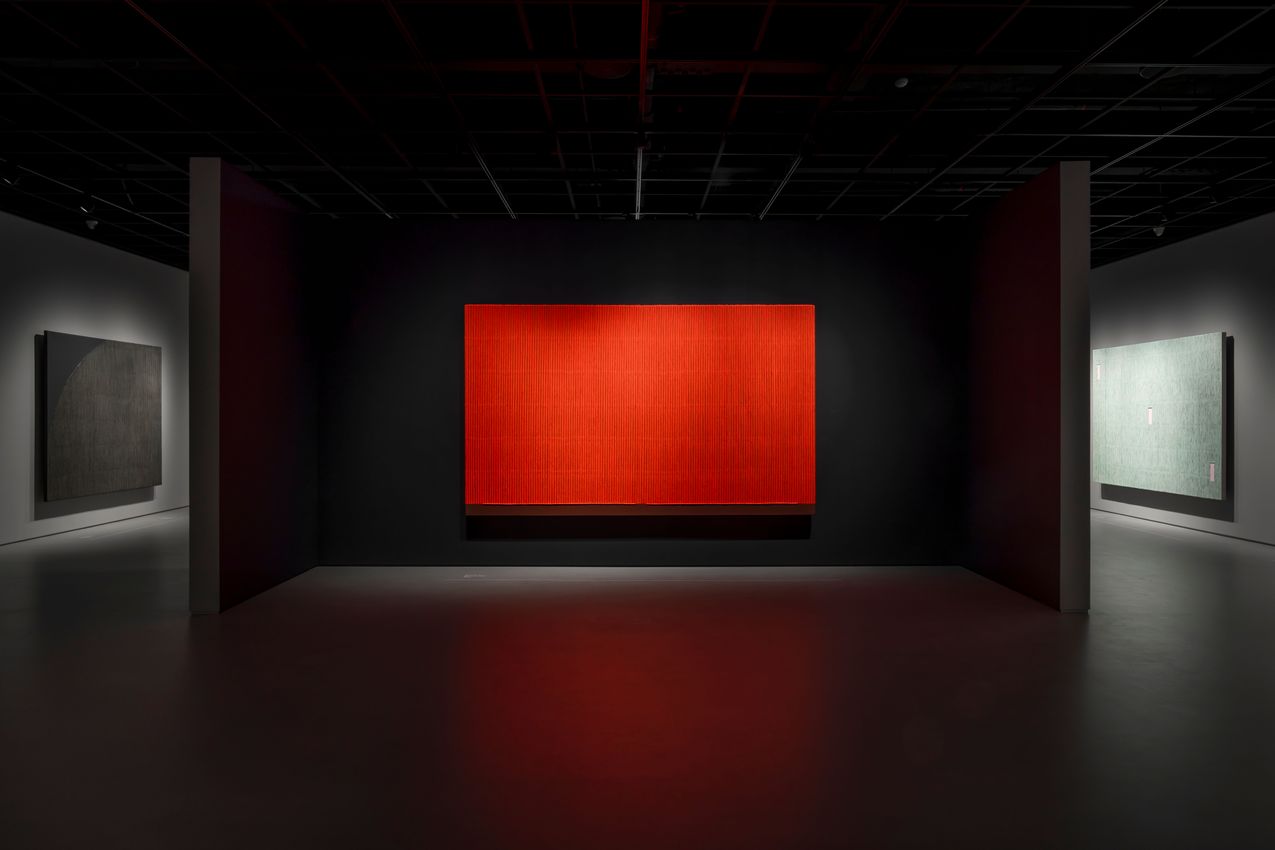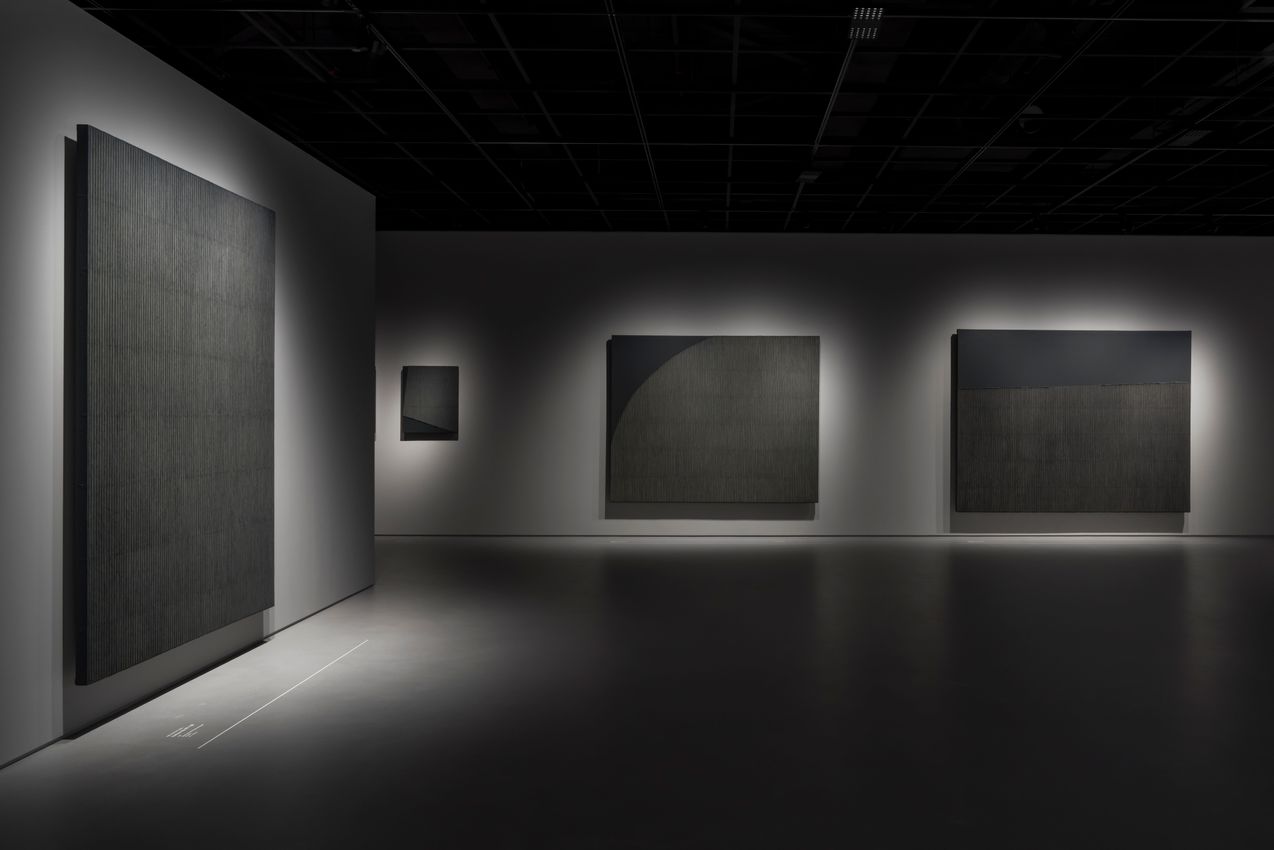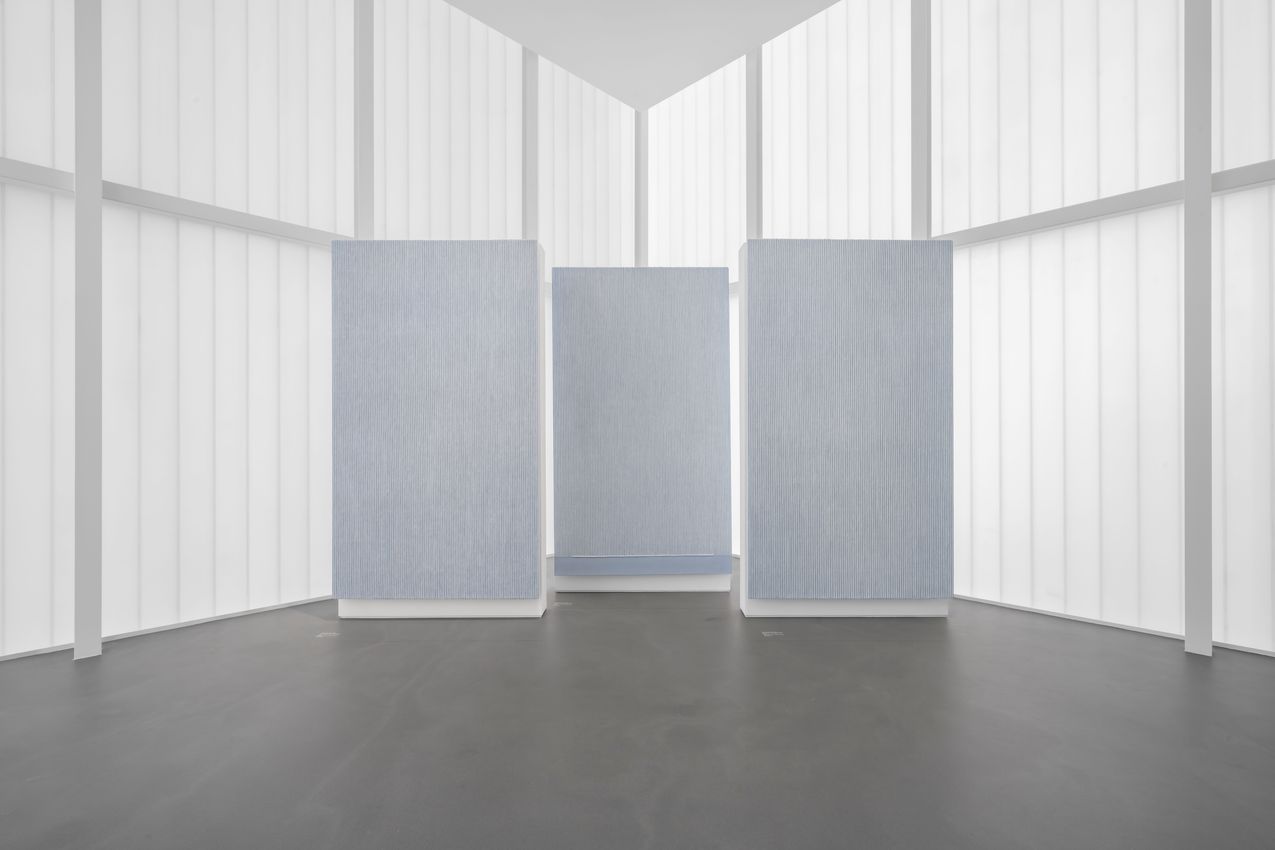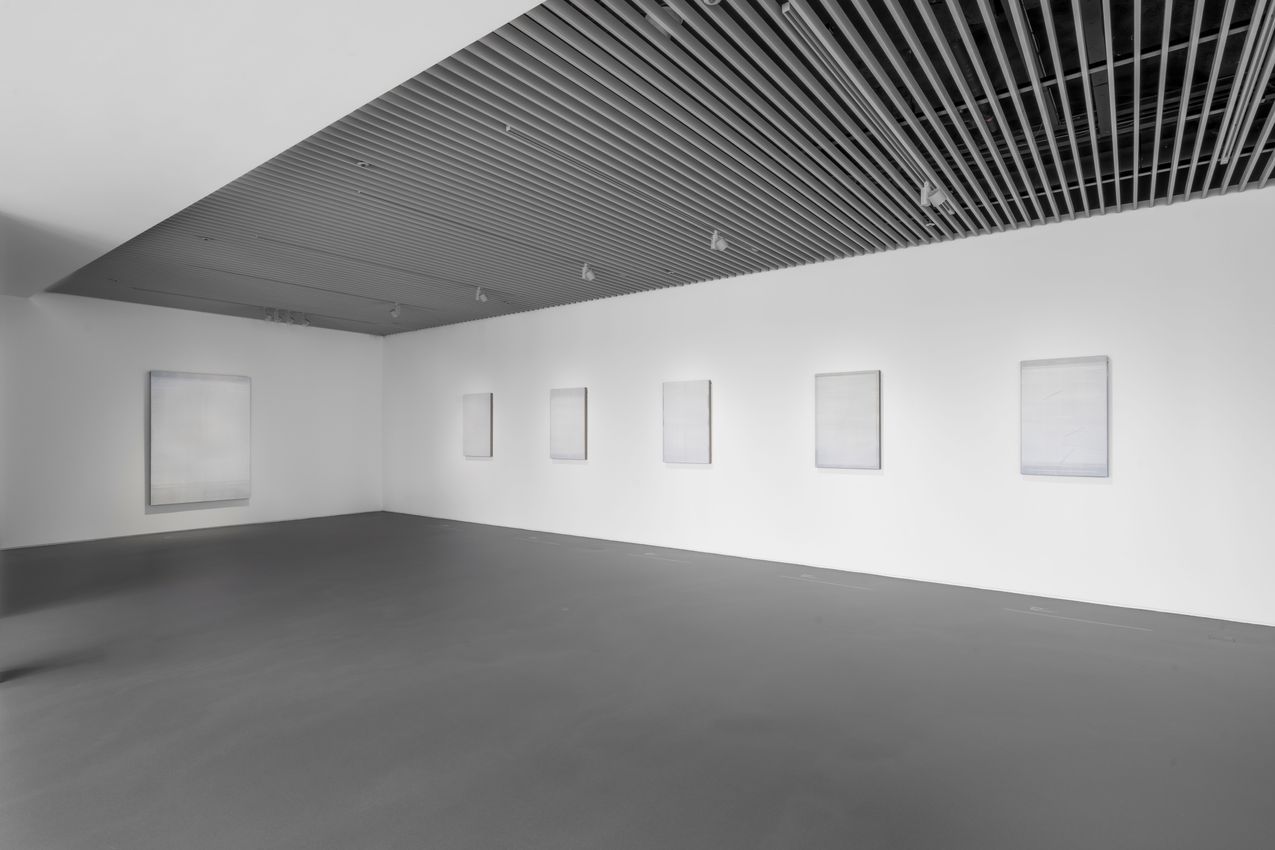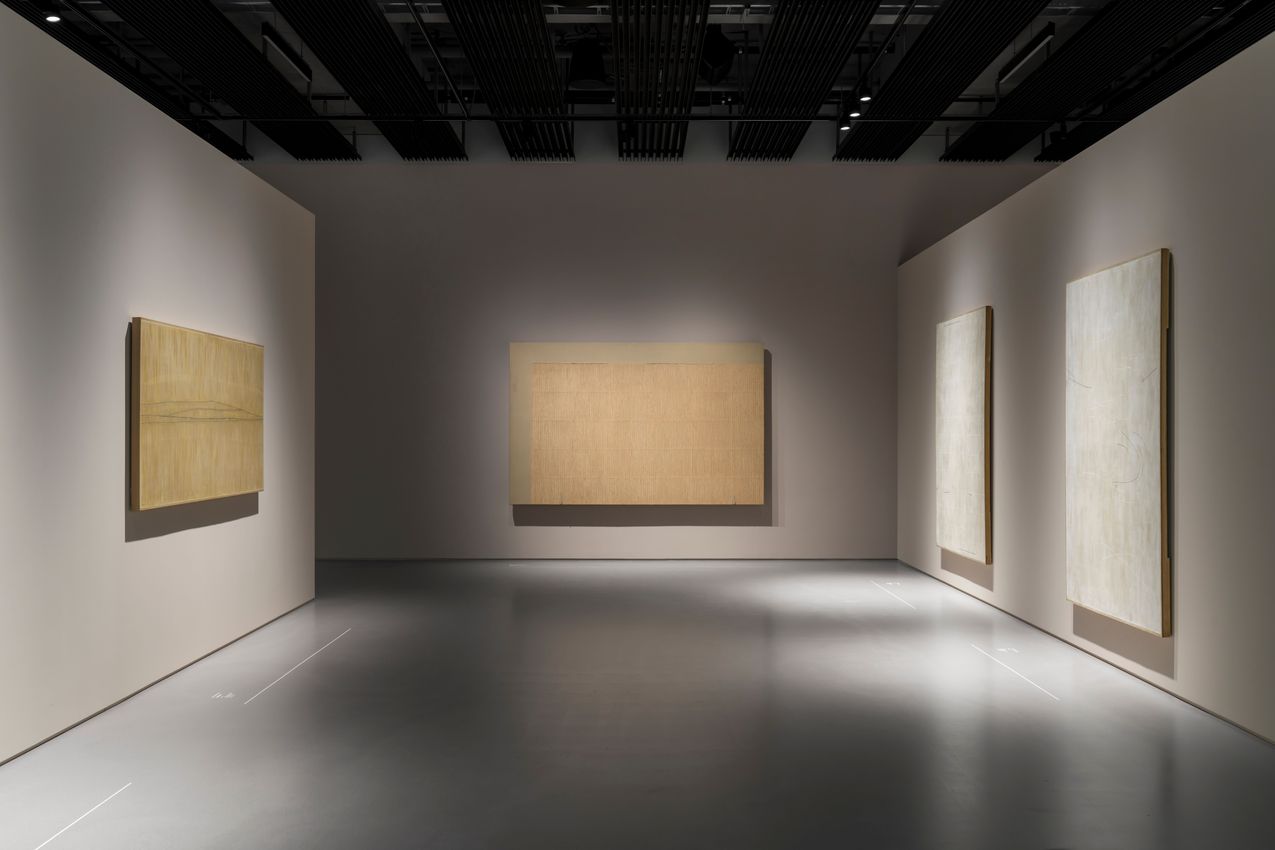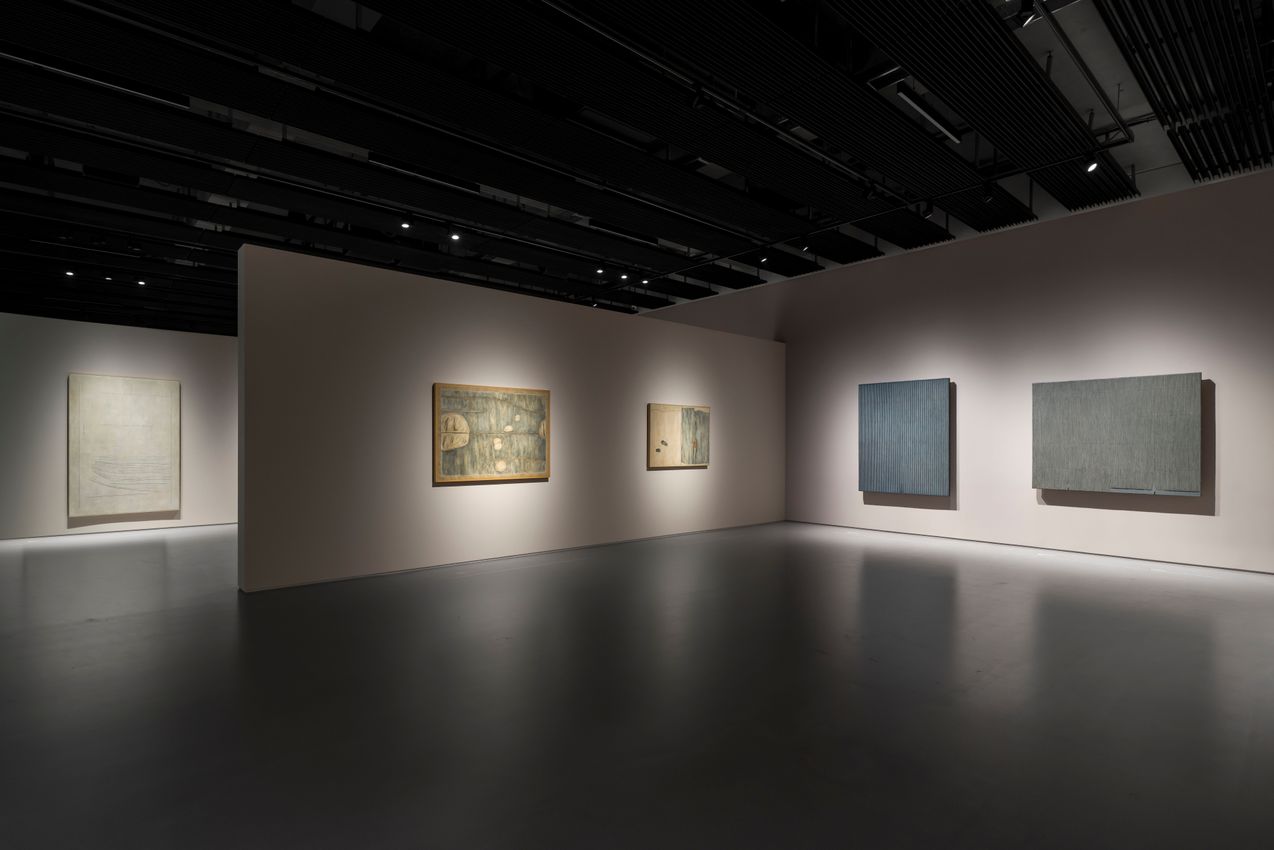
PARKSEBO MUSEUM’s inaugural exhibition, Park Seo-Bo & Huong Dodinh: Emptiness Fullness, brings together the works of Park Seo-Bo (1931–2023), a leading figure in Korean contemporary art, and Huong Dodinh (1945–), an artist born in Vietnam who has been based in France throughout her career.
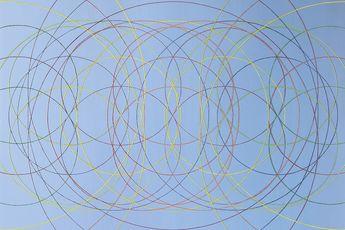
Park Seo-Bo explored a new order of painting by repeatedly drawing lines across surfaces layered with Korean hanji paper, treating the act of repetition as a way of emptying the self. Huong Dodinh, layering dozens of coats of mineral pigment, creates a depth in which light appears to emanate from within the surface itself. One repeats lines, the other builds up layers of color, but both artists move toward removing the unnecessary, not toward adding more. Through this process, the emptied surface acquires an unexpected density and quiet fullness.
The exhibition begins at SPACE Ø(B2), moves through SPACE 2(G2), and concludes at SPACE 3(G3). At SPACE Ø, the beginning of the exhibition, works from the 1990s by Park Seo-Bo and Huong Dodinh are presented together, revealing the point where the two artists’ distinct visual languages intersect. On the G2, audiences first encounter the Media Room featuring videos of the two artists’ working processes and interviews. After a short passage through the corridor, in SPACE 2, the exhibition traces the evolution and expansion of Park Seo-Bo’s Ecriture series, from the Black and White Hanji Ecriture to the Color Hanji Ecriture. SPACE 3, where the exhibition ends, shows the white-tones works of both Park Seo-Bo and Huong Dodinh come together in a single space.
Alongside this, 26SQM on the Lobby Floor of the PARKSEOBO FOUNDATION next to the museum, presents black and white photographs documenting the two artists’ work and practice. Adding onto the paintings and videos, this photographic presentation offers a more multidimensional look into the two artists’ worlds.
This exhibition does not confine Park Seo-Bo to his art-historical position as a representative figure of Korean Dansaekhwa. Placed alongside the work of Huong Dodinh, who has spent her life building her own artistic world in Paris, Park Seo-Bo’s work is newly read as an artistic practice that transcends the boundaries of culture and geography in its pursuit of the essence of painting.
The two artists, working within different lives and cultures, have each emptied and filled the canvas in their own way by way of repetition and restraint. 《Park Seo-Bo & Huong Dodinh: Emptiness Fullness》 brings their works together in one space, presenting a new perspective born from two distinct paintings.
Park’s artistic practice began with the postwar Informel-inspired Primordialis[LH1] series and evolved through the Ecriture[LH2] series, which he initiated in the late 1960s. Rather than viewing painting as a vehicle for emotional expression, he understood it as a process of emptying the self through repetitive actions and exploring an inner order. From 1967, Ecriture researched repetition, accumulation, and the relationship between materiality and spirituality, ultimately becoming a defining body of work in the emergence and development of Dansaekhwa.
Huong Dodinh’s works center on an exploration of light, space, balance, and inner order. Rather than representing the external world, she focuses on the structure of painting itself and on sensory experience, composing her works through restrained geometric forms such as lines and circles. Her work, which encompasses both Eastern meditative thought and the formal investigations of Western abstract painting, has built a unique visual language within restrained colors and refined composition.


PARKSEOBO MUSEUM was founded upon the art of Park Seo-Bo and the spirit he left behind. Through the research and presentation of his work, the museum seeks to reinterpret its significance within the context of our time.

A respected voice in contemporary art discourse.
Focusing on ambitious storytelling and insightful art-world commentary. Ocula Magazine publishes in-depth interviews, critical essays and timely analysis on the artists, exhibitions and ideas driving the global art world.
Learn more about Ocula Magazine
Showcasing the best of the art world.
Ocula partners with galleries from around the world to highlight their artists, artworks and exhibitions. Gallery membership is by application and invitation, with each member vetted by an independent panel.
Learn more about Ocula Membership

Specialises in the sale of major artworks.
Led by a team with deep ties to the world’s leading auction houses, galleries and collectors. Ocula’s advisory team offers bespoke services to high-net-worth clients from around the world who are looking to acquire the best of contemporary and modern art.
Learn more about our team and services