






SENGA NENGUDI
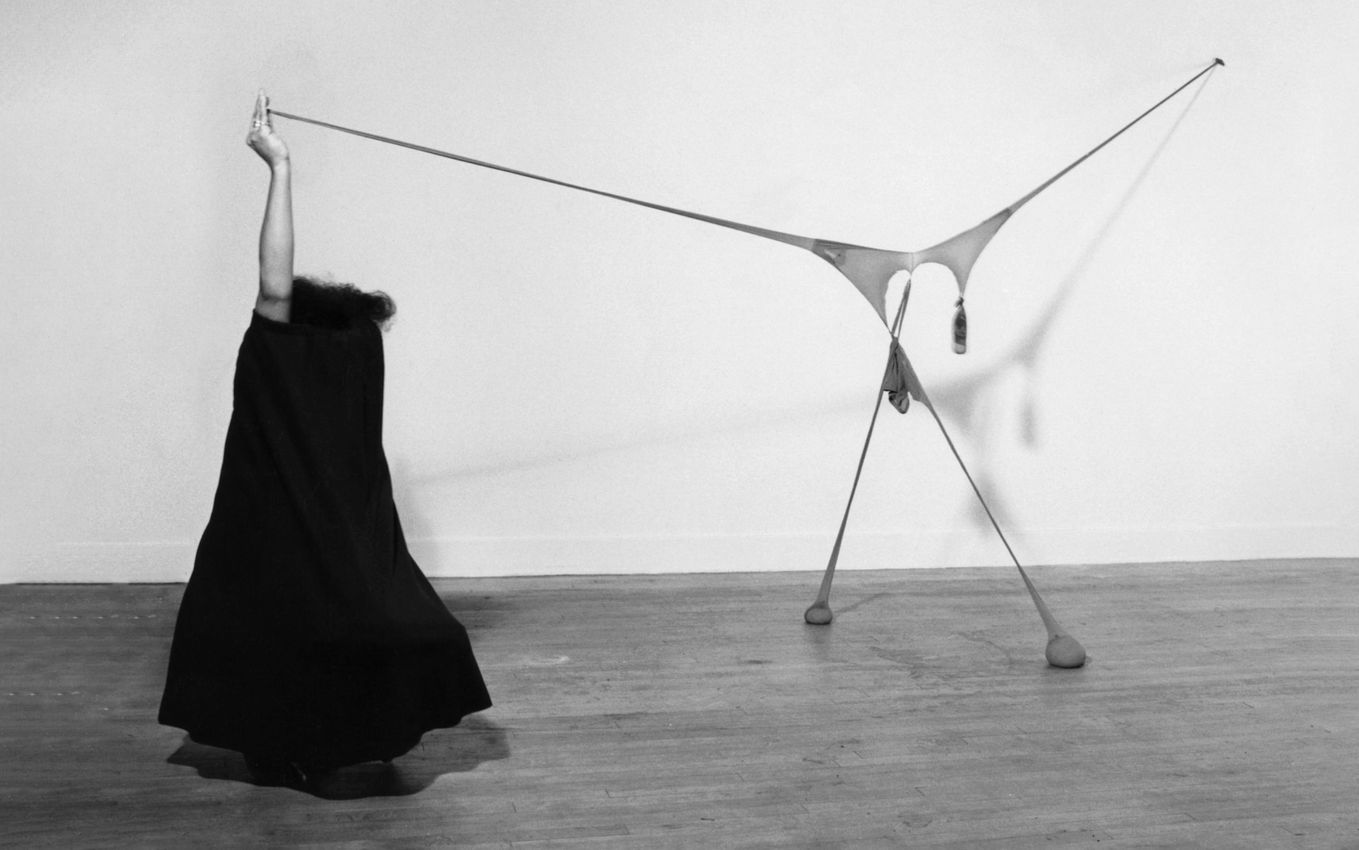
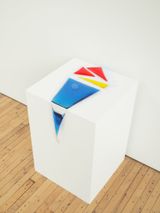
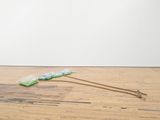
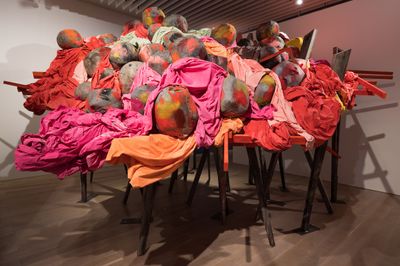
b. 1943, United StatesSenga Nengudi emerged in the 1970s as a conceptual sculptor at the forefront of the Black American avant-garde in Los Angeles. Working at the intersection of sculpture, installation, and performance, she reimagines Post-Minimalism in terms of the Black female body, experimenting with discarded materials, ritual, and collaboration (most profoundly, her five-decade dialogue with the artist Maren Hassinger). With influences ranging from free jazz and spoken word to Yoruba mythology, Japanese theatre, and Brazilian Constructivism, her work is characterized by elasticity, movement, and flux. Her iconic series of performative installations R.S.V.P. (1976–) comprise pantyhose filled with sand, knotted, and pinned to the walls or ceiling; for Water Compositions (1970), viewers were invited to prod volumes of coloured liquid sealed in vinyl.
Born in Chicago in 1943, Nengudi lives and works in Colorado Springs. While earning degrees in art and dance from California State University, Los Angeles (BA, 1966; MA, 1971), she worked at the energised spaces of the Watts Towers Arts Center and the Pasadena Art Museum and spent a formative year at Waseda University, Tokyo. In the 1970s, alongside David Hammons, she belonged to the loosely organised collective Studio Z. Her earliest exhibitions were held at the legendary gallery Just Above Midtown (JAM) in New York. Recently, the survey Senga Nengudi: Topologies was organised by Lenbachhaus, Munich (2019) and traveled to Museu de Arte de São Paulo (2020), Denver Art Museum (2020), and Philadelphia Museum of Art (2021). Her work has been the subject of many solo exhibitions at museums around the world, and has featured in such significant group exhibitions as Soul of a Nation (2017); We Wanted A Revolution: Black Radical Women, 1965–1985 (2017); Now Dig This! Art and Black Los Angeles 1960–1980 (2011); and WACK! Art and the Feminist Revolution (2007). Nengudi’s work resides in such collections as the Carnegie Museum of Art, Pittsburgh; Hammer Museum and Museum of Contemporary Art, Los Angeles; and in New York, the Studio Museum in Harlem, Museum of Modern Art, Brooklyn Museum, and Whitney Museum of American Art.
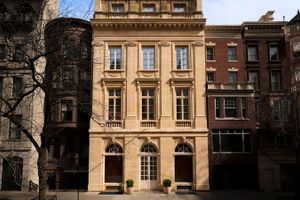
Courtesy Lévy Gorvy Dayan

Exhibiting Elsewhere

Works Elsewhere













Explore and Follow Artists Shaping Contemporary Art
A respected voice in contemporary art discourse.
Focusing on ambitious storytelling and insightful art-world commentary. Ocula Magazine publishes in-depth interviews, critical essays and timely analysis on the artists, exhibitions and ideas driving the global art world.
Learn more about Ocula Magazine
Showcasing the best of the art world.
Ocula partners with galleries from around the world to highlight their artists, artworks and exhibitions. Gallery membership is by application and invitation, with each member vetted by an independent panel.
Learn more about Ocula Membership
Specialises in the sale of major artworks.
Led by a team with deep ties to the world’s leading auction houses, galleries and collectors. Ocula’s advisory team offers bespoke services to high-net-worth clients from around the world who are looking to acquire the best of contemporary and modern art.
Learn more about our team and services