






SUCHITRA MATTAI
b. 1973, HaitiSuchitra Mattai’s artistic practice uses archive, found objects and oral histories to reimagine fibres, materials and techniques into large-scale sculptures, mixed-media compositions and installations that take apart historical narratives and give voice to those whose contribution to society has often been overlooked.
Early Years
Suchitra Mattai’s heritage is significant in her work: her ancestors were indentured labourers brought from India to the Caribbean during British colonial rule. She was born in 1973 in Georgetown, Guyana and her family moved to New Jersey when she was 12, bringing her close to extended family in Queens, New York City—she remembers visiting her uncle’s grocery store, as well as celebrations and a Hindu temple. Her first degree was a BA in statistics from Rutgers University in 1994, followed by an MA in South Asian Art from the University of Pennsylvania in 2001. Following a 2002 fellowship at the Royal College of Art in London, Mattai gained her MFA in painting and drawing from the University of Pennsylvania in 2003. However, she did not work for almost a decade, living with bipolar disorder.
Suchitra Mattai: Artworks
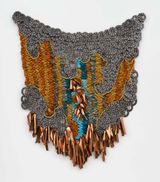
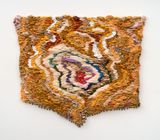
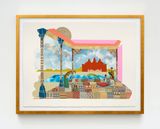
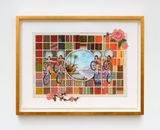
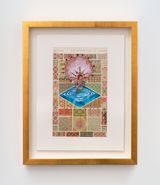
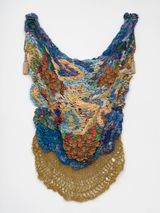
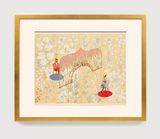
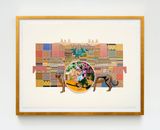
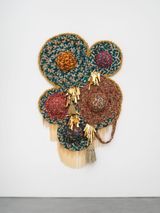
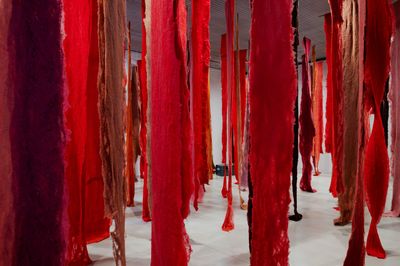
As part of her focus on women’s labour, Indo Caribbean artist Mattai uses materials and practices traditionally associated with domestic work: weaving, fibres and embroidery, as well as found and vintage items, notably including saris, which she sees as a way of connecting the women of the global South Asian diaspora. The found tapestries she uses might be based on commercial patterns, to which Mattai adds figurative or abstract elements by hand.
- Guardian (2021) first appeared at the RedLine Contemporary Art Centre in Denver and is a monumental sculpture combining found objects, a gate and many pieces of sari fabric. Mattai has said of the space: “RedLine is an amazing art centre and nurturing space with the warmest brightest people you’ll ever find and I owe much of my recent growth as an artist to the community there.”
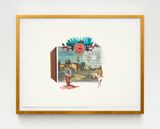
- Future Perfect from 2023 saw Mattai nodding towards (and subverting) Western art history, embellishing a vintage needlepoint reproduction of Jean-Honoré Fragonard’s Young Girl Reading (1969) with a headdress made of freshwater pearls and the beaded word “future” in the pages of her book.
- The huge (10m x 3m x 3m) fabric, bead and recycled-sari sculpture Poppy’s House (2024) is a replica of Mattai’s grandparents’ house on stilts in Guyana. The artist has talked about her creative process: “I was thinking about the Medieval mnemonic device of using conceptual architecture as a means of remembering and storing information in each ‘room’.”
Suchitra Mattai: Select Exhibitions
Select Solo Exhibitions
- she walked in reverse and found their songs, Seattle Asian Art Museum (2025)
- With abundance we meet, Memphis Brooks Museum of Art (2025)
- The Fall, Joslyn Museum, Omaha (2025)
- fables, guineps, and the sweetness of unknowing, Roberts Projects, Los Angeles (2025)
- Bodies and Souls,Tampa Museum of Art (2024)
- We are nomads. We are dreamers, Socrates Sculpture Park, New York City (2024)
- Myth from Matter, National Museum for Women in the Arts, Washington DC (2024)
- In the absence of power. In the presence of love, Roberts Projects, Los Angeles (2023)
- Osmosis, Kavi Gupta Gallery, Chicago (2022)
- Breathing Room, Boise Museum of Art (2021)
- Innocence and Everything After, K Contemporary Art, Denver (2020)
- Fugue, the Vault residency, Denver (2019)
- Sugar Bound, Centre for the Visual Arts, Metropolitan State University of Denver (2018)
- Sweet Asylum, K Contemporary, Denver (2018)
- Landfall, GrayDuck Gallery, Denver (2018)
- Denver Art Museum/SkyHouse Commission, Denver (2017)
- Revisionist, Artworks Loveland, Loveland (2016)
Select Group Exhibitions
- 20 works from the Sao Paolo Biennial, Museum of Art Rio, Rio de Janeiro (2026)
- Let us Gather in a Flourishing Way, Buffalo AKG Museum (2026)
- Textile as Monument, Fowler Museum of Art, Los Angeles (2026)
- Frieze Los Angeles (2026)
- São Paulo Biennial (2025)
- Piece by Piece: Collage and Assemblage at the Santa Barbara Museum of Art, (2025)
- Forecast Form: Art in the Caribbean Diaspora, MCA San Diego (2024)
- Reverb, Stephen Friedman Gallery, London (2024)
- Art Basel Miami Beach (2023)
- The Armory Show, New York City (2023)
- State of the Art: Constructs, Sarasota Art Museum, Sarasota (2022)
- Fragments of Epic Memory, Art Gallery of Ontario, Toronto (2021)
- Cultural Encounters: Art of Asian Diasporas in Latin America and The Caribbean, 1945–Present, Art Museum of the Americas, Washington DC (2020) (and touring)
- Sharjah Biennial (2019)
- Womens’ Work_, Pen and Brush, New York City (2019)
- Pulse Art Fair, K Contemporary Art, Miami (2019)
- Nice Work if You Can Get It, RedLine Contemporary Art Centre, Denver (2017)
- Visitation, GrayDuck Gallery, Austin (2016)
- The Intrepid Garden, Buell Theatre, Denver (2016)
Further Reading
- Suchitra Mattai’s official website
- Suchitra Mattai’s Instagram
- 2024 profile in W artist profile page at Roberts Projects
- 2024 story from The New York Times
Suchitra Mattai FAQs
How does Suchitra Mattai’s family history influence her practice?
Suchitra Mattai’s ancestors were indentured labourers who left Uttar Pradesh in India to work on sugar plantations in Guyana. She weaves stories from her own family history into her works, notably colouring in the figures in her found tapestries to change the make-up of European scenes—a process she has called “brown reclamation”.
How does Suchitra Mattai think about colonialism?
On her website, Mattai explains that she has used her own family’s history, alongside research into 19th century colonial indentured labour, to rewrite established colonialist narratives and “expand our sense of ‘history’”. She also says: “Rewriting this colonial history contributes to contemporary dialogue by making visible the struggles and perseverance of those who lived it.” The way she thinks about colonisation across Guyana and the Caribbean acts as a starting point for discussion about contemporary issues around gender and labour.
What materials and techniques does Suchitra Mattai use?
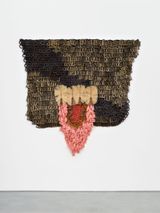
Suchitra Mattai takes found fabrics and beads and reimagines them as giant, elaborate installations and sculptures that seek to re-centre female voices and skills lost to colonisation or overlooked in society. Her 2024 installation Time Travellers showcases many of her techniques: beginning with what she calls “sari weaving”, she winds strips of sari fabric through a rope structure, before adding small beads reminiscent of the bindis that women in her family would have worn. She also integrates found fabrics to add dimension and colour. The pieces of sari fabric were sent to the artist by her mother and her mother’s best friend.
Ocula


View Suchitra Mattai's Artworks




















Explore and Follow Artists Shaping Contemporary Art
A respected voice in contemporary art discourse.
Focusing on ambitious storytelling and insightful art-world commentary. Ocula Magazine publishes in-depth interviews, critical essays and timely analysis on the artists, exhibitions and ideas driving the global art world.
Learn more about Ocula Magazine
Showcasing the best of the art world.
Ocula partners with galleries from around the world to highlight their artists, artworks and exhibitions. Gallery membership is by application and invitation, with each member vetted by an independent panel.
Learn more about Ocula Membership
Specialises in the sale of major artworks.
Led by a team with deep ties to the world’s leading auction houses, galleries and collectors. Ocula’s advisory team offers bespoke services to high-net-worth clients from around the world who are looking to acquire the best of contemporary and modern art.
Learn more about our team and services